Scattered across the vast, dry plains east of Amman, Jordan, is a collection of 7th- and 8th-century structures known as the Desert Castles. However, their English name is entirely misleading. These buildings were not medieval military fortresses designed to withstand long European sieges. Instead, they belonged to the Umayyad Caliphate, a powerful Islamic dynasty that ruled from Damascus between 661 and 750 AD. This guide explains the buildings’ original purposes, their artistic value, and what visiting them actually involves. Most importantly, it helps you decide whether the experience deserves a place on your itinerary or whether you’d be better off spending your limited time elsewhere in Jordan.
Disclaimer: This post contains affiliate links. If you click through and make a purchase, we may receive a small commission at no additional cost to you. This helps to support and run our blog. Thanks!
Why Trust Our Desert Castles in Jordan Guide?

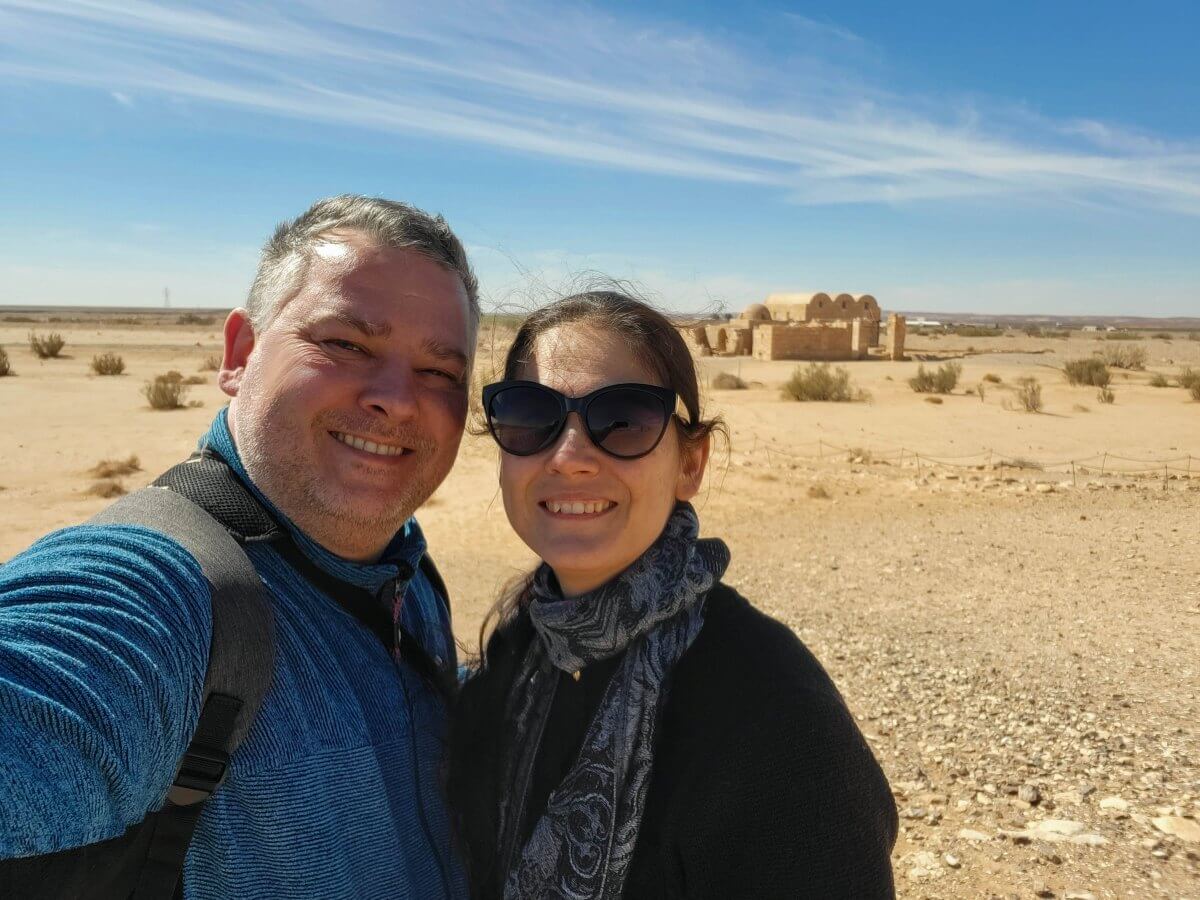
Our visit to the Desert Castles in Jordan took place on a Wednesday in February 2025 during our stay in Amman. This trip was a last-minute choice because we had some free time, but it introduced us to a fascinating part of the country’s past that many travellers overlook. We recommend this excursion if you want to explore Jordan beyond its better-known attractions, including Petra, the Dead Sea, and Jerash.
When we visited the Desert Castles in Jordan, all three sites were very quiet, with only a handful of other visitors at each one. We had plenty of time to explore at our own pace, appreciate the different architecture and details, and take photographs without rushing or constantly working around other tourists. It made it easier to enjoy each site properly rather than feeling we had to move on to make room for the next group. Of course, visitor numbers vary by season and day, so we cannot promise the same experience for everyone. Our visit showed us how rewarding these sites can be when you have room to explore without crowds.
WHY WE BOOKED A TOUR INSTEAD OF DRIVING
We booked a private half-day Umayyad Desert Castles Tour with Transfer from Amman, which lasted 6 hours. We wanted to avoid chaotic driving in the city, where traffic can be fast, stressful and lane discipline can be poor. Booking a tour was the perfect way to have a stress-free trip. It was also a practical way to explore this remote area without arranging our own transport. We even returned early enough to spend the evening at Ma’in Hot Springs, which made a perfect end to our day.
We paid for the tour ourselves, with no sponsorship influencing our opinions. Rather than suggesting every stop is equally impressive, we explain what impressed us and what you should consider before adding it to your itinerary.
RESEARCH BEYOND THE INFORMATION PANELS
One challenge is the lack of detailed explanations at the sites. Information panels are usually limited, leaving you to work out what you see and why it matters. To make this guide more useful, we combine our observations and information from the sites with archaeological research and trusted sources. Our goal is to help you understand the experience before you book, including who will appreciate this trip and who won’t.
Why Did the Umayyad Rulers Build the Desert Castles in Jordan?

After establishing Damascus as their capital, the Umayyad rulers developed estates and other buildings across their expanding territory. Often referred to collectively as qusur (the plural of qasr), these structures supported different aspects of political, economic, and social life. They served a surprising variety of purposes. Some were luxurious residences, hunting retreats, and agricultural estates, while others provided bathing facilities or trading stops.
Their importance goes well beyond their size or remote locations. According to Universes in Universe, Umayyad builders combined Greco-Roman, Byzantine, and Persian architectural styles. The buildings reveal some of the finest surviving examples of early Islamic art and architecture. Some surviving interiors depict people, animals, and everyday life. Such artwork is especially valuable because large-scale figurative decoration became less common in later Islamic art.
Should You Visit the Desert Castles in Jordan?
Before you rent a car, take a private tour, or find a driver in Amman, ask yourself one question: is this desert road trip worth your time? Desert Castles in Jordan offer fascinating history and unusual artwork, but they aren’t the right choice for everyone. Here is how to decide whether this excursion belongs on your itinerary.
YOU SHOULD GO IF YOU…

- Want more than Jordan’s famous attractions.
- Love lesser-known history and architecture. These early Islamic complexes reveal a side of Jordan that many tourists miss.
- Appreciate ancient art that challenges expectations. Qusayr Amra is the main reason many history enthusiasts (including us) make the journey. Its UNESCO-listed frescoes offer a rare insight into secular art from the early Umayyad period.
- Prefer quieter historical sites. Compared with Petra or Wadi Rum, these remote locations generally don’t attract many visitors. You will have moments to explore without tour groups.
- Enjoy road trips beyond the usual tourist route. The drive takes you across the vast, dry landscape of eastern Jordan and offers a different view of the country. You’ll see road signs for places like Iraq or Saudi Arabia and the sand stretches in every direction. This isn’t a quick roadside stop. Driving to see three main Desert Castles from Amman covers approximately 218 km (135 mi), based on our suggested route. Expect extra time for traffic and stops along the way.
- Want a flexible day trip? Visiting Qasr Kharana and Qusayr Amra takes around 4 to 4.5 hours, including return driving from Amman and time to explore both sites. Visiting all three main sites takes approximately 6 hours on the same basis, without a lunch stop. These are estimates, not guarantees. Your travel time depends on Amman traffic, your starting point, and how long you spend at each site; additional stops can extend your trip.
YOU MAY WANT TO SKIP IT IF YOU… 
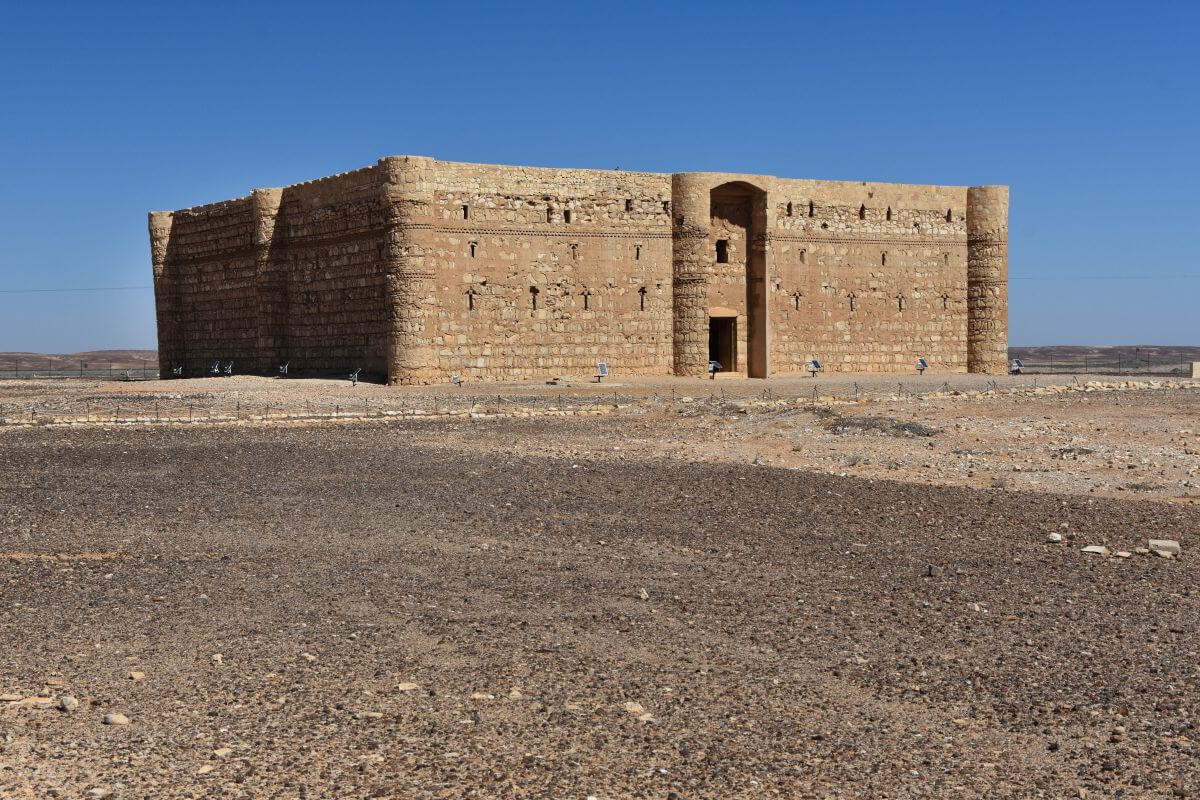
- Expect impressive, towering fortresses. These are mostly compact historic buildings, not dramatic European-style castles such as Jordan’s Crusader-era Kerak Castle.
- Dislike long, monotonous drives. The open desert can feel repetitive, and some roads lack visual variety. Expect a flat, exposed, and industrial-looking landscape with limited variety between stops.
- Have fewer than five days in Jordan. Depending on your interest, consider prioritising Amman, the Jerash ruins, Petra, Wadi Rum and the Dead Sea before adding this excursion.
- Struggle with heat or basic facilities. Sites can be exposed to strong sun, with limited shade, refreshments and visitor facilities.
- Want interactive museums or prefer tour guides on site. Don’t expect extensive displays, audio guides or detailed explanations everywhere. Some locations offer little information, so advance reading makes a real difference.
OUR VERDICT
Choose the Desert Castles excursion for unusual artwork, early Islamic history, and a different view of Jordan. Skip if you need dramatic scenery, impressive fortresses, modern visitor facilities, and hate long, repetitive drives. Neither choice is wrong; the best itinerary is the one that suits your interests.
The Big Three: Three Desert Castles Worth Visiting in Jordan
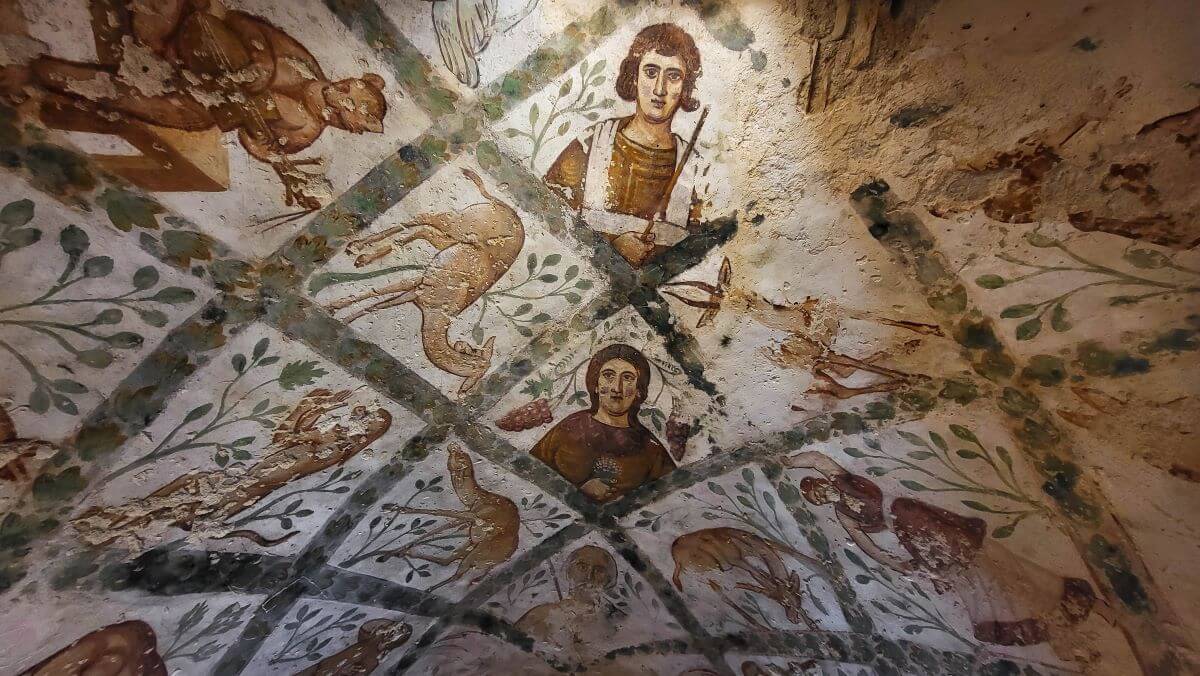
Not every remarkable historical site looks impressive from the road. Some reveal their real value only when you step inside, and some stops on our list are perfect examples.
1. Qasr Kharana
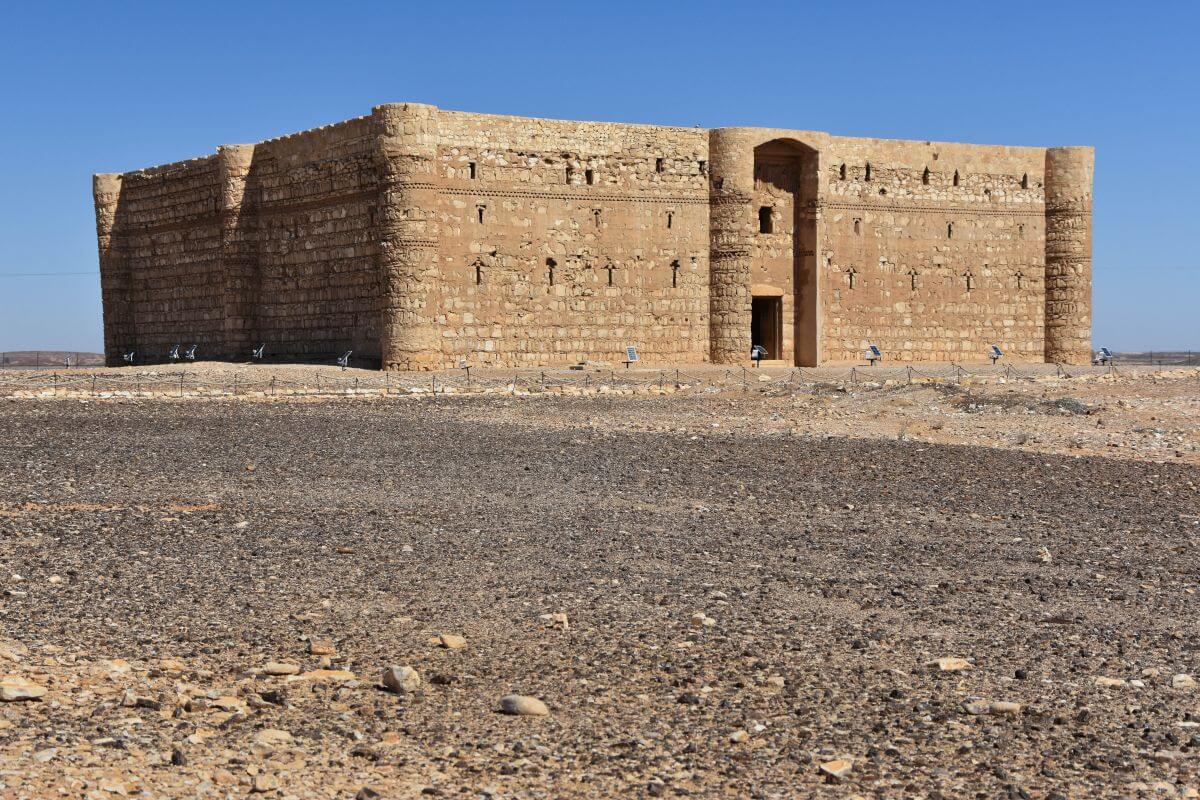
Qasr Kharana, also known as Qasr Al-Kharanah, is usually the first stop on the Desert Castles in Jordan tour from Amman. Located approximately 65 km (40 mi) east of the capital, just off Highway 40, this building challenges its name. Its thick walls, rounded towers, and narrow openings look like features of a defensive fortress. However, there is little evidence it was designed for military use.
This well-preserved Umayyad building, surrounded by miles of deserted gravel plains, dates back to the early Islamic period. Its precise construction date remains uncertain. However, a faint black Kufic graffito painted above an upstairs doorway records the date 24 November 710 AD. This is critical evidence proving the structure existed by that date, rather than proof of when construction actually began or ended. A local travel agency, PV Travels, identifies Qasr Kharana as an important early example of the region’s architectural heritage. Historians and archaeologists recognise it as one of the earliest surviving examples of Islamic architecture not only in Jordan, but in the wider Levant region.
ARCHITECTURAL CLUES THAT CHALLENGE ITS NAME
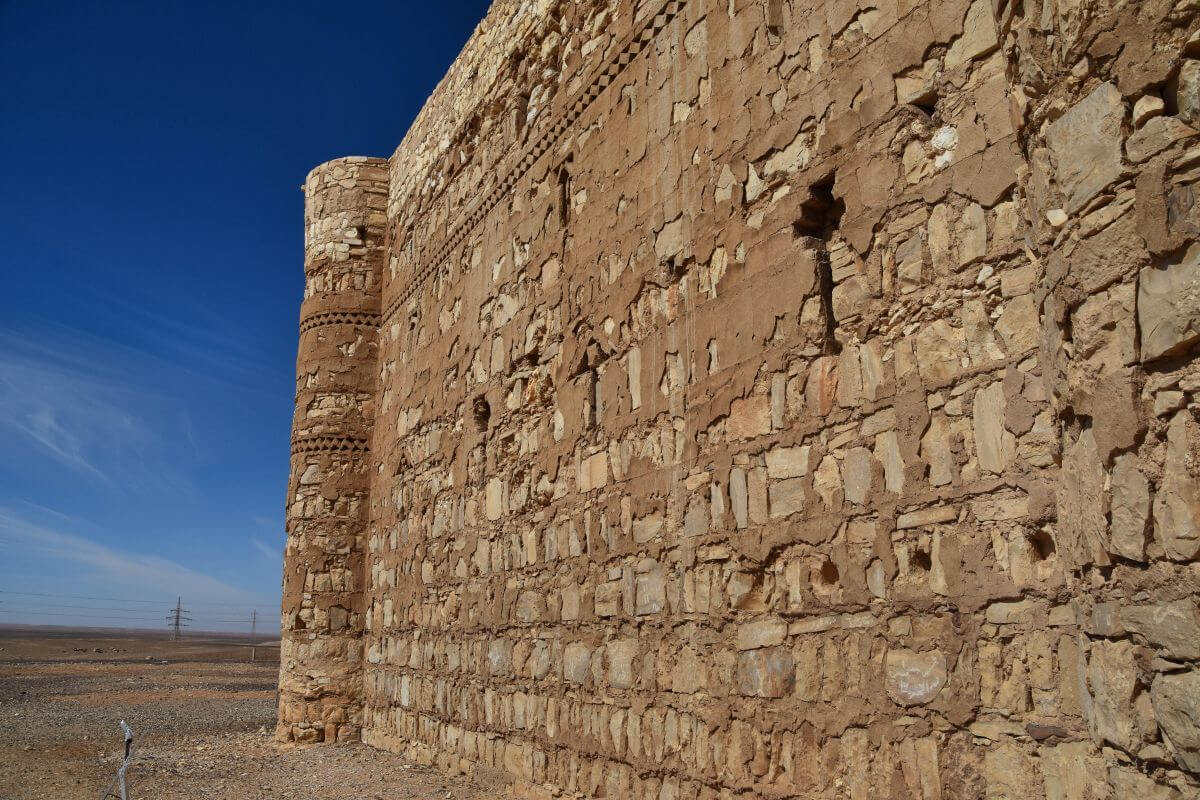
When you look beyond the towering walls, the theory that it served a military purpose begins to fall apart. The nearly square building measures approximately 35 m (114 ft) on each side. The structure has two storeys, with a single entrance in the middle of its southern wall. Rounded projections mark the corners, while smaller buttresses break up the other facades.
At first sight, the narrow openings resemble arrow slits, while the towers suggest positions for armed guards. Yet, as Universes in Universe explains, the openings are too high to serve as practical firing positions. The towers are also solid, decorative features rather than functional defensive structures. Their appearance suggests a military purpose, but their actual function remains uncertain.
Early interpretations proposed a caravanserai, a roadside stopping place for merchants and their animals. However, its distance from major trade routes and limited water supply make that explanation less convincing. A more widely accepted interpretation is that the building served as a meeting place for Umayyad officials and local tribal leaders. Its enclosed layout would have offered privacy for political discussions. Although this explanation fits the building’s design, its exact original function remains uncertain.
WHAT CAN YOU SEE INSIDE?
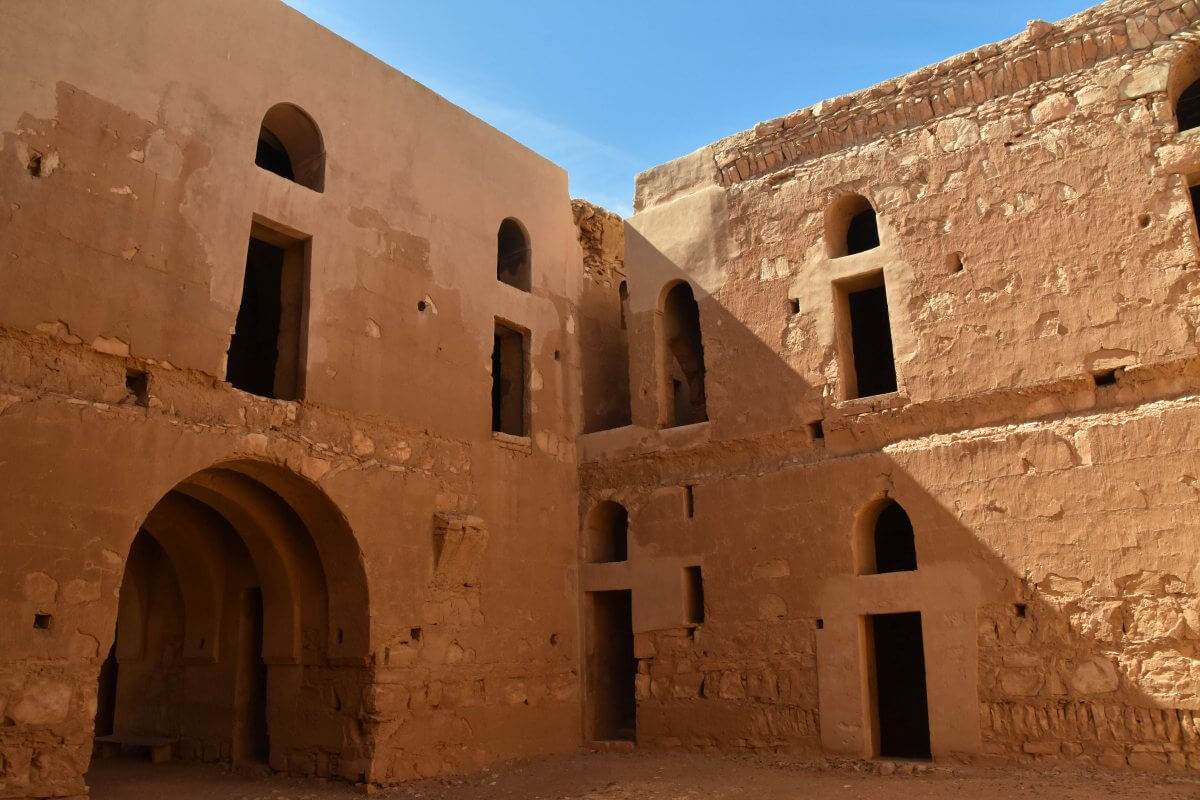
Inside, the layout is more practical than grand. Approximately 60 rooms occupy two floors around a central courtyard, where a basin collected rainwater. The entrance passage has a vaulted chamber on either side, which are believed to have served as stables or storage spaces. Beyond it, the rooms form separate units known as bayts, a common feature of Umayyad architecture. The upper floor is particularly worth exploring. Look for decorative plasterwork, sculpted columns, and vaulted ceilings. You’ll also find surviving graffiti of people who passed through the building centuries ago.
The architecture reflects several regional traditions, including Syrian, Byzantine, Roman, and Sasanian influences. This fusion makes Qasr Kharana an essential stop for understanding the birth of early Islamic architecture.
IS IT WORTH VISITING?
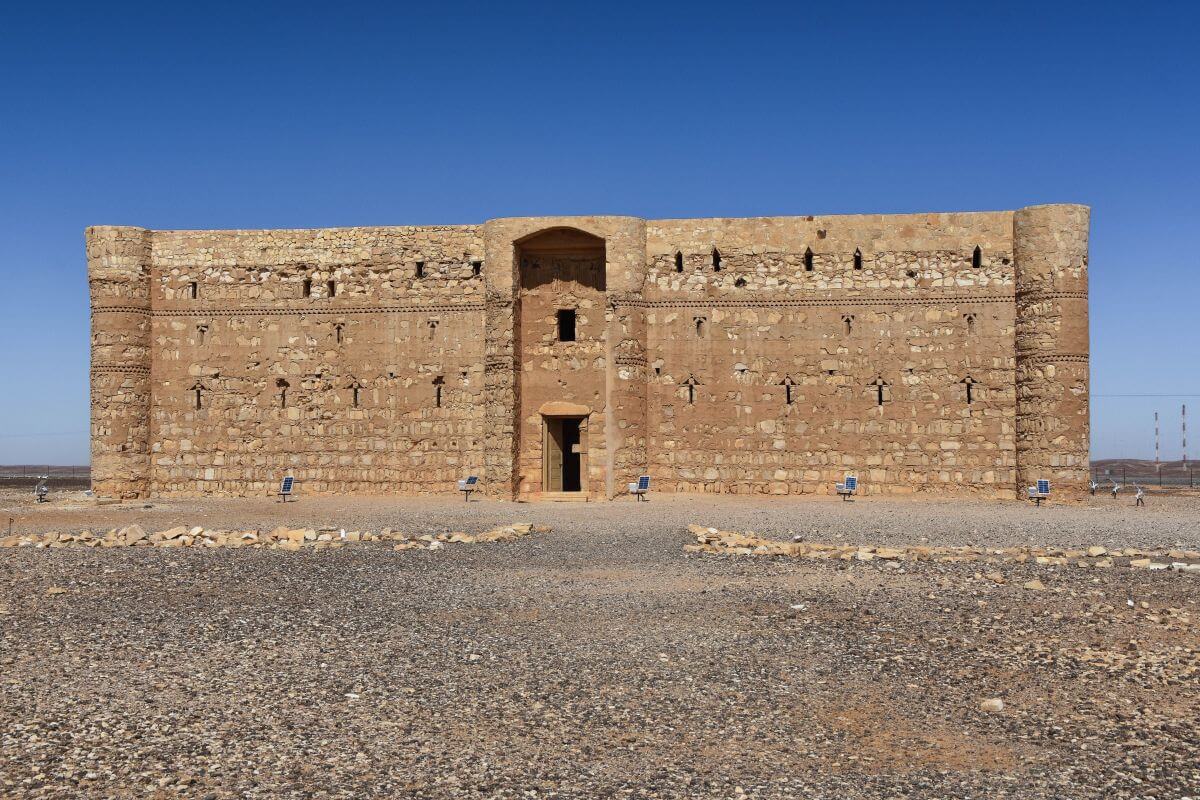
If you’re interested in early Islamic history, traditional building techniques and lesser-known heritage sites, Qasr Kharana is an ideal introduction to the Desert Castles in Jordan. However, if you expect richly decorated interiors, extensive displays or dramatic landscapes, this stop may not become the highlight of your day. Allow time to explore the exterior, walk through the courtyard and see the upper rooms before continuing towards Qusayr Amra.
2. Qusayr Amra

Don’t let the simple exterior fool you. Located approximately 15 km (9.3 mi) beyond Qasr Kharana, Qusayr Amra contains one of Jordan’s most unusual artistic treasures. This small, triple-domed building was the highlight of our February excursion through the Desert Castles in eastern Jordan. If you enjoy history, unusual artwork, or places that challenge your expectations, this stop is worth considering.
Dating from the early 8th century, Qusayr Amra served as a royal retreat and bathhouse during the Umayyad period. Its importance lies not in towering walls or military strength, but in the paintings preserved inside its reception hall and bathing complex. The remarkable colourful frescoes depict hunting scenes, animals, human figures, and other subjects. They offer a rare insight into early Islamic secular art. You can also see a painted zodiac on the dome of the hot room, which is considered one of the earliest representations of the heavens on a domed ceiling. The famous Six Kings mural is another detail to look out for. These details help explain why UNESCO added the site to its World Heritage List in 1985.

For a closer look at the paintings, their meaning, and the details you should not miss, read our Qusayr Amra guide.
READ MORE:

3. Azraq Castle
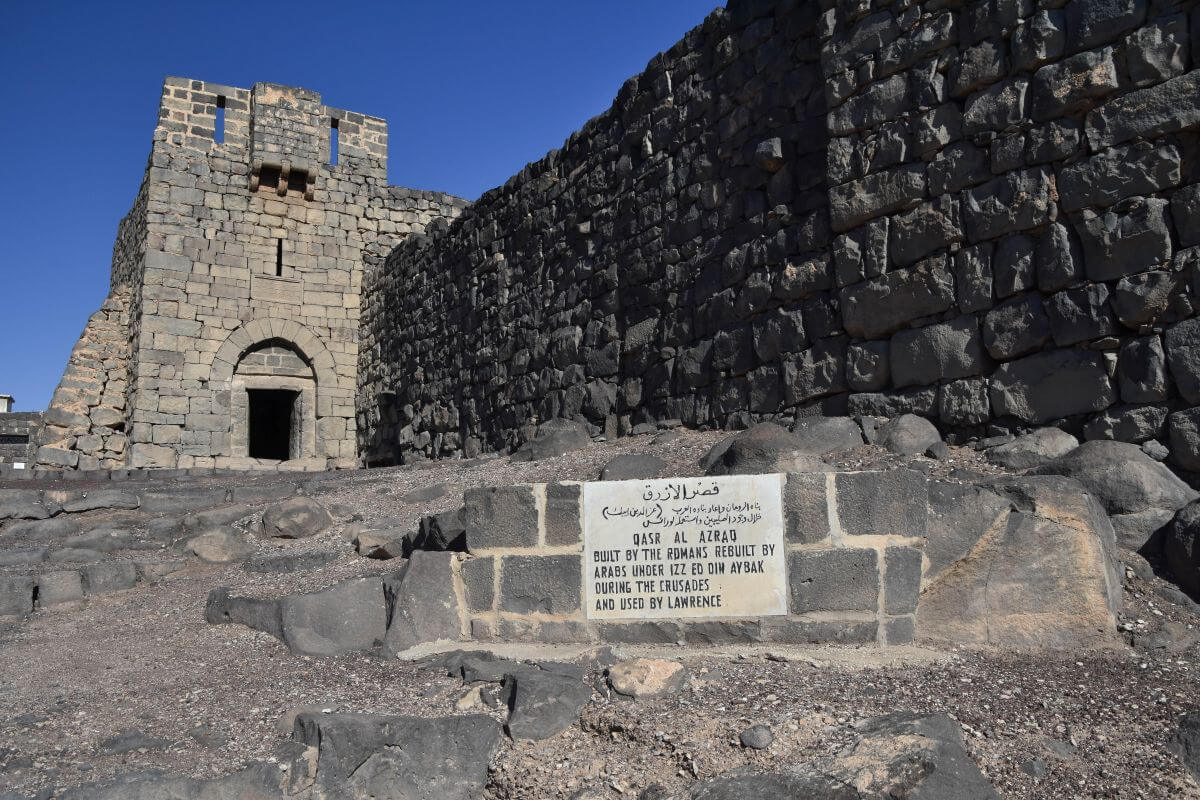
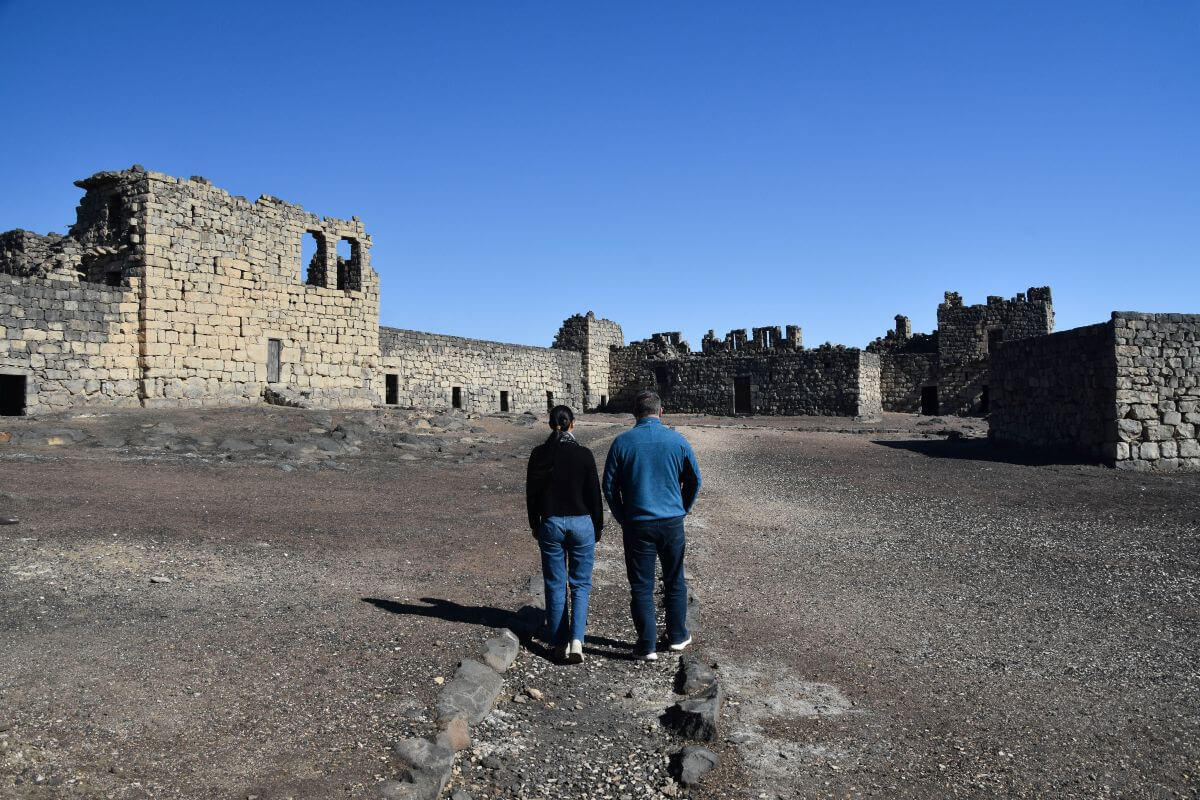
One of Jordan’s most unusual desert castles isn’t sand-coloured at all; it’s built almost entirely of dark volcanic basalt. Located in the oasis town of Azraq, approximately 108 km (67 mi) east of Amman, Azraq Castle looks like something out of a dark fantasy novel. But its unique architecture isn’t its only secret.
WHY WAS A FORTRESS BUILT IN THE MIDDLE OF THE DESERT?
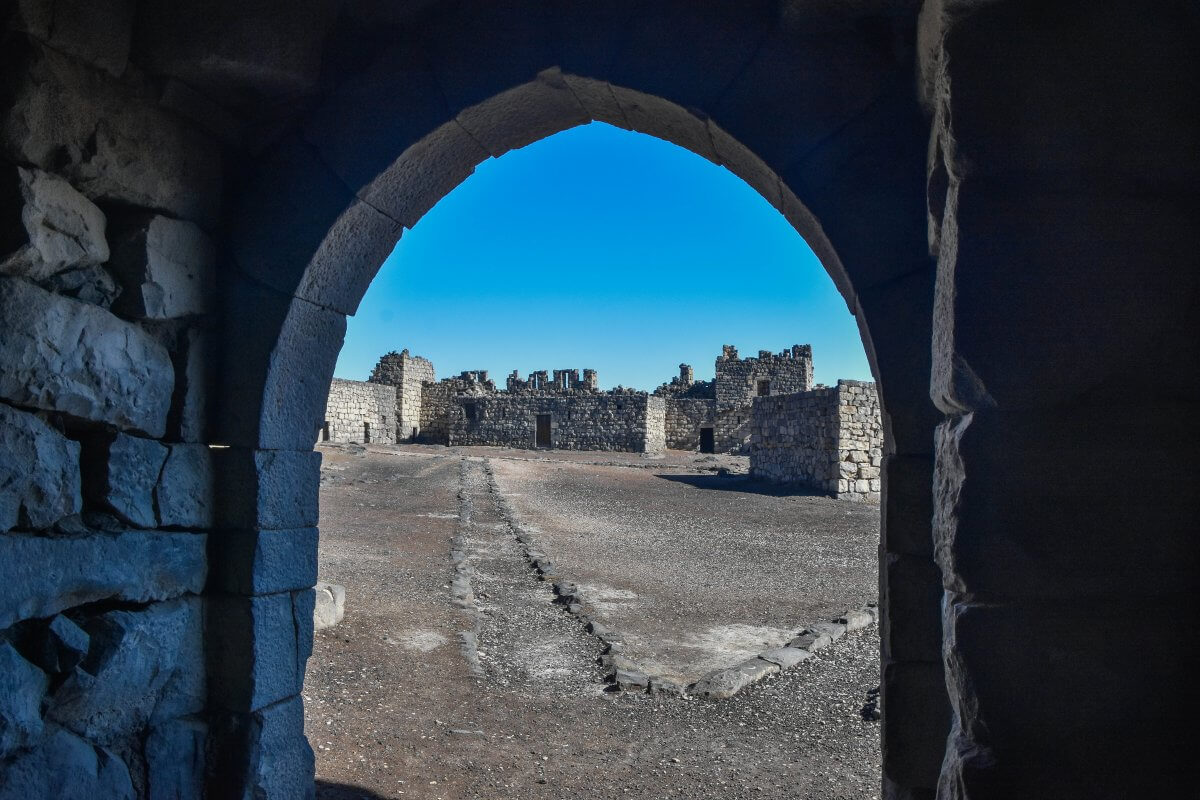
For centuries, this ancient stronghold guarded a priceless resource: life-saving fresh water in a harsh landscape. Much later, those same black stone walls served as the legendary winter headquarters for Lawrence of Arabia. Without the nearby Azraq oasis, a fortress in this remote location would have made little sense. The oasis was an important permanent source of fresh water across an enormous desert region. This made it a valuable stopping point along historic trade routes.
According to historical overviews, the Romans established the first structure here in the 3rd century AD. The site later passed through several hands. The Umayyad caliph Walid II used it as a hunting residence when the wetlands around the oasis supported abundant wildlife. In 1237, the Ayyubids strengthened their defences. They created much of the fortress that you can see today. Ottoman forces later occupied it in the 16th century, adding another chapter to its long history.
LOOK FOR THE DETAILS
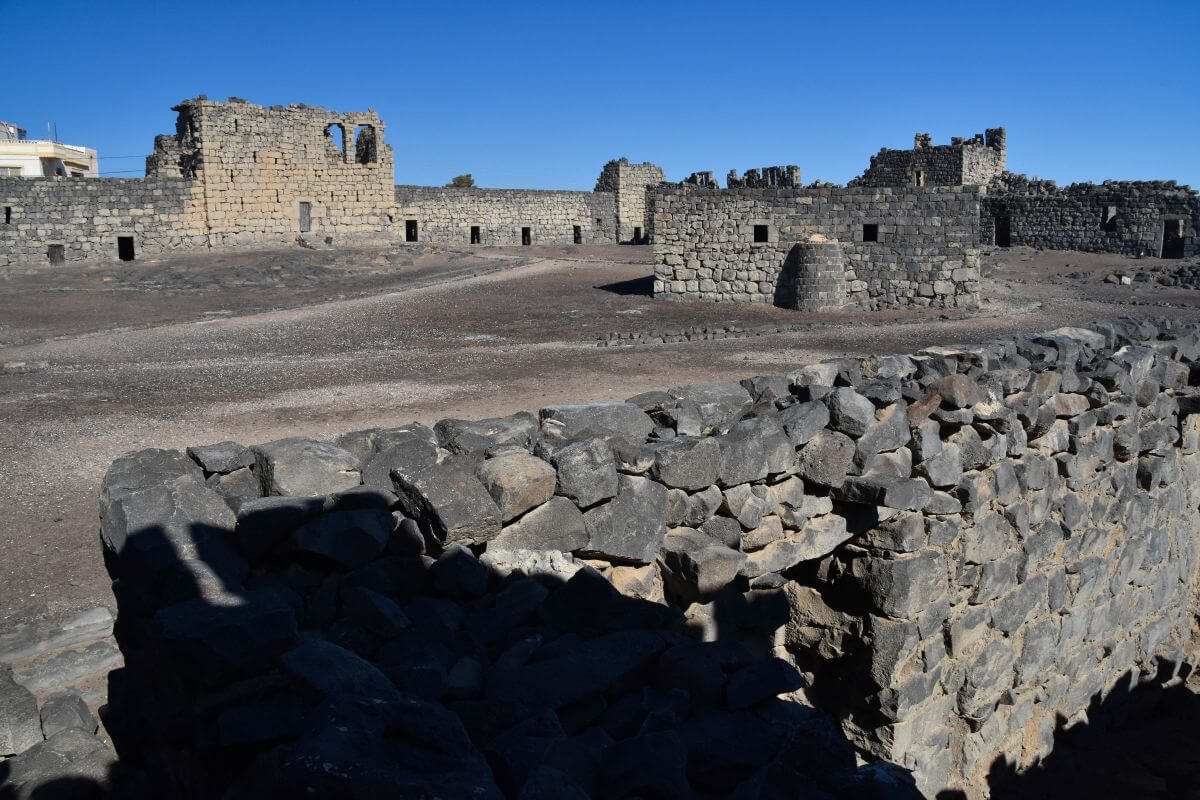
The first thing you’ll notice is the black basalt construction. While many historic buildings in Jordan use lighter stone, Azraq’s dark blocks give the walls a heavier, more impressive appearance. The fortress follows an almost square layout, with walls approximately 80 m (262 ft) long surrounding a central courtyard. Once inside, explore the courtyard and look for a small mosque, a well, and the remains of earlier rooms. A Roman altar near the entrance also offers a clue to the site’s much older origins. Another highlight of the fortress is its enormous stone entrance doors. Made from heavy slabs of volcanic basalt, they can still be pushed open, allowing you to feel their weight as they move smoothly on their ancient stone hinges.
THE ROOM WHERE LAWRENCE OF ARABIA STAYED
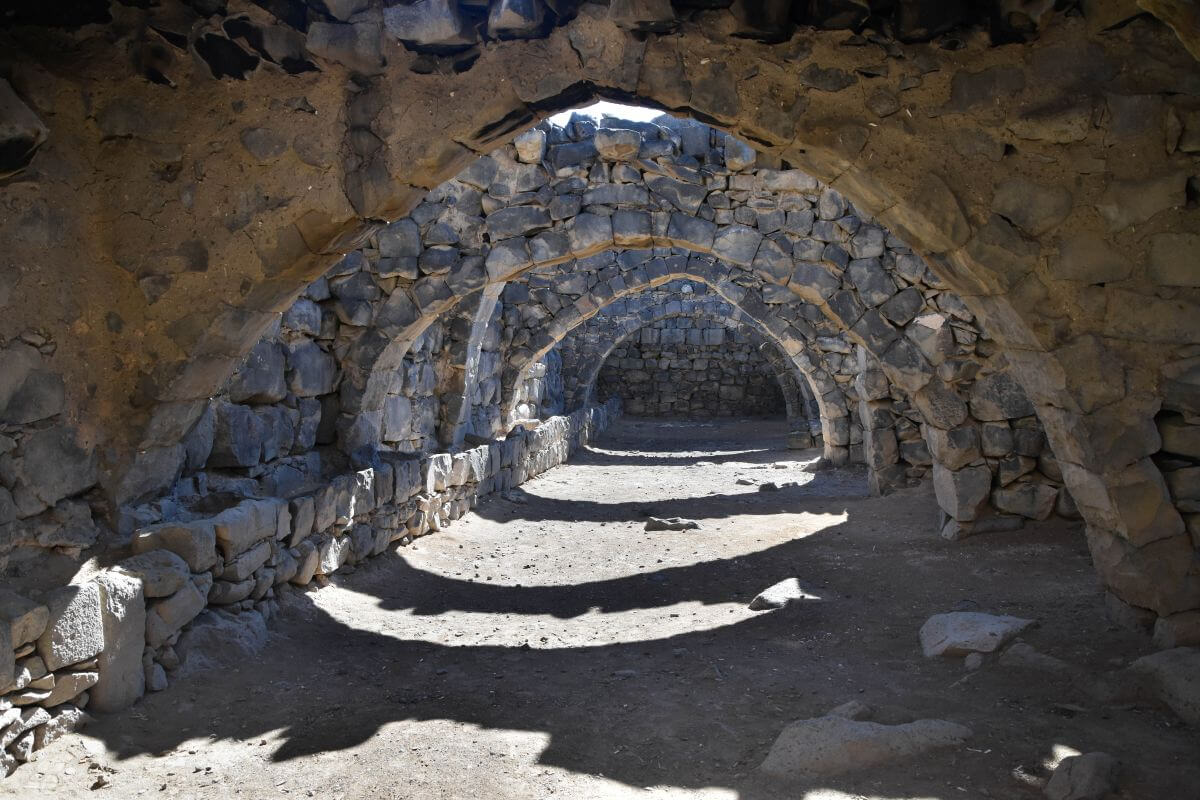
Azraq Castle is closely linked to the Arab Revolt against the Ottoman Empire. In November 1917, the British officer and writer T. E. Lawrence (better known as Lawrence of Arabia) used the old fortress as a base during the campaign. In Seven Pillars of Wisdom, he described preparing part of the castle for use as his headquarters.
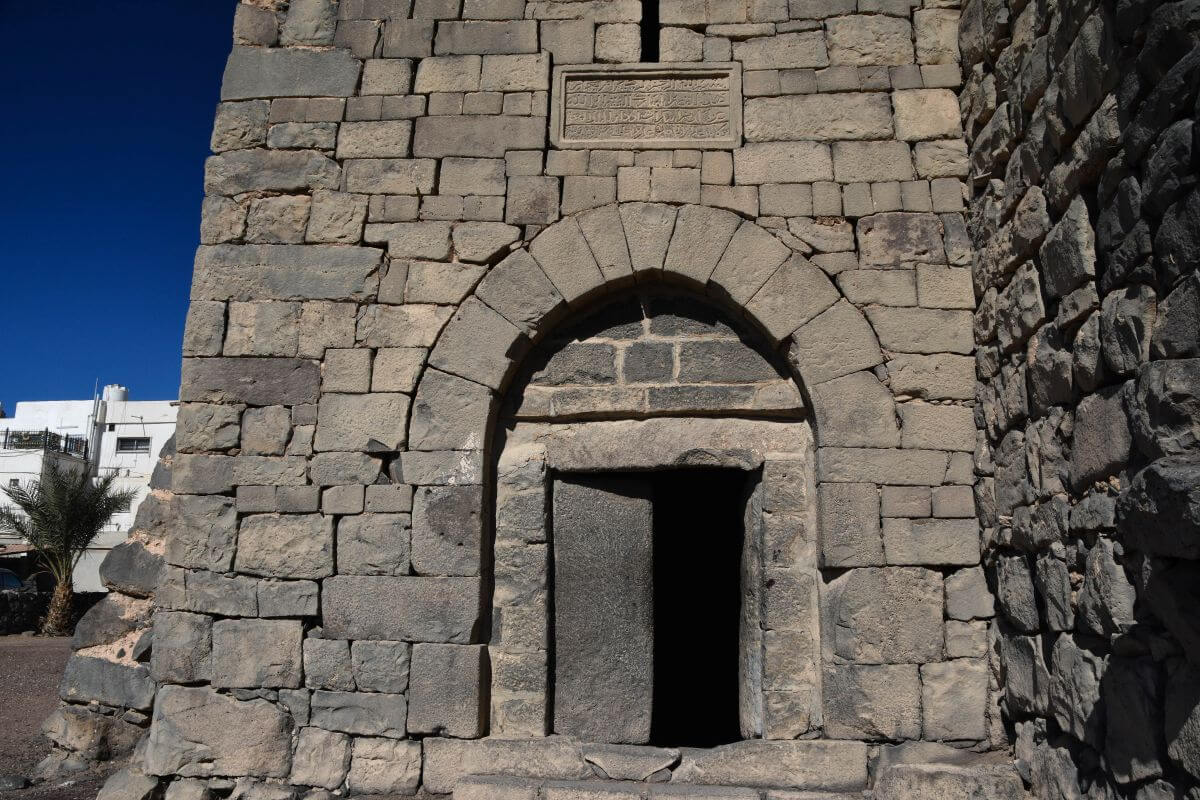
You can still visit the small room directly above the main entrance where Lawrence stayed and planned military operations. He also wrote about the castle’s heavy stone doors, which you can still see today. His account gives a personal view of life inside the fortress during the revolt. When we visited, seeing the room associated with Lawrence helped us connect the building with this period of history. If you’re interested in the Arab Revolt, Azraq Castle offers a chance to explore a place linked to Lawrence’s time in the region.
SHOULD YOU ADD AZRAQ CASTLE TO YOUR ITINERARY?
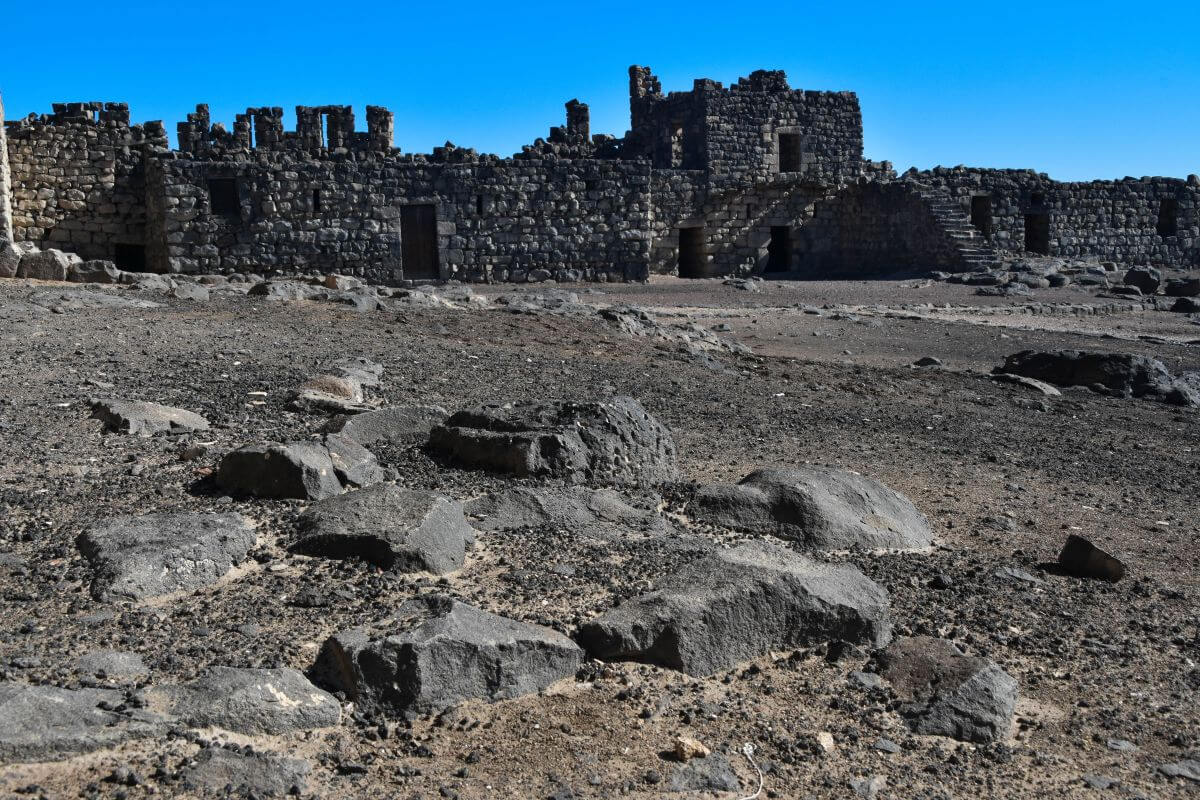
Azraq Castle is worth visiting if you enjoy military history, unusual architecture, and places shaped by several different civilisations. Its black stone design and connection to Lawrence of Arabia give it a character that the other sites cannot quite match. On the other hand, the fortress is relatively plain inside. Don’t expect richly decorated interiors or extensive museum displays. Much of the experience involves exploring historic stonework and imagining how Azraq Castle functioned. Azraq is also farther from Amman than the first two main stops. Visiting all three sites therefore means a longer day than visiting Qasr Kharana and Qusayr Amra alone. If you have limited time, concentrate on the nearer sites first.
Useful Information Before You Visit the Desert Castles in Jordan

A visit to the Desert Castles in Jordan requires more planning than a typical sightseeing stop. The sites are spread across a wide area, summer temperatures can be punishing, and transport options are very limited. Here is how to prepare without wasting time or money.
THE BEST TIME TO VISIT
- Spring (March to May) and autumn (September to November) are generally the most comfortable seasons to explore eastern Jordan. Temperatures are usually milder than in summer, making it easier to walk around the ruins and examine their architecture.
- Summer is the least comfortable time to explore the Desert Castles. Temperatures can exceed 40°C, and the exposed courtyards offer little protection from the sun. If you visit between June and August, leave early, carry plenty of water, comfortable shoes, and sun protection. Avoid spending too long outdoors during the hottest hours.
- Winter has its advantages, especially if you prefer quieter attractions. We visited this area on a sunny February day in 2025, when a half-day excursion fitted comfortably into our plans; despite the clear skies, there was a colder breeze with temperatures around 12 degrees. However, winter mornings can be cold and windy, while rain may affect road conditions. Always check the forecast and bring an extra layer of clothing.
Wheelchair Accessibility and Shade

The Desert Castles in Jordan are historic sites and aren’t wheelchair accessible. As ancient ruins, they lack modern features like ramps, flat, paved paths, and accessible facilities. While some sections are relatively flat and manageable, most of the terrain requires navigating uneven ground. We recommend contacting the site authorities before visiting if you need step-free access or assistance getting around.
Shade is limited in exposed outdoor areas, particularly in the courtyards and around the paths from the car parks. If you visit in warm weather, carry water, wear a hat, and plan breaks indoors in the shade. The thick stone walls provide some shelter from the sun and rain.
OPENING HOURS
The official Jordan ticketing website lists the opening hours for the Desert Castles as:
- 8 am – 4 pm in winter (November-April)
- 8 am – 6:30 pm in summer
- 8 am – 5:30 pm for the April and May timetable, and
- 9 am – 5 pm during Ramadan.
Because April overlaps with the published winter and April-May categories, check the official timetable for your exact travel date before setting off.
DESERT CASTLES JORDAN – COSTS & TICKETS
As of October 2026, the official Jordan tourism and ticketing website lists an entrance fee of 3 JOD for foreign visitors to the Desert Castles. This covers the main Desert Castles, including Qasr Kharana, Qusayr Amra, and Azraq Castle. Check the official fee table before your visit in case prices or entry arrangements change.
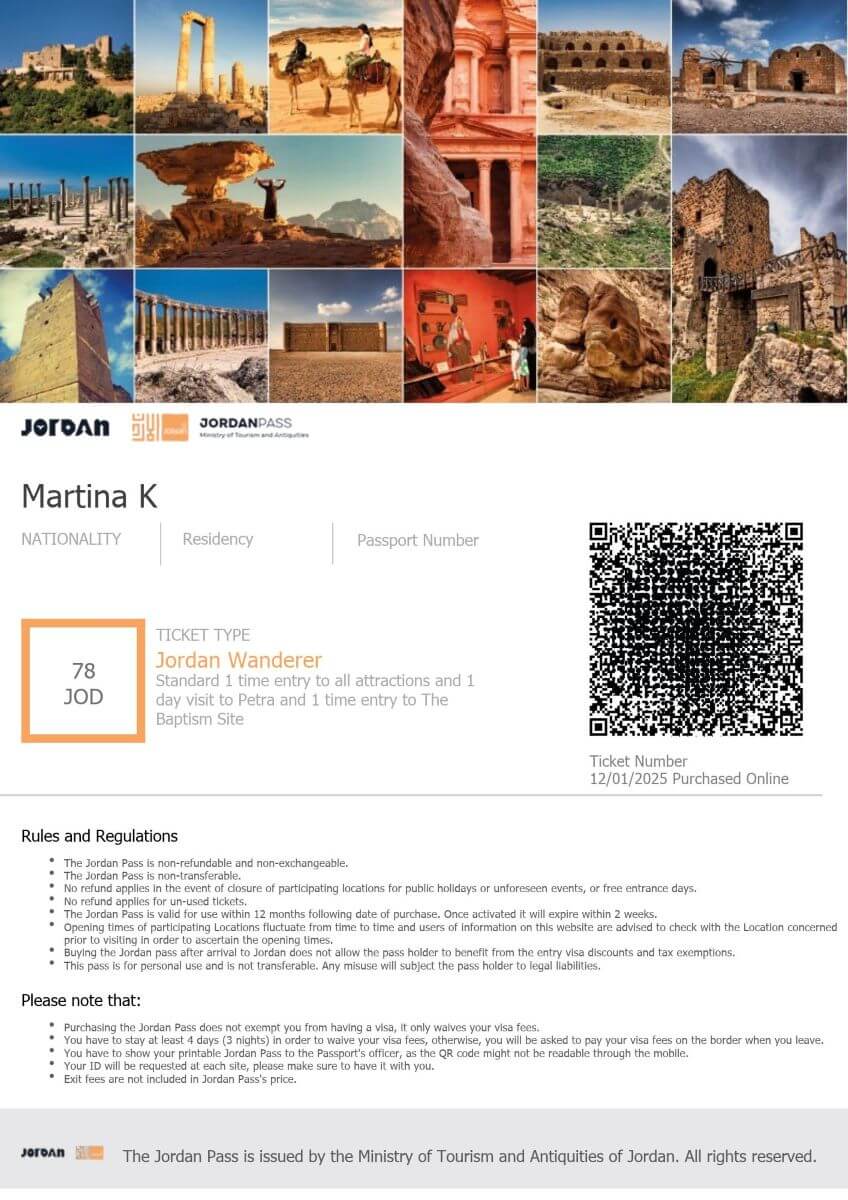
During our visit, we used the Jordan Pass, which completely covered our entry to all three sites. The pass includes entry to more than 40 attractions across Jordan, including Petra, Jerash, Wadi Rum, and the main Desert Castles. It’s available in three packages, with the main difference being how many consecutive days you can visit Petra. The Jordan Pass also waives the tourist visa fee for eligible visitors who buy it before arriving in Jordan and stay for at least 2 nights (3 days). However, it doesn’t include transport, guided tours, or every attraction in the country. Check the official Jordan Pass website for current prices, eligibility requirements, and the full list of covered attractions.
One more tip: don’t expect to find detailed signs explaining every building. Some locations have limited explanations, and a local guide may be available on arrival, but this is not guaranteed. Reading about the buildings beforehand will help you understand what you are seeing.
HOW TO GET THERE
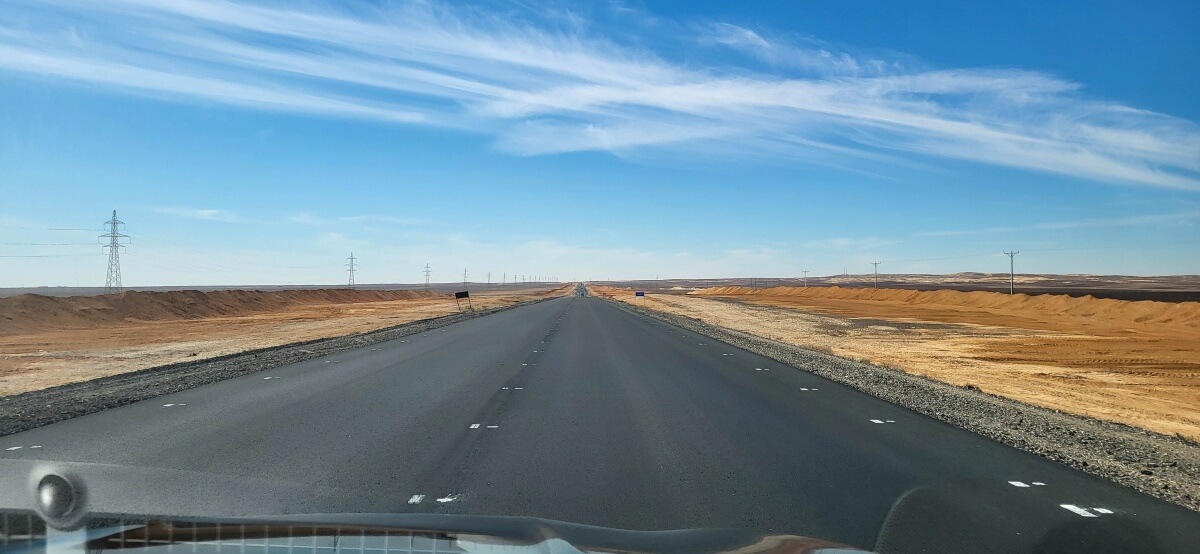
There is no convenient public transport connection for visiting the scattered sites in a single loop. Your realistic choices are to rent a car, hire a private driver, or join an organised excursion from Amman. We chose an organised half-day excursion because we wanted to avoid driving in unfamiliar traffic. It lasted six hours, and we were back in Amman early enough to enjoy the rest of the day.
If you drive yourself, fill the tank before leaving Amman and bring water and snacks. Highway 40 carries heavy traffic, so allow space around large lorries and stay alert. Camels, sheep and goats can wander onto rural roads, so reduce your speed when visibility is limited. Avoid driving after dark where possible, especially on unfamiliar rural roads. Before hiring a car, check exactly what your insurance covers, including collisions involving animals.
DRIVING TIMES AND DISTANCES
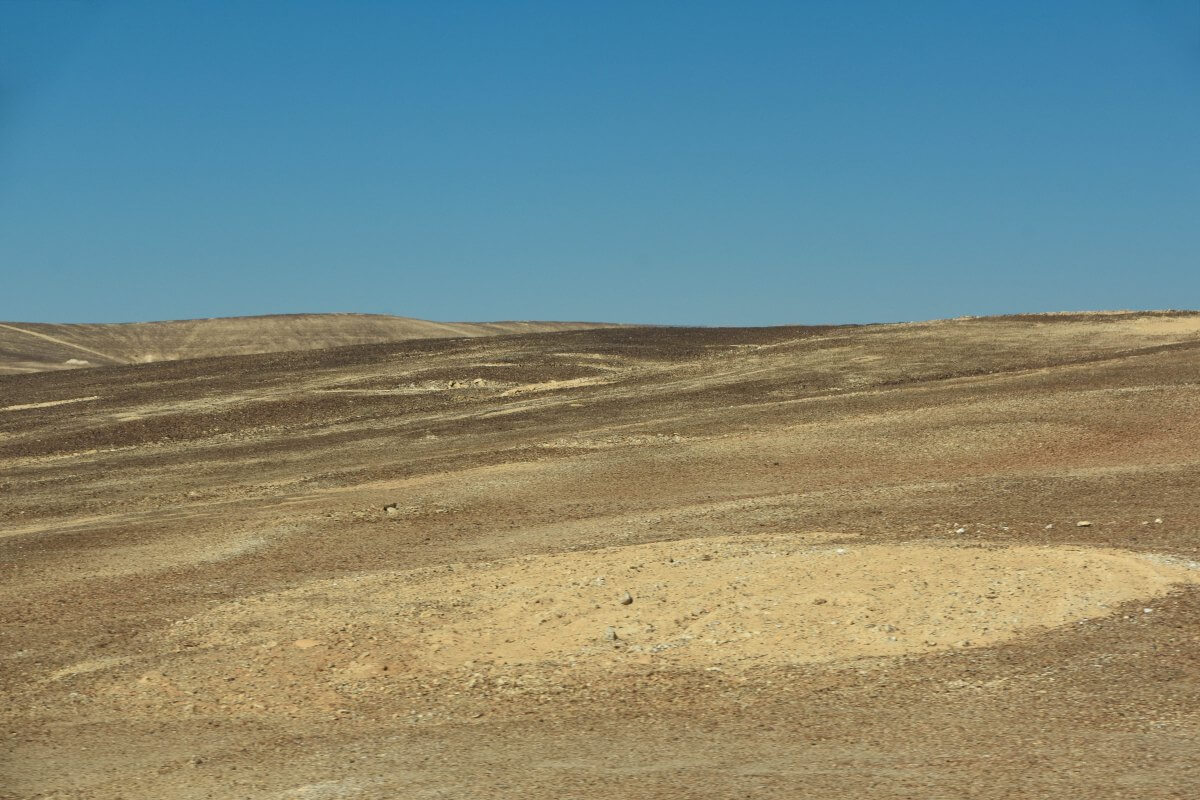
The biggest mistake you can make when planning this excursion is underestimating the distances. The sites may look close together on a map, but the final stop in Azraq turns a shorter trip into a longer journey across eastern Jordan.
How Far Are the Sites from Amman?
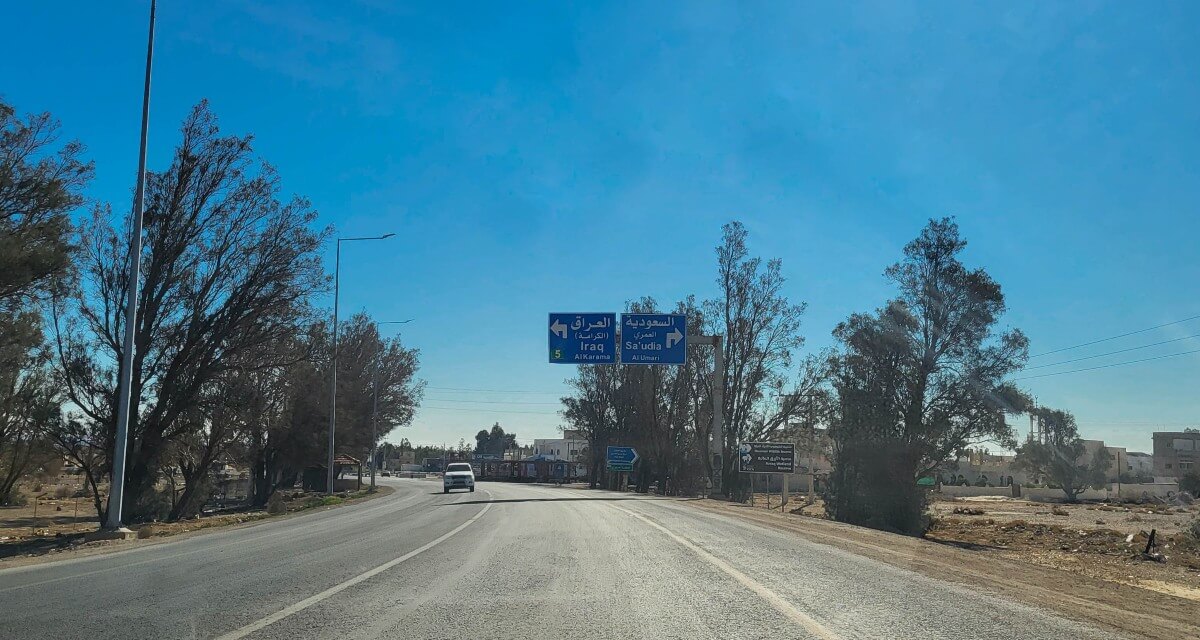
The three main Desert Castles lie east of Amman along Highway 40, also known as the Al-Azraq Highway. The first two are close together, but reaching Azraq Castle adds another stretch of driving across the open landscape.
- AMMAN TO QASR KHARANA: approximately 65 km (40 mi), or 1 hour and 15 minutes drive.
- QASR KHARANA TO QUSAYR AMRA: approximately 15 km (9 mi), or 15 minutes drive.
- QUSAYR AMRA TO AZRAQ CASTLE: approximately 30 km (19 mi), or 25 minutes drive.
- AZRAQ CASTLE TO AMMAN: direct route, approximately 108 km (67 mi), or 1 hour and 30 minutes.
These are estimated driving times and distances, not guarantees. Traffic leaving central Amman, your exact starting point, road conditions, and stops or a meal along the way can affect your journey. Check the complete loop in Google Maps before setting off, and allow extra time rather than planning every minute.
Using the distances listed above, the full route from Amman via Qasr Kharana, Qusayr Amra, and Azraq Castle, and returning to Amman (Rainbow Street), adds up to approximately 218 km (135 mi). If you take a different route to make a full loop back to Amman, the total distance is about 238 km (148 mi), as seen on picture. These are approximate driving distances, so check your chosen route before setting off.
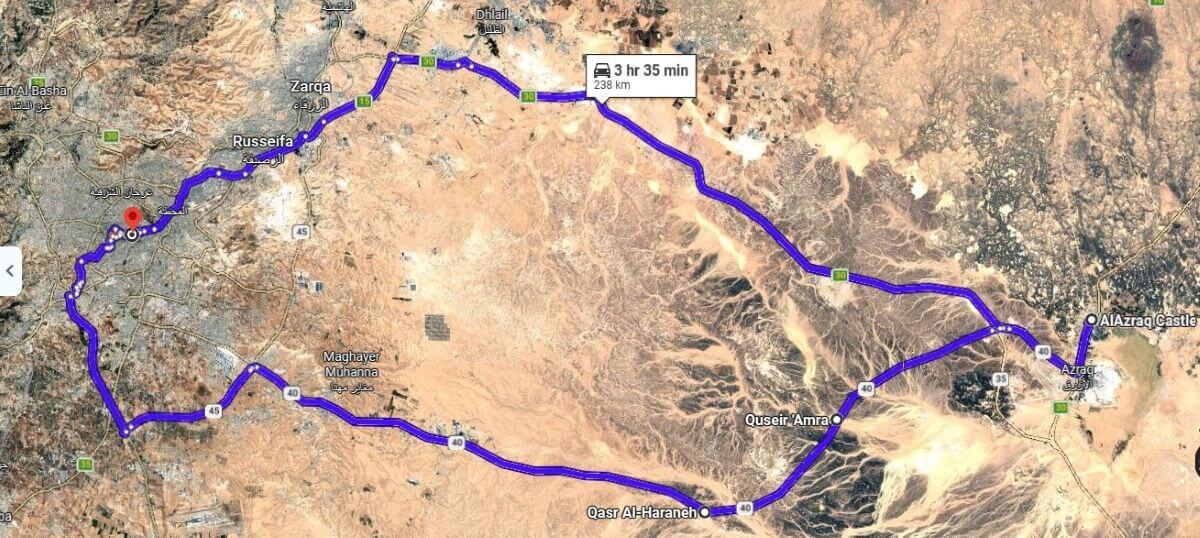
THE BEST ROUTE: VISIT THE SITES IN THIS ORDER
To avoid unnecessary backtracking, we recommend visiting the sites in order as you travel east from Amman.
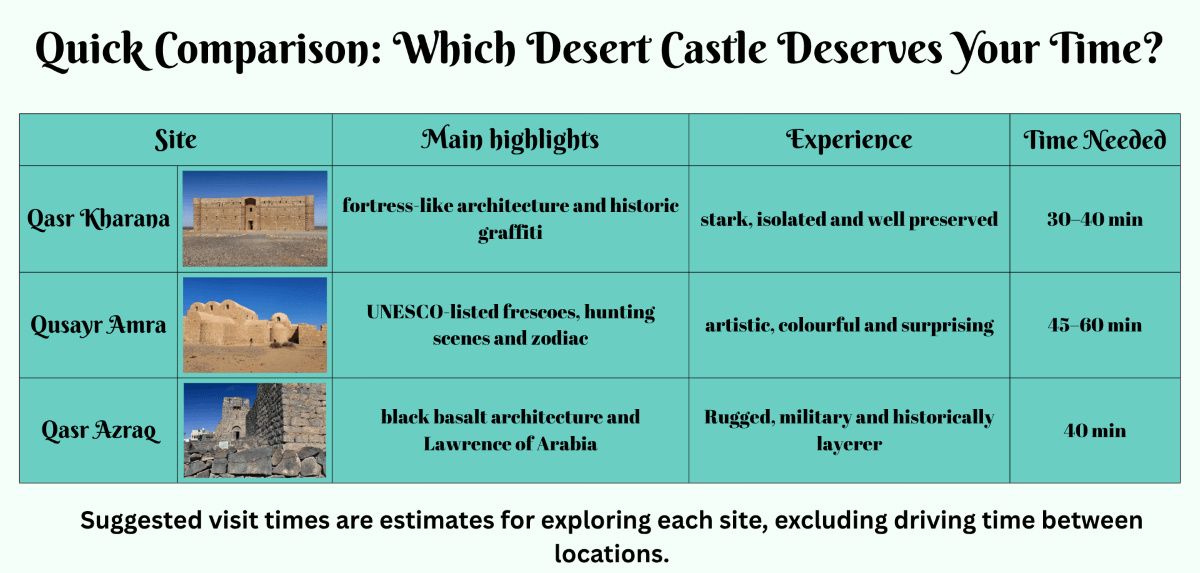
- STOP 1: Qasr Kharana – Start with its impressive fortress-like exterior and early Islamic architecture. Allow 30-40 minutes to explore the building and courtyard.
- STOP 2: Qusayr Amra – Just 15 minutes away, this small complex offers a striking contrast. Its UNESCO-listed frescoes, including hunting scenes and a painted zodiac, make it a highlight for many visitors. Allow another 40-60 minutes.
- STOP 3: Azraq Castle – Continue east to discover dark basalt walls, massive stone doors and the fortress’s connection to Lawrence of Arabia. Allow another 40 minutes to explore Azraq Castle.
Half-Day or Full-Day Excursion: Which Should You Choose?
- Shorter route: Qasr Kharana and Qusayr Amra. Allow approximately 4–4.5 hours, including return driving from Amman and time to explore both sites. Allow extra time for traffic, longer visits, and any additional stops. These two neighbouring sites provide very different experiences: impressive architecture and richly decorated interiors. This is a better option if your itinerary is already packed.
- Extended route: All three sites. Allow at least 6 hours for all three sites, including driving and time to explore (without a lunch stop). Your actual starting point, traffic, the time spent at each castle and any additional stops may extend your trip. Adding Azraq Castle means more time on the road, but rewards you with a fortress shaped by several periods of history. You could also explore the nearby Azraq Wetland Reserve or stop for lunch, although this would extend your stay.

As mentioned earlier, we booked a half-day tour that lasted 6 hours and returned to Amman early enough to visit Ma’in Hot Springs that evening.
OUR ADVICE:
Choose the first two sites if you are short on time or most interested in Umayyad architecture and art. Add Azraq Castle if military history, unusual stonework, and a longer road trip appeal to you. You don’t need to visit every site to make this excursion worthwhile.
You now have the essential information for planning your visit to the Desert Castles in Jordan.
Thank you for reading to the end! If you’ve enjoyed this article, please share this post to extend its reach.
Pin Desert Castles in Jordan for later so you don’t lose it!
YOU MAY ALSO ENJOY: