Deep in a remote Karakalpakstan desert in Uzbekistan, just a short drive from Nukus, lies Mizdakhan Necropolis. For over 2,000 years, this haunting hilltop sanctuary has witnessed empires clash, ancient world religions merge, and countless pilgrims pass through. This vast, surreal ‘city of the dead’ holds such spiritual significance for the region that locals believe its sacred land marks the very origins of humanity. Yet, the vast majority of tourists exploring Uzbekistan completely miss it. Even those who travel as far west as Khiva rarely venture further, treating that ancient city as their final stop. By stepping off the beaten path, you’ll discover a beautiful landscape where ancient Zoroastrian traditions sit alongside modern Islamic shrines.
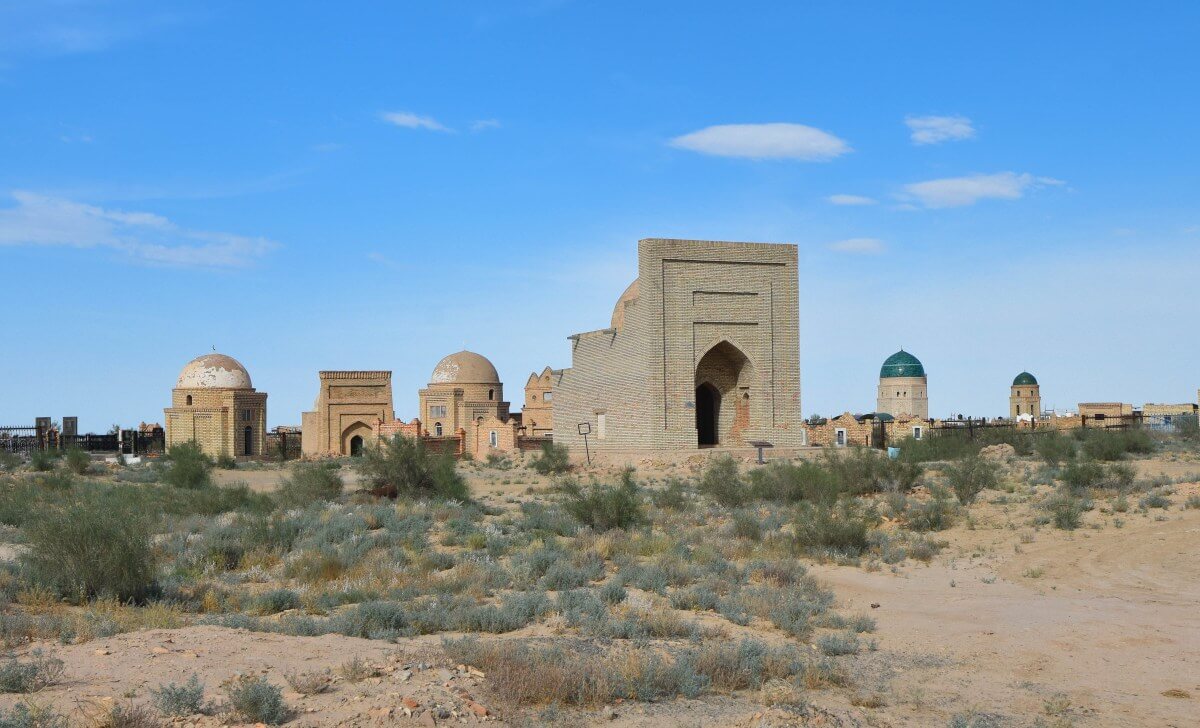
In this Mizdakhan Necropolis guide, we go beyond the surface to uncover the site’s secrets and legends. We also provide the practical information you need to plan your visit and explain what to expect when you arrive.
Disclaimer: This post contains affiliate links. If you click through and make a purchase, we may receive a small commission at no additional cost to you. This helps to support and run our blog. Thanks!
Why Trust Our Mizdakhan Necropolis Guide?
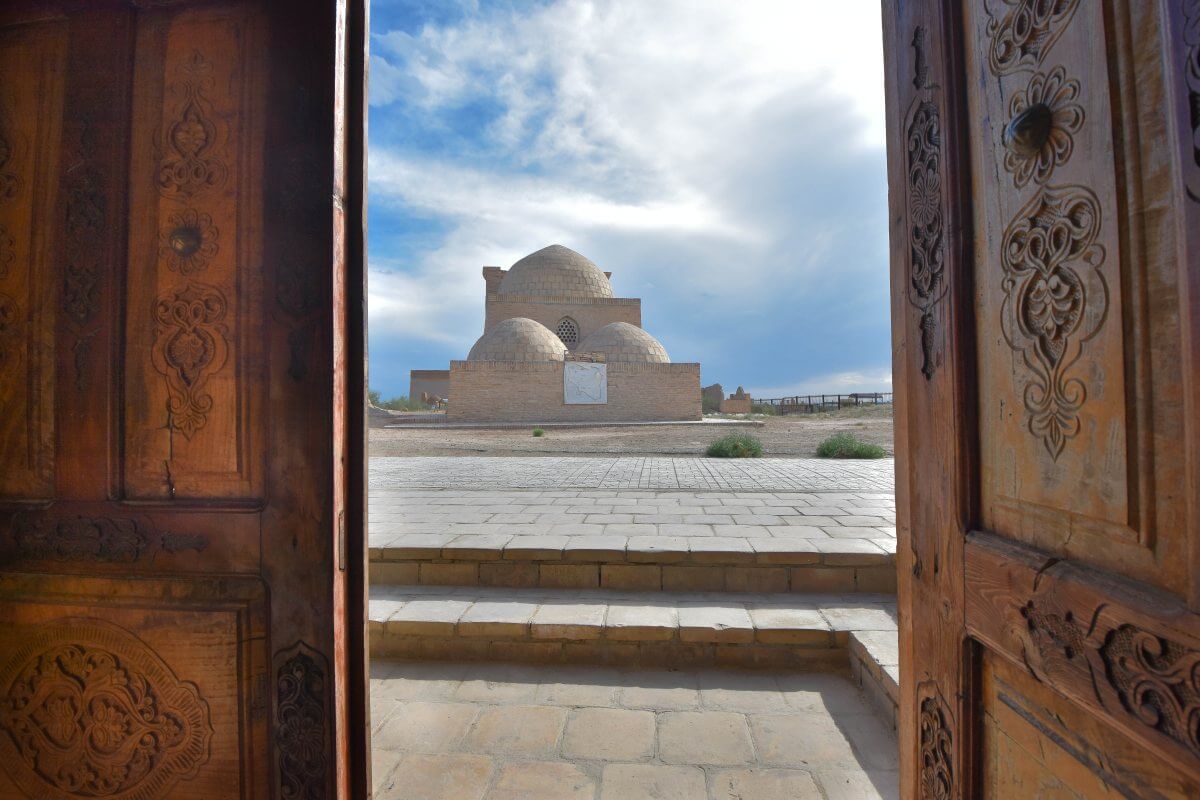
We didn’t build this guide from a stock description or a list copied from other travel websites. Visiting Mizdakhan is very different from exploring a famous monument. There is no grand entrance, no neat route between the sites, and no simple explanation of everything you see.
We visited Mizdakhan Necropolis in May 2026 during our journey to the Ship Graveyard of the Aral Sea in Muynak. This archaeological site was one stop along the way. We paid for the trip ourselves, so no sponsor shaped what we say. We won’t pretend that every part of the experience was perfect. Instead, we want to give you an honest sense of what it’s like to visit this remote site. We will point out what impressed us, what made the visit more difficult, and which details could influence your decision to include it in your itinerary.
Many online descriptions are short and repeat the same details. For this guide, we combine our own observations with archaeological research and information from reliable sources. We also used information from the panels and scanned a barcode on the map. This gave us additional information.
Quick Answers: Is a Visit to Mizdakhan Necropolis Worth the Detour?
- LOCATION: Karakalpakstan, Uzbekistan
- NEAREST TOWN: Khojeyli is approximately 3-4 km away. The regional capital, Nukus, is around 20-22 km to the east or northeast.
- WHAT SHOULD YOU EXPECT? This is a large, open archaeological landscape and ancient burial ground, not a single monument or a clearly identified walking circuit. The wider site covers roughly 200 hectares across three desert hills. This guide concentrates on the cemetery and its burial site rather than the separate Gyaur-Kala fortress.
- DIFFICULTY: Moderate. The cemetery spreads across the hill rather than along paved paths. Expect uneven ground, dust, gravel, and slopes. Walking between different parts of the burial ground can be tiring, particularly in hot weather.
- TIME NEEDED: Allow approximately 1-1.5 hours for the cemetery and mausoleums, depending on your pace and how much time you spend learning about the site. If you plan to explore Gyaur-Kala, allow another 30-45 minutes.
- Keep in mind that travellers visiting on the way to Muynak may have a limited schedule. A short stop can give you an introduction, but it may not allow enough time to appreciate the whole landscape. If you’re travelling with a fixed departure time, plan your visit carefully.
The Best Time to Visit Mizdakhan Necropolis
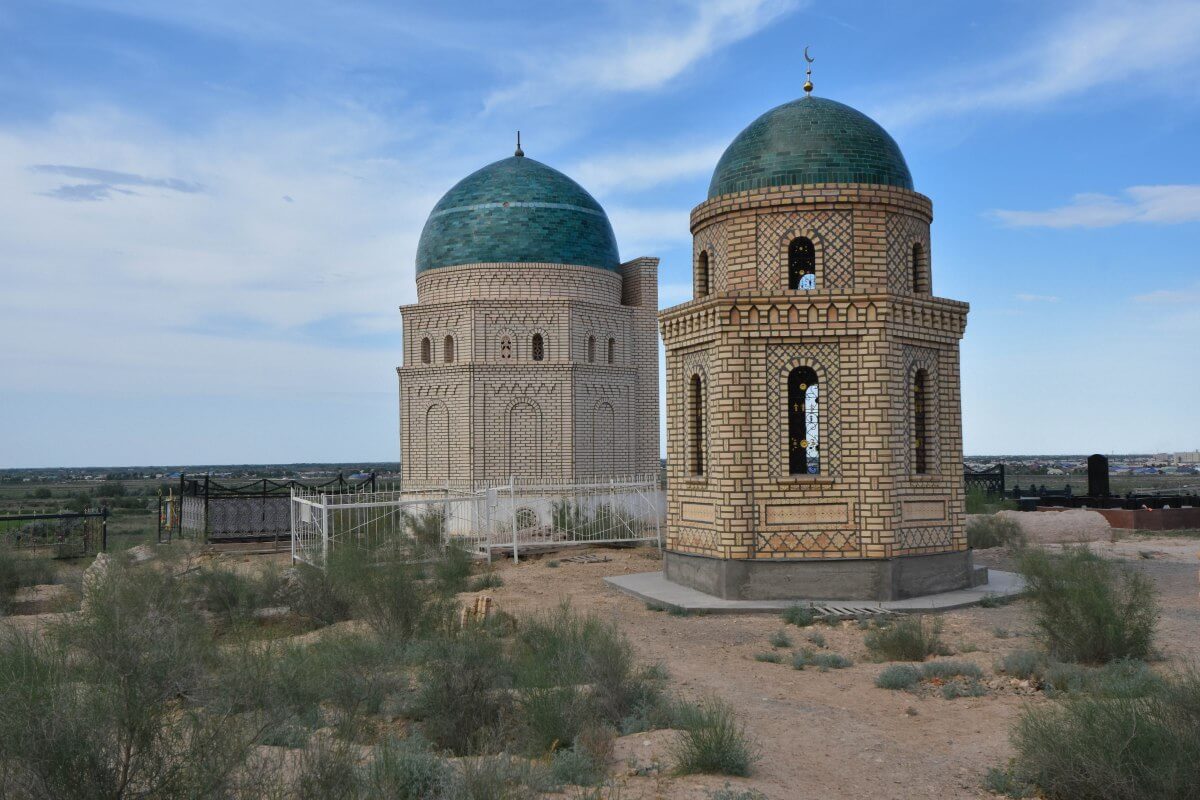
The site is fully exposed to the Karakalpak desert, so the weather will heavily impact your experience. There is little protection from the sun, wind, dust, or cold. Spring and autumn are generally the most suitable seasons to consider. April and May, as well as September and October, may offer more comfortable conditions than the height of summer or the coldest winter months.
WILL IT BE CROWDED?
Don’t expect the crowds associated with the famous Silk Road cities. Mizdakhan Necropolis is a quiet and remote site. You may find yourself exploring the site with very few other visitors.
Is it Worth Visiting?
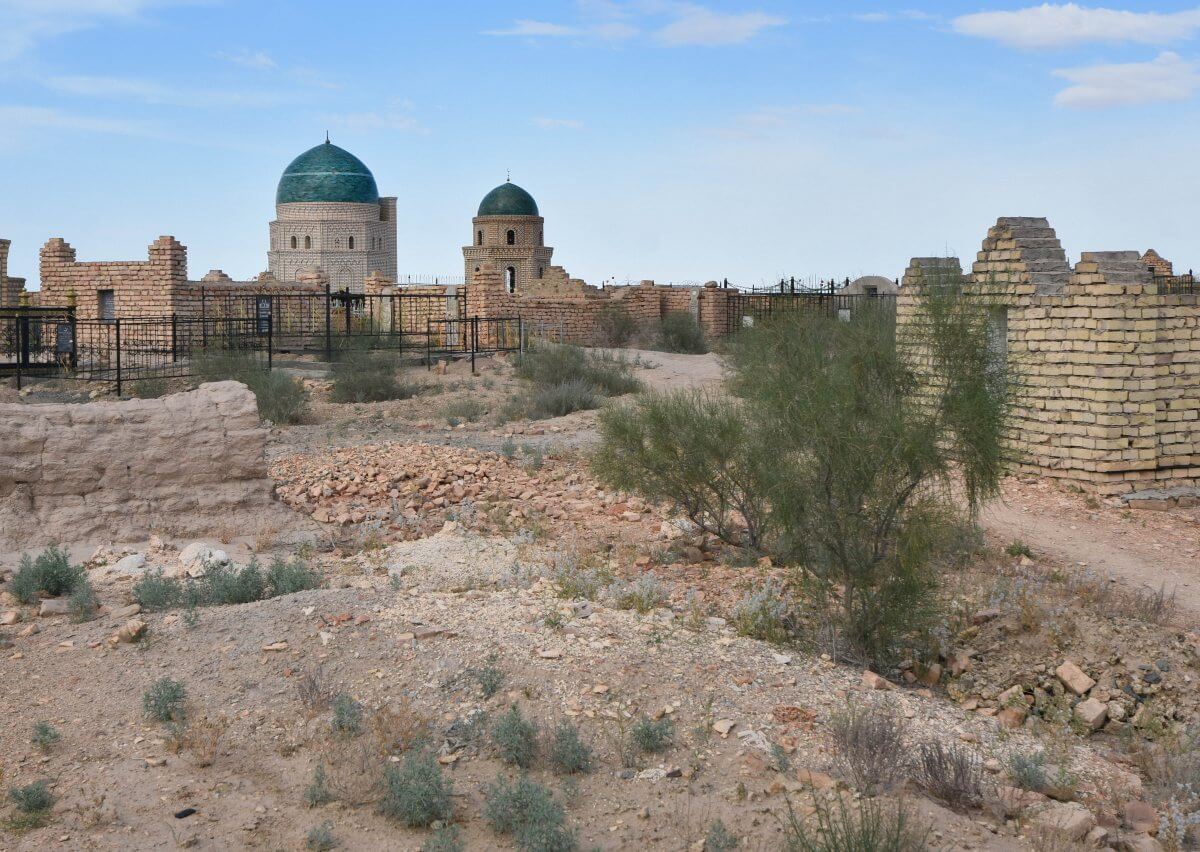
Yes, especially if you enjoy archaeology, unusual places, quieter experiences, and want to witness a pilgrimage site with multi-faith history. If you mainly want beautifully restored monuments, this may not be the experience you are looking for. We highly recommend adding this stop to a western Uzbekistan itinerary, especially if you’re already visiting Karakalpakstan, Nukus, or the Aral Sea (Muynak). Because of its remote location, it’s much easier to visit on a western Uzbekistan tour than as a standalone trip from Tashkent, Samarkand, or Bukhara.
- WHO SHOULD VISIT: Dark tourism enthusiasts, photographers, history and anthropology buffs. The site is a perfect match for off-the-beaten-path travellers and those who prefer archaeological sites away from the usual tourist route. It may also appeal to those interested in how religious traditions, burial customs, and local communities have shaped a historic landscape over time.
- WHO MAY FIND IT CHALLENGING: Anyone expecting manicured paths, clear signage, facilities and guides waiting at the entrance. Visitors who struggle with intense heat, dust, or uneven ground should also plan carefully. There is little shade and walking across the hill can be tiring.
- IS IT WHEELCHAIR ACCESSIBLE? No. The site has no modern disability infrastructure, and the natural terrain creates substantial barriers. Sand, gravel, uneven ground, steep sections, and steps make access difficult. A private vehicle can reach a point close to the main entrance, allowing someone with limited mobility to enjoy panoramic views from a flat area. Reaching individual monuments and exploring the cemetery may not be possible.
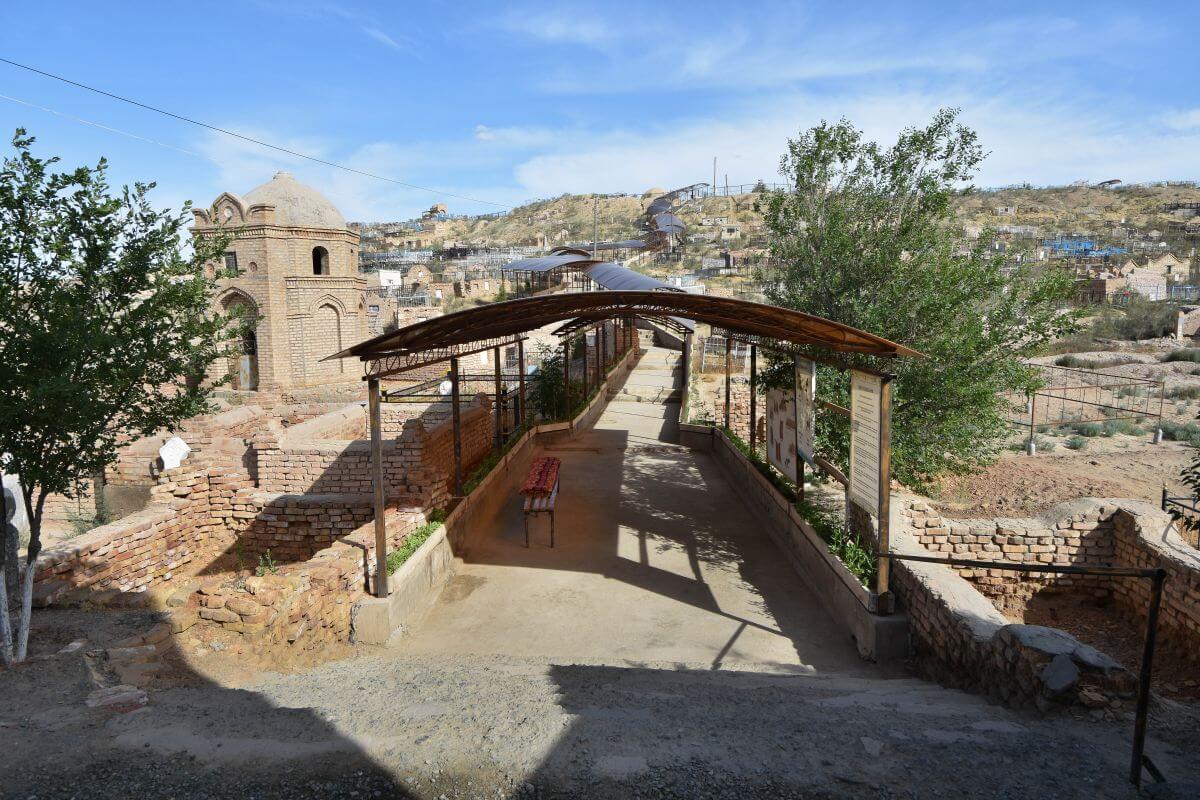
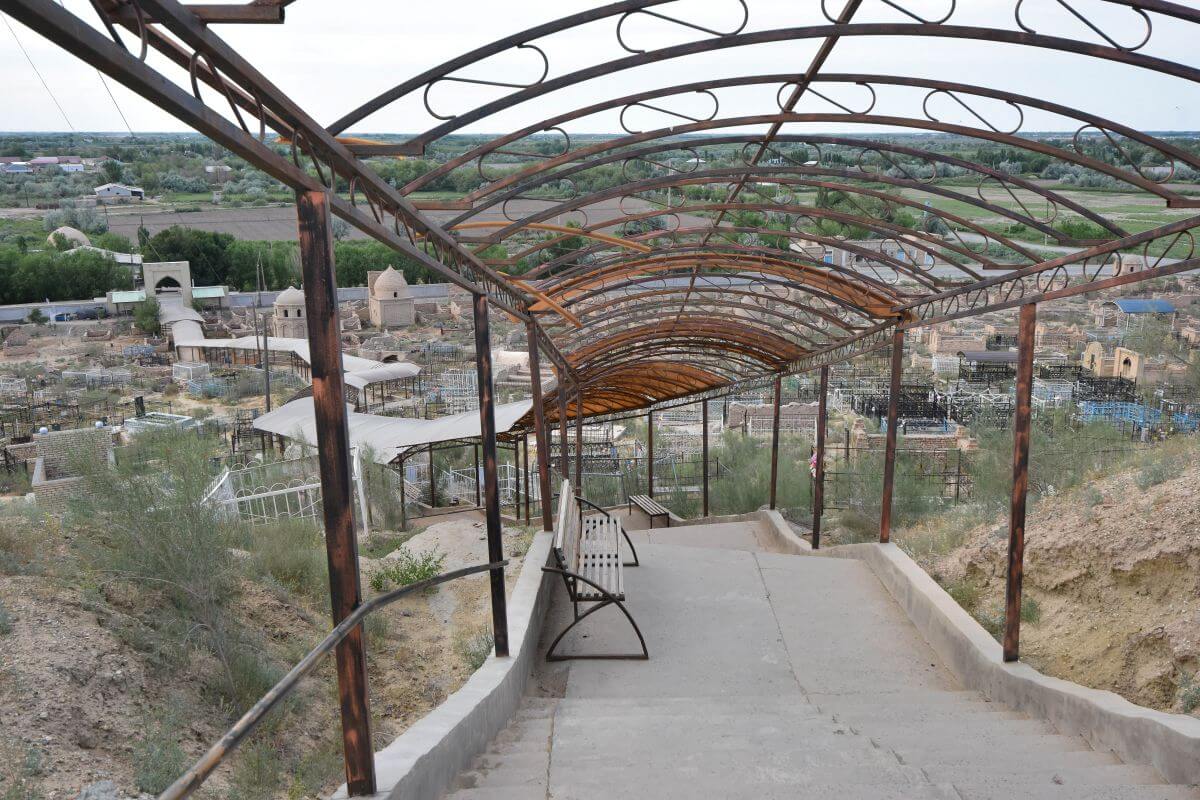
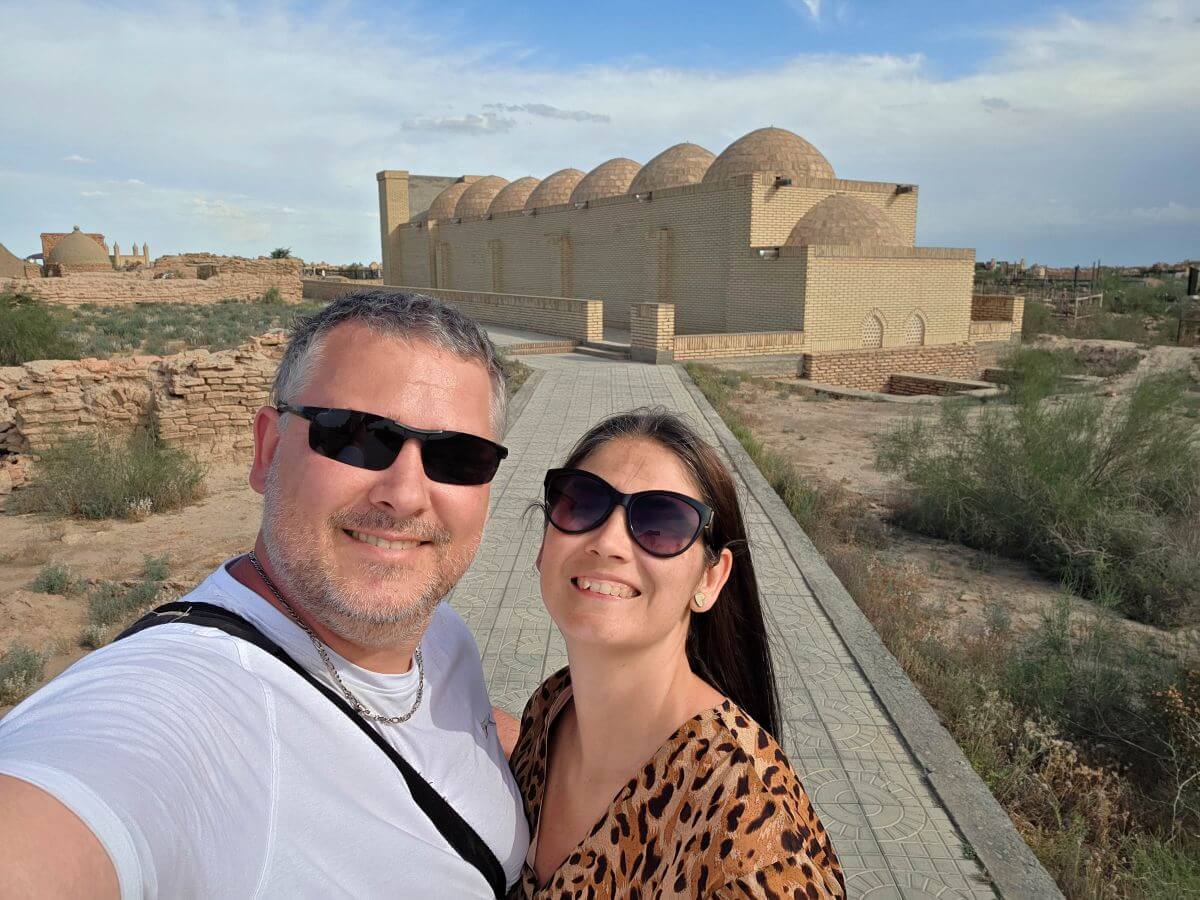
The picture shows the entry path with paved walkway leading to the complex.
- FACILITIES/ TOILETS: No.
Why is Mizdakhan Necropolis Famous?
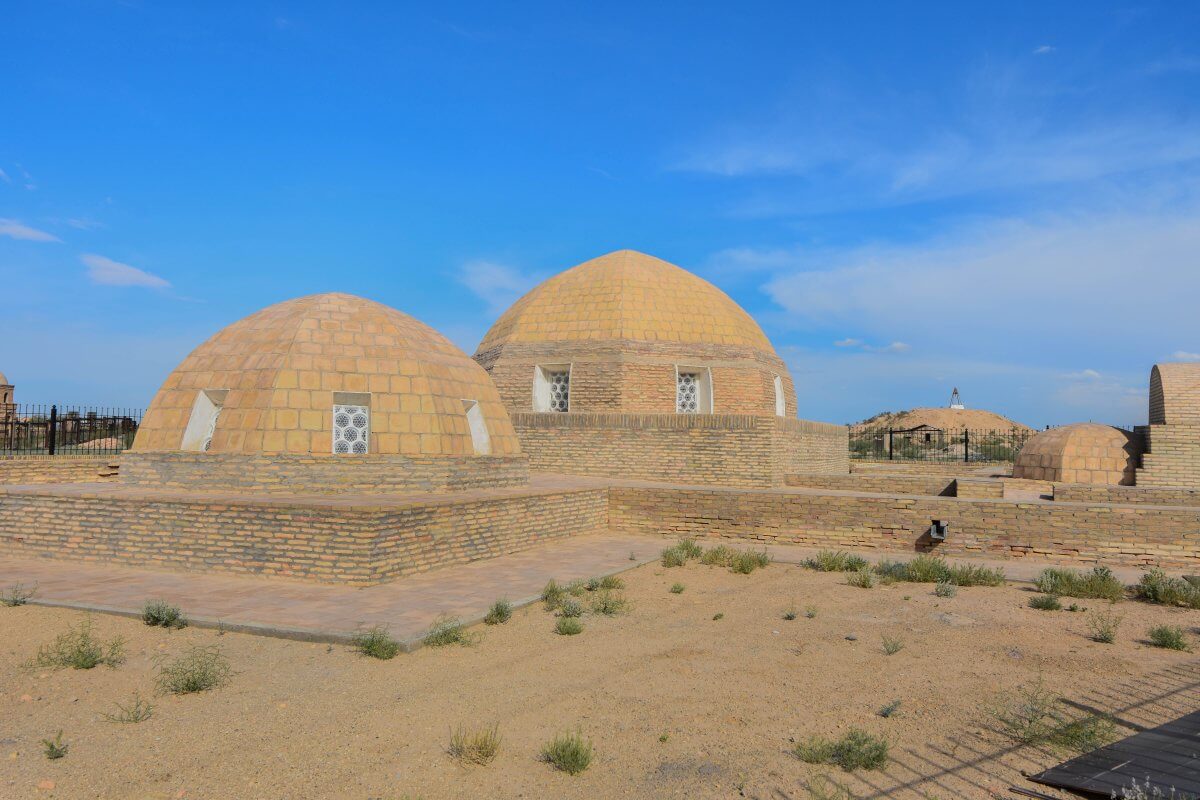
Mizdakhan Necropolis near Nukus in Uzbekistan is famous as one of the oldest and largest ancient cemeteries in Central Asia. Walking through its grounds allows you to trace over 2,000 years of changing religious beliefs.
The official website for Karakalpakstan notes the archaeological complex covers around 200 hectares. Some burials have a history stretching back approximately 2,400 years. It also describes Mizdakhan as an important pilgrimage place that has attracted people for centuries. Historic burials recorded across the complex continued into the 14th century. Mizdakhan’s sacred status never faded; it remained an active burial site well into the modern era. But its size and age are only parts of what makes this place extraordinary.
Short History of Mizdakhan
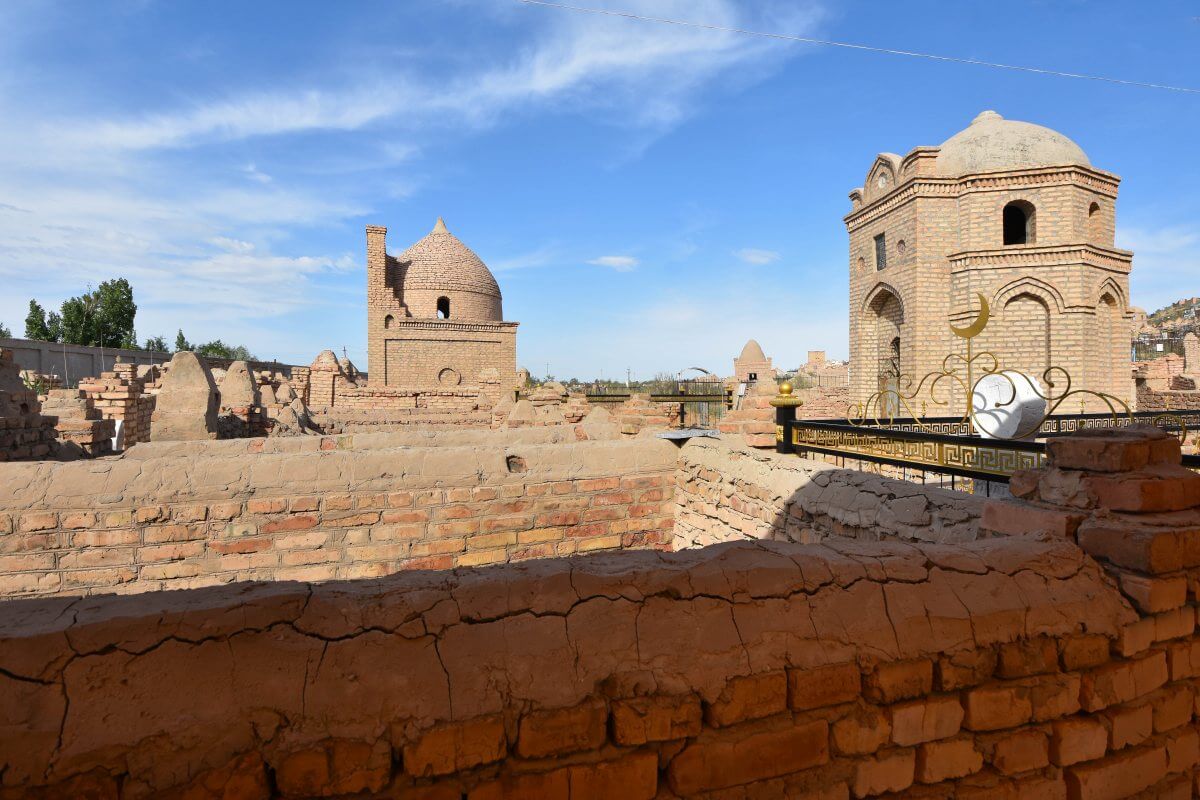
To understand the beautiful, vast landscape of the Mizdakhan Necropolis, you have to realise you aren’t looking at just one cemetery. You are looking at 2,400 years of overlapping empires, clashing religions, and local folklore baked into the desert clay. Here is the quick summary everyone needs to know before setting foot on the site.
1. Before Islam
Archaeologists trace the earliest settlement to the 4th century BC on the western hill. The cemetery sits on hills outside the town of Khojeyli, beside the crumbling remains of the Gyaur-Kala fortress. Mizdakhan was one of the largest economic and cultural hubs of the Khwarazm civilisation, which flourished around the lower Amu Darya River. Before it became a city of the dead, Mizdakhan was the third-largest city of the ancient Khorezm civilisation according to historians. The nearby Gyaur-Kala fortress received its name during the Arab conquest. Its name translates as the ‘Fortress of the Unbelievers’, because the local population resisted Islam and remained devoted to Zoroastrianism.
BURIAL CUSTOMS
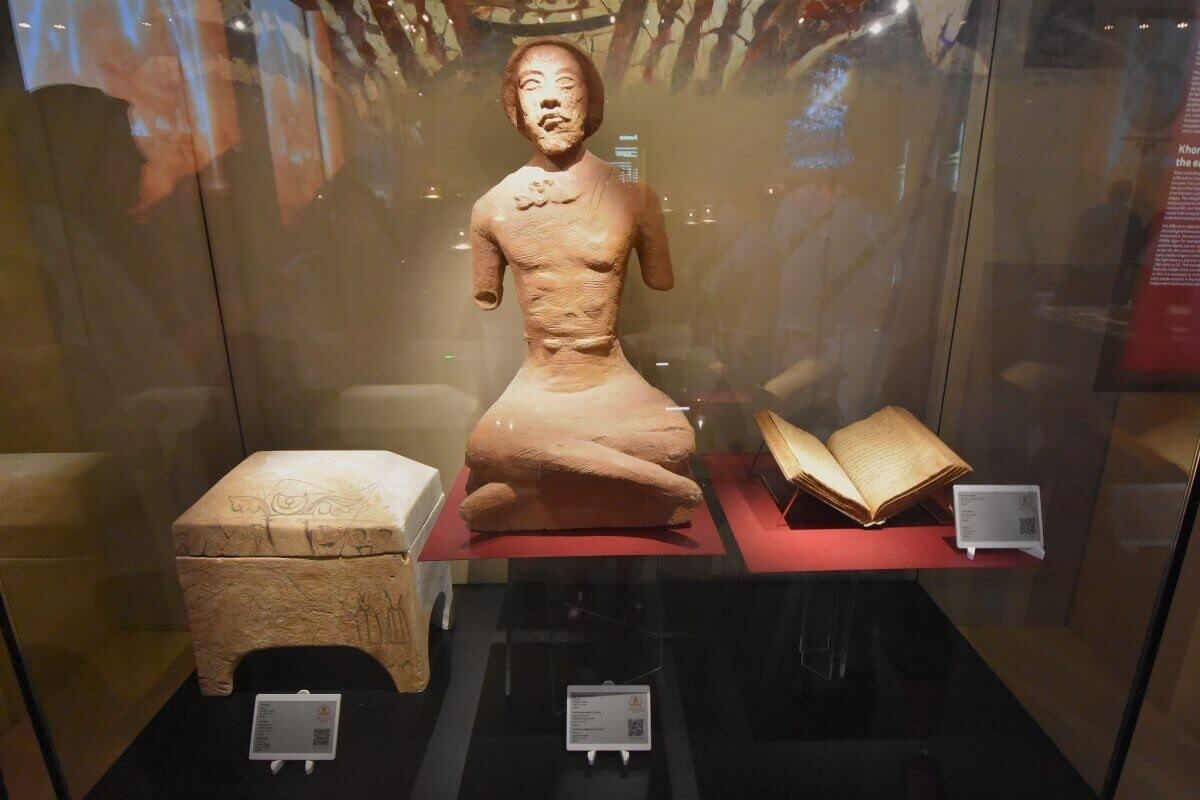
People living in ancient Khwarazm practised burial customs very different from those you see in a modern cemetery. In Zoroastrian tradition, people considered a corpse capable of contaminating the earth. In parts of Central Asia, people left bodies out in the open. Later, they collected bones into special clay boxes called ossuaries. Archaeologists have found many clay containers (such as those in the picture) across ancient Khwarazm and neighbouring regions. Mizdakhan has produced countless ossuary burials, some containing religious inscriptions and items. These finds give physical evidence of the burial customs once practised here. You can see many of them in the nearby Savitsky Museum in Nukus.
2. New religions arrived and changed the cemetery
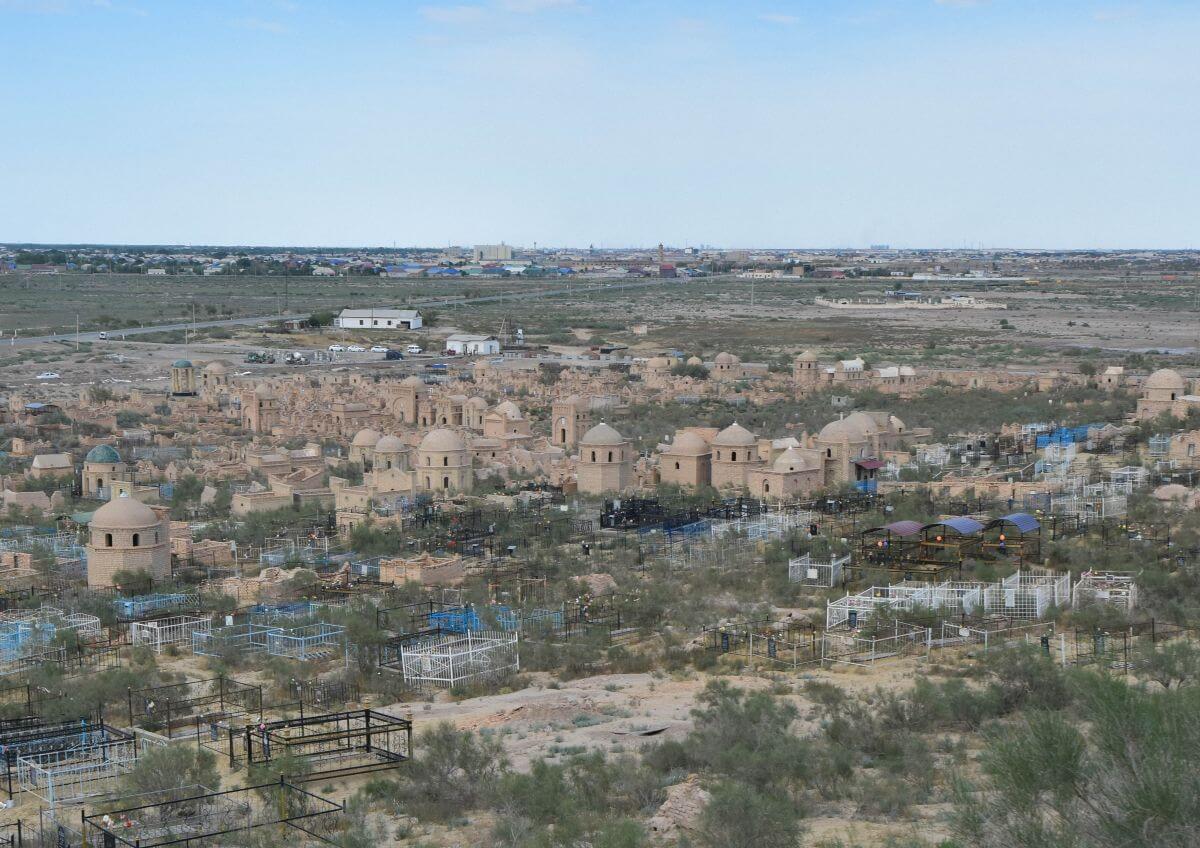
Arab conquest changed Khwarazm during the 8th century, and Islam gradually transformed both the city and its burial traditions. But it wasn’t an overnight switch. Evidence suggests Zoroastrian ossuary burial continued into the 8th and 9th centuries, even as Muslim burials began appearing. For a time, old and new traditions therefore existed within the same sacred landscape.
By the 9th-11th centuries, the city was flourishing again. A fortified citadel appeared, while changes in burial practice point towards the growing adoption of Islam. Medieval geographer al-Maqdisi described an exceptionally important settlement surrounded by an enormous agricultural region. His account refers to 12,000 surrounding settlements or fortifications. The number may be exaggerated, but it suggests this was a major urban centre rather than a remote cemetery.
3. The Mongols destroyed the city.
The turning point came in 1221, when the Mongol conquest swept through Khwarazm. Archaeological and regional tourism sources explain that Mizdakhan didn’t disappear after the attack. The area recovered under Mongol and Golden Horde rule, and the cemetery entered another important period. New Muslim monuments appeared among much older burial structures, showing that destruction didn’t end its religious significance.
Another devastating blow came in 1388, when Turco-Mongol conqueror Timur (Tamerlane) attacked Khwarazm. Historical and archaeological accounts connect this attack with the final collapse of medieval Mizdakhan as an important urban centre. The cemetery proved much harder to erase, and its identity as a sacred burial landscape survived. And that is perhaps the most important thing to understand before walking through the cemetery today. Once you understand that, the messy mix of ruins and graves makes sense. It shows how people kept using the same land, even after their cities and religions changed.
4 Must-see Monuments
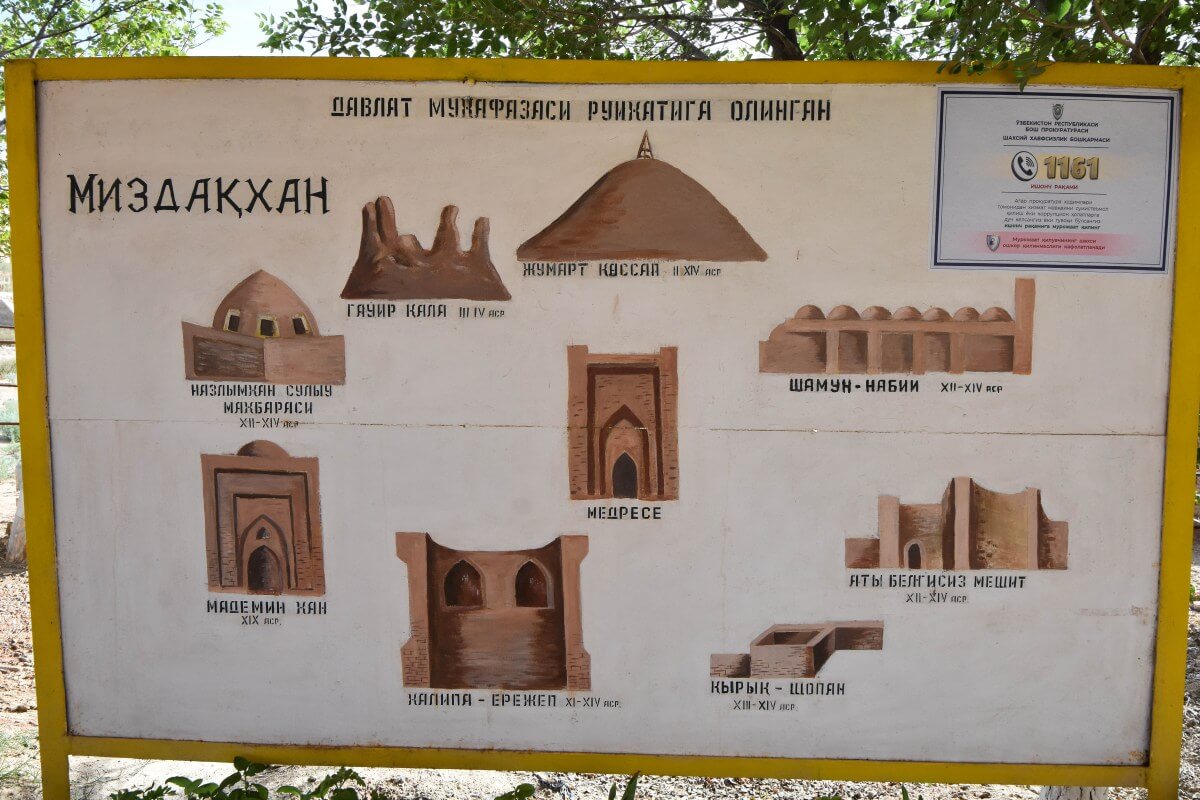
1. Shamun-Nabi Mausoleum
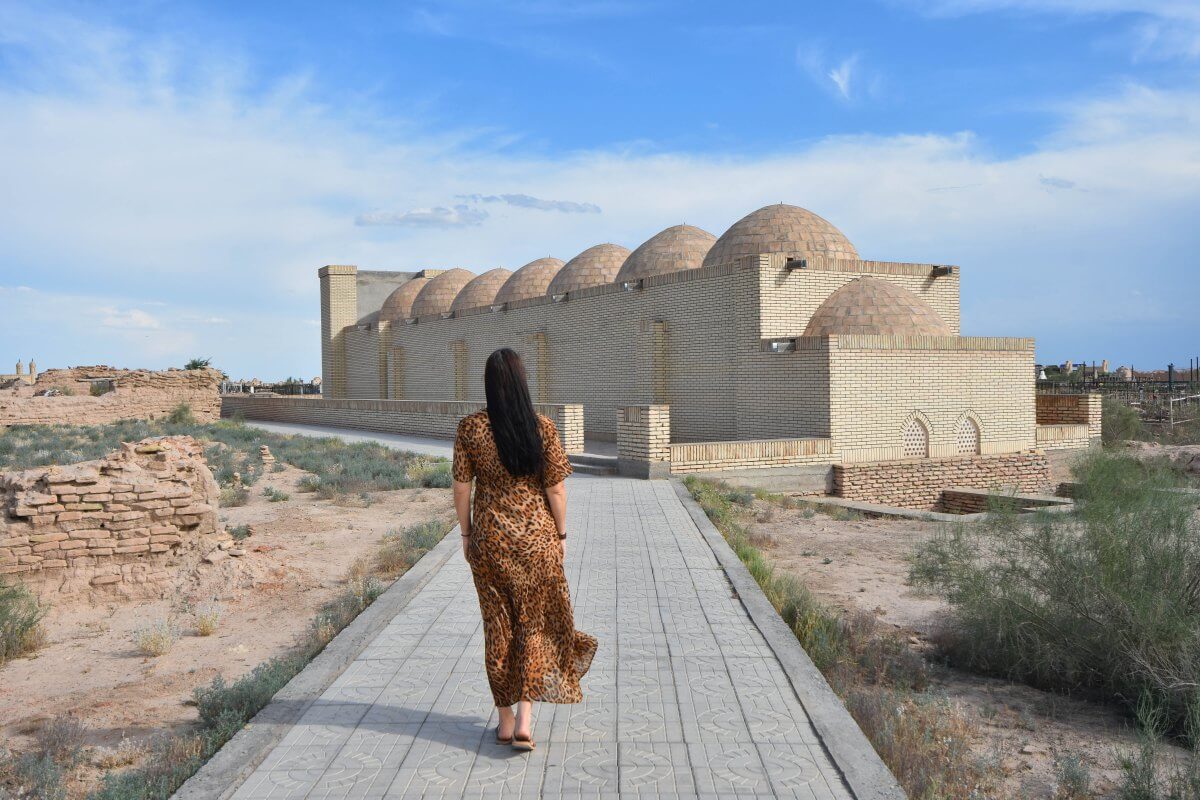
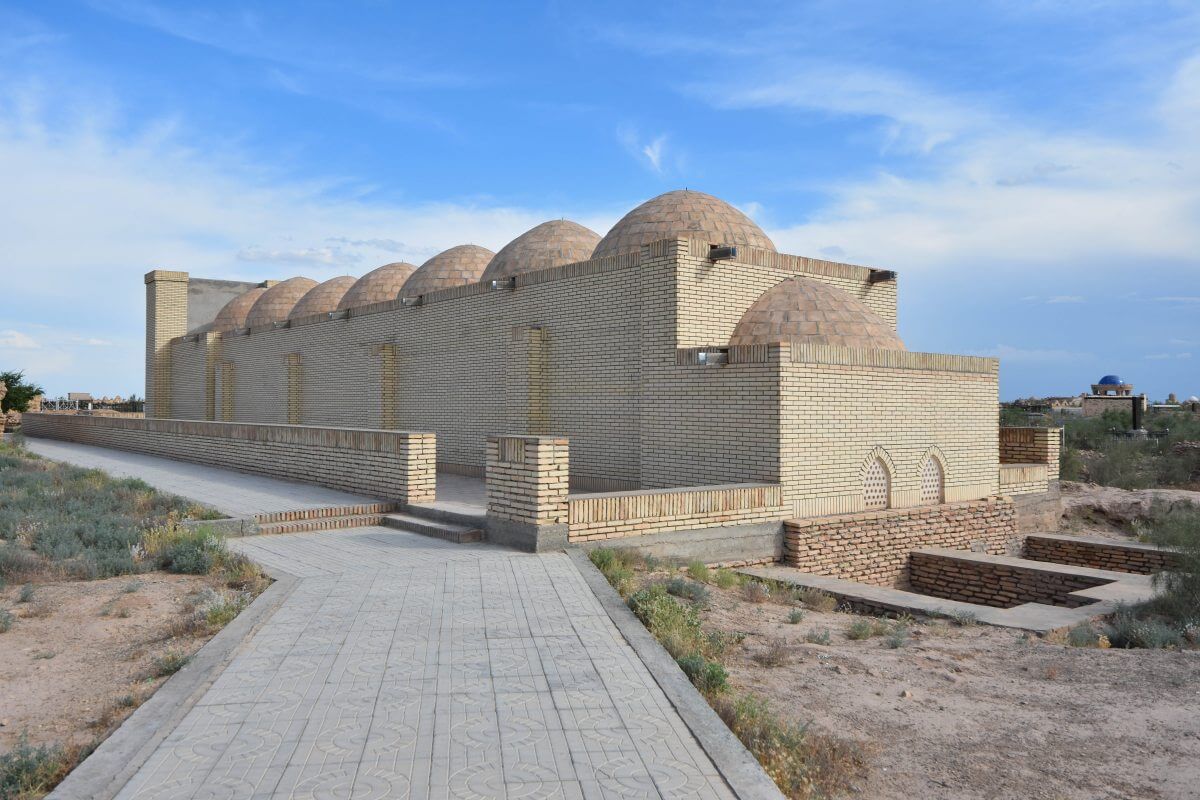
Of all the structures scattered across Mizdakhan Necropolis near Nukus in Uzbekistan, the Shamun-Nabi Mausoleum is one of the easiest to recognise. Sitting beside the paved stone path in the cemetery’s northern part, its long white walls and seven rounded domes immediately stand out against the surrounding graves. But its strangest feature is hidden inside.
The information we scanned from the on-site panel during our visit describes the original mausoleum as a rectangular structure measuring approximately 28 m by 5.2 m (91 ft by 17 ft). The white seven-domed mausoleum you see today is a reconstruction of an earlier structure, but the sacred tradition behind it is considerably older.
A VERY LONG TOMB FOR ONE MAN
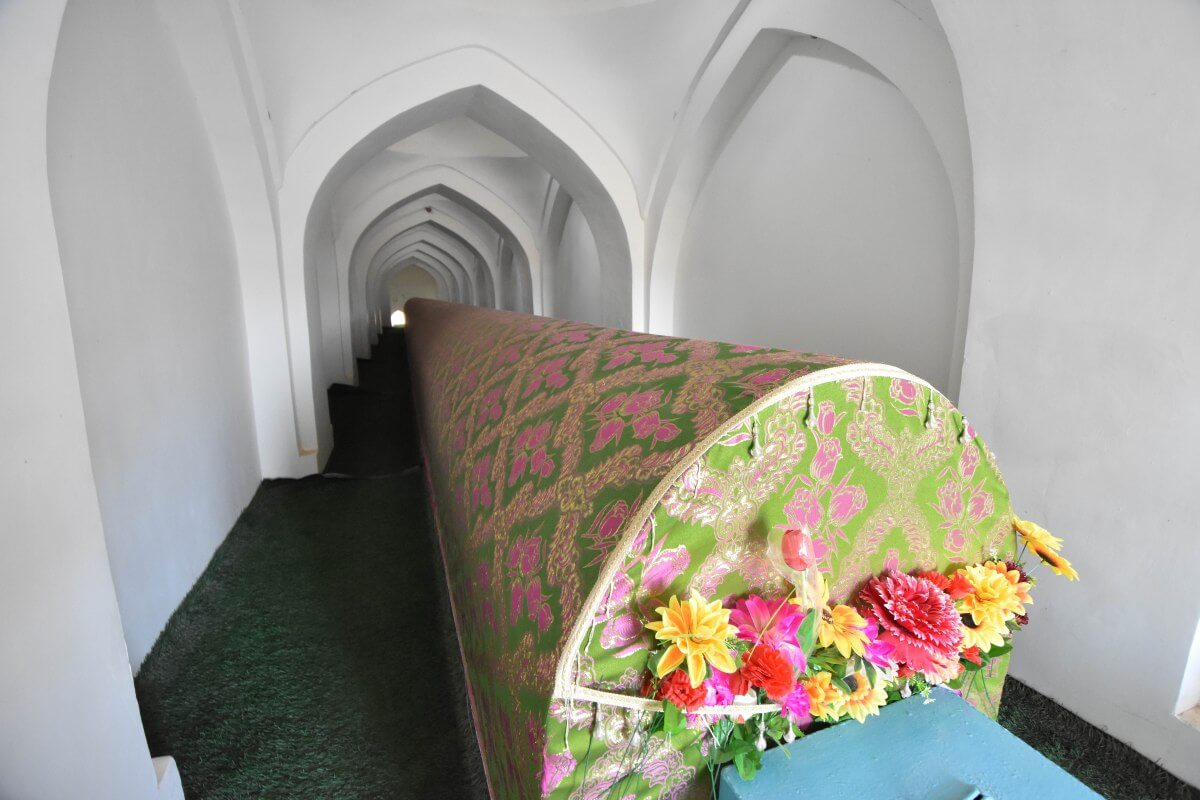
As soon as you step inside, you’ll see a massive 25-m long cenotaph stretching nearly the entire length of the building. It looks like the grave of a giant, and it’s exactly what some local stories claim Shamun-Nabi was. Despite its appearance, the massive crypt inside is not a normal tomb. Archaeological investigation records that the cenotaph was opened in 1966, but archaeologists found no human remains inside. This supports the interpretation that this was a symbolic cenotaph rather than Shamun-Nabi’s physical burial place. In other words, the structure represents the saint’s spiritual presence and importance.
WHO WAS SHAMUN-NABI?
There is no reliable historical evidence establishing exactly who he was or where he came from. We also don’t know which religious tradition he originally belonged to. Local stories instead transformed him into an almost superhuman figure. Tradition remembers Shamun-Nabi as a powerful pre-Islamic healer who treated the sick without payment. Stories give him even greater abilities: understanding wild animals, controlling the weather, and even influencing the movement of heavenly bodies. Another legend identifies him with the Apostle Peter, although this should be understood as local belief rather than historical fact.
Even the seven domes have their own explanations. One legend says Shamun-Nabi had seven daughters, with each daughter responsible for one dome. Other local traditions connect the shrine with protection, healing, fertility, and blessing. This helps explain why pilgrims continue coming here long after the medieval city disappeared.
2. Mazlumkhan-Sulu Mausoleum
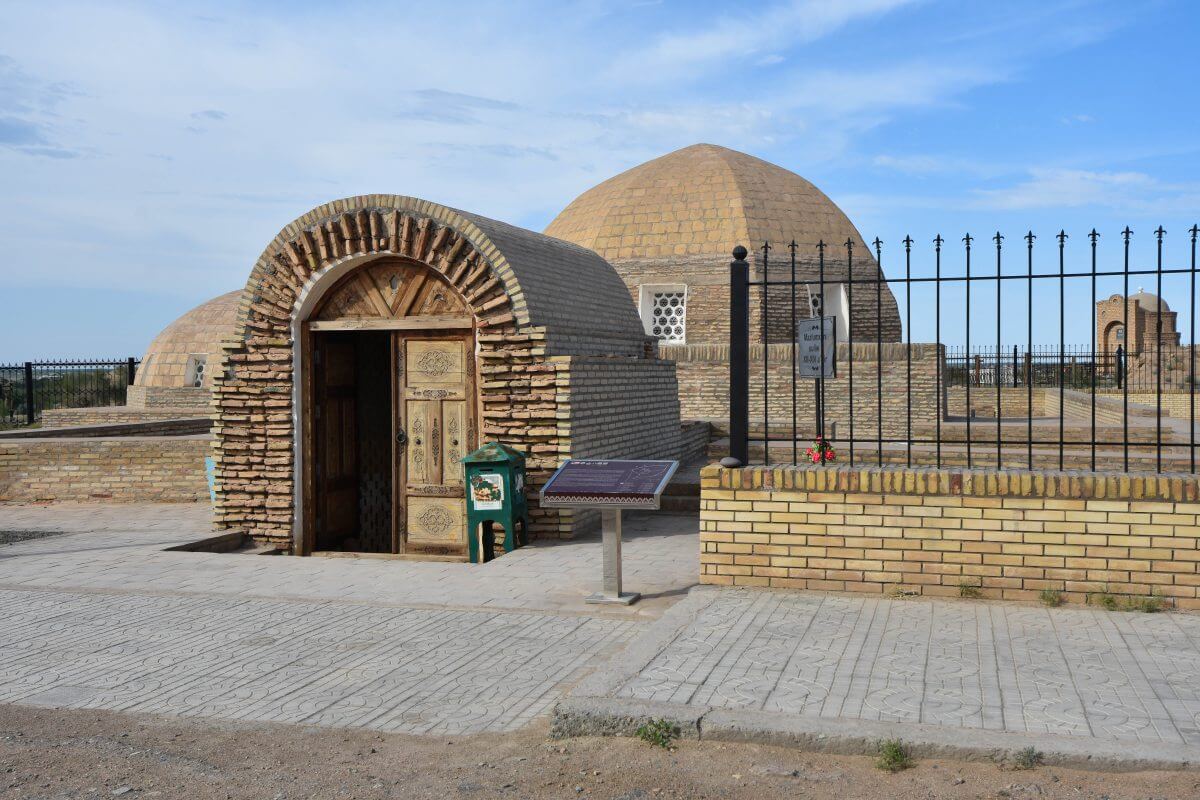
From the outside, the Mazlumkhan-Sulu Mausoleum doesn’t immediately reveal why it’s one of the most beautiful monuments at Mizdakhan Necropolis. Instead of rising high above the cemetery, much of this extraordinary building disappears beneath your feet. Its domes and arched entrance give you only a hint of what waits for you below.
An information panel dates the mausoleum to the 12th-14th centuries. Archaeological research places its construction more specifically in the 1320s-1330s, during the Golden Horde period. Its design is highly unusual: a multi-domed religious building, divided between surface and underground levels. Researchers studying the monument say there is no directly comparable structure elsewhere in historic Khwarezm. That alone makes it worth walking down the stairs.
THE PLAIN EXTERIOR HIDES THE BEST PART
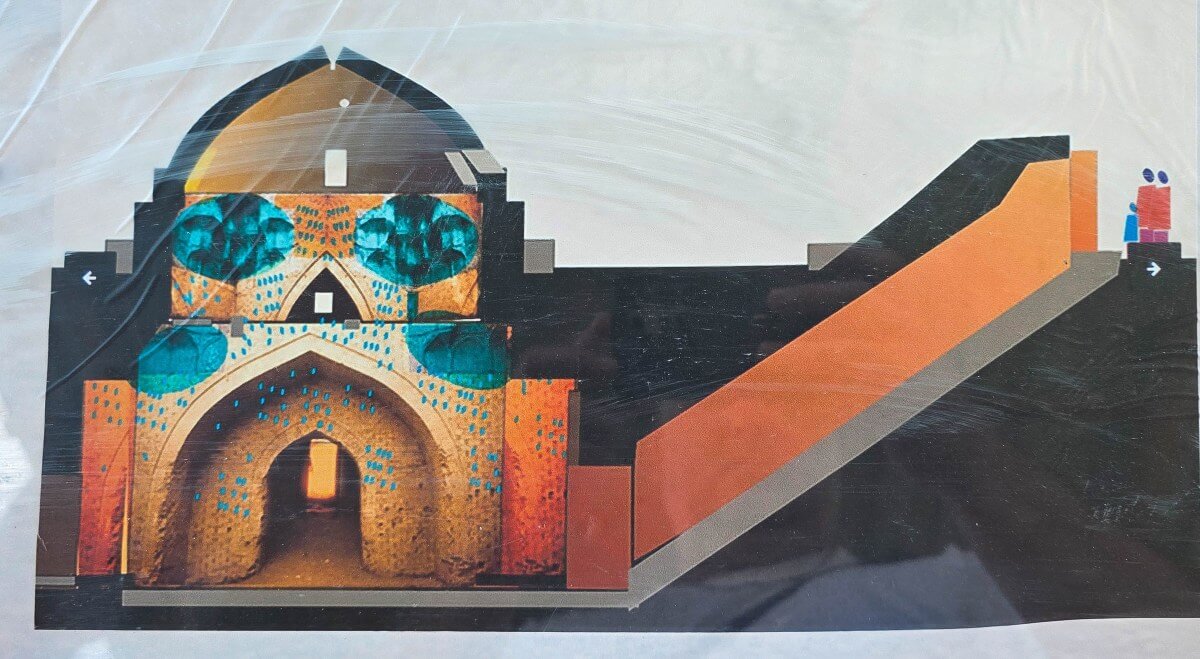
A vaulted corridor takes you into a cross-shaped complex of rooms beneath the surface. Light pours down from overhead blue dome windows into the central square. The walls are beautifully decorated with pale-blue glazed brickwork. For us, this was one of the most beautiful interiors we saw here.
There is something a photograph cannot really show: the temperature change. When we visited on a hot day in May, walking downstairs felt like entering a natural icebox. The underground rooms were pleasantly cool compared with the exposed cemetery outside. Combined with soft light, blue decoration and rooms hidden underground, the sudden coolness gives the monument an unexpectedly atmospheric feel.
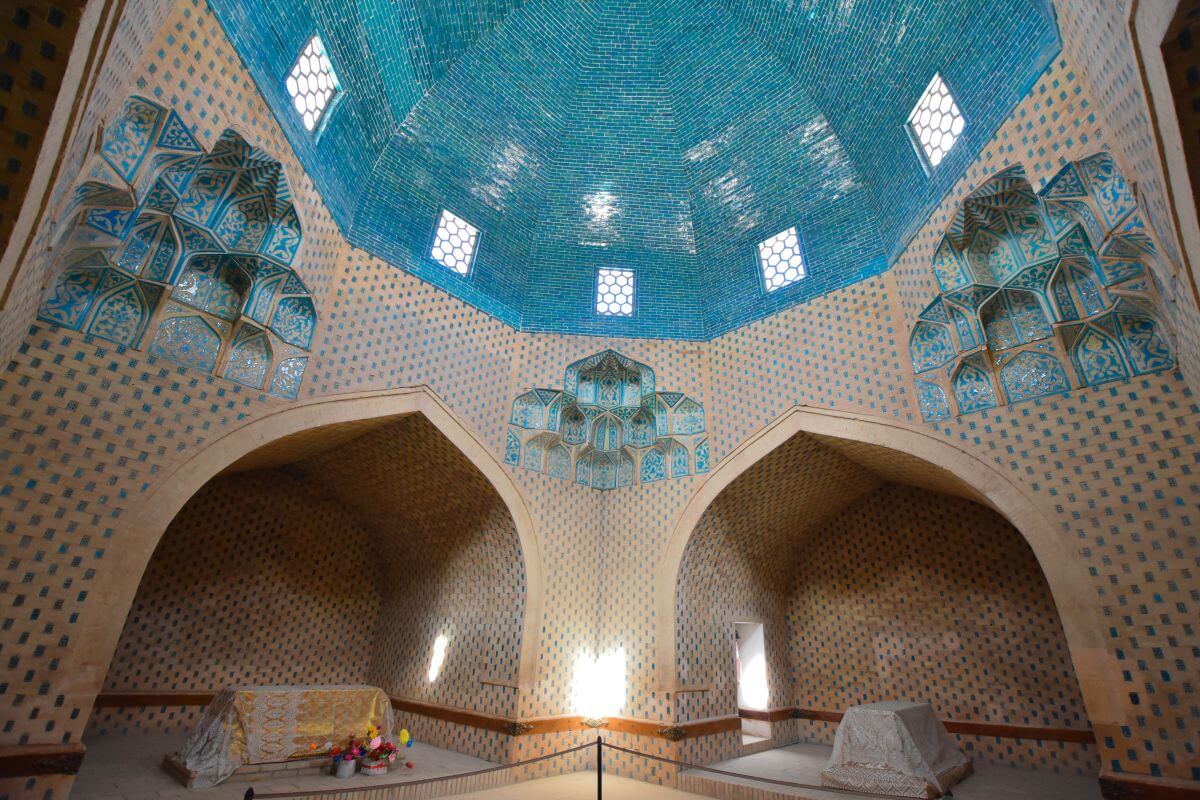
Then you notice the graves. Two graves that occupy the interior are traditionally associated with Mazlumkhan-Sulu and her lover. However, the romantic explanation belongs to folklore rather than archaeological proof.
THE ROMEO AND JULIET LOVE STORY AND ITS IMPOSSIBLE CHALLENGE
The story recorded at the site provides a dramatic explanation for its strange architecture. According to the legend, a local ruler promised his beautiful daughter Mazlum to a man capable of creating something extraordinary. Her lover accepted the challenge and built an unusual underground structure, leaving only a dome visible above it. But the ruler demanded another proof of his devotion. He asked him to prove his love by throwing himself from the unfinished dome. The young architect jumped.
Different versions continue the story differently, but Mazlum then died because she couldn’t live without him. Two tombs inside later became associated with the doomed couple. It’s a memorable legend, and even its name fits the story. Mazlumkhan-Sulu translates approximately as ‘the beautiful sufferer’ or ‘the princess who suffered.’
A MAUSOLEUM THAT MAY NOT HAVE STARTED AS ONE
What looks like a beautiful underground tomb may once have served a much larger religious purpose. Despite its graves, researchers have disagreed about the monument’s original function. One interpretation sees it as a mausoleum; another identifies it as a palace later converted into a burial place. Its unusual layout, sophisticated construction and expensive indoor decoration have all contributed to the debate.
Information available at the site presents another possibility. The information presented at the site suggests that the complex may have functioned as a Sufi khanqah. A khanqah was a religious building where members of a Sufi community could gather, live, and practise their faith. The wider archaeological landscape also supports a strong Sufi connection. That is what makes this landmark far more interesting than its tragic legend.
3. Jumart-Kassab Mound
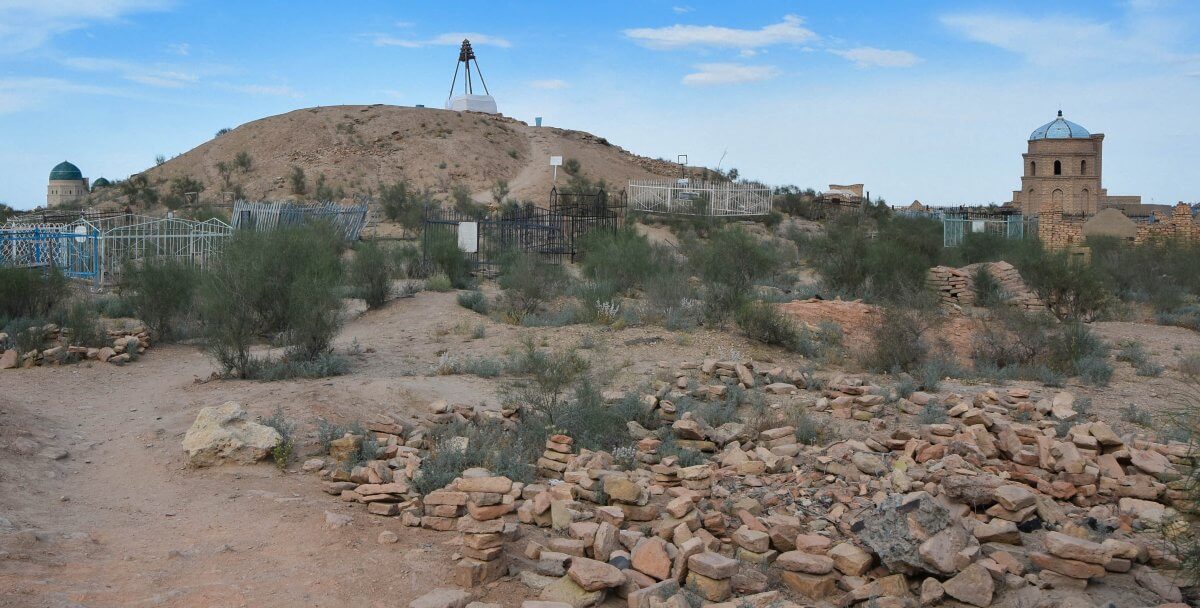
Jumart-Kassab Mound looks like an ordinary 5 m (16 ft) high hill, and without knowing its story, you could easily walk past. Yet for generations, this small rise at Mizdakhan Necropolis has been connected with fertility, livestock, pilgrimage, and ancient beliefs. Fragments of offerings and traces of structures have been found across the top and slopes.
A HILL WITH A STRANGE RITUAL
One of the strangest traditions connected this hill with an extraordinary fertility tradition. The information we scanned at the site describes a ritual in which a woman first circled Shamun-Nabi Mausoleum three times and then rolled down Jumart-Kassab Mound in the hope of becoming pregnant. Another version says pilgrims asked permission from the shrine’s custodians and walked around the sacred grave structure while touching it. After that, they rolled down the mound seven times. Whichever version was followed, the purpose was the same: fertility.
This was not simply an old custom that disappeared centuries ago. The information provided at the site says the ritual survived into modern times. It shows how older beliefs continued alongside Islamic pilgrimage traditions. The variations are important because they show why local religious customs shouldn’t be presented as if they followed one fixed written rule. These were traditions passed between generations, and different accounts preserve slightly different versions.
But this hill wasn’t connected only with human fertility. Shepherds also brought animals here when their numbers were falling. One version records that the shepherds drove their animals seven times around the mound, hoping to protect them and increase their numbers.
‘THE TOMB OF ADAM’?
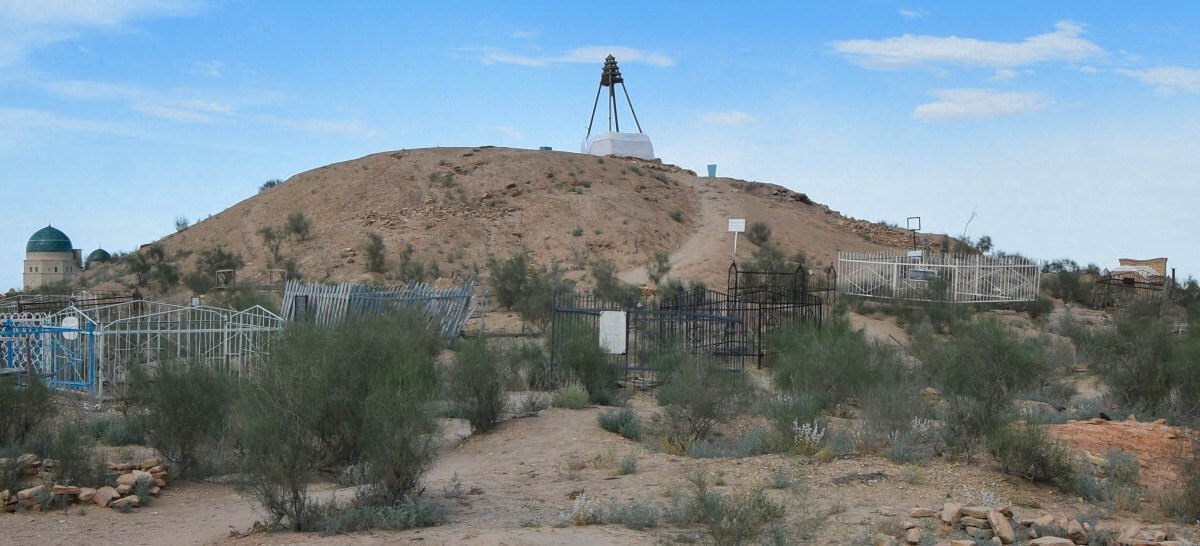
Regional sources have also connected the Jumart-Kassab mound with Gayomard, the first human in Zoroastrian tradition. Later Islamic writers connected him with Adam. That has helped create another remarkable claim surrounding this landscape: the first human may have been buried here. This, however, doesn’t prove that Gayomard, or Adam, was buried underneath this mound. Archaeology cannot prove it.
4. The Apocalypse Clock
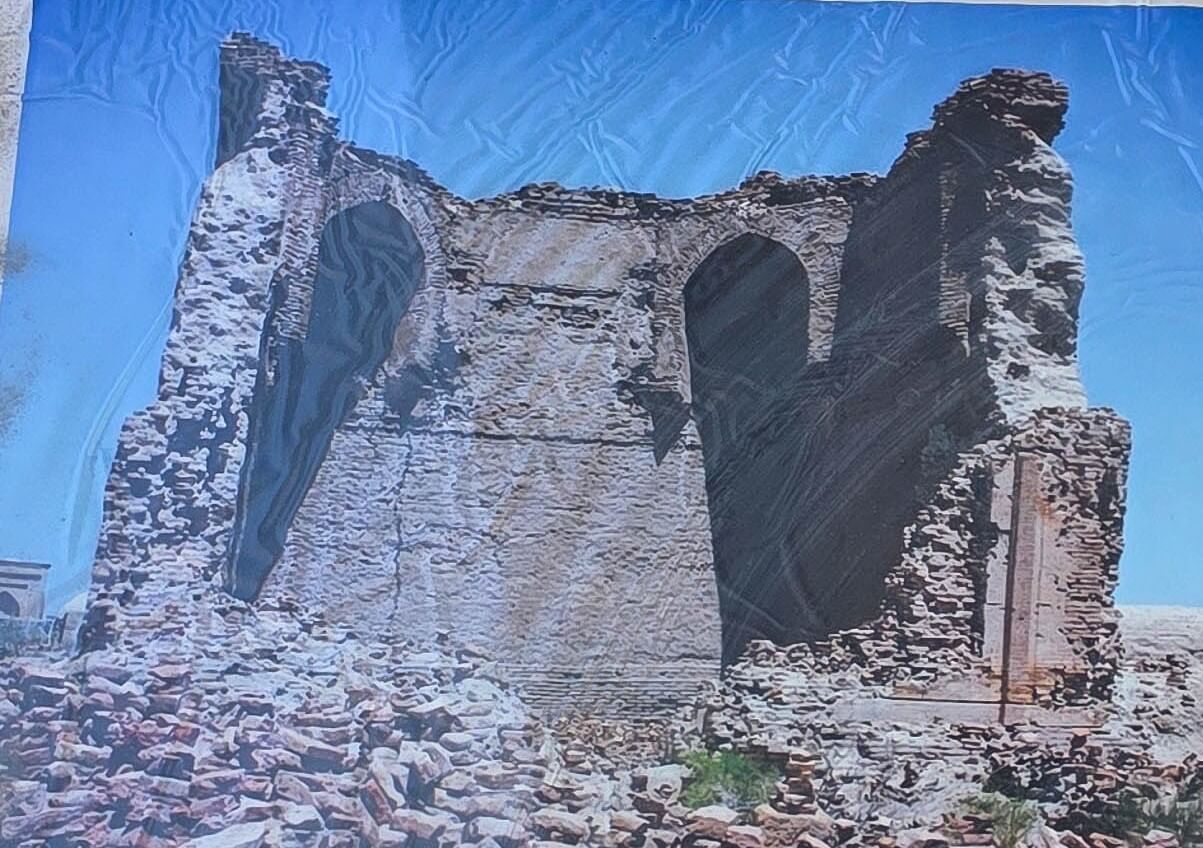
We only took one photograph of this area without realising its significance.
Here is what we have to admit was one of our biggest mistakes at Mizdakhan. We actually saw Khalifa Erezhep Mausoleum. We simply didn’t realise what it was and didn’t take any pictures of the structure. No obvious information told us we were looking at the famous ‘World Clock’ or ‘Apocalypse Clock’. With limited time, unclear signage, and dozens of graves and ruined structures competing for attention, we assumed Khalifa Erezhep Mausoleum was simply another badly damaged building. So we walked past.
Only afterwards did we discover that these crumbling walls are connected with one of the cemetery’s most extraordinary traditions: the Apocalypse Clock. This mistake clearly shows why this site can be difficult to understand without doing your homework first. So, if you have more time than we did, don’t make the same mistake. Find the mausoleum, look closely at what remains of the walls, and notice the tiny piles of bricks around it.
COUNTING DOWN THE APOCALYPSE
The International Institute of Central Asian Studies identifies this mud-brick mausoleum as a unique example of architectural mastery in Central Asia. The mausoleum dates from the late 12th to the early 13th centuries, and its conservation was completed in 2024. Its surviving architecture is only part of the reason why people visit this ruined structure.
According to one of Mizdakhan’s famous legends, the building is a clock counting down towards the end of the world. The official Uzbekistan Tourist portal records a belief that one brick falls from the ‘World Clock’ every year. When the final brick falls, the world will end. Pilgrims therefore collect stones and carefully pile them nearby while praying for salvation. Tradition says these should contain seven pieces, another appearance of the number seven in the sacred landscape.
Now you know the top things to see in the Mizdakhan necropolis near Nukus!
Useful Information Before You Visit Mizdakhan in Karakalpakstan, Uzbekistan
OPENING TIMES
The Mizdakhan necropolis is generally accessible 24 hours a day, with no standard tourist opening times. However, that doesn’t mean we recommend arriving here after dark. There is little reason to visit at night, and daylight makes it much easier to find individual monuments and move safely around the enormous cemetery.
ADMISSION FEE
There is no entrance ticket for the wider archaeological and burial landscape. However, keep a small amount of Uzbek cash with you. Voluntary donations and tips are customary at individual holy places and mausoleums.
MIZDAKHAN NECROPOLIS MAP
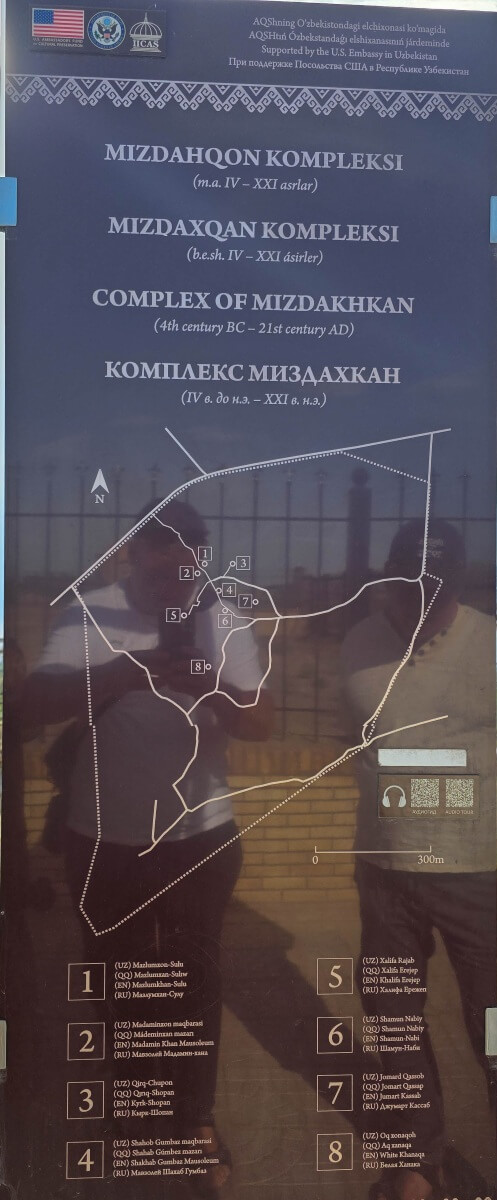
Getting there from Nukus
PRIVATE TAXI
The Mizdakhan necropolis lies outside Khojeyli, approximately 20-22 km from Nukus. The simplest option is therefore a private car or taxi. You can ask your accommodation to arrange a driver or negotiate with a local driver. We recommend downloading the Yandex Go app. Yandex Go operate in Nukus and give you an idea of the current fare. We used the app numerous times during our trip in Uzbekistan, and we cannot recommend it enough.
For a privately negotiated return journey, budget approximately 150,000-200,000 UZS (€ 11-15), including waiting time. Treat that figure as a guide rather than a fixed tariff because prices can change.
GOOD TO KNOW:
Yandex Go is very useful, but we wouldn’t rely completely on finding a second app-based driver for the return journey from this remote location. Make sure the driver understands you want him to wait for 1- 1.5 hours and bring you back. Don’t assume that arranging another car from the cemetery will be as easy as ordering once in central Nukus.
SHARED TAXIS VIA KHOJEYLI
There is a much cheaper local option if you don’t mind changing vehicles. From Nukus, head towards the Konye Qala transport area and find a shared Damas minivan or taxi for Khojeyli. This may cost approximately 5,000 UZS (€ 0.37) per seat.
Once there, take a shared taxi travelling towards the Turkmenistan border. Tell the driver you want Mizdakhan. The remaining journey is approximately 8 km, and the price is around 2,000-3000 UZS (€ 0.15-0.22) per seat. While this option is wonderfully cheap, it requires more patience. Prices, departure points, and waiting times can change, and shared transport doesn’t always fit a tourist timetable.
ADD THE MIZDAKHAN NECROPOLIS TO A BIGGER KARAKALPAKSTAN TRIP
This is how we visited, and for many travellers, it makes the most sense. Instead of making a dedicated return trip, include the Mizdakhan necropolis in a longer journey through Karakalpakstan, Uzbekistan. Many tour operators already built it into regional routes. We stopped here on our way to the Muynak Ship Graveyard, which saved us from making a separate trip from Khiva.
BOOK YOUR ONCE IN A LIFETIME EXPERIENCE BELOW:
Now you have all the information you need to visit Mizdakhan in Uzbekistan!
Would you like to add this unique attraction in Uzbekistan on your travel bucket list?
Thank you for staying with us until the end! If you’ve enjoyed this article, please consider sharing this post to extend its reach.
Pin Mizdakhan Necropolis in Uzbekistan for later so you don’t lose it!
BOOK YOUR ONCE IN A LIFETIME EXPERIENCE BELOW:
Disclaimer: This post contains affiliate links. If you click through and make a purchase, we may receive a small commission at no additional cost to you. This helps to support and run our blog. Thanks!
YOU MAY ALSO ENJOY: