To truly understand the best things to do in Samarkand, Uzbekistan, you first need to understand its extraordinary past. For over 2,500 years, this remarkable Silk Road city has brought together cultures, religions, knowledge and trade from across the world. The city reached its golden age under the Timurid rulers, who transformed the skyline with extraordinary monuments, which you can still see today. In this article, you’ll discover the remarkable places to visit in Samarkand, which do more than decorate the skyline. They all tell the story of ambition, innovation and cultural exchange across generations.
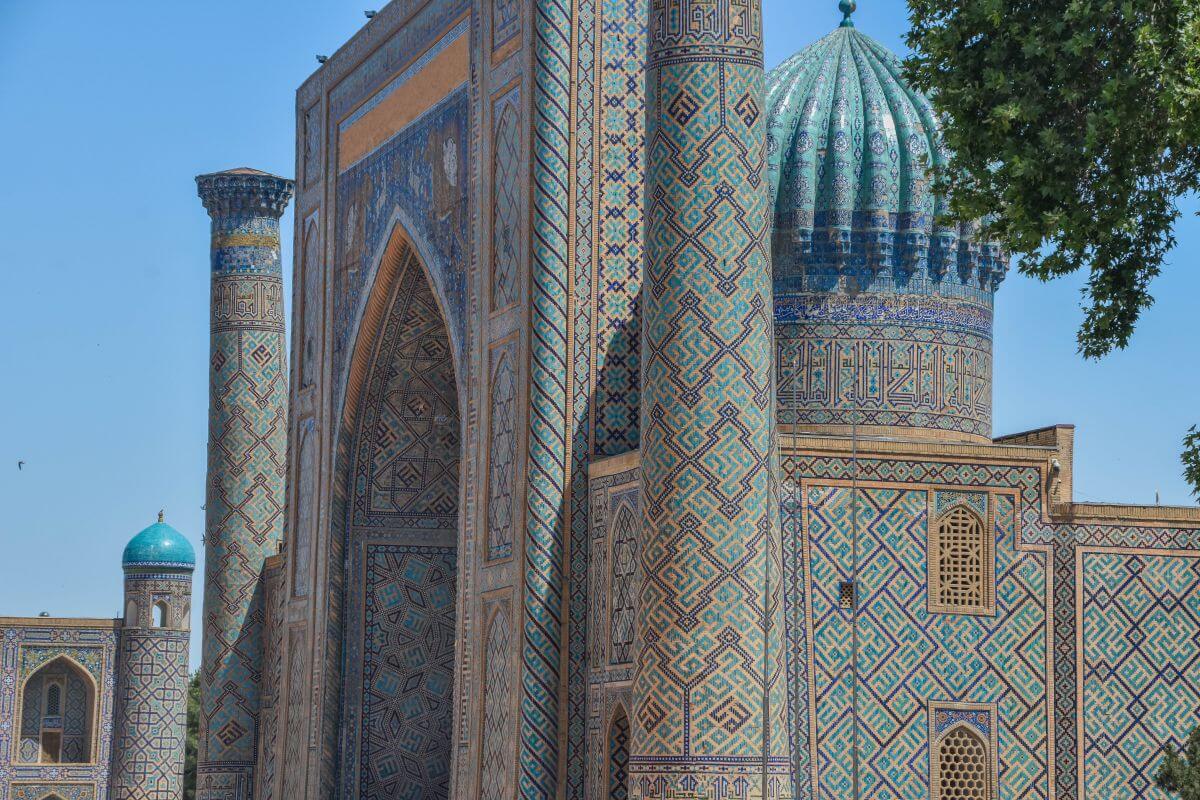
These sights reveal the scale of the city’s influence and explain why Samarkand remains one of Central Asia’s most fascinating historic destinations.
How Many Days Do You Need for Samarkand in Uzbekistan?
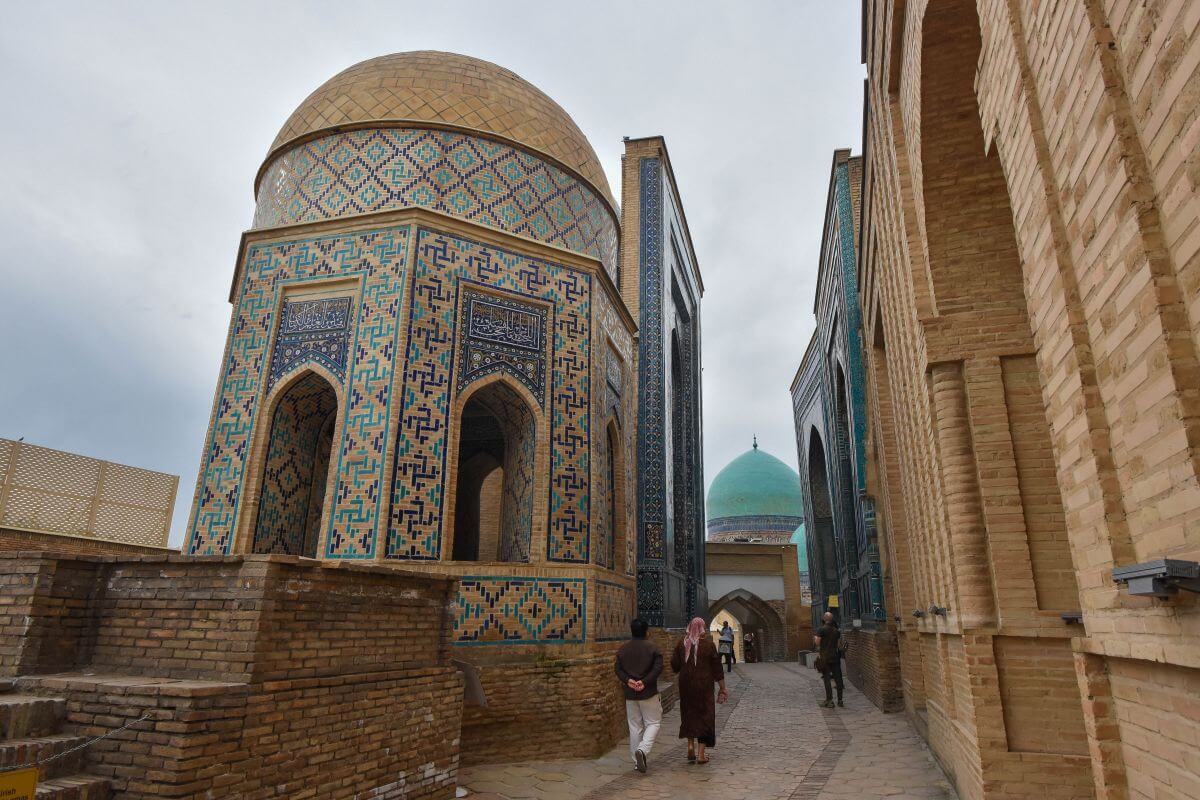
Planning your time well can make a huge difference to your experience. While many tourists arrive to Uzbekistan expecting to tick off a few famous landmarks, the best things to do in Samarkand deserve enough time to appreciate without constantly watching the clock.
If your schedule is tight, a full day allows you to visit the most famous sights, but it can feel rushed. Two days offer the ideal balance, giving you enough time to explore Registan Square, Shah-i-Zinda and Gur-e-Amir while still enjoying the atmosphere between attractions. We visited Samarkand in the middle of May 2026 and found out that three and a half days worked exceptionally well for us. We had enough time for deeper exploration and a day trip across the border. The city also serves as a convenient base for visiting nearby destinations such as Shahrisabz or the colourful Urgut Bazaar, both of which deserve an additional half day.
Don’t forget to bookmark this post about the best things to do in Samarkand, Uzbekistan so you can quickly find it.
Best Things To Do in Samarkand Uzbekistan for culture lovers
1. Registan Square Viewing Platform
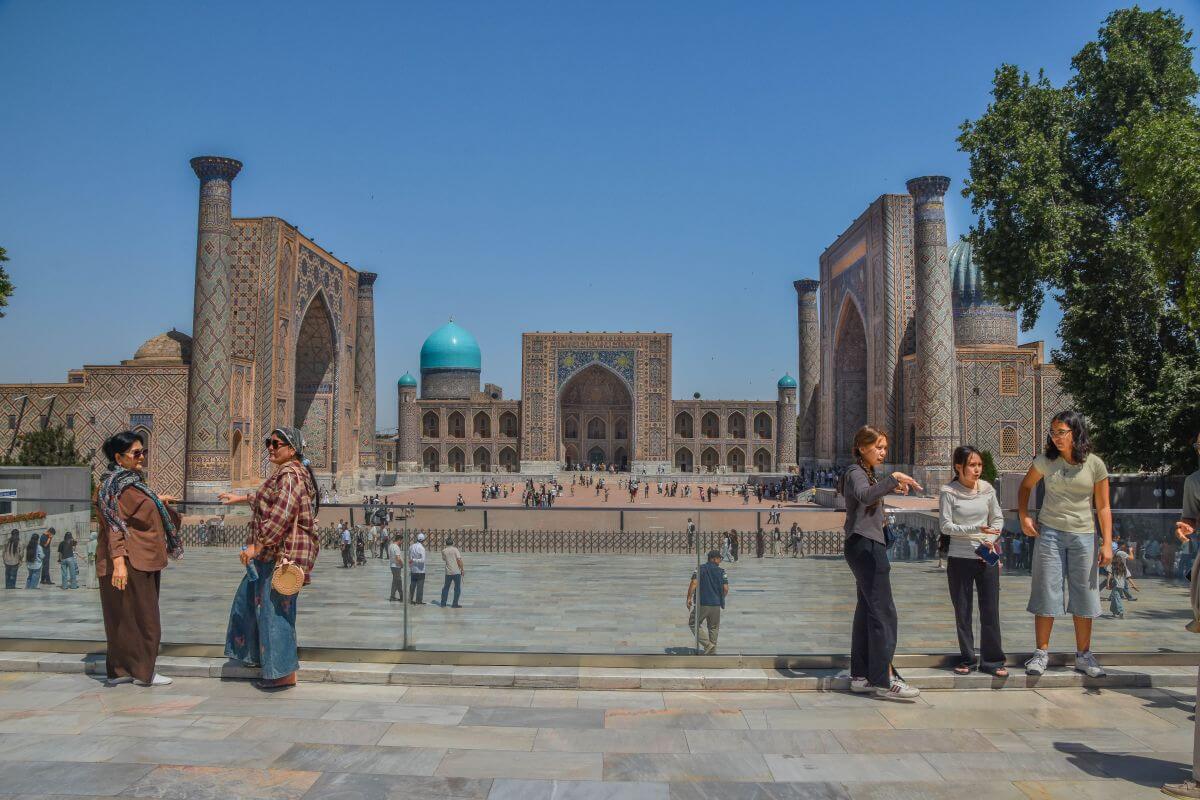
Before entering the famous Registan Square complex, head straight to the Registan Square Viewing Platform. This raised observation deck sits just outside the main square and offers some of the finest panoramic views not only in Samarkand but also in Uzbekistan. From here, you can fully appreciate the scale, symmetry, and beauty of the entire square without tourists blocking your pictures. The viewing platform perfectly frames the three famous madrassas.
GOOD TO KNOW
- One of the best parts is that access to the Registan Square Viewing Platform and the steps leading up to it are completely free. You don’t need to purchase an entrance ticket to the madrasas to enjoy this viewpoint. For that reason, visiting the Registan Square Viewing Platform is one of the best free things to do in Samarkand.
- During our visit, we found golden hour to be the most rewarding time to come. The softer light enhances the colours of the intricate tilework and creates ideal conditions for photography. Also, the crowds are noticeably smaller than later in the day. It’s easily one of the best photography locations in the country.
2. Registan Square in Samarkand
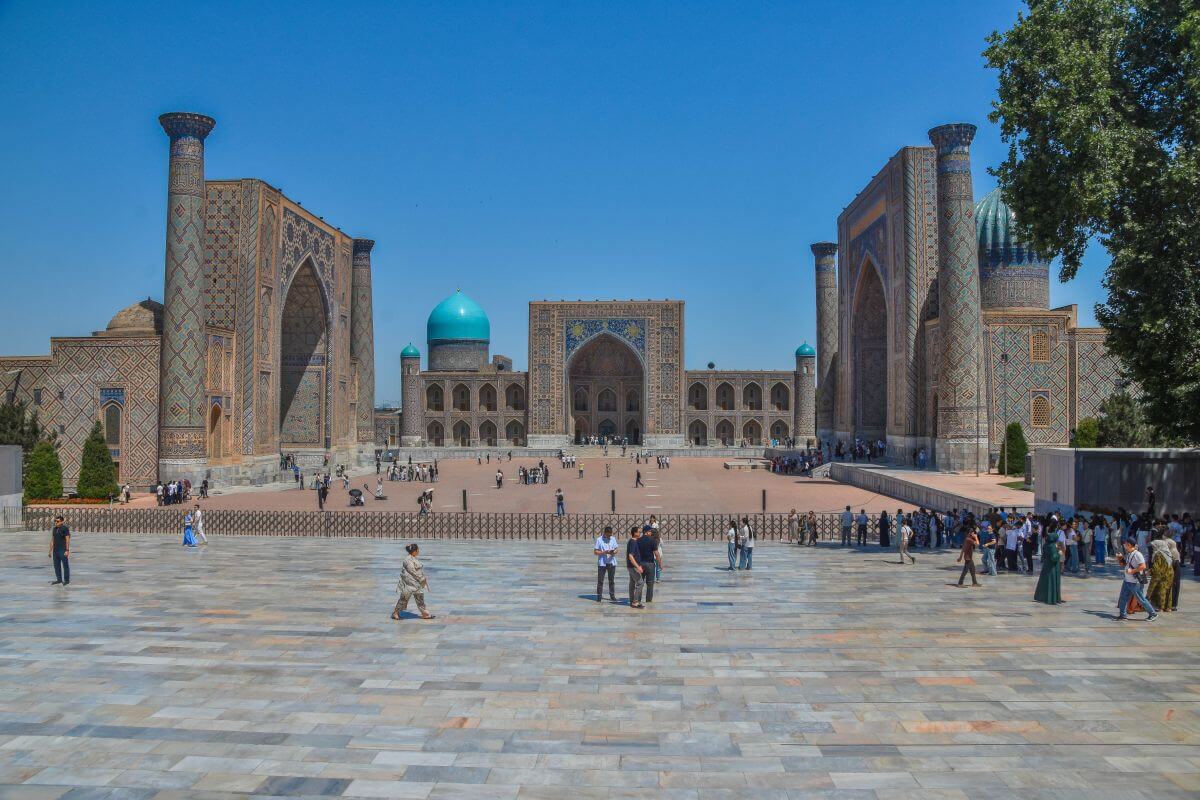
If you only have time for one landmark, make it the Registan Square. Only a few places in Uzbekistan capture the spirit of the Silk Road so completely. Among all the things to do in Samarkand, this landmark leaves you with the strongest first impression. The moment the enormous mosaic-covered facades come into view, it becomes clear why generations of travellers, historians and photographers consider this one of Central Asia’s greatest architectural treasures.
While seeing the square from the viewing platform is unforgettable, exploring the 3 madrasas allows you to understand the people, ideas, and craftsmanship that shaped these famous landmarks. Beyond their facades lie courtyards, student chambers, teaching halls and intricate decorative details which you cannot fully appreciate from a distance. If you’re searching for the best things to do in Samarkand, the three Registan madrassas deserve a place at the top of the list.
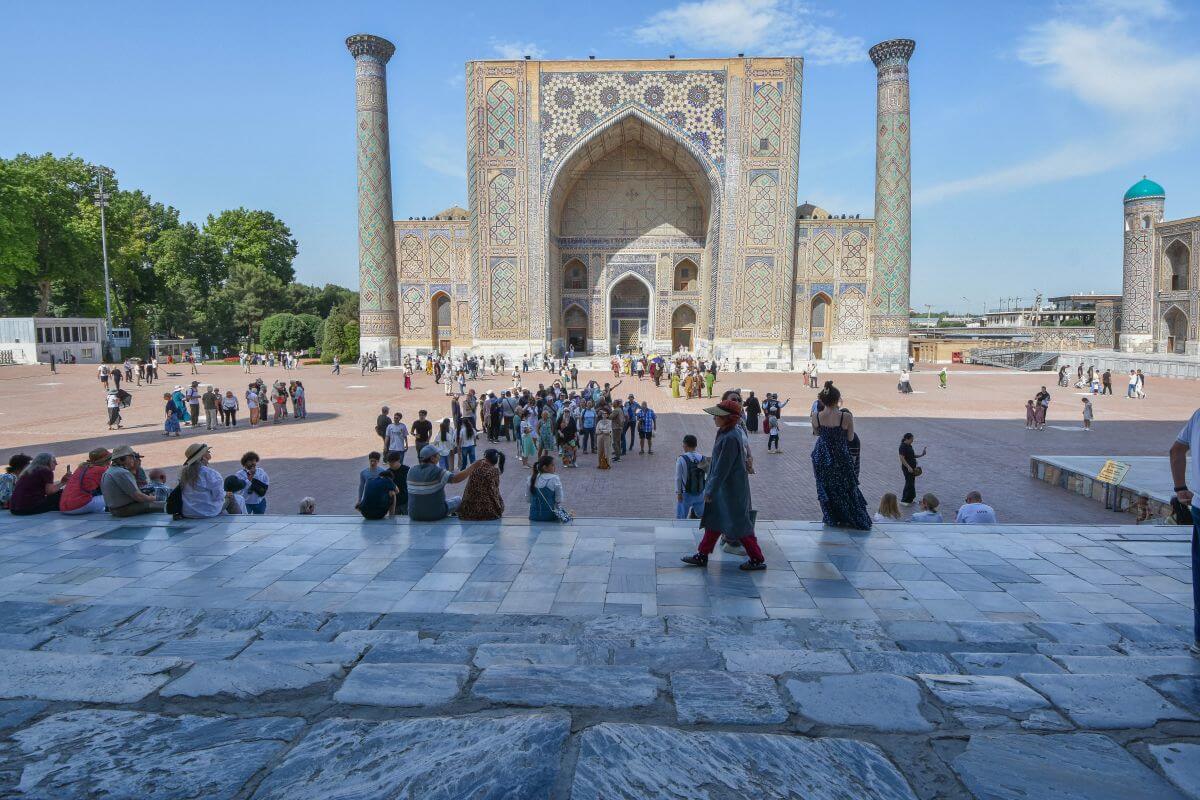
Ulugh Beg Madrasa
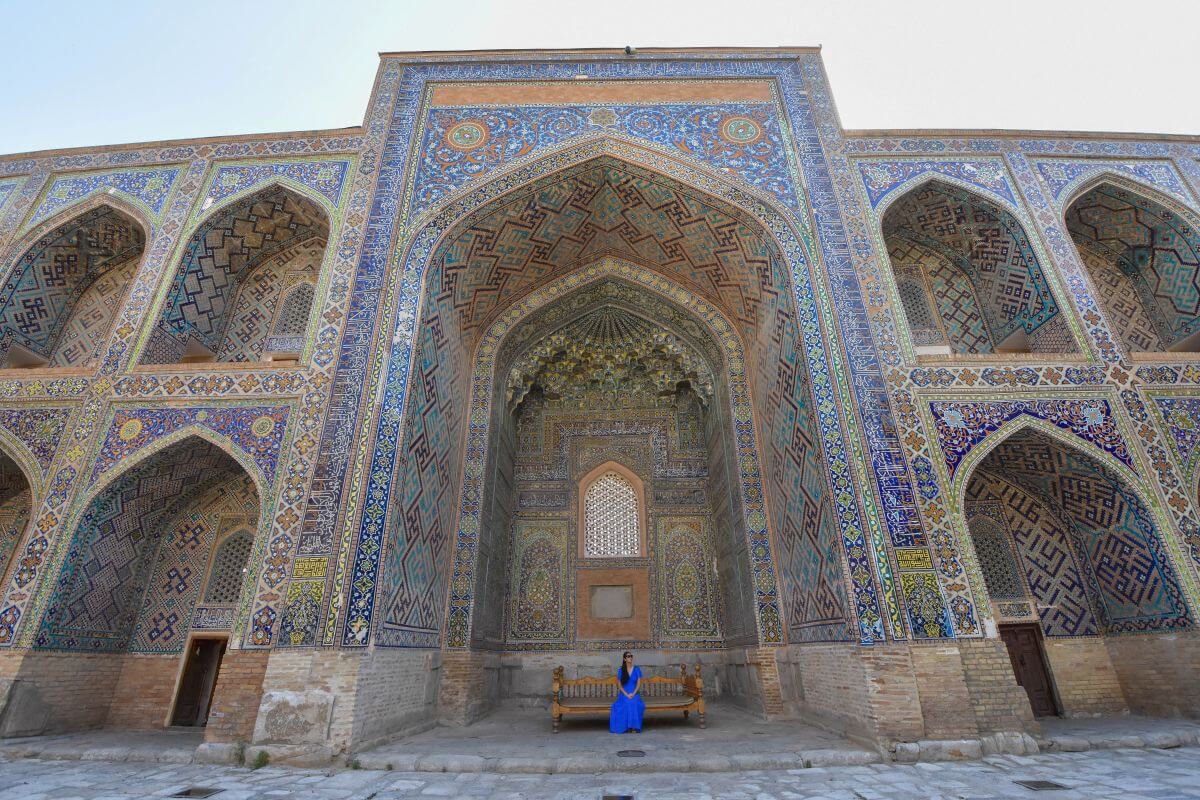
Sher-Dor Madrasa
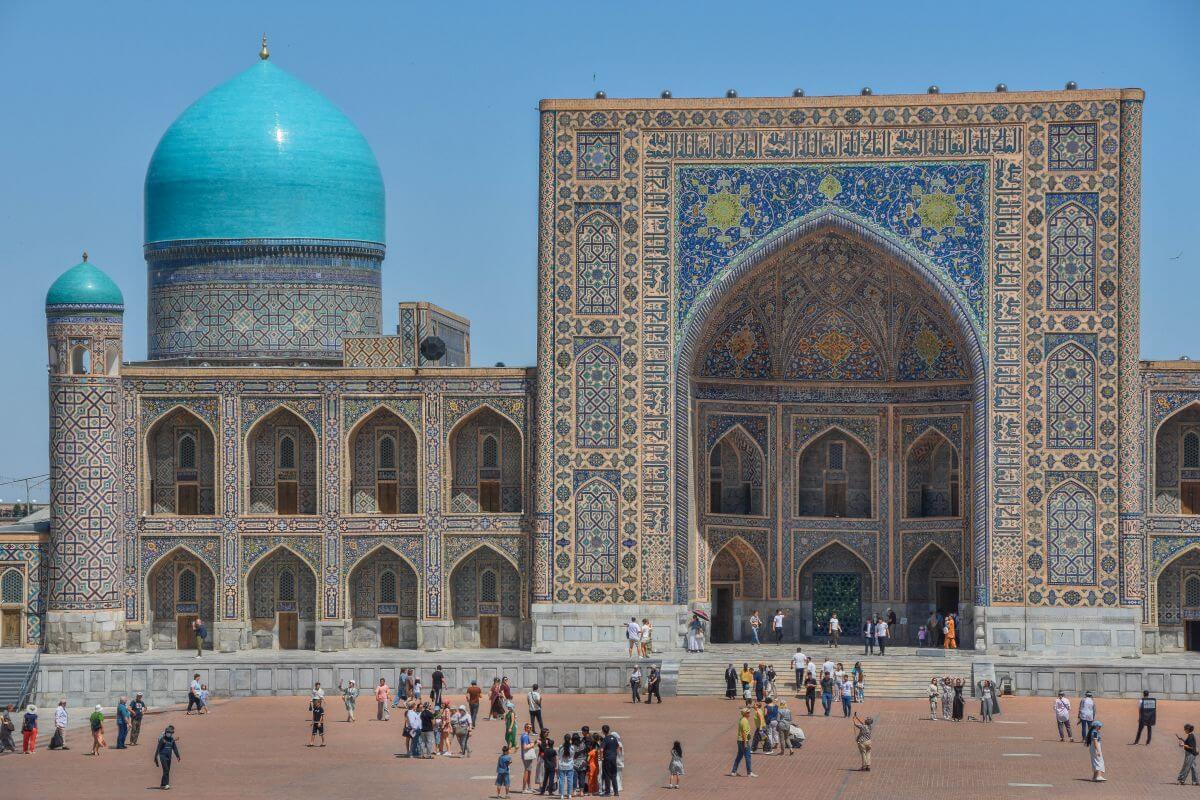
Tilla-Kori Madrasa
THE LASTING SYMBOL OF A GOLDEN AGE
Like much of the city, the square experienced decline during the 18th and 19th centuries. Extensive restoration work during the Soviet period helped preserve its fragile structures and ensured its survival.
GOOD TO KNOW:
All three buildings contain former student rooms and classrooms, many of which remain accessible today.
READ MORE ABOUT REGISTAN SQUARE:
3. Watch the Registan Square Light Show
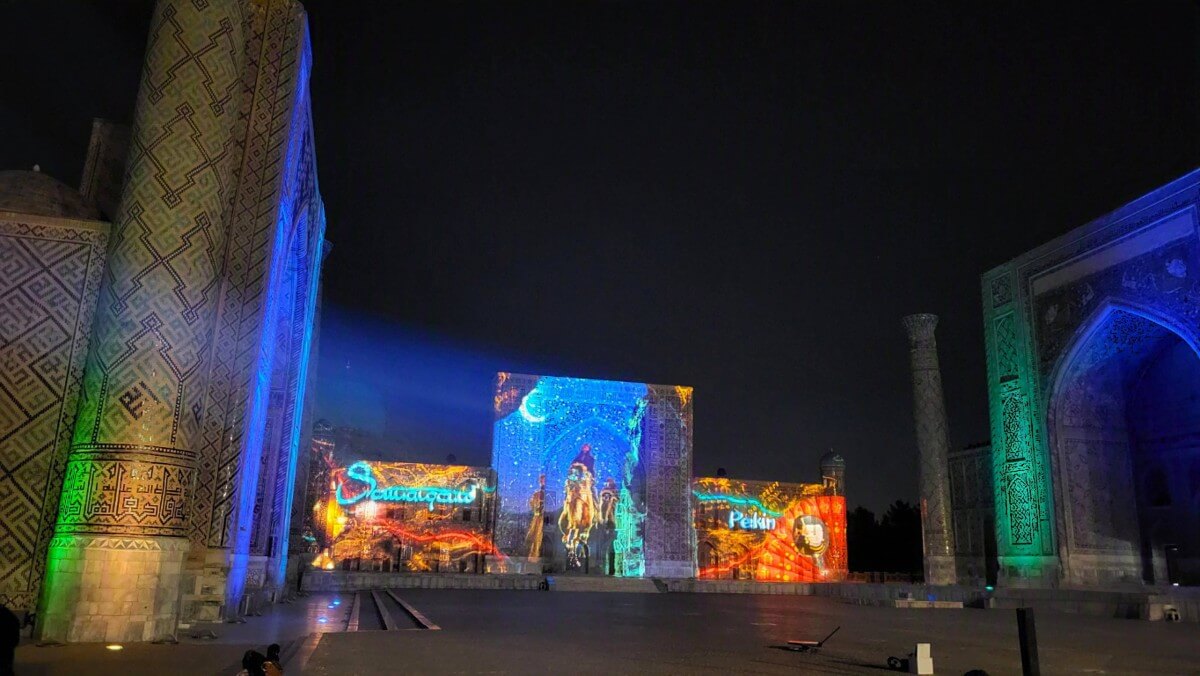
Many tourists leave once they explore the Registan Square, and miss one of the city’s most popular evening attractions. The night Registan Square Light Show transforms centuries-old architecture into a spectacular open-air stage filled with colour, music, and storytelling.
Using modern 3D projection mapping, vibrant light and laser effects, the Registan Square Light Show turns buildings into a giant canvas. Throughout the show, the facades of three monumental madrasas become giant storytelling screens. They explain the Silk Road, the Timurid Empire and the city’s cultural heritage. The performance typically lasts up to 20 minutes.
OUR HONEST OPINION
When we visited on Saturday evening in May 2026, the light show started at 9 PM. The presentation was in Russian. This was not surprising as many visitors come from Russian-speaking countries and Russian remains widely spoken locally. We heard that English-language versions may also exist, but we couldn’t find any reliable information about specific schedules.
While we loved the elegant illuminations of the square, some brighter colours in the performance felt slightly over-the-top compared with the timeless atmosphere of Registan Square. However, the overall experience was highly entertaining and well worth seeing.
BEST PLACES TO WATCH
You can watch the light show free of charge from behind the front fences. The raised viewing platforms and public steps outside the complex provide excellent views. For a closer experience, purchase a standard entry ticket and watch from inside the complex.
GOOD TO KNOW:
- Arrive approximately 15-30 minutes early, especially if you want to see the show at weekends.
- Evening performances usually begin around 8 PM or 9 PM (or 9:30 PM during the summer).
4. See the Registan’s illuminated buildings.
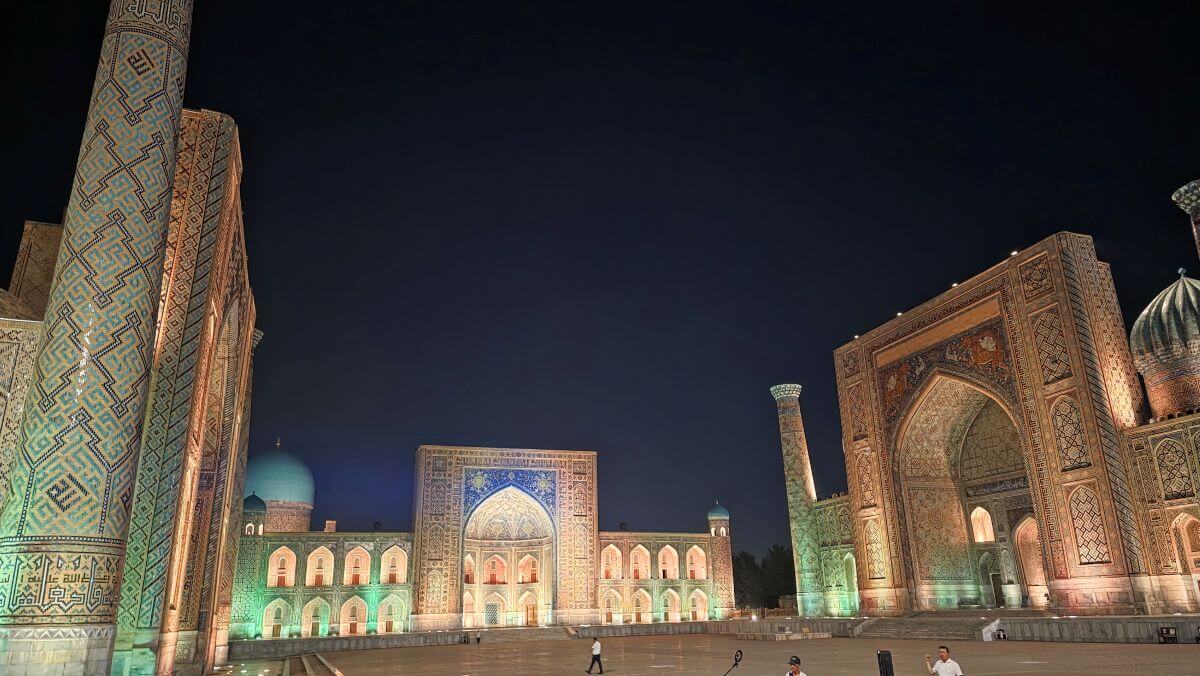
Seeing the iconic Registan Square monuments by day is spectacular, but staying until the sun dips unlocks an entirely different world. To truly appreciate the historical grandeur and architectural brilliance of the complex, you must view the illuminated buildings before and after the evening light show.
Without the distraction of crowds or flashing laser lights, the centuries-old majolica tiles shine in their truest colours. Towering minarets and the vast, dark sky create dramatic ink-black silhouettes that immediately transform you back to the golden era of the Timurids. During this time of day, the atmosphere is more peaceful, allowing you to absorb the massive scale of the three madrasas and their historical weight. Therefore, witnessing the illuminated Registan Square before and after the show is one of the best free things to do in Samarkand.
The secret to experiencing Samarkand’s Registan Square isn’t the flashing 3D light show but the tranquil windows right before and after it. While the scheduled laser performance offers a modern, visually striking show, we personally preferred the static illumination as it better displays the timeless magic of Silk Road architecture.
GOOD TO KNOW:
- Arrive 30 to 45 minutes after sunset. The best time to see the Registan Square’s illuminated buildings is 30 minutes after sunset. This is the legendary ‘Blue Hour’, when the sky turns deep indigo (matching the historic blue tileworks perfectly).
- LATE NIGHT: After the evening show, the public viewing platform clears out completely, giving you a crowd-free panorama of the glowing square.
5. Gur-e-Amir Mausoleum
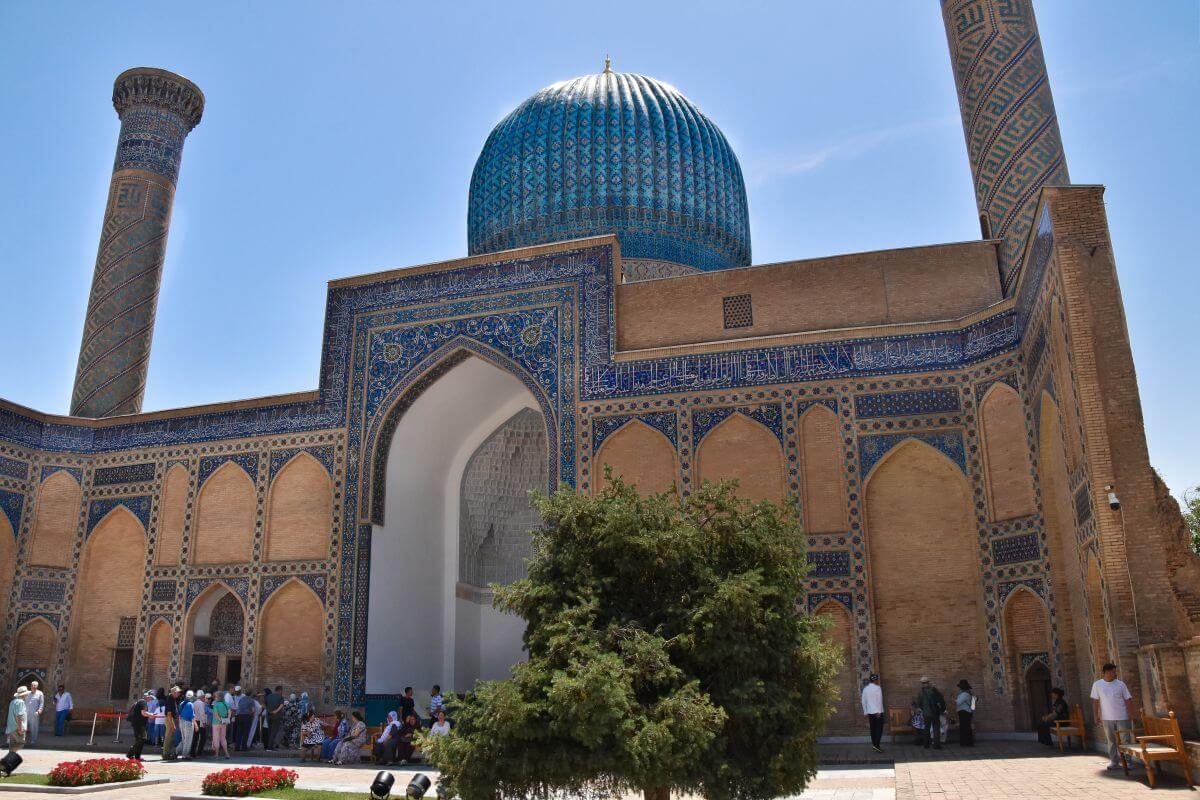
If you’re researching the best things to do in Samarkand, this remarkable mausoleum belongs on the top of your list in Uzbekistan. Alongside the Registan Square and Bibi-Khanym Mosque, Gur-e-Amir ranks among the three most famous landmarks everyone should visit.
Before entering, take a moment to admire the exterior. The huge turquoise dome with geometric blue tilework remains one of the finest surviving examples of Timurid architecture. When you look closely, you’ll notice something unusual. It contains exactly 64 vertical ribs. According to local tradition, this number honours the 64 years of the Prophet Muhammad’s life. It also symbolises deep religious devotion.
What many visitors don’t realise is that the Gur-e-Amir mausoleum in Samarkand influences architecture far beyond Uzbekistan and Central Asia. Historians consider it one of the architectural ancestors of the Taj Mahal. The grand entrance portal, monumental dome, balanced proportions, and richly decorated style later inspired architects in India.
THE TOMB OF A CONQUEROR
According to the information panel on the site, Gur-e-Amir means ‘Tomb of the King’ in Persian. Behind this elegant façade lies the final resting place of Amir Timur, the Turco-Mongol conqueror known in the West as Tamerlane. But the most fascinating part of the story is that Timur never intended to be buried here.
Construction began in 1403 after the sudden death of his beloved grandson and chosen heir, Muhammad Sultan. Timur ordered a magnificent mausoleum worthy of the future ruler of his empire. However, only two years later, Timur died unexpectedly while leading a military campaign towards China. Timur was supposed to be buried in his hometown, Shahrisabz. However, heavy winter snow blocked the road, making the journey impossible. As a result, he was buried inside the newly completed mausoleum intended for his grandson.
The mausoleum became the dynastic tomb of the Timurid family. Inside rest Timur, his son, his grandsons Ulugh Beg and Muhammad Sultan, and his respected adviser. This collection of royal burials transformed Gur-e-Amir into one of the most important monuments of the Timurid Empire.
GOLDEN CHAMBER
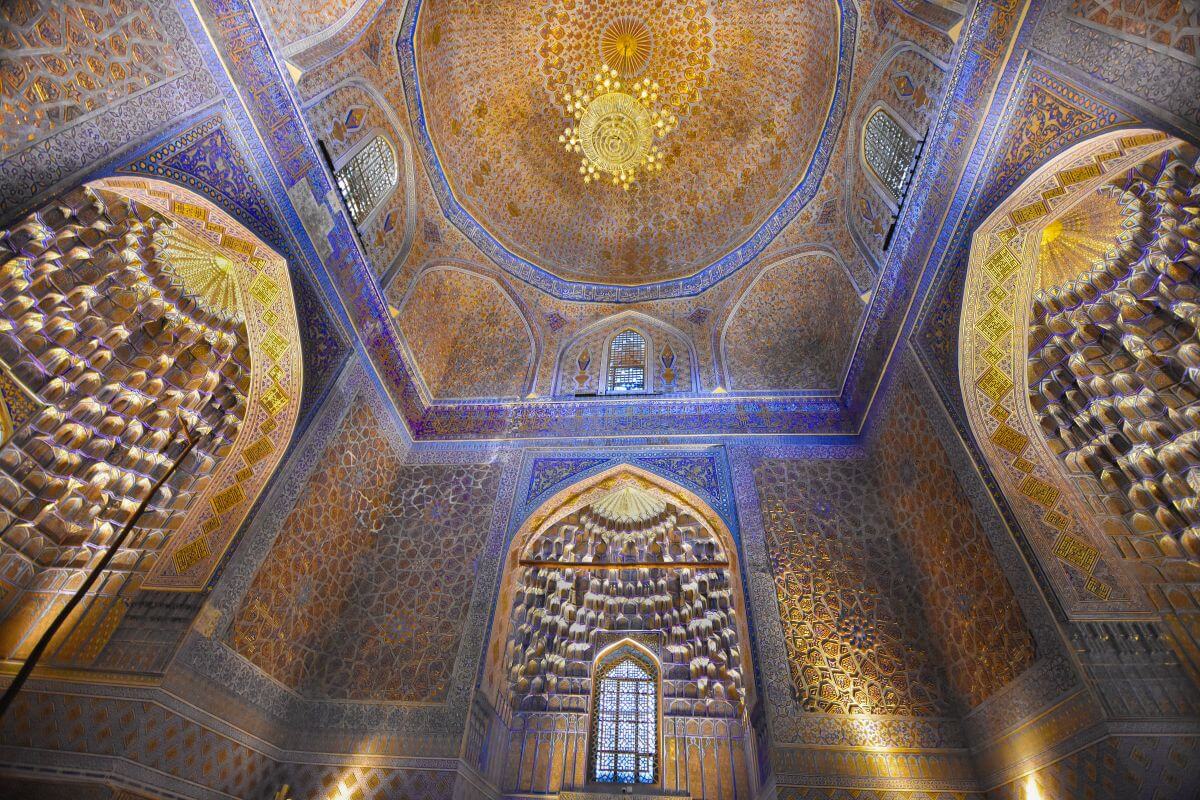
While the exterior is beautiful, the interior is unforgettable. Layers of honeycomb-shaped muqarnas create a three-dimensional effect that seems to glow. Deep blue patterns with gold decorations across the walls create one of the most luxurious interiors we saw anywhere during our travels in Uzbekistan.
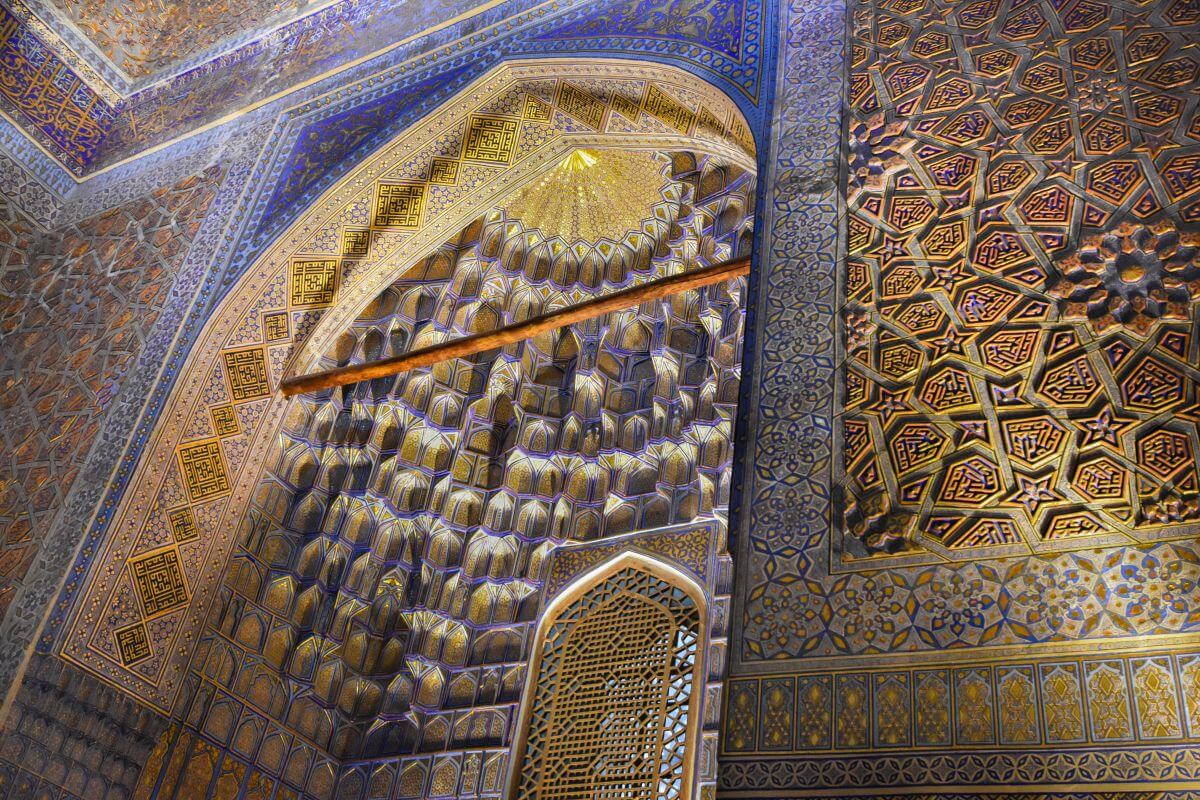
Even more surprising is the material used to create these decorations. Historical records explain that craftsmen made much of the detailed relief work from a specialised mixture of paper pulp, glue, and clay. Then, they painted and gilded it to resemble carved stone. This way, they reduced weight and protected the structure from collapse. Modern restoration used approximately 3 kg (6.5 pounds) of pure gold leaf to revive the brilliant appearance you can admire today.
BROKEN JADE TOMBSTONE
Timur’s grave is identified by a massive slab of dark-green jade. In 1740, the Persian ruler Nadir Shah removed the stone and transported it away from the tomb. According to local stories, a series of misfortunes followed almost immediately. His son became seriously ill, and he suffered a string of bad luck. Fleeing a curse, he returned the stone to avoid further misfortune. Today, you can still see a visible crack running across its surface.
THE CURSE OF TIMUR’S TOMB
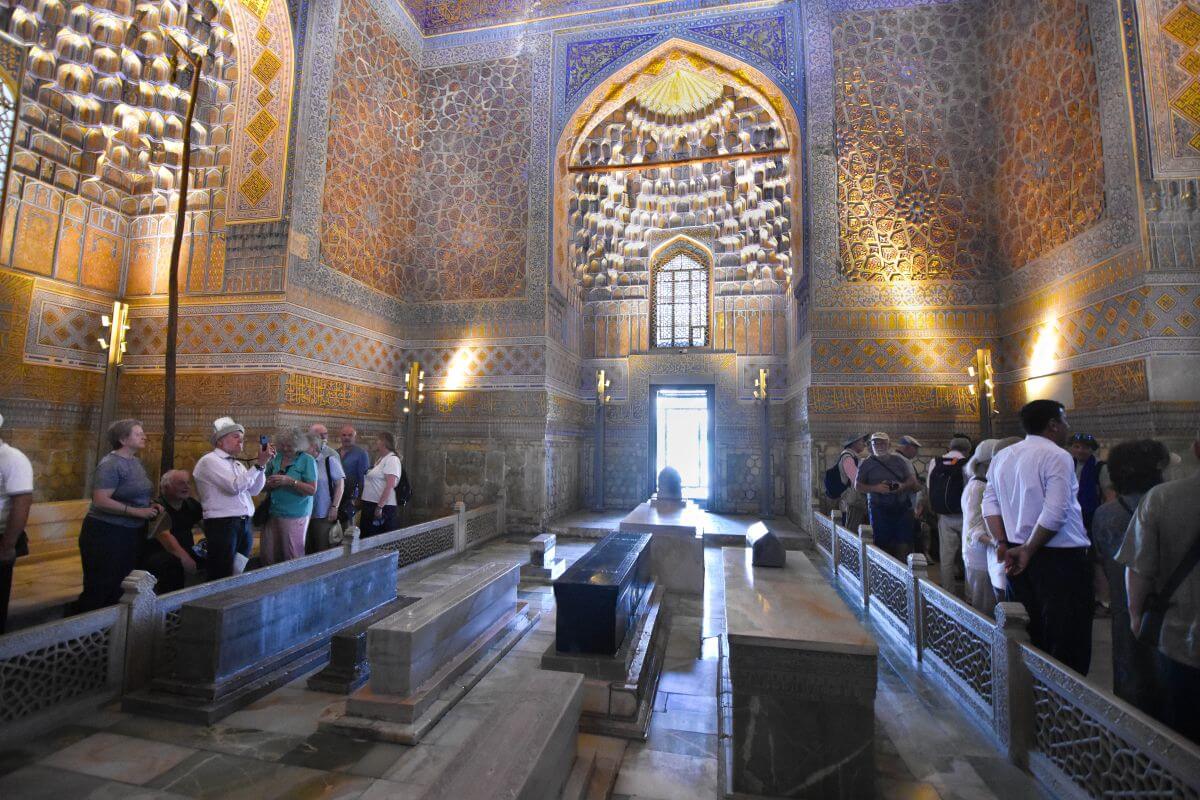
Soviet anthropologists opened Timur’s tomb to study his remains on 20 June 1941. Historical records tell that they discovered an inscription warning that ‘anyone disturbing the grave would unleash an invader even more terrible than Timur himself.’ Two days later, Nazi Germany invaded the Soviet Union. Whether coincidence or not, this story quickly became one of the most famous legends associated with the mausoleum.
The scientific investigation produced another remarkable discovery. Researchers confirmed that Timur suffered from a significant leg injury, causing a permanent limp. This helped to explain the origins of his nickname ‘Timur the Lame’ (Tamerlane).
GOOD TO KNOW:
- LOCATION: Around a 15-minute walk from the Registan Square.
- OPENING TIMES: Daily from approximately 8 AM to 7 PM.
- ADMISSION FEE: As of July 2026, foreign adult visitors pay 75,000 UZS (USD 6.25).
- VISIT DURATION: Allow 45-60 minutes.
- BEST TIME TO VISIT: Visit early in the morning for smaller crowds or in the evening for excellent lighting conditions. When we visited around 1 PM, the site was very busy.
6. Rukhobod Mausoleum
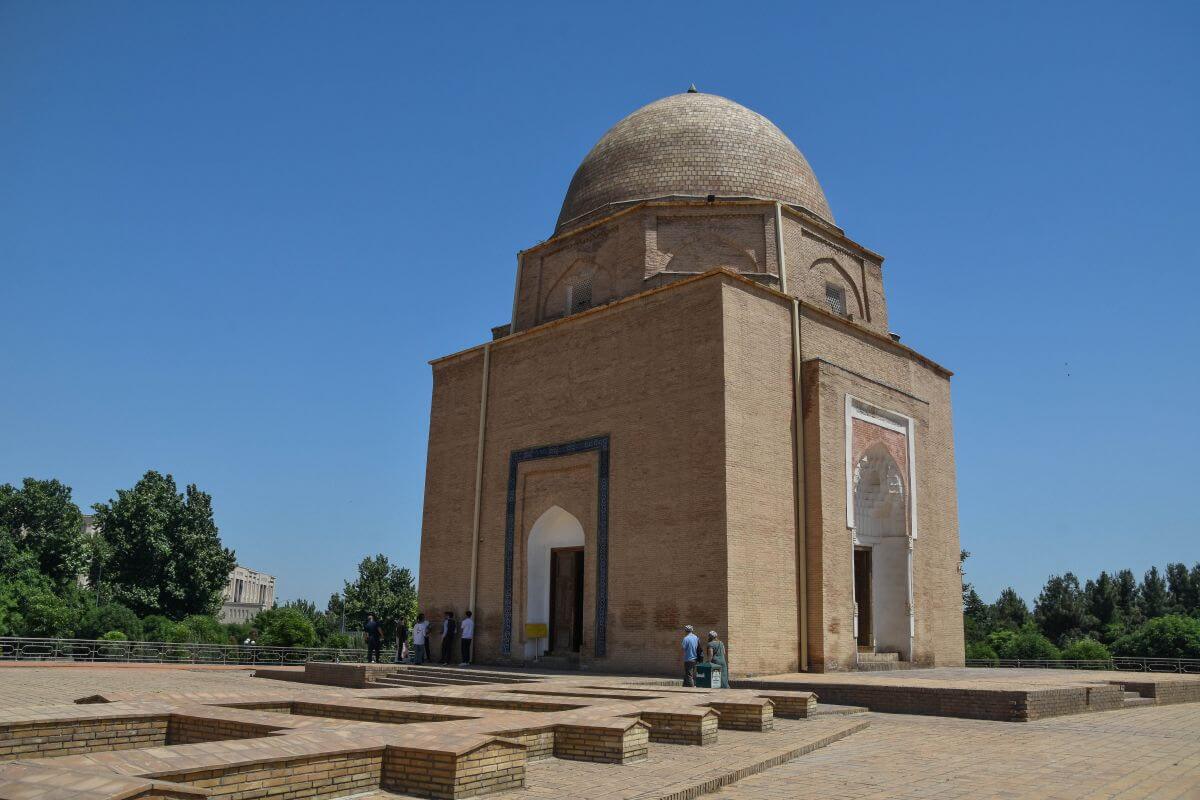
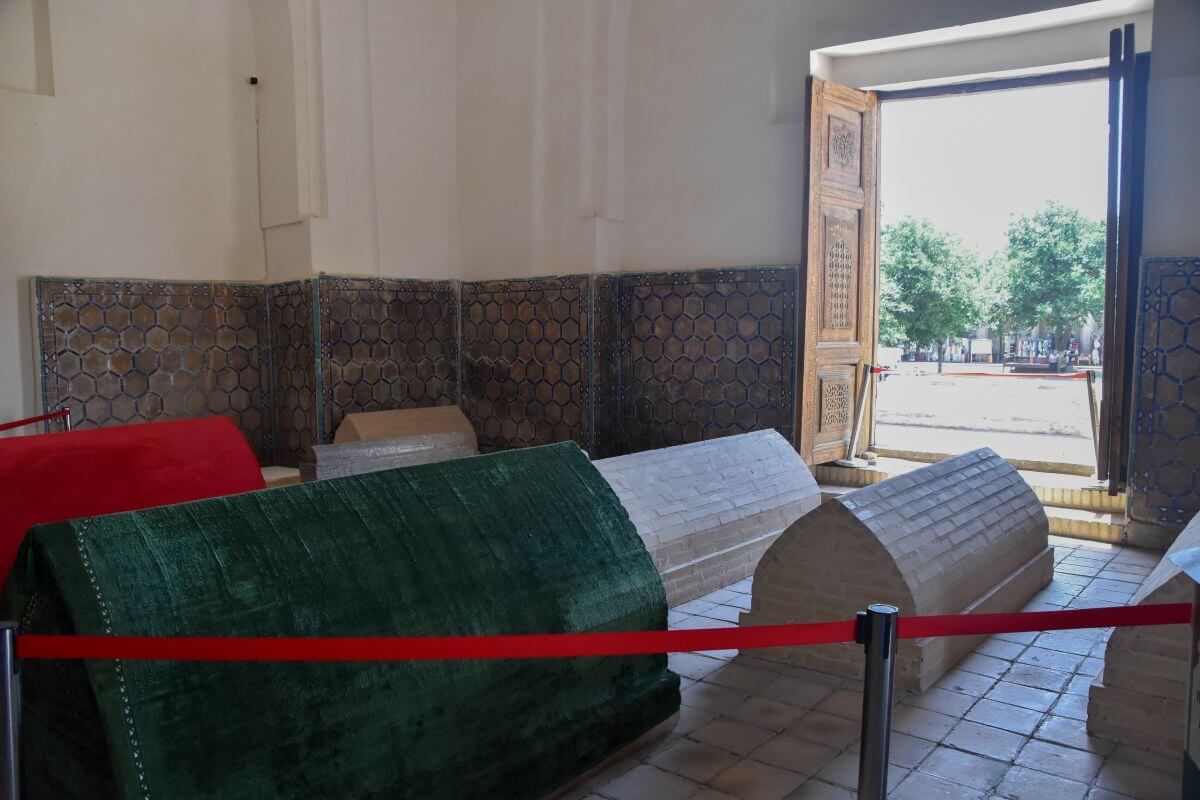
Unlike many Timurid buildings, the Rukhobod Mausoleum offers a completely different atmosphere from the city’s grand royal monuments. Built of plain brick and crowned by a single dome, it lacks the massive entrance portal normally seen in monuments of the same period. The mausoleum marks the burial place of Sheikh Burhanuddin Sagaradzhi, a highly respected Islamic theologian. Local tradition says a sealed box hidden inside the dome contains seven hairs from the beard of Prophet Muhammad. Inside the mausoleum rest Sheikh Sagaradzhi, his wife, a princess, and their nine children.
GOOD TO KNOW:
Entry is free. Opening hours generally run from 8-9 AM until 6-7PM. Opening hours often vary during the quieter season.
7. Bibi-Khanym Mosque
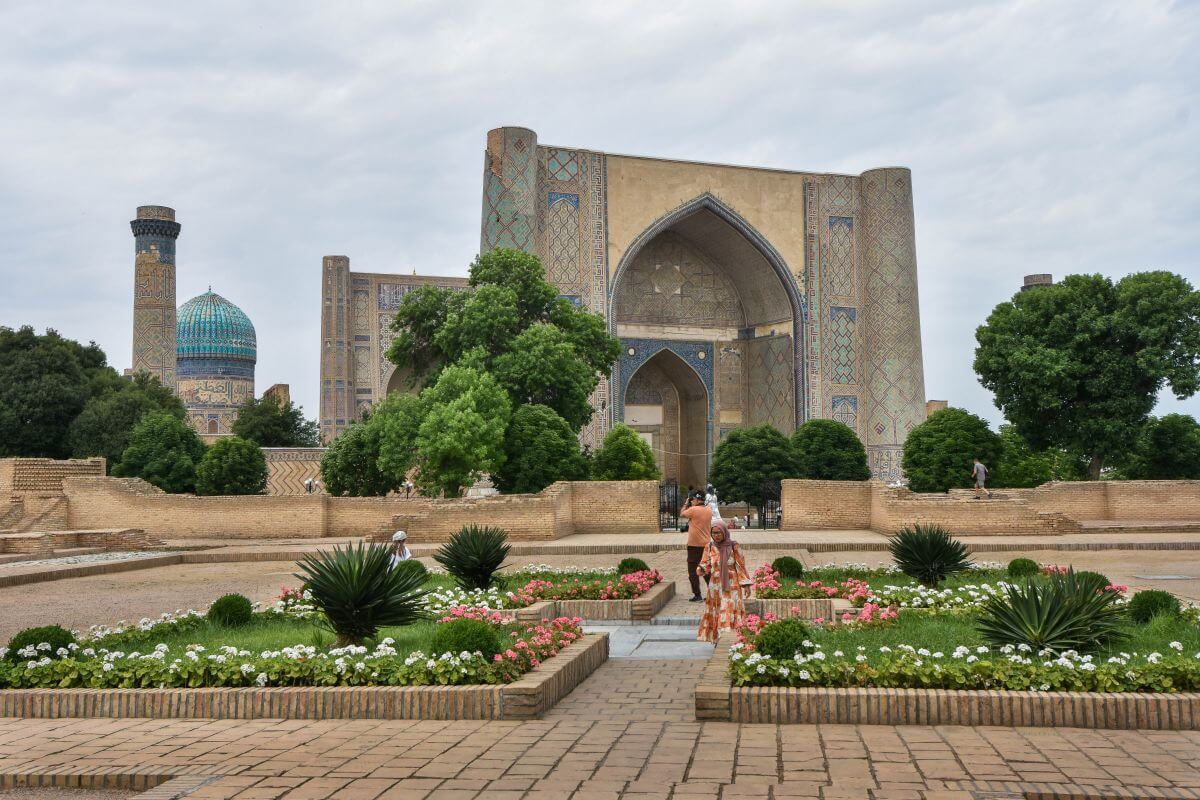
The enormous Bibi-Khanym Mosque complex remains one of the most impressive places you can visit when looking for things to do in Samarkand. Yet, behind this magnificent façade lies a story of ambition, engineering failures, earthquakes, and one of the largest reconstruction projects in Central Asia.
According to historical records, Timur (also known as Tamerlane) commissioned this mosque between 1399 and 1404. A Turco-Mongol conqueror and the first ruler of the Timur dynasty ordered this construction for his beloved wife, Saray Mulk Khanum. Her title, Bibi-Khanym, translates roughly to ‘Senior Princess’ or ‘Queen’. As a direct descendant of Genghis Khan, she was one of the most respected women in Timur’s empire.
ALMOST TOO AMBITIOUS PROJECT
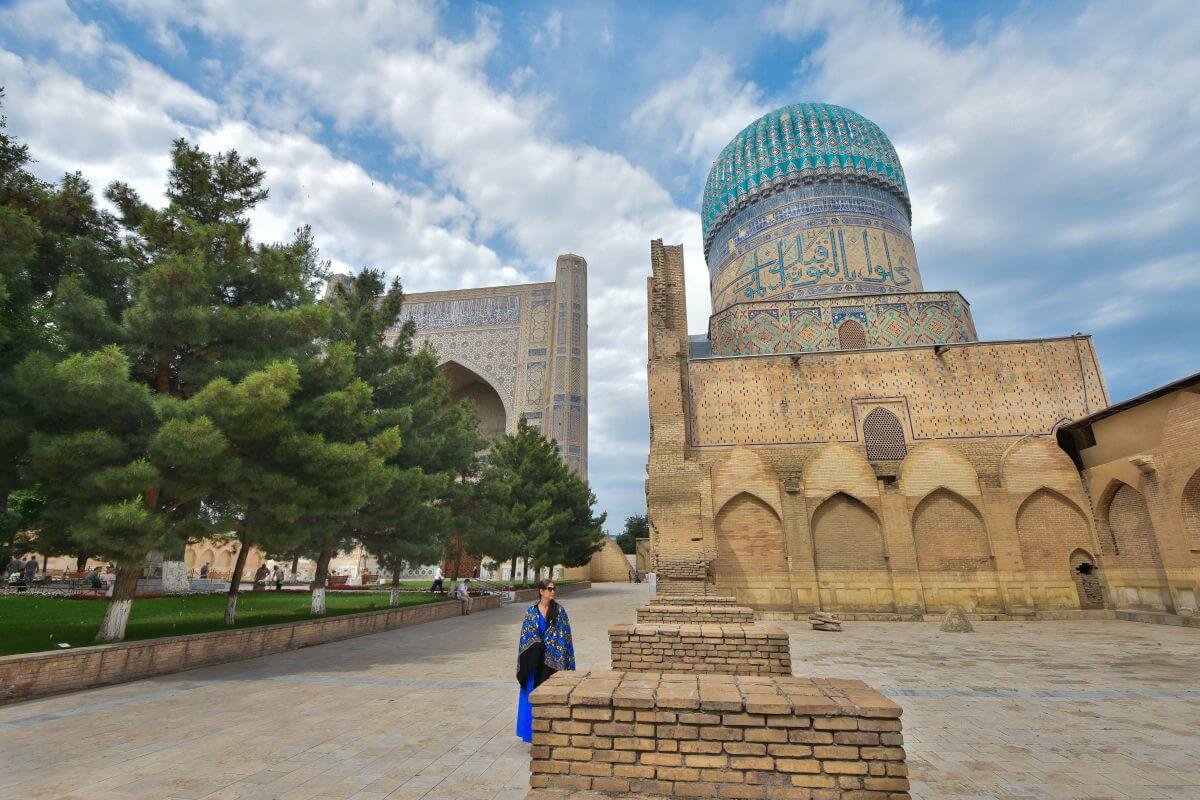
Not everything is as old as it looks
Timur wanted a mosque unlike anything the world had seen before. The result became one of the largest and most significant mosques in the Islamic world and a masterpiece of the Timurid Renaissance. The project pushed 14th-century engineering to its absolute limits. Construction moved at incredible speed, and problems appeared almost immediately. The main dome began showing signs of weakness only a few years after completion. Bricks started falling from the structure.
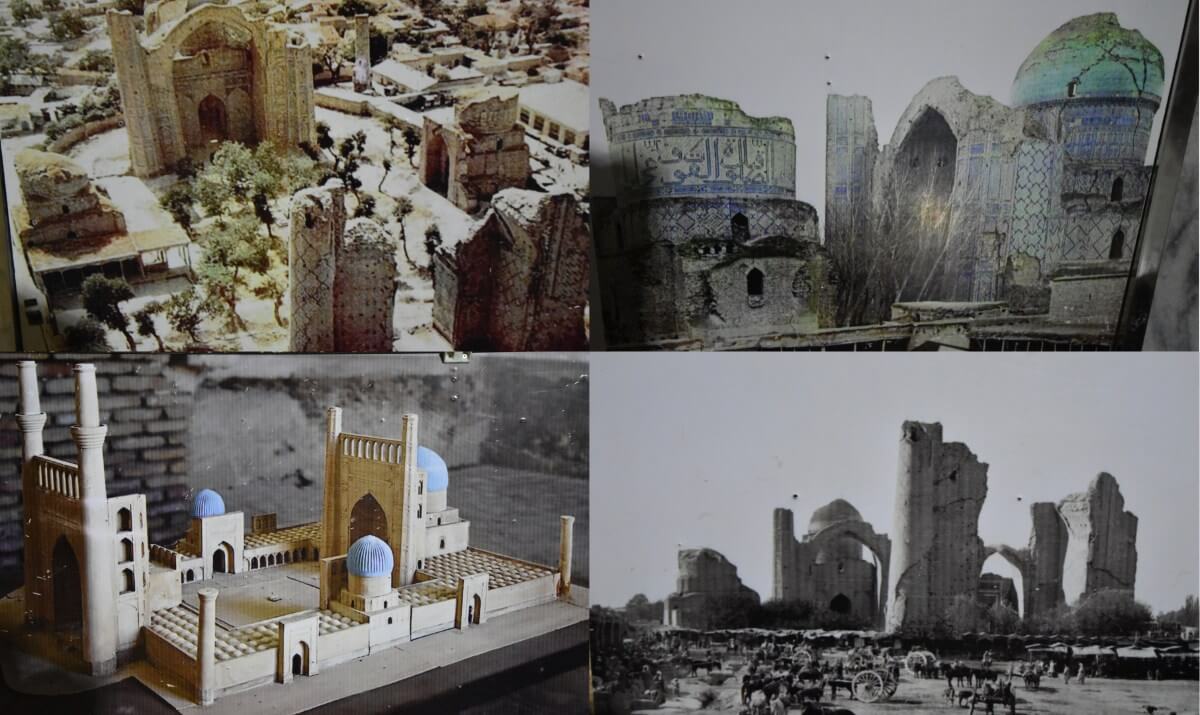
Over centuries, weather, neglect, and earthquakes caused further destruction. The inner portal eventually collapsed during the devastating earthquake in the 19th century. Several parts collapsed completely, while others suffered severe cracking. During the Soviet period and after independence, a large-scale reconstruction transformed the site. Certain tiled sections use modern interpretation, and several walls stand much taller than they originally did. Rather than reducing experience, we personally think this makes the site even more fascinating. It allows us to see both the grandeur of Timur’s vision and the enormous effort required to preserve it.
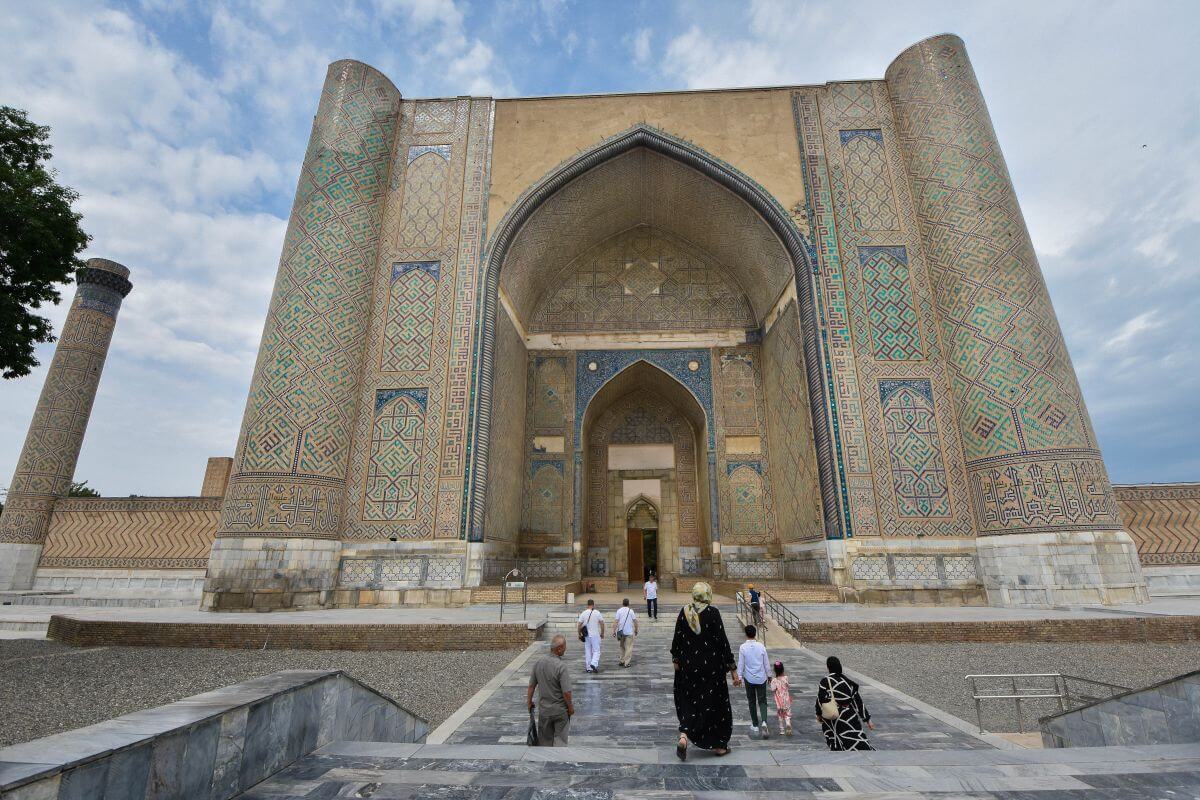
WHAT NOT TO MISS
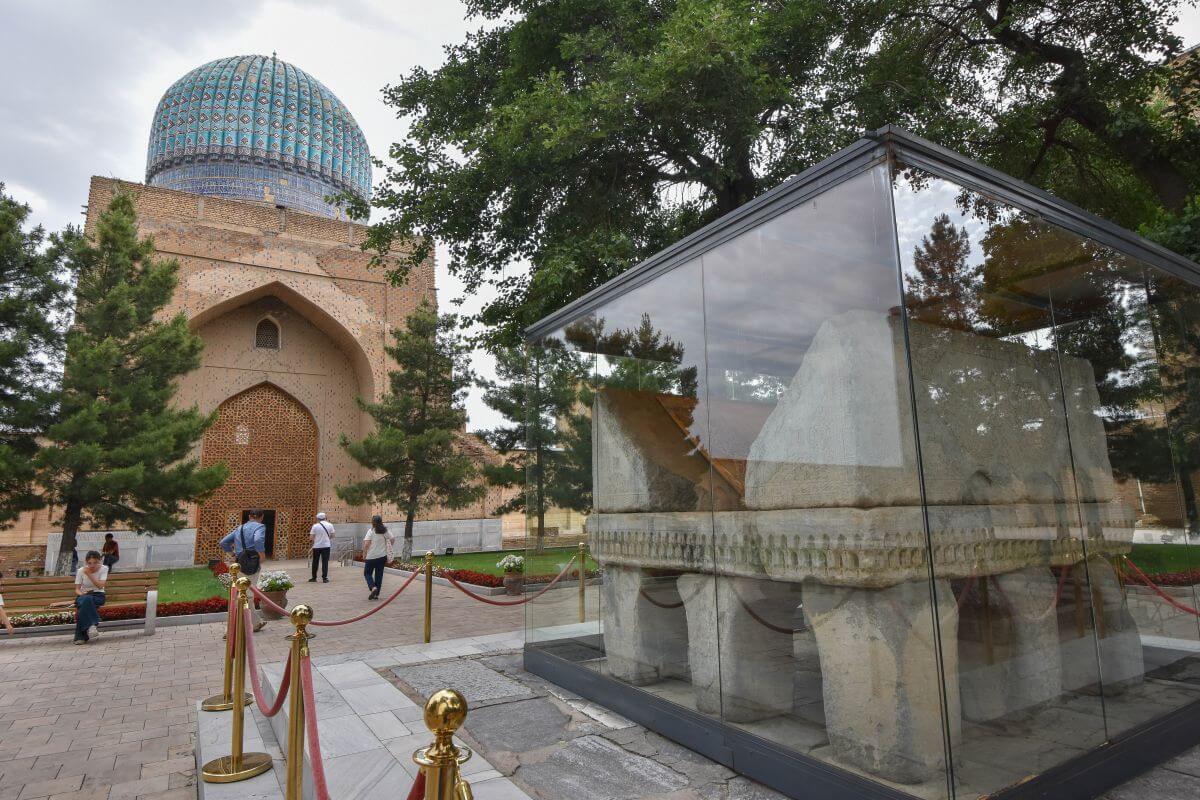
The highlight of the courtyard is a massive marble Quran stand. This beautifully carved pedestal once held a giant handwritten Quran. Today, it remains one of the most recognisable features of the complex. For generations, local legend claimed that women who crawled underneath the stand would be blessed with many children. In 2023, authorities installed protective glass around it to prevent further damage.
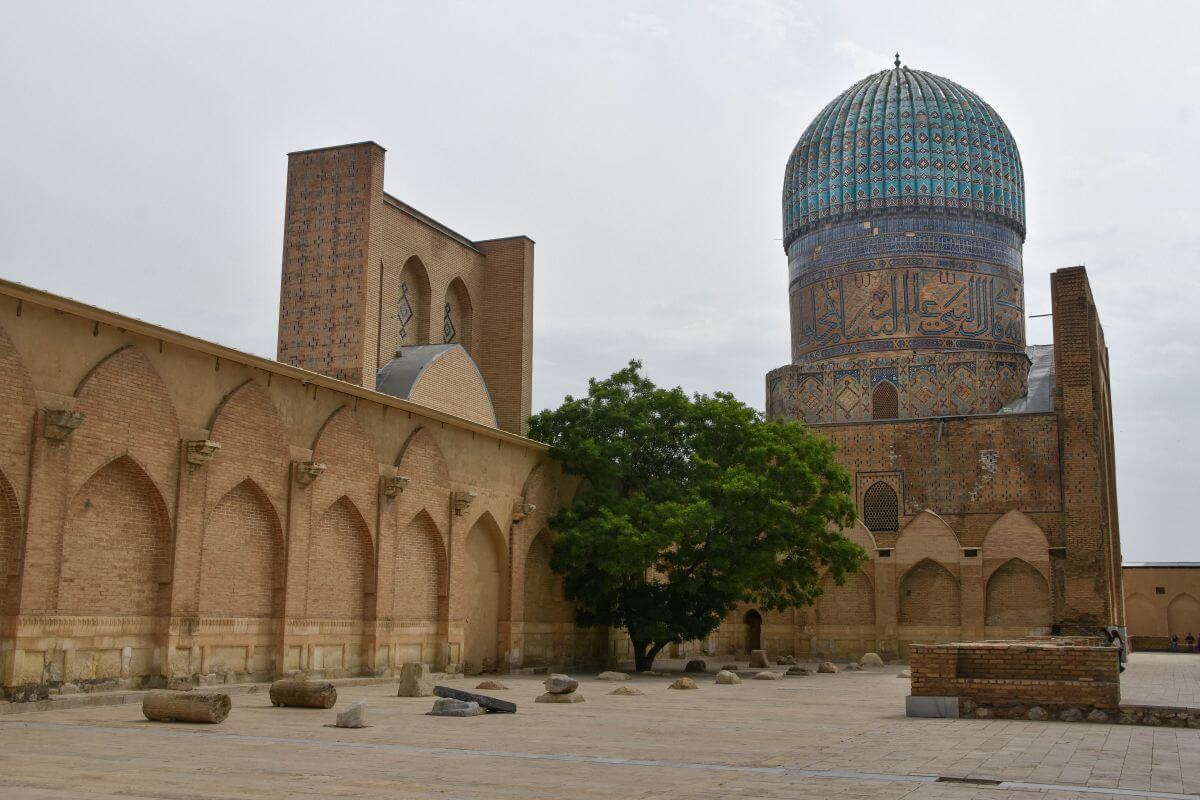
Also, take time to explore the two smaller domed mosques located inside the complex. Many tourists overlook them, yet they contain some of the most beautiful details. The mosque on the left preserves stunning original Arabic calligraphy that survived centuries of restoration campaigns.
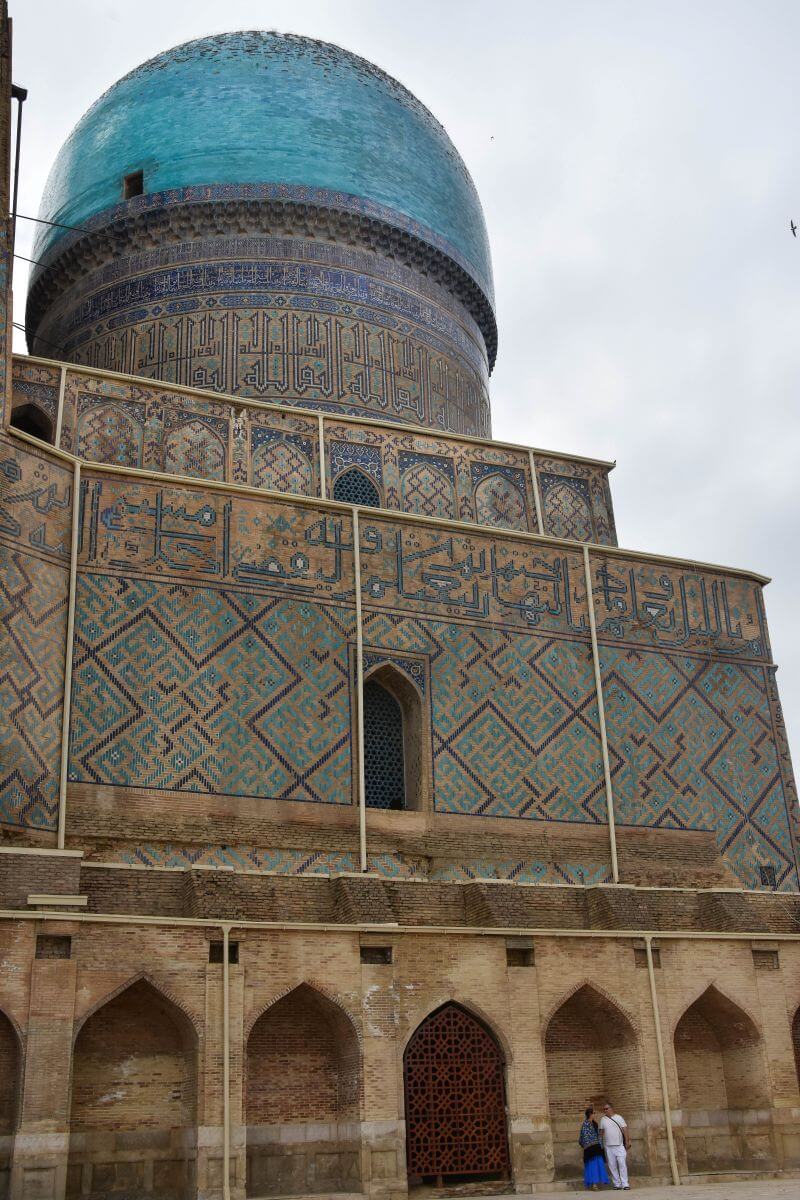
The enormous 40-m high dome towering above the complex also deserves attention. Standing beneath it gives a real sense of the scale Timur hoped to achieve.
GOOD TO KNOW:
- LOCATION: The mosque stands directly beside the famous Siab Bazaar. Walking from Registan Square to Bibi-Khanym Mosque is a scenic 10-15-minute walk along the pedestrian-friendly Tashkent Street (Islam Karimov Street).
- ADMISSION FEE: As of July 2026, foreign visitors pay 75,000 UZS (around USD 6.20) to visit the Bibi-Khanym Mosque. Keep your ticket, as you may visit it multiple times.
- BEST TIME TO VISIT: Arrive between 7 AM and 8 AM for cooler temperatures and fewer crowds. We also found conditions excellent at 10 AM and after 7.30 PM, when the crowds were smaller and the lighting excellent.
- DURATION: Don’t rush; allow up to one hour to explore the courtyard, admire the architecture, and visit the smaller side mosques.
- OPENING TIMES: The mosque is generally open from 7 AM to 10 PM on weekdays and 9 AM to 10 PM on weekends. Hours can vary slightly by season.
OUR EXPERIENCE:
Our accommodation was only a 2-minute walk away. One evening in May, we arrived at 10:40 PM, expecting the gates to be closed. To our surprise, the mosque remained open, and staff were still selling tickets. We hesitated because we wanted to explore the complex properly in daylight. A member of staff then explained that tickets could be used multiple times within 3 days. Although this was not printed on the ticket, it proved true, and we returned twice more during our stay without problems.
8. Bibi-Khanym Mausoleum
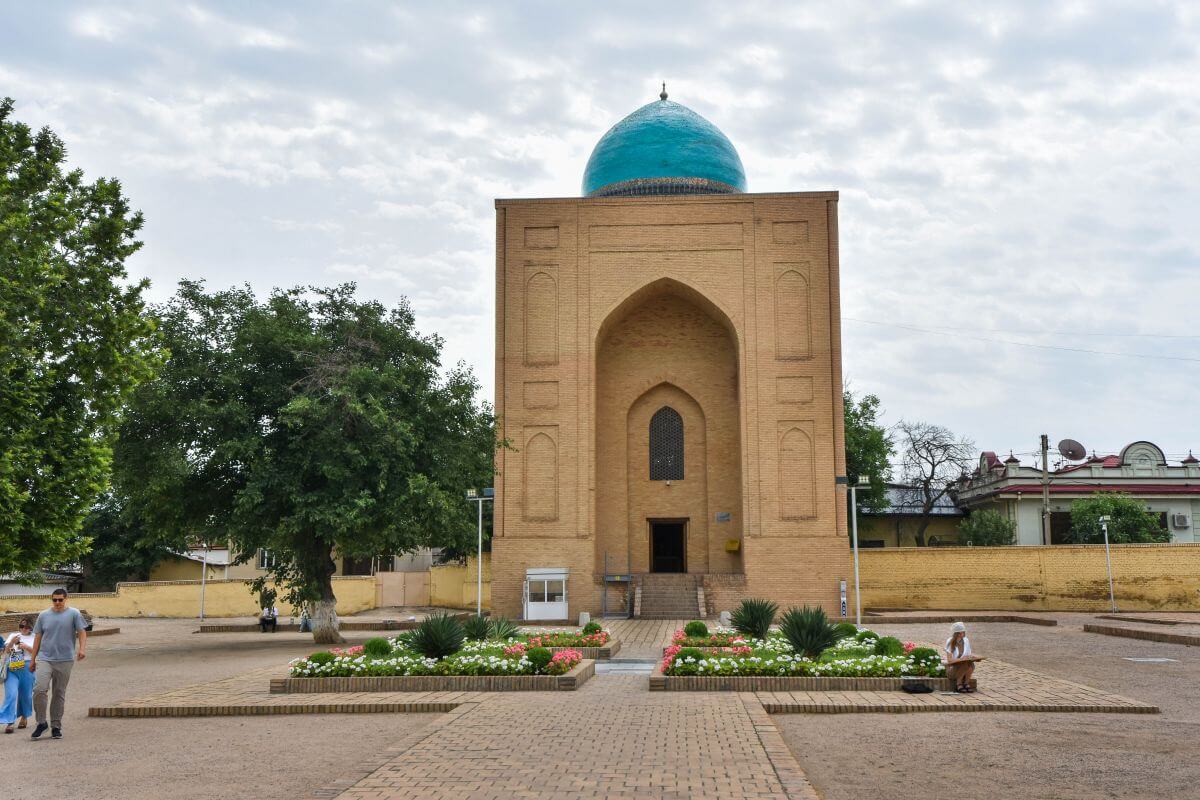
Just a few steps from the bustling mosque stands one of Samarkand’s most overlooked monuments. The Bibi-Khanym Mausoleum may lack the enormous scale or nearby monuments, but its peaceful atmosphere and beautiful craftsmanship make it worth a closer look.
The mausoleum with a striking blue dome dates to the 15th century. This elegant octagonal building honours female members of Timur’s extended family. It’s linked to Saray Milk Khanum’s mother, the influential wife who gave her name to the nearby mosque. The real highlight is the beautiful tilework covering the dome and inside walls. Without large crowds, you can take time appreciating details that many tourists rush past elsewhere.
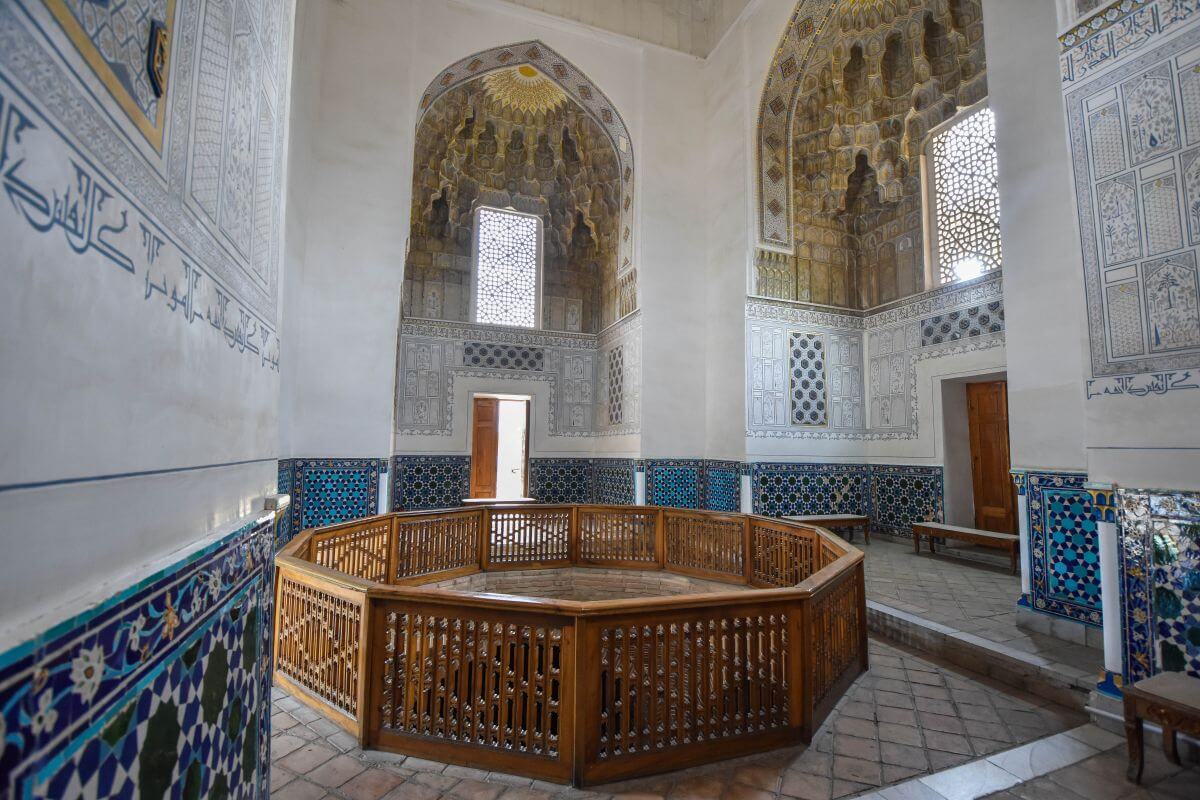
The main attraction lies below ground level. Follow the steps, and you’ll discover marble sarcophagi, which belong to women of the ruling family.
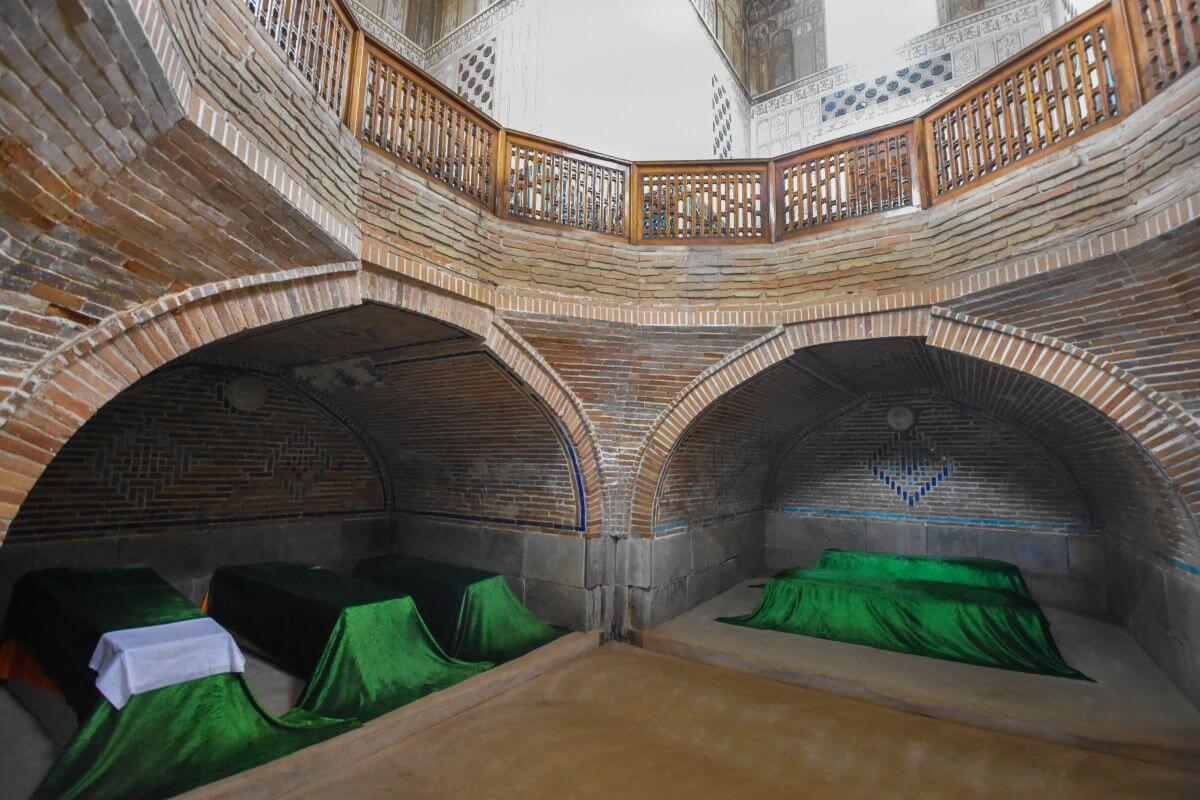
GOOD TO KNOW:
The mausoleum stands directly opposite the mosque across the pedestrian street.
- OPENING TIMES: Daily, approximately from 9 AM – 6 PM.
- ADMISSION FEE: As of July 2026, the entry fee to visit the Bibi-Khanym Mausoleum is 50,000 UZS (around USD 4).
- VISIT TIME: 5-10 minutes.
When we visited, we had the entire mausoleum to ourselves. Many tourists overlook it completely, while others decide not to enter after discovering that admission is NOT included with the mosque ticket. While the admission fee feels relatively expensive for such a small attraction, the elegant architecture and peaceful setting still make it an enjoyable stop. However, if you’re short on time or watching your budget, you may wish to skip it.
9. Siyob Bazaar
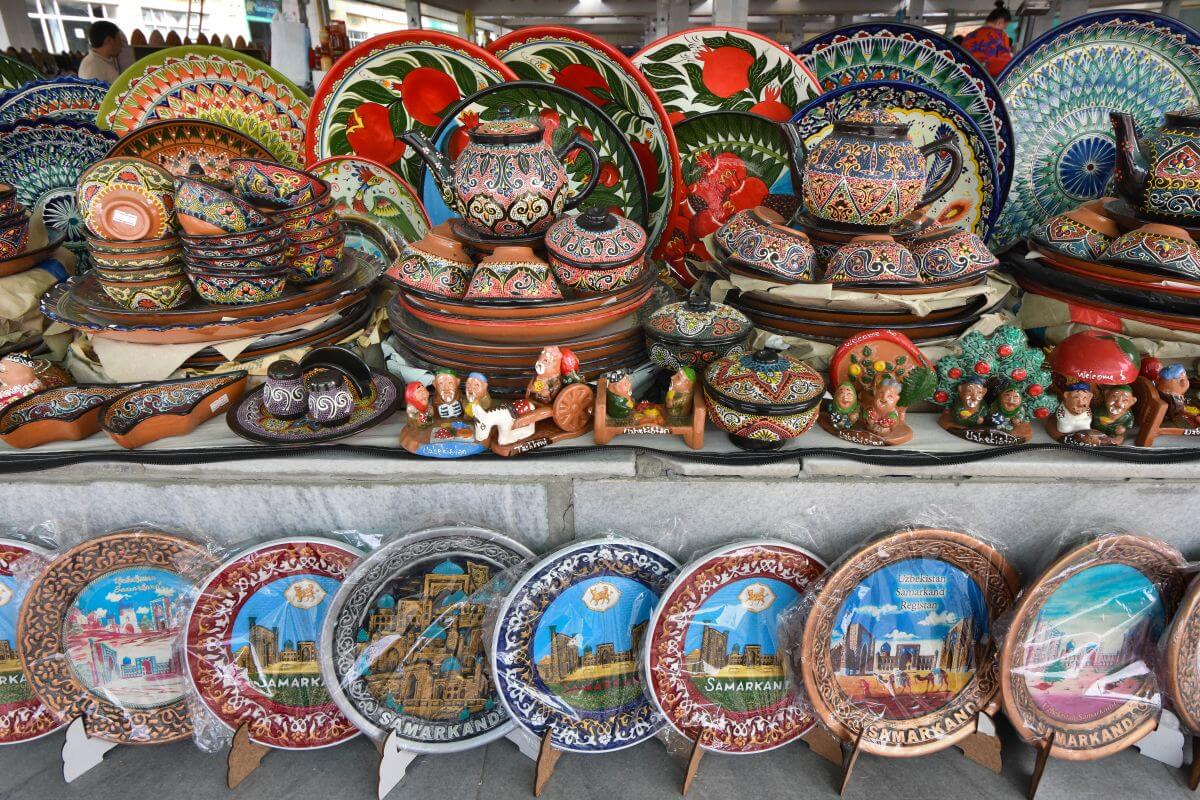
If you want to experience everyday life beyond Samarkand’s famous monuments, few places feel more authentic than wandering through Siyob Bazaar. Located beside Bibi-Khanym Mosque, Siyob Bazaar is the largest and oldest traditional market in the city. According to the historical records, traders have gathered here since the reign of Amir Timur. While its layout has changed over time, traditional trading practices such as haggling and communal gathering continue daily.
The market consists of seven larger covered pavilions, smaller shopping arcades, and countless stalls. Hundreds of vendors sell everything from fruits and vegetables to handcrafted goods. The market is also famous for its legendary flatbread. You’ll also find mountains of dried apricots, almonds, walnuts, and other local produce at prices far lower than in tourist shops. Beyond food, browse ceramics, textiles, and other traditional souvenirs.
Unlike many attractions, Siyob Bazaar feels authentic. Most visitors here are local residents doing their weekly shopping rather than tourists taking photographs. That makes it one of the most meaningful things to do in Samarkand if you want to experience daily life rather than simply admire historic buildings.
GOOD TO KNOW:
Open daily from 7 AM to 7 PM. Closed Mondays.
10. Ulugh Beg Observatory
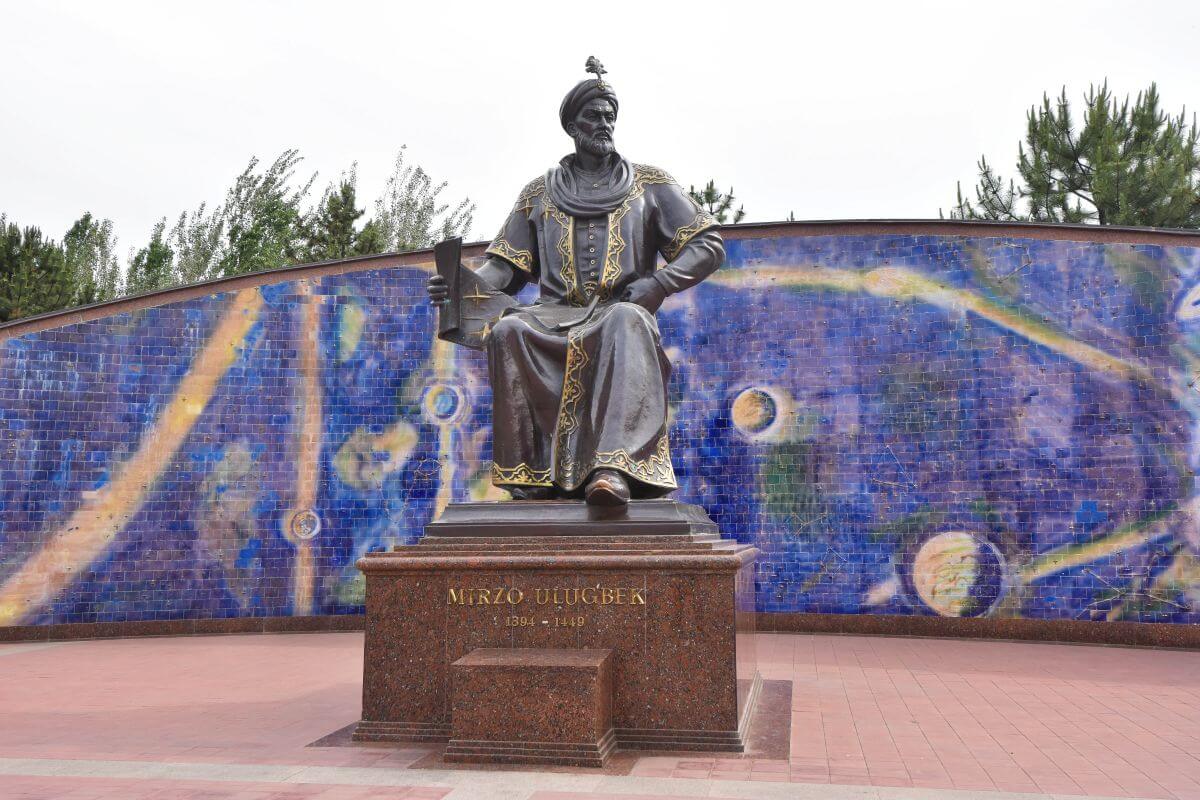
Did you know that Samarkand was home to one of the world’s greatest scientific achievements?
During the 15th century, astronomer-king Ulugh Beg transformed Samarkand into one of the world’s leading centres of astronomy. The grandson of Amir Timur possessed an extraordinary passion for mathematics and astronomy. Unlike many rulers of his time, he invested heavily in science and education. The observatory he established in 1429 attracted mathematicians and scholars across the region. Ulugh Beg created a scientific institution unlike anything seen before.
According to the museum’s information panels, Ulugh Beg’s Observatory was one of the largest and most accurate in the Islamic world. It was also one of the rare examples of 15th-century architecture. The exterior of the building was decorated with mosaics and beautiful decorations. At its peak, the Ulugh Beg Observatory was a round, three-story building constructed around three massive astronomical instruments. For several decades, some of the most advanced astronomical research on Earth took place right here. At its peak, scholars from across the Islamic world gathered here to study the movements of stars, planets, and the Sun.
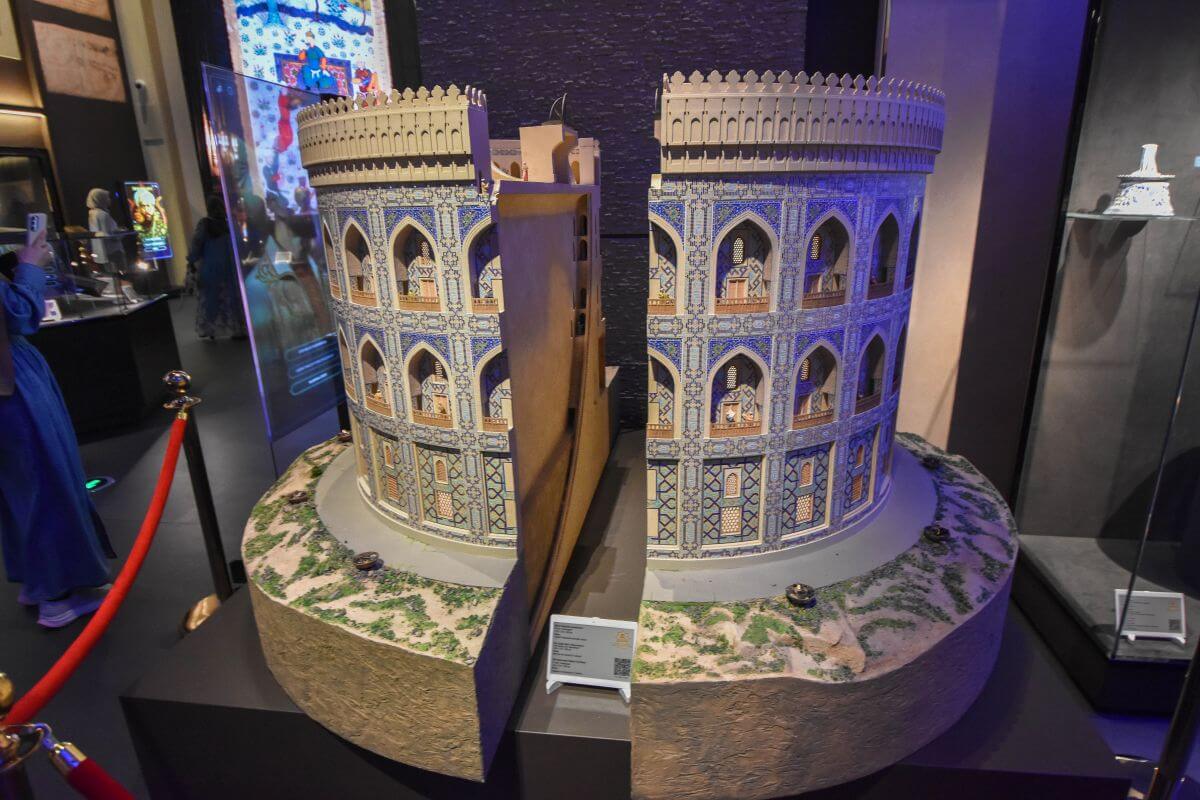
A model of the observatory
THE GIANT INSTRUMENT HIDDEN UNDERGROUND
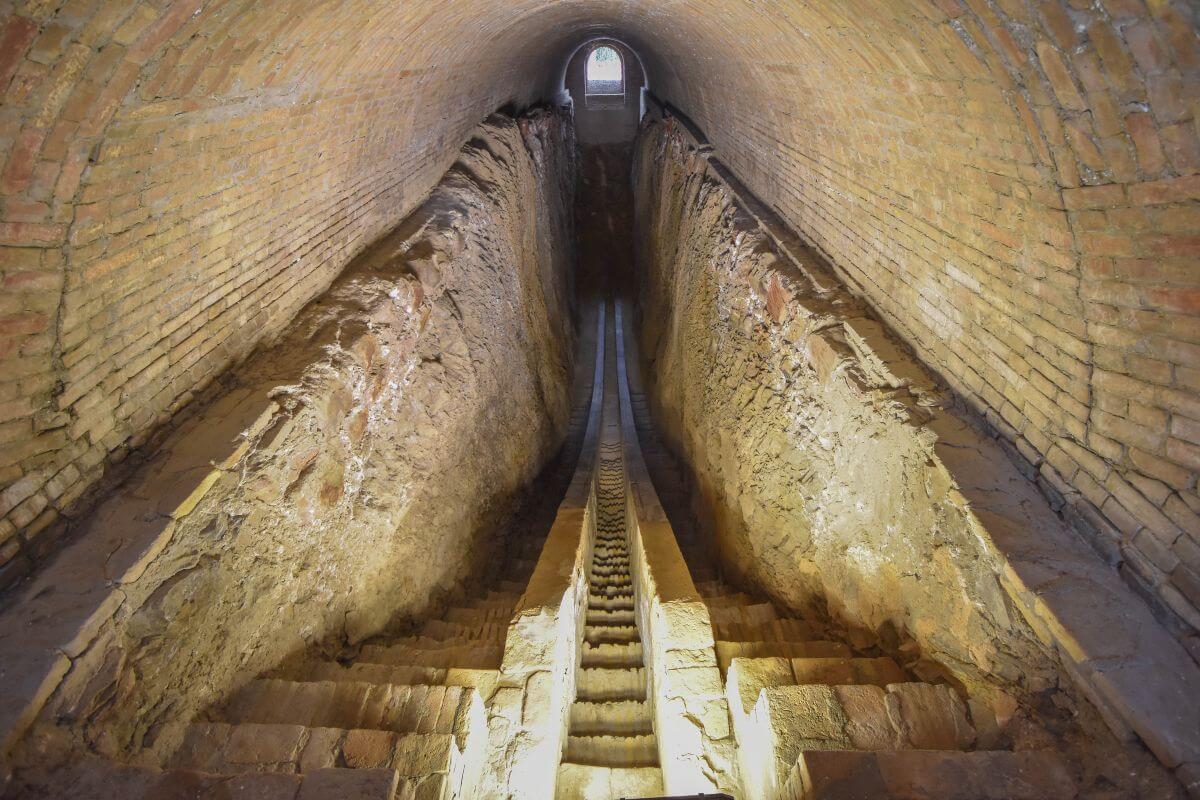
The observatory’s centrepiece was an enormous 40-m-long instrument, known as a sextant. Rather than constructing it entirely above ground, engineers carved a huge trench into the hillside and placed much of the instrument below the surface. This clever design improved stability and protected it from earthquakes. The surviving trench still exists today.
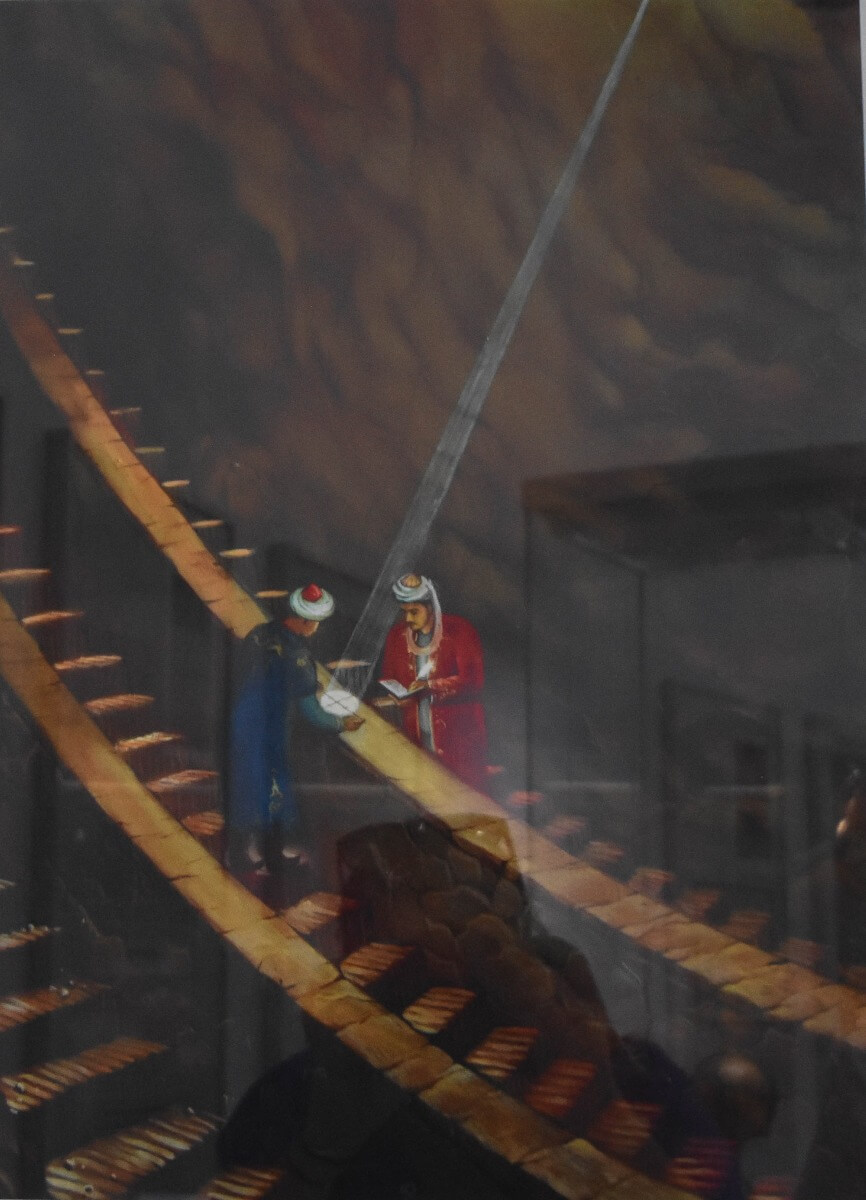
According to the information panels, the scale of this instrument allowed astronomers to achieve an accuracy equivalent to viewing a penny from over half a kilometre away. Using this giant sextant, they measured the length of the year within just 25 seconds of the modern measurements. They also calculated Earth’s axial tilt with astonishing precision. Remember, they achieved all this nearly 200 years before the telescope existed.
A STAR MAP
One of the observatory’s biggest achievements was also the creation of a detailed catalogue recording the positions of 1,018 stars. This remarkable work became one of the most accurate star maps ever produced before modern technology. You can see it in the small museum.
WHAT YOU CAN SEE TODAY
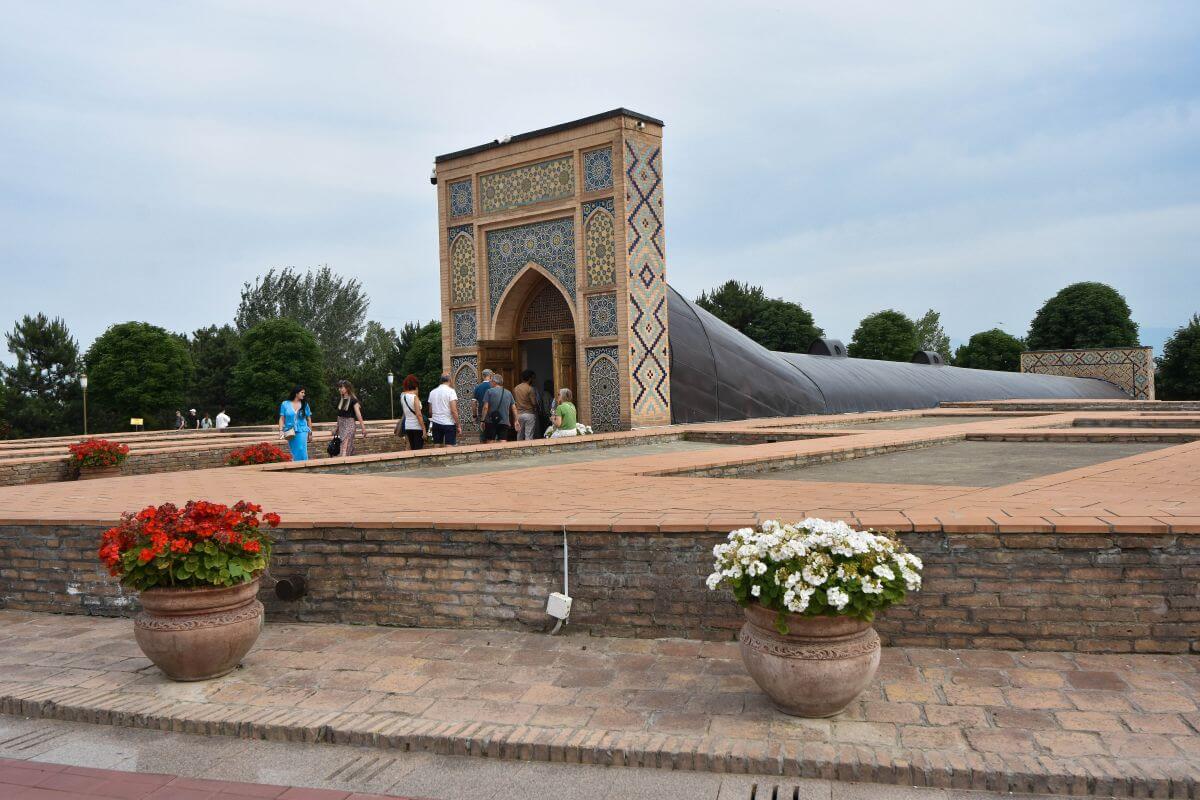
After Ulugh Beg’s assassination in 1449, religious extremists destroyed much of the observatory, according to historical records. The site was lost until Russian archaeologist Vassily Vyatkin rediscovered its remains in 1908. Although the original building no longer survives, you can still view the preserved underground sextant trench that made the observatory famous. A small but informative museum next to it displays models, maps and scientific instruments. It also explains how medieval astronomers worked.
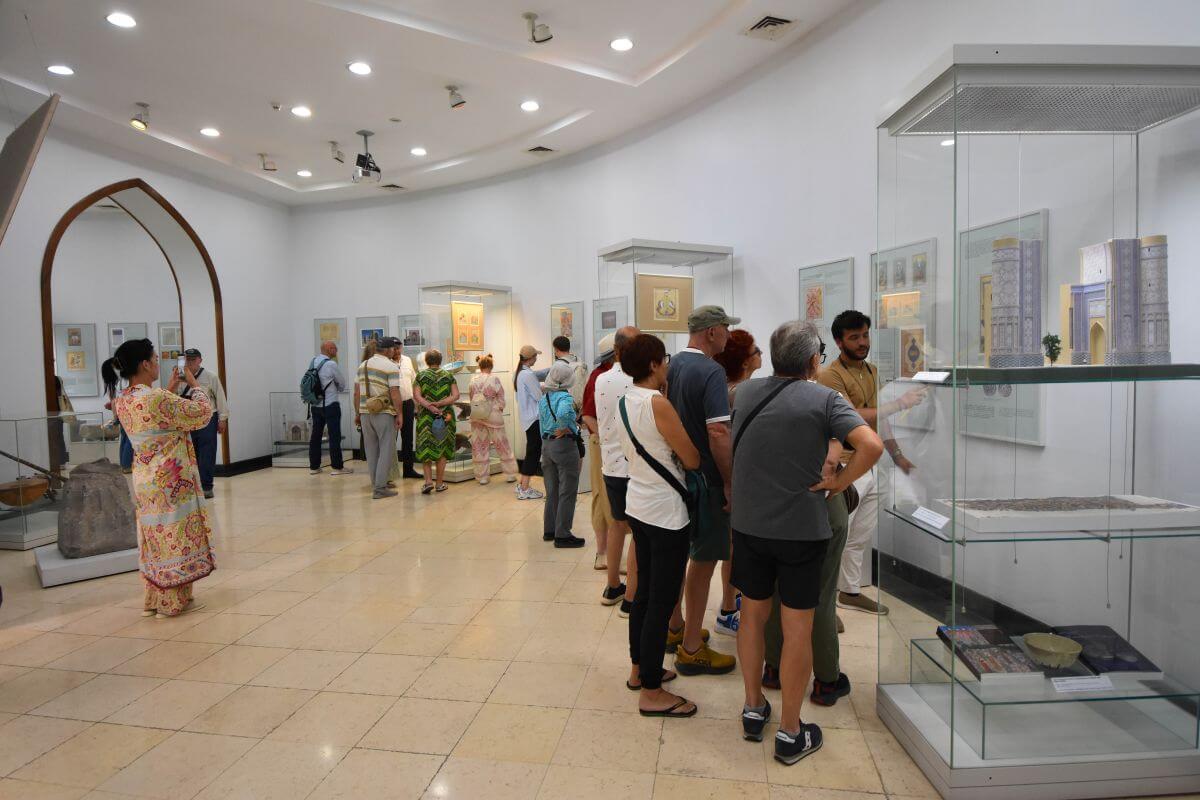
Ulugh Beg Observatory demonstrates how knowledge, curiosity and innovation shaped life in Uzbekistan. If you enjoy learning about how civilisations advanced knowledge, this ranks among the best things to do in Samarkand.
GOOD TO KNOW:
Despite sitting slightly beyond the historic centre (15 min drive from the Registan Square), the Ulugh Beg Observatory deserves a place high on your itinerary.
- OPENING TIMES: Daily from 7 AM to 7 PM. Opening hours can change during the winter months.
- ADMISSION FEE: As of July 2026, the entry fee to the Ulugh Beg Observatory costs 75,000 UZS (approximately USD 6) for foreign adults.
- VISIT TIME: 45 – 60 minutes
We expected a quick stop, but ended up spending much longer reading the exhibits. Understanding the scale of the underground sextant made us appreciate just how far ahead of its time this place really was.
11. Shah-i-Zinda necropolis
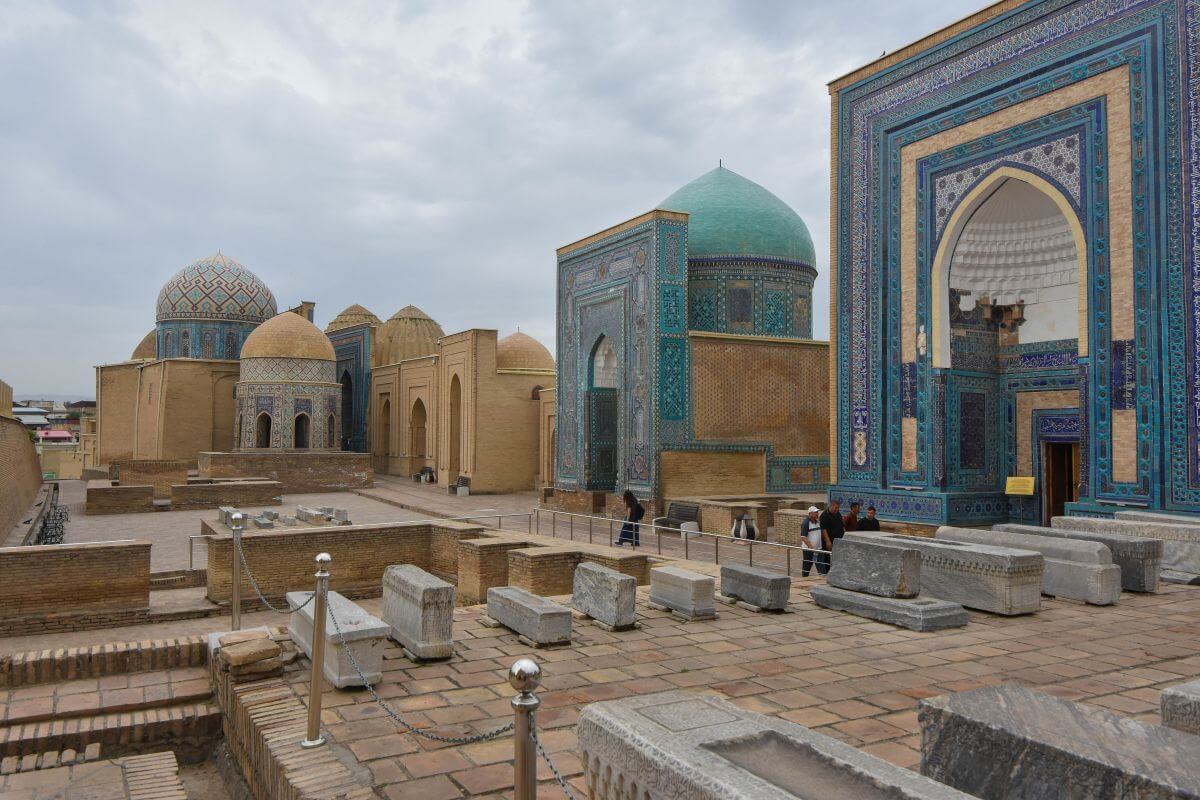
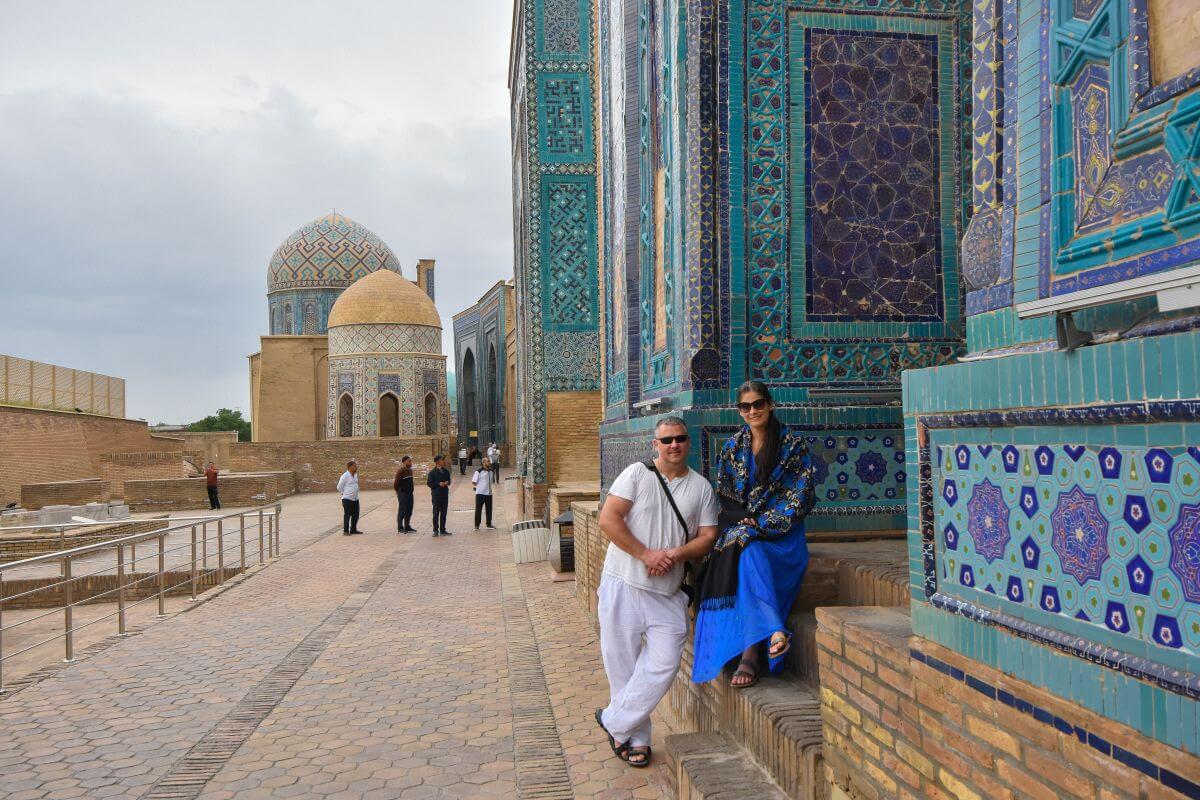
Among all attractions in the city, few places leave such a powerful impression as the Shah-i-Zinda necropolis. Bright blue mosaics, peaceful atmosphere, and rich history make exploring Shah-i-Zinda one of the best things to do in Samarkand.
THE LEGEND OF THE LIVING KING
The story of this site begins with Qusam ibn Abbas, a cousin of Prophet Muhammad. Historic sources and information panels on the site explain that he arrived during the 7th century to spread Islam throughout the region. According to local tradition, he was killed by enemies while praying. However, legend tells a very different story. Rather than dying, he picked up his decapitated head and descended into a deep well hidden beneath the complex, where he continues to live today. This legend gave the necropolis its name. Shah-i-Zinda translates as ‘The Living King’.
CAN YOU COUNT THE STEPS?
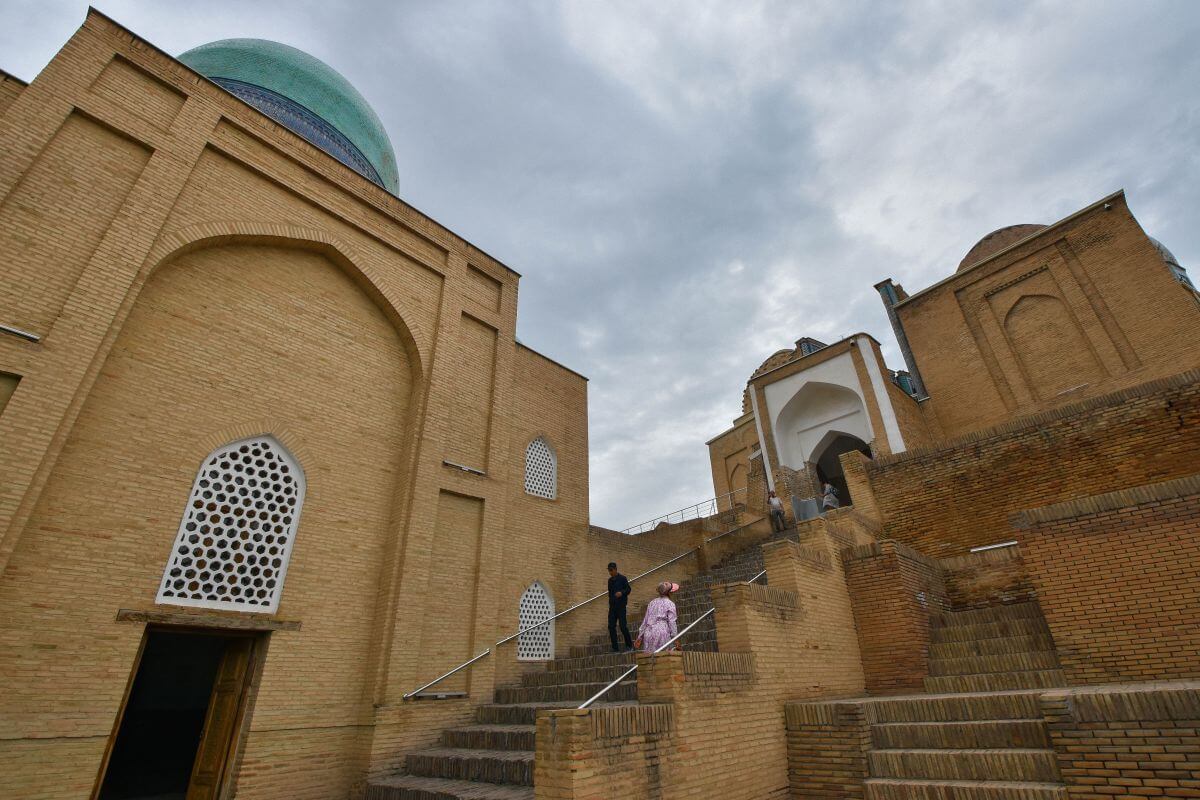
According to a popular local belief, a person who counts the exact number of steps correctly while walking both up and down the stairs is free from sin.
A CITY OF TOMBS
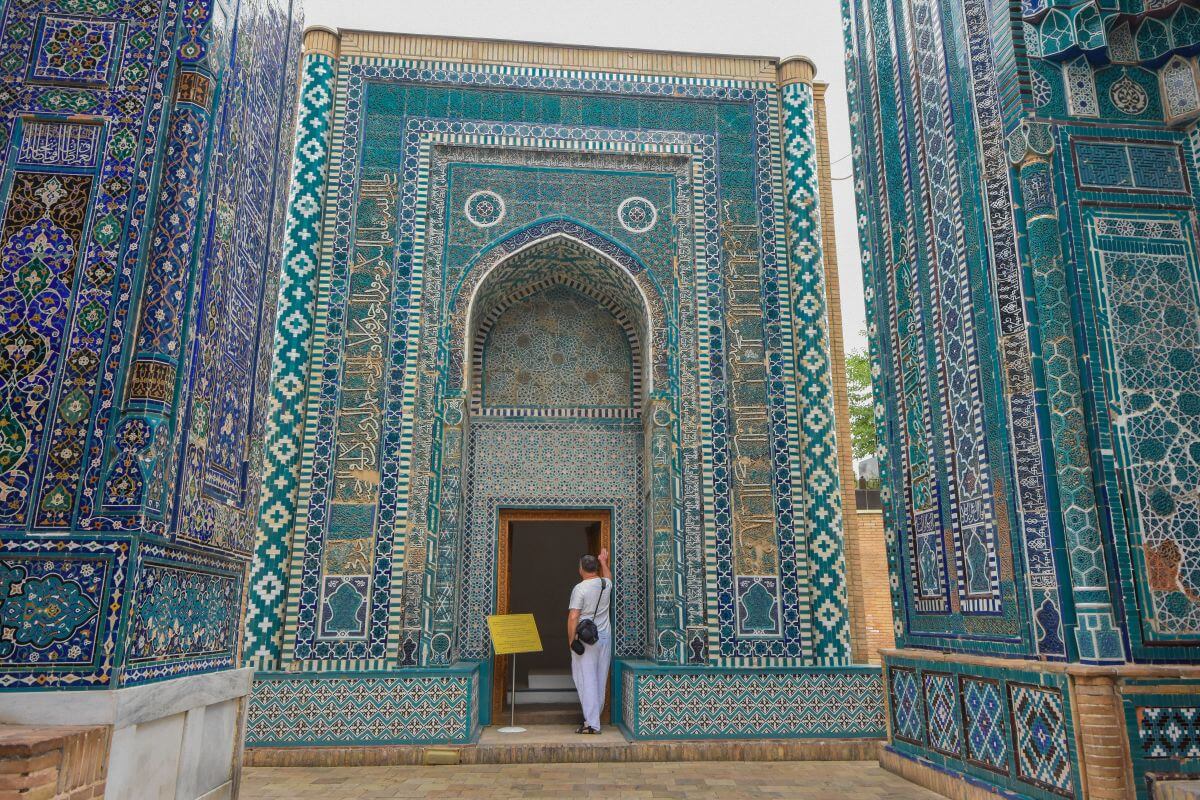
For centuries, pilgrims have travelled here to pay their respects, transforming the site into one of the most important spiritual destinations in the region. Information panels explain that the complex developed gradually between the 10th and 15th centuries. Today, it contains more than twenty mausoleums, shrines, mosques, and ceremonial buildings.
The earliest structures stood near the burial place of Qusam ibn Abbas. Over time, rulers and wealthy families competed to build beautiful monuments around the sacred shrine. After Amir Timur came to power during the 14th century, construction accelerated dramatically. Determined to honour the holy site, he commissioned master craftsmen from across the empire to build magnificent mausoleums for members of his own family nearby.
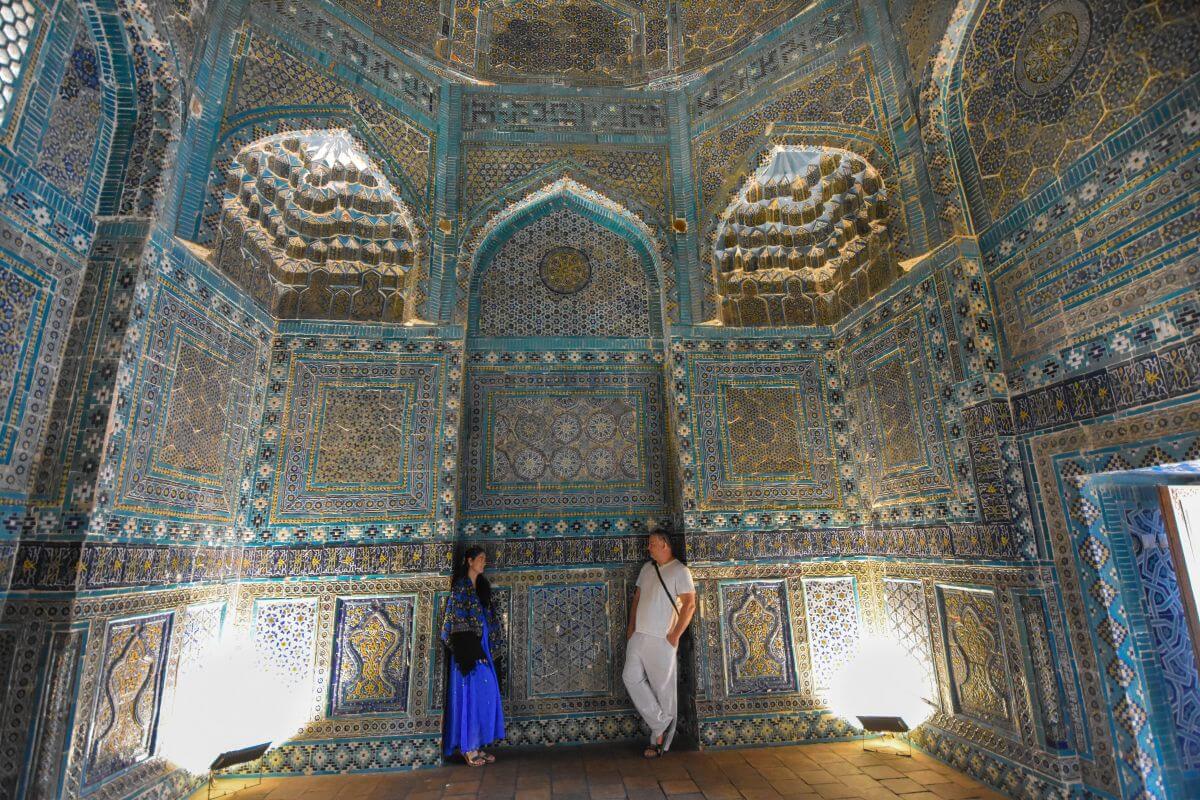
What survives today is one of the finest collections of Islamic funerary architecture anywhere in Central Asia. The lower section preserves some of the oldest decorative techniques from the early medieval period. Higher up, Timurid architects introduced detailed mosaic patterns and beautifully painted glazed tiles. Near the top, you can admire seven-coloured decoration and deeply carved relief tiles that sparkle when sunlight strikes them.
THE BLUE AVENUE
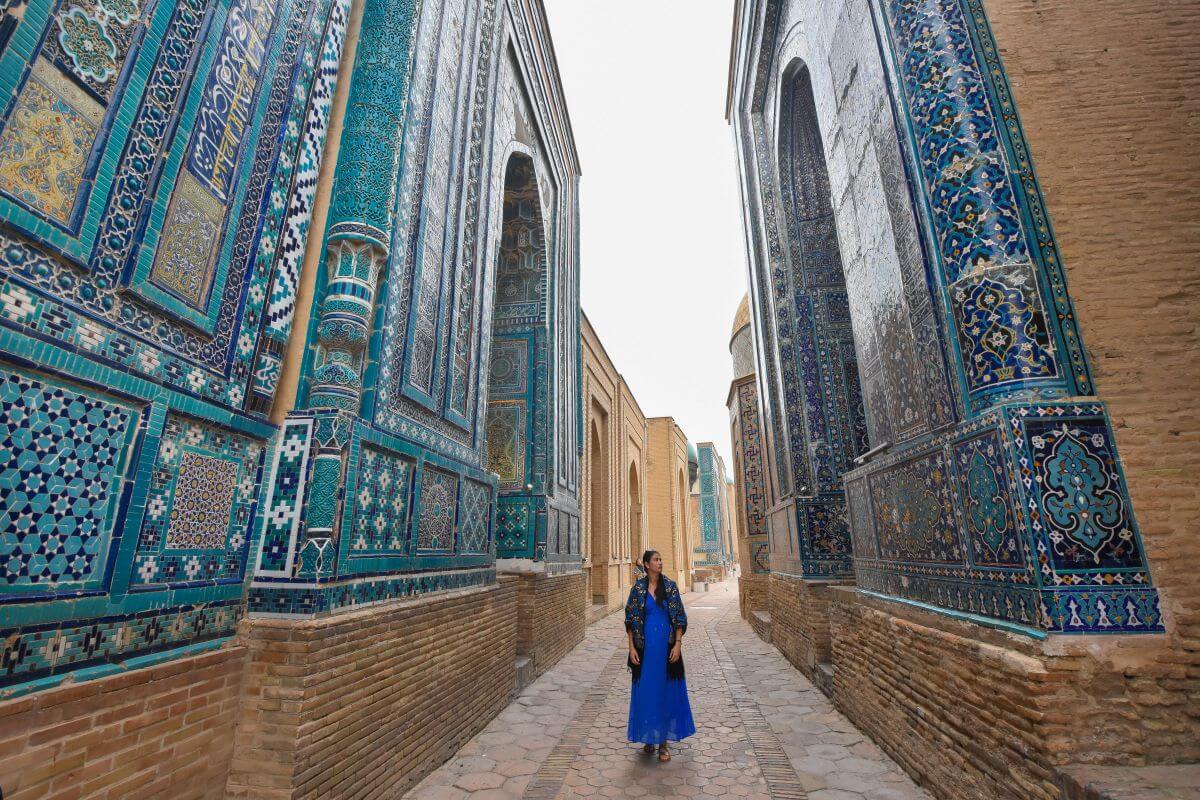
A narrow passage lined with stunning mausoleums stretches uphill through the heart of the complex. This breathtaking ‘Street of the Dead’ is considered one of the finest masterpieces of Islamic ceramic art in the world. Many visitors call it ‘Blue Avenue’, and we think this name describes it perfectly. The walls glow with extraordinary shades of turquoise, cobalt blue and deep azure.
FINAL RESTING PLACE OF ROYALTY
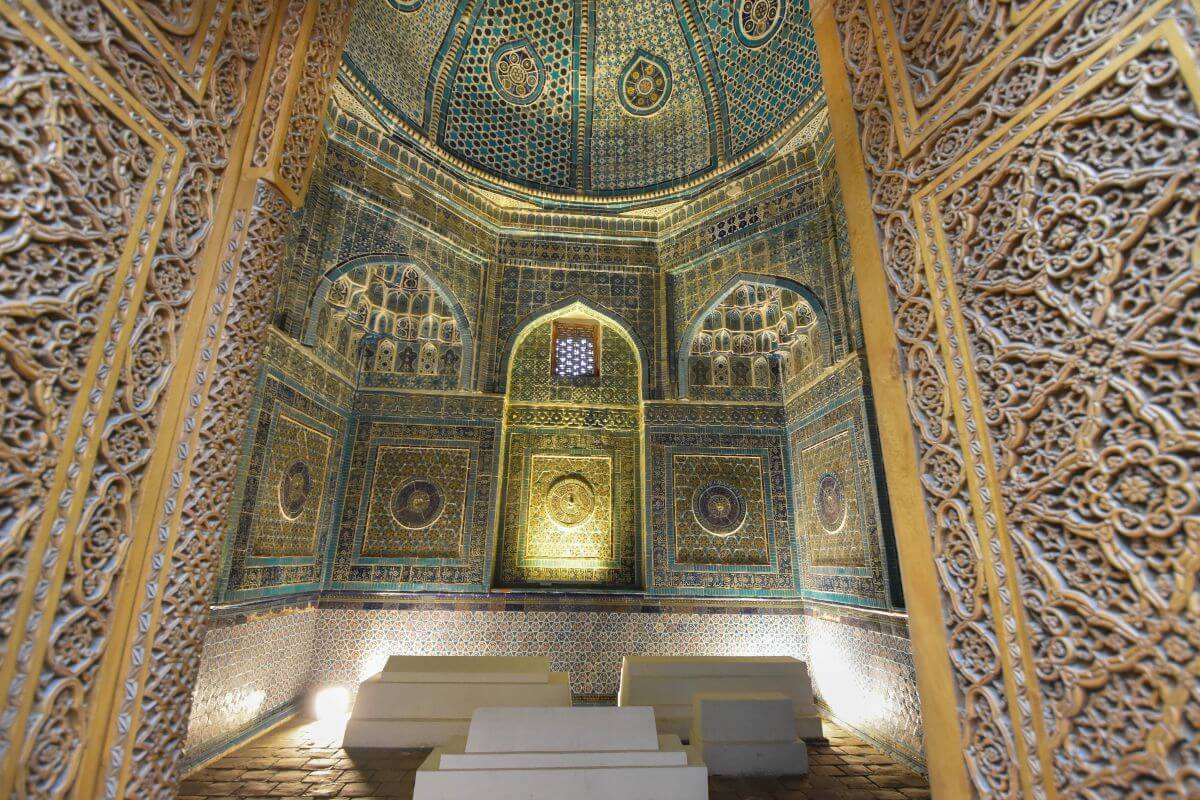
Many of Timur’s close relatives lie here, including his sister, nieces, and other members of the ruling elite. Their tombs transformed the sacred avenue into one of the most prestigious burial grounds of the Timurid Empire.
A ‘PEARL’ TOMB
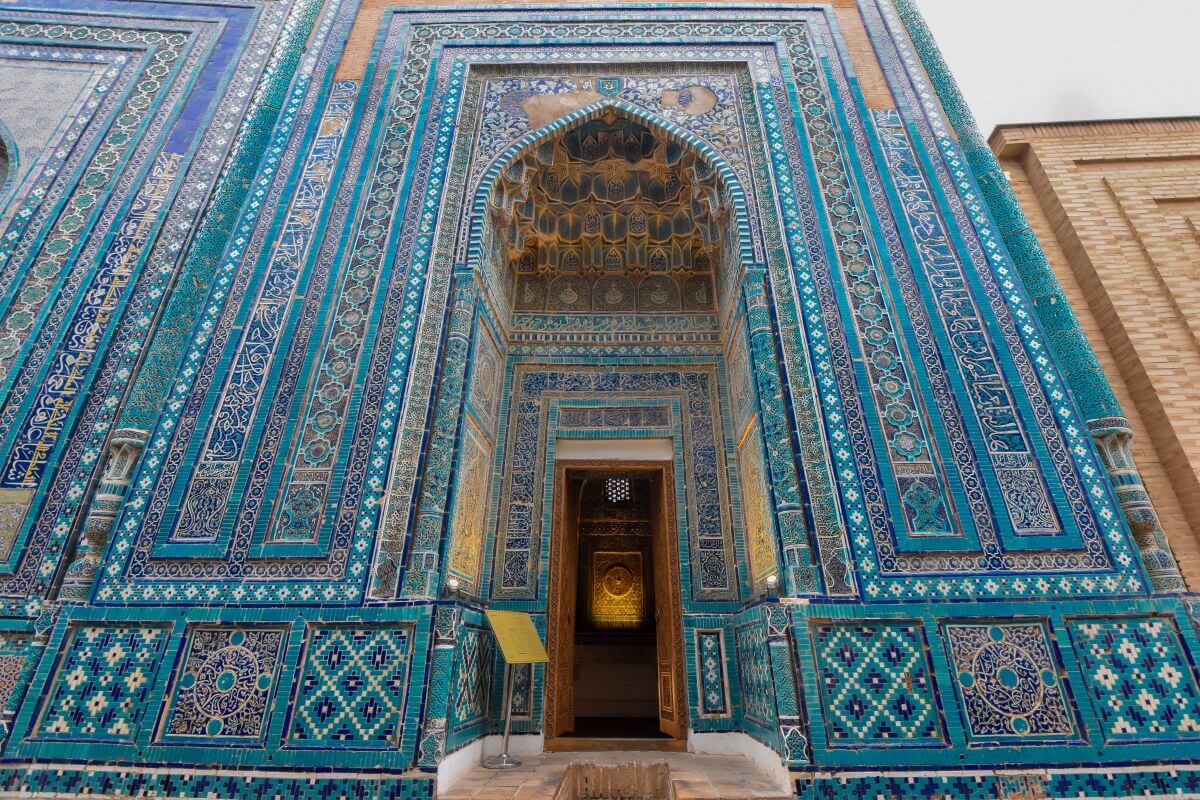
This is one of the most famous mausoleums, built in the 14th century for Timur’s niece. According to information panels on the site, ancient inscriptions describe it as a ‘garden where the world’s treasure lies buried’ and a place where ‘the pearl was lost’.
GOOD TO KNOW:
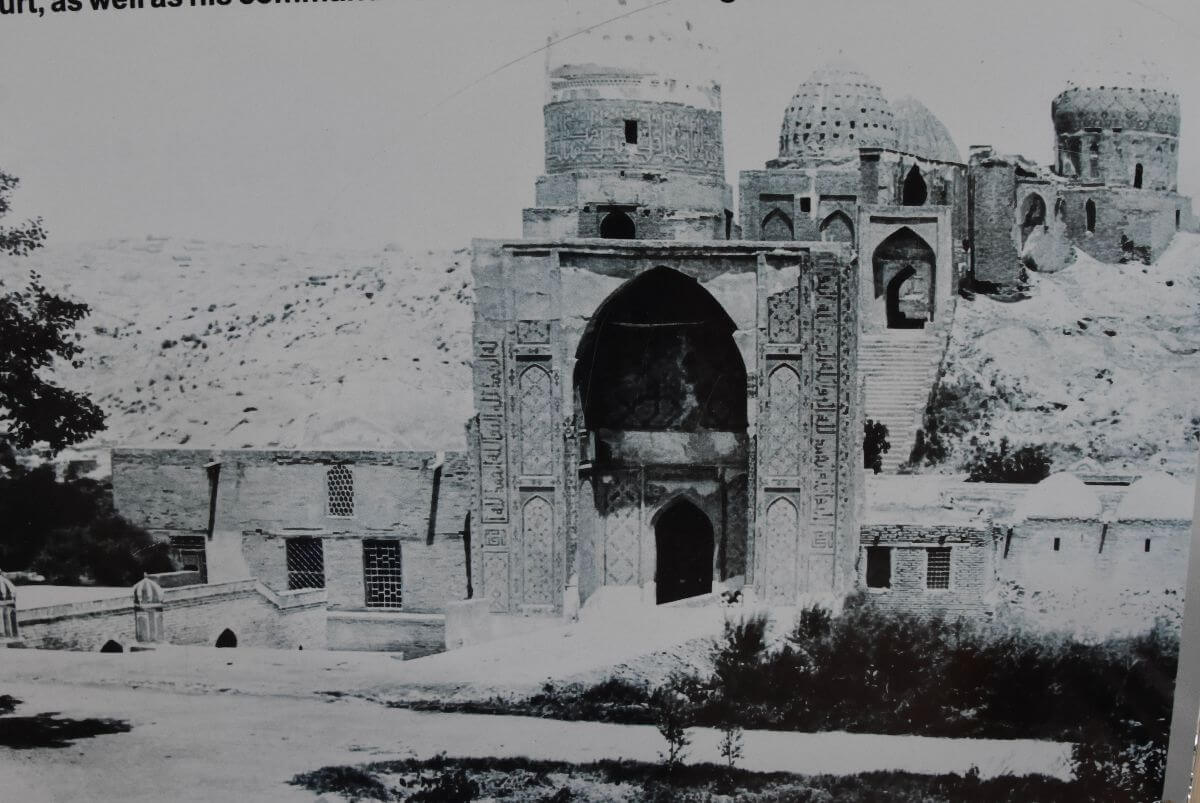
The necropolis underwent significant reconstruction during the Soviet era, followed by a massive restoration campaign in 2005 under independent Uzbekistan. Today, the Shah-i-Zinda necropolis isn’t just one of the most popular places to visit in Samarkand. This complex continues to function as one of the most sacred Islamic pilgrimage sites in Central Asia. Throughout the day, you’ll see worshippers praying quietly, touching shrine walls and performing religious rituals.
- LOCATION: The complex stands on the southern slope of ancient Afrasiab.
- OPENING TIMES: Officially open from approximately 7 AM to 10 PM. In reality, closing times vary throughout the year. During summer, access often continues around 8 PM, while winter closures can occur much earlier. Staff told us that opening hours frequently depend on visitor numbers.
- ADMISSION FEE: As of July 2026, foreign adults pay 80,000 UZS (USD 6.60) to visit the Shah-Zinda necropolis. Children aged 7-16 pay 40,000 UZS (USD 3.30).
- VISIT DURATION: Allow at least 1.5 -2 hours.
- DRESS CODE: Because this complex remains an active pilgrimage site, modest clothing is essential. Everyone should cover their shoulders and knees. Women should wear a headscarf to access shrine areas.
- TIPS: We arrived shortly after 7 AM on Tuesday in May. To our surprise, we had the Blue Avenue almost entirely to ourselves. By late morning, the complex becomes considerably busier.
PHOTOGRAPHY TIPS:
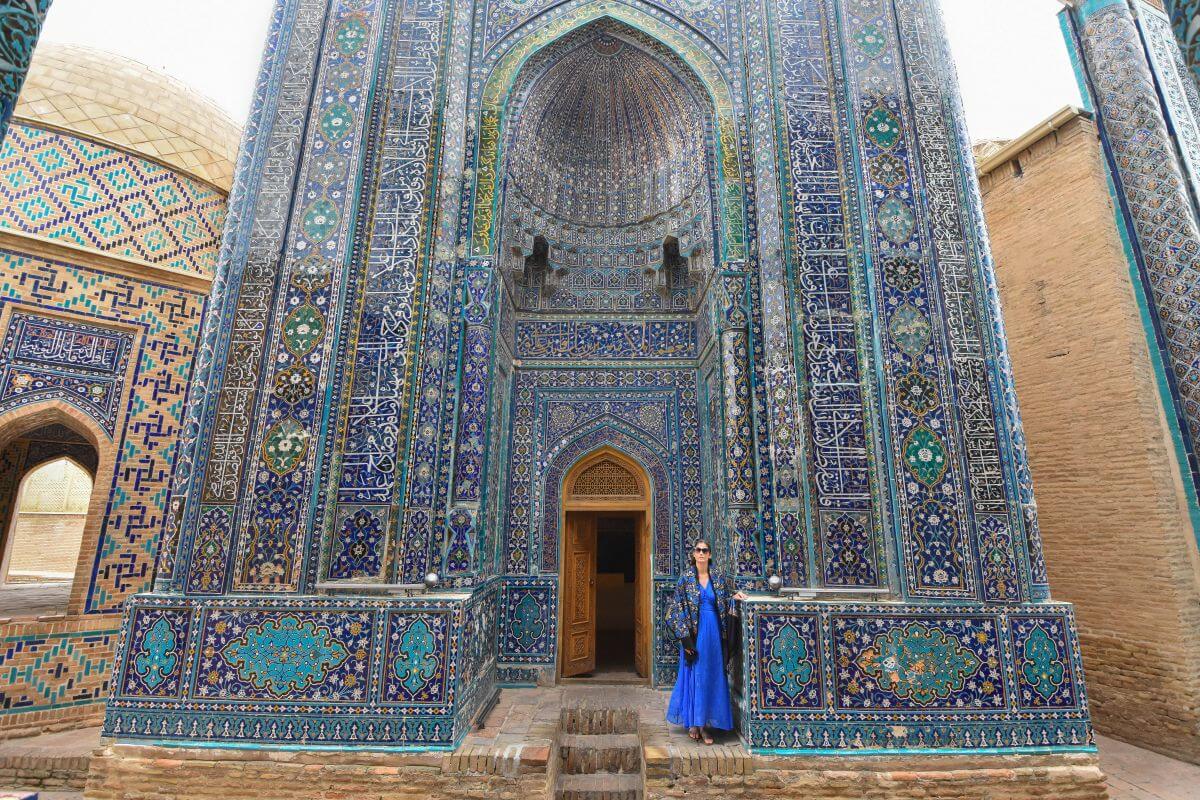
Golden hour before sunset also creates excellent conditions for photography. However, when we passed by a day earlier, we found the site to be busy. A wide-angle lens works best because the Blue Avenue is surprisingly narrow. Remember that organised photoshoots are prohibited inside the complex.
12. Afrasiyab
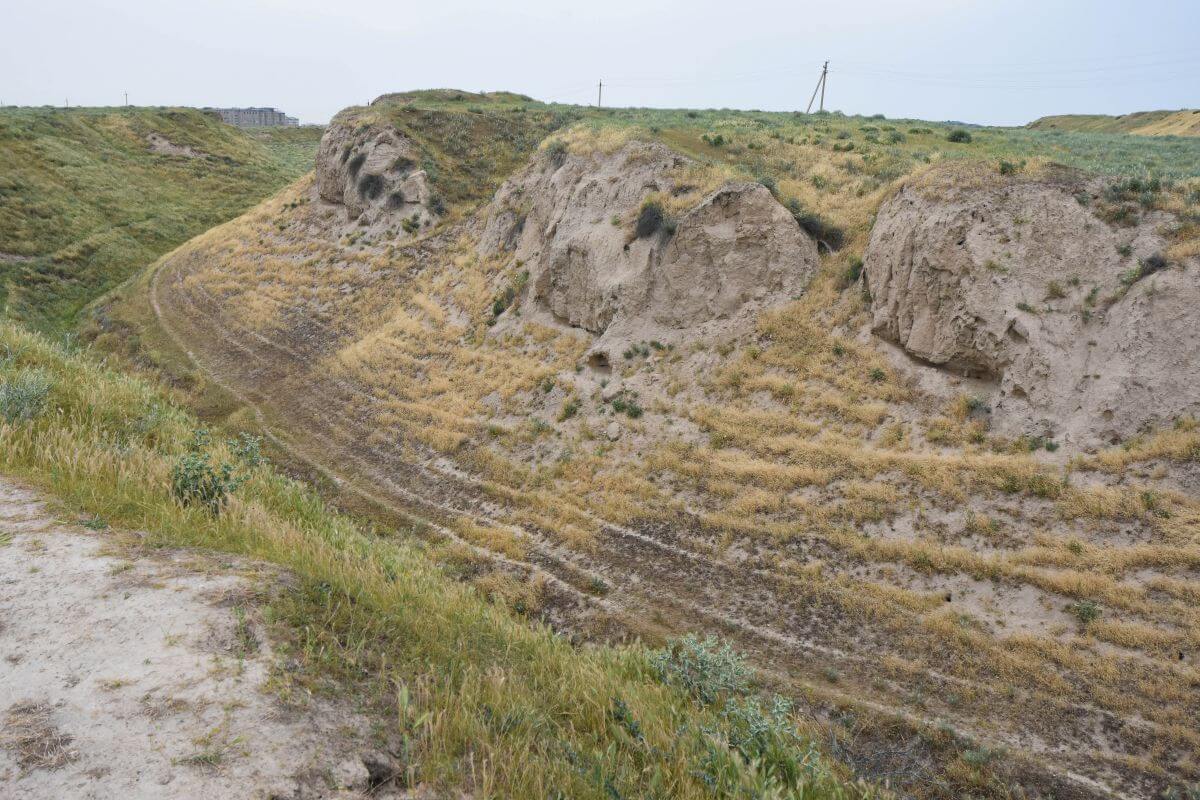
Before the famous domes, mosaics and monuments appeared, an entire city stood here. Located on low hills beside modern Samarkand, Afrasiyab preserves the archaeological remains of ancient pre-Mongol Samarkand. This ancient settlement flourished for nearly 1,700 years before the Mongol invasion in 1220. Historical sources explain that it became a major centre of the Sogdian civilisation. It prospered as a major, strategic Silk Road trading hub before Genghis Khan destroyed it.
Today, grassy mounds hide wealthy medieval dwellings, bathhouses and even ruins of a palace complex buried beneath the soil. You can wander freely across the excavated landscape and imagine the scale of the ancient city before visiting the nearby museum. Despite the historical importance, few visitors come here. During our Sunday afternoon visit, only a handful of locals were walking around.
GOOD TO KNOW:
Entry is completely free.
13. Afrasiyab Museum of Samarkand
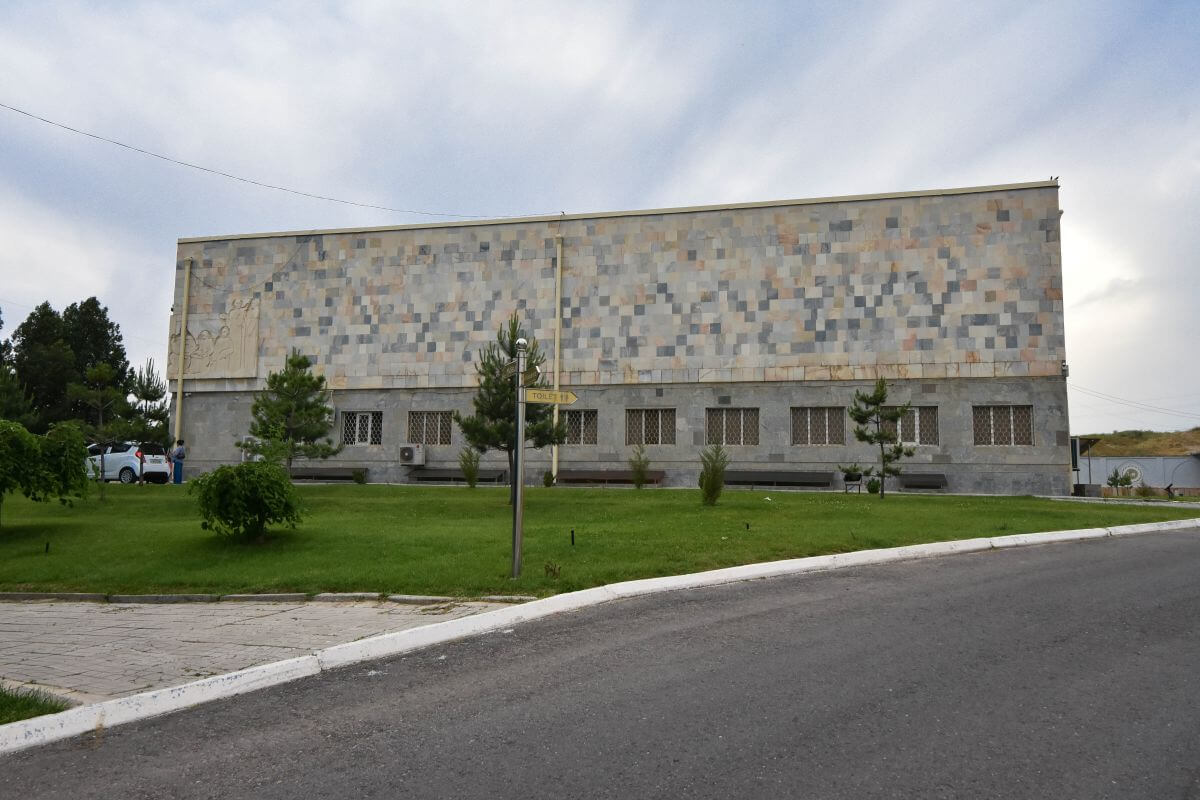
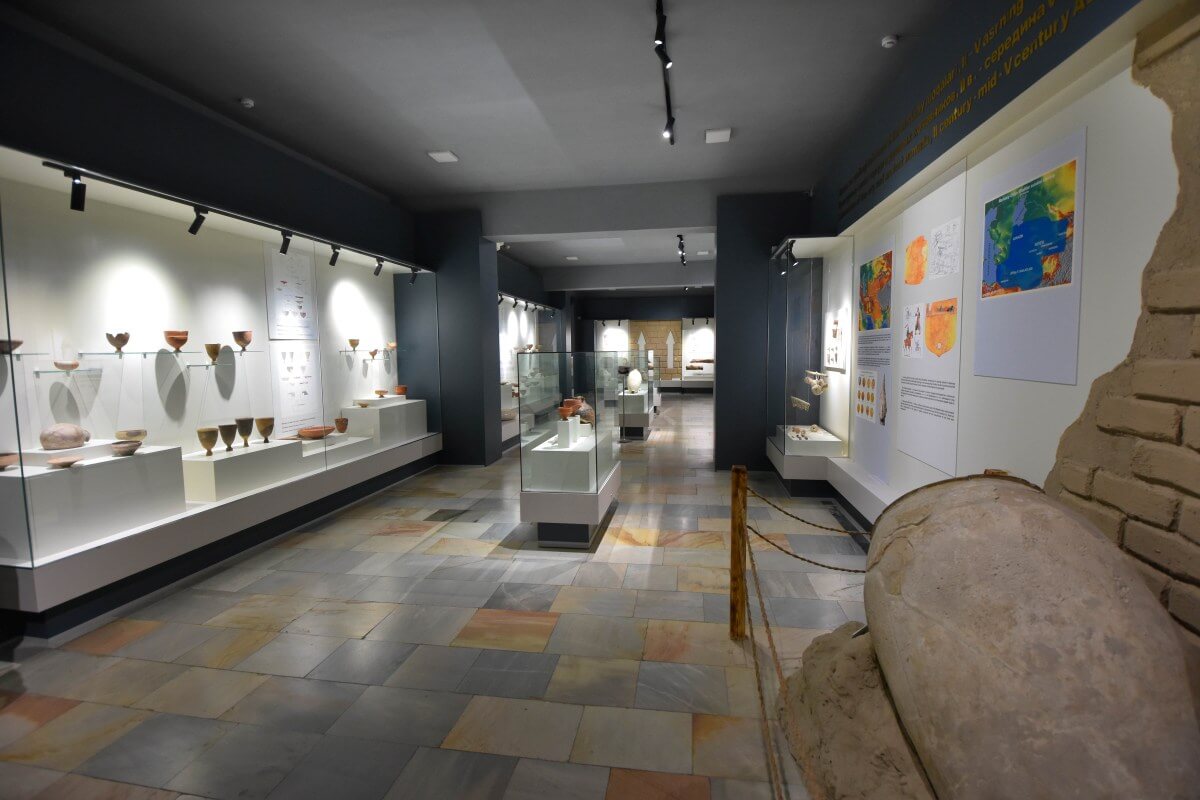
If the ruins leave you wondering what once stood beneath those grassy hills, the Afrasiyab Museum provides the missing pieces of the puzzle. Located beside the archaeological site, this fascinating museum tells the story of the ancient settlement through thousands of artefacts found during excavations. Opened to celebrate the city’s 2,500th anniversary, this unassuming Soviet-era building houses more than 1,000 objects from the ancient settlement and the surrounding region.
THREE FLOORS OF DISCOVERY
Start with the short audiovisual presentation near the entrance before exploring the galleries. It explains the history of the settlement far better than reading display labels alone. Afterwards, explore the museum’s treasures – the famous Afrasiyab Frescoes, often called the Paintings of the Ambassadors. Dating from the 7th century, these remarkable wall paintings once decorated the reception hall of a powerful local ruler.
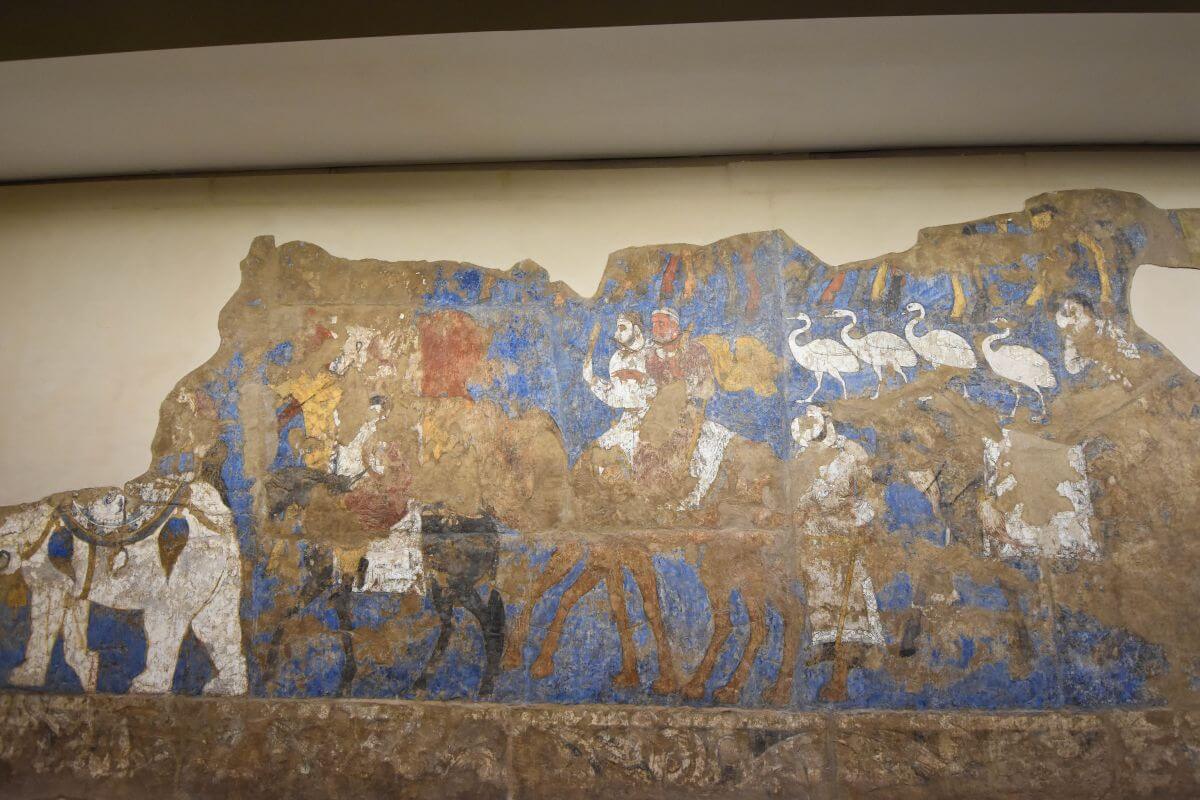
The Ambassadors’ Painting. Look closely, and you’ll see that they depict royal ceremonies and ambassadors from distant kingdoms. They also show hunting scenes and diplomatic exchanges that once shaped the Silk Road.
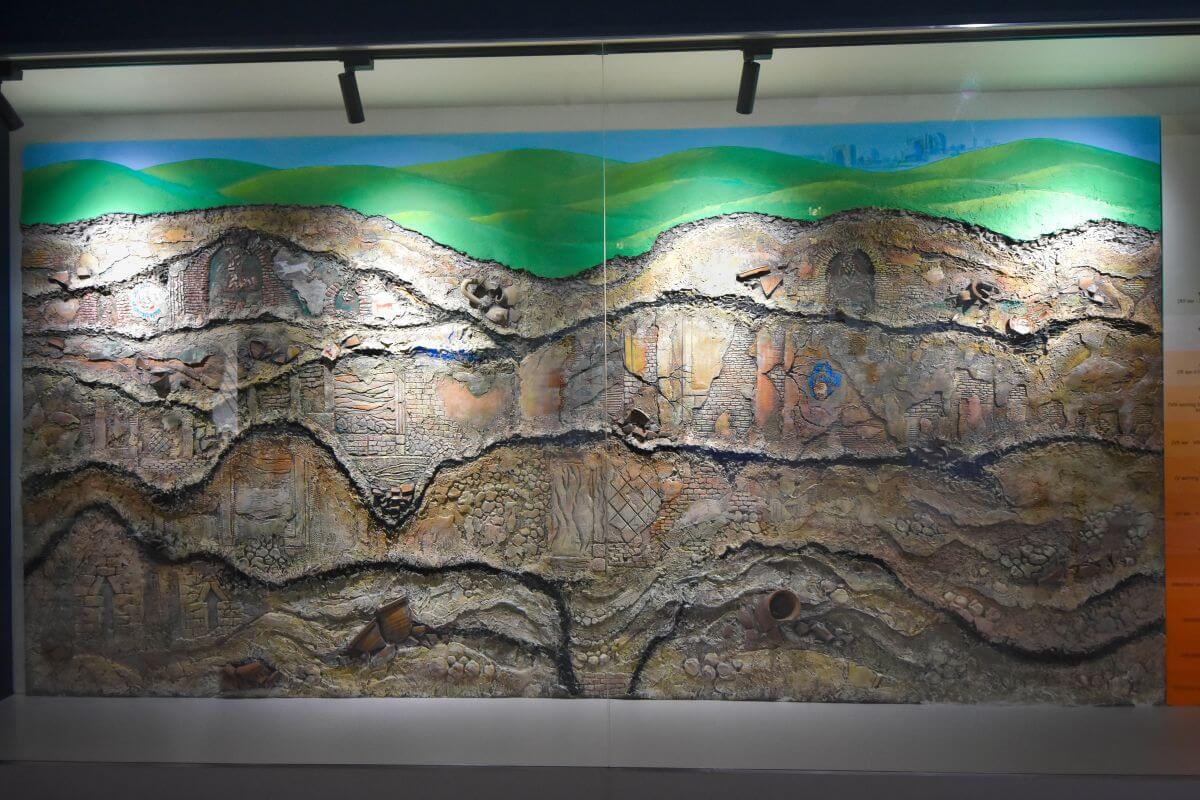
While the murals attract the most attention, don’t rush past the other exhibits. The museum spreads across three floors. It follows the settlement’s story from its earliest origins through later centuries. Ancient swords, coins, manuscripts, statues and rare Zoroastrian burial containers reveal how people lived centuries before the Timurid era. If you’re researching things to do in Samarkand for culture lovers, this museum explains the best of the city’s past and Samarkand’s importance within Uzbekistan.
GOOD TO KNOW:
- OPENING TIMES: Usually from 9 AM – 6 PM (often closed on Sundays).
- ADMISSION FEE: As of July 2026, the entry fee to the Afrasiyab Museum is 80,000 UZS for foreign visitors (cash only).
- VISIT TIME: 45-60 minutes.
- OUR EXPERIENCE: After exploring the nearby ruins on Sunday late afternoon in May, we wandered over, expecting the museum to be closed. To our surprise, the staff welcomed us inside and told us it would remain open until 7 PM. Apart from a few employees, we were completely alone inside, making this visit feel almost like a private tour.
14. Mausoleum of the Prophet Daniel
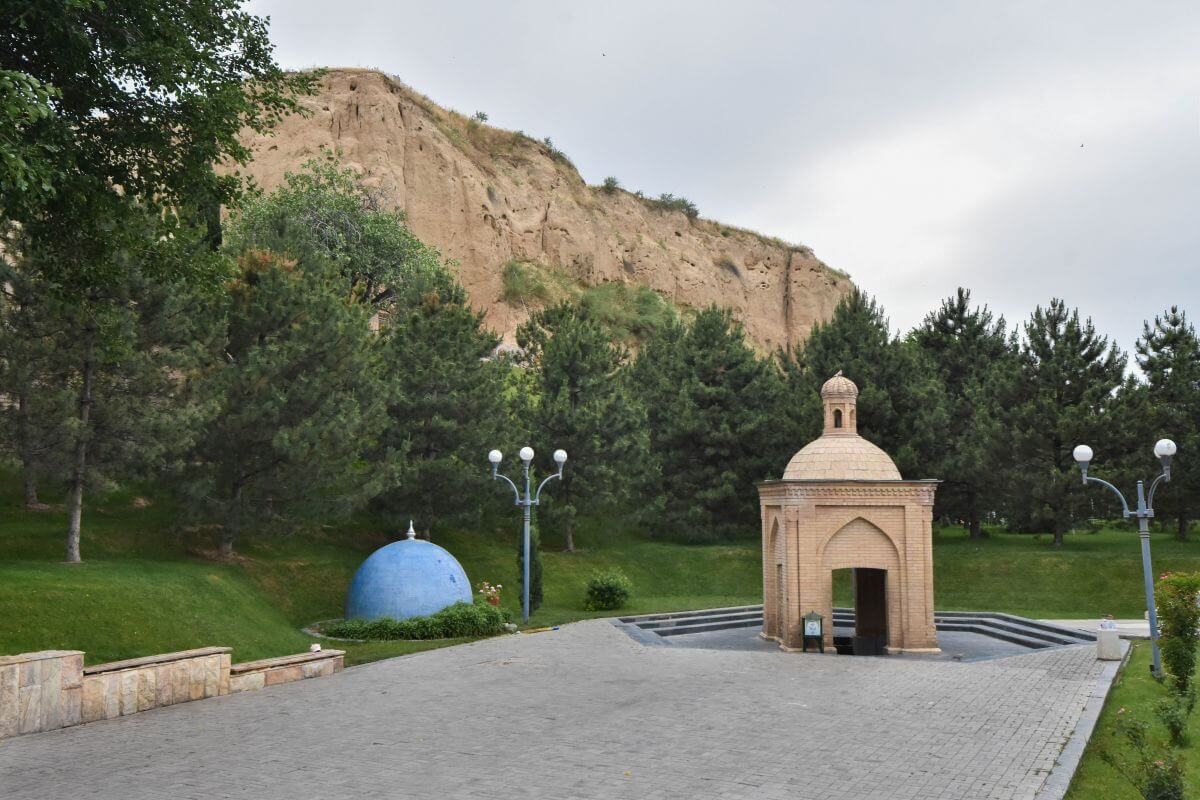
Tucked away beside the Siyob River stands one of the city’s most unusual sacred sites. The Mausoleum of the Prophet Daniel attracts a mix of Christian, Muslim and Jewish pilgrims. They come here to pay their respects to one of history’s most admired prophets. The mausoleum feels very different from other monuments in Samarkand and also Uzbekistan. Pilgrims arrive quietly to pray, reflect, and seek blessings. The peaceful setting adds to the atmosphere. Mature trees provide shade, birdsong replaces city noise, and visitors move quietly through the complex. According to local tradition, water from a nearby natural spring possesses healing qualities, and many visitors still drink it today.
WHY IS THE TOMB SO LONG?
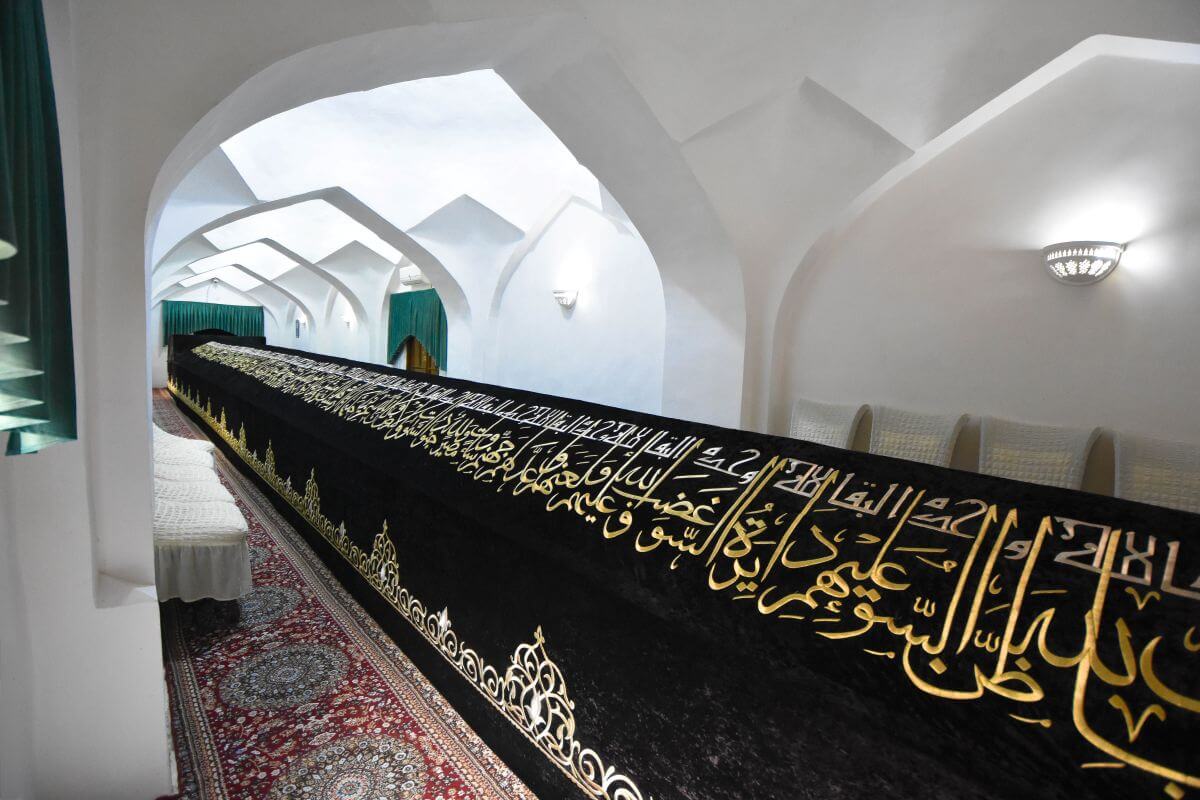
The first thing you’ll notice is the extraordinary length of the tomb. Stretching approximately 18 m (59 ft) , it’s far larger than a normal grave. Local legend offers several explanations. Some believe the prophet’s remains continued growing after his death. Others say Timur deliberately extended the tomb to protect the exact burial location from grave robbers. Nobody knows for certain, which only adds to the site’s appeal.
GOOD TO KNOW:
- LOCATION: 14-minute walk (3 min by car) from the Afrasiyab archaeological site.
- OPENING HOURS: Usually open daily from 8:30 AM – 6 PM.
- ADMISSION FEE: As of July 2026, the entry fee to the Mausoleum of the Prophet Daniel is 30,000 UZS for foreign visitors.
- DRESS CODE: Speak quietly and wear modest clothing, as this remains an active religious site.
- VISIT TIME: 20- 30 minutes
15. Take a day trip from Samarkand to Shahrisabz
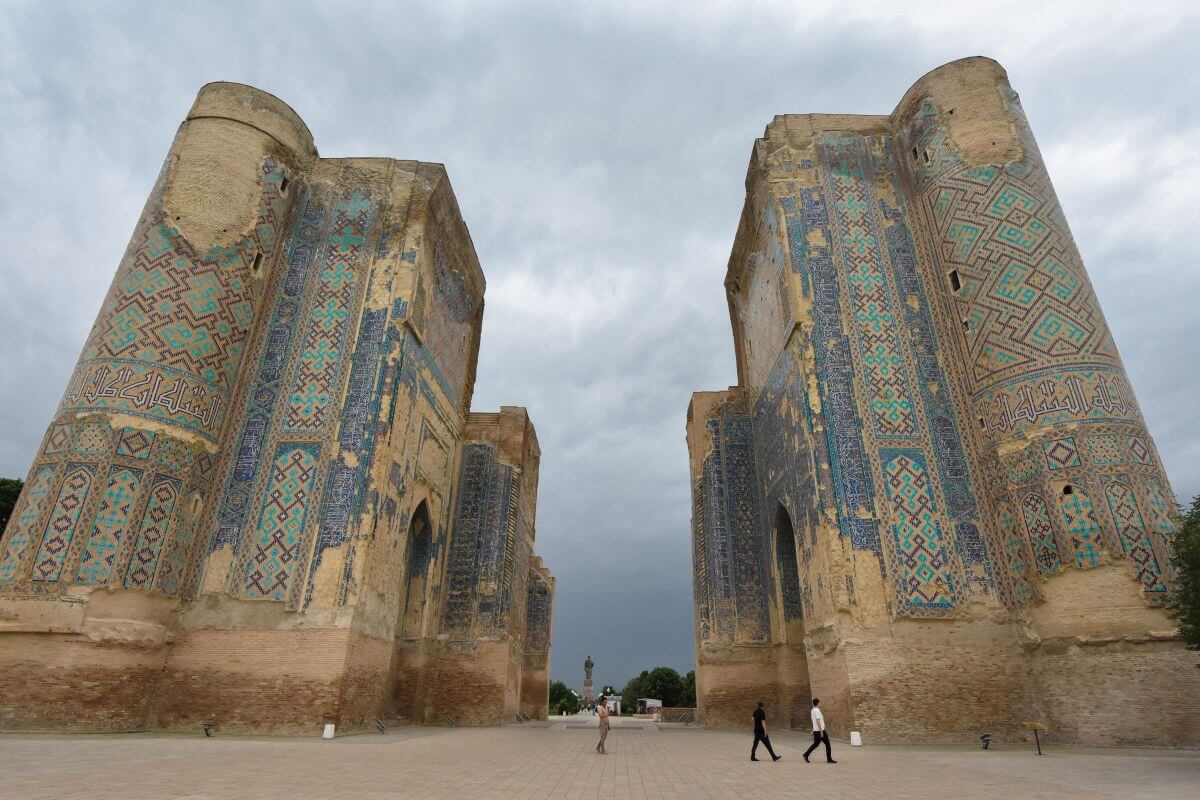
If you have already explored Samarkand’s grand madrasas and mausoleums, consider taking a day trip to Shahrisabz. Located approximately 90 km away (1.5-2 hrs), this city offers a fascinating look into the early life of Amir Timur. UNESCO added the Historic Centre to its World Heritage List in 2000 for its remarkable collection of Timurid-era monuments and its importance in the dynasty’s development. The drive to Shahrisabz also feels like part of the adventure. The road crosses the Gissar Mountains through the scenic Takhtakaracha Pass, offering views that you would never expect.
IS IT RIGHT FOR YOU?
This trip suits everyone who enjoys digging deeper into history rather than simply ticking off famous sights. If you enjoy history, architecture, UNESCO sites, and lesser-visited places, visiting Shahrisabz is one of the best things to do in Samarkand and Uzbekistan. However, if you have limited time, you may prefer to focus on the city’s larger landmarks, as some monuments lack the overwhelming scale found elsewhere.
16. Take a Day Trip from Samarkand, Uzbekistan to the Seven Lakes in Tajikistan
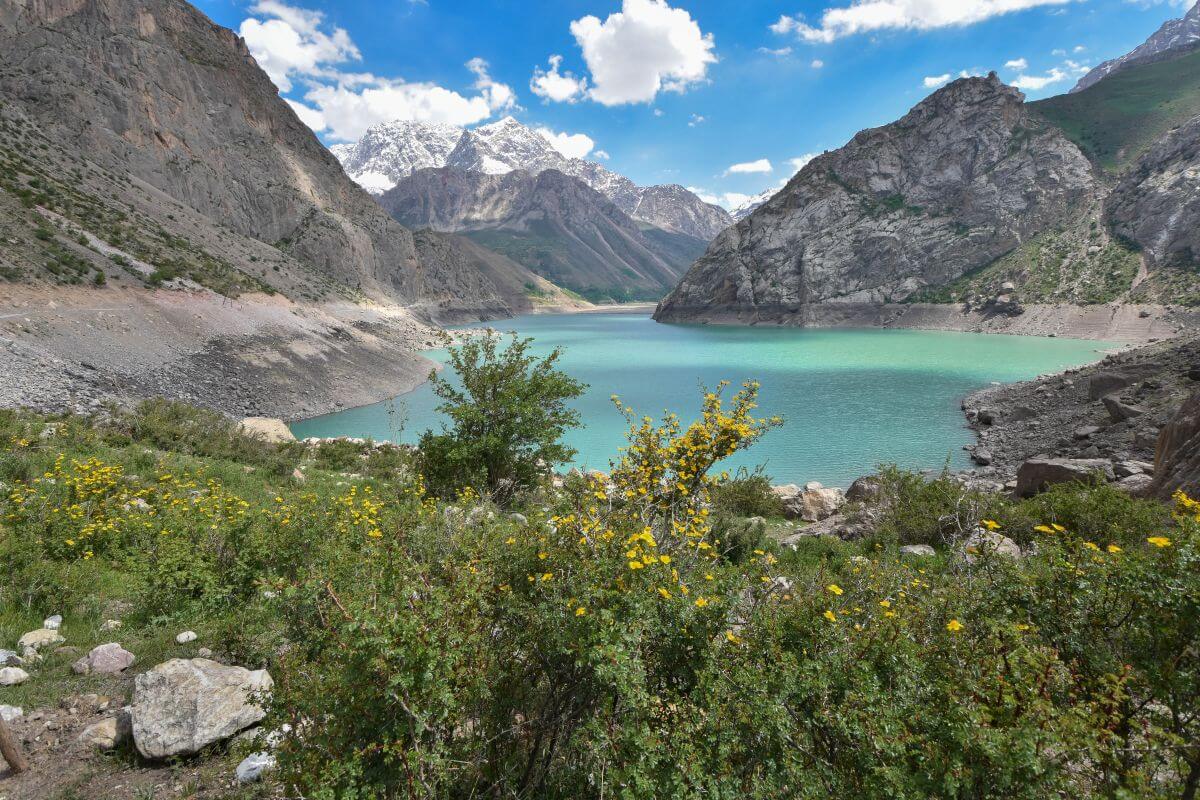
After several days of exploring monumental architecture with turquoise domes, crossing the border into Tajikistan feels like entering a completely different world. Located approximately 110 km east of the city, this unforgettable day trip from Samarkand in Uzbekistan takes you across an international border and deep into the rugged Fann Mountains. The Seven Lakes in Tajikistan tour offers one of the most rewarding escapes from the historic Silk Road landscape. In just one day, you can leave behind busy streets and towering madrasas. You’ll find yourself surrounded by scenic mountains and the seven lakes that stretch through the beautiful Shing River Valley. This was easily our favourite day trip from Samarkand, and we would happily do it again. If your itinerary allows, we strongly recommend making time for it.
READ MORE:

Now you know what the best things to do in Samarkand, Uzbekistan, are!
Thank you for staying with us until the end! If you’ve enjoyed this article about Samarkand in Uzbekistan, please consider sharing it to extend its reach.
Pin the best things to do in Samarkand, Uzbekistan, for later so you don’t lose them!
YOU MAY ALSO ENJOY: