In the heart of Samarkand, where ancient caravan routes once crossed, lies the breathtaking Registan – a grand public square framed by three towering Islamic monuments. As one of Uzbekistan’s most iconic landmarks, its beautiful courtyards and intricate tilework feel far more impressive in person than any photograph can capture. Many visitors focus only on snapping pictures, but there is so much more to discover when you know how to plan your visit. In this guide, we’ll share exactly what to expect, what to see, and the practical tips you need to maximise your experience. We also uncover its fascinating history and explain why Registan Square has earned its status as Samarkand’s crown jewel.
Why is the Registan Square in Samarkand Famous? 
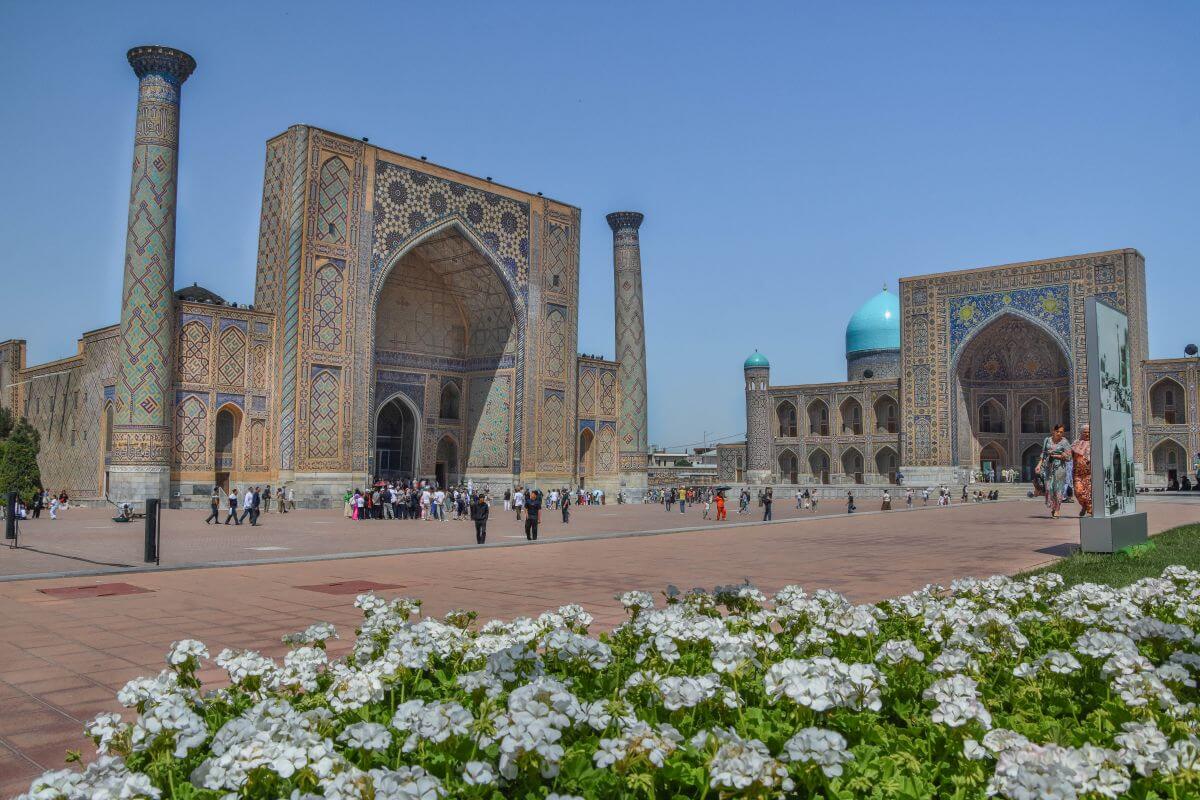
Registan Square is famous for its connection to the Silk Road, its magnificent Islamic architecture, and its Timurid Renaissance legacy. Its three grand masterfully tiled madrasas (the Ulugh Beg, Sher-Dor, and Tilla-Kori Islamic schools) showcase centuries of artistic achievements and UNESCO-listed heritage. Together, these 15th to 17th-century structures create one of Central Asia’s most recognisable architectural landscapes.
UNESCO World Heritage Status
Registan Square’s importance extends far beyond Uzbekistan. In 2001, UNESCO included the complex within the ‘Samarkand – Crossroad of Cultures’ World Heritage Site. This designation highlights the square’s historic role as a meeting point of global civilisations, ideas and trade routes that shaped the region for centuries. The UNESCO status also honours centuries of advanced Islamic scholarship, master craftsmanship, and international exchange that flourished here.
The Living Heart of Samarkand
Registan, derived from Persian, means ‘sandy place’ – a humble name for a colossal square where royal proclamations once echoed, brilliant minds debated, and Silk Road merchants bartered.
What makes this complex extraordinary is the remarkable harmony between its architecture, geometry, colour and decorative calligraphy. Facing the central plaza today stand three monumental Islamic schools: Ulugh Beg Madrasa, Sher-Dor Madrasa and Tilla-Kori Madrasa. Built across nearly two centuries, they reflect different periods of artistic and intellectual achievement while forming a perfectly balanced architectural masterpiece.
Six Centuries of Survival
Over the past 600 years, Central Asia has experienced devastating earthquakes, political disruptions, invasions, and periods of neglect. Although parts of the structures at Registan Square suffered severe damage, they were never completely destroyed.
What you can see today at Registan Square in Samarkand combines the original 15th-17th century framework with extensive restoration work carried out during the 19th and 20th centuries. Conservation specialists carefully studied surviving architectural elements before rebuilding damaged sections. Information panels and short videos explain that missing decorative tiles were recreated using original fragments as templates. This allowed craftsmen to reproduce the same colour, patterns, and glazing techniques used more than five centuries ago. The result is one of the most successful architectural preservation projects in Central Asia.
What to See at Registan in Samarkand
1. Ulugh Beg Madrasa
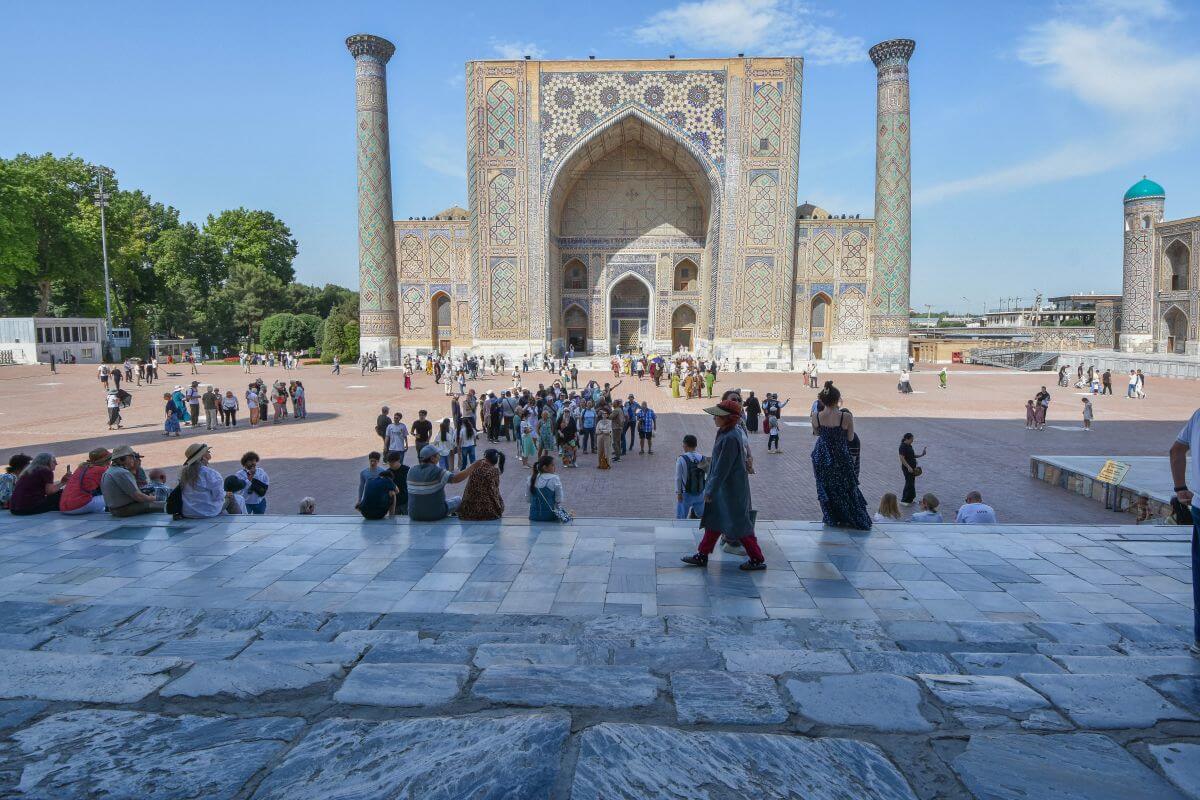
Standing on the left side of the Registan Square, this extraordinary monument is far more than a beautiful Islamic school. It represents a time when knowledge, science, and discovery shaped one of the greatest intellectual centres in the world.
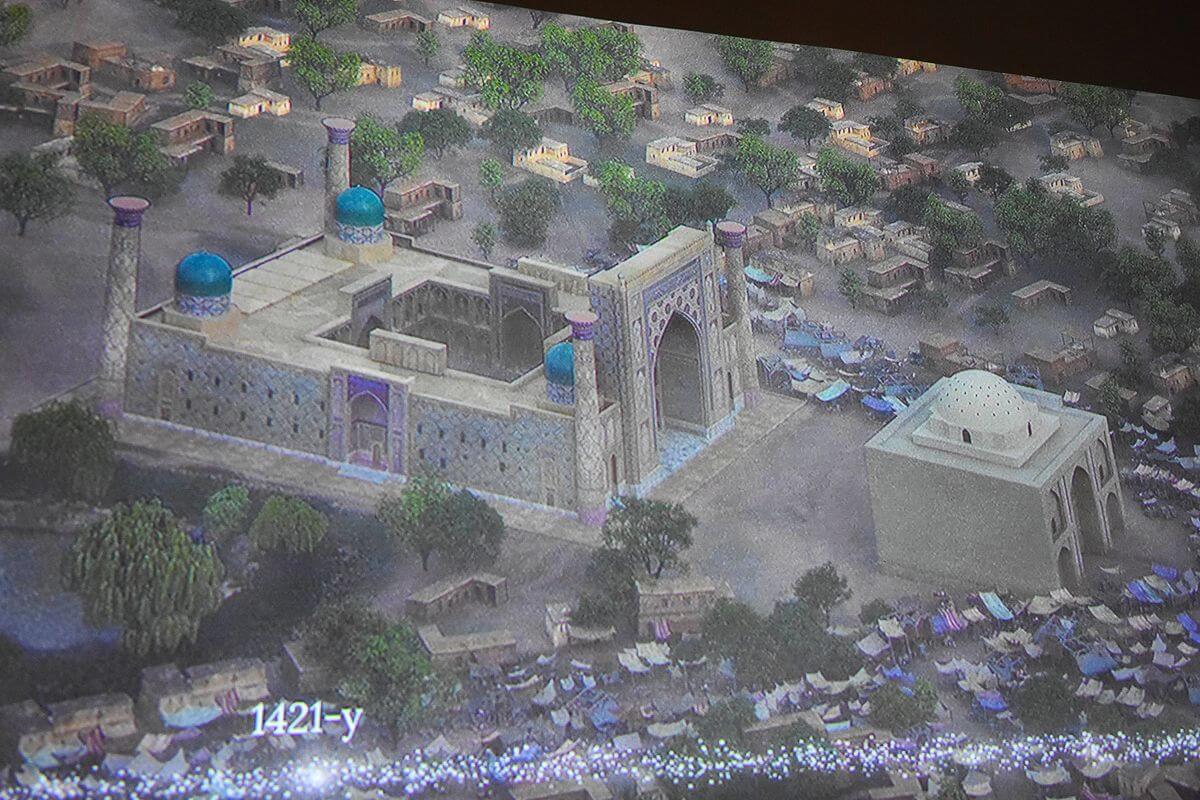
Built between 1417 and 1420 by the astronomer-king Ulugh Beg, the grandson of the conqueror Timur, it’s the oldest structure within the complex. The Ulugh Beg Madrasa is also the only surviving building from the 15th century. An information panel on the site explains that it once formed part of buildings that included mosques, caravanserais, a bazaar, and even a spiritual retreat for Sufi worshippers.
WHO WAS ULUGH BEG?
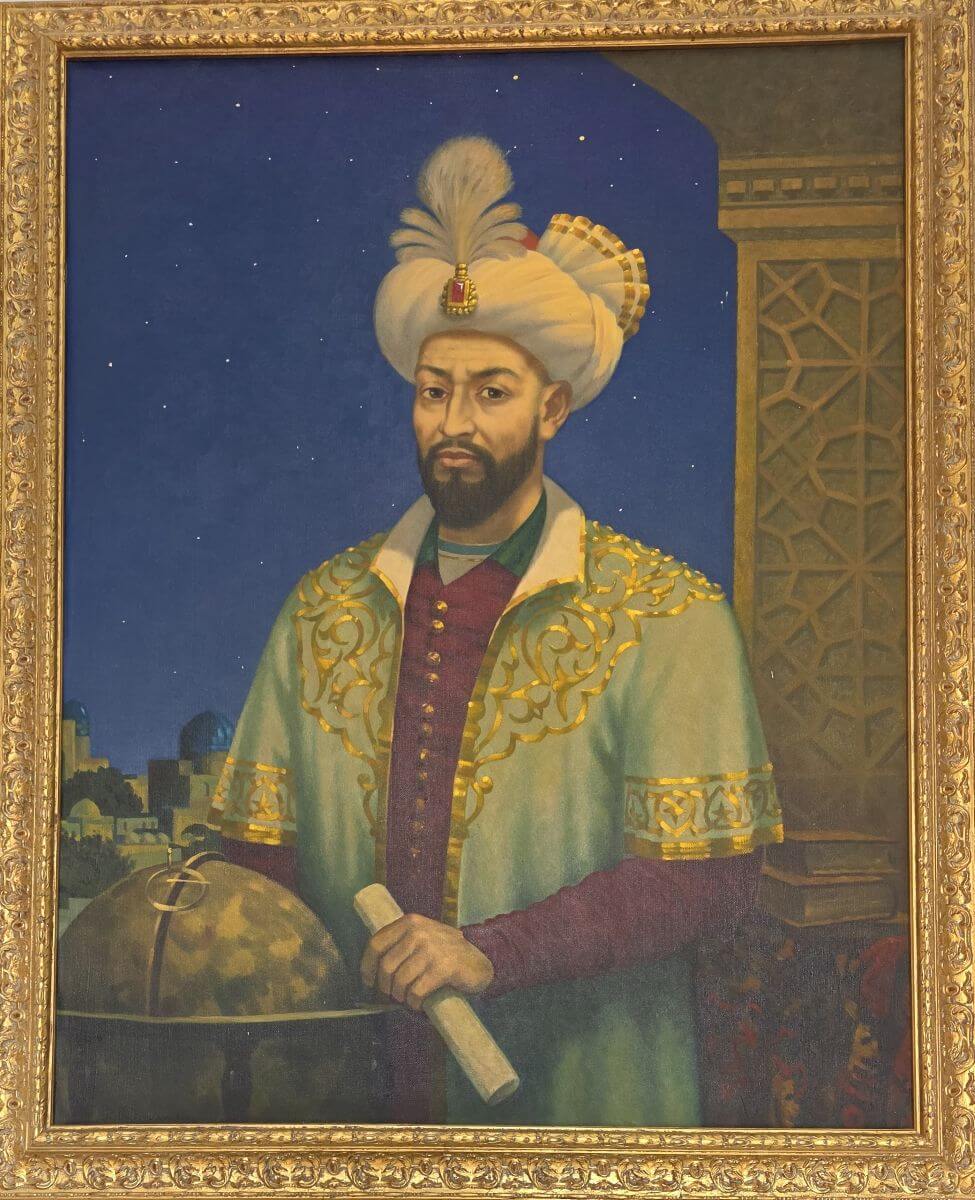
Unlike many rulers of his era, Ulugh Beg earned his reputation through scholarship rather than military conquest. Although he belonged to the powerful Timurid dynasty, his true passion lay in mathematics, astronomy, and scientific research. Historians regard him as one of the greatest astronomers of the medieval world. Long before the invention of the telescope, he mapped the night sky with astonishing accuracy. This astronomer king even produced star catalogues that remained influential for centuries.
Ulugh Beg’s fascination with learning shaped every aspect of this madrasa. Rather than creating a school focused solely on religion, he established an institution where students studied theology alongside other subjects. He even taught here himself and invited leaders from across the Timurid Empire to lecture within its walls.
DESIGN
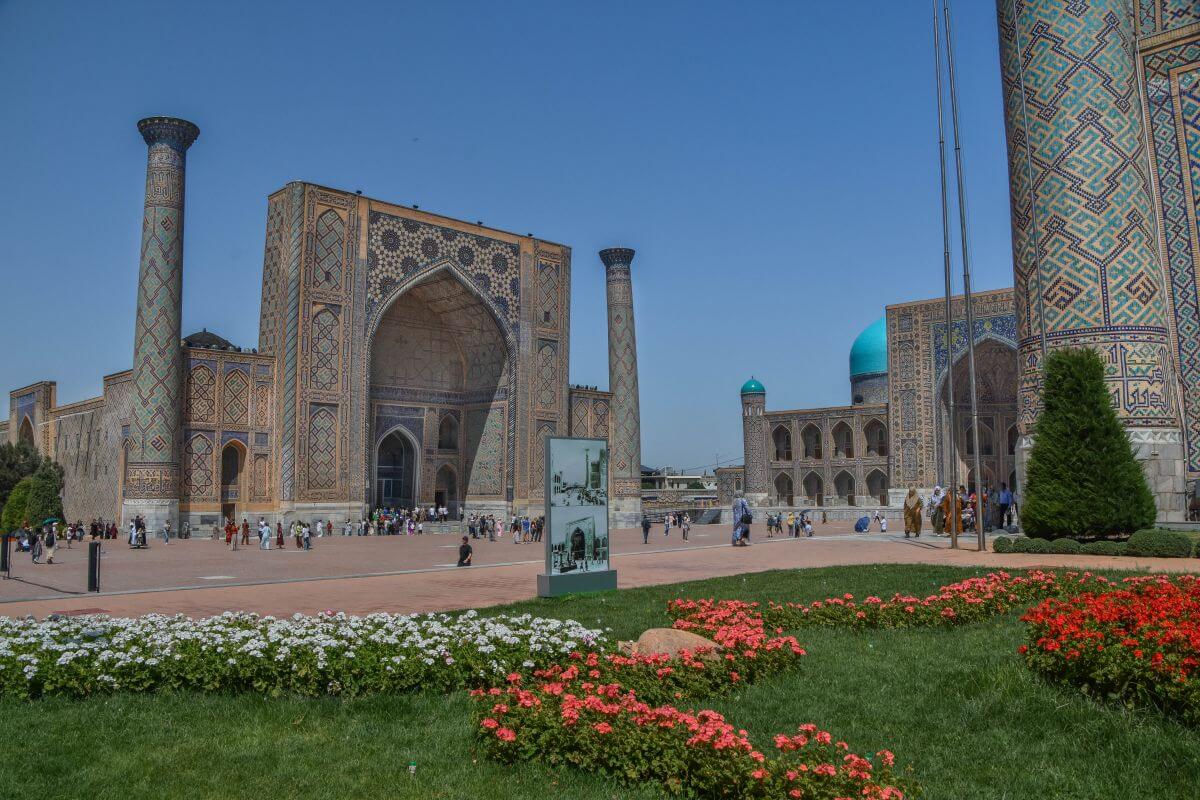
The elegant proportions and sophisticated decorations still reflect the ambition of the Timurid era. The building itself is an architectural masterpiece. According to historical records, the Ulugh Beg Madrasa follows a rectangular plan. Four minarets rise from the corners, each reaching 33 m (108 ft) in height. The structure surrounds a large central courtyard, while two-storey blocks line each side.
ONE OF THE GREATEST UNIVERSITIES OF THE ISLAMIC WORLD
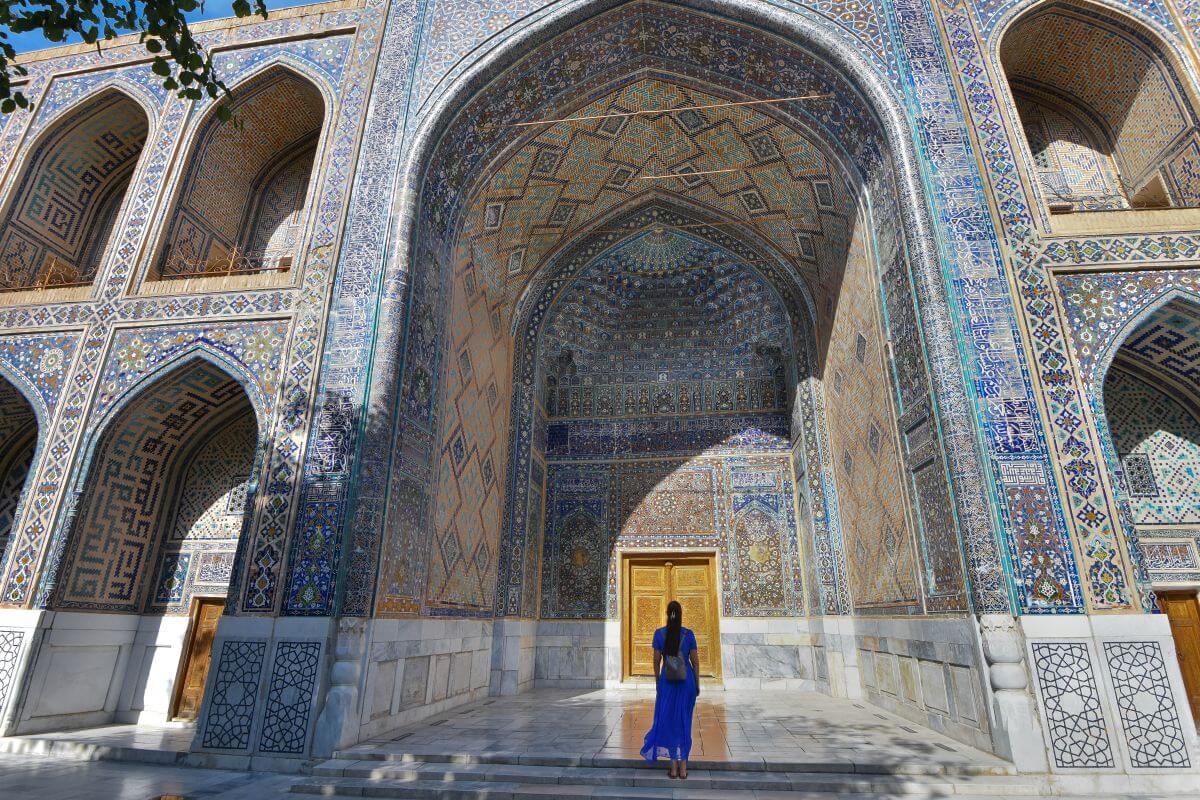
During the 15th century, this was much more than a religious school. The madrasa functioned as one of the most prestigious centres of higher learning in the Islamic world. Beneath the blue domes and perfect patterned tiles, students came to study the Quran, as well as mathematics, literature, poetry, and art. This reflected the city’s reputation as a centre of knowledge rather than simply trade.
LOOK UP
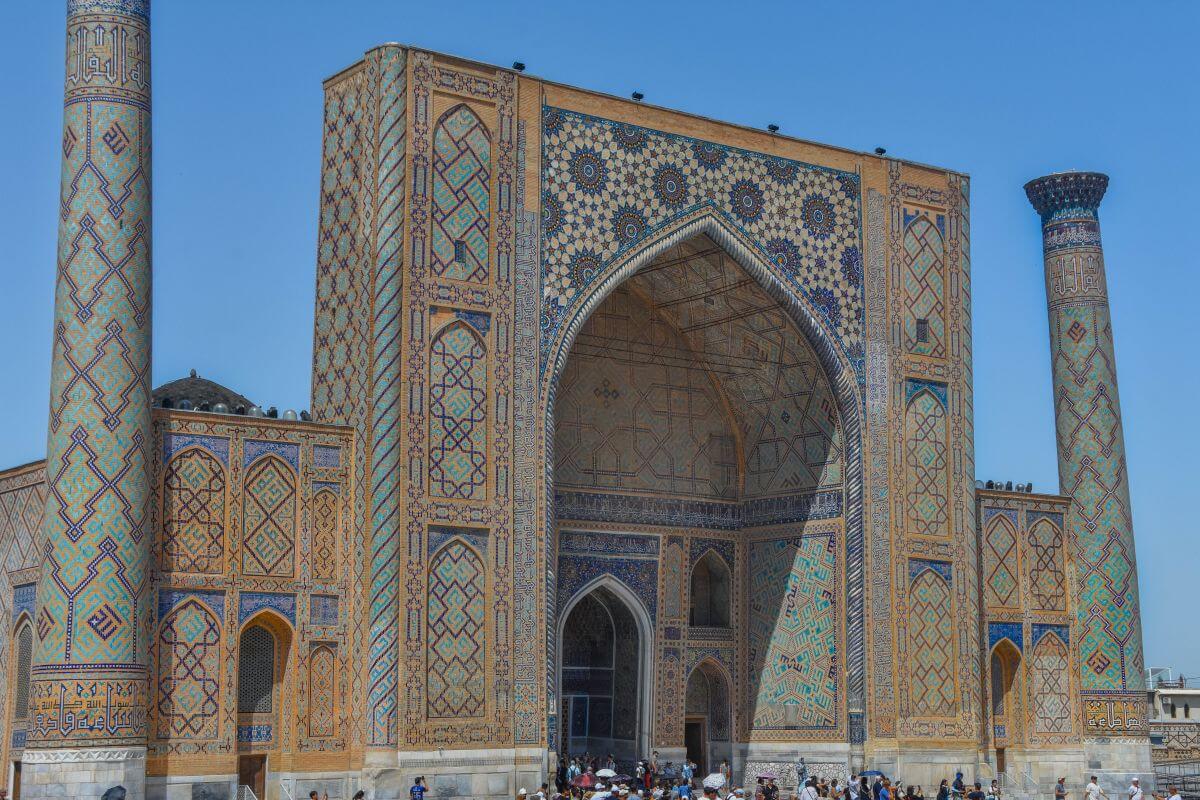
The entrance is especially impressive. Tourists pass through three monumental vaulted spaces that gradually lead from the outside world into the heart of the complex. Its enormous rectangular frame around an arched opening rises dramatically above the surrounding structure. This portal occupies roughly two-thirds of the front of the building. A Kufic inscription praises the building’s scale, declaring that its magnificent façade rises twice as high as the sky itself.
DON’T MISS THE BLUE STARS
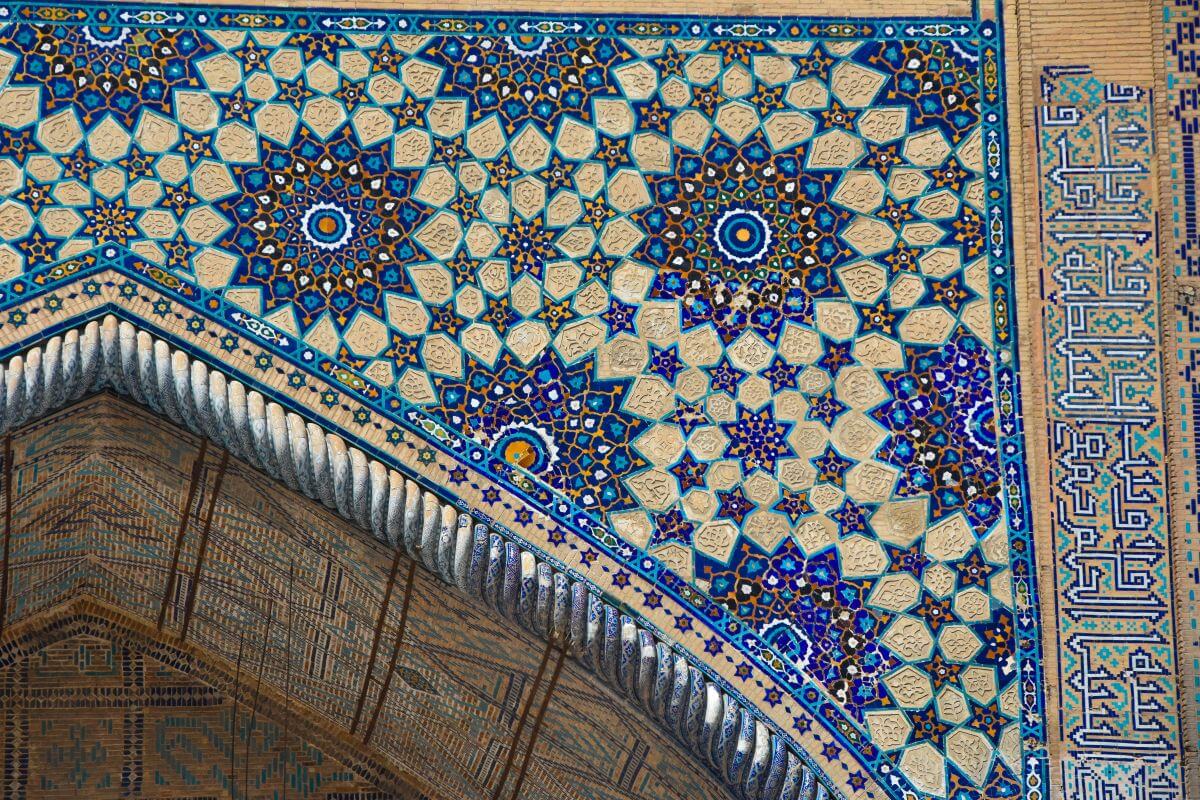
Before entering, take a moment to study the decoration around the main portal. Among the detailed geometric patterns, you’ll notice a beautiful display of blue stars in the design. These celestial motifs reflect Ulugh Beg’s obsession with astronomy and his desire to celebrate scientific knowledge through architecture.
Many people admire tilework without realising its deeper meaning. Once you know the story behind the stars, the entire façade becomes a tribute to the universe and the ruler who dedicated his life to understanding it. This small detail transforms the building from a beautiful monument into a personal statement from one of history’s greatest scientist-rulers.
WHAT TO SEE INSIDE TODAY
- THE INNER COURTYARD
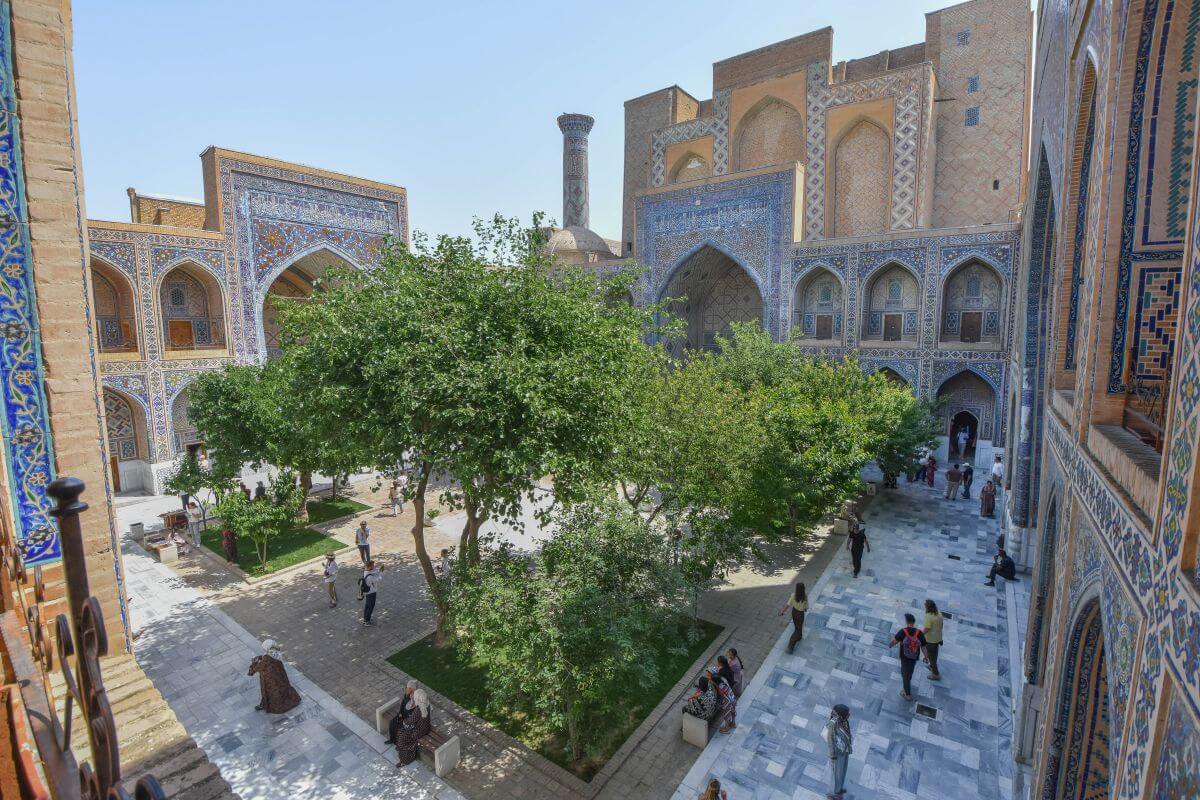
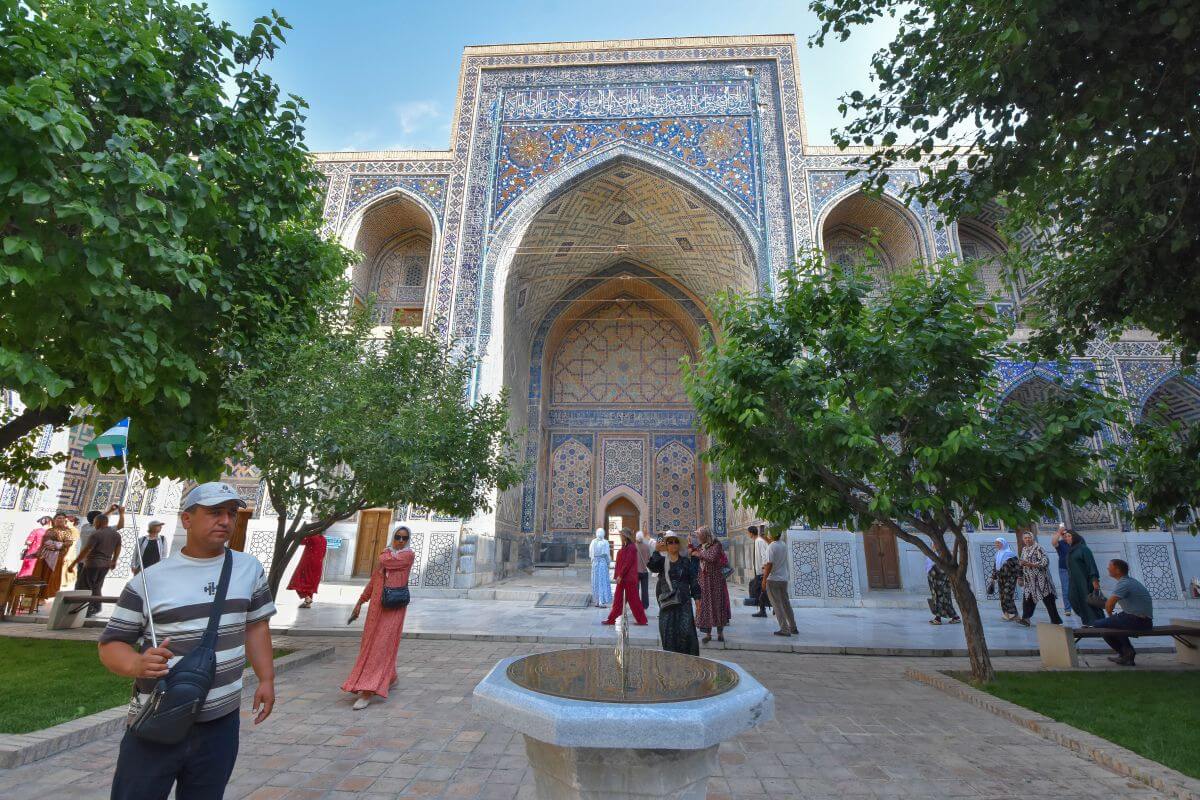
Walking through the courtyard today offers a glimpse into daily life at one of Central Asia’s earliest universities. More than 100 students lived and studied here at the same time. The inner courtyard is surrounded by approximately 50 two-storey hujras. These were small residential rooms designed to accommodate the demanding academic life of the madrasa.
- STUDENT ROOMS
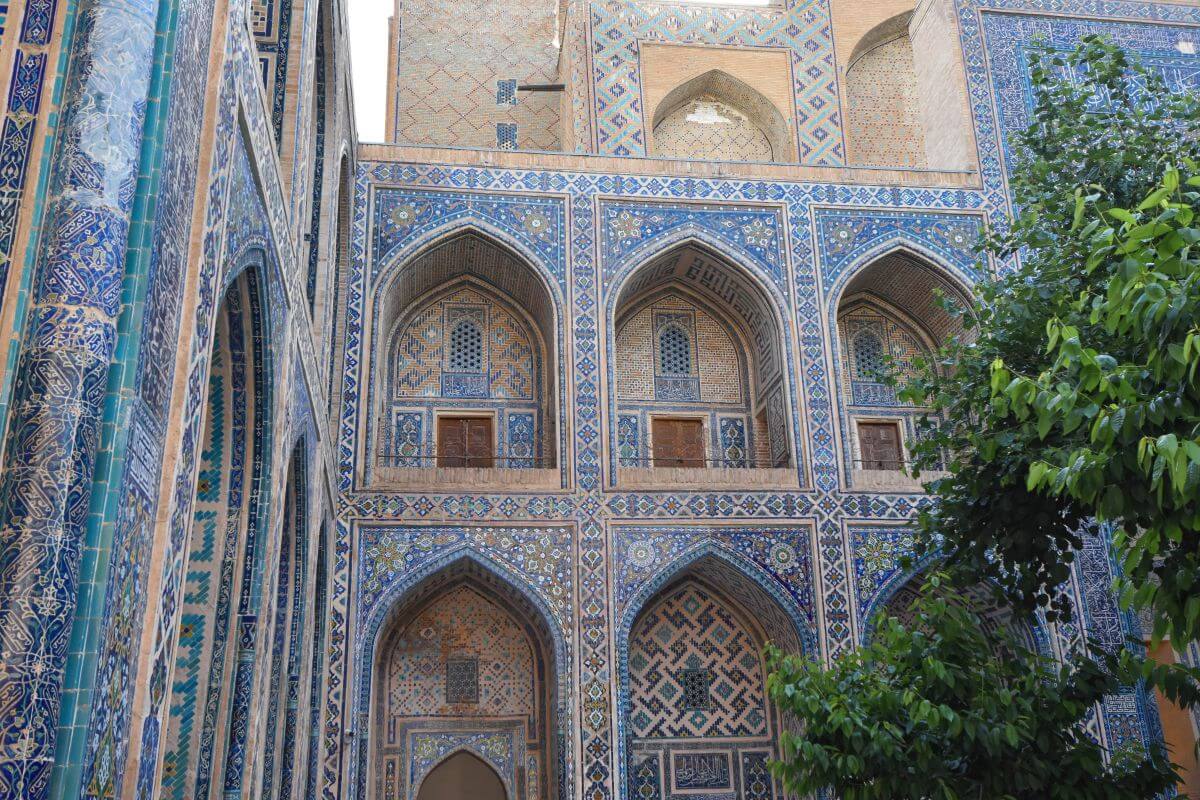
While many visitors focus entirely on the exterior, the interior also deserves equal attention. The former student rooms now house small workshops and souvenir shops where local artisans display ceramics, textiles, and traditional handicrafts. Unlike many souvenir markets, these spaces occupy the rooms where students once lived and studied. This creates a fascinating connection between past and present.
- ULUGH BEG SECTION
One section of the madrasa also celebrates the legacy of the astronomer king. You can find information panels, books, historical displays, and portraits that help bring his remarkable story to life.
- SECRET CAFÉ INSIDE THE MADRASA
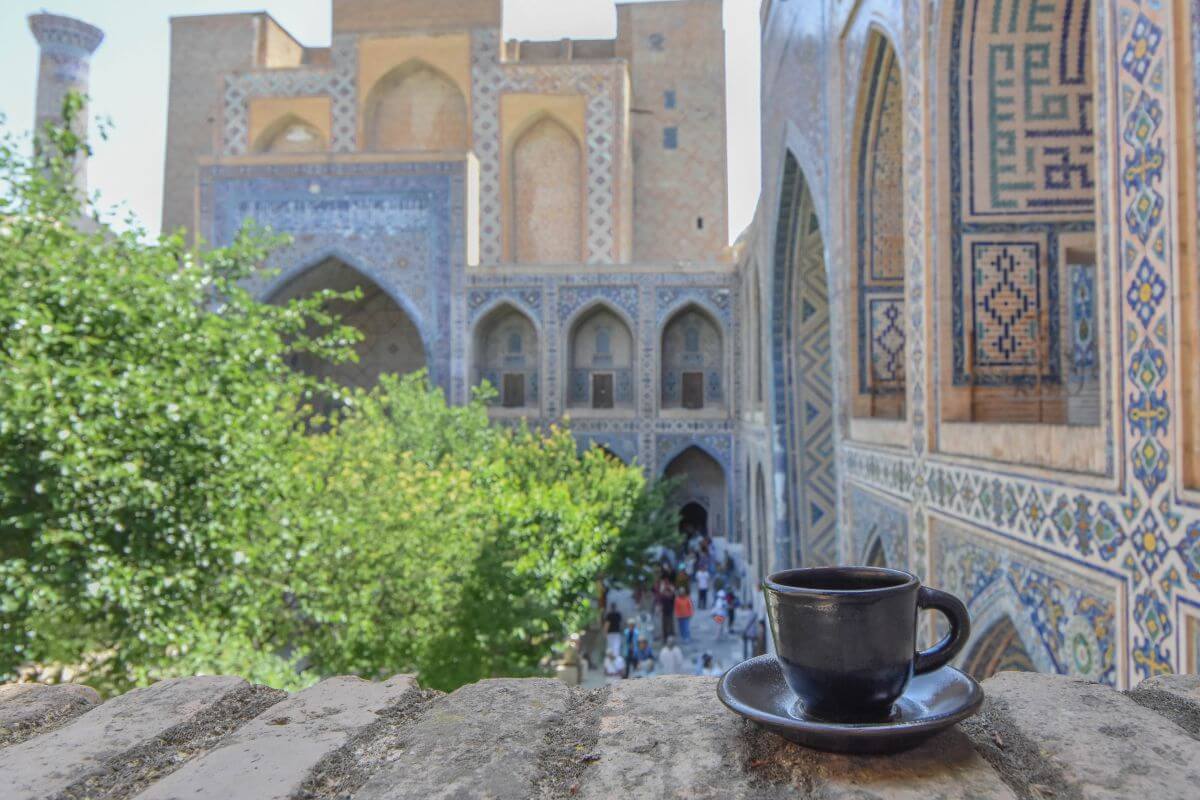
Most visitors never realise that the Ulugh Beg Madrasa hides a small café within its historic upper-floor rooms. This little-known spot offers a completely different perspective of the monument. It also remains one of the most overlooked experiences in the Registan Square complex.
Is it worth it?
Absolutely. The café serves traditional Turkish-style coffee. We found the coffee rich, strong and surprisingly good for such a small venue. When we visited in May 2026, the café was quiet, with only one other customer enjoying the balcony views. It provided a rare opportunity to slow down and chat with a local resident. We could also appreciate the madrasa’s atmosphere beyond its famous architecture.
While the coffee was excellent, the setting is what makes this place special. Sitting in a room that once housed students more than 600 years ago makes this a unique experience. From the balcony, you can also enjoy breathtaking views across the courtyard while escaping the crowds below.
HOW TO FIND IT
After entering the madrasa, continue through the main portal into the central courtyard. Walk through the courtyard and on the left-hand side. Look for the staircase that once gave students access to the upper-level living quarters. Climb the stairs and follow the balcony walkway. The café occupies one of the historic rooms and is easy to miss if you don’t know it’s there.
TIP
If you have trouble locating it, ask one of the local shopkeepers in the courtyard. During our visit, one of them was happy to point us in the right direction.
Can you climb the minaret of the Ulugh Beg Madrasa at Registan Square, Samarkand?
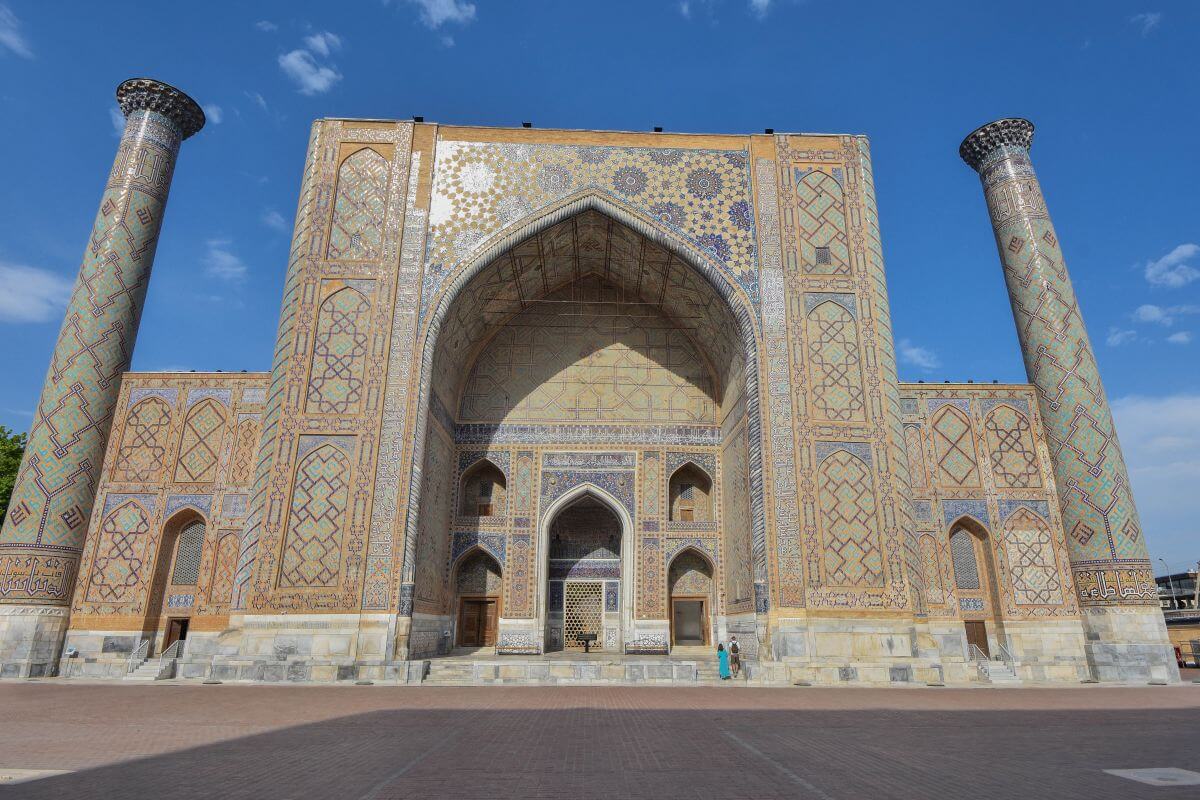
Before our trip to Samarkand, we planned to climb one of the minarets of the Ulugh Beg Madrasa. Several travel blogs mention that climbing the minaret is possible, although it isn’t an official part of the visit. According to these reports, visitors usually need to speak with local vendors or site staff near the entrance and agree on an additional payment. The extra cost should be around 20,000 to 50,000 UZS on top of the general entrance ticket.
We also read that the staircase inside the minaret is extremely narrow and steep. Only two people are allowed inside at the same time. This means the climb can be challenging and is not suitable for everyone. However, when we visited in May 2026, we were told that climbing the minaret was no longer possible because the access had been closed following a UNESCO-related preservation decision. Therefore, although older reports suggest climbing was possible, you should check it to avoid disappointment.
2. Sher-Dor Madrasa
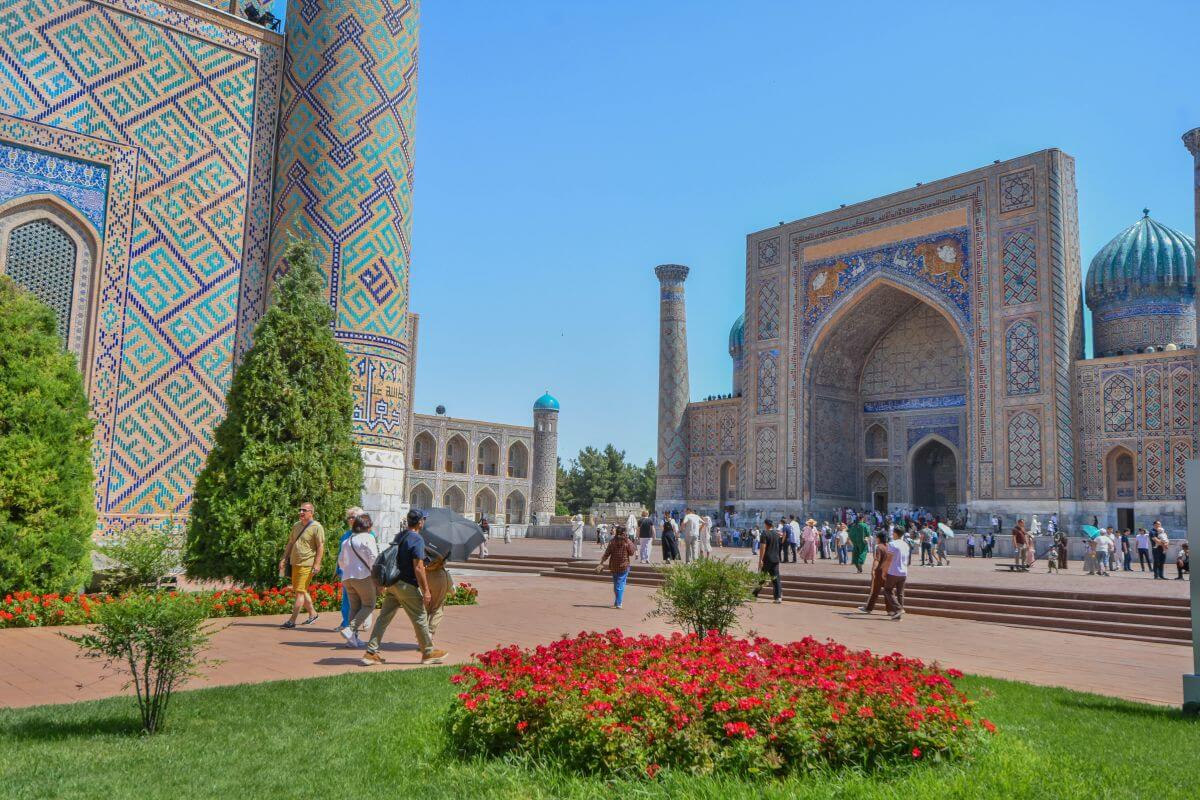
The building that breaks the rules
The moment you turn your attention to the right-hand side of the Registan Square, one building immediately demands a closer look. While many historic Islamic monuments rely on geometric patterns and calligraphy, the Sher-Dor Madrasa takes a bolder approach.
According to an information panel on the site, the Sher-Dor Madrasa dates back to the 16th century. The powerful governor of Samarkand, Yalangtush Bahadur, built it between 1619 and 1636. This magnificent madrasa was designed to revive the city’s cultural and educational importance after the Timurid era. More than 200 years had passed since Ulugh Beg created his famous school. Yet, Governor Yalangtush Bahadur wanted to restore the architectural balance of the Registan Square by constructing a matching institution opposite it. The result is one of the most distinctive monuments in Central Asia.
WHY IS IT CALLED SHER-DOR?
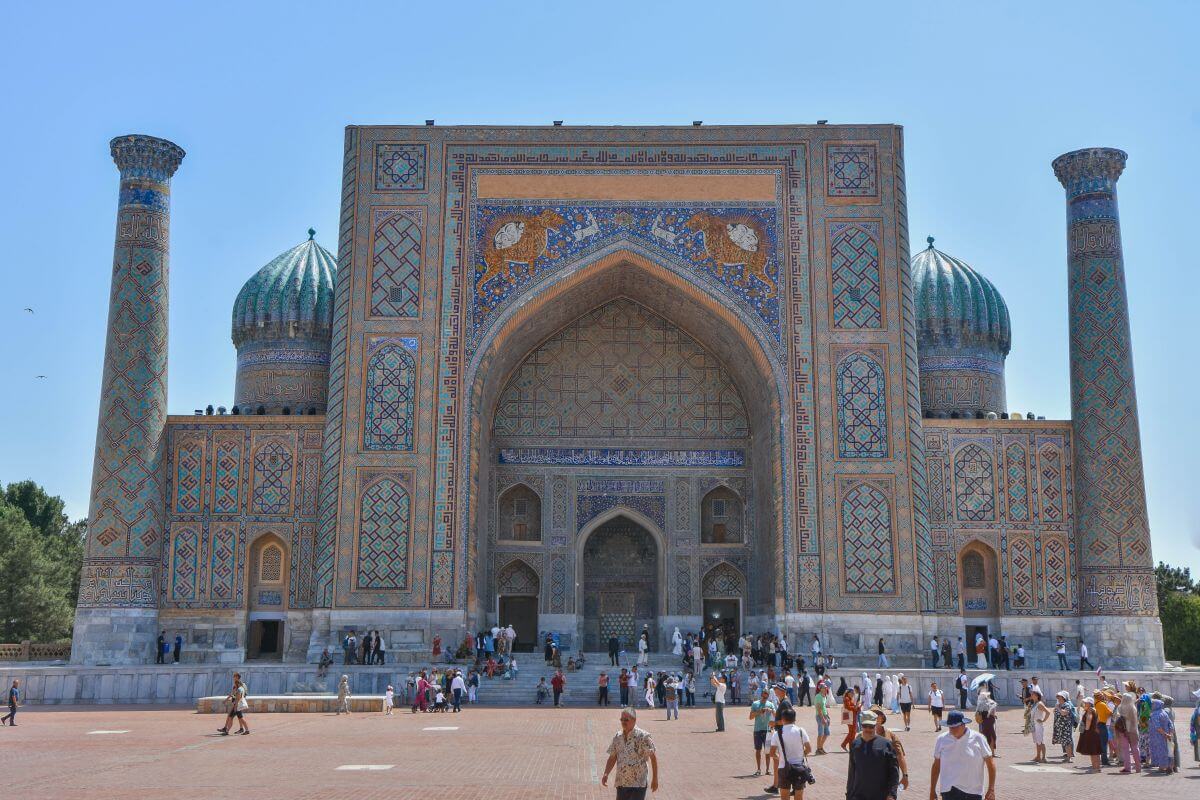
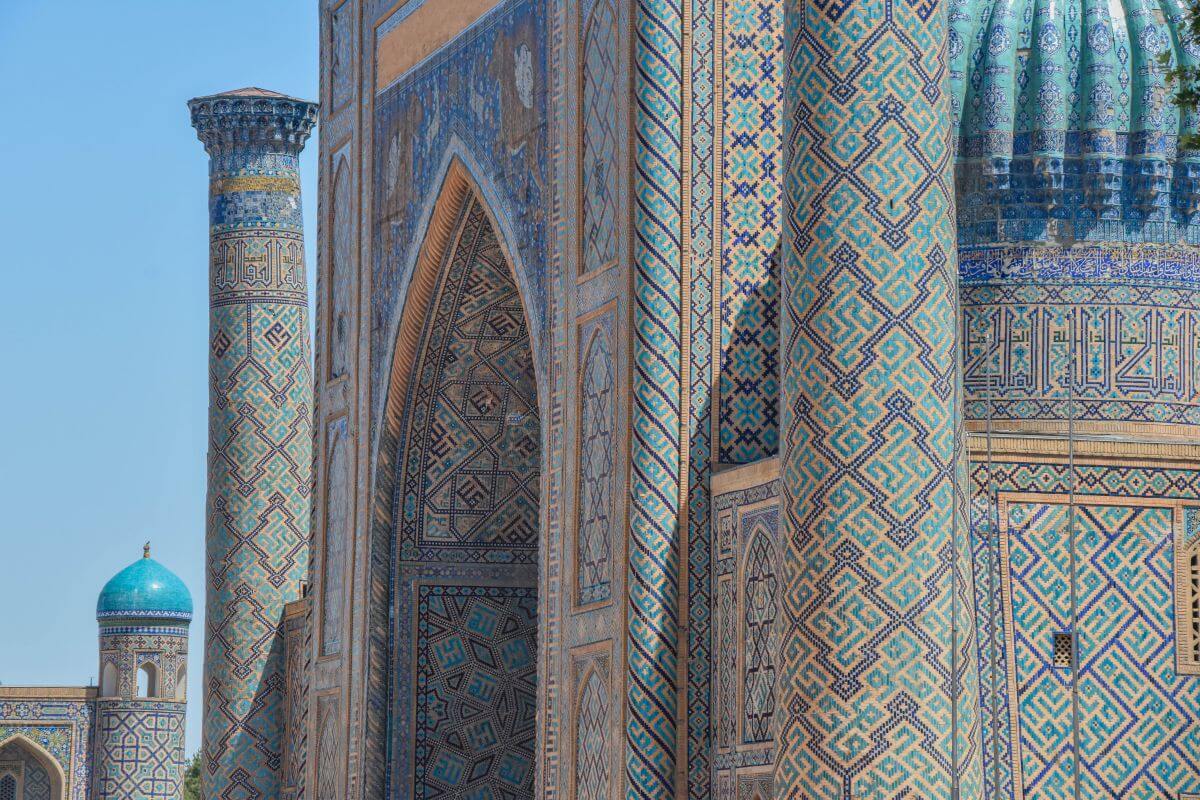
The name ‘Sher-Dor’ translates as ‘Having Lions’, although the creatures decorating the building’s facades are not actually lions. If you look closely, you’ll notice enormous tiger-like cats racing across the entrance portal. These mythical animals have become one of the most recognisable symbols of Uzbekistan.
What makes them so remarkable is that they appear on an Islamic religious building. Traditional Islamic artistic methods generally discouraged the depiction of living creatures, particularly on important religious structures. Yet here, the architects deliberately ignored convention and created the building that stands out among historic monuments across the country.
THE SECRET OF THE SUN GODS
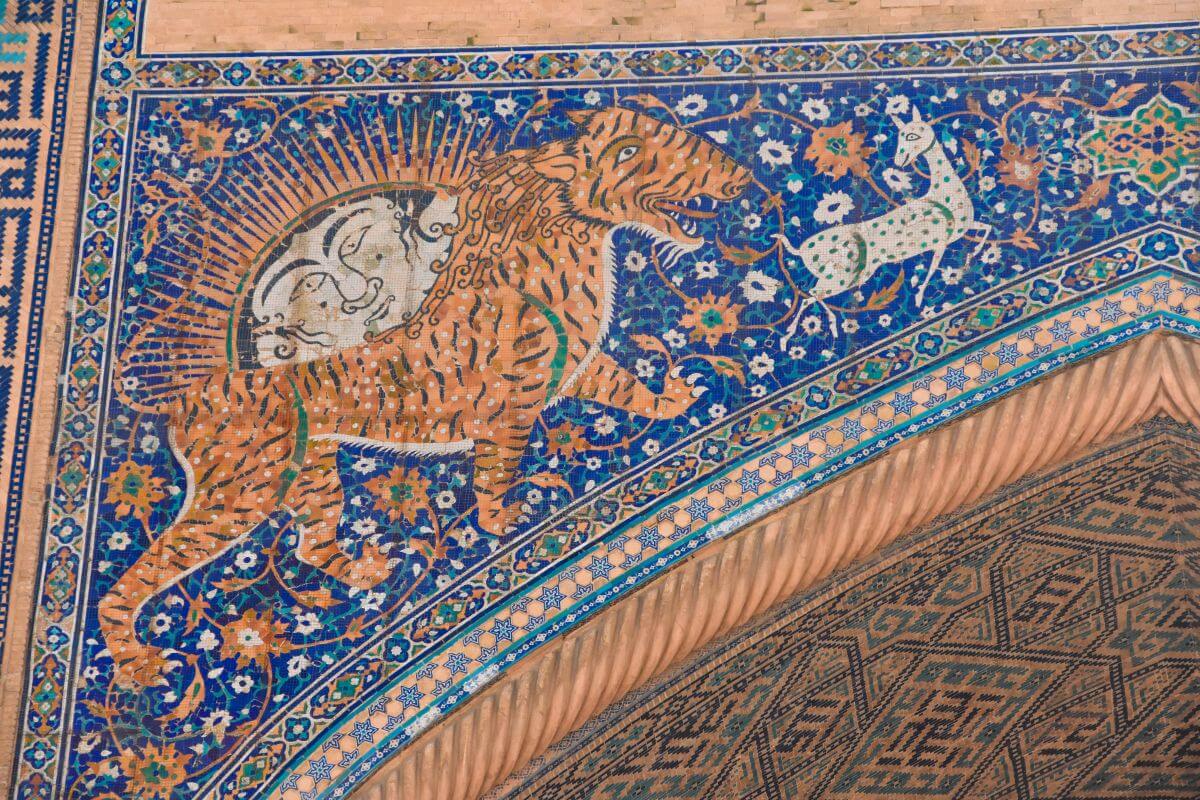
Most people notice the giant animals immediately, but only a few notice what sits above them.
Rising from the back of the tiger-like creatures are human-like faces surrounded by rays of light. This unusual image represents the sun and reflects artistic influences that predate Islam in Central Asia. The motif draws inspiration from Zoroastrian traditions that flourished across the region long before the arrival of Islam. Rather than creating conflict, the design reveals how different cultural traditions blended together over centuries.
This combination of Islamic architecture and pre-Islamic symbolism helps explain why the Sher-Dor Madrasa remains one of the most unique landmarks in the Registan Square.
THE SYMBOL MOST VISITORS MISS
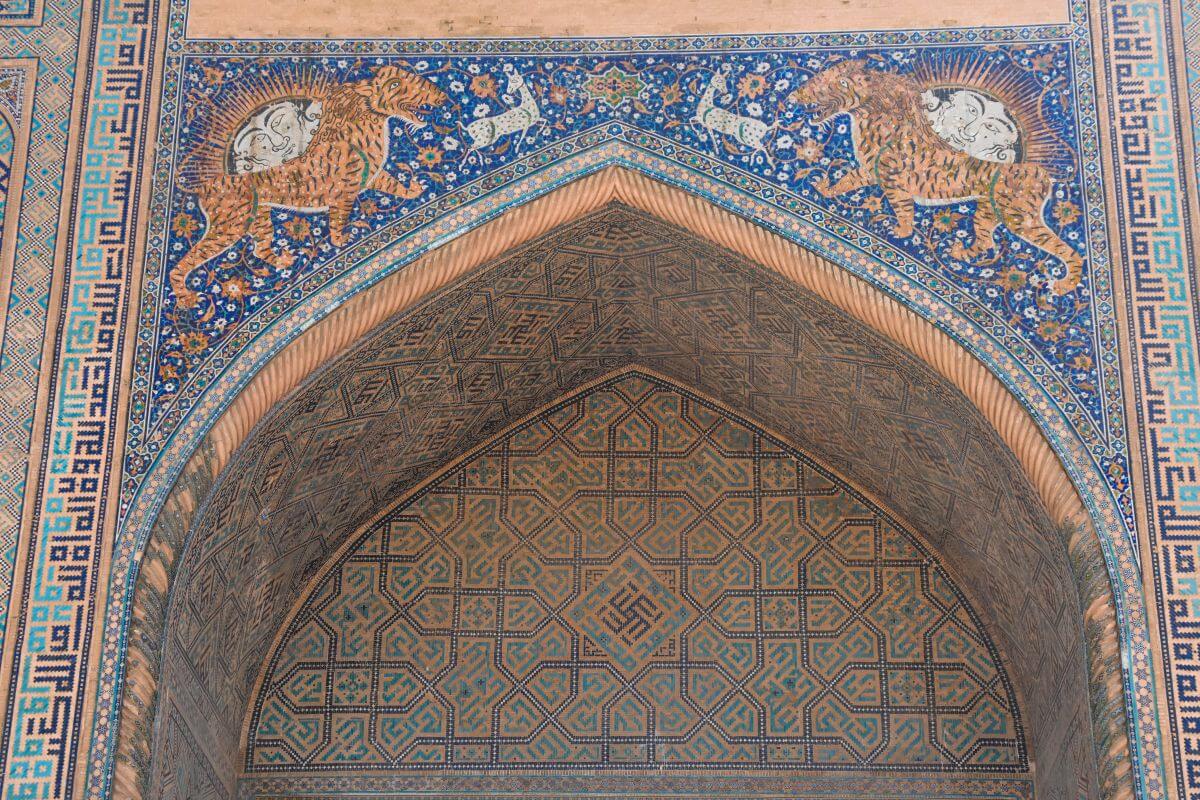
Before walking through the portal, pause for a moment and study the decorative details. Hidden among the patterns is an ancient swastika symbol (a hate symbol due to its use by Nazi Germany). Long before the symbol became associated with the horrors of the 20th century, it appeared across Asia as a sign of prosperity, good fortune, fertility, and the cycle of life. At the Sher-Dor Madrasa, this symbol forms part of the original 17th-century decoration.
THE MIRROR IMAGE THAT WASN’T
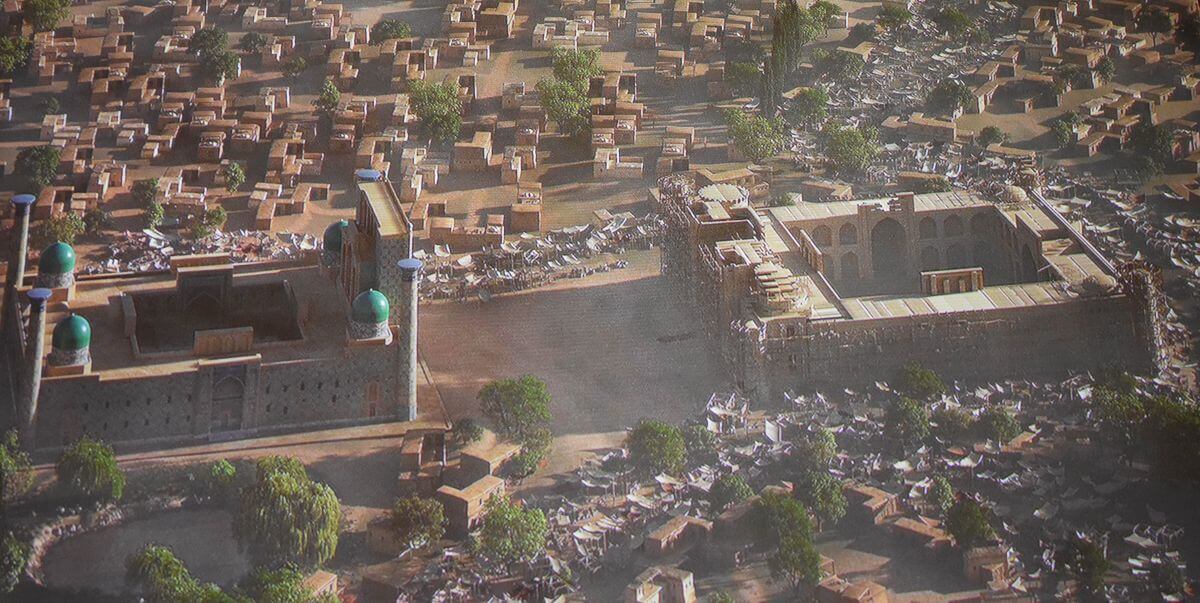
The first madrasa was never intended to stand alone. According to Uzbekistan Travel, the architects followed the traditional ‘kosh’ principle, a planning technique that places two monumental buildings opposite one another to create architectural harmony. Their goal was simple: to create a near-perfect mirror image of the older Ulugh Beg Madrasa. However, they overlooked one important detail.
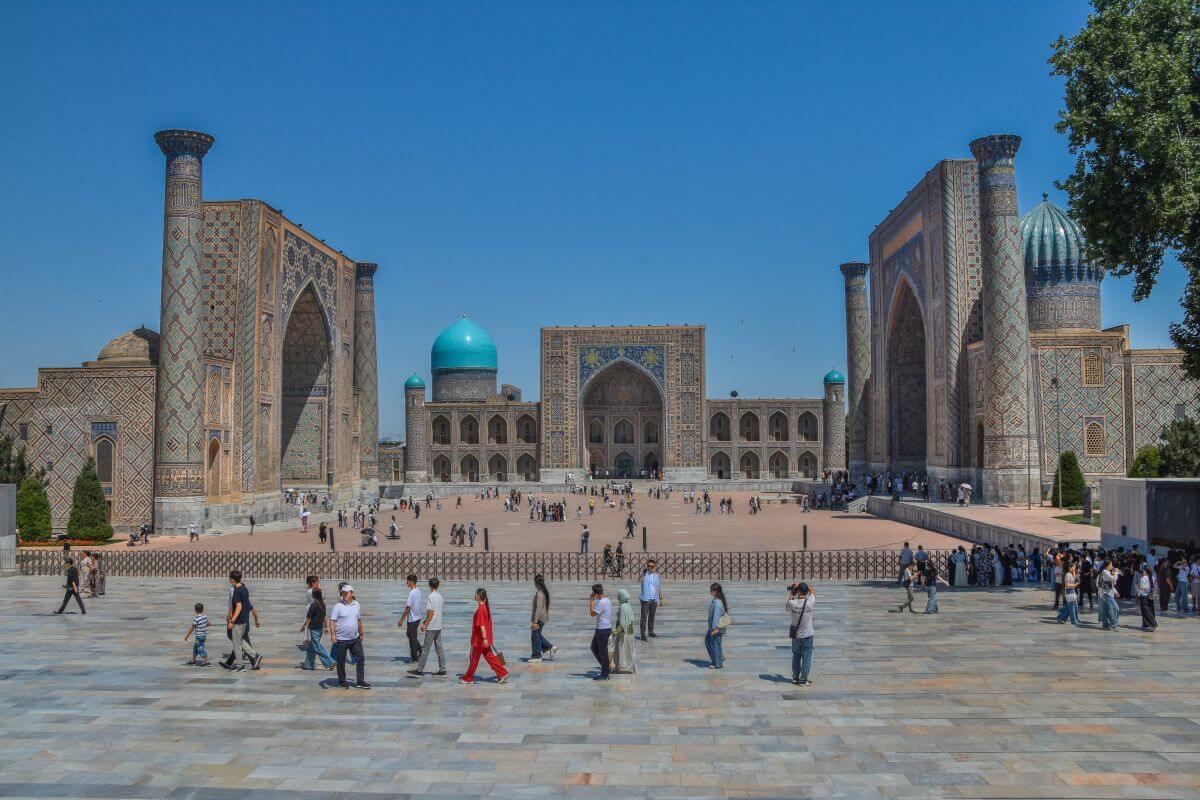
Over the previous two centuries, the foundations of the older madrasa had gradually settled into the ground. The builders copied its proportions, but they should have measured the visible structure rather than use its original dimensions. As a result, the Sher-Dor appears slightly larger and taller than the madrasa it was meant to mirror. Once you know this story, the difference becomes surprisingly easy to spot.
THE COURTYARD
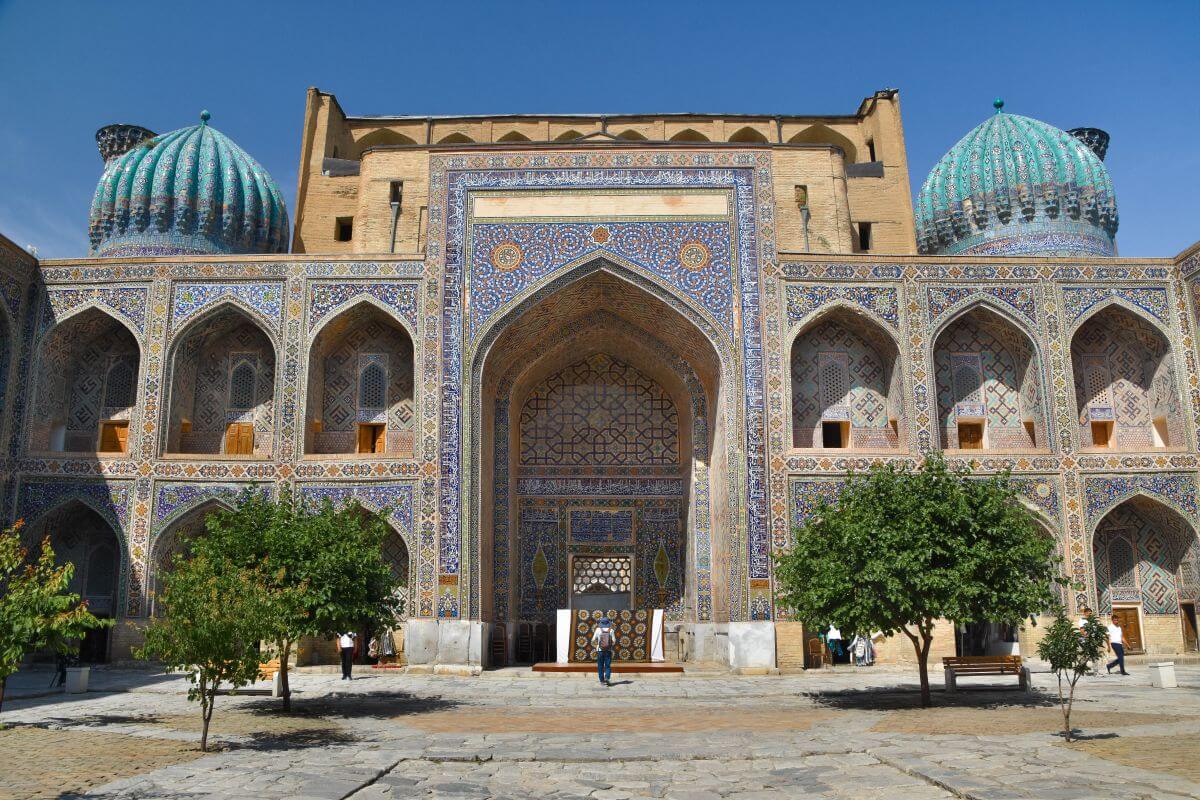
While the dramatic façade attracts most of the attention, the real magic begins after passing through the main entrance. Beyond the portal lies a spacious courtyard lined with leafy trees, elegant arches and rows of former student rooms. The atmosphere feels noticeably calmer than the busy outside.
Many visitors spend only a few minutes here before moving on. We found it to be one of the most peaceful corners of the complex. This is also one of the best places to photograph the building. The courtyard provides excellent views of the ribbed turquoise domes rising above the surrounding structures.
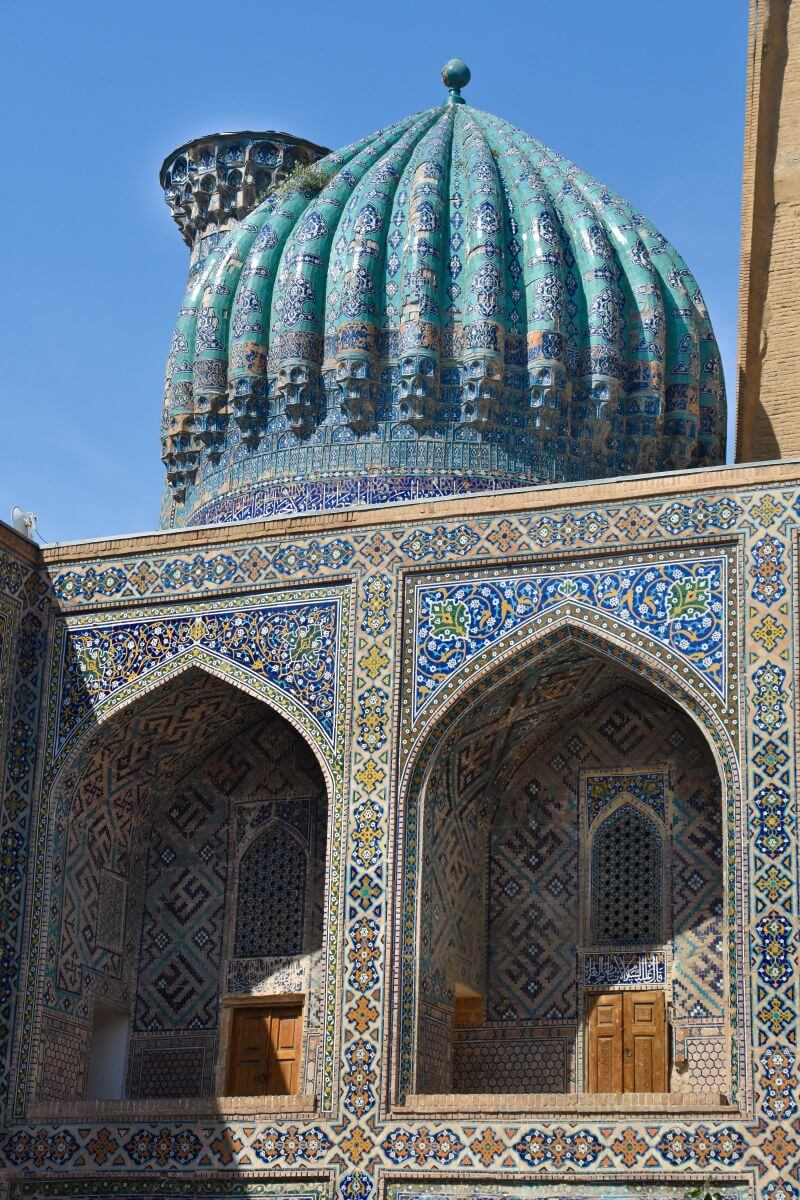
Without crowds filling the frame, it becomes much easier to appreciate the scale and symmetry of the architecture.
INSIDE A STUDENT’S WORLD
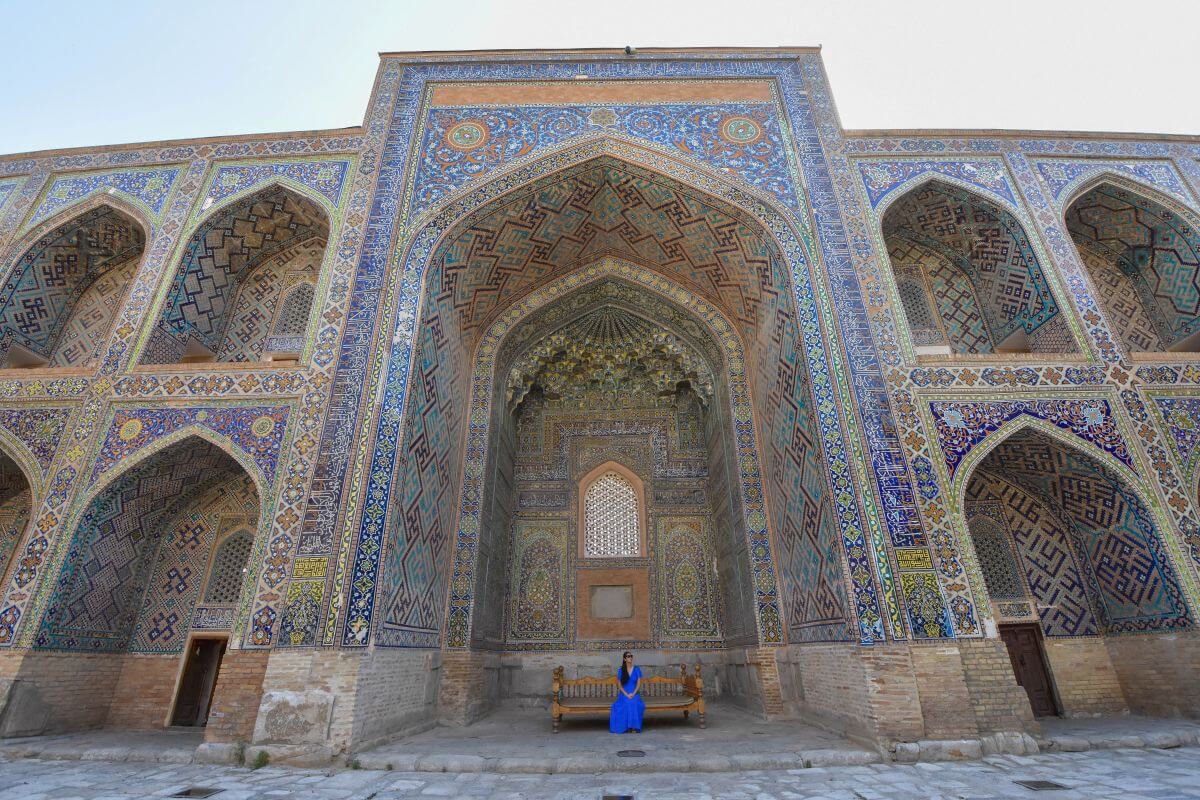
For nearly three centuries, this madrasa operated as an elite centre of higher learning. Students lived within small rooms that surrounded the courtyard. Although compact, these spaces used a surprisingly clever design. A main lower room functioned as both a study and a living area. Students spent long hours reading religious texts and solving mathematical problems. Many rooms also featured an upper sleeping loft reached by a small staircase or ladder. This split-level layout allowed students to make the most of the limited space available.
The builders also understood the local climate exceptionally well. Thick brick walls kept the rooms naturally cold during the intense Central Asian summer heat. During winter, they help to preserve warmth.
WHAT YOU CAN SEE TODAY
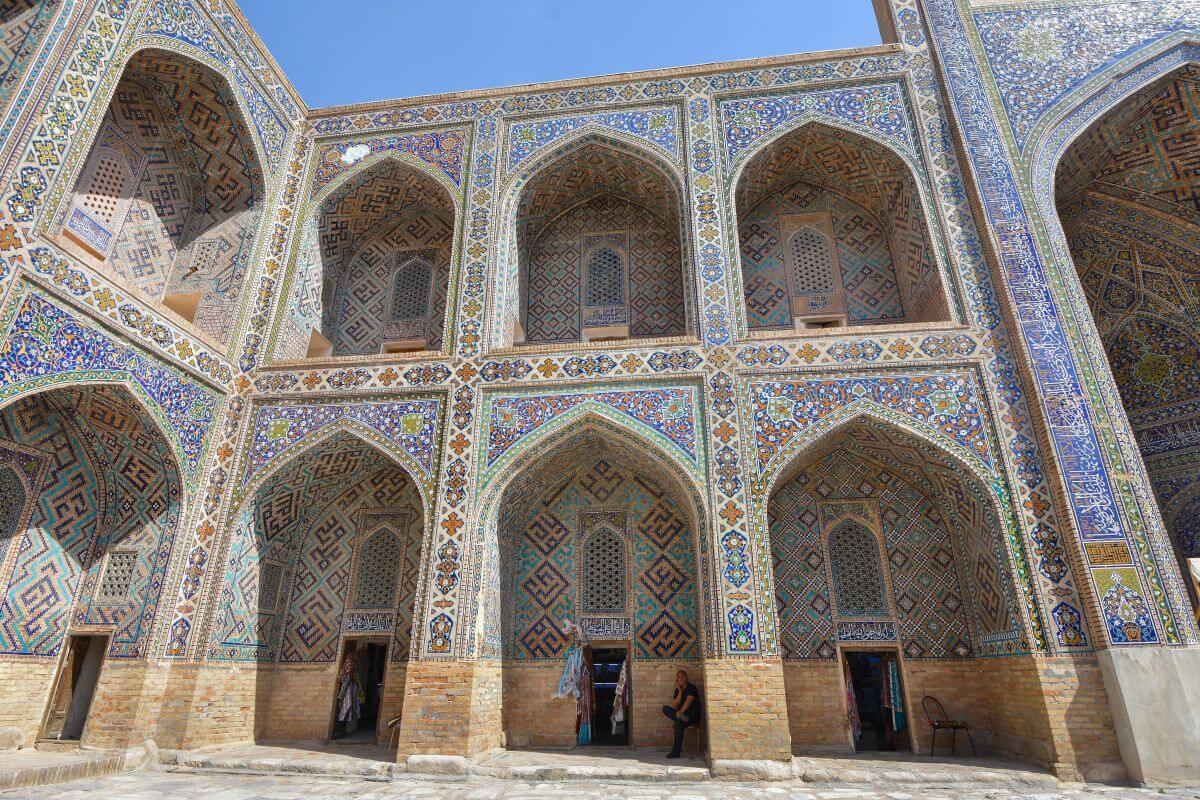
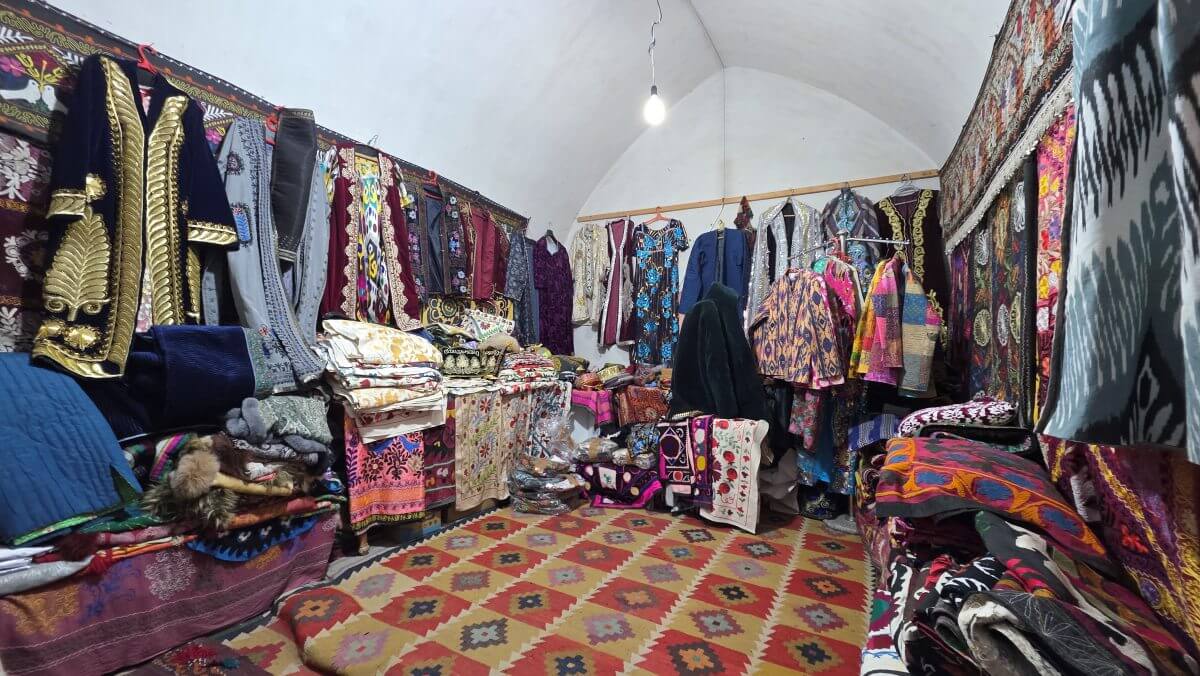
The student rooms still exist, although their purpose has changed. Today, many ground-floor cells house artisan workshops and small souvenir shops. They sell silk scarves, ceramics, embroidery, woodcarvings and traditional handicrafts. Unlike ordinary tourist markets, these businesses operate inside rooms once occupied by students centuries ago.
During our visit, we purchased several handmade scarves from a local trader. After chatting for a while, the young woman working there kindly invited us upstairs to see the room’s upper level. Standing inside the loft gave us a far better understanding of how students once lived. The layout remains remarkably easy to recognise despite the modern displays.
3. Tilla-Kori Madrasa
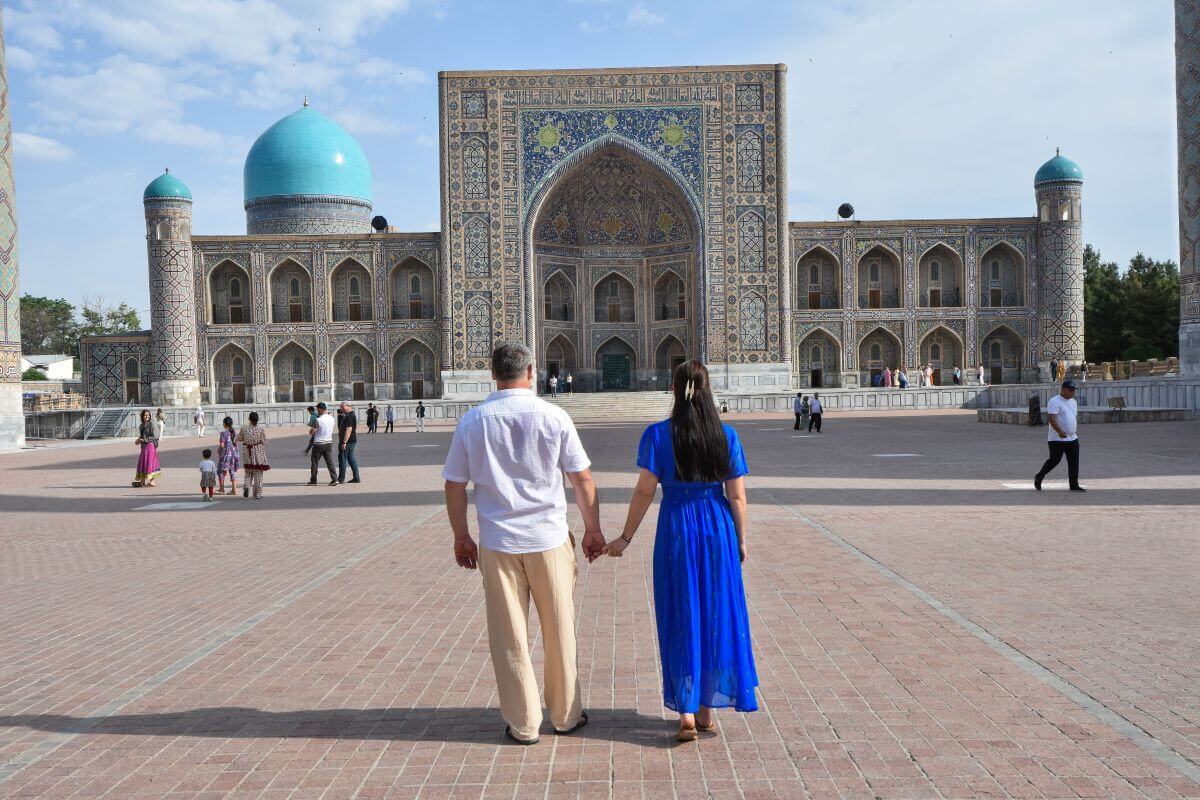
Standing between its two famous neighbours, the Tilla-Kori Madrasa will surprise you the most. At first glance, its exterior appears elegant rather than overwhelming. However, behind its walls hides one of the most spectacular interiors in Uzbekistan.
Constructed between 1646 and 1660, this was the final monument added to the Registan Square in Samarkand. An information panel on the site explains that the powerful ruler Yalangtush Bahadur also commissioned its construction approximately 10 years after completing the Sher-Dor Madrasa. Unlike the other educational institutions surrounding it, this building served two important functions. It operated both as a madrasa for students and as the city’s main Friday mosque. Its name translates as ‘Gilded’, and once you step inside, you immediately understand why.
BUILT ON THE RUINS OF THE PAST
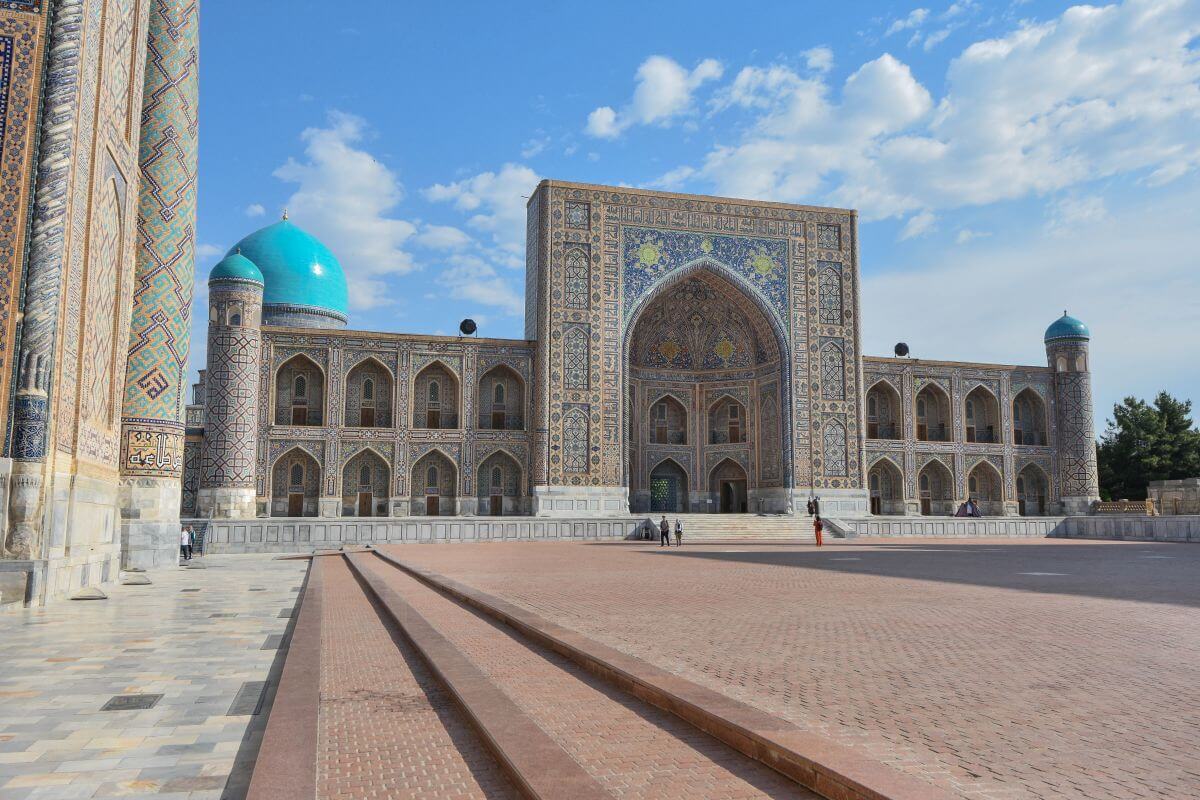
Long before this impressive building appeared, a caravanserai occupied the site. These roadside inns provided accommodation for merchants travelling across Central Asia and along the Silk Road. By the 17th century, the older structure had fallen into ruin. Rather than clearing the area completely, builders used the existing foundations as the base for the new project. Construction lasted 14 years and required some of the most skilled craftsmen available at the time. The result completed the architectural harmony of this complex and created the appearance you can admire today.
COVERED IN REAL GOLD
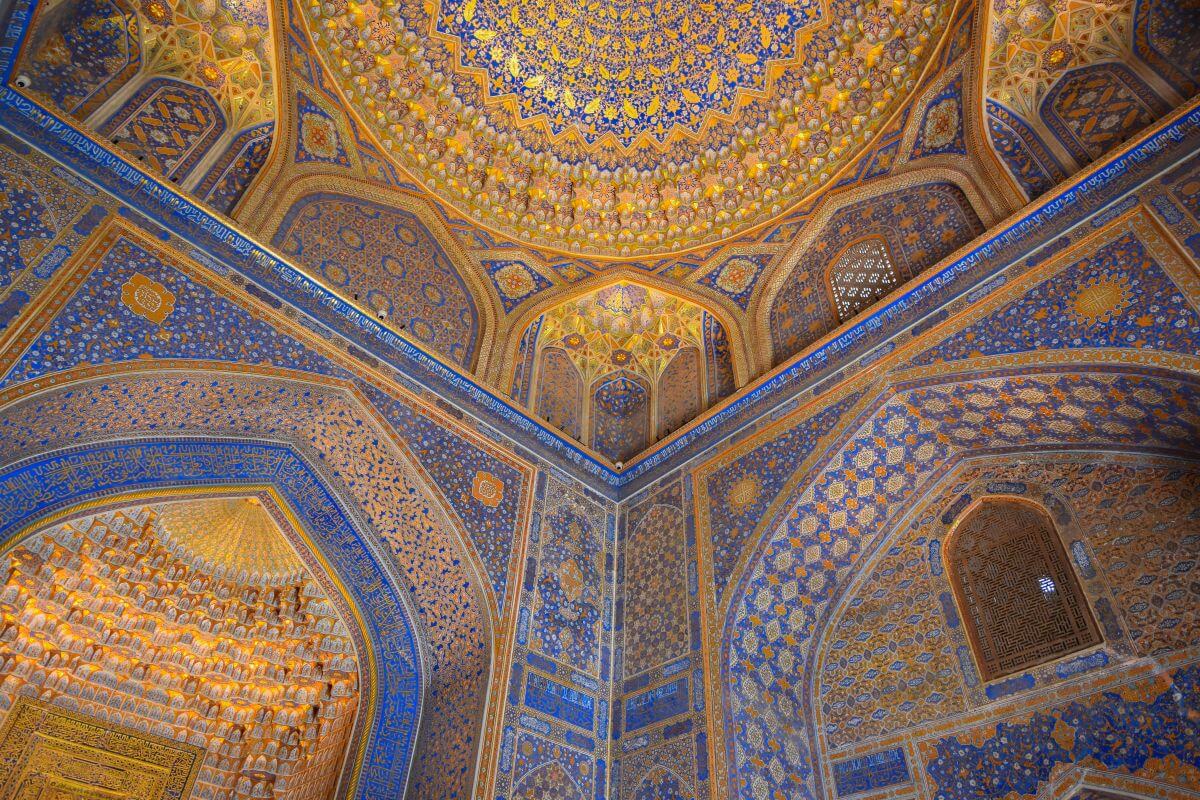
Inside the prayer hall, craftsmen covered large sections of the decoration with real gold leaf. The historian records explain that Persian master artisans used a specialised decorative process known as the kundal technique. This method applied gold directly onto raised floral and geometric patterns, creating extraordinary depth and richness.
When we entered the mosque, the effect was breathtaking. Photographs simply don’t prepare you for the amount of gold surrounding you. Every wall, arch, and decorative panel seems to shimmer from every direction. The interior of this madrasa in the Registan Square in Samarkand is one of the most impressive interiors we saw anywhere in Uzbekistan. Thanks to its perfect proportions, blue-and-gold decorations, and seamless design, the Tilla-Kori Madrasa is one of the best surviving examples of the Persian-Timurid style.
THE ‘FAKE’ DOME THAT FOOLS EVERYONE
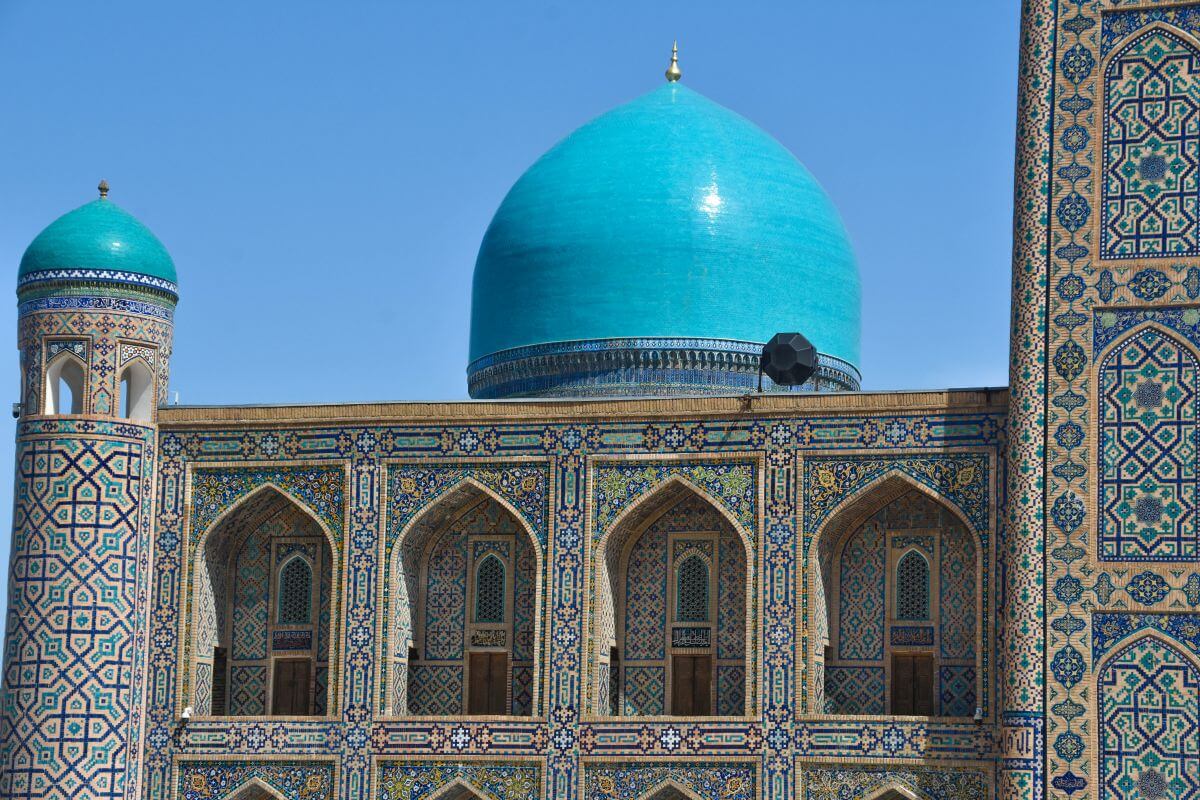
One of the most fascinating details of this madrasa remains completely invisible from inside. Every day, many tourists admire the large turquoise dome above the mosque and assume it matches the interior space beneath it. But it doesn’t.
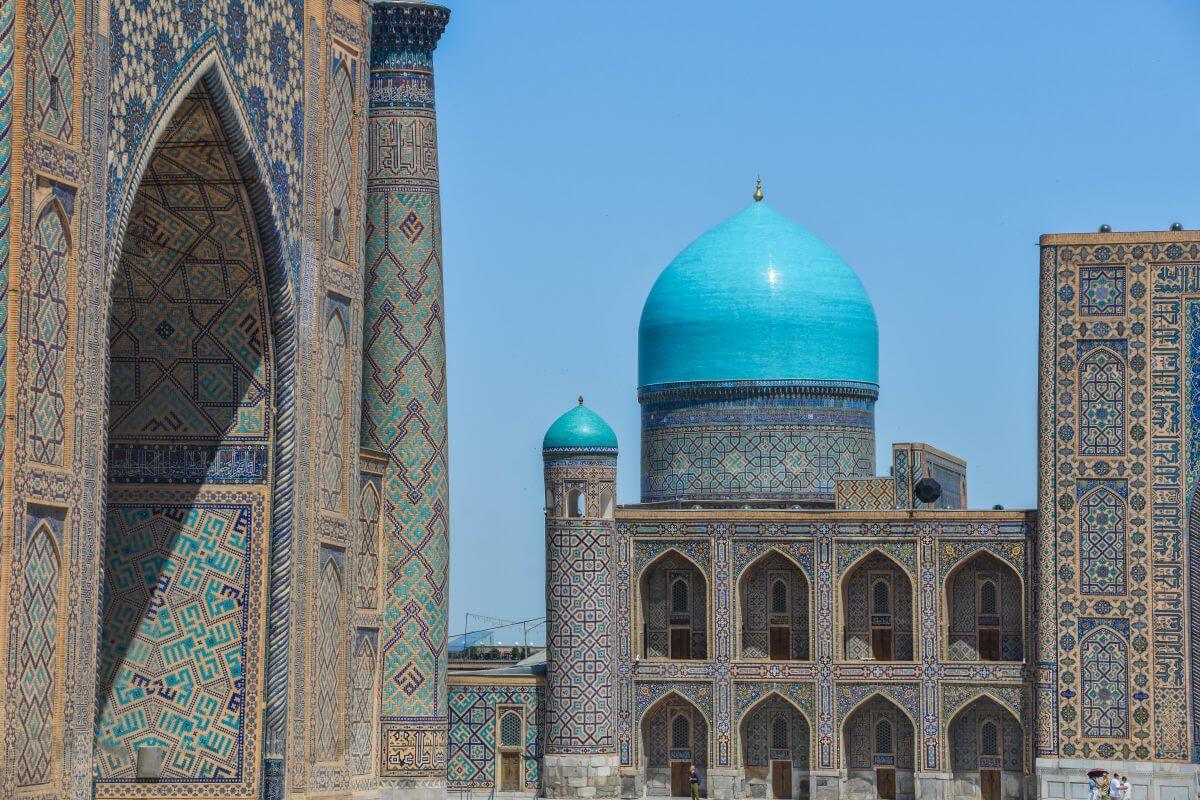
The large, striking blue dome you can see is actually an architectural illusion. The prayer hall sits much lower and has a flatter roof. Painted decorative patterns create the illusion of a soaring dome from below.
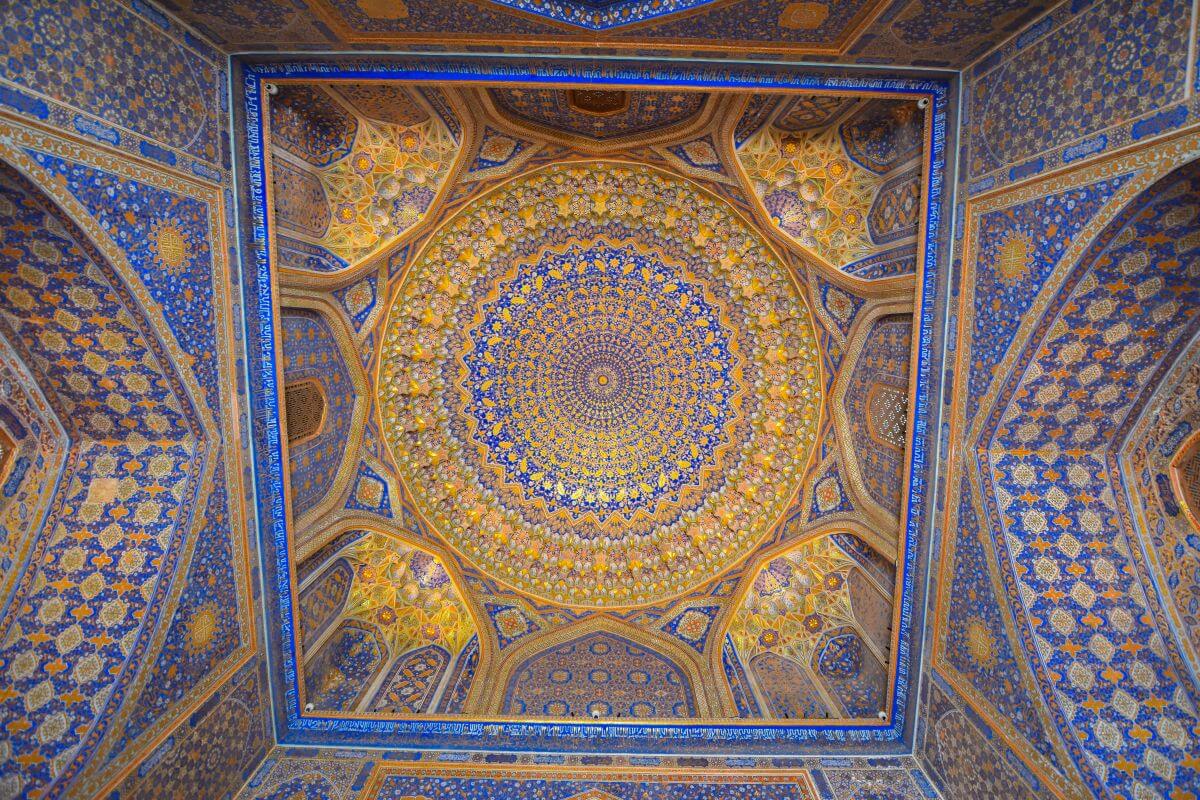
When standing behind the dome, many people never realise they are looking at one of the most successful optical illusions in Islamic architecture.
THE BUILDING THAT PLAYS WITH YOUR EYES
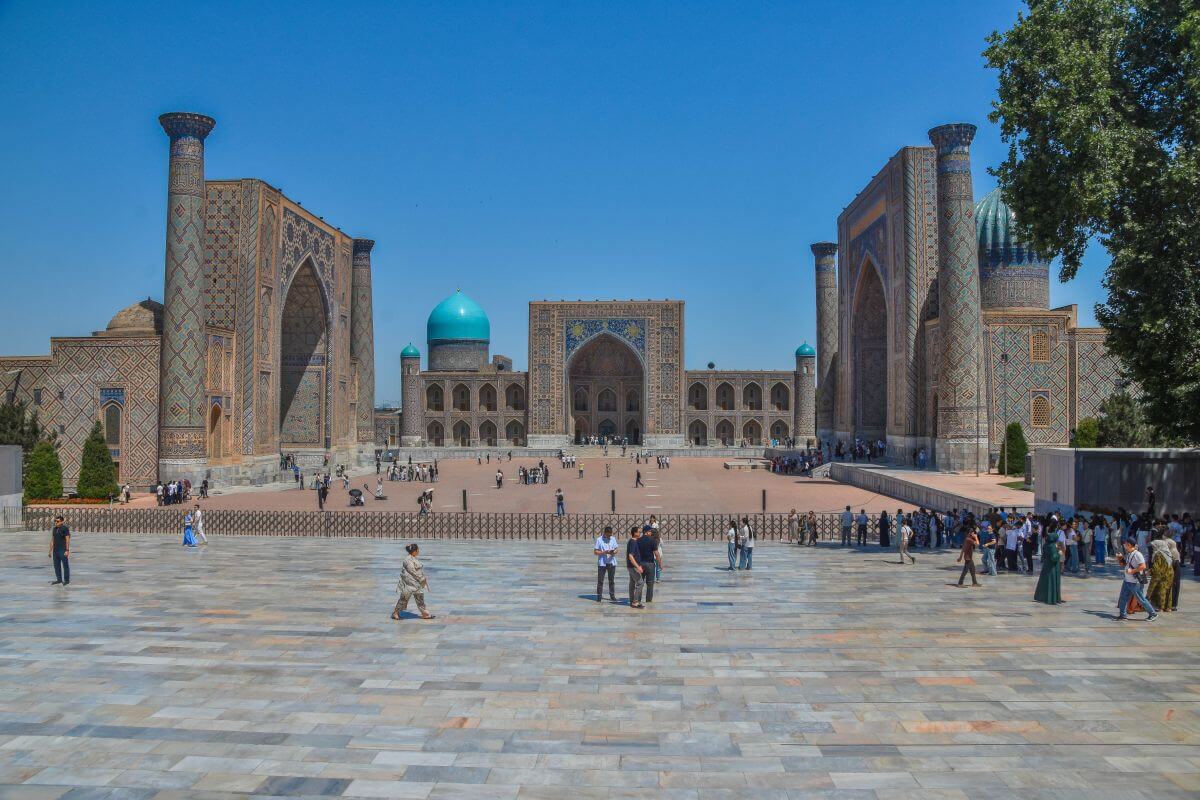
The Tilla-Kori Madrasa’s architects used visual tricks elsewhere, too. Unlike the other two madrasas, Tilla-Kori only rises one storey above ground level. This created a challenge. Without careful planning, the building could have appeared smaller and less impressive than its neighbours. The solution was surprisingly clever.
The 17th-century architects extended and rounded sections of the main façade to create an illusion of greater height and scale. From the Registan Square, the building appears perfectly balanced alongside the larger structures surrounding it. The same mastery of visual design appears throughout the complex. The domes seem perfectly round from below, yet many follow an elliptical shape. This design satisfied both engineering requirements and human perception.
A MASTERCLASS IN TIMURID DESIGN
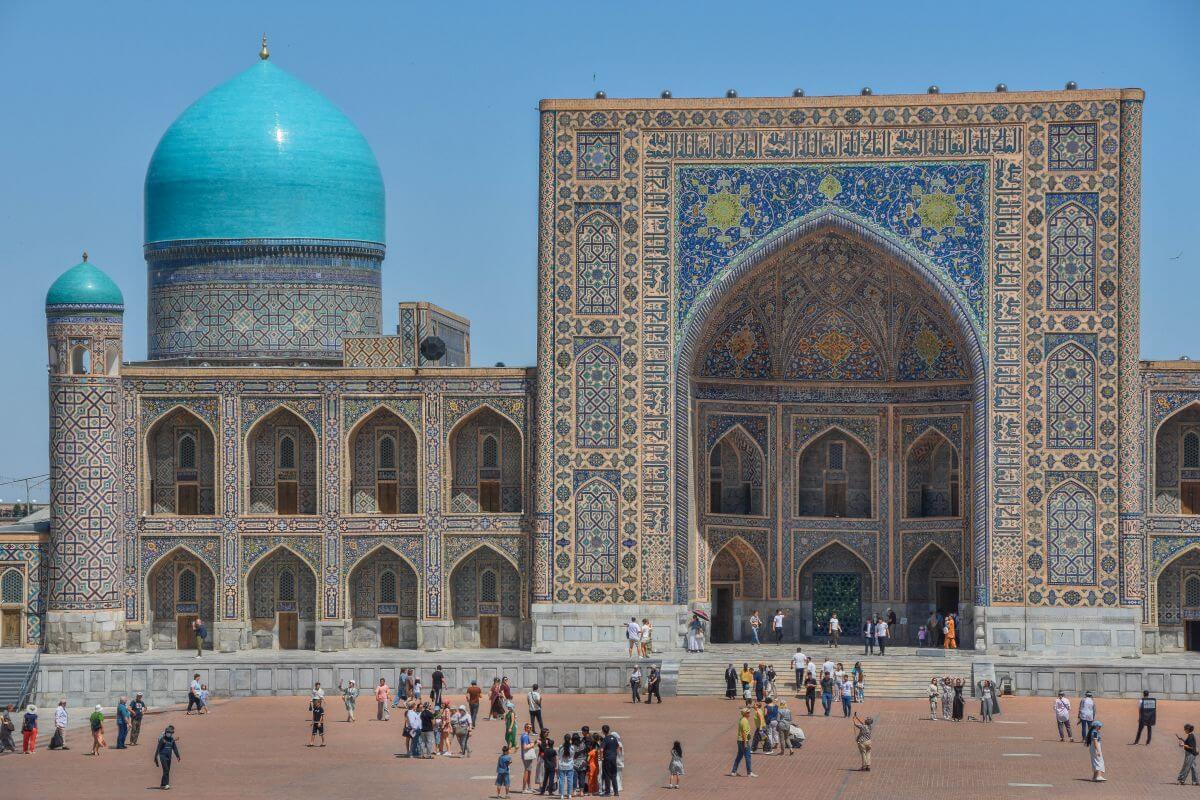
According to the historical records, historians often consider Tilla-Kori as one of the finest surviving examples of Timurid decorative art. Its floral ornamentation, intricate tilework, monumental entrance portal and richly decorated interiors reflect traditions that flourished across Persia. The building combines beauty with remarkable technical skill. Muqarnas vaulting creates depth and shifting shadows. Glazed tiles produce impressive colours, and geometric patterns blend seamlessly into floral motifs and calligraphic inscriptions.
AN EARTHQUAKE CHANGED ITS APPEARANCE
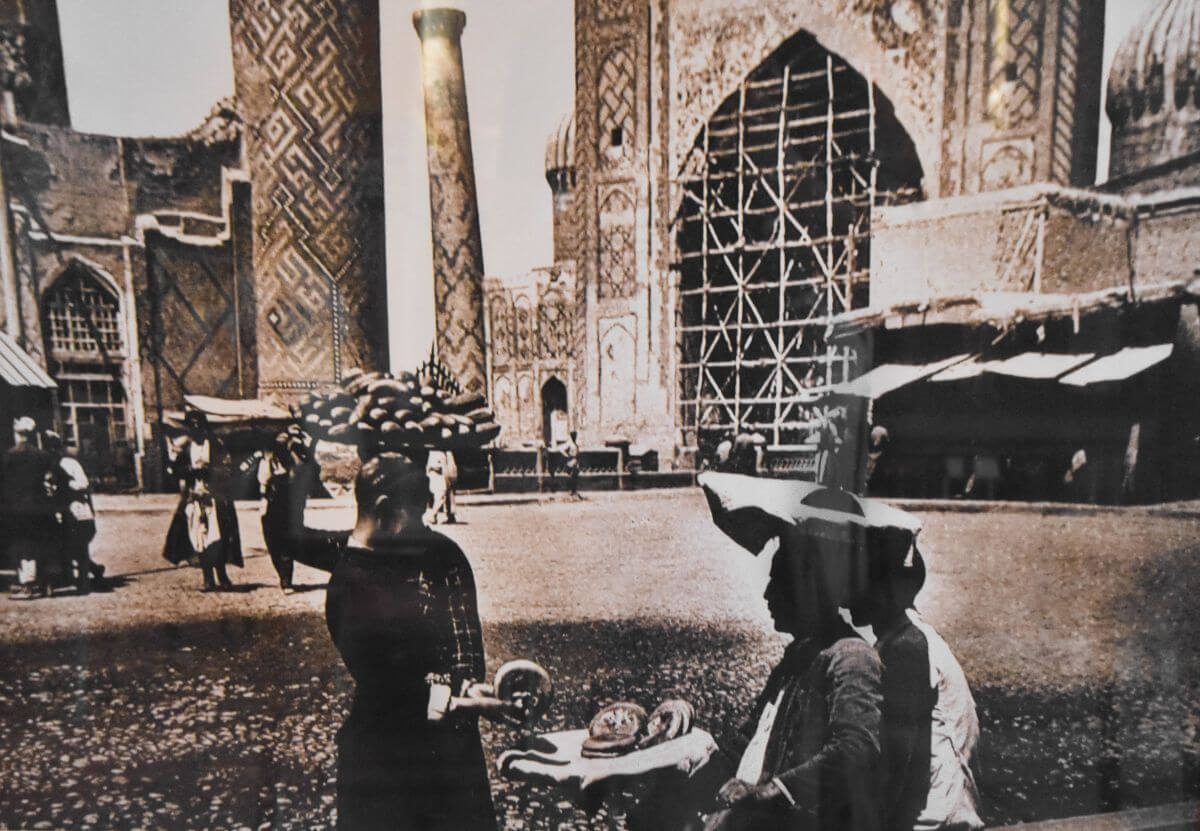
The building you can see today differs slightly from the one from the 17th century. A powerful earthquake during the 19th century severely damaged the monumental entrance portal. Historical records and archival photographs show how much of the original decoration collapsed and deteriorated. Later Soviet restoration work saved the structure from further destruction, but not all decorative details returned.
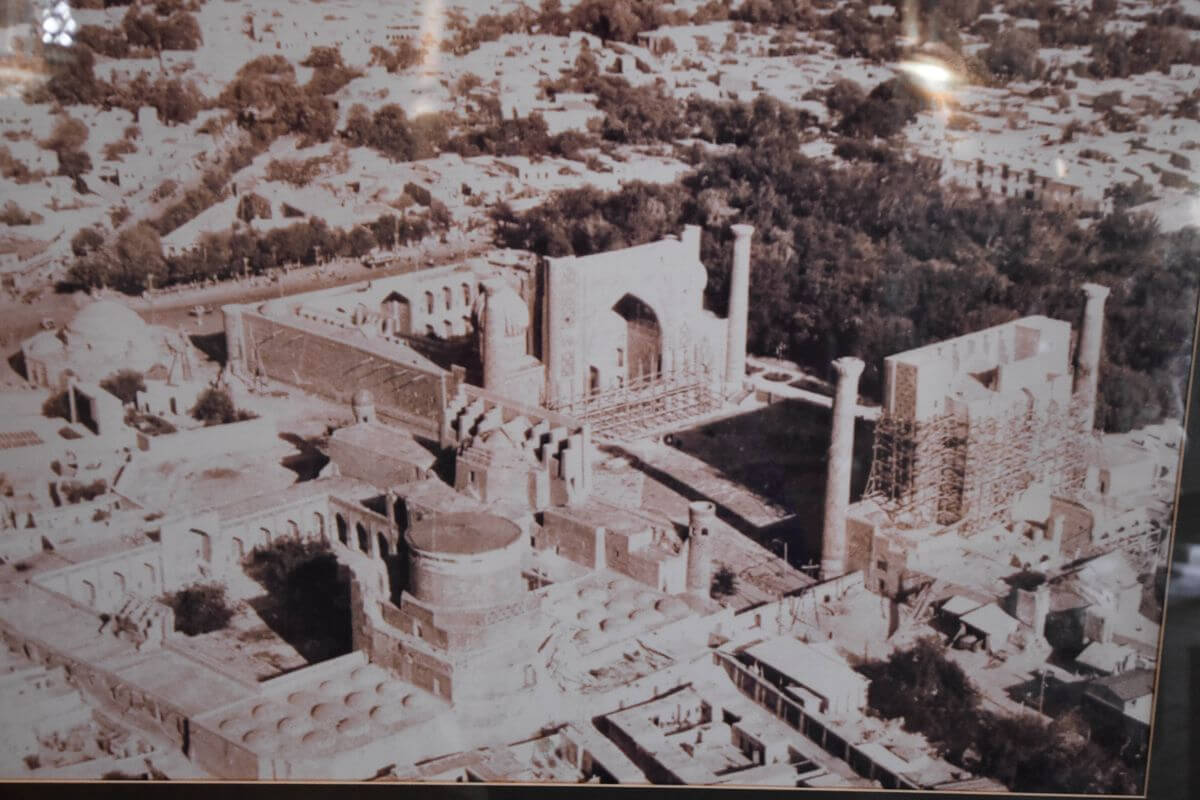
This photograph shows that the turquoise dome of the youngest madrasa was flat and completely missing its cupola. The dome wasn’t built for over 300 years due to a shortage of funds and shifting political priorities. It was finally completed during a massive Soviet restoration campaign in the 20th century.
WHAT TO SEE TODAY
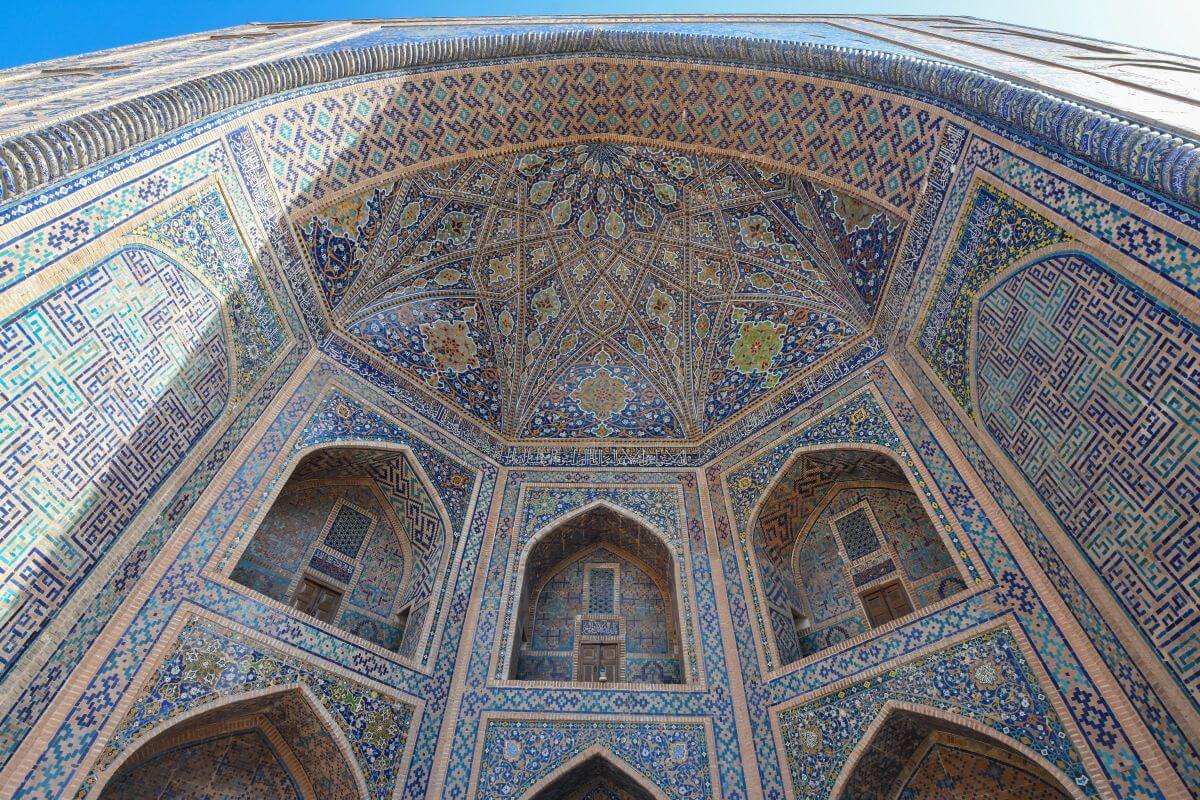
Most visitors head directly towards the mosque interior, and for good reason. The guided prayer hall remains the highlight of the building. However, don’t rush. Take time to explore the courtyard, examine the tilework and study the decorative inscriptions. Notice how the colours shift throughout the day as sunlight moves across the surface.
4. Don’t Leave Too Early – the Registan Square Light Show
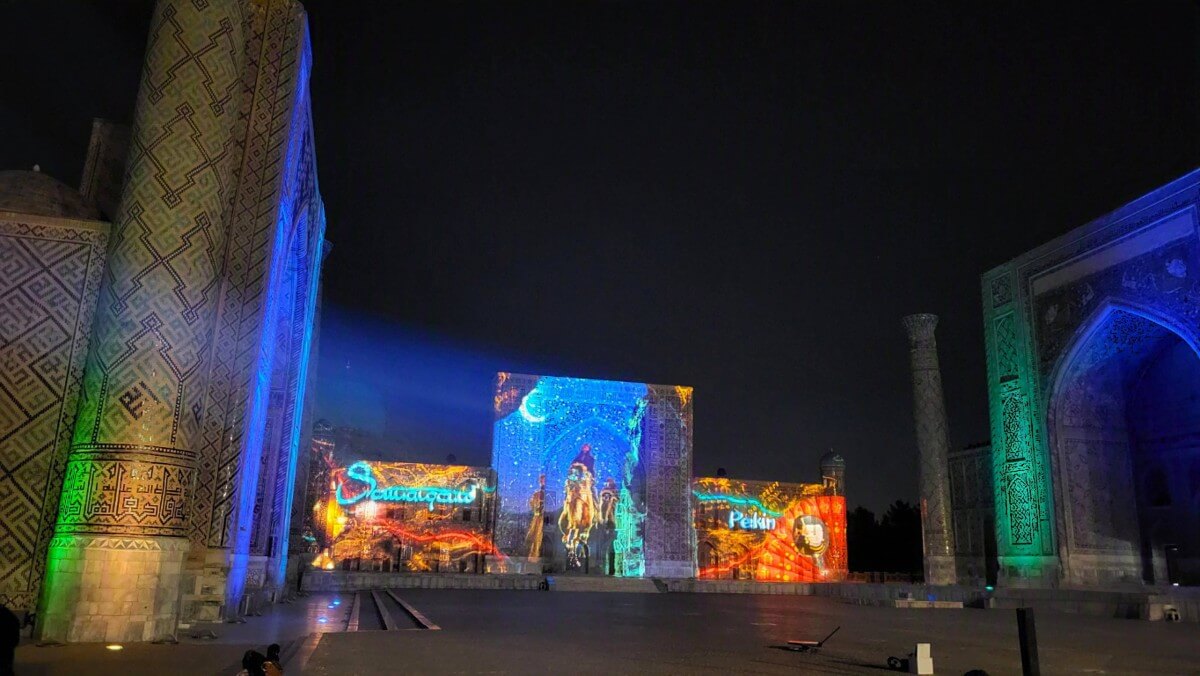
If you only visit during the day, you’ll see one side of this famous landmark. Return after sunset, and you’ll discover something entirely different.
Every evening, the square becomes the stage for one of Samarkand’s most popular nighttime attractions. The evening Registan Square Light Show uses projection mapping, coloured lights, music and animation to tell the story of the city. Rather than simply illuminating the buildings, the technology turns their facades into enormous screens. Historical scenes, decorative patterns and moving images appear across the three madrasas, creating the illusion that the monuments are part of the performance. The Registan Square Light Show usually lasts approximately 20 minutes, making it easy to fit into your evening plans.
OUR EXPERIENCE
When we visited on a Saturday evening in May 2026, the show began at 9 PM. It was in the Russian language. This was unsurprising given the number of Russian-speaking visitors we met throughout Uzbekistan. The storytelling itself was enjoyable, although we found the architecture even more impressive during the quieter moments between projections. Some of the brighter colours felt slightly modern for such a historic setting. However, the combination of music, lighting and centuries-old buildings created a memorable experience that we are glad we stayed for.
BEST VIEWING SPOTS
You don’t need a ticket to enjoy the Registan Square Light Show, you can watch it for free. The public viewing area outside the entrance provides excellent views. It attracts plenty of tourists each evening.
TIP:
If you prefer a closer perspective, purchase a standard admission ticket in the early evening and remain inside the complex.
GOOD TO KNOW:
- Arrive 15-30 minutes before the scheduled start time to secure your spot.
- Weekend performances attract the largest crowds.
- Show times of the Light Show vary throughout the year (depending on the season’s sunset time). The show often begins between 8 PM and 9 PM.
- Evening temperatures can feel surprisingly cool outside of summer, so bring an extra layer if visiting in spring, winter, or autumn.
5. See the Illuminated Monuments in the Evening
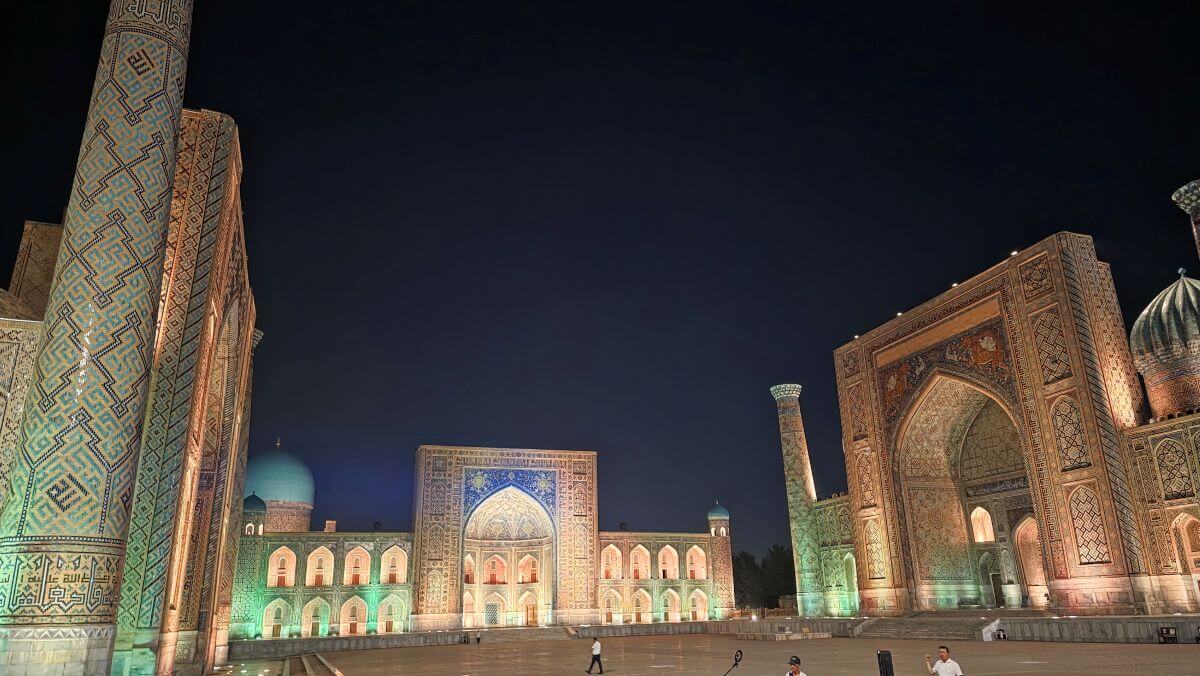
After darkness settles over Samarkand, the Registan Square takes on a completely different character. The intricate tilework that looked impressive during the day suddenly glows beneath carefully placed lighting. Every arch, dome, and minaret comes out from the darkness with remarkable clarity. In the evening, you’ll see details you probably overlooked under the harsh midday sun.
A COMPLETELY DIFFERENT ATMOSPHERE
Unlike the evening projection show, the permanent illumination allows the architecture to speak for itself. For us, this was the moment when the scale of the complex became easier to appreciate. Nothing flashes, nothing moves, and nothing distracts from the craftsmanship. The buildings look exactly as the architects intended them to be seen: elegant, balanced, and with extraordinary details.
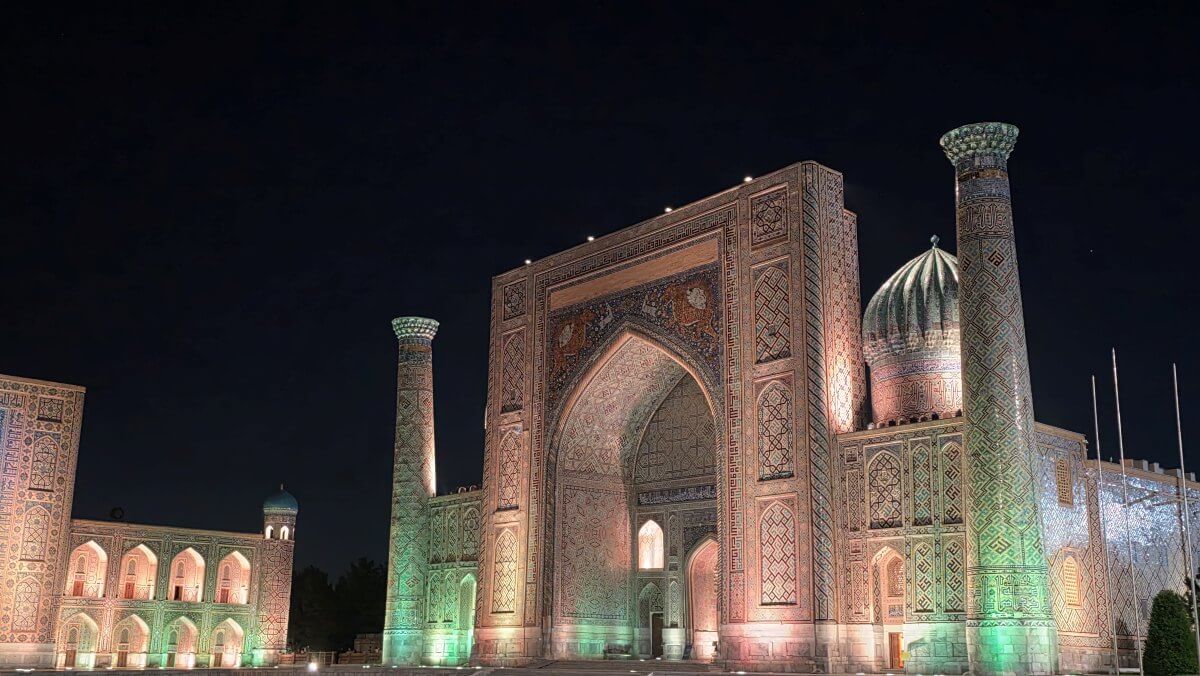
If you enjoy photography, this is also one of the best moments of the day. The contrast between the glowing buildings and the dark sky creates dramatic images that look entirely different from daytime photographs. We also found this to be one of the most peaceful times to admire the complex.
GOOD TO KNOW:
- Visit around 30-45 minutes after sunset for the best lighting conditions. The famous Blue Hour usually offers the most striking colours. Sadly, we missed it because one evening we were exploring a different part of the city, and the other evening there was a thunderstorm at this time.
- The viewing platform outside the complex offers excellent panoramic views without entering the complex.
- Allow at least 20-30 minutes simply to stand back and take in the view.
- Evening temperatures are usually far more comfortable than daytime conditions.
What to Wear When Visiting the Registan Square in Samarkand
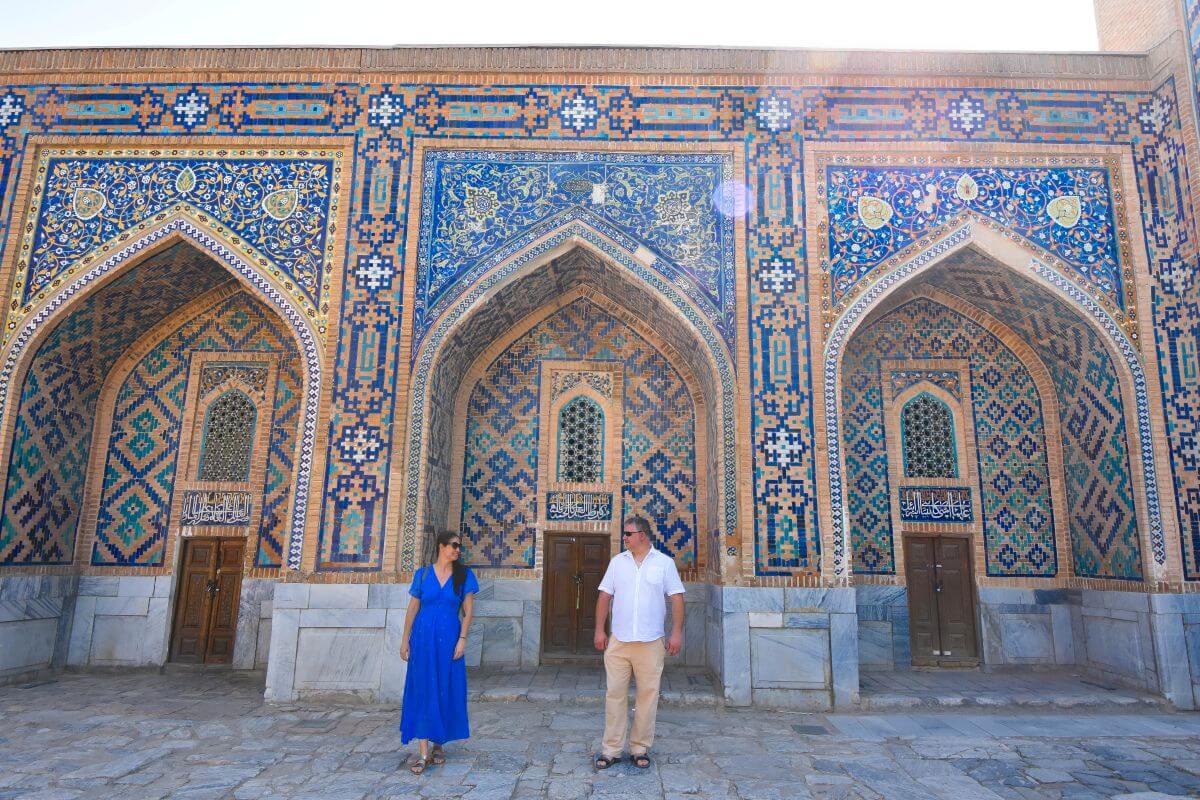
Is there a dress code for visiting the Registan Square? The short answer is yes, but it’s far less strict than you would expect.
Uzbekistan is a secular country and welcomes visitors from all over the world. However, you are still visiting historic Islamic monuments, including a former mosque and religious schools. Dressing respectfully helps you blend in with local customs and ensures you can enjoy every part of the complex without any issues. The good news is that modest clothing can also be the most comfortable option in the Central Asian climate.
WHAT SHOULD WOMEN WEAR?
Women don’t need to wear traditional clothing or cover their hair when exploring the courtyards and monuments at the Registan Square. The most practical choice is clothing that covers the shoulders and falls below the knees. Maxi dresses, midi dresses, loose trousers and longer skirts all work perfectly. Avoid crop tops, very short skirts, see-through fabrics and clothing with extremely low necklines.
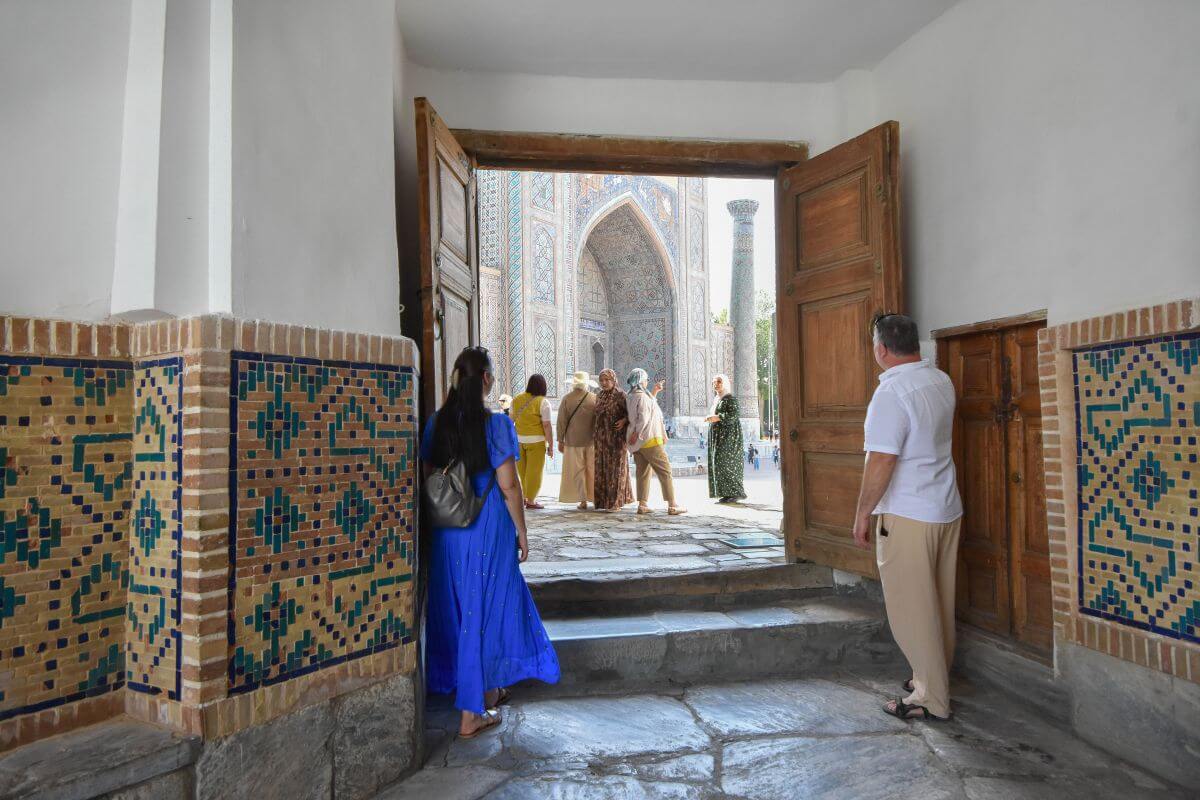
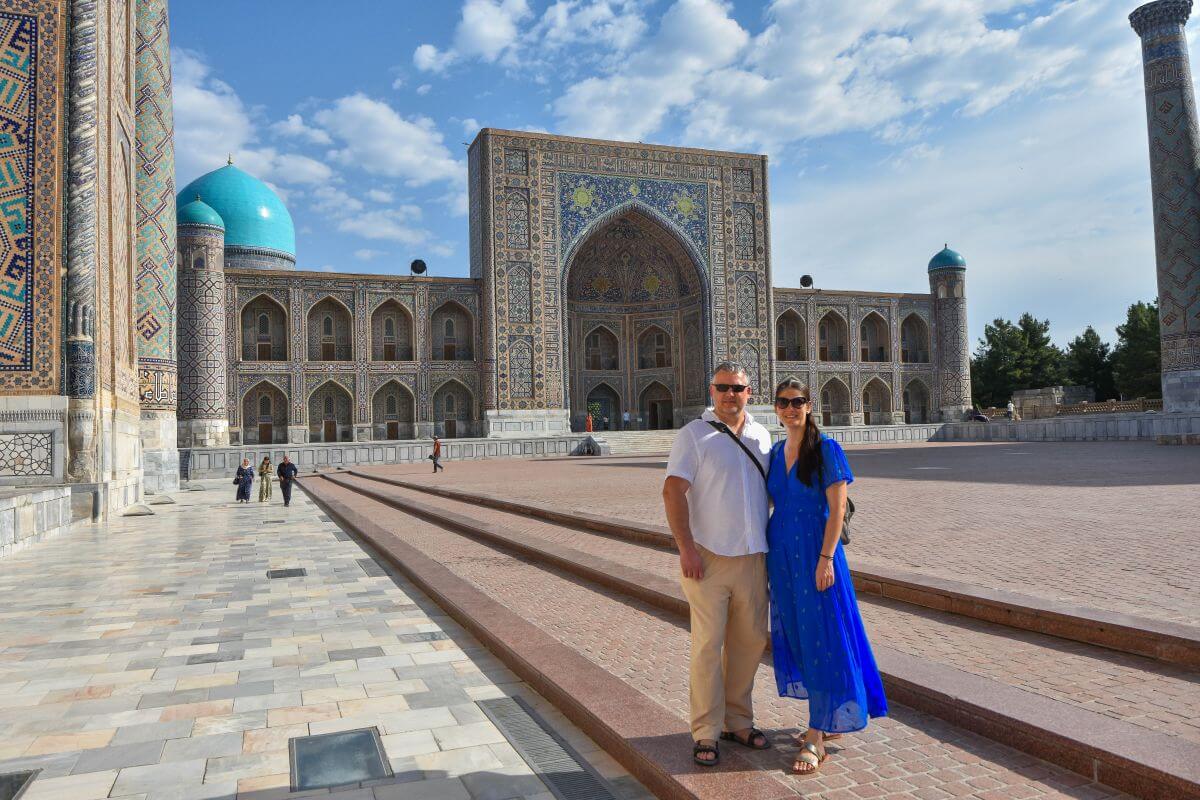
During our visit in the middle of May 2026, temperatures reached around 33°C. I wore a loose blue maxi dress throughout the day and felt comfortable even during the hottest hours. Many female visitors dressed similarly. We noticed that only the local women covered their hair within the complex. However, carrying a lightweight scarf is still a good idea.
WHAT SHOULD MEN WEAR?
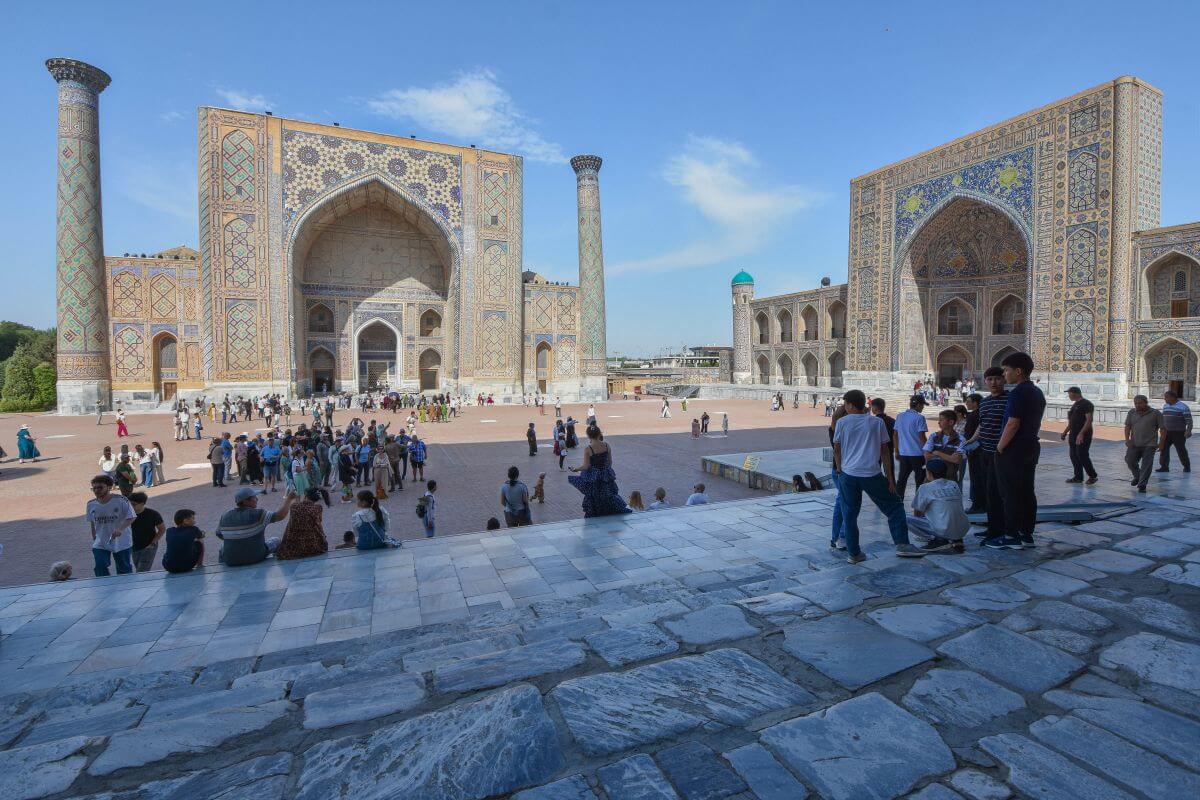
Men have a simple dress code. T-shirts, polo shirts and lightweight button-down shirts are all perfectly acceptable. Avoid sleeveless vests, gym-style tank tops and shorts. Long trousers or linen trousers remain the most respectful option, particularly when entering former religious spaces at the Registan Square. Not only will you remain comfortable throughout the day, but you’ll also feel appropriately dressed for one of the most important historical and cultural landmarks in Central Asia.
During our visit, Andrej wore lightweight linen trousers throughout the day. They proved far more comfortable than jeans in the warm weather. Although we saw a small number of tourists wearing shorts elsewhere in Samarkand, we noticed only a few wearing them while exploring the complex.
WEATHER MATTERS MORE THAN YOU THINK
Many visitors underestimate how extreme the climate can be. Summer temperatures between June and August frequently climb above 40°C. Lightweight cotton and linen fabrics become essential if you want to stay comfortable while walking around exposed courtyards with very little shade. Spring and autumn offer more pleasant daytime conditions, but temperatures can drop significantly after sunset.
How Much Time Do You Need to Explore the Registan Square in Samarkand?
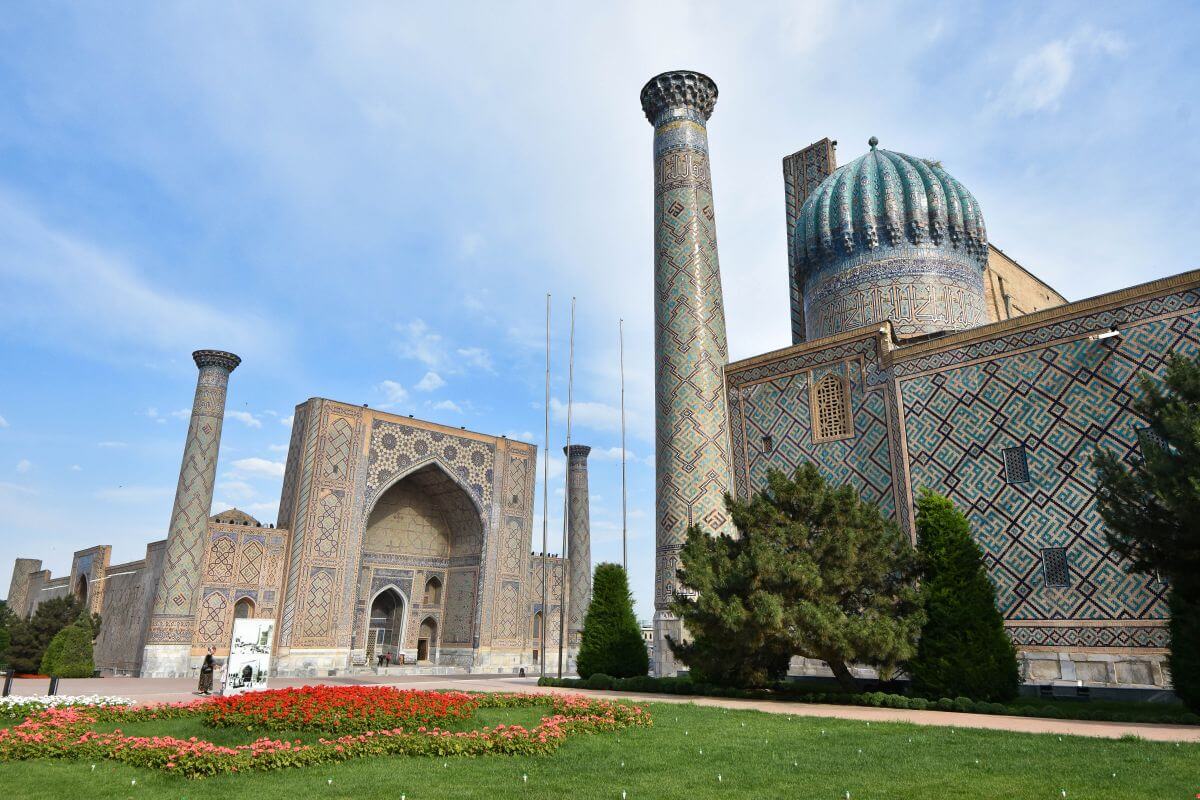
The answer depends entirely on how you like to travel. Some visitors walk through the gates, take a few photographs and move on within an hour. In our opinion, that barely scratches the surface.
For most travellers, we recommend allowing 2 to 3 hours to properly explore the Registan Square in Samarkand. This provides enough time to appreciate the architecture without feeling rushed. You’ll have enough time to explore all three madrasas, browse the exhibitions, discover hidden corners and enjoy this complex without rushing.
From the outside, it looks like a single monument. Once inside, you quickly discover museums, exhibitions, workshops, courtyards, and countless architectural details.
BREAKING DOWN YOUR 3-HOUR VISIT
- The Three Madrasas (1.5-2 hours)
Start by exploring each madrasa individually. Walk through the courtyards, study the intricate tileworks and step inside the former student rooms. Many contain small museums, workshops, and displays that most visitors overlook.
- Secret Café (30 minutes)
Take a break inside the little-known café hidden within the Ulugh Beg Madrasa. During our visit, we enjoyed a strong Turkish coffee while overlooking the courtyard from one of the original student rooms. It was one of the most memorable moments of our visit.
- Photography and Wandering (30 minutes)
Leave time to simply explore the square. Some of the best views appear when you slow down and notice details that others miss. Near the entrance, we found several refreshment stalls selling homemade drinks. The non-alcoholic mojito proved especially welcome in the heat. It also helped us to stay hydrated while exploring every corner of the complex.
SHORT ON TIME?
If your schedule is tight, you can see the highlights of the Registan Square in around one hour. However, you’ll miss many of the smaller exhibits, a short movie, artisan workshops, café, and quieter areas that make this place so special. 2 to 3 hours is the perfect balance between sightseeing and enjoying the atmosphere.
Practical Information About the Registan Square
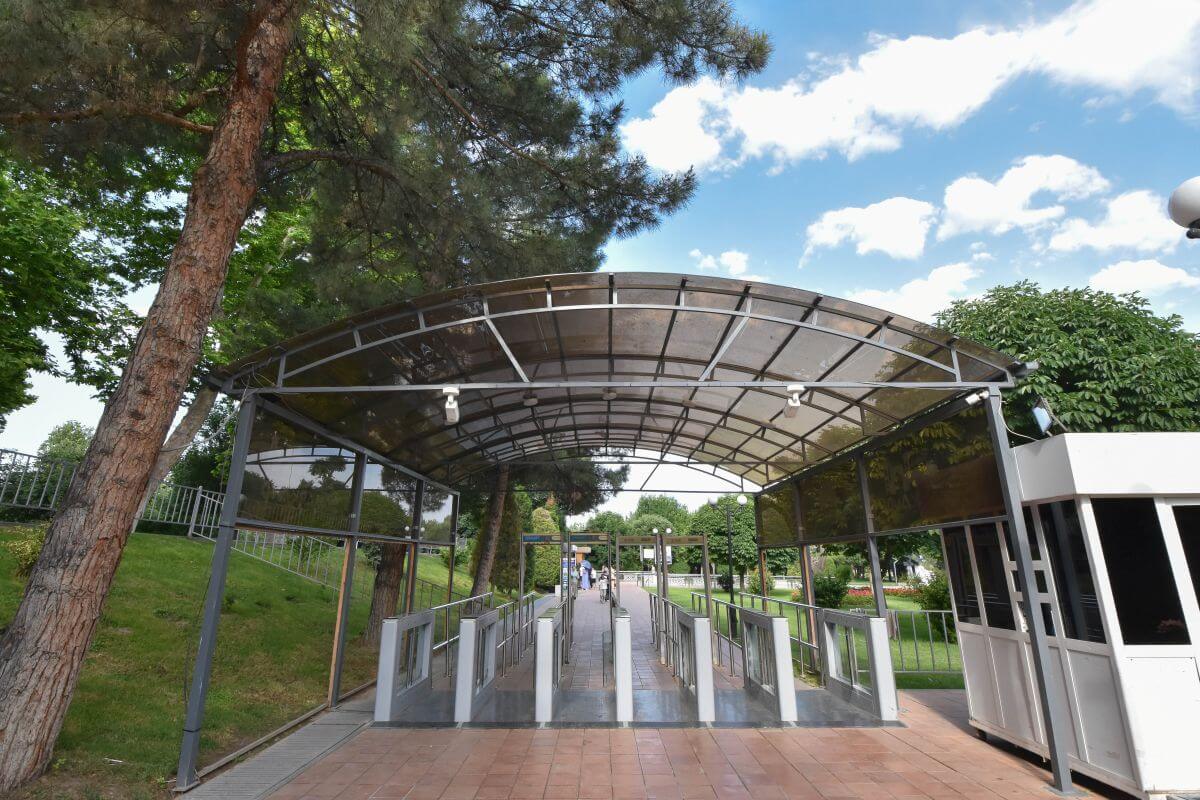
- WHERE TO BUY TICKETS: Use the official ticket booth near Ulugh Beg Madrasah in the centre of the complex. Ignore anyone offering unofficial tickets on the street.
- OPENING TIMES: High season (20 February – 20 November): 7 AM – midnight. Low season (20 November – 20 February): 8 AM – 8 PM.
- Remember that you only need a ticket if you plan to enter the Registan Square complex. The viewing platform and steps remain free to access at any time.
- ADMISSION FEE: As of June 2026, an entry ticket to the Registan Square costs 100,000 UZS (USD 8.30) for foreign visitors. Foreign visitors under 18 pay 50,000 UZS (USD 4.18).
- GUIDES: As of June 2026, guided tours of the Registan Square cost 300,000 UZS (USD 25) per group of up to 20 people. Audio guide costs 100,000 UZS (USD 8.30) for up to 10 listeners.
- CASH VS CARD: While the ticket booth accepts international credit and debit cards, the payment systems can occasionally go offline. Therefore, we recommend bringing backup cash in local Uzbek Som (UZS) just in case.
Can you buy Registan tickets online, and is it necessary?
You can buy a ticket to the Registan Square complex online, but it isn’t necessary. Samarkand doesn’t get massive crowds like Rome, Barcelona or other famous tourist cities. We visited during the busiest time of year and were able to walk right up and buy our tickets at the door without waiting in any lines. So there is no need to prebook, and skip-the-line tickets aren’t necessary.
Is the Registan Square Wheelchair Accessible?
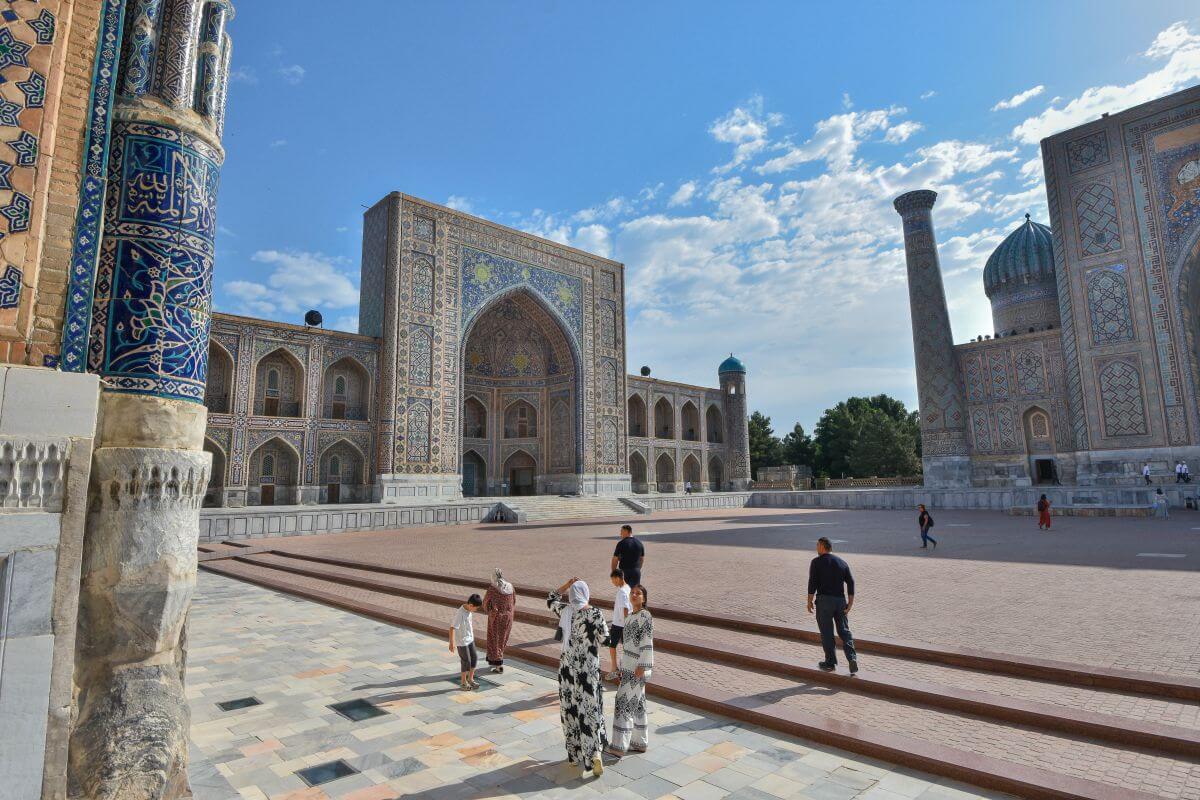
Many historic sites look beautiful in photographs but prove difficult to navigate in reality. Fortunately, this is not one of them.
When we visited the Registan Square in Samarkand, we paid close attention to accessibility features. We were pleasantly surprised by what we found. Although the complex dates back hundreds of years, several modern adaptations now make large sections wheelchair-friendly. Ramps now provide access to the main entrance areas, allowing wheelchair users to reach the central courtyards and most ground-floor sections of the three historic madrasas.
WHAT YOU CAN ACCESS
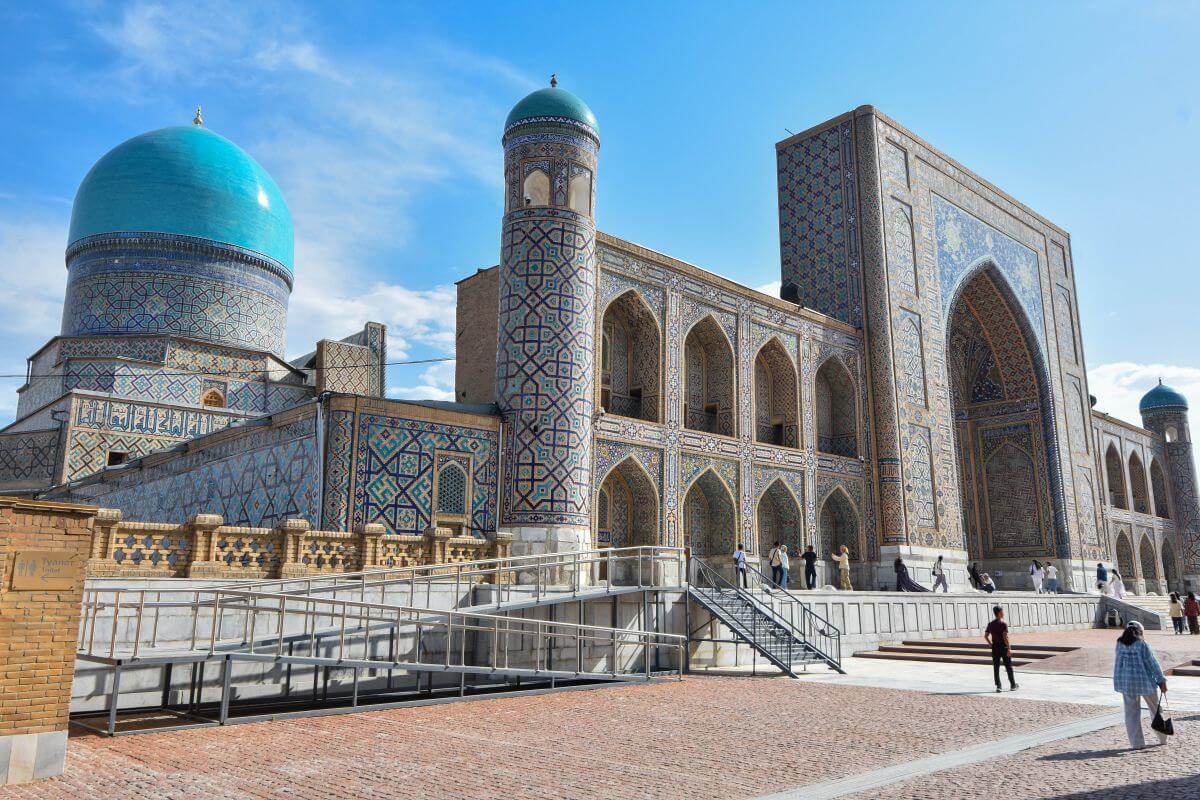
The main open plaza is generally easy to navigate. The Ulugh Beg Madrasa has a side ramp for access to the courtyards, making it possible to explore many of the ground-level displays, workshops, and architectural highlights. Tilla-Kori Madrasa has a ramp (located on the left-hand side of the main entrance), which helps you to enter the courtyard area. From there, another ramp provides access towards the neighbouring section of the complex.
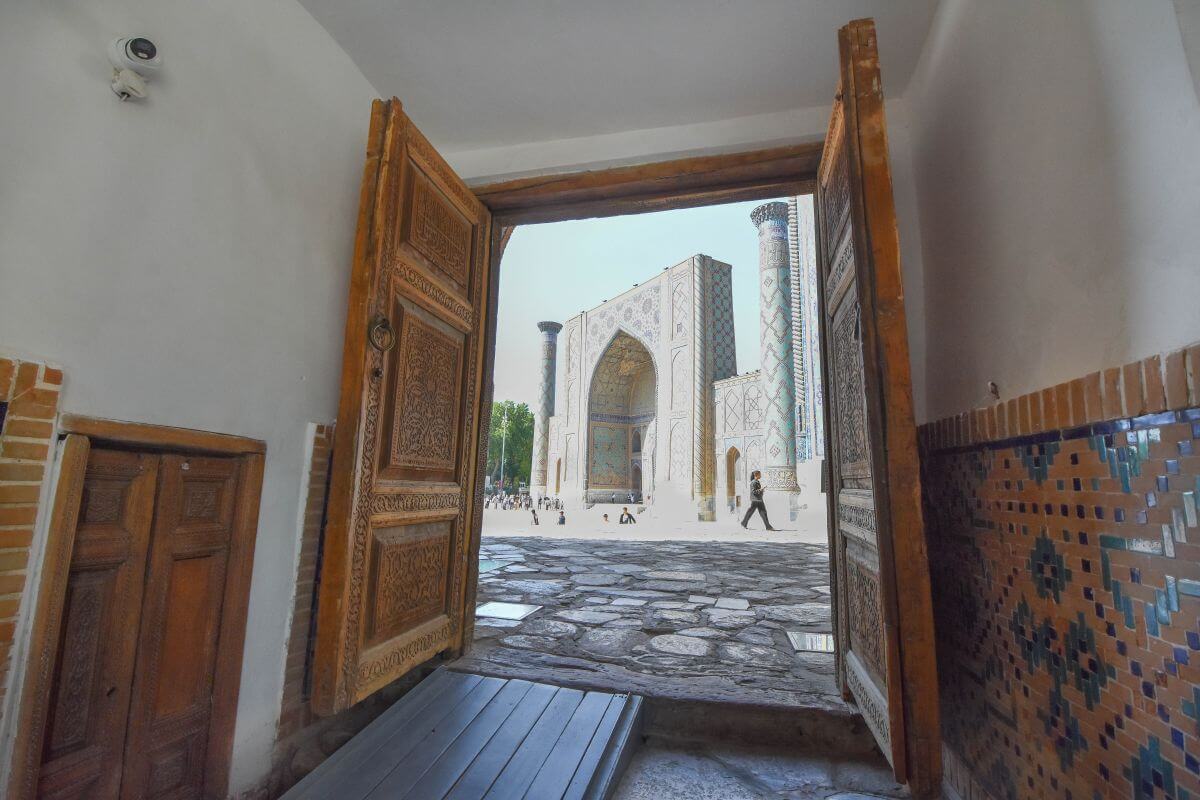
As you can see in the photograph above, several ramps have been carefully integrated into the historic architecture. This particular example shows Tilla-Kori looking towards Ulugh Beg.
WHAT TO EXPECT
While accessibility is generally good, the complex has a few limitations:
- Ground-floor access is available throughout most of the Registan Square complex.
- Historic paving stones and decorative tiled areas occasionally create a bumpy ride.
- The upper levels of the madrasas remain inaccessible due to steep staircases.
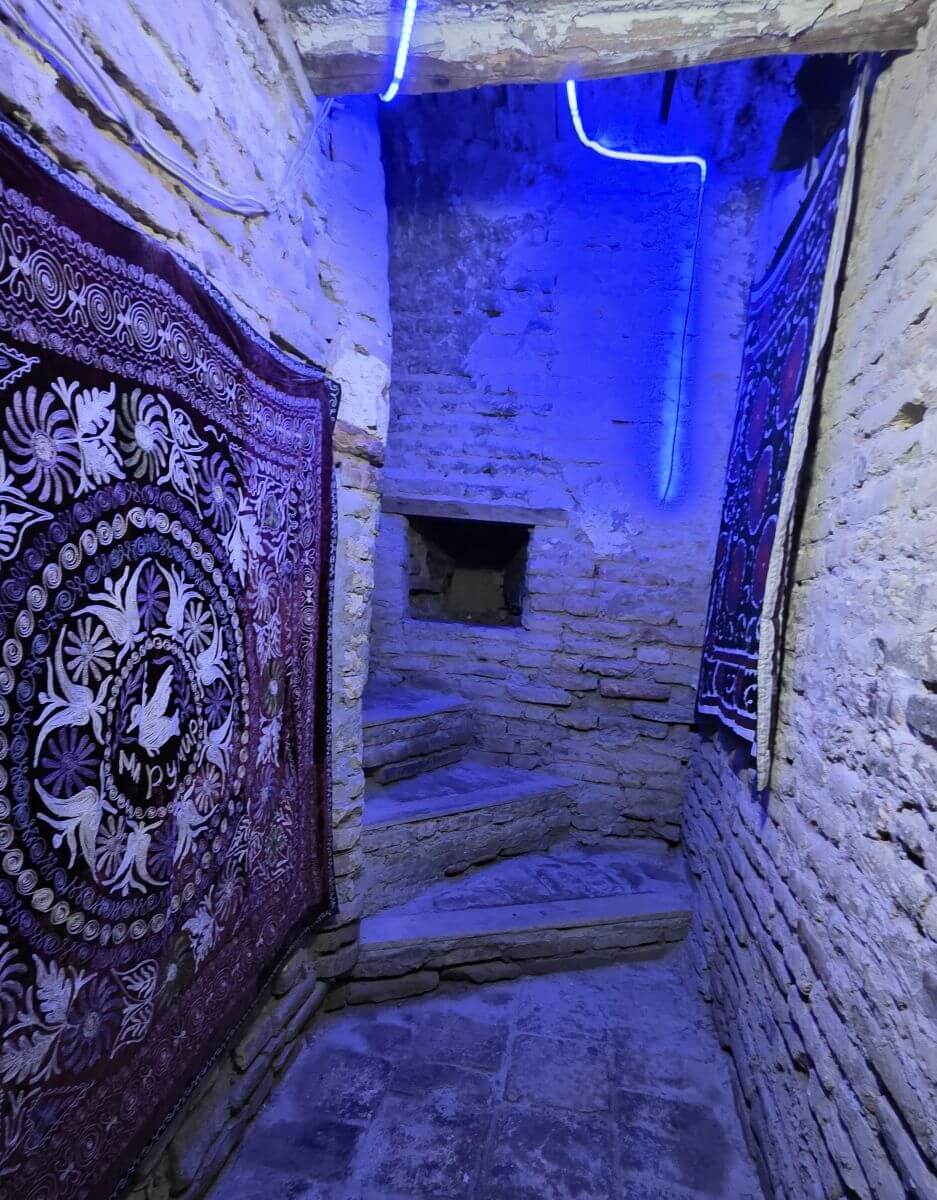
- The hidden café inside the former student quarters requires climbing narrow stairs.
FREE ADMISSION FOR SOME VISITORS
The ticket office information displayed during our visit in May 2026 stated that wheelchair users and some disabled visitors may receive free admission. Bring supporting documentation, such as a Blue Badge or disability certificate, to avoid complications when purchasing tickets.
Top Nearby Attractions:
- Bibi-Khanym Mosque (800 m away)
- Siyob Bazaar (900 m away)
- Gur-e Amir Mausoleum (900 m away)
- Sha-i-Zinda Necropolis (1.4 km away)
Now you have a complete guide to planning your visit to the Registan Square in Samarkand, Uzbekistan.
Thank you for staying with us until the end! If you’ve enjoyed this article, please consider sharing this post to extend its reach.
Pin this guide to the Registan Square in Samarkand for later so you don’t lose it!
YOU MAY ALSO ENJOY: