Rising alone above the Karakalpak deserts, Chilpik, the Tower of Silence, looks almost too dramatic to be real. For over 2,000 years, this monolithic structure has witnessed brutal desert winds, bloody conflicts, and the rise and fall of empires. It’s so iconic that it is proudly displayed on the official Coat of Arms for the Republic of Karakalpakstan. Yet, the vast majority of tourists exploring Uzbekistan completely skip it, opting instead for the standard Silk Road route. Their loss is your gain. By stepping off the beaten path, you’ll understand why seeing this ancient landmark is such an unusual travel experience. In this guide, we uncover the dark secrets of Chilpik Dakhma and explain exactly what to expect from this forgotten monument.
Quick Answers: Chilpik, the Tower of Silence. Worth the Detour?
- LOCATION: Karakalpakstan, Uzbekistan
- NEAREST CITY: Nukus, Uzbekistan
- UNESCO STATUS: Tentative List, submitted 30 September 2025
- DIFFICULTY: Moderate due to the steep climb
- TIME NEEDED: 45-60 minutes
- BEST FOR: History lovers, photographers, UNESCO hunters, and adventurous travellers.
- BEST TRANSPORT: Private driver/taxi
- WHEELCHAIR ACCESSIBLE: No
- FACILITIES: Very basic
- BEST STRATEGY: Combine with a wider Karakalpakstan itinerary.
- BEST ITINERARY: Khiva – Chilpik – Nukus /Moynaq
- OUR VERDICT: Worth visiting if you are already travelling through western Uzbekistan.
Why does a place you’ve never heard of matter so much to people in Uzbekistan?
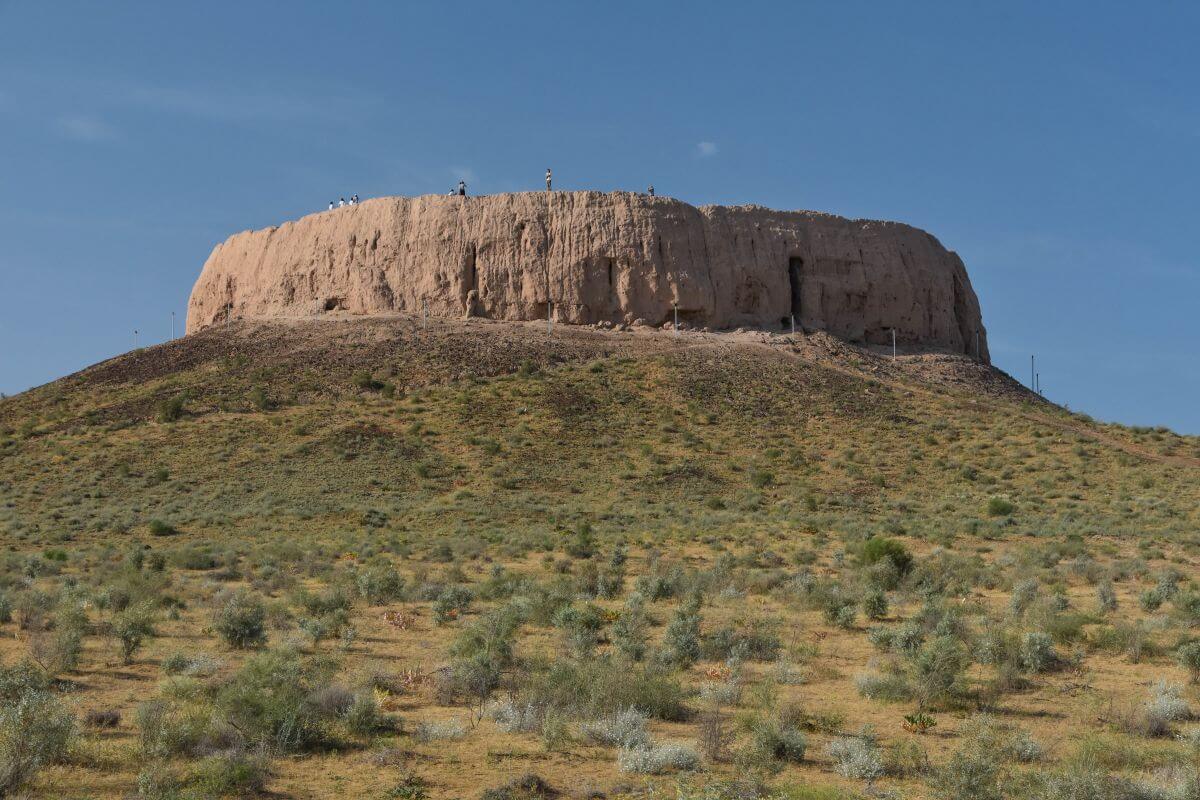
The importance of this desert landmark becomes clearer when you look at what it represents today. Chilpik, the Tower of Silence, holds a special place in Uzbekistan’s cultural heritage because it connects the country’s ancient history with the identity of people who live here today.
For Karakalpakstan, the connection is particularly strong. Its distinctive image appears on the republic’s official state emblem, giving the monument a powerful symbolic role. It’s a reminder that the region’s ancient heritage remains an important part of its cultural identity. Nationally, the site represents much more than archaeology. Its ancient traditions, unusual architecture and spiritual values form part of the country’s wider cultural story. Seeing it in person gave us a stronger sense that this heritage has a living identity, not just an archaeological ruin.
Why should someone anywhere in the world care about Chilpik, the Tower of Silence?
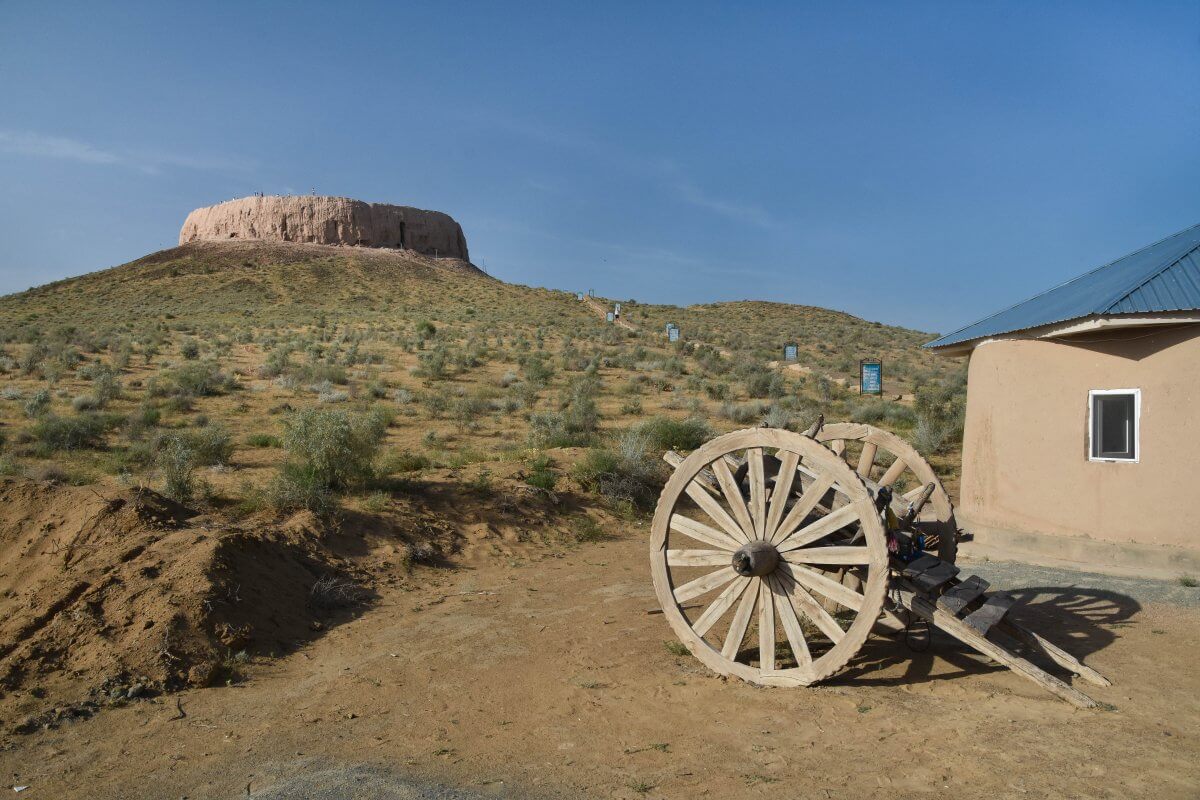
It has no roof, no doors, and sits thousands of miles from western civilisation. So why does this remote, crumbling mud ring monument matter? Chilpik, the Tower of Silence, is one of the world’s last remaining portals into the hauntingly beautiful world of sky burials. It holds the key to a forgotten ancient religion that completely changed how humans view life, death, and the afterlife. Built over 2,000 years ago, during the ancient Khorezm civilisation, Chilpik is a remarkable survivor from a forgotten era. It pulls you directly back to a time when entirely different beliefs, kingdoms, and cultures ruled Central Asia.
THE ZOROASTRIAN CONNECTION
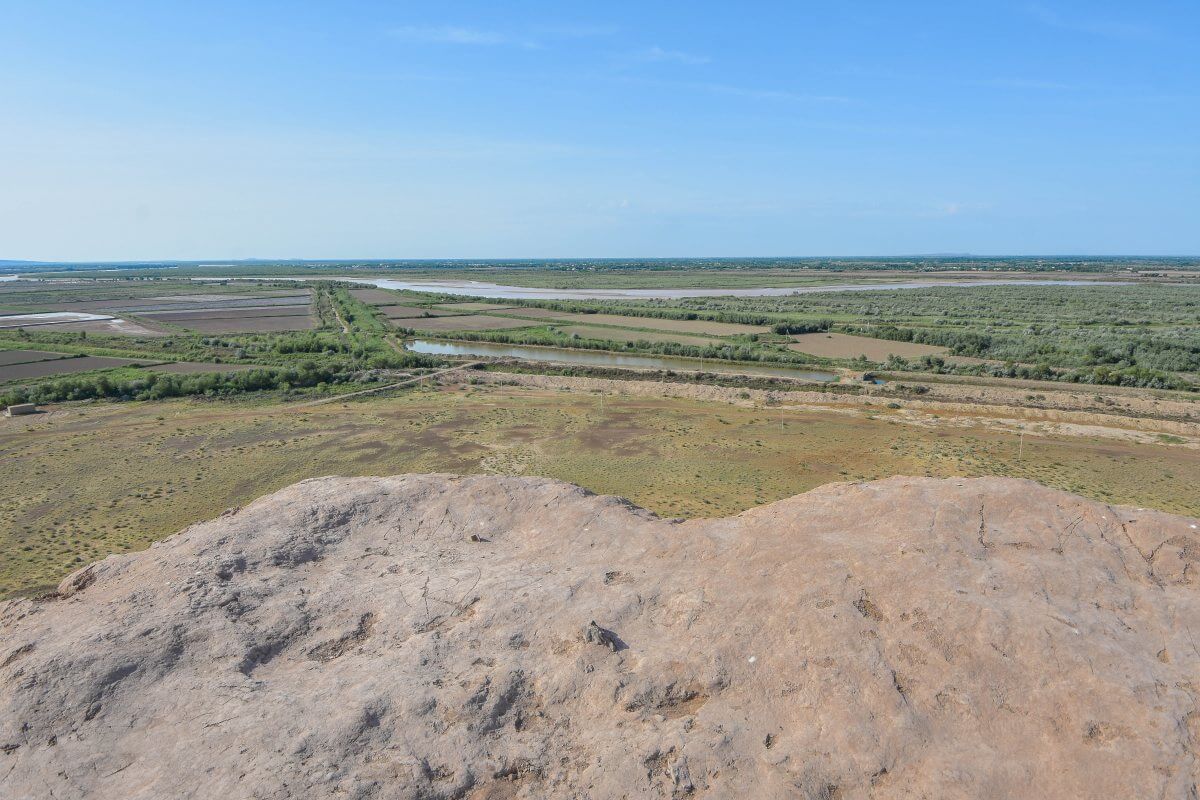
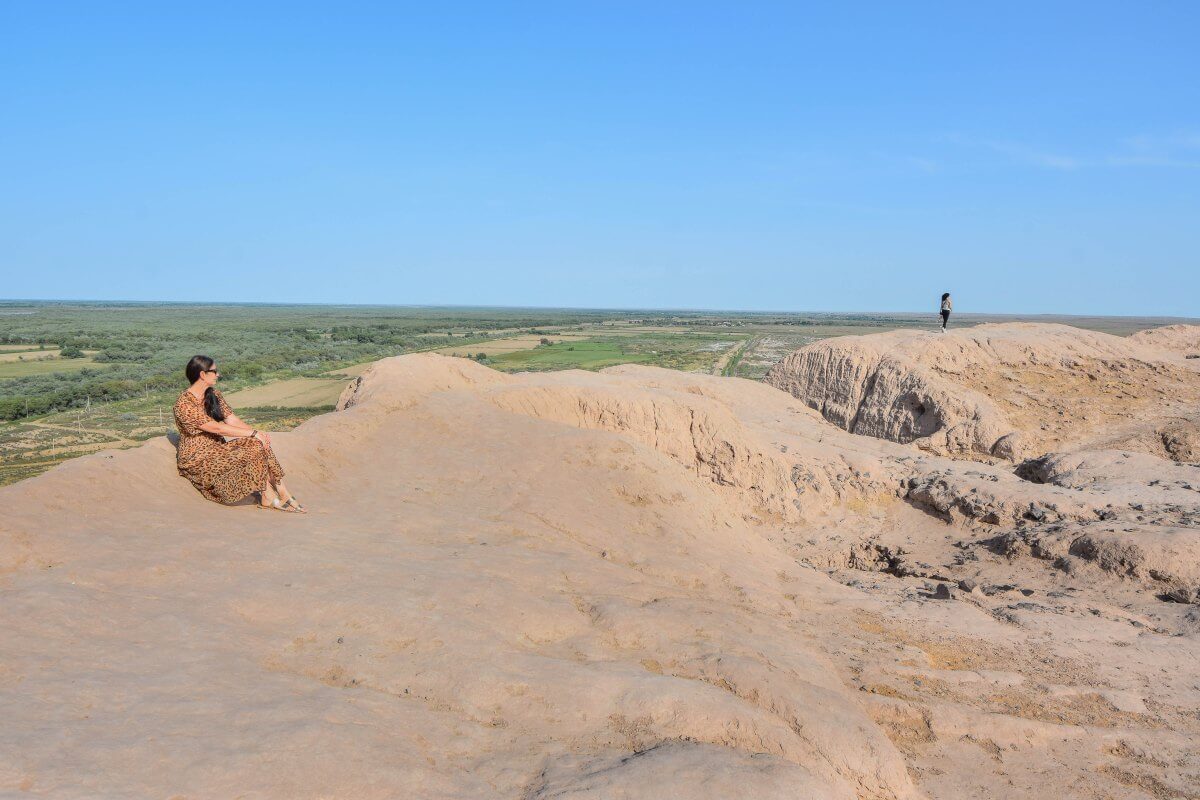
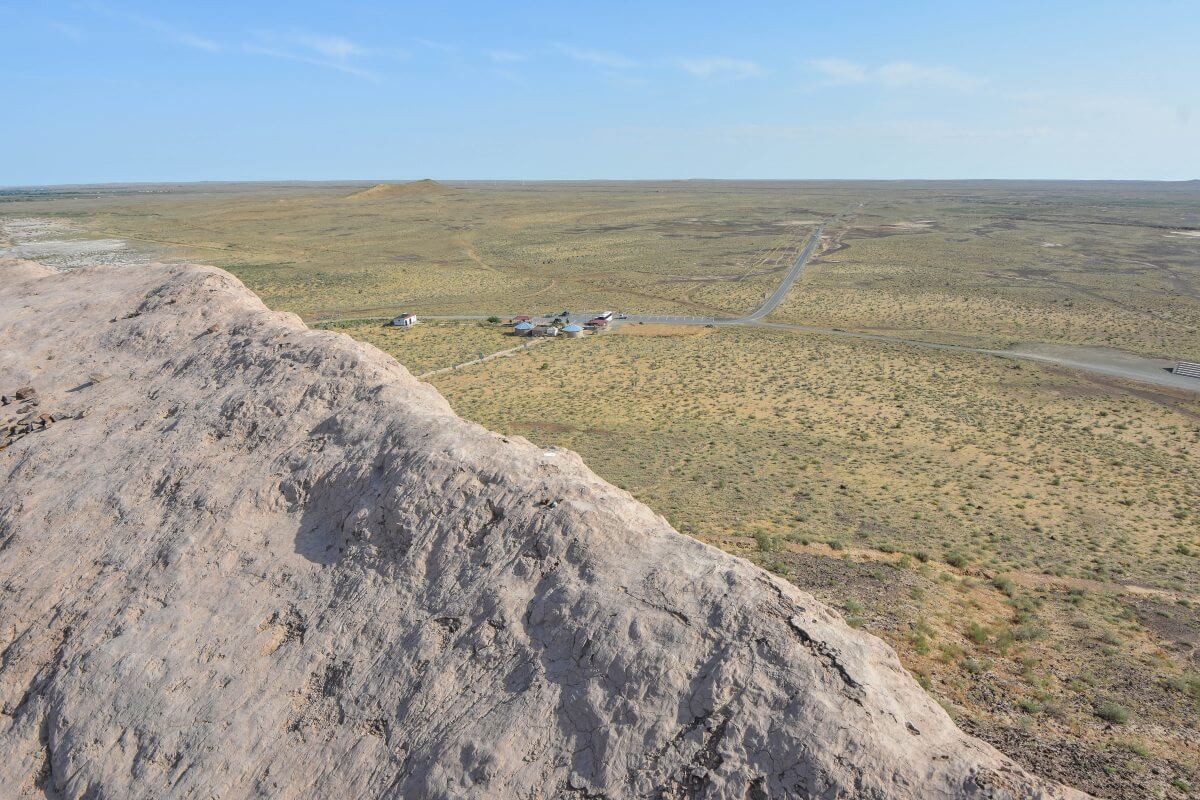
View from the top of Chilpik towards the floodplains of the Amu Darya River.
The monument belongs to a much older religious world. The people who used Chilpik, the Tower of Silence, followed Zoroastrianism, one of the world’s oldest organised faiths. According to information at the Centre of Islamic Civilisations in Tashkent, it developed in the first quarter of the first millennium BC.
Its founder was Zarathustra (or Zoroaster), while his birthplace is thought to have been, most likely, near the Amu Darya River in modern Uzbekistan. For that reason, the religion’s early roots are associated with the heartland of ancient Khorezm. The religion centres on Ahura Mazda, the supreme deity, and teaches the moral ideal of good thoughts, good words, and good deeds. Its sacred book, the Avesta, preserves religious teachings, while fire held a special place as a symbol of divine light.
A ZOROASTRIAN DAKHMA
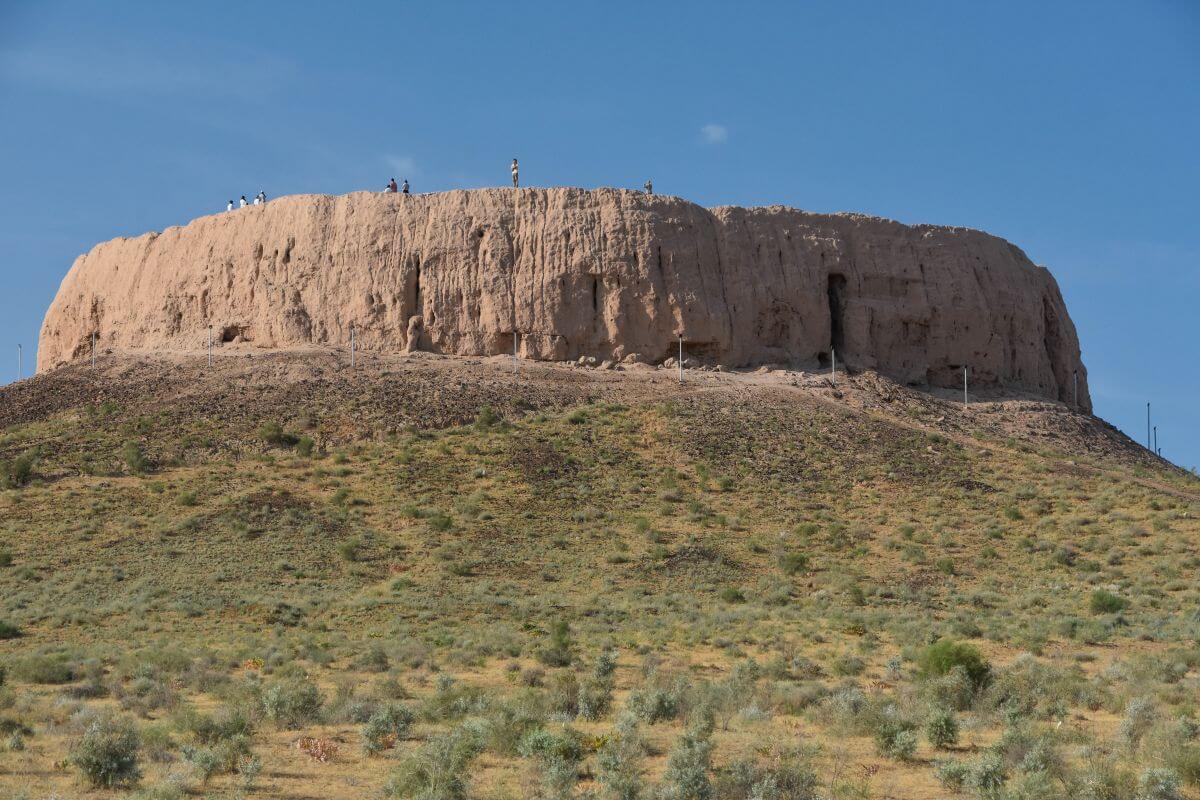
Two thousand years ago, this remote Uzbek hilltop was the final stop for ancient Zoroastrians. Chilpik was a dakhma, a roofless, circular mud-brick structure created for Zoroastrian sky burials. A guide at the Centre of Islamic Civilisation in Tashkent explained to us that Zoroastrian belief regarded a dead body as impure. It could contaminate sacred earth, water or fire. The dead were, therefore, placed here rather than buried directly in the ground. We will explain how this ritual worked in the next section, including how the structure’s design helped fulfil its purpose.
A SECOND LIFE
Chilpik’s story didn’t end when this religious tradition disappeared from the region. After Islamic rule became established following the Arab conquest of Khorezm, the earlier sky-burial practice ended. The structure was then given a new purpose, with later medieval use, including its role as a watch and signal tower. For us, this is what makes this Tower of Silence so fascinating. It’s not simply an ancient religious site. It’s a physical record of changing faiths, customs, power and daily life across a huge stretch of Central Asian history.
What else makes Chilpik, the Tower of Silence, so rare?
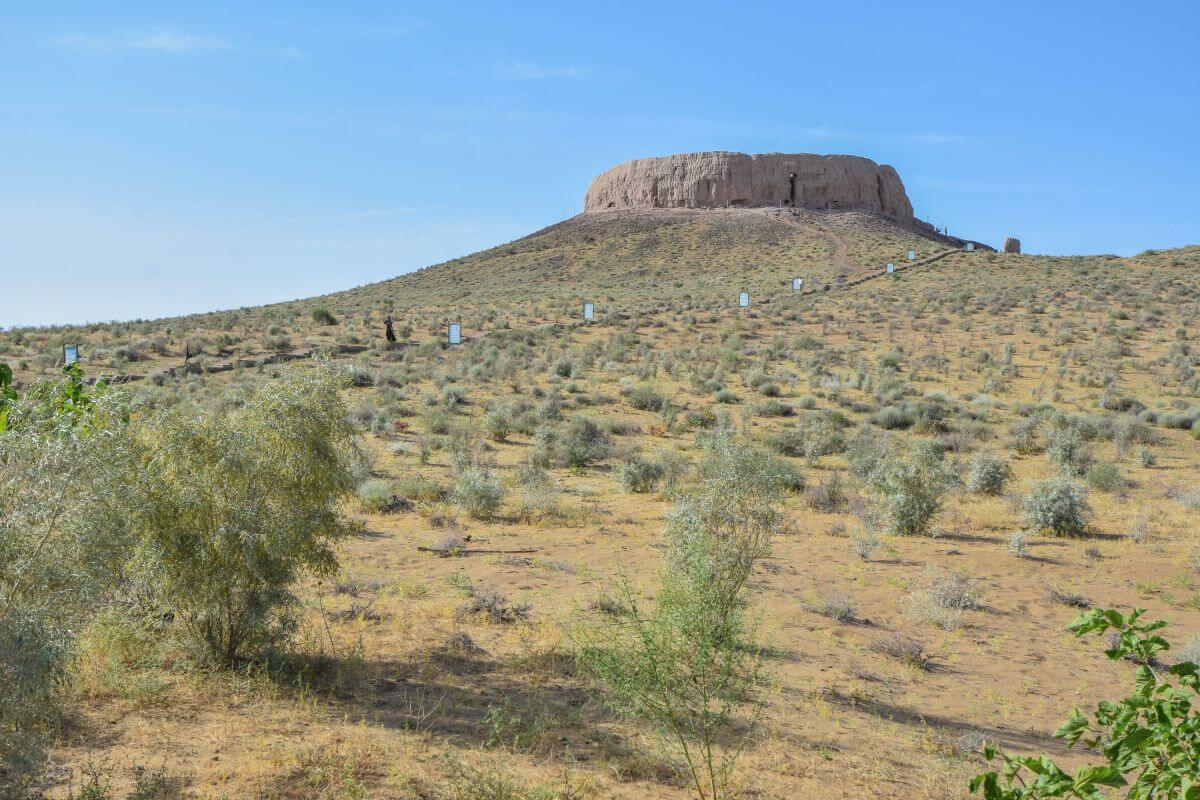
You might expect a monument this unusual to be world famous. Yet, the real surprise is just how rare it is. UNESCO describes Chilpik, the Tower of Silence, as the only purpose-built Zoroastrian dakhma identified in Uzbekistan. It’s also one of the very few surviving examples anywhere in the world. That puts this remote landmark in a very different league from an ordinary ancient ruin. Its survival gives us a rare chance to see a physical structure created specifically for a religious tradition that once stretched across much of Central Asia.
WHY THE WORLD IS TAKING NOTICE
There is another reason for attention now. On 30 September 2025, the Government of Uzbekistan submitted Chilpik to UNESCO’s Official Tentative List of potential World Heritage Sites, under cultural criteria (iii) and (iv). This does NOT mean it has already become a UNESCO World Heritage Site. Instead, it has entered the official process that identifies places considered to have potential Outstanding Universal Value. That is a major moment for a landmark many travellers have never heard of.
THE ARCHITECTURE THAT MADE THE RITUAL POSSIBLE
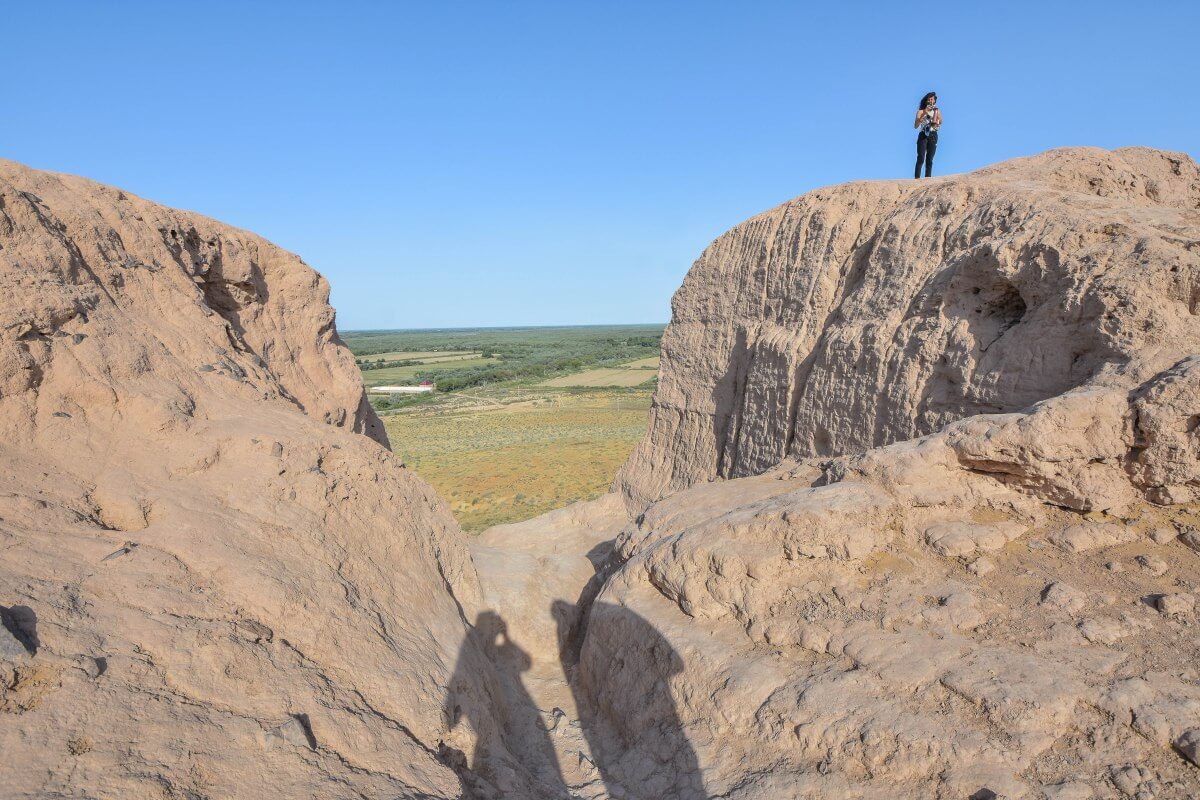
Its uniqueness comes from several things working together. UNESCO highlights that it is a purpose-built dakhma, rather than simply a natural hill or ordinary burial place later associated with Zoroastrian practice. Its circular adobe design, unusual layout, and unique water-drainage system provide evidence of a carefully designed structure linked to ancient funerary customs.
Chilpik is also remarkably important because dedicated Towers of Silence have rarely survived in Central Asia. UNESCO’s nomination notes that Chilpik, as a dakhma, is the only structure of its kind built in the 1st century AD to have survived centuries of religious and political shifts in the region. It’s an example of a unique architectural style and a monument to ancient religious beliefs that have long since disappeared in the region. No identical component currently appears on the World Heritage List.
Many Zoroastrian artefacts such as ossuaries have been found in Central Asia. However, Chilpik is the only major freestanding 1st century AD tower of this scale which has survived until the present day.
WE FOUND TOMORROW’S HERITAGE TODAY
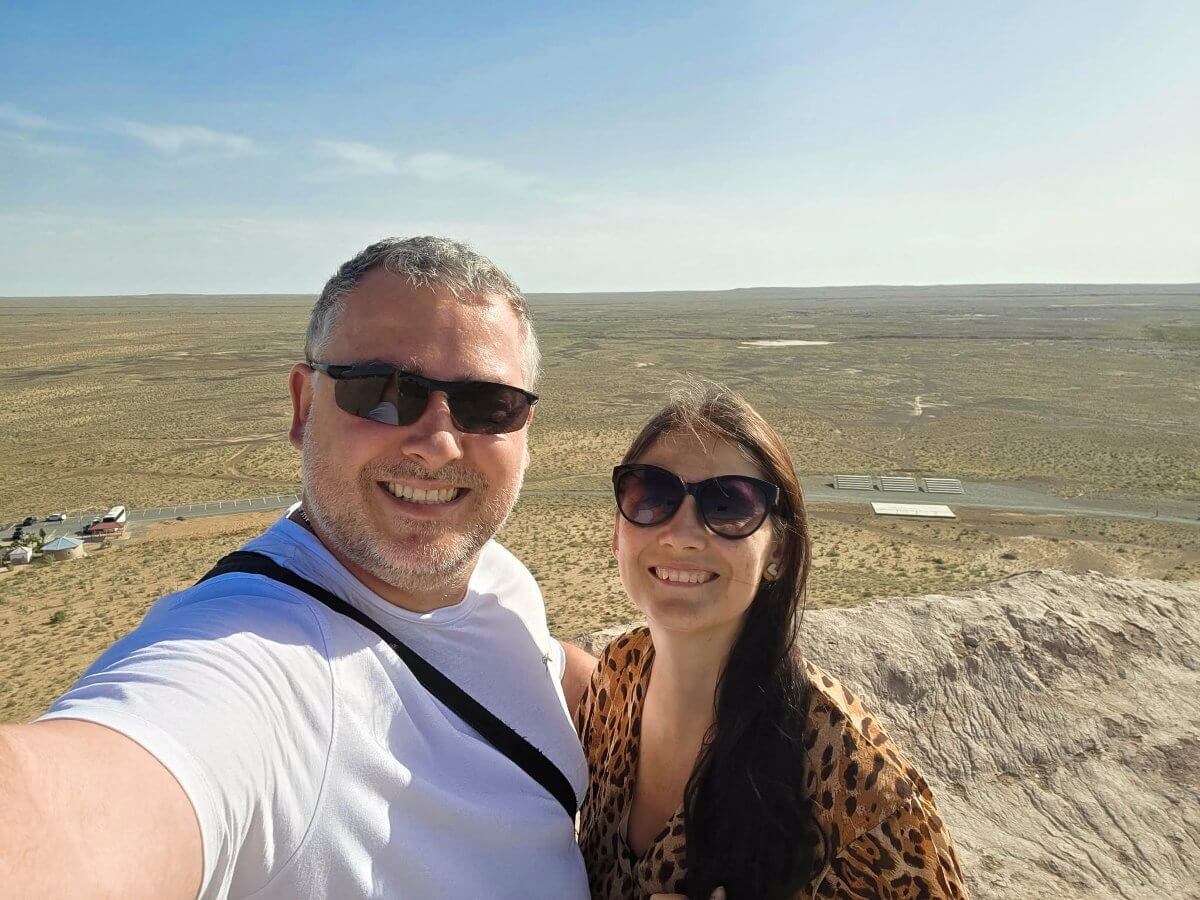
For us, this is one of the most exciting things about visiting places like this. You’re not simply ticking off another famous attraction. You are discovering a UNESCO Tentative List site before it becomes globally recognised. The combination of rarity, survival, and cultural meaning is exactly why this forgotten landmark deserves far more attention.
The Ancient Engineering Behind the Ritual at Chilpik, the Tower of Silence
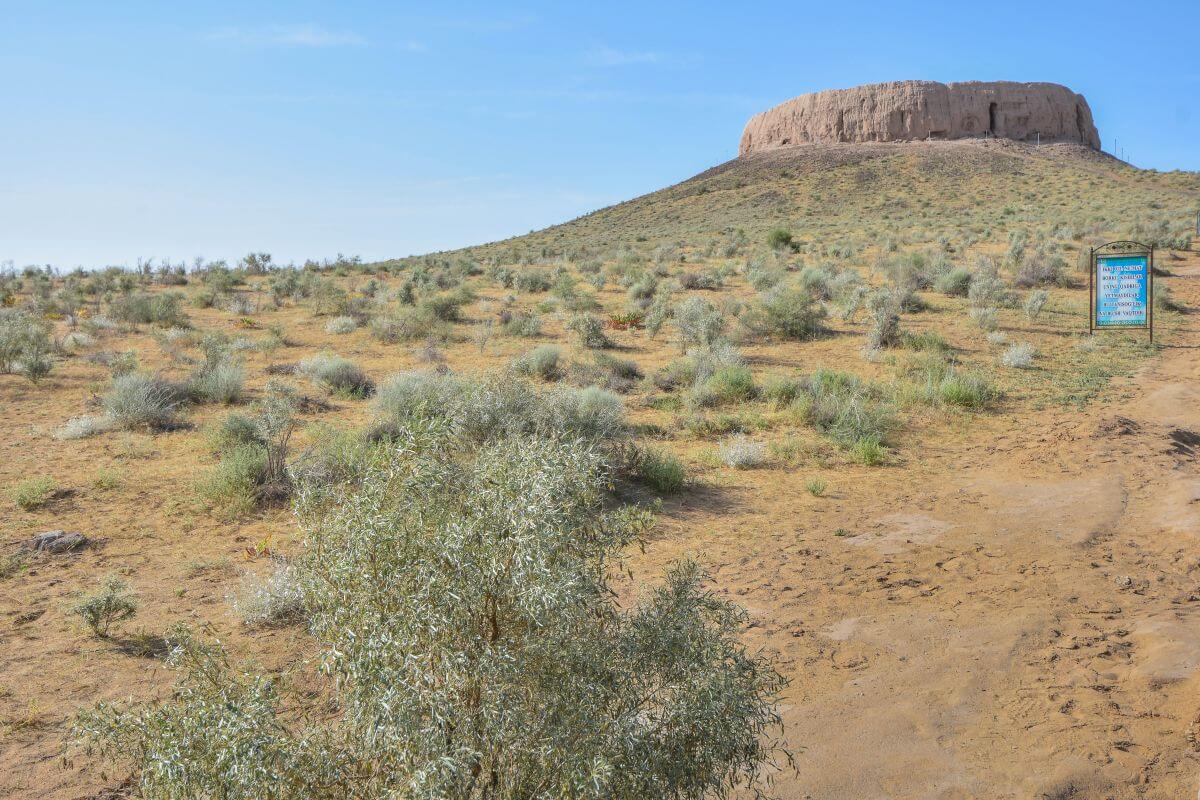
From a distance, the first thing that catches your eye is its shape. An information panel on the site explains that the structure is an enormous, slightly elongated circle. It measures approximately 65 by 79 m (213 by 256 ft), with walls reaching around 15 m (49 ft) high. The walls were made from large mud-brick blocks and were much thicker at the bottom than at the top. UNESCO records a wall thickness of about 4.8-5.5 m (15.7-18 ft) at the base, narrowing to approximately 2-3 m (6.5-9.8 ft) at the top.
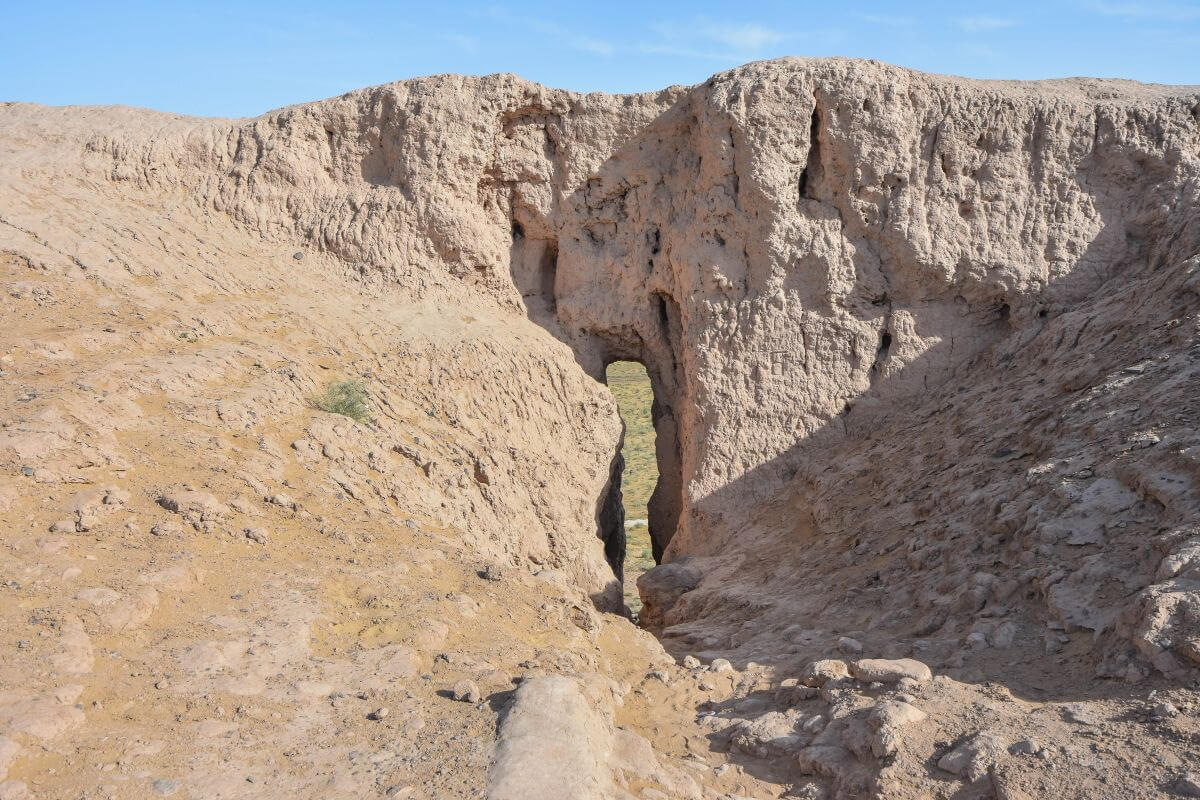
A view from inside the Tower of Silence, looking at the circular, weathered mud-brick walls.
INSIDE THE MASSIVE RING
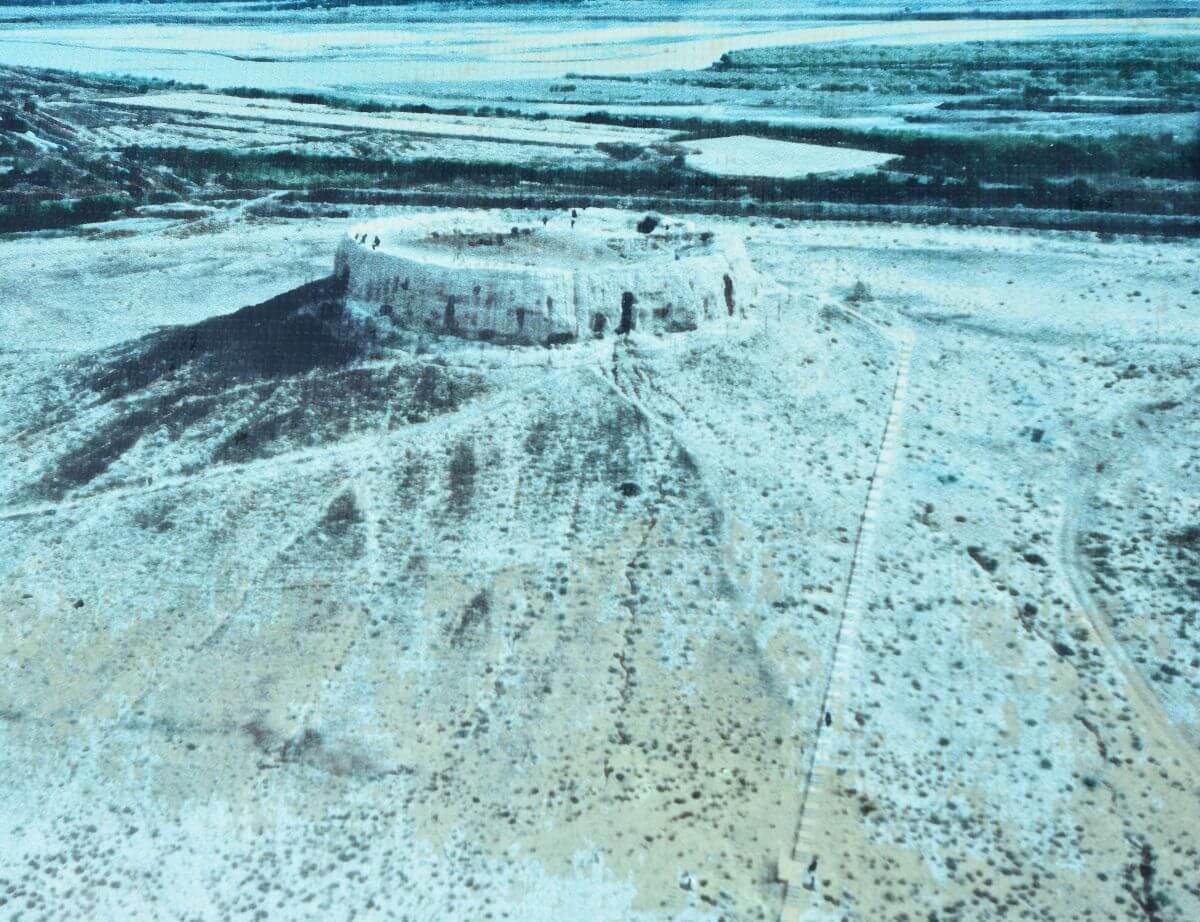
The construction becomes even more fascinating once you understand what lies inside. A rock rises from the centre, surrounded by layers of sand and clay packed between it and the outer walls. Vertical radial walls divided this enormous interior, while a long staircase provided access. Archaeologists have traced the remains of a staircase with about 75 steps, as well as a ramp leading towards it. There were even ceramic channels built into parts of the structure. These small details reveal how carefully this Tower of Silence was designed.
THE PROBLEM THEY HAD TO SOLVE
Chilpik’s design becomes easier to understand when you remember the Zoroastrian belief. Their faith required the sacred elements of earth, water, fire, and air to remain pure. For that reason, allowing a corpse to touch the ground or contaminate water was unacceptable. The answer was a purpose-built structure high above the surrounding landscape. The dead could be placed here without directly contaminating those elements. The dakhma stood on a high point, and its design even helped protect the bodies from rainwater. UNESCO describes a special ceramic drainage system that diverted rainwater away from the structure. The surface was also arranged so the bodies could be exposed rather than covered by soil.
NATURE BECOMES PART OF THE RITUAL
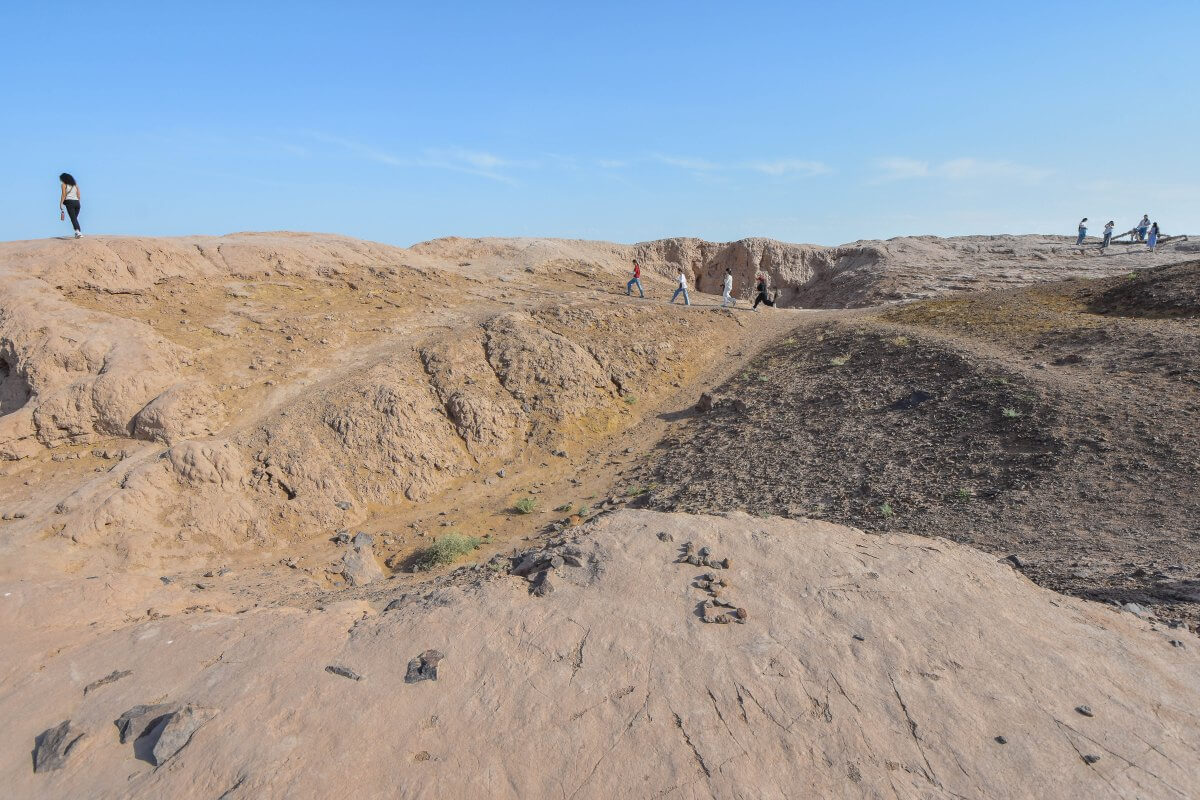
This is where the meaning of the open roof becomes clear. According to an information panel on the site, the bodies were placed on the flat upper surface and left for birds and other scavengers to remove the flesh. It was a carefully controlled religious practice designed to prevent the corpse from polluting sacred elements.
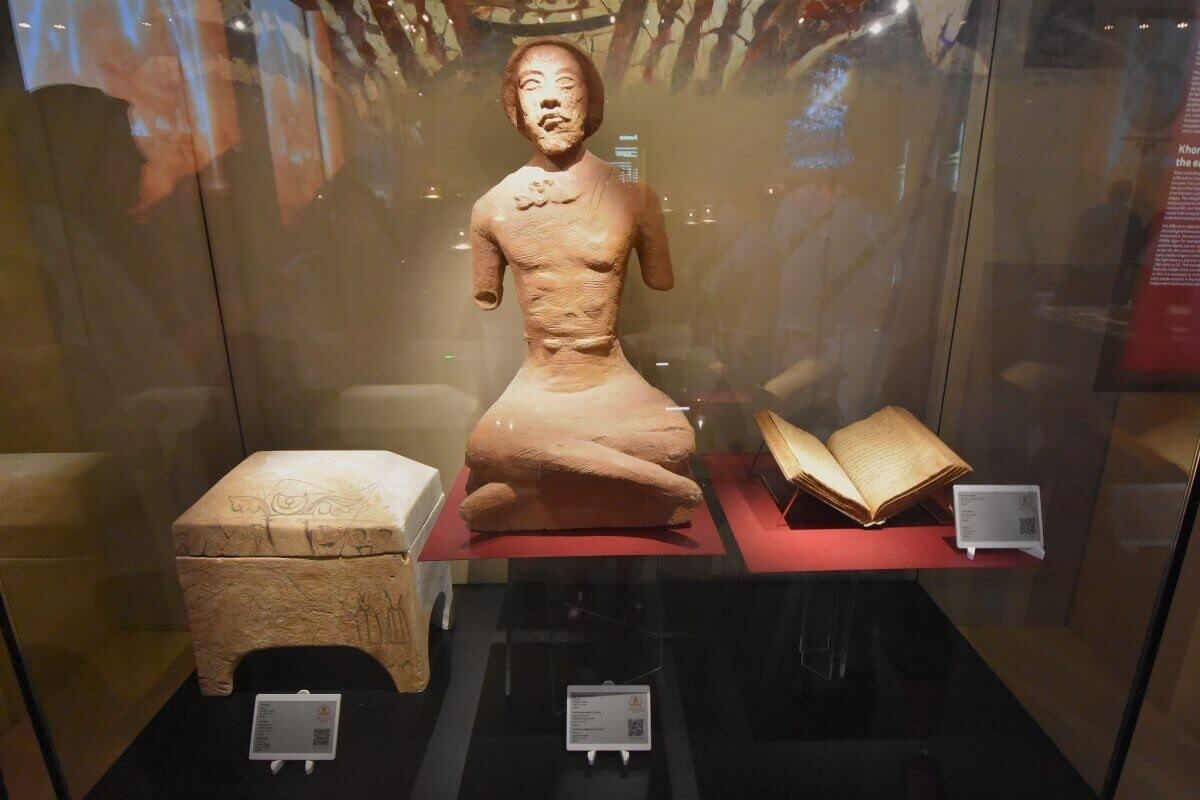
Once the bones had been cleaned, the remains could be collected and placed in clay ossuaries, or bone containers like this one, before being buried elsewhere. This image displays the “Man Statue,” an ossuary used to preserve human remains. On the left is a carved rectangular ossuary box with a matching lid. The open manuscript on the right is the Avesta, the sacred text of Zoroastrianism. You can view this exhibition at the Centre of Islamic Civilisation in Tashkent.
Standing behind these enormous walls, it is striking to realise that almost every part of the structure had a practical purpose. The height, open top, drainage channels, internal divisions and access route all formed part of a carefully planned ritual system. That is what makes this place so fascinating to us. You are not simply looking at an ancient mud-brick landmark. Instead, you’re seeing the physical solution an ancient community created for one of its most important religious rituals.
Where is Chilpik, the Tower of Silence?
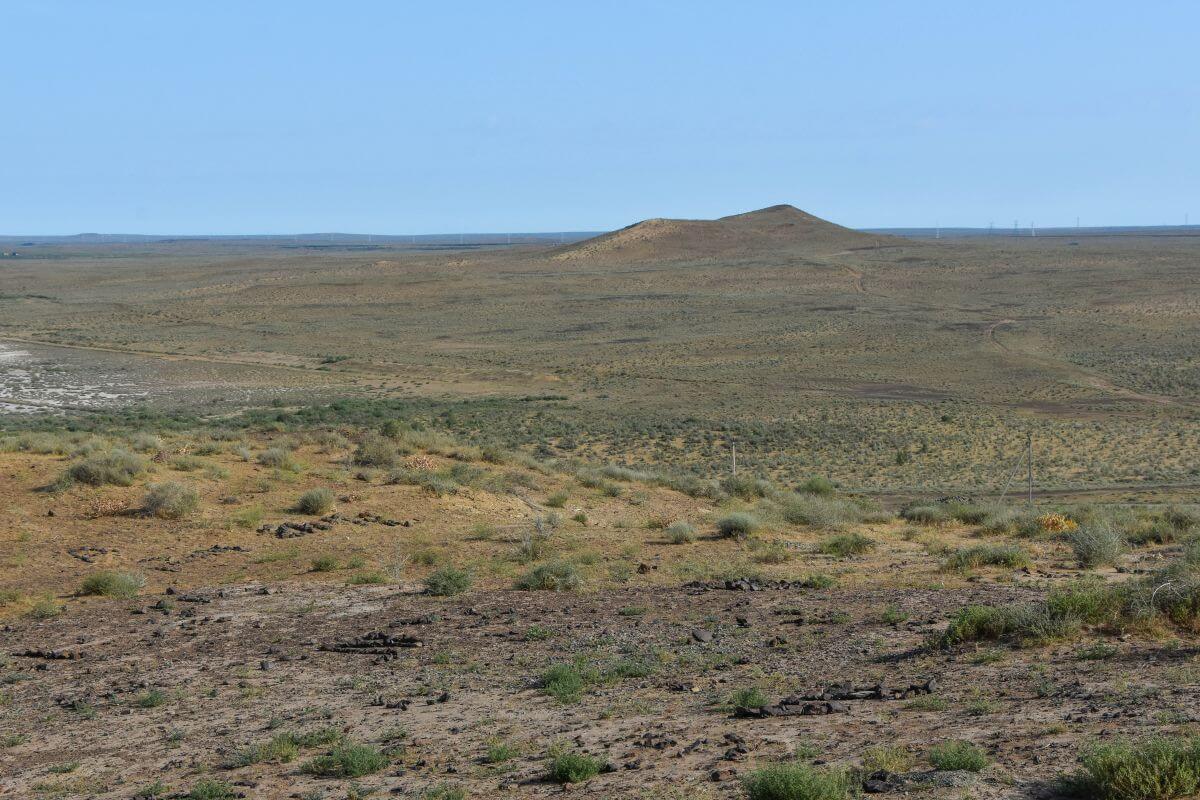
Knowing where Chilpik is on a map is one thing. Actually reaching it is another.
Look at the map of western Uzbekistan, and you will see why this place feels so different from the country’s famous Silk Road cities. Chilpik is one of those places where the journey is almost as memorable as the attraction itself. There are no grand city streets leading here, and you won’t find sightseeing buses either. The surrounding desert stretches for miles.
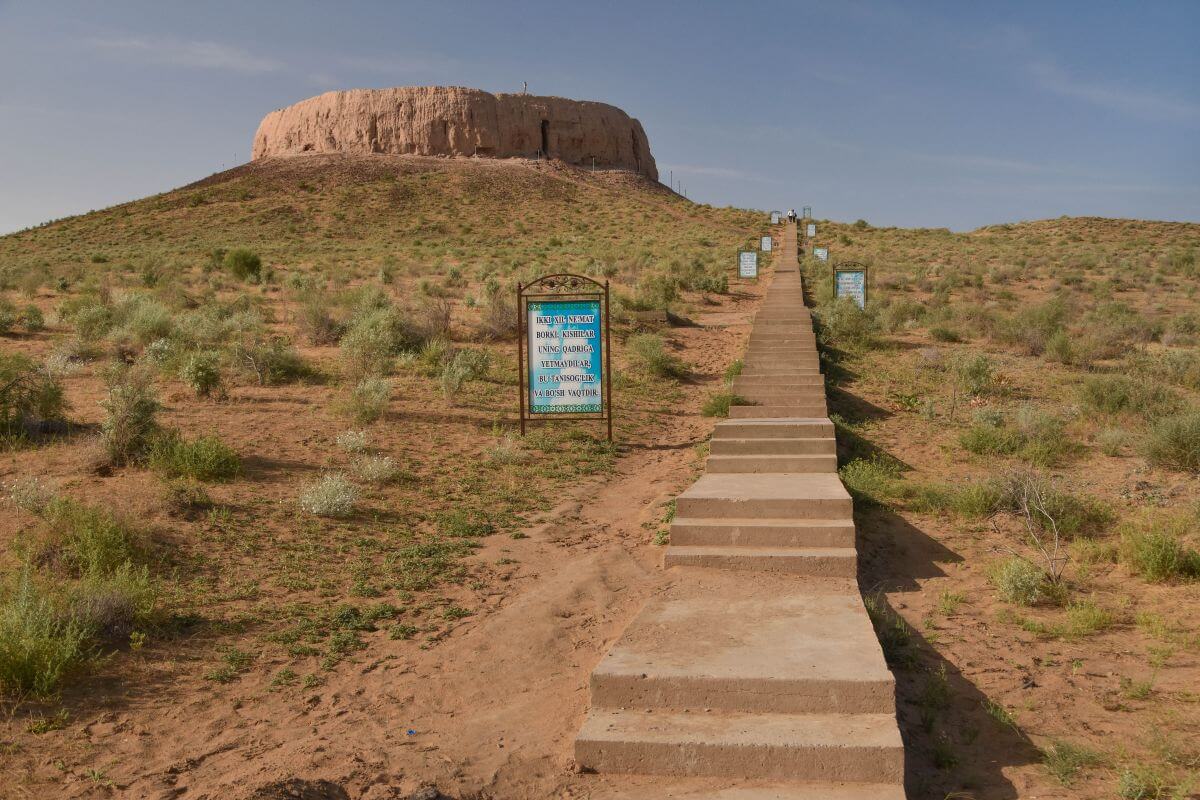
Chilpik, the Tower of Silence, lies in the vast Republic of Karakalpakstan, approximately 49 km (30 mi) south of Nukus and about 125 km (77 mi) north of Khiva. It rises from a desert hill beside the right bank of the Amu Darya River. It is relatively close to the border with Turkmenistan in one of the most remote parts of Uzbekistan.
THE FINAL APPROACH
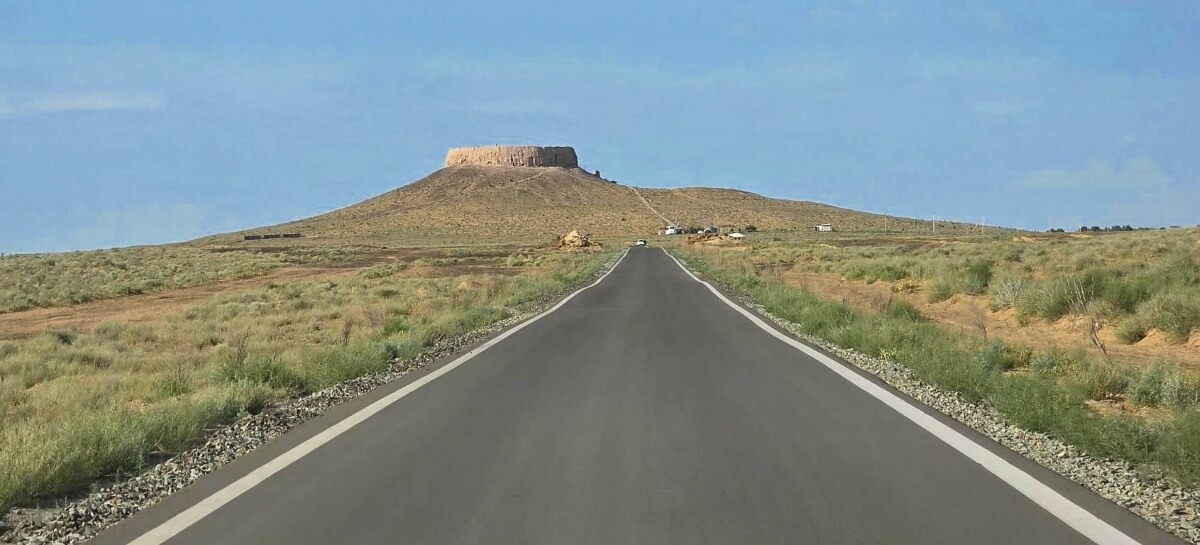
From the main Nukus-Urgench-Khiva highway, you follow a paved road for roughly 2.4 km towards the hill. Then comes the final challenge: climbing toward the top, using a long, steep staircase and uneven slopes.
How to Get to Chilpik, the Tower of Silence 
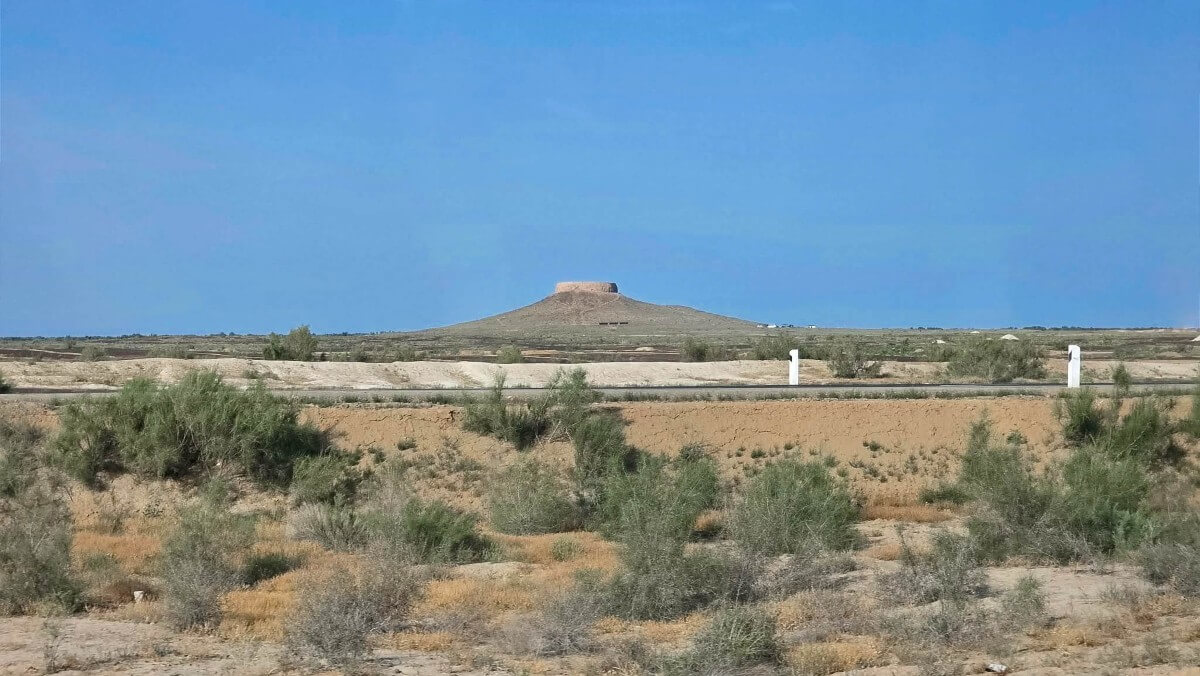
FROM NUKUS
Nukus is the easiest base. If you’re already in the Karakalpakstan capital, arrange a local taxi heading towards Khiva or Urgench. Before leaving, negotiate a flat stop-and-wait price. Ask the driver to drop you beside the highway, wait around 45 minutes while you climb and explore, then continue toward Khiva after you return.
GOOD TO KNOW:
There is no direct public transport to the monument, so arrange a local taxi.
COMING FROM KHIVA OR URGENCH
Chilpik also works extremely well as a stop between Khiva and Nukus. If you’re staying in Khiva, you can arrange a private taxi or tour heading towards Nukus and include this attraction on the journey. If you’re flying to the region, Urgench is another useful starting point. From Urgench, travel towards Nukus and arrange a stop before continuing north-west. This is much more sensible than treating the monument as a separate excursion.
WHAT ABOUT TASHKENT?
Don’t travel from Tashkent only to visit one monument. Instead, make Chilpik, the Tower of Silence, part of a wider western Uzbekistan trip. You can fly to Urgench, then continue towards Khiva and Nukus. Alternatively, take a sleeper train from Tashkent to Nukus and explore Karakalpakstan from there. That is exactly why we recommend treating this as a strategic stop rather than a standard attraction. We visited Chilpik during our private tour from Khiva to Moynaq and the Aral Sea ship graveyard. This refreshing stop fitted naturally into the route.
Tips for Visiting Chilpik, the Tower of Silence
The first thing you need to understand is that this is not a polished tourist attraction with everything arranged for you. Once you know what to expect, it becomes much easier to enjoy it.
PLANNING AND TRANSPORT
- Go early in the morning to avoid the worst of the desert heat in warm weather. The summit is completely exposed, so take your time if you’re visiting in warmer weather.
- Plan your return transport. This is not an attraction you can get off a bus and find another one waiting to take you home. Taxis and mobile phones cannot be relied upon at the site.
- Hire a private driver from Nukus or Khiva in advance and agree exactly how long they will wait. This is particularly important if you’re travelling independently.
- Combine with a trip to the Savitsky Museum in Nukus or nearby regional fortresses. You can also visit it as a part of a journey from Khiva towards Moynaq and the Aral Sea ship graveyard. The stop naturally fits into a route, and you won’t need to solve the transport problem twice.
- Bring small cash notes.
GEAR AND CLOTHING
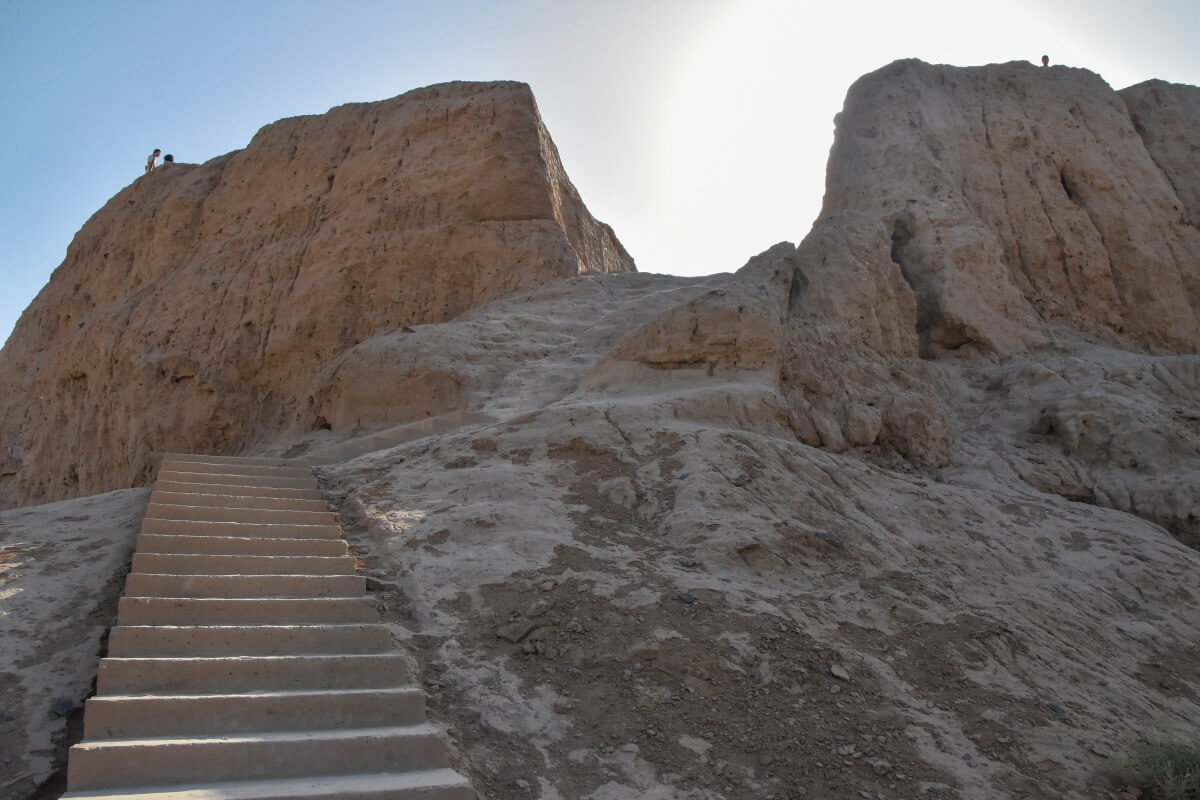
- Wear sturdy shoes with good grip (learn from my mistake!). The climb is short enough to look easy from below, but the combination of steep stairs, uneven slopes and loose gravel makes sensible footwear essential.
- Bring your own snacks and water, as there are only limited supplies available at the site.
- Don’t forget to wear a hat and sunscreen, especially if you visit during hot weather. There is very little shade, and once you start climbing, you’re exposed to the desert sun. Take your time rather than rushing to the top.
AT THE SITE
- There are no cafes or souvenir shops at the bottom of the hill. You may find a small local stall selling soft drinks and a few snacks. However, this is not somewhere to rely on for supplies.
- Don’t expect to find a modern visitor centre explaining everything in front of you. The only information panel is at the bottom of the hill near the parking area and staircase. At the summit there are no toilet facilities.
- Respect the site’s sacred history, which served as a historical dakhma for Zoroastrian funerary practices.
- Look beyond the walls and take it slow. Look across the desert and towards the Amu Darya River and imagine the rituals that once took place here. Enjoy the views of the wide valley below.
TOILETS
- Sort out the toilet before the climb. There is a small toilet block near the parking area, and it’s your only option before heading uphill. Just lower your expectations. The facilities are very basic rural squat or pit-style toilets rather than Western flush toilets. A local attendant may ask you for around 2,000 UZS (£0.12 as of May 2026) as a small maintenance fee. For that reason, keep some Uzbek som in small notes. We strongly recommend carrying toilet paper, wet wipes, and hand sanitiser. During our visit in the middle of May 2026, there was running water, but it may not be available.
- If you prefer modern facilities, use the bathrooms at your hotel or at a larger restaurant in Nukus or Khiva before setting off.
Is Chilpik Worth Visiting?
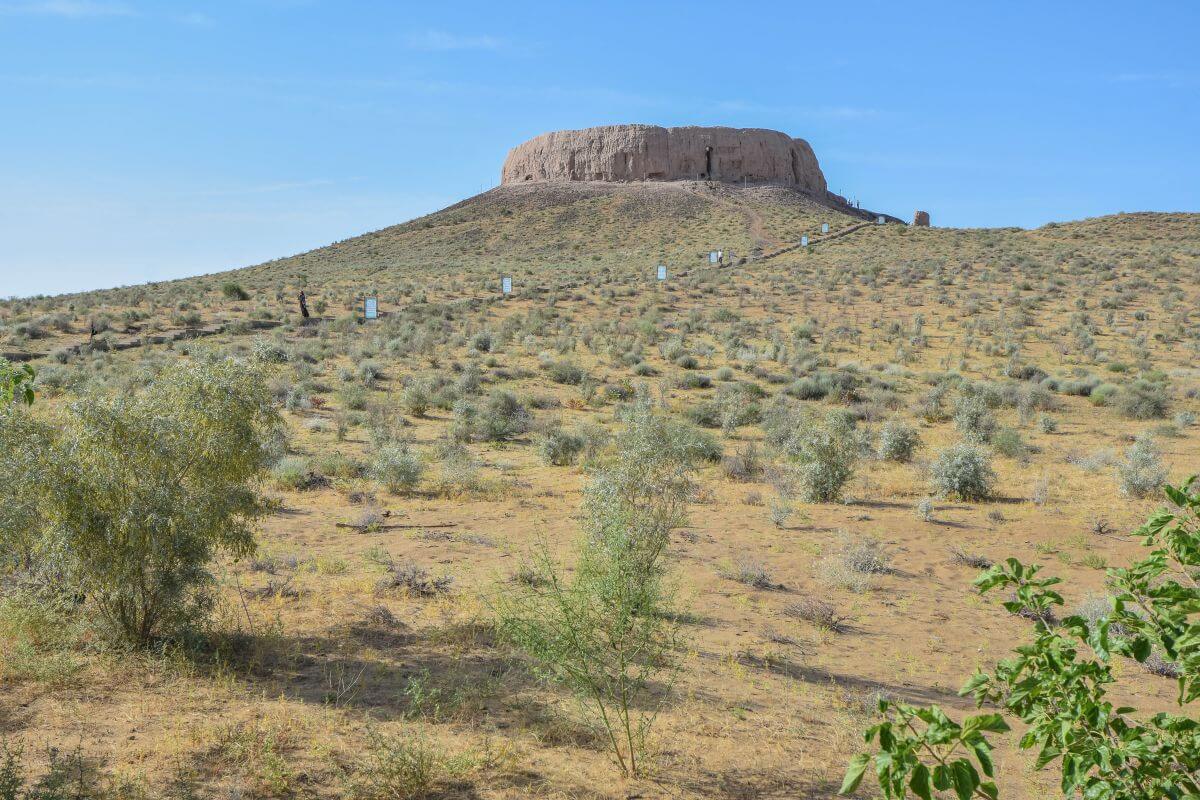
Chilpik, the Tower of Silence, is absolutely worth visiting, especially if you are already travelling between Nukus and Khiva. While it’s a quick stop, its cultural importance and dramatic landscape make it a memorable highlight of the Karakalpakstan region. We definitely recommend it for anyone who also loves ancient history, unusual religious traditions, archaeology, remote places and potential UNESCO sites. The experience is difficult to compare with Uzbekistan’s better-known Silk Road sights. For us, the visit was one of those travel stops that proves an attraction does not need to be famous, enormous, or packed with things to see to be memorable.
WHEN IT MIGHT NOT BE WORTH IT
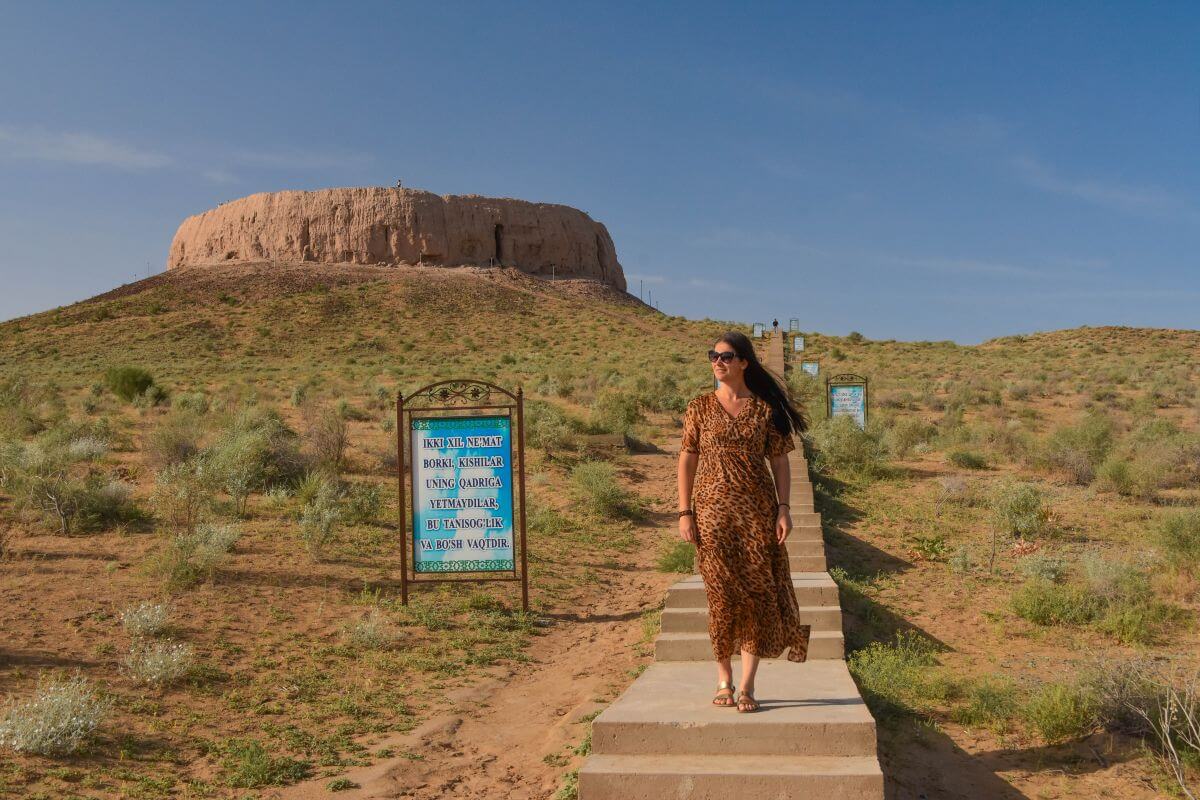
As much as we recommend adding this unusual site to your western Uzbekistan itinerary, it’s not the right stop for every traveller. Think twice if you:
- Dislike rough roads, heat, steep climbs, or basic facilities.
- If you expect a large archaeological complex, you might find the site underwhelming. Its appeal comes from its age, unusual purpose, remote setting, and cultural importance, rather than the large list of things to see.
- Don’t make a five-hour detour from Khiva just for it. The journey from Khiva takes approximately 2.5 hours each way. That means you could spend around 5 hours travelling for a visit that takes only about 45 minutes. For us, that would not be a good use of a day; save that time for somewhere else.
How Long Do You Actually Need to Visit Chilpik, the Tower of Silence?
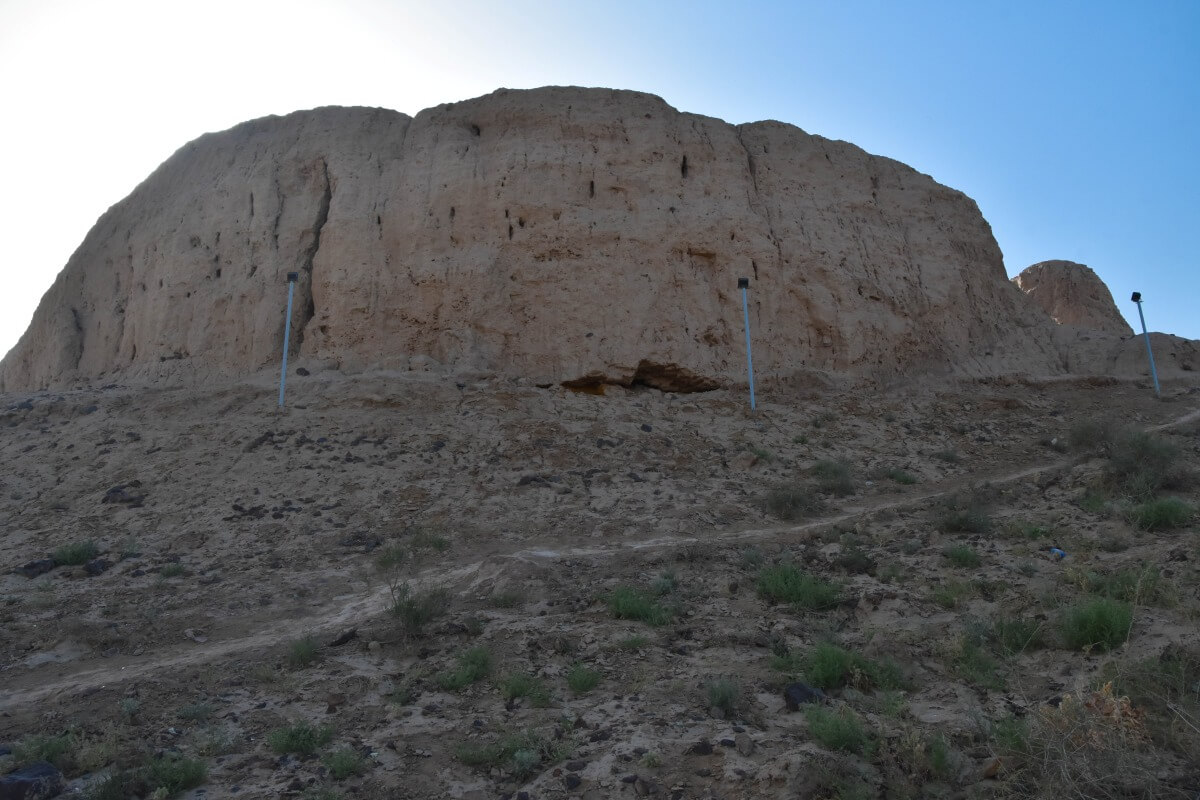
We spent about 45 minutes at Chilpik, the Tower of Silence, and that was enough for us. We never felt that we were rushing, yet we didn’t leave thinking we had missed something important. For most travellers, we recommend allowing 45 minutes to 1 hour from leaving the parking area to getting back to your vehicle. Many tourists spend only about 30 minutes here, but we don’t recommend rushing.
VISIT, MINUTE BY MINUTE:
- 10-15 minutes: parking area to the summit. In hot weather, give yourself extra time.
- 10-15 minutes: explore the ancient structure. Walk around the structure, look at the surviving construction and take a moment to appreciate just how unusual it is.
- 10-15 minutes: for photographs and views of the surrounding desert and towards the river.
- 5-8 minutes: back to the car. The descent is quicker than the climb and should take less than 8 minutes at a comfortable pace.
Now you have all the information you need to visit Chilpik, the Tower of Silence in Uzbekistan!
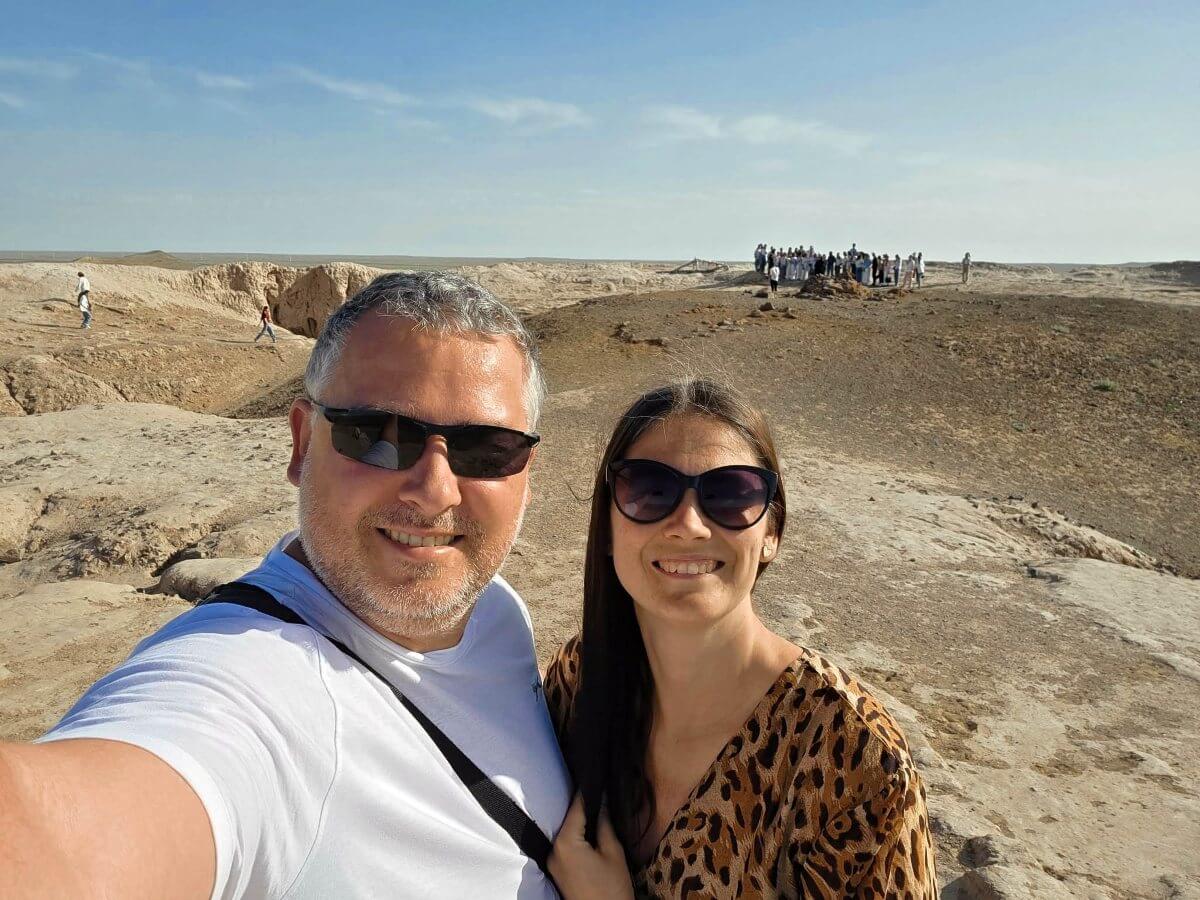
Thank you for staying with us until the end! If you’ve enjoyed this article, please consider sharing this post to extend its reach.
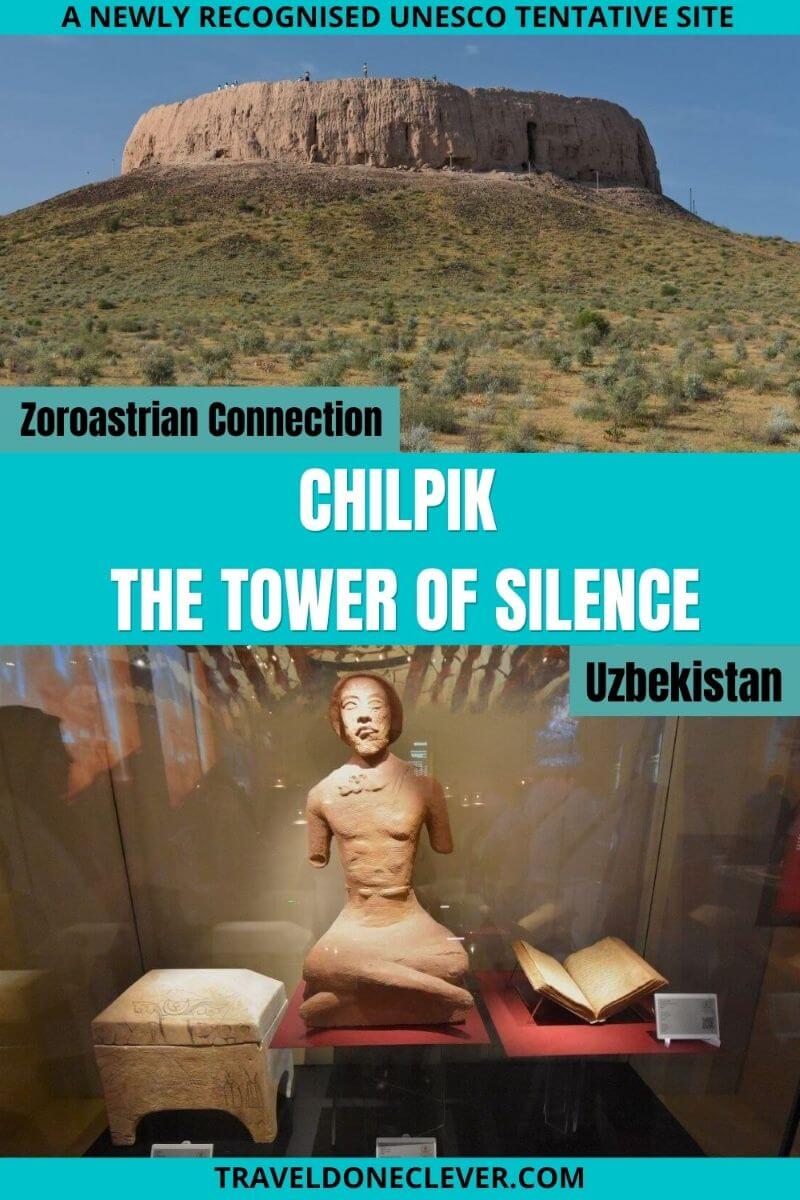
Pin Chilpik, the Tower of Silence in Uzbekistan for later so you don’t lose it!
MAY ALSO ENJOY: