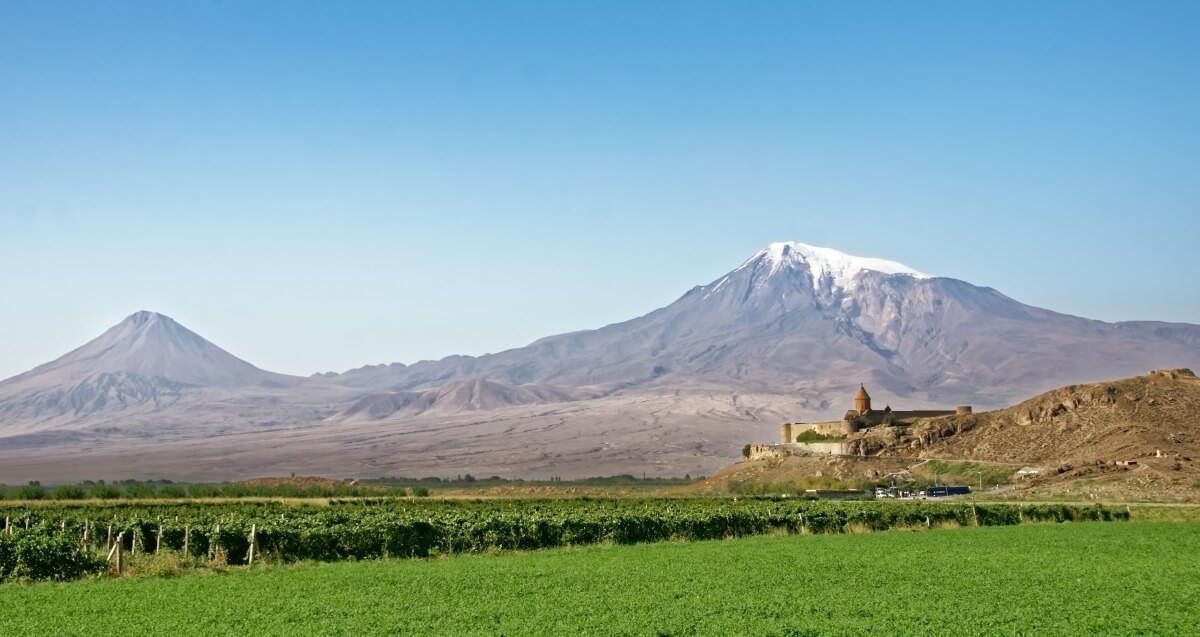
Around 301 AD, Armenia traditionally became the first kingdom in the world to adopt Christianity as its official state religion. According to Armenian Christian tradition, this historic turning point is closely connected with Khor Virap, where Saint Gregory the Illuminator survived 13 years of imprisonment in a dark, 6-m-deep underground pit among snakes. In this Khor Virap Armenia guide, we go beyond the surface to uncover the site’s deep secrets, royal prison history, and religious legends. We also provide the practical information you need to plan your visit from Yerevan and explain what to expect when you arrive.
Disclaimer: This post contains affiliate links. If you click through and make a purchase, we may receive a small commission at no additional cost to you. This helps to support and run our blog. Thanks!
Why Trust Our Khor Virap Guide?
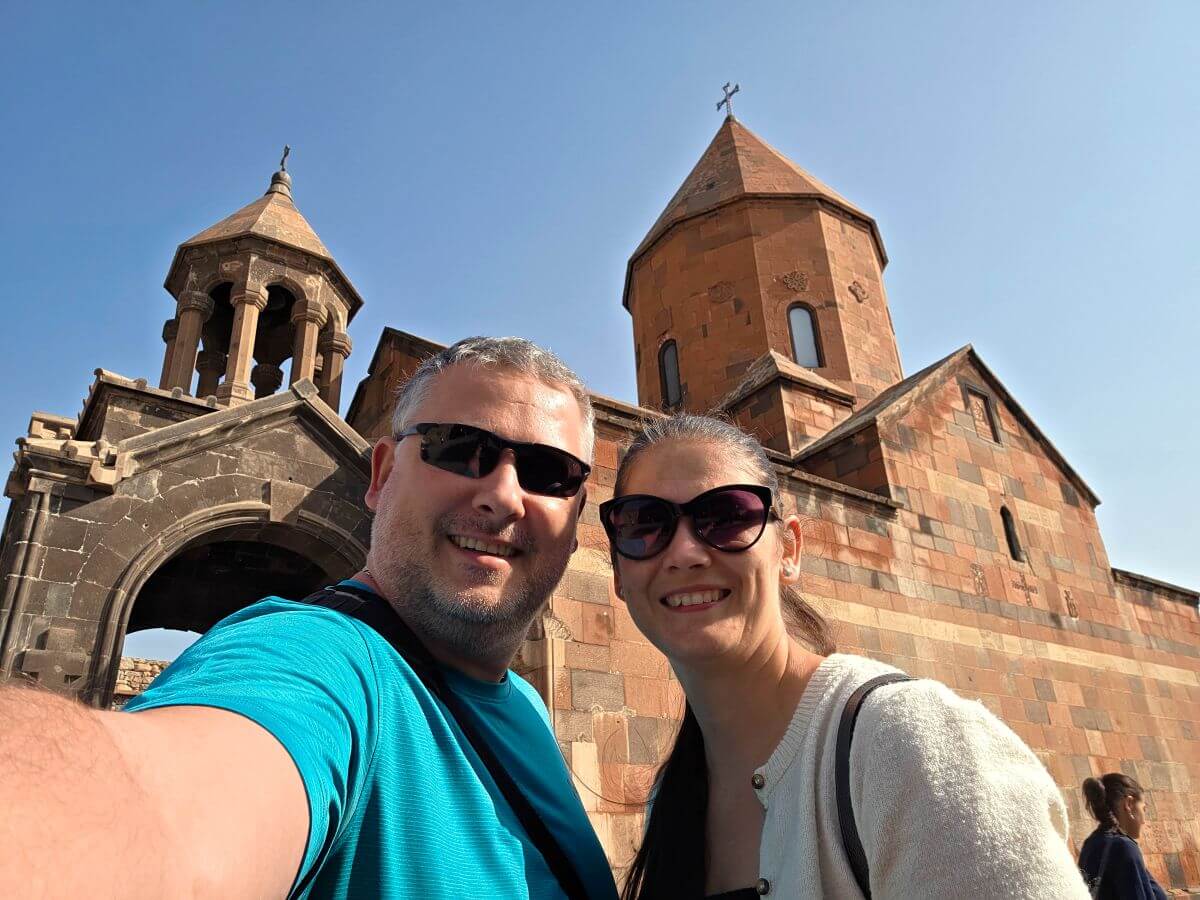
We didn’t build this guide from a stock description or a rewritten list from other travel websites. Visiting Khor Virap is different from exploring other Armenian monasteries because of its unique landscape, architectural history, and religious significance. While most Armenian complexes are intentionally hidden away in deep canyons (like Geghard) or perched on cliffs (like Tatev), Khor Virap breaks the pattern. It stands on a ridge in a flat valley, right next to a fortified international border, offering views of Mount Ararat.
We spent four days exploring Armenia in mid-October 2026. Khor Virap was one of the main stops on our day trip that also included Charents Arch, Garni Temple, the Symphony of Stones, Geghard Monastery, and a traditional lavash-baking demonstration. We paid for the entire trip ourselves, so our advice is completely independent. We won’t pretend everything was perfect. Instead, we combine our observations with reliable academic research to give you an honest look at this remote site. We will point out what impressed us, what made logistics more difficult, and the essential details to help you decide whether it belongs on your itinerary.
The Hidden Geography of Khor Virap
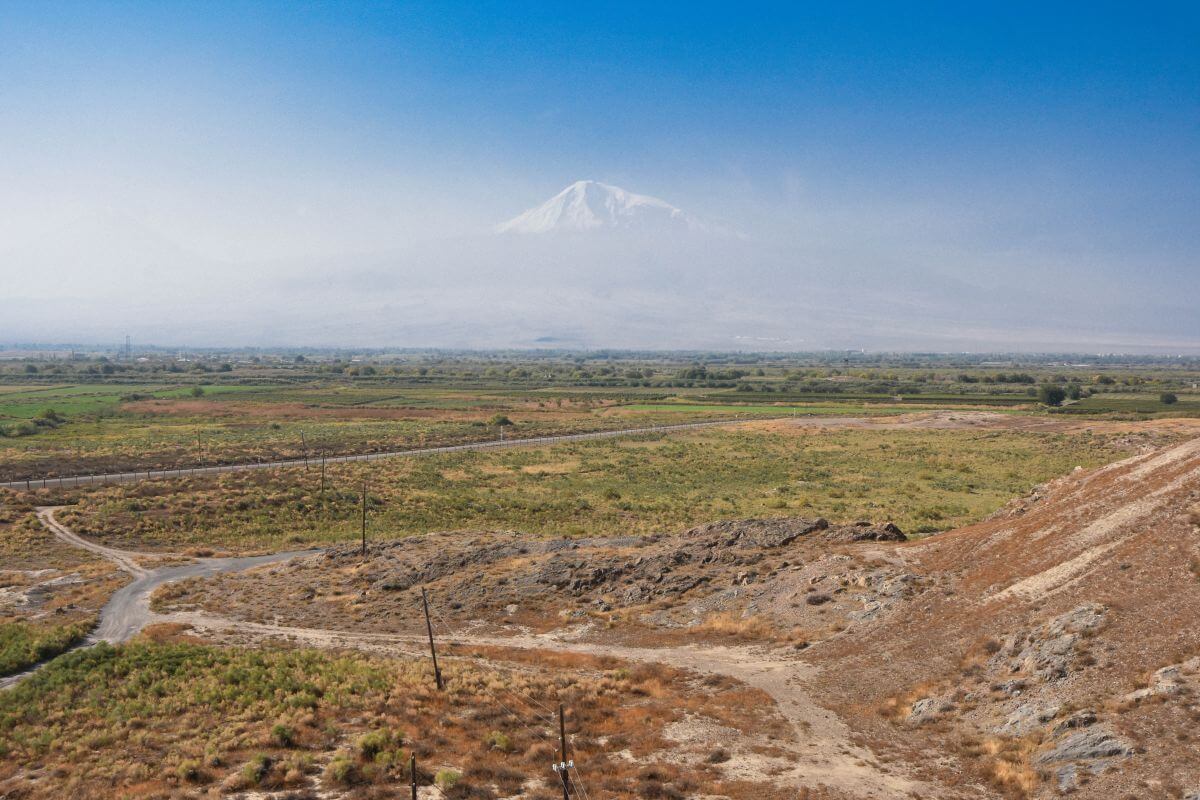
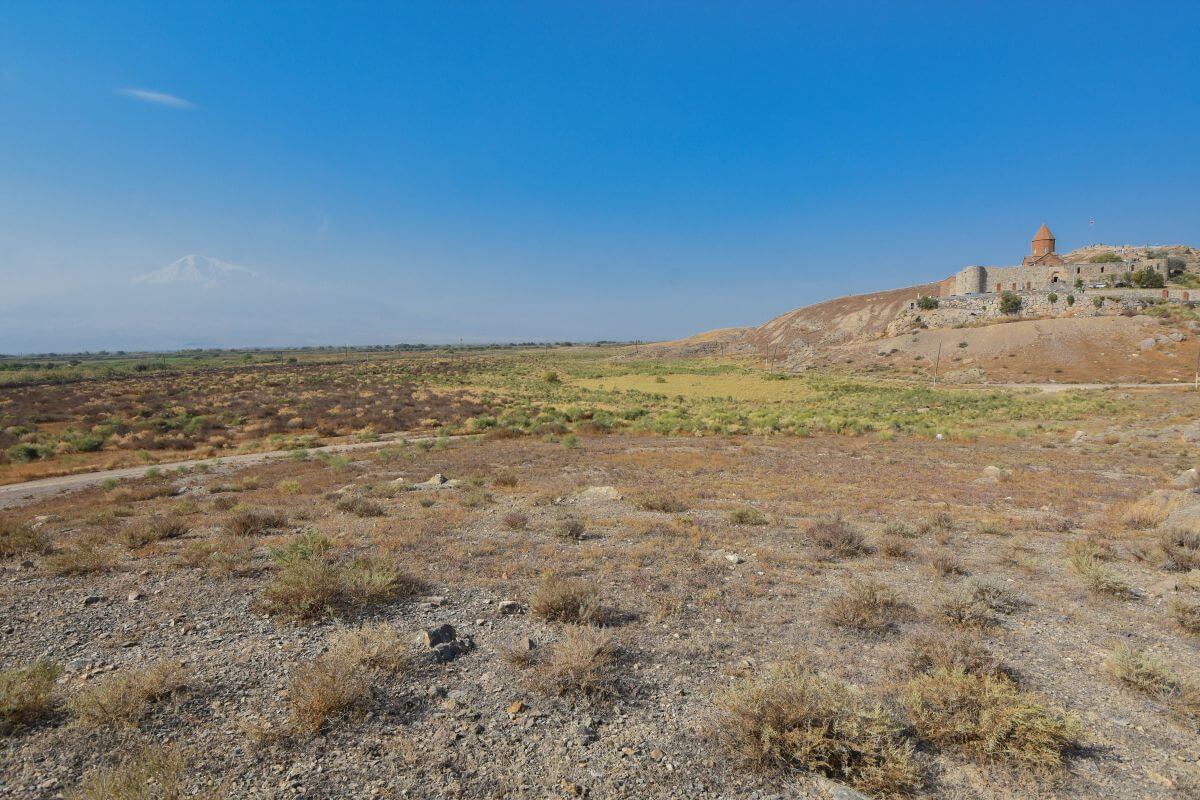
Khor Virap offers one of the most stunning and unforgettable views in Armenia. But to really understand it, you need to look closely at the landscape around it. Look past the peaceful green fields and vineyards, and you’ll spot military outposts and barbed-wire fences guarding the area. These are active security installations, not decorative structures or abandoned military buildings. This is the closed border between Armenia and Turkey; Turkey closed its land border in 1993. Armed military watchtowers stand guard along the nearby Araks River, which forms part of the natural geographical boundary between the two countries. Behind it all stands Mount Ararat, which is the ultimate symbol of Armenian culture and history. Yet, it stands just across an international border that remains closed to ordinary travellers, making the mountain visible but inaccessible by land from Armenia.
For Armenians, looking across this space is deeply emotional. The monastery lies approximately 100 m (330 ft) from the fortified Turkish-Armenian border zone. We were genuinely surprised by how close it is. From the stone ramparts, you can look towards Turkey and see the security installations separating the two countries. It’s a striking reminder that beautiful scenery, deep religious importance, and complicated geopolitics can exist in the same spot.
Why Mount Ararat Means So Much to Armenians
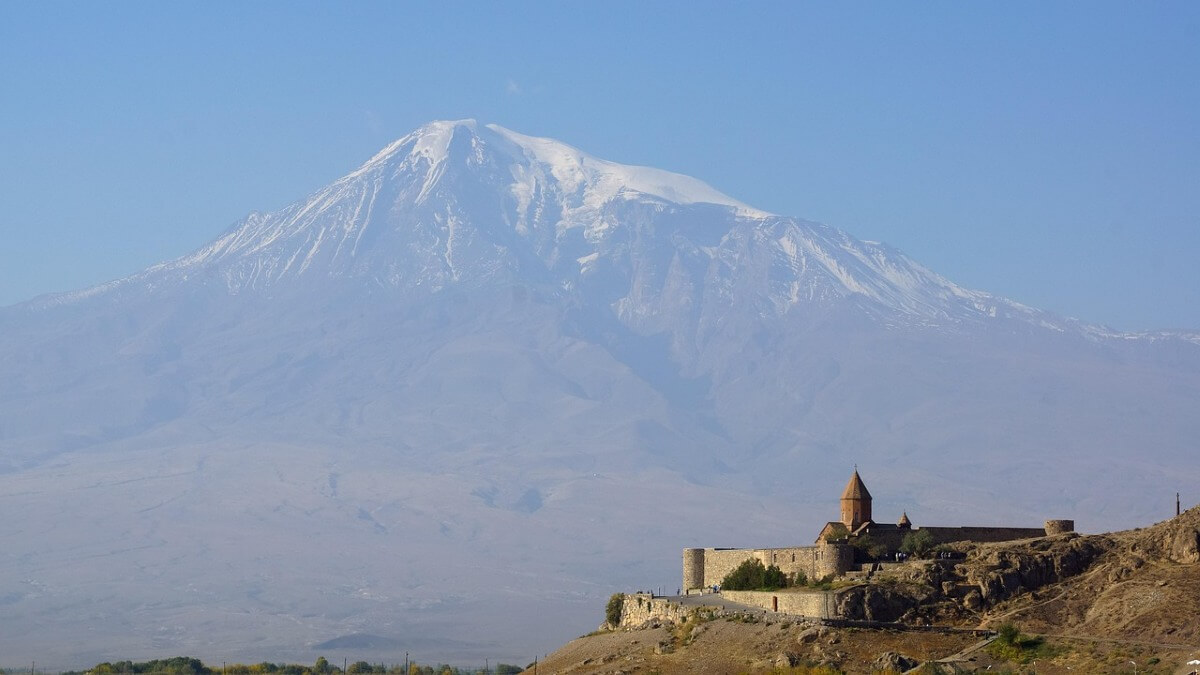
Mount Ararat is one of the strongest symbols of Armenian national identity, carrying deep religious, historical, and cultural meaning. According to the Book of Genesis, Mount Ararat is the resting place of Noah’s Ark after the Great Flood. Over centuries, this connection became deeply rooted in Armenian tradition, with the mountain representing the new origins of humanity after the flood. However, its importance goes far beyond religion.
For thousands of years, Mount Ararat formed part of the Armenian Highlands and was associated with various ancient Armenian kingdoms. However, after the political and military conflict in 1920-1921, the Treaty of Kars border arrangement placed the mountain inside Turkey. Losing this sacred land is still deeply painful for many Armenians, and the mountain remains an important part of the country’s historical memory.
WHAT IF YOU CANNOT SEE MOUNT ARARAT?
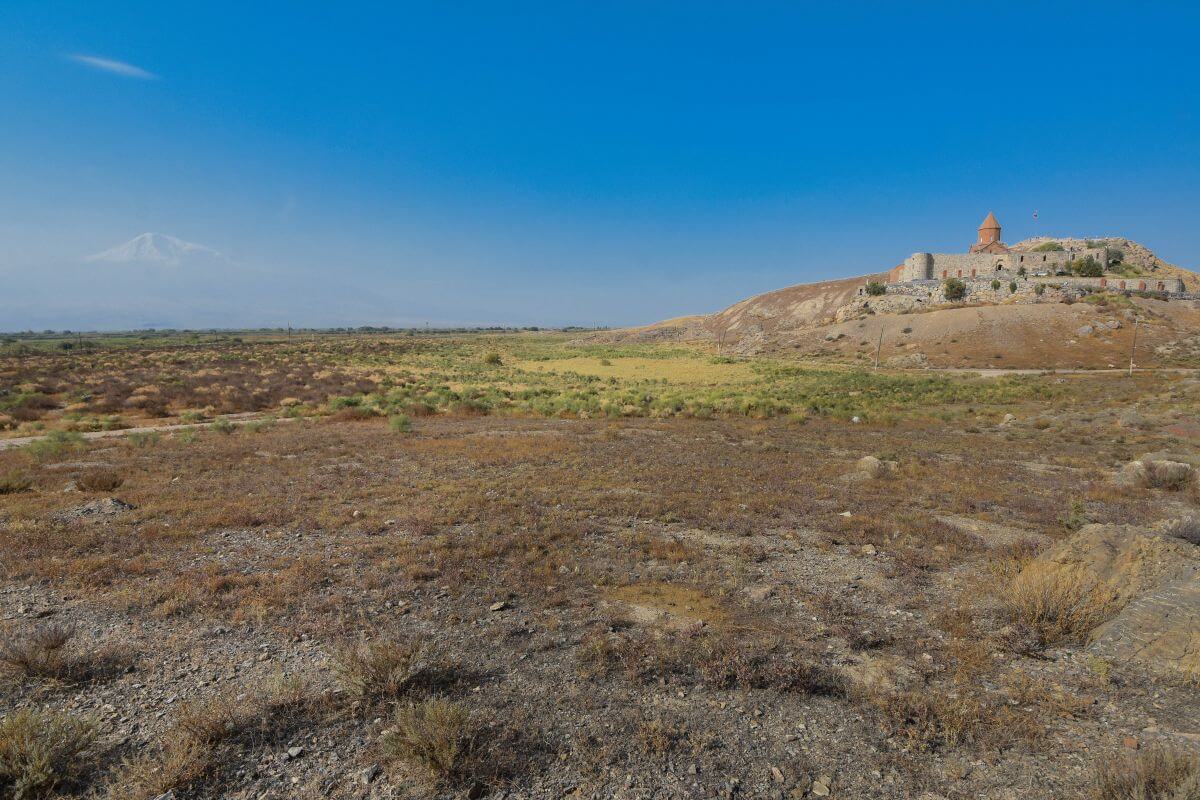
We visited on a hazy October day, and unfortunately, Mount Ararat was hidden most of the time. This was particularly disappointing because the mountain is such an important part of the setting. Even without the famous view, the combination of ancient ruins, open landscape, and closely guarded international border made the surroundings fascinating.
OUR TIP:
Look beyond the main church and take a moment to study the landscape around you. Even when the clouds hide the mountain, you can still feel the deep weight of Armenian history here. Its unique position right beside the Turkish border makes it unlike any other monastery you can visit.
The History of Khor Virap – The Pit that Changed a Nation
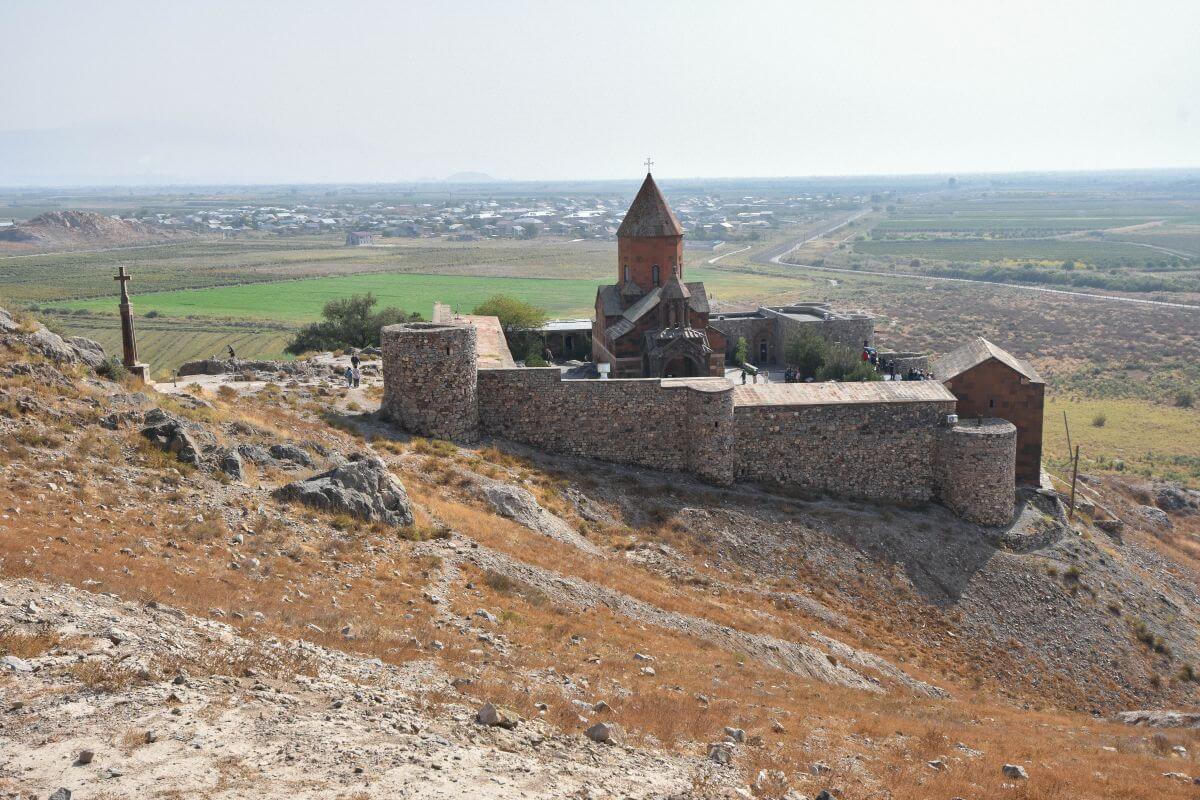
The site’s history stretches back more than 1,700 years, long before Christianity reached Armenia. Today, the monastery stands on a historic hill that hides the ruins of an ancient capital city, a royal prison, and the site where one of the most important events in Armenian history took place.
Founded around 176 BC by King Artaxias I, Artashat (also known as Artaxata) served as the capital of the ancient Armenian Kingdom. This ancient capital developed into an important political and commercial centre. As Encyclopaedia Iranica notes, this heavily fortified city occupied several hills strategically surrounded by water on three sides. Although Artaxata remained an important political and commercial centre for centuries, the ancient capital experienced several periods of destruction and rebuilding. The remains of its fortified landscape provide the historical setting for understanding Khor Virap and its association with a royal prison of ancient Armenia.
According to Armenian historical tradition, long before Khor Virap became a symbol of Christian Armenia, it was a depressing royal dungeon. The name Khor Virap translates literally to ‘deep dungeon’ or ‘deep pit‘, directly reflecting this dark chapter. In a remarkable historical twist, what began as a place of execution became Armenia’s sanctuary of worship.
13 YEARS IN DARKNESS – THE STORY OF GREGORY THE ILLUMINATOR
The most famous prisoner was Saint Gregory the Illuminator, one of the most important figures in Armenian Christianity. During the reign of King Tiridates III (also known as Trdat), Gregory preached Christianity despite the king’s attachment to pagan beliefs. There was also a personal reason for their conflict: Gregory was the son of Anak, who had murdered the king’s father. Gregory refused to abandon his faith or sacrifice to the goddess Anahit. The furious king ordered him to be thrown into the underground prison, expecting him to die.
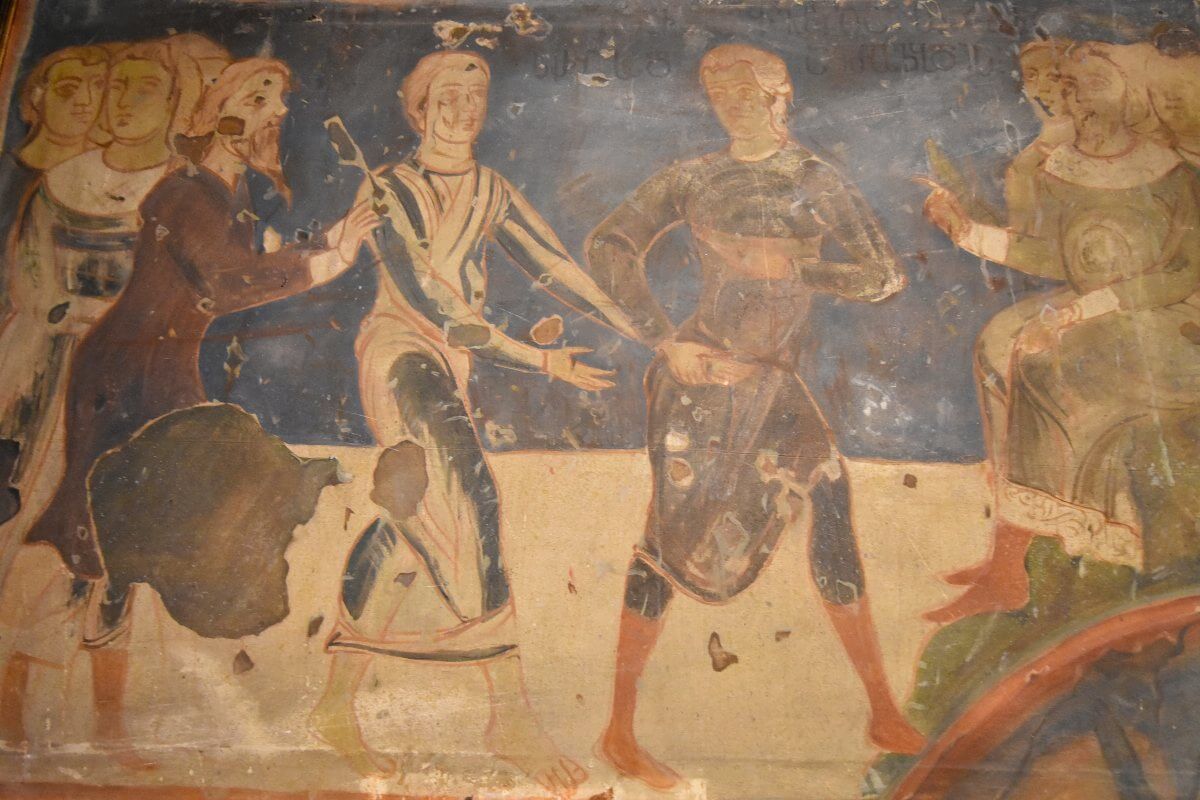
The Trial of King Tiridates III Against Gregory the Illuminator. This fresco depicts Saint Gregory the Illuminator (dressed in white robes) with bound hands and chained feet as he is led to trial. Surrounding him are soldiers and guards holding him in custody and escorting him forward. Seated on a throne on the far right with attendants behind him is King Tiridates III, who ordered Gregory’s arrest, torture, and imprisonment in the Khor Virap pit.
THE LEGEND OF TIRIDATES III THE KING WHO BECAME A WILD BOAR
While Saint Gregory the Illuminator remained imprisoned, events at the royal court took a dramatic turn. According to Armenian religious tradition, King Tiridates III ordered the execution of a group of Christian women known as the Hripsimeyan martyrs, after their leader, Hripsime, rejected his advances.
Soon afterwards, the king became seriously ill and began behaving like a wild animal. The legend describes him transforming into a wild boar or pig, losing his reason and tearing at his own body. The king’s sister, Princess Khosrovidukht, repeatedly dreamt that only Gregory could heal her brother. Initially, nobody believed her because everyone thought Gregory had died in the dungeon. However, after her vision continued, the king’s officials returned to the prison and found out Gregory was still alive. After 13 years underground, they brought him before the suffering king. Gregory prayed for Tiridates III, who miraculously recovered according to the traditional story. This extraordinary healing became the turning point in the conversion of the Armenian Kingdom to Christianity.
301 AD: THE BIRTH OF CHRISTIAN ARMENIA
Following his recovery, King Tiridates III reportedly embraced Christianity and supported Gregory’s mission to spread the new faith. In 301 AD, the king proclaimed Christianity the official state religion. This made Armenia the first kingdom in the world to adopt Christianity as its official state religion. This historic milestone happened more than a decade before Emperor Constantine issued the Edict of Milan in 313 AD, which granted Christian religious tolerance in the Roman Empire. From 301 AD onwards, the Christian faith became closely connected with Armenian national identity, culture, architecture, and traditions. Gregory later became known as Saint Gregory the Illuminator and is recognised as the founder of the Armenian Apostolic Church.
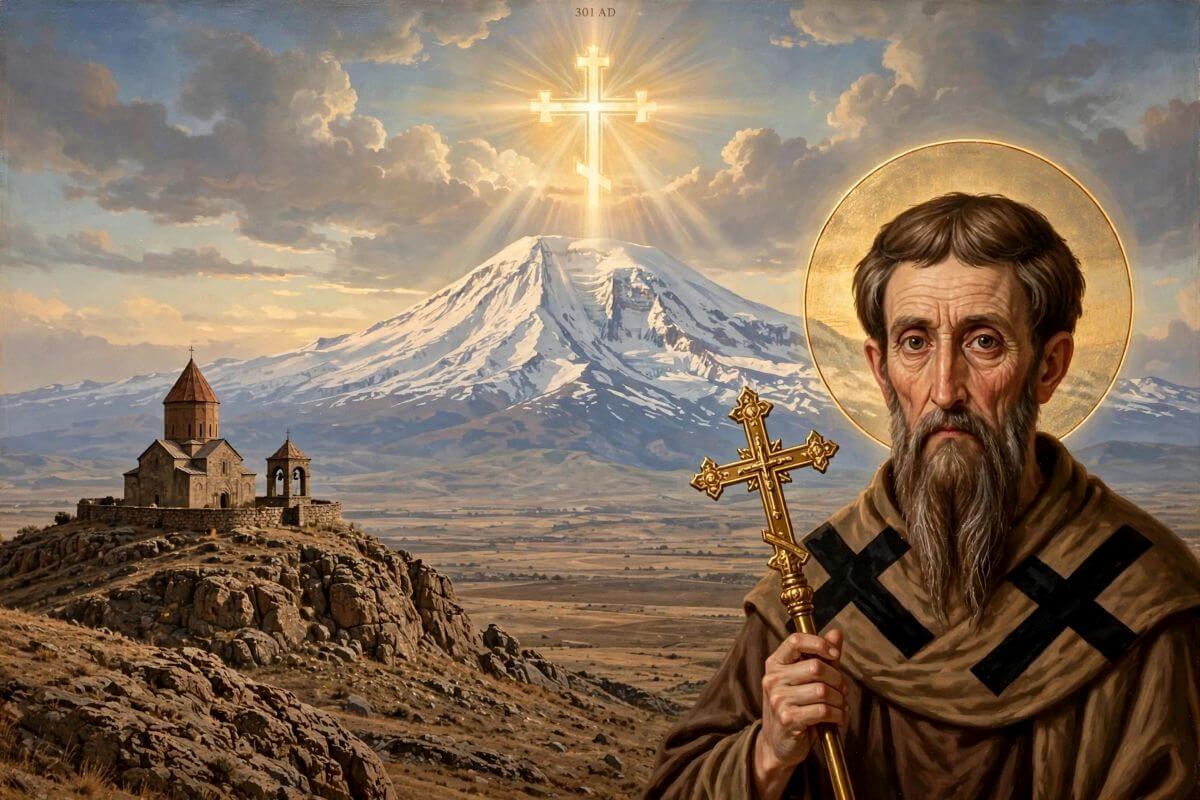
Digitally generated illustration of Armenia adopting Christianity in 301 AD.
GOOD TO KNOW:
There is one important historical detail worth understanding. While 301 AD is the traditionally celebrated date, modern historians continue to discuss the precise chronology of the conversion, with some pointing to a date closer to 314-315 AD. The main surviving account, attributed to the scribe Agathangelos, is a religious history written in its present Armenian form during the second half of the 5th century AD. It combines historical memories with religious traditions and miraculous events. It’s therefore safer to describe 301 AD as the traditional date of the official adoption rather than as a claim that independently verified history.
FROM A PRISON TO A PLACE OF PILGRIMAGE
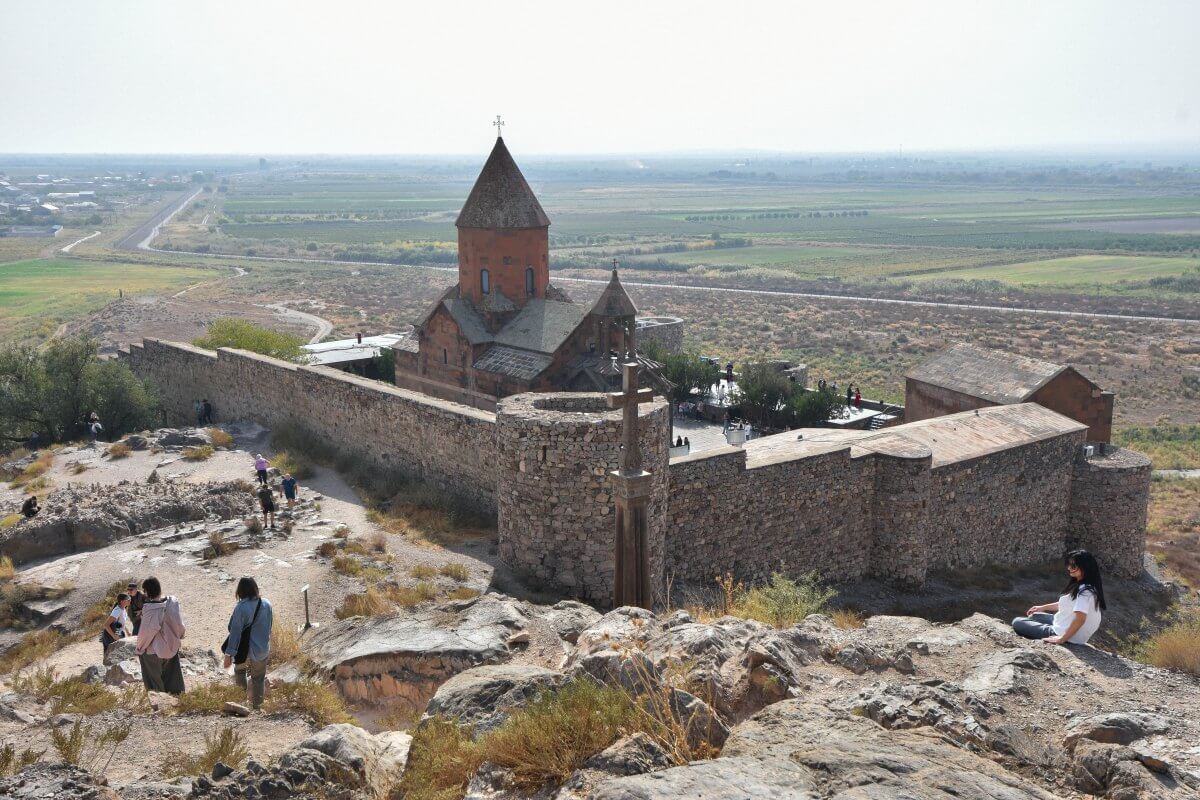
The transformation of an ancient royal prison into a Christian pilgrimage site is exactly what makes the Khor Virap monastery so unique. During our October 2026 visit, climbing down into the small underground chamber brought this history to life in a very powerful way. Descending the narrow ladder brings the traditional story closer to life, even if the exact archaeological origins of this specific chamber remain uncertain. Understanding this background completely changes how you experience the monastery. As we explored the site, we realised that we were standing on the fortified remains of an ancient citadel whose religious story shaped an entire nation’s identity. This deep layer of meaning made Khor Virap our absolute favourite monastery in Armenia, leaving the most lasting impact on our entire journey.
BOOK YOUR ONCE-IN-A-LIFETIME EXPERIENCE BELOW:
6 Must-See Things at Khor Virap
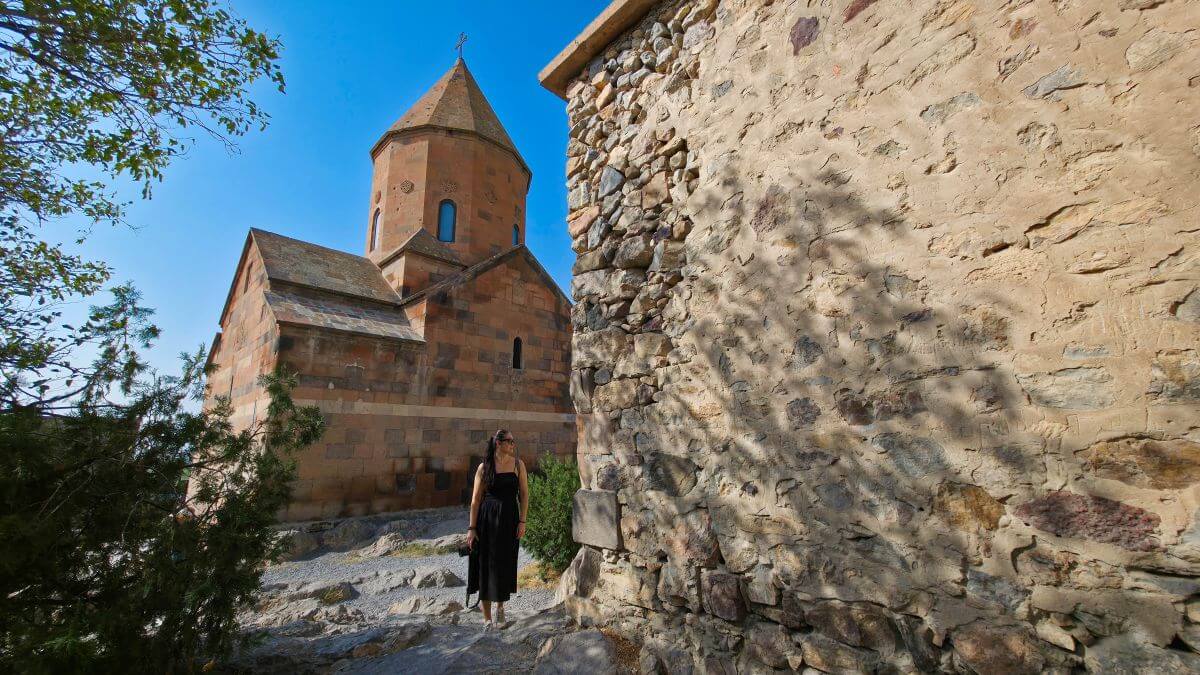
Passing through the fortified entrance, you’ll find a compact religious complex rather than an enormous monastery with many buildings. However, there is so much more to discover here than the famous underground prison. The present-day complex consists mainly of two churches, a large courtyard, fortified walls, a bell tower, and several smaller buildings. Take your time to explore rather than rushing straight to the dungeon. Look closely at the hidden details; they hold some of the finest examples of traditional Armenian religious art.
1. St. Astvatsatsin Church
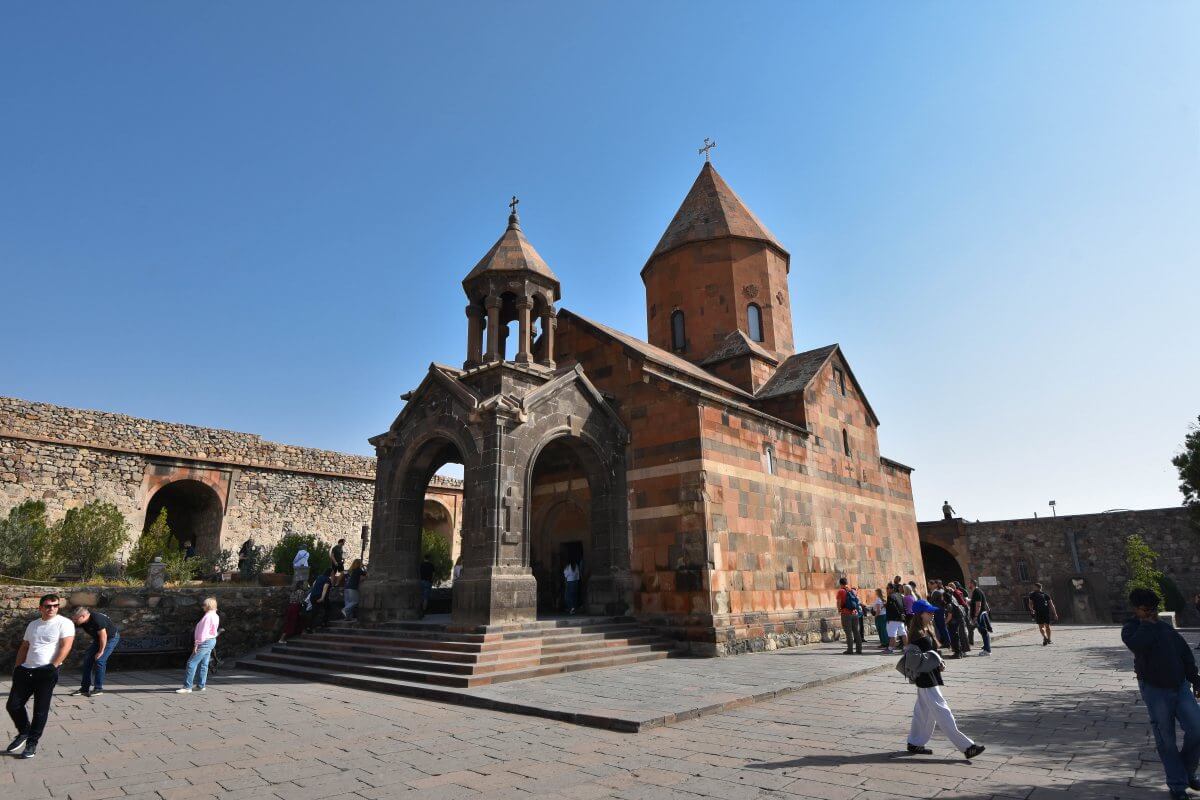
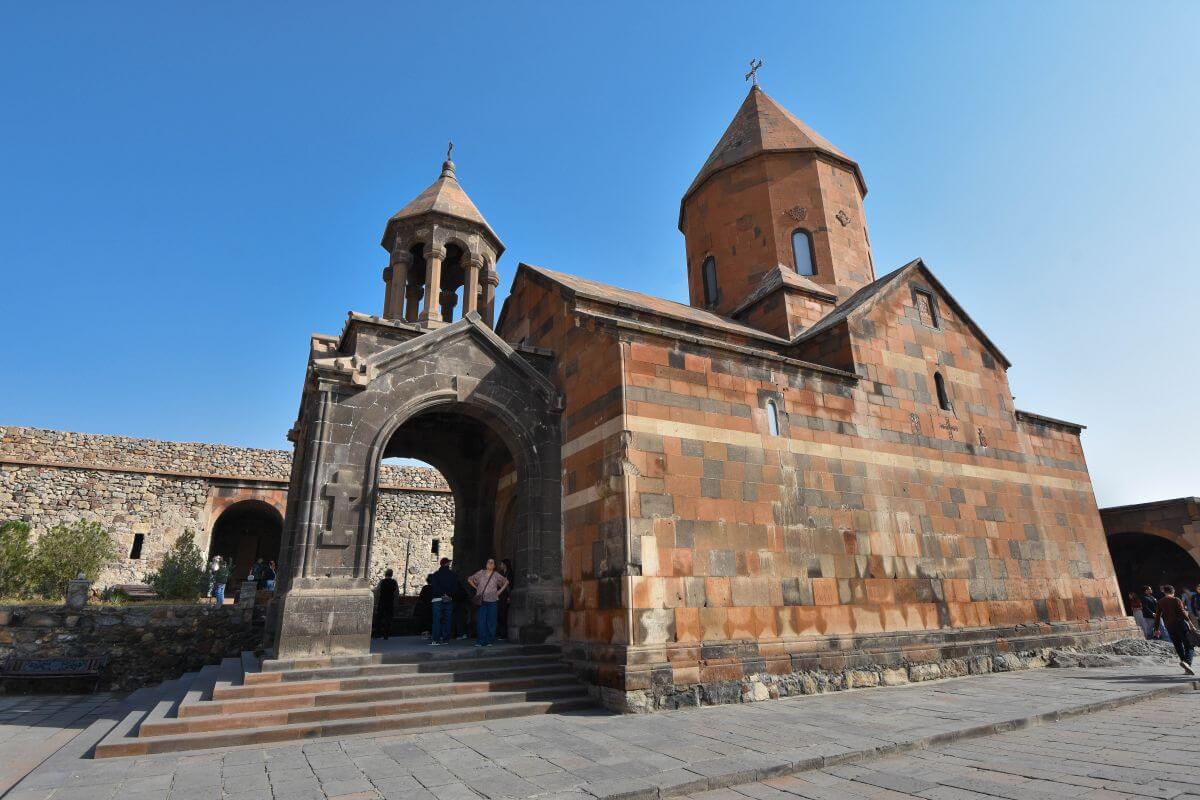
The larger St. Astvatsatsin Church (Holy Mother of God) dates back to the 17th century. The structure you can see today was constructed on the site of earlier religious buildings. Experts believe the original temple honoured Anahit, the ancient Armenian goddess of healing and wisdom. Although its exterior looks relatively simple, the church, with its courtyard, makes a strong impression. It has also survived several earthquakes, including the devastating 1679 quake, and underwent later restoration.
When you look closely, you can see that St. Astvatsatsin Church’s design is different from many other Armenian religious buildings. It has a longer and thinner than usual layout: a long, domed hall, with two smaller annexes on either side of the apse. This actually makes it stand out from typical medieval Armenian churches, which have a more compact, centralised cross design.
INSIDE
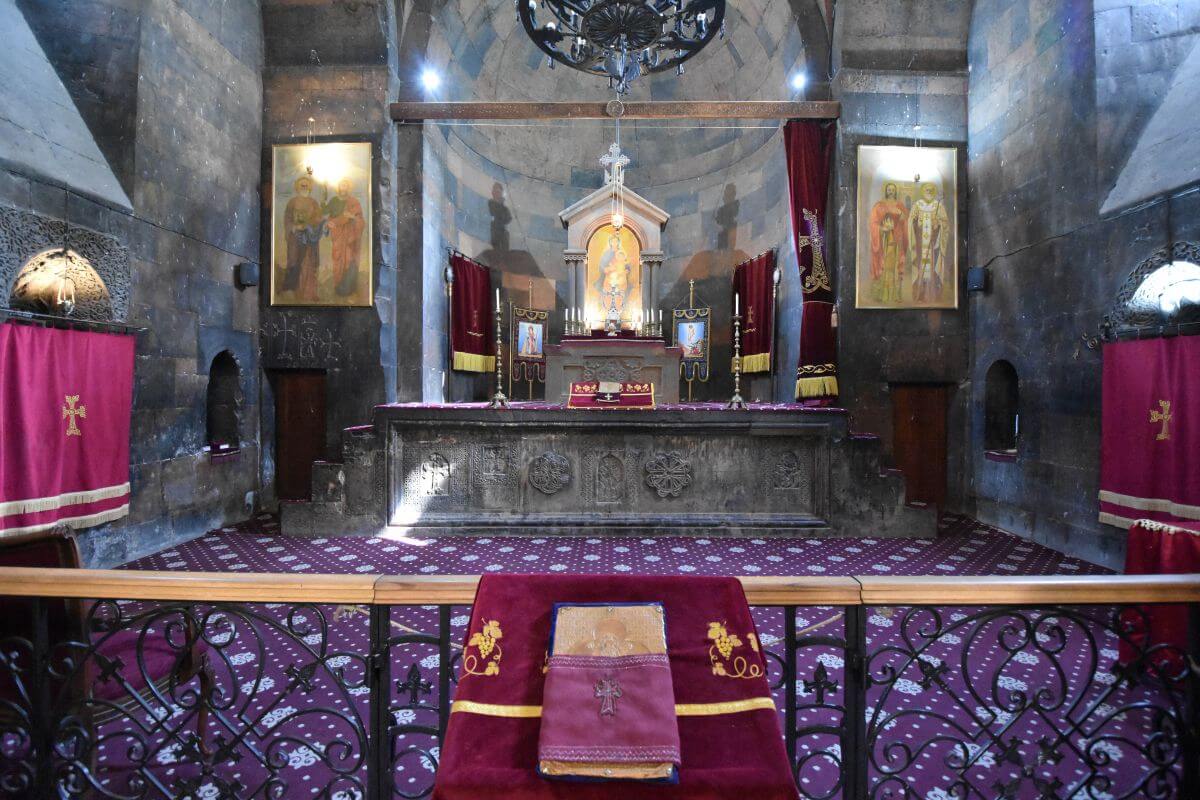
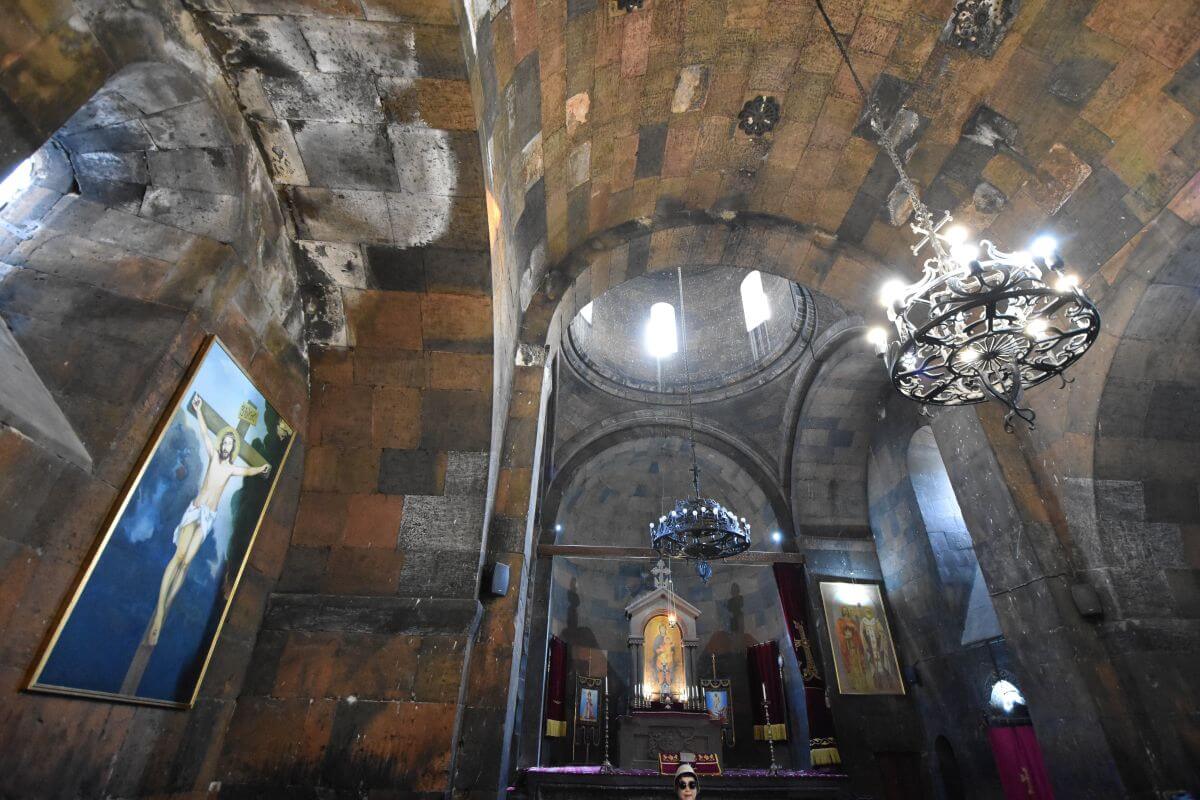
The interior of this church shows incredible historical craftsmanship with its massive, exposed blocks of volcanic tufa stone. By leaving the walls bare without any plaster or frescoes, the builders created a powerful atmosphere. Our eyes were immediately drawn to the main altar, which stands on an elevated platform, covered with a richly decorated carpet. Luxurious red and purple velvet curtains, decorated with gold-embroidered crosses, frame the sanctuary and create a beautiful contrast against the dark stone. Overhead, a soft glow from a dark metal chandelier illuminates the room, casting warm light onto two traditional icon paintings of saints.
DON’T MISS
One detail worth looking for is the carving on the eastern façade, depicting Saint Gregory the Illuminator healing King Tiridates III. It illustrates the religious story that made this place so important to Armenian Christianity. You can also spot a sundial on the southern wall and a black-stone bell tower standing beside the church.
2. St. Gevorg Chapel
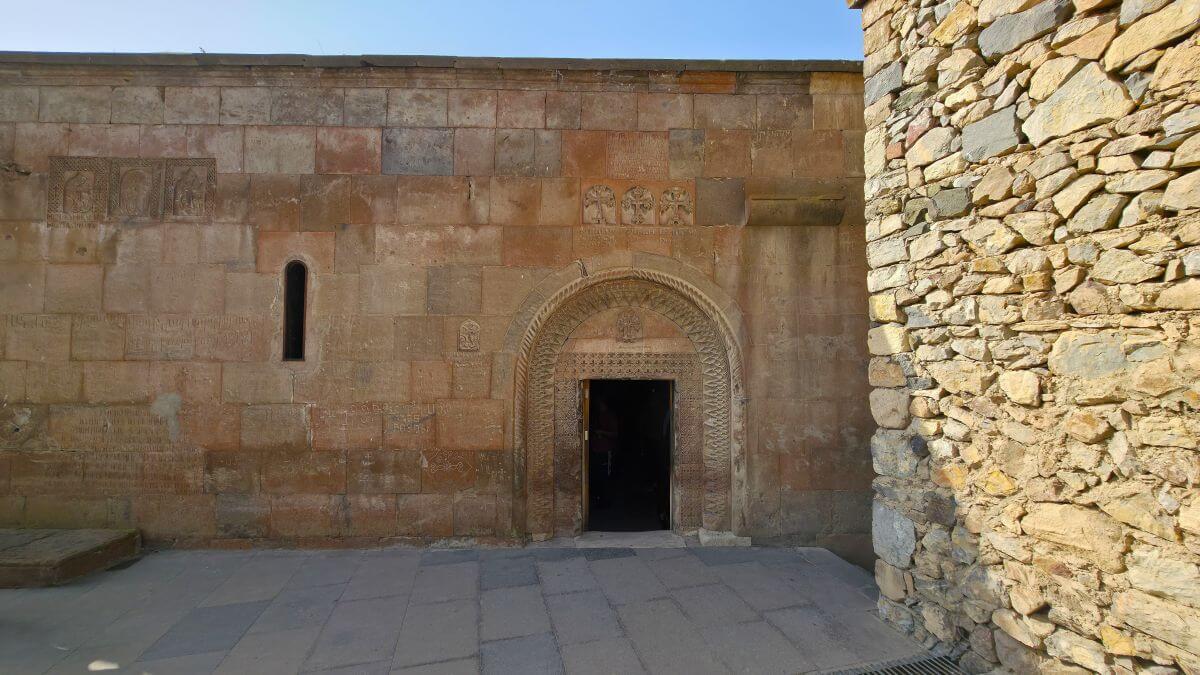
The smaller St. Gevorg Chapel (Saint George) is equally important, although for a completely different reason. It stands above the underground chamber where Saint Gregory the Illuminator was imprisoned. Although the present chapel largely reflects later reconstruction and restoration, its religious history goes much further back. Historical records explain that an earlier round chapel was built here around 642 AD under Catholicos Nerses III. The current structure has undergone rebuilding over the centuries.
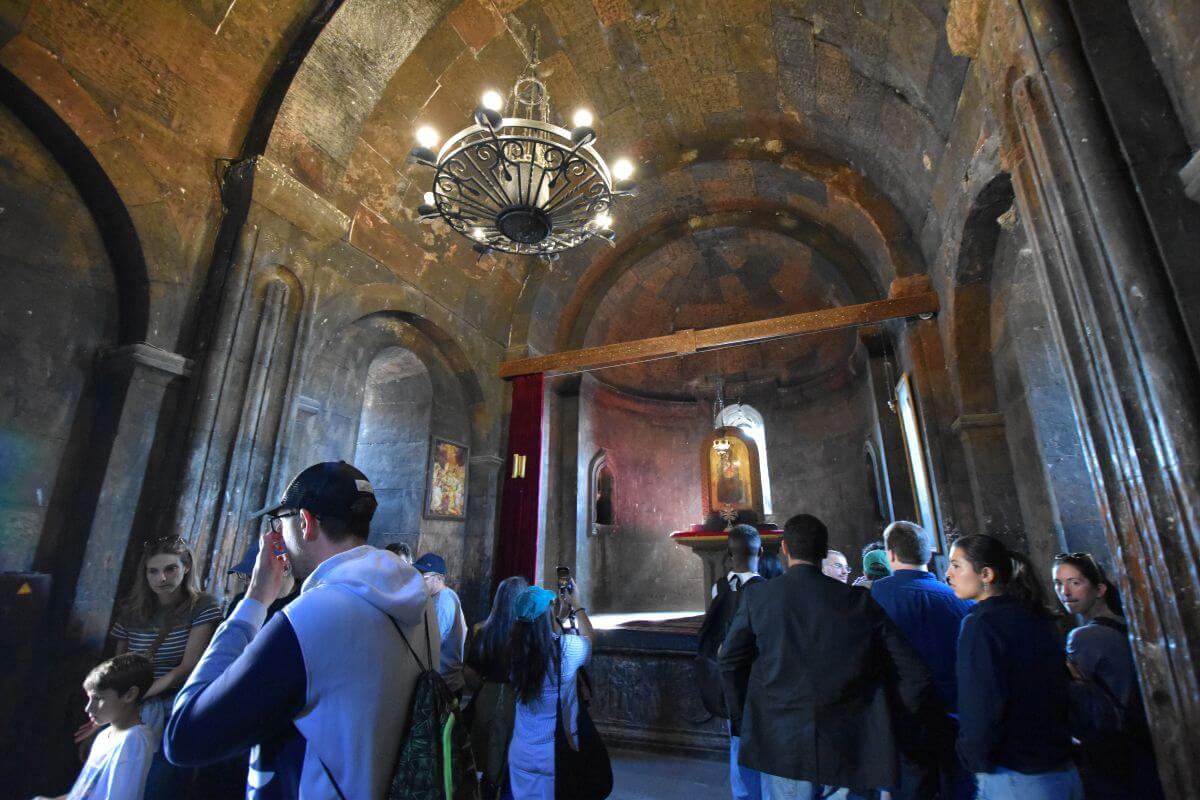
We loved the chapel’s vaulted stone ceiling and ancient atmosphere, where soft light enters through narrow windows. Nearby, you can find a separate room dedicated to lighting candles. If it is open, definitely step inside. The room contains long metal stands filled with sand and water. Before entering, we highly recommend purchasing thin beeswax candles to place in the sand.
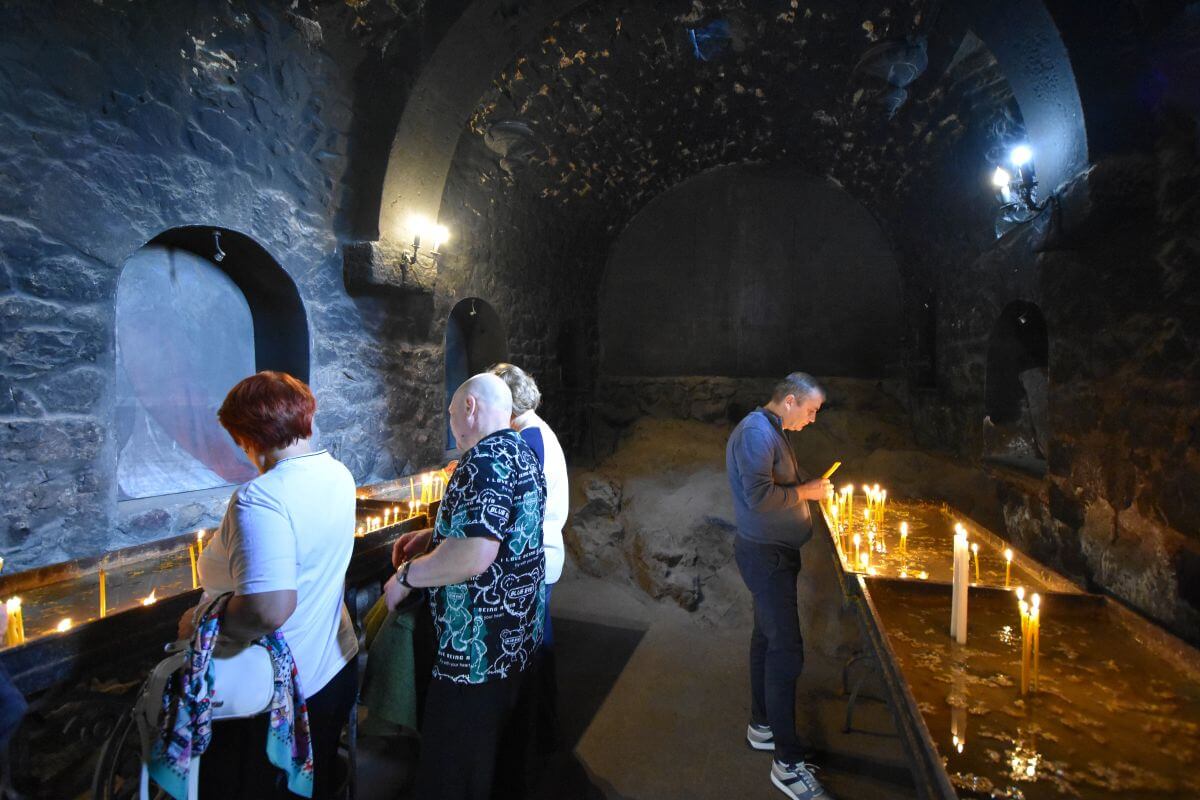
In Armenian Apostolic tradition, lighting a candle is a deeply meaningful ritual. Both pilgrims and tourists light them while offering silent prayers for health, remembrance, and safe travels. This quiet moment was one of our highlights at Khor Virap. The soft glow of the candlelight reflecting off the ancient stone surfaces creates a truly unforgettable spiritual experience.
GOOD TO KNOW:
Remember this is an active place of worship, not simply a historical attraction. If you plan to enter the churches, dress modestly and respect any instructions displayed at the entrance. Women may be asked to cover their heads, while men should also wear appropriate clothing.
3. Gregory’s Underground Prison
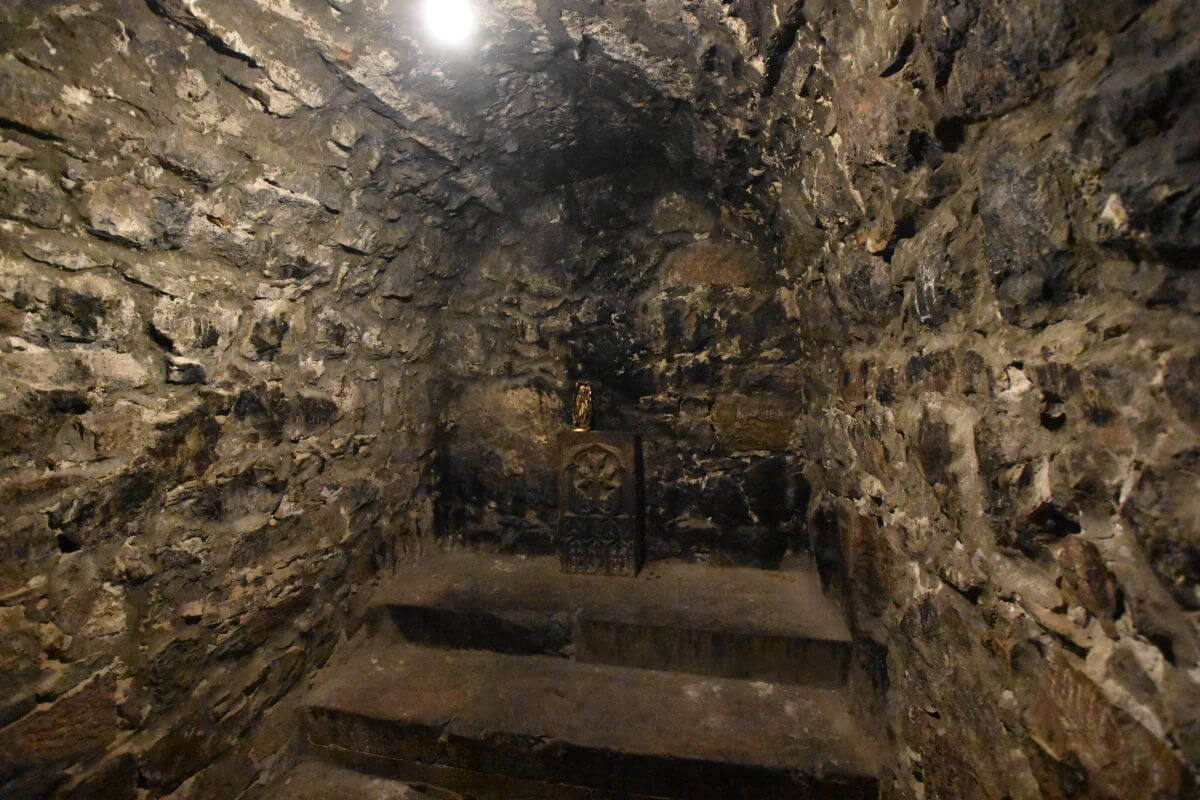
The underground prison is the most unusual part of the visit, but the steep climb down isn’t for everyone. You cannot properly understand the religious importance of this place without seeing the underground chamber associated with Saint Gregory the Illuminator. He spent 13 years imprisoned here before King Tiridates III released him.
Finding the entrance is relatively straightforward. Look for the narrow floor opening and a steep metal ladder leading down into the darkness. The chamber is approximately 6 m (19.7 ft) deep. Reaching its bottom requires climbing down a nearly vertical ladder rather than using ordinary stairs. One detail still makes the traditional story difficult to imagine. Today, you can descend using a metal ladder, and you won’t find any dangerous animals waiting in the pit below. According to religious legend, Saint Gregory the Illuminator had none of these advantages.
GOOD TO KNOW:
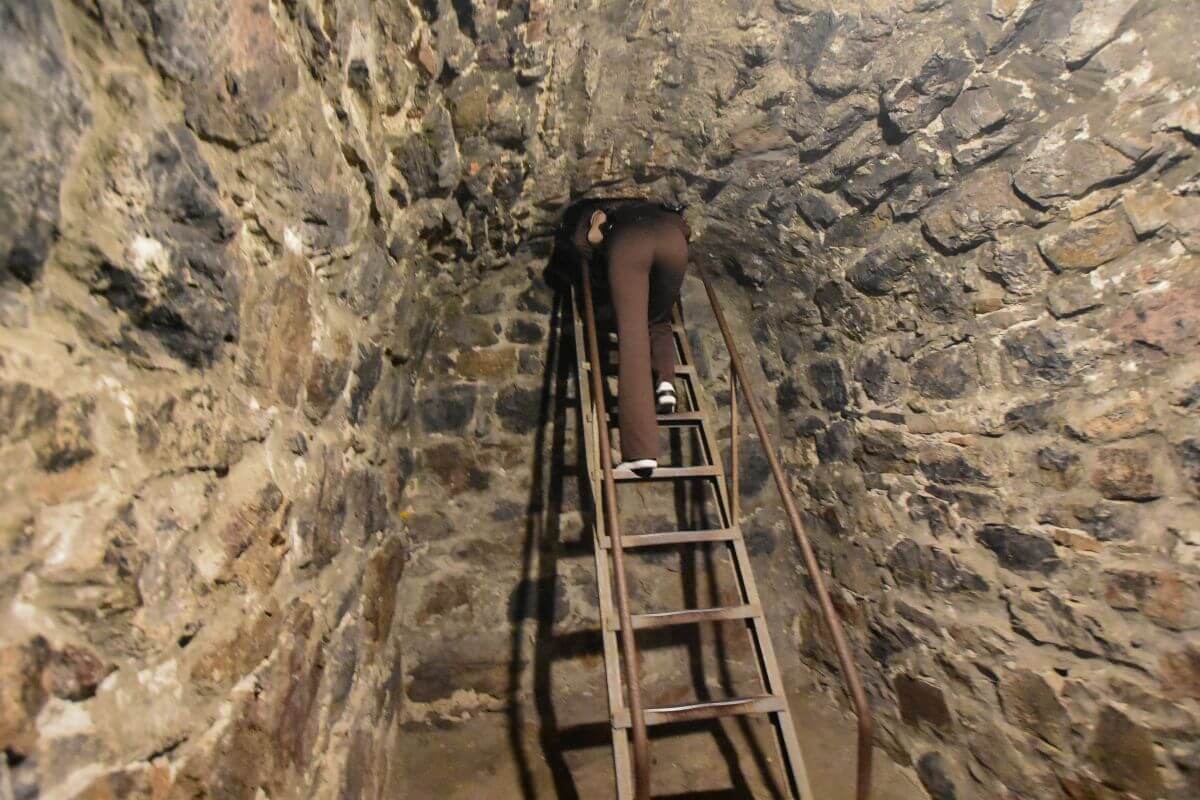
Before descending, take a moment to look at the opening. It’s much narrower than you might expect, with very little room to move once you enter. There aren’t any conventional handrails at the top, so you must lower yourself carefully using the metal ladder. The descent requires both hands and careful foot placement. Hold the ladder securely, lower yourself one step at a time and be equally careful when climbing back up. Good shoes with a firm grip are essential. Once underground, the air feels humid and heavy, with limited ventilation. It’s a strange contrast to the open, breezy courtyard.
SAFETY WARNING:
This isn’t a suitable attraction for everyone. The narrow opening may be difficult for larger-bodied visitors. The steep ladder also creates problems for people with limited mobility or vertigo. Anyone with claustrophobia should also think carefully before attempting it.
OUR EXPERIENCE:
We found the experience more challenging than expected. Martina managed to squeeze through the opening, but carrying her camera made the descent even more difficult. Andrej decided to stay above, concerned about becoming stuck in such a confined area. We don’t think anyone should feel pressured to climb down just because it is the main attraction. In fact, when we visited, we were surprised to see that only a handful of visitors actually chose to go down into the dungeon.
4. Armenian Cross-Stones
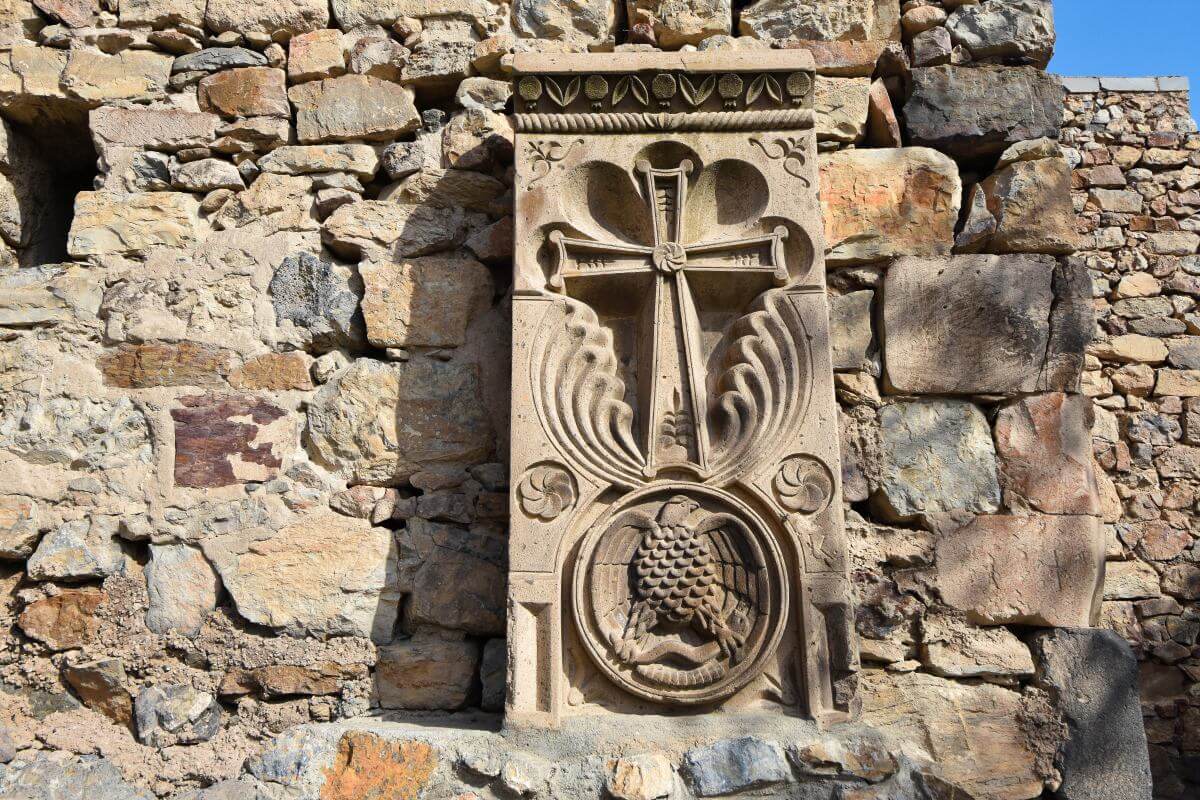
One thing we love about Armenian religious architecture is the decorative khachkars. You’ll find these traditional Armenian cross-stones throughout the complex. They are worth examining closely rather than treating them as simple decorations. The word ‘khachkar’ refers to a carved stone monument, usually made from a single piece of stone. Unlike traditional Christian images that focus on Christ’s suffering on the crucifix, Armenian cross-stones show a living cross surrounded by botanical patterns. The cross appears to grow out of the stone, with branches, leaves, grapevines, and pomegranates extending around it. Some monuments also depict images of saints and animals.
SYMBOLISM AND CRAFTSMANSHIP
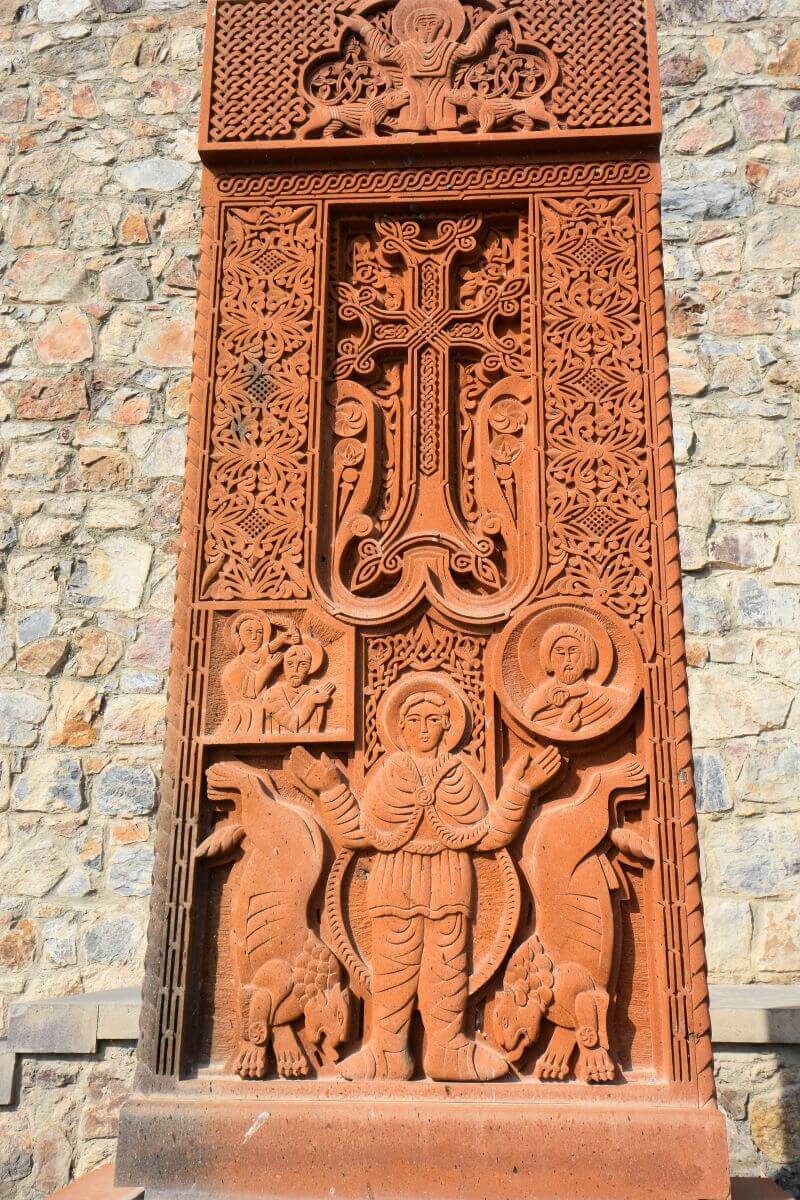
The craftsmanship is impressive because they are carved entirely by hand. Artisans carve local stone, particularly volcanic tuff, using chisels, hammers, and other specialised tools. While some Armenian cross-stones reach approximately 1.5 m in height, their importance isn’t measured by size. They serve as sacred places of prayer, protective monuments, and memorials to both the living and dead. UNESCO explains that once a khachkar is finished, people put it up in a short religious ceremony. After a priest blesses and oils it, people believe the stone has special holy powers that provide protection, victory, long life, and mediation towards the salvation of the soul.
A PROTECTED LIVING TRADITION
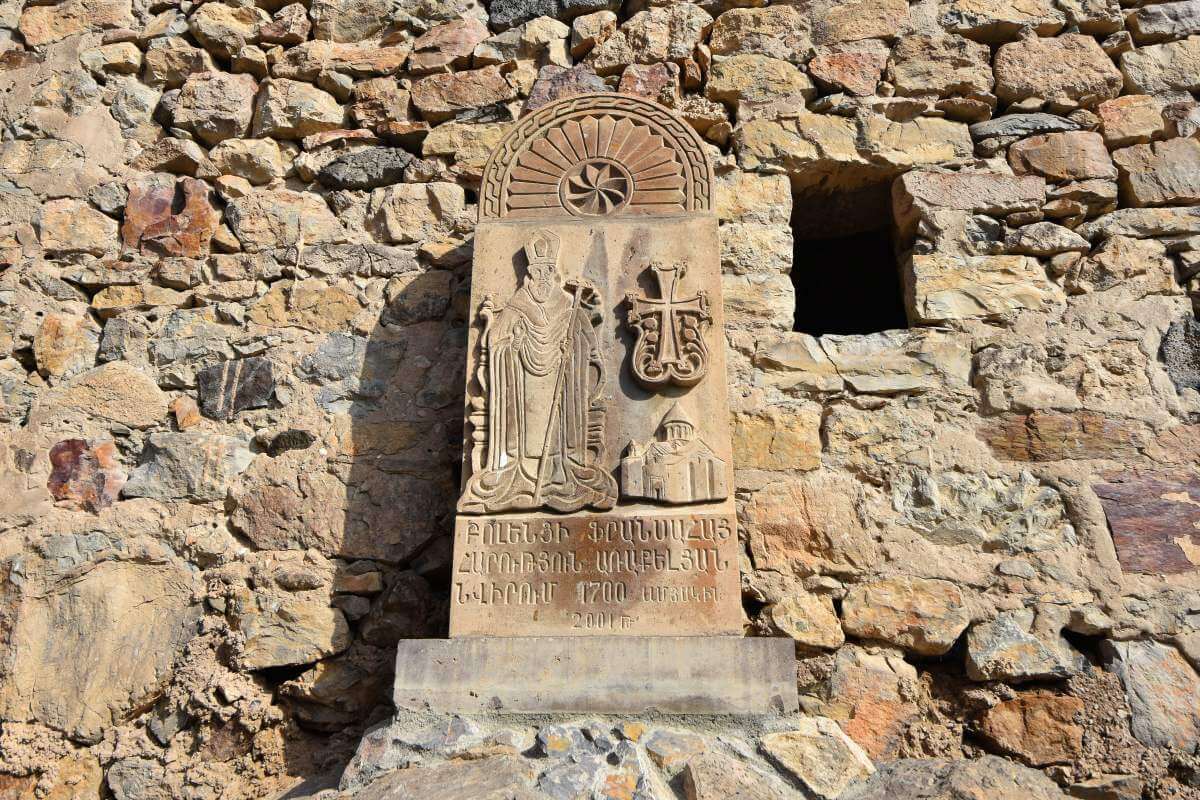
What makes this tradition fascinating is that no two khachkars are alike. UNESCO records more than 50,000 examples in Armenia, each with unique patterns and individual character. In 2010, UNESCO officially inscribed Armenian cross-stone art: Symbolism and craftsmanship of Khachkars onto the Representative List of the Intangible Cultural Heritage of Humanity. This recognition protects not only the finished monuments, but also the traditional knowledge and skills required to create them, which have been passed down through generations.
5. The Ancient City Beyond the Walls
The surrounding landscape contains the remains of Artaxata, the ancient Armenian capital founded around 176 BC. Its archaeological traces extend across several nearby hills, with evidence of ancient fortifications, residential areas, and workshops. One of the most exciting discoveries in recent years came in October 2024, when archaeologists uncovered a previously unknown early Christian Church. The building dates back to the 4th century AD and is the oldest archaeologically documented church in the country. The discovery provides exceptional evidence of early Christianity in Armenia. We only learned about this discovery after returning home. Had we known about it during our October 2026 visit, we would have asked our guide more questions about the excavations and their location.
It’s worth mentioning that these archaeological findings are separate from the monastery. You shouldn’t expect to find the 4th-century AD church inside the fortified courtyard or assume it’s a visitor attraction. It belongs to the wider archaeological landscape of ancient Artaxata.
6. Photography Hill
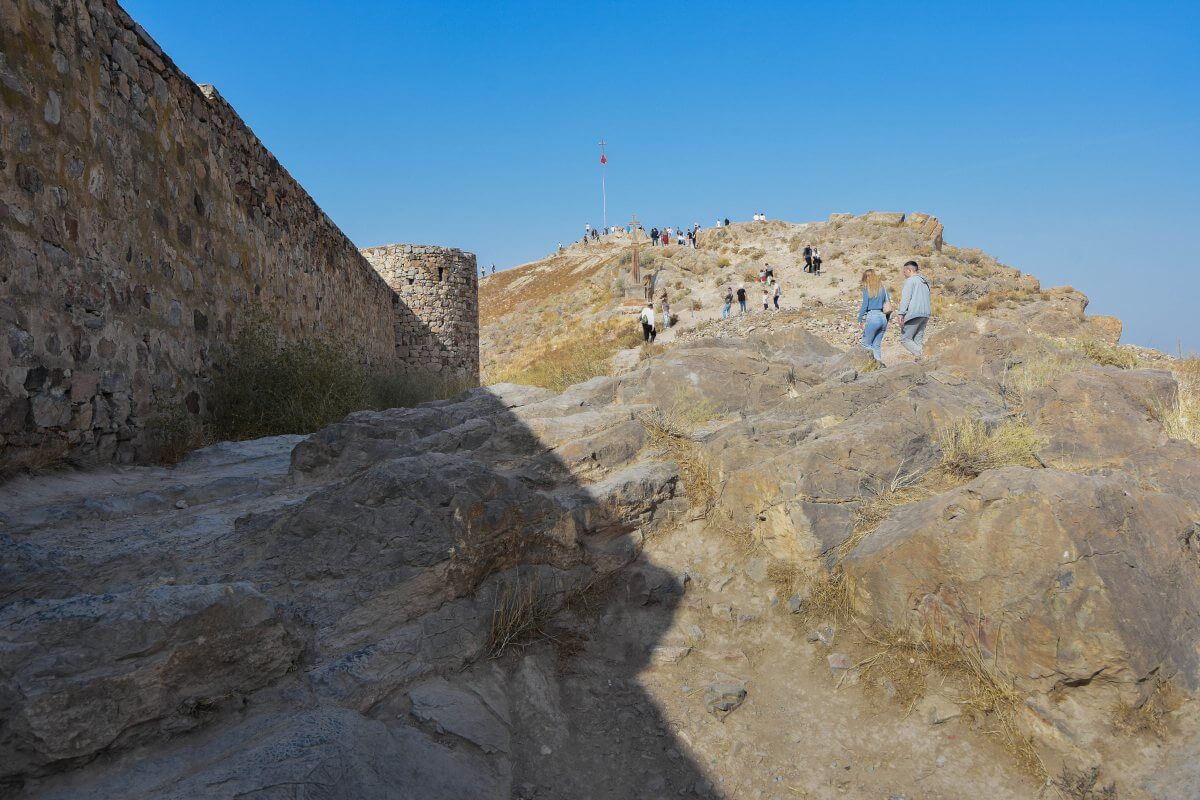
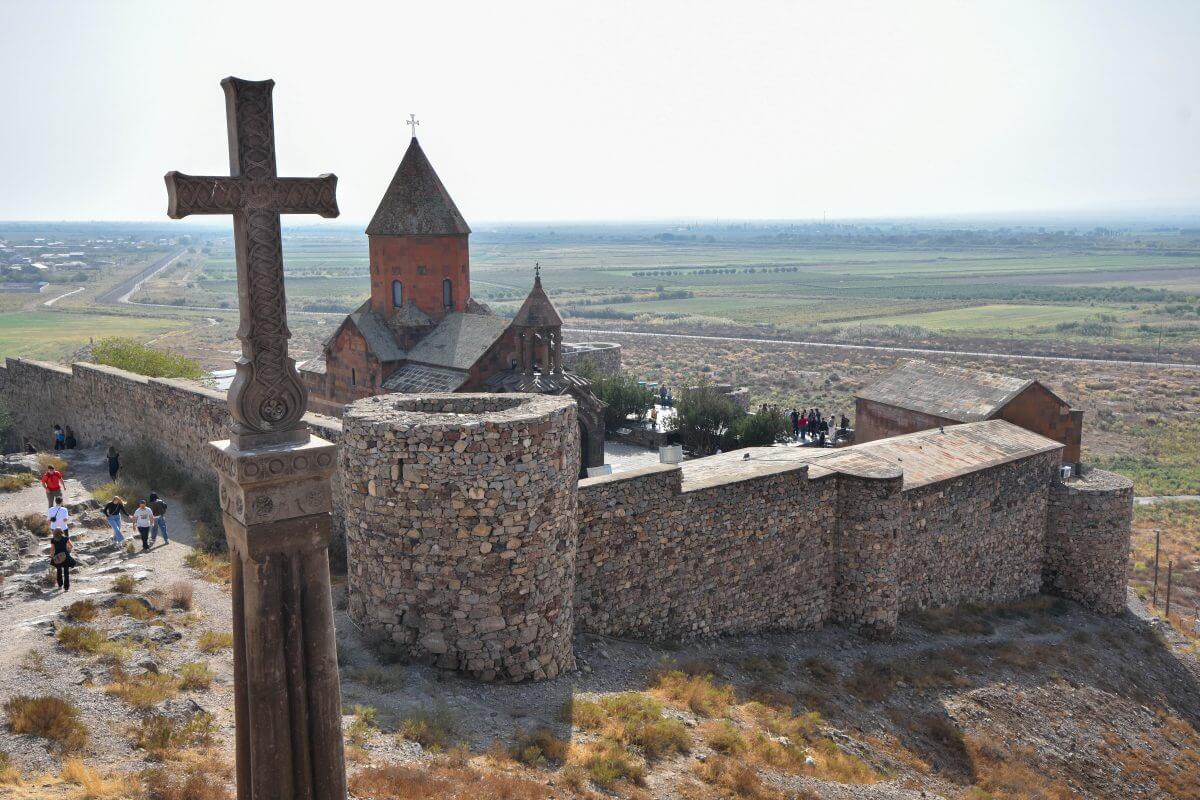
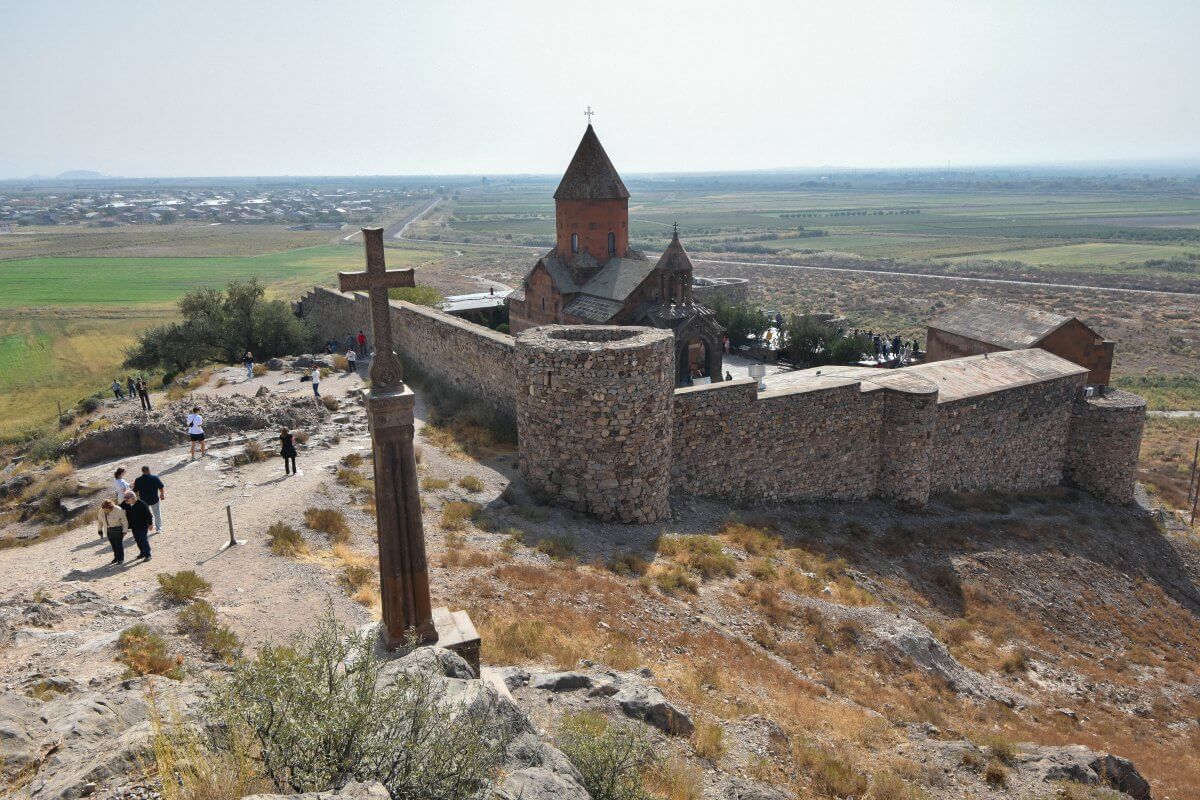
Don’t leave without climbing the small hill behind the monastery. It offers a completely different perspective from the courtyard views. It’s also one of the best places to photograph the entire Khor Virap complex. After exploring the monastery, head towards the rear of the complex and walk beyond the main fortified entrance. Follow the rough uphill path towards the large metal cross and the Armenian flag near the top.
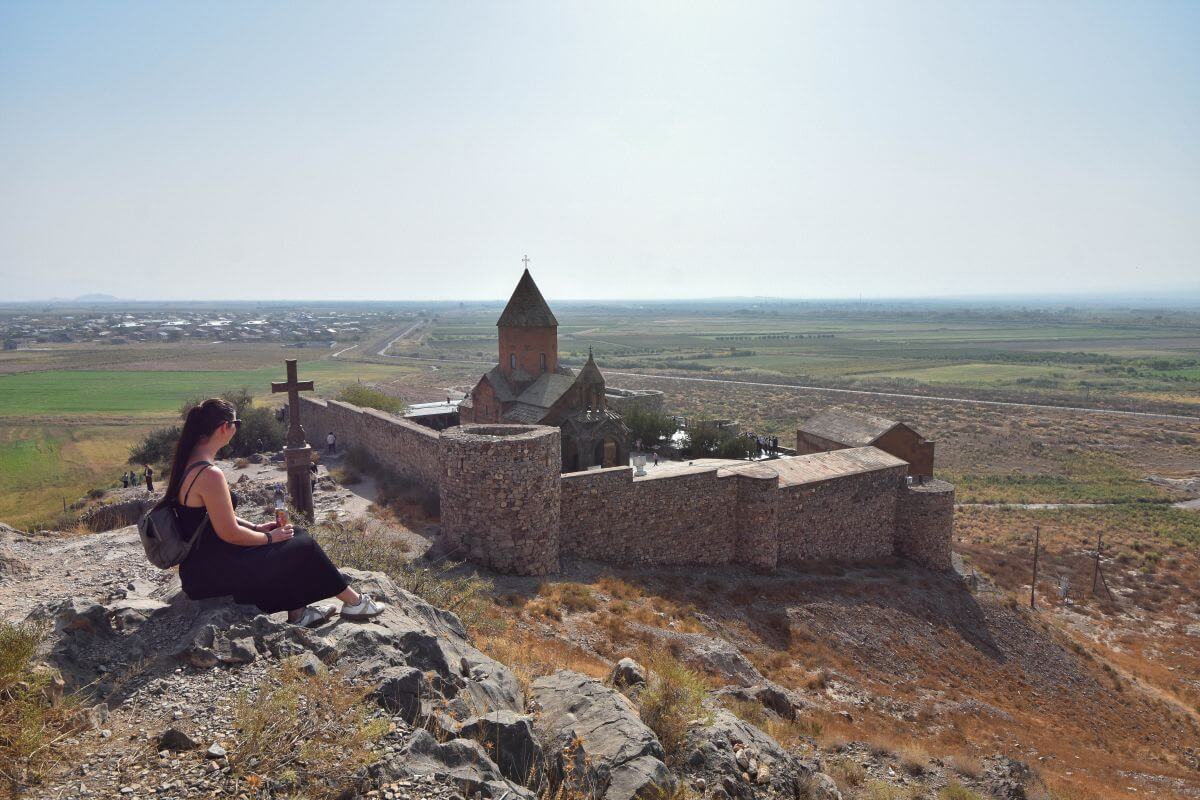
The climb is short, but the path is uneven and rocky. Wear proper shoes and take care, especially after rain or in strong winds. There is no formal paved viewing platform, so you should expect a natural, rocky hillside rather than a landscaped viewpoint. From higher up, you get a completely different view of the fortified walls, the churches, and the surrounding Ararat Plain. When the weather is clear, Mount Ararat creates the perfect background for the classic postcard shot.
OUR EXPERIENCE:
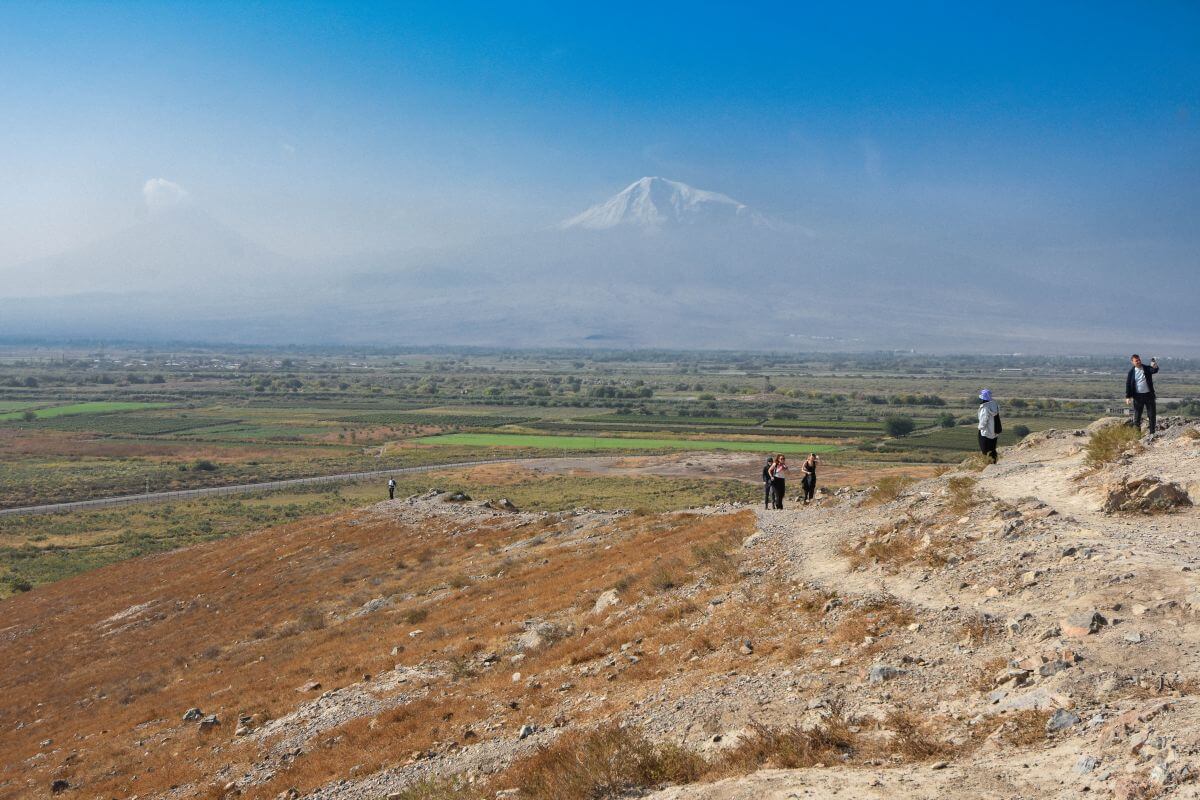
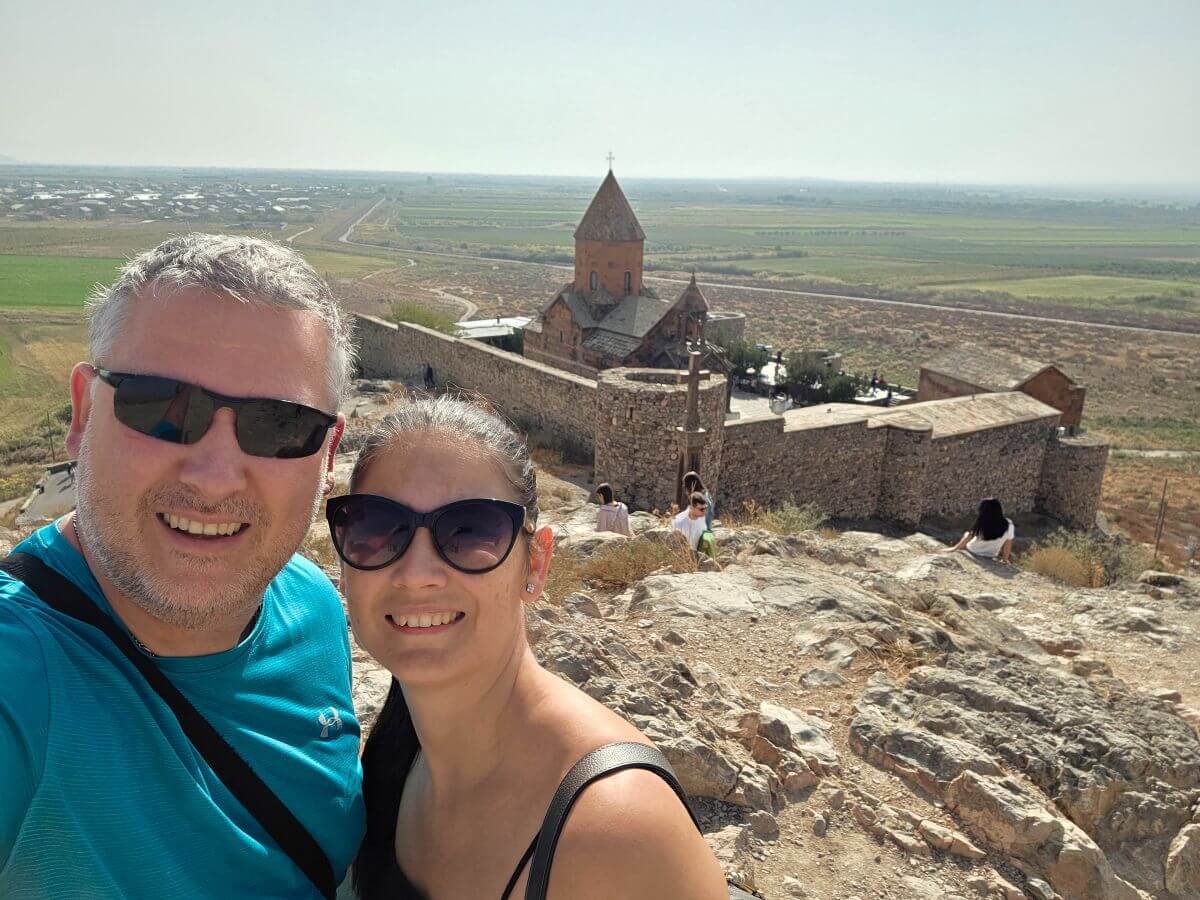
We visited on a hazy October day, so the famous mountain was hidden behind the clouds and atmospheric haze most of the time. Nevertheless, we still enjoyed the elevated perspective. Many visitors continue towards the Armenian flag, but we preferred the views from the large metal cross slightly below it. Khor Virap monastery and its surrounding landscape look particularly impressive from there.
GOOD TO KNOW:
- Don’t rush back to the car park after visiting the churches. Allow at least 10-15 minutes for this viewpoint. Even without a clear view of the mountain, it offers one of the best views of the entire site.
- If you’re lucky enough to visit on a clear day, consider bringing a telephoto lens, a 200 mm lens or longer. From the higher viewpoint, a longer focal length can visually compress the distance between the monastery and Mount Ararat, making the mountain appear much larger behind the fortified walls.
Quick Answers: Is a Visit to Khor Virap Worth the Detour from Yerevan?
- UNESCO SITE: No
- LOCATION: Khor Virap sits in southwestern Armenia, in Ararat Province, right on the closed border with Turkey.
- DISTANCE FROM THE CAPITAL: Khor Virap is approximately 40-44 km (25-27 mi) south of Yerevan’s city centre.
- NEAREST TOWNS AND VILLAGES: The nearest villages are Pokr Vedi and Lusarat, and the nearest major town is Artashat, around 11 km (7 mi) away.
- WHAT SHOULD YOU EXPECT? It’s a relatively small, historic religious site with a remarkable setting. The main attraction is the combination of its Christian heritage, unusual underground prison and open landscape. Its setting can be breathtaking when the weather cooperates. Khor Virap has a peaceful religious atmosphere, but it’s also a popular tourist destination. Expect other visitors, uneven stone surfaces and a fairly exposed setting rather than landscaped gardens or extensive visitor facilities. The monastery and its surroundings are more open and exposed than those of many other historic religious sites in Armenia.
Difficulty:
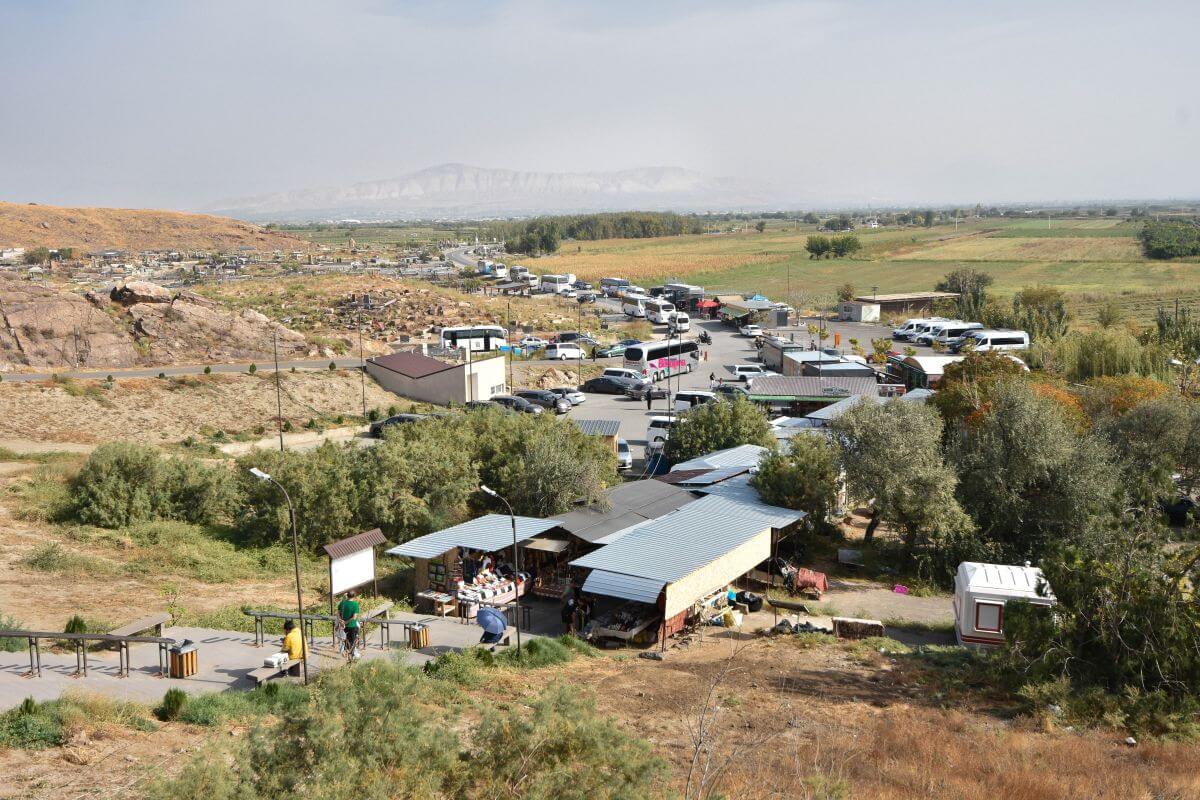
The parking and vendor area near the monastery.
Getting to the monastery is easy, and the main grounds are manageable for many visitors. The road from Yerevan is straightforward, and you can reach the parking area without tackling mountain roads or long hiking trails. The uphill walk from the car park to the monastery is short, taking less than 5 minutes, but it’s surprisingly steep in places. There is little shade, and the paved slope can become uncomfortable in hot weather. Inside, expect old stone paving, steps, and occasional uneven surfaces. The biggest physical challenge is the underground prison. To reach it, you’ll need to use a narrow, steep iron ladder leading about 6 m down into the ground. It’s not suitable for everyone, especially for those with mobility problems, vertigo or claustrophobia.
Time Needed:
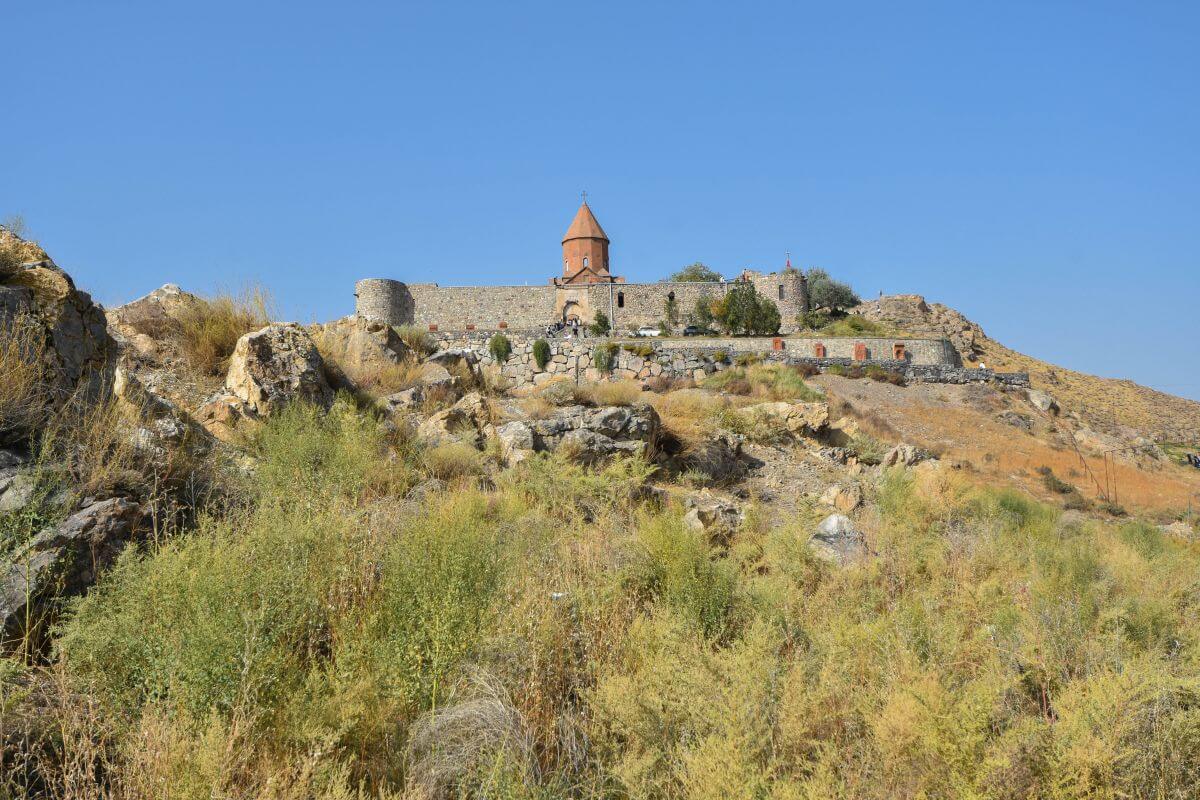
Allow 45-90 minutes to explore Khor Virap monastery without rushing. This gives you enough time to enjoy the setting, explore the grounds, visit the churches, and take photographs. We spent one hour and ten minutes here during our organised day trip in October 2026. It was enough time to explore the monastery and walk up to nearby viewpoints without feeling rushed. The journey from Yerevan usually takes around 45-60 minutes each way. You should budget approximately three hours for the return excursion, including an hour at the monastery. Organised trips can be more restrictive because you have to follow the group’s timetable.
Best Time To Visit
For comfortable temperatures and a better chance of seeing Mount Ararat, September and October are excellent months. Early morning (ideally within 2 hours of sunrise) generally offers the best chance of clear mountain views before haze builds over the plain. We deliberately planned our October trip around the pleasant autumn weather. Unfortunately, we arrived at approximately 11 am, and Mount Ararat was almost completely hidden. It was disappointing because the mountain is one of the main reasons people visit.
GOOD TO KNOW:
A sunny forecast doesn’t guarantee a clear view. Clouds, dust, and atmospheric haze can hide the mountain even when the weather looks pleasant. If seeing Mount Ararat is your priority, try to arrive earlier than the typical organised tours.
Will It Be Crowded?
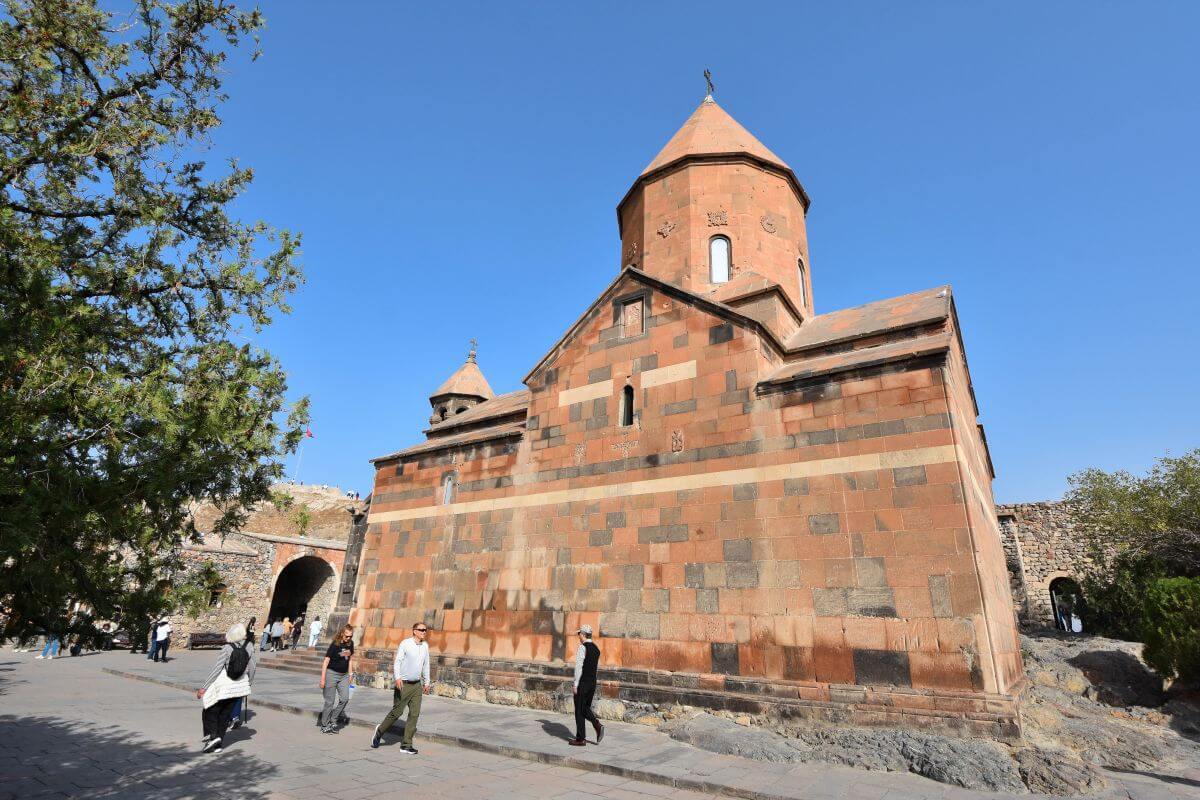
Yes, especially during midday. Khor Virap is one of the most popular religious and tourist destinations in Armenia. This famous monastery attracts organised tours, independent travellers, and local visitors. Late morning through early afternoon is generally the busiest period. This can make the small courtyard feel crowded, particularly around the underground chamber. Sundays and Saturdays also attract additional visitors, including religious pilgrims. We visited on a Wednesday around lunchtime. Although there were plenty of people around, it didn’t feel uncomfortably crowded. For a quieter experience, we recommend arriving early on a weekday.
Opening Times
Khor Virap Monastery is generally open daily. Published visiting hours are 8 am to 6 pm during winter and 8 am to 8 pm during summer. However, opening times may change, especially around religious events and holidays. Check locally before travelling.
Entrance Fee
It doesn’t cost anything to visit Khor Virap Monastery. As of November 2026, admission is completely free. Visitors can explore the church grounds, see the chapels, and even climb down into the historic pit at no cost.
Can You Attend Religious Services at Khor Virap?
Khor Virap is an active holy site, not just a museum. People still come to this working monastery to pray and worship. The main service happens inside the large Holy Mother of God Church. You can join the main weekly service on Sundays from 10 am to 12 pm to hear traditional male chanting and see the rituals. There are also shorter, smaller prayers held every evening around 5 pm. To avoid disappointment, contact the monastery or check locally for the current schedule.
Is It Worth Visiting?
Absolutely. Despite its modest size, Khor Virap is one of the most culturally significant landmarks in Armenia. Its connection with early Christianity, the unusual dungeon beneath the monastery, and its dramatic position overlooking Mount Ararat make it a memorable stop. However, manage your expectations. The monastery isn’t especially large, and you won’t spend half a day exploring endless architectural details. Also, the famous mountain view is never guaranteed.
If you appreciate history, religious heritage, unusual places and photography, the detour from Yerevan is well worth it. However, if you are short on time and only interested in grand architecture, you may prefer to prioritise larger complexes elsewhere.
- WHO SHOULD VISIT? First-time visitors, history lovers, and anyone interested in religious heritage. If you enjoy visiting places with unusual stories, historical significance and a strong sense of place, you will probably find the experience rewarding.
- WHO MAY FIND IT CHALLENGING? Travellers with limited mobility may struggle with the steep uphill approach, uneven surfaces and steps. The underground prison is particularly unsuitable for anyone who cannot safely use a steep ladder or feels uncomfortable in confined spaces. Visitors expecting impressive architecture on a grand scale, modern visitor facilities, or a full day of activities may also find the experience underwhelming. Those arriving around lunchtime on a hazy day should prepare for the possibility of missing the famous mountain view.
Is Khor Virap Wheelchair Accessible?
Unfortunately, no. Although the lower parking and approach are relatively flat, the uphill route, uneven surfaces, steps, and historic buildings create significant barriers. The underground chamber is even more challenging, requiring you to descend a narrow iron ladder. Those using wheelchairs or mobility aids shouldn’t expect to access all the main areas independently.
Facilities and toilets at Khor Virap
Facilities are basic, so don’t expect a modern visitor centre, ATMs, or well-equipped public toilets. There are toilets on the hill before the entrance to the monastery grounds. They are extremely basic, with simple squat-style toilets rather than modern flush toilets. The fee is approximately 100 AMD (around £0.20), and you should bring cash because payment is cash-only. When we visited in October 2026, only one of the two men’s toilets was working. Both women’s toilets were operational. There are a few small cafes, drink stalls, and souvenir and fruit sellers near the parking area. During summer, you may also find locally grown apricots for sale. However, don’t expect to find a proper sit-down restaurant near the monastery. Dining options near the monastery are limited, so plan a substantial meal elsewhere.
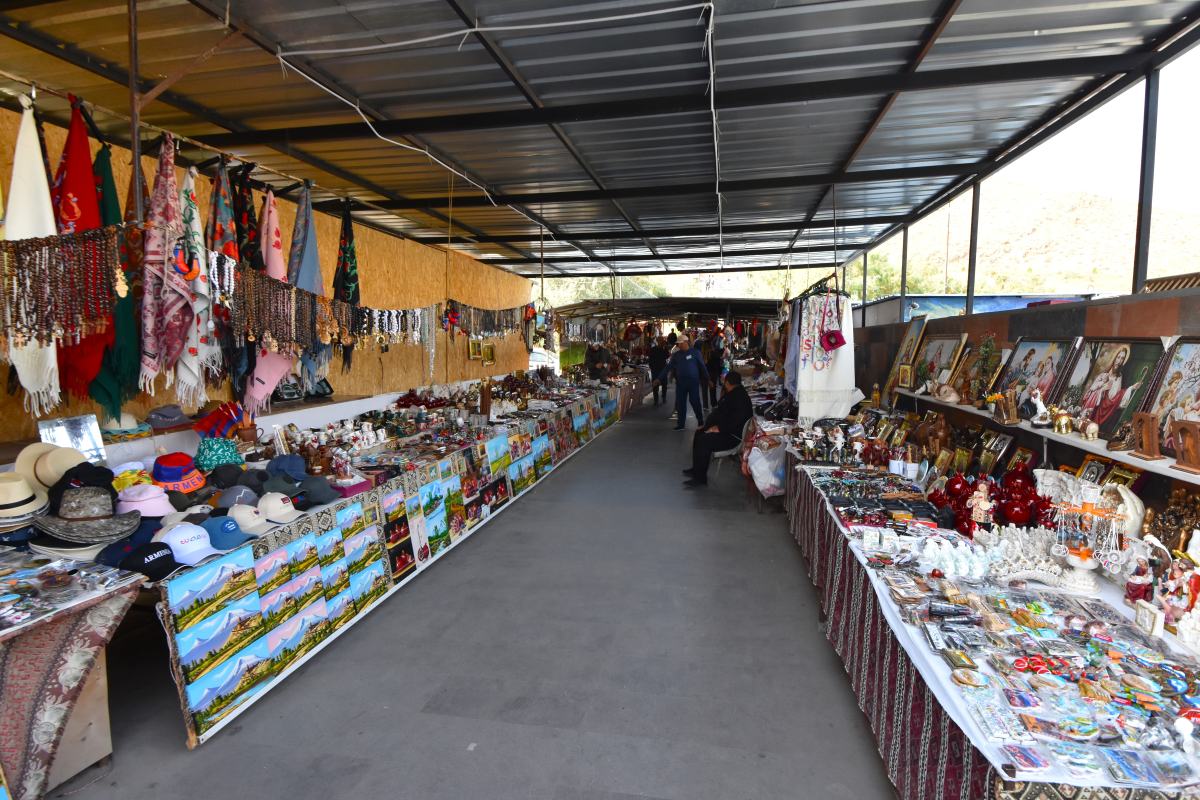
Souvenir shops near the parking area
How to Get to Khor Virap: Taxi, Bus, Car, or Guided Tour?
Although the monastery looks relatively remote, reaching it from Yerevan is surprisingly easy. The distance is approximately 40-44 km (25-27 mi), and the drive takes 40-50 minutes. Khor Virap is an easy excursion from the capital. You can reach it by taxi, public minibus, rental car, or organised tour. Each option has its advantages, and public transport requires a little more planning than you might expect.
1. Public Marshrutka
If keeping your travel costs down is your priority, public transport is the cheapest alternative. Bus 467 departs from the Southern Bus Station, located behind Sasuntsi Davit railway and metro station, and travels towards Noyakert, with a stop near Khor Virap. The journey from Yerevan takes approximately 1 hour and 20 minutes.
As of November 2026, the one-way fare is approximately 500 AMD (£1). Pay the driver directly and tell him where you need to get off. Services are limited, so check the latest departure times and return connections. Timetables may change; you shouldn’t assume buses run frequently throughout the day. Finding the correct minibus can be confusing if you are unfamiliar with the station. Look for bus number 467 and confirm with the driver that it goes towards Khor Virap before boarding. Don’t assume every minibus heading toward Ararat town will stop at the same place.
BIG CATCH:
Although Bus 467 serves a stop named Khor Virap, don’t assume that it drops you directly at the monastery entrance. Check the exact stop location on the T-Armenia route map before travelling and confirm with the driver where to get off. If it isn’t close enough to walk comfortably, arrange alternative transport rather than relying on an uncertain roadside drop-off.
OUR TIP:
Before getting off, ask the driver when the next bus will return towards Yerevan. Services are limited, and missing the last bus can disrupt your afternoon. Keep both GG Taxi and Yandex Go installed as backup options.
2. By Taxi: GG Taxi vs Yandex Go
Taking a taxi is one of the easiest ways to reach Khor Virap without hiring a car. A journey from central Yerevan costs around 5,000 AMD (£10.30) each way, as of November 2026. Prices vary with demand, vehicle type, the time of day, and your collection point. We recommend using a taxi app rather than approaching drivers waiting outside hotels or tourist attractions. Some street drivers quote considerably higher prices for tourists, especially when they realise you’re unfamiliar with local fares.
With an app, you can see estimated prices before accepting the journey. Two useful options are GG Taxi and Yandex Go. Both operate in Yerevan and allow you to request a ride directly from your phone. Yandex Go shows the estimated fare and journey time before you confirm (card or cash payment available). We personally had an excellent experience with Yandex Go. We used it regularly during our stay in Yerevan, as we had already become familiar with the app while travelling around Uzbekistan in May 2026. It was convenient, easy to use, and saved us the hassle of negotiating prices.
OUR TIP:
Don’t forget to arrange your return journey. You might find a taxi near the car park, but availability isn’t guaranteed. The easiest solution is to negotiate a waiting arrangement before leaving Yerevan. Ask the driver to wait by saying Spasel (wait), and agree on the total cost, including waiting time, before setting off.
3. By Car
Hiring a car is an excellent option if you want to explore the surrounding region independently and control your itinerary. From central Yerevan, follow Arshakunyats Avenue and the E1 17/H11 road towards Ararat Province. The main roads are straightforward, and you don’t need to tackle mountain roads or difficult off-road tracks. Once you reach the monastery, there is parking near the entrance (free of charge). Entry to the religious complex is also free. However, it’s something worth knowing before you arrive. The complex doesn’t have information panels. You can explore both churches, the courtyard, and photograph the surrounding landscape, but without understanding the history, you may miss some of the most interesting details.
OUR TIP:
If you rent a car, read about the site before your visit. Otherwise, you risk seeing the buildings without understanding why they are important.
4. Guided Tour
Why limit yourself to one attraction when you can explore several breathtaking places on the same excursion? If you don’t want to drive, an organised day trip from Yerevan is probably the most convenient option.
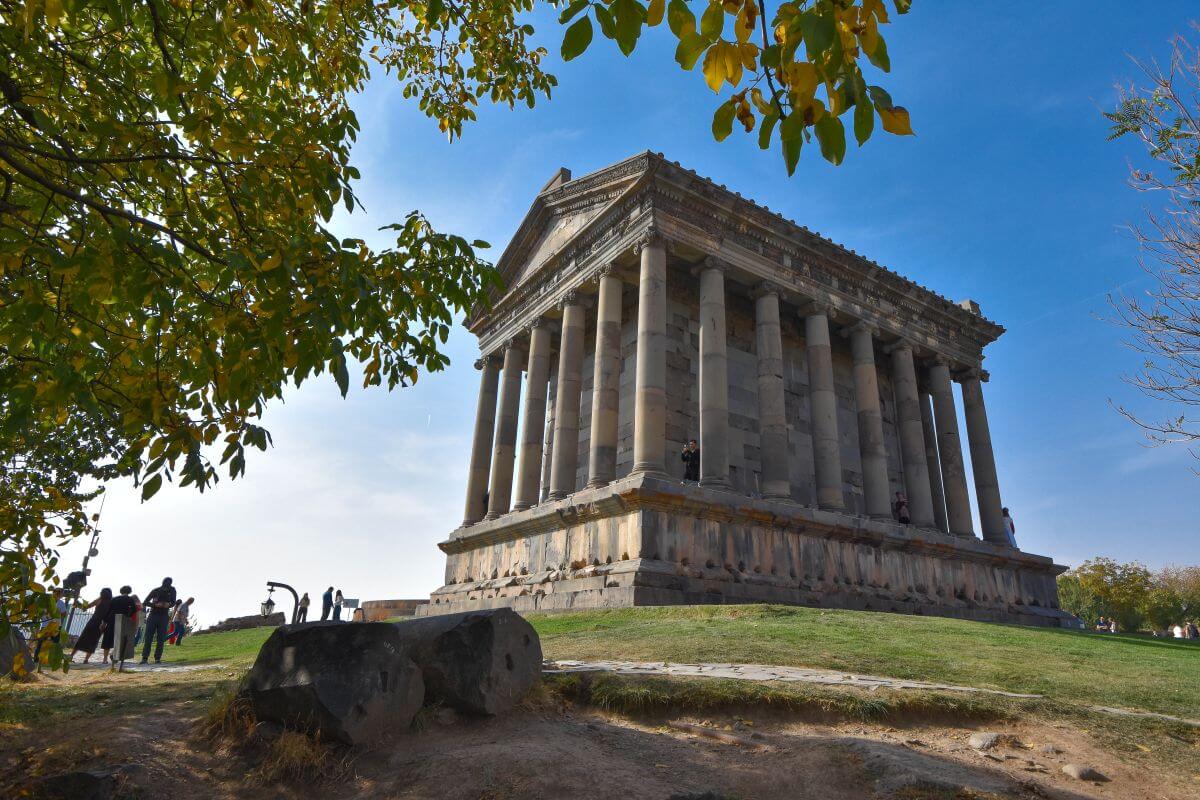
We booked the GetYourGuide excursion Khor Virap, Garni, Geghard, Symphony & Charents Arch + Lavash, operated by Go Global Tours. It included Charents Arch, Garni Temple, the Symphony of Stones, Geghard Monastery, and a traditional lavash-baking demonstration. The entire experience was exceptionally well organised. Our guide, Nazeli, was friendly, knowledgeable, and genuinely helpful. She made the journey interesting by explaining the history and significance of the places along the way. We also appreciated the practical itinerary, comfortable pace, and sufficient time at each attraction. There were no unnecessary delays or stressful arrangements. For us, this tour was one of the absolute highlights of our trip to Armenia. We happily recommend this excursion to anyone who wants to see several major sights without worrying about driving, parking, or navigating public transport.
If you want to explore further south, consider a guided day tour from Yerevan combining Khor Virap, the Areni Wine Valley and Noravank Monastery. These excursions are a perfect way to experience Armenia’s ancient winemaking history and stunning red-rock canyons without worrying about driving.
Now you have the information you need to visit Khor Virap in Armenia!
Would you like to add this beautiful monastery in Armenia to your travel bucket list?
Thank you for staying with us until the end! If you’ve enjoyed this article, please consider sharing this post to extend its reach.
Save this Khor Virap, Armenia Guide for later, so you can find it later!
A Small Way to Support Our Work
Did you know that by booking through our links, you support our travel blog at no extra cost? Thank you for your support ♥️
BOOK YOUR ONCE-IN-A-LIFETIME EXPERIENCE BELOW: