For many travellers, Jordan’s capital is little more than a stop before Petra. Yet anyone looking for the best things to do in Amman soon discovers one of the world’s oldest continuously inhabited cities, where ancient history and modern life continuously coexist side by side. Despite its remarkable past, it remains one of the Middle East’s most underrated capitals. Here, you will not find Damascus’ grand historical reputation, Jerusalem’s intense atmosphere or Cairo’s endless collection of monuments. Instead, its charm lies in something far more genuine – an authentic city shaped by its people, rich culinary traditions, fascinating heritage and genuine hospitality.
A different side of the Middle East
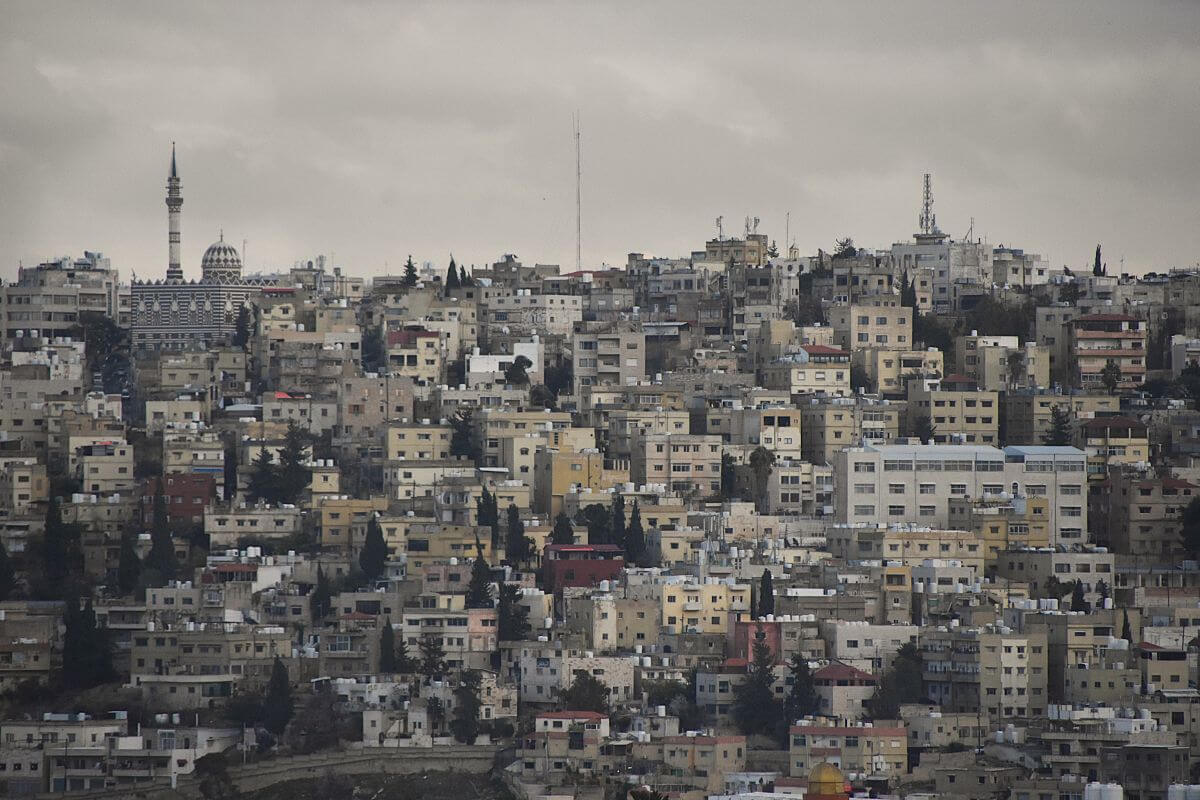
Amman is a 20th-century invention; it was no more than a muddy farming village when the ruler of Jordan, Emir Abdullah, chose it to be his new capital in 1921. Many visitors never experience its true character because they leave too soon. Spend more than a single day here, and you will quickly see why it deserves far more attention. This guide will show you exactly what to expect and how to make the most of your visit to Amman.
The City of Hills
Just like ancient Rome in Italy was built on seven hills (jabals), Amman today stretches across more than twenty hills. They are covered with bright white limestone buildings and create one of the Middle East’s most distinctive skylines.
How Long Should You Stay? Our Honest Recommendation
Planning enough time can completely change your experience. While many visitors expect to see the city’s highlights in a single day, the best things to do in Amman are far more enjoyable when you are not constantly racing from one attraction to the next. A full day is enough to visit several of the main landmarks. However, it often feels rushed, leaving little time to enjoy the local cafes, viewpoints, and neighbourhoods that give the city its character.
DON’T TRUST THE MAP
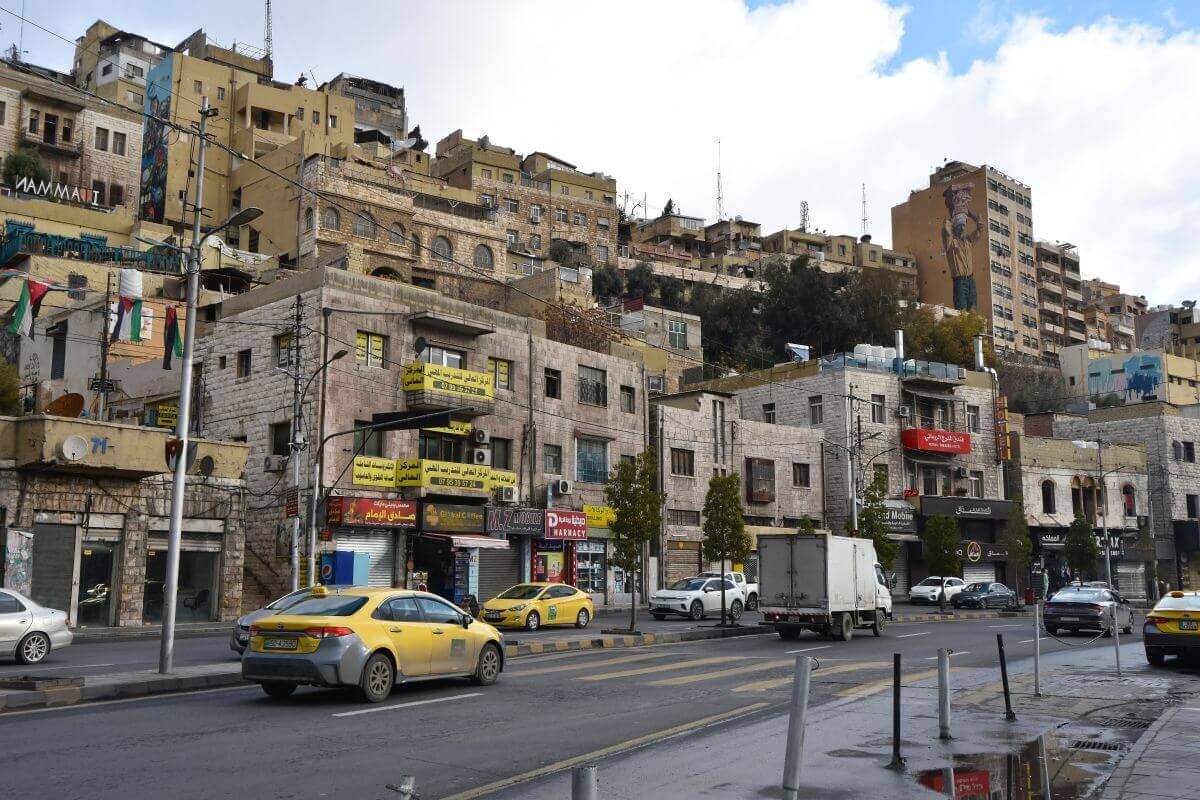
One of the biggest surprises for first-time visitors is how long it takes to get around. Although distances of some attractions may appear short on Google Maps, the city’s steep hills and heavy traffic tell a very different story. Roads follow narrow valleys or climb sharp gradients, meaning journeys are rarely direct. Walking between attractions can be far more tiring than expected, especially in warmer weather. Travelling by taxi often involves sitting in slow-moving traffic during the busy morning and afternoon rush hours. Even returning to your hotel can take much longer than planned.
OUR EXPERIENCE – WHY THREE DAYS IN AMMAN WORKED PERFECTLY FOR US
After visiting in the middle of February, we found that three and a half days gave us the perfect balance. It allowed enough time to explore at a relaxed pace without skipping attractions, while also fitting in a few easy day trips. We chose to stay in Amman this long to make travelling far less stressful. The capital is also an excellent base for exploring nearby highlights such as Jerash, the Desert Castles and several UNESCO-listed sites, each of which deserves at least half a day.
If your itinerary allows, staying at least three days will reward you with a much richer experience than simply passing through.
Things to do in Amman for history lovers
DID YOU KNOW?
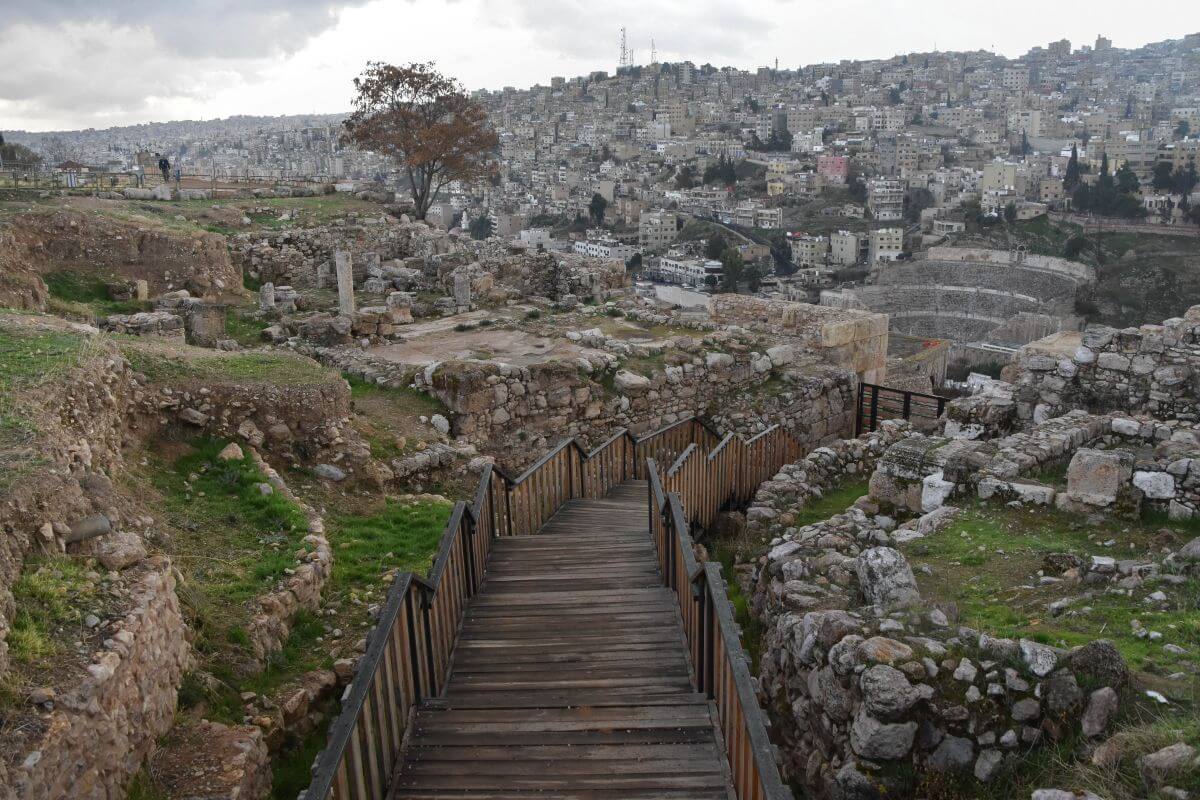
Long before the modern capital existed, this area formed the heart of ancient Philadelphia, the Greek and Roman name for today’s city. According to historical records, Philadelphia was founded during the Hellenistic period after being renamed by King Ptolemy II around 285 BC. Over the following centuries, it flourished under Greek, Nabataean, Roman and Byzantine rulers before becoming one of the leading cities of the Decapolis.
1. Roman Theatre and Forum
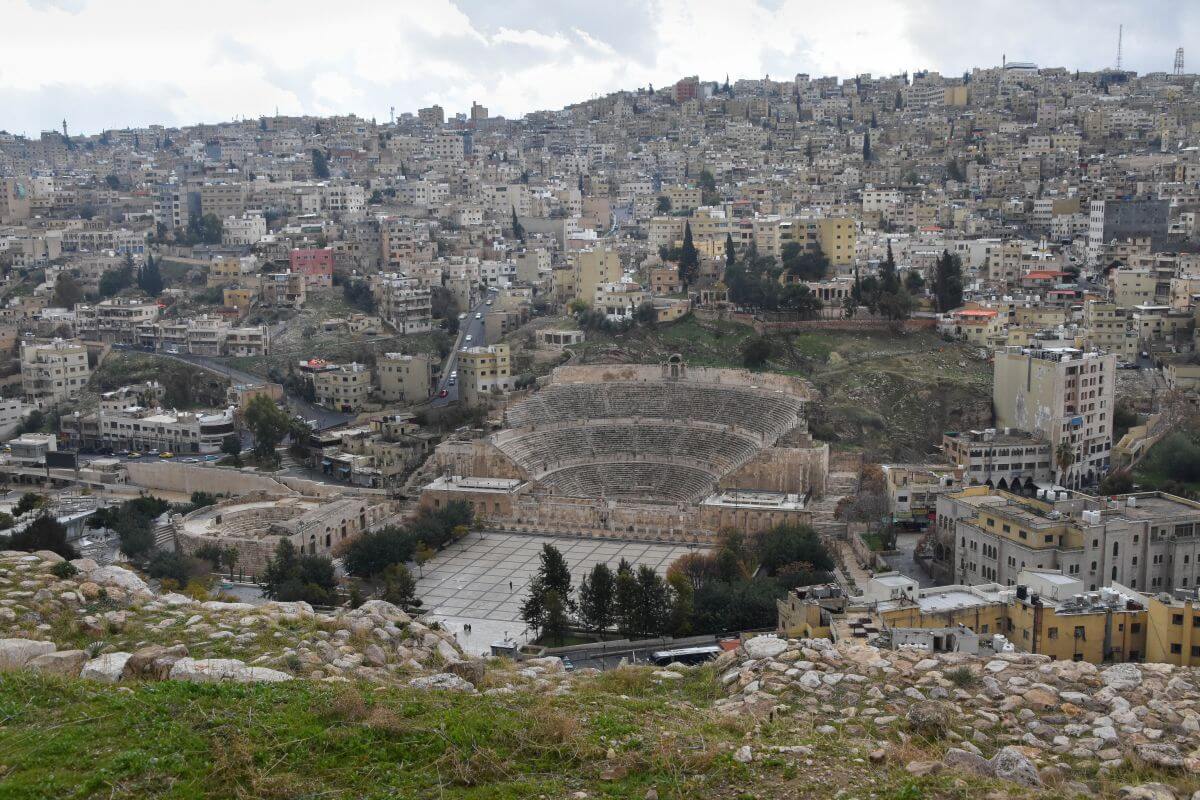
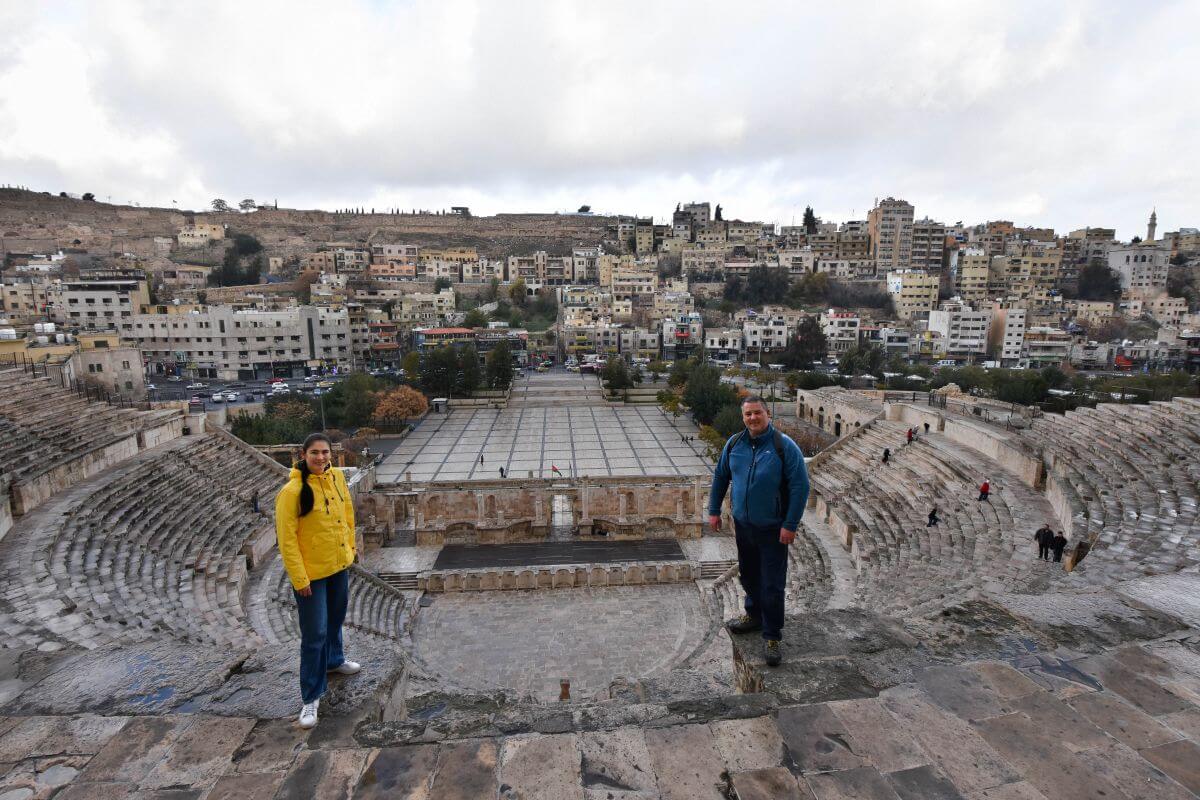
Standing proudly in the heart of Downtown, the Roman Theatre is the perfect place to begin exploring the city’s remarkable past. Culture lovers will find visiting this impressive complex among the best things to do in Amman. Here, nearly 2,000 years of history continue to shape everyday life.
Before reaching the theatre, you will cross the spacious Hashemite Plaza. This lively public square occupies the site of Philadelphia’s Roman Forum, once the city’s busy marketplace where merchants traded goods and residents gathered to socialise. Today, only an elegant row of Corinthian columns and sections of the original stone paving remain. However, the square still serves exactly the same purpose. Families and friends continue to fill the area with life from morning until late evening, making it one of the best places to experience the city’s atmosphere.
ONE OF THE BEST-PRESERVED ROMAN THEATRES IN THE REGION
Cut into the northern hillside, the theatre was constructed between AD 138 and 161 during the reign of Antoninus Pius. According to the Tourist Jordan website, it could seat almost 6,000 spectators, and its seating followed the strict social hierarchy of Roman society. Royalty and senior officials occupied the lowest rows nearest the stage while military leaders and nobles sat above them. Ordinary citizens watched performances from the highest seats.
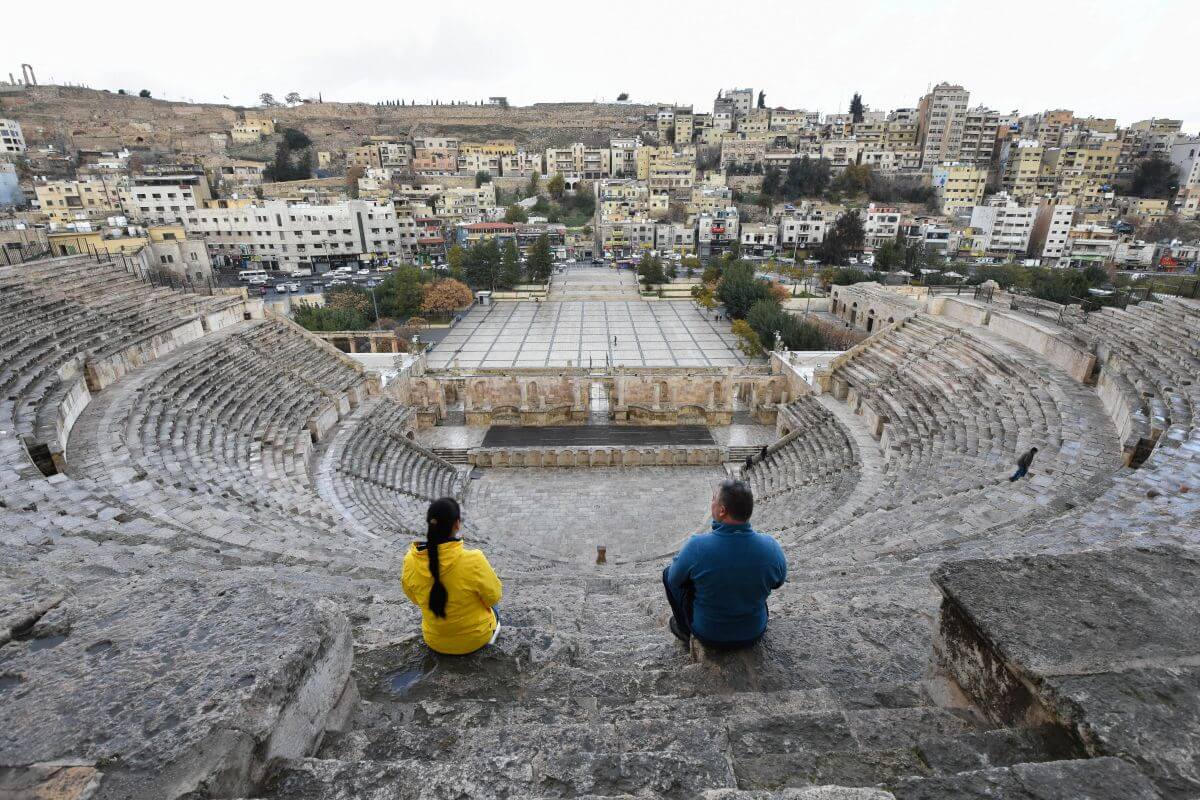
The climb to the upper seats is steep, but the reward is a spectacular view across the surrounding hills and white limestone buildings.
The Romans also demonstrated remarkable engineering skills. The south-facing stage receives sunlight throughout the day, while the audience remains comfortably shaded.
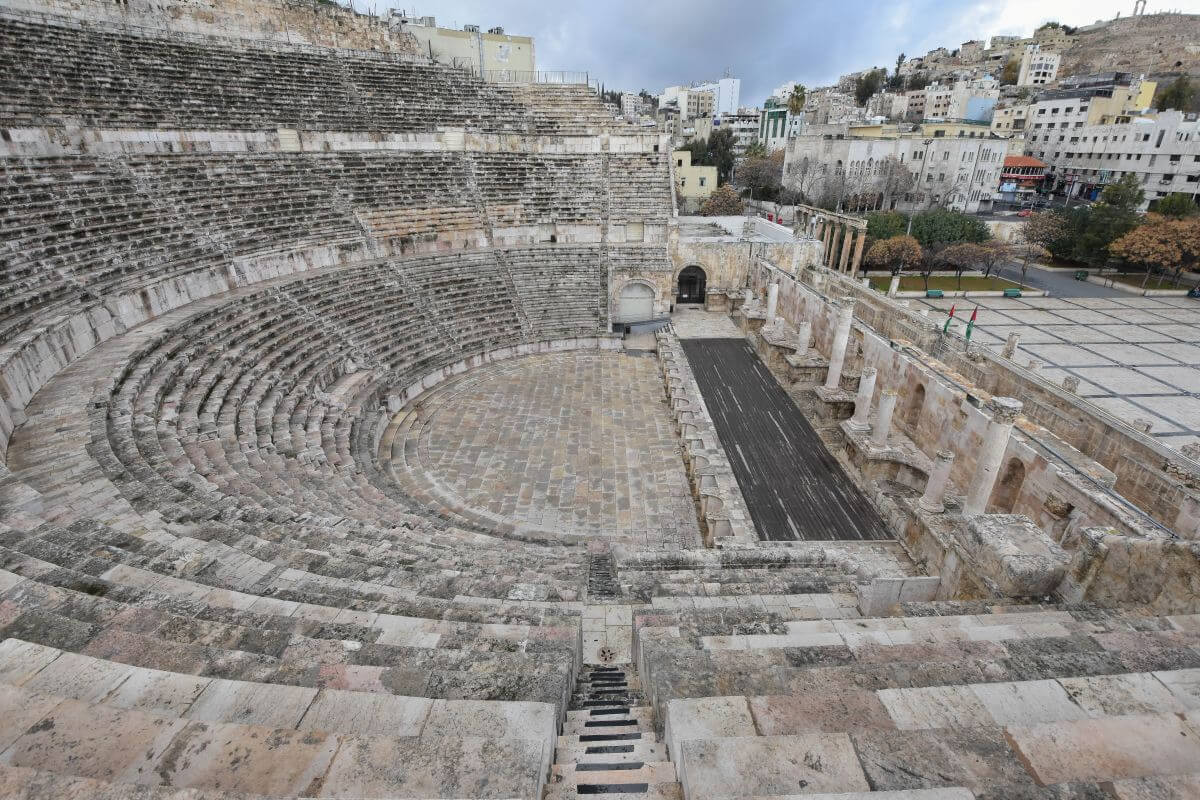
Even more remarkable are the acoustics. Stand in the centre of the orchestra and speak in a normal voice, and your words carry clearly through the entire theatre. Move just a few steps away, and the echo almost disappears. There is even an unusual acoustic trick: two people positioned at opposite ends of the curved stone wall beneath the first row can quietly speak to one another despite the distance.
DON’T MISS THE NEARBY ROMAN MONUMENTS OF THE COMPLEX
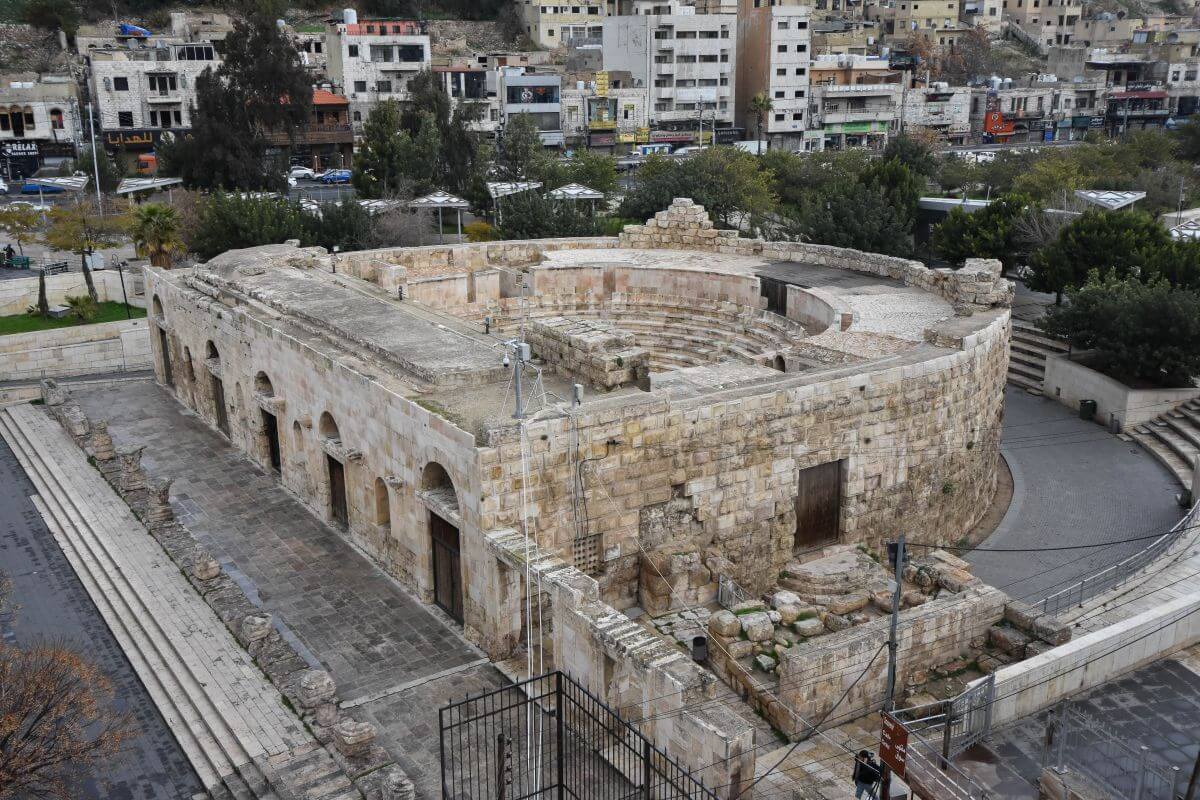
On the eastern side of the plaza stands the restored Odeon, a much smaller theatre that once welcomed around 500 people. It still hosts occasional cultural events. Just a short walk away brings you to the impressive remains of the Nymphaeum. This richly decorated public fountain was dedicated to the water nymphs. It was completed in AD 191 and offers another glimpse into the grandeur of Roman Philadelphia.
GOOD TO KNOW
The Roman Theatre is easy to reach on foot while exploring Downtown. As of July 2026, entry costs 2 JOD (£2.11) for foreign visitors and 0.25 JOD for Jordanian residents. Your ticket also includes the Jordan Folklore Museum and the Museum of Popular Traditions within the theatre complex. If you have purchased the Jordan Pass, simply scan your digital pass at the entrance for free admission.
2. Amman Citadel
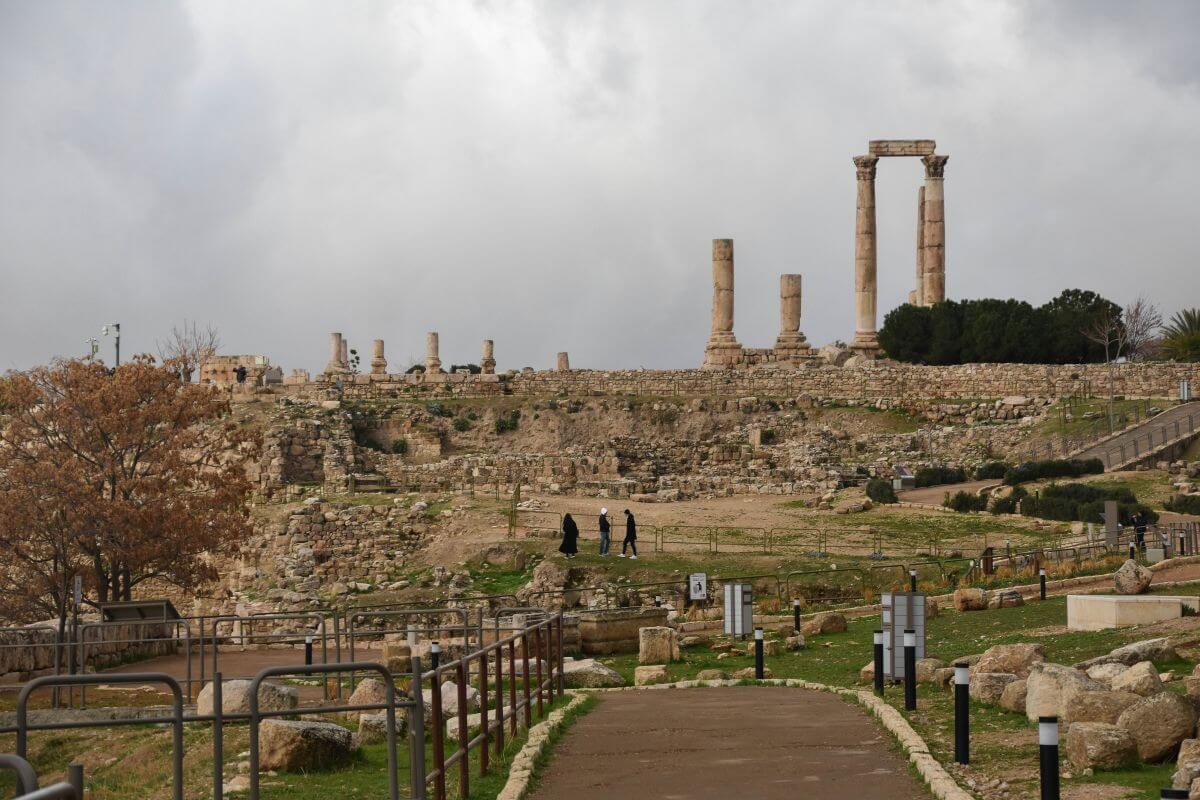
Amman Citadel (Jabal al-Qala’a)
Perched high above Downtown on Jabal al-Qala’a, the Amman Citadel is the place where the city’s remarkable story began. Among the most rewarding things to do in Amman for culture lovers is exploring this extraordinary hilltop, where archaeological discoveries reveal more than 7,000 years of almost continuous human settlement. Every stone, wall, and pathway represents another chapter in a story that stretches back to the very beginning of settlement in this part of the Middle East.
THE BIRTHPLACE OF THE MODERN CAPITAL
Long before today’s city spread across dozens of hills, this rocky plateau was known as the ancient city of Rabbath Ammon, the royal capital of the Kingdom of Ammon. Archaeological evidence shows people first settled here during the Neolithic period, while the hill was heavily fortified around 1800 BC during the Bronze Age. According to historical records, its strategic position overlooking the surrounding valleys made it one of the most desirable locations in the region. Over thousands of years, the Assyrians, Babylonians, Greeks, Nabataeans, Romans, Byzantines, and Umayyads all recognised its importance and transformed the hill to suit their own ambitions.
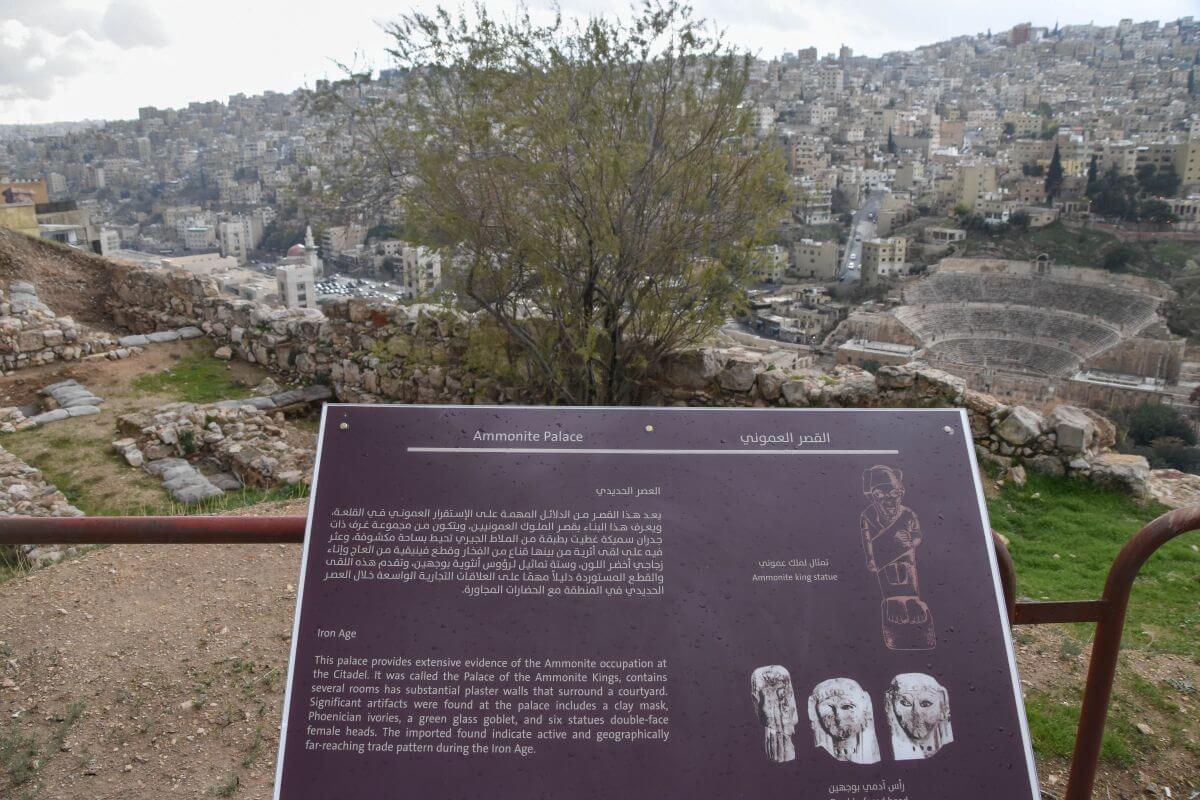
Ironically, many of the earliest remains disappeared during the Roman period. When the Romans rebuilt the hill into the acropolis of ancient Philadelphia, they cleared away much of the earlier Ammonite settlement. To make way for new constructions, the Romans threw enormous quantities of stone and rubble down the surrounding slopes. Archaeologists have since uncovered Bronze Age, Iron Age, and Hellenistic pottery, mixed together with Roman remains below the hill. This provided remarkable evidence of how dramatically the site was reshaped almost two thousand years ago.
THE STORY OF AN ENTIRE REGION
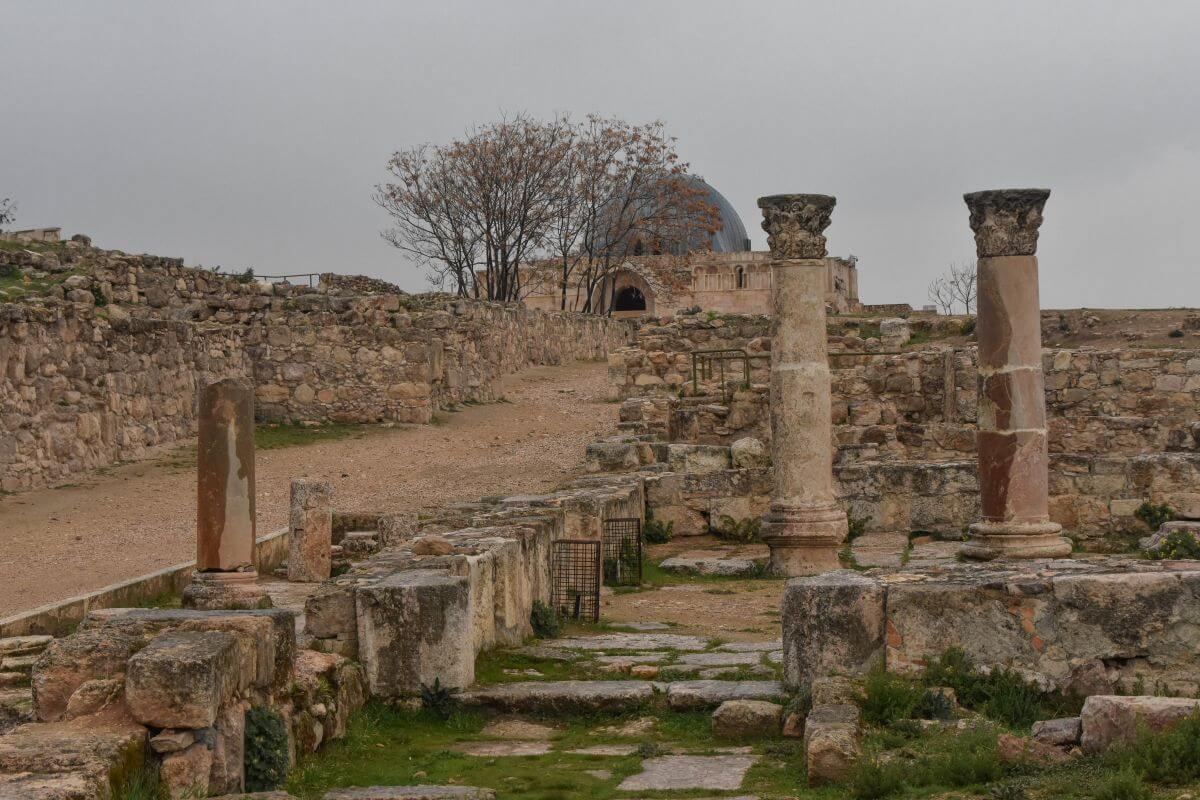
One of the reasons the Amman Citadel feels different from many archaeological sites is that it isn’t frozen in a single period of history. Most of the impressive structures visible today date from the Roman, Byzantine, and Umayyad eras. This reflects the site’s importance long after Philadelphia expanded beyond the hilltop.
Defensive walls dating back to the Bronze Age stand alongside Roman engineering, Byzantine remains and one of the finest surviving Umayyad complexes in the region. Most visitors immediately notice the Temple of Hercules, the Umayyad Palace, and the Archaeological Museum, which are the site’s most famous highlights. Each of these deserves proper attention, so we will explore them separately in this guide.
One of the greatest rewards of visiting is simply walking around the open hilltop. Wherever you stand, breathtaking views stretch across the surrounding white limestone neighbourhoods. It quickly becomes clear why generations of rulers chose this strategic location to control the valley below.
GOOD TO KNOW:
- The Amman Citadel occupies the highest hill overlooking Downtown. Although it is possible to walk from the city centre, the climb is very long, steep, and can be exhausting, particularly during the warmer months. Unless you enjoy challenging uphill walks, taking a taxi is the easiest and smartest option. It usually costs less than 3 JOD (£3.16) , depending on where you start.
- The Citadel is partially wheelchair accessible. Recent improvements have introduced smooth paved walkways and ramps linking the main outdoor monuments, making much of the complex accessible. However, because the Amman Citadel sits on a natural hilltop, several ramps are fairly steep, so manual wheelchair users will usually need assistance from a companion.
ADMISSION FEE:
As of July 2026, admission to the Amman Citadel costs 3 JOD for foreign visitors. Jordanian citizens and Arab nationals pay 0.25 JOD, and children under 12 can enter for free. If you purchased the official Jordan Pass before arriving in the country, entry is completely included. Simply scan your digital pass at the ticket office.
OPENING TIMES:
- Opening hours change with the season. From April to September, the site opens Saturday to Thursday from 8 AM to 7 PM, while between October and March it closes earlier at 4 PM. Fridays operate from 10 AM to 4 PM throughout the year. During Ramadan, opening hours are usually reduced to approximately 9 AM until 4 PM or 5 PM, so it is always worth checking before your visit.
- For the best experience, arrive after 4:30 PM during summer, when the afternoon heat begins to ease. This is when most organised tour groups have departed, and the setting sun lights up the white-stone city below while the evening call to prayer echoes across the surrounding hills.
3. Temple of Hercules
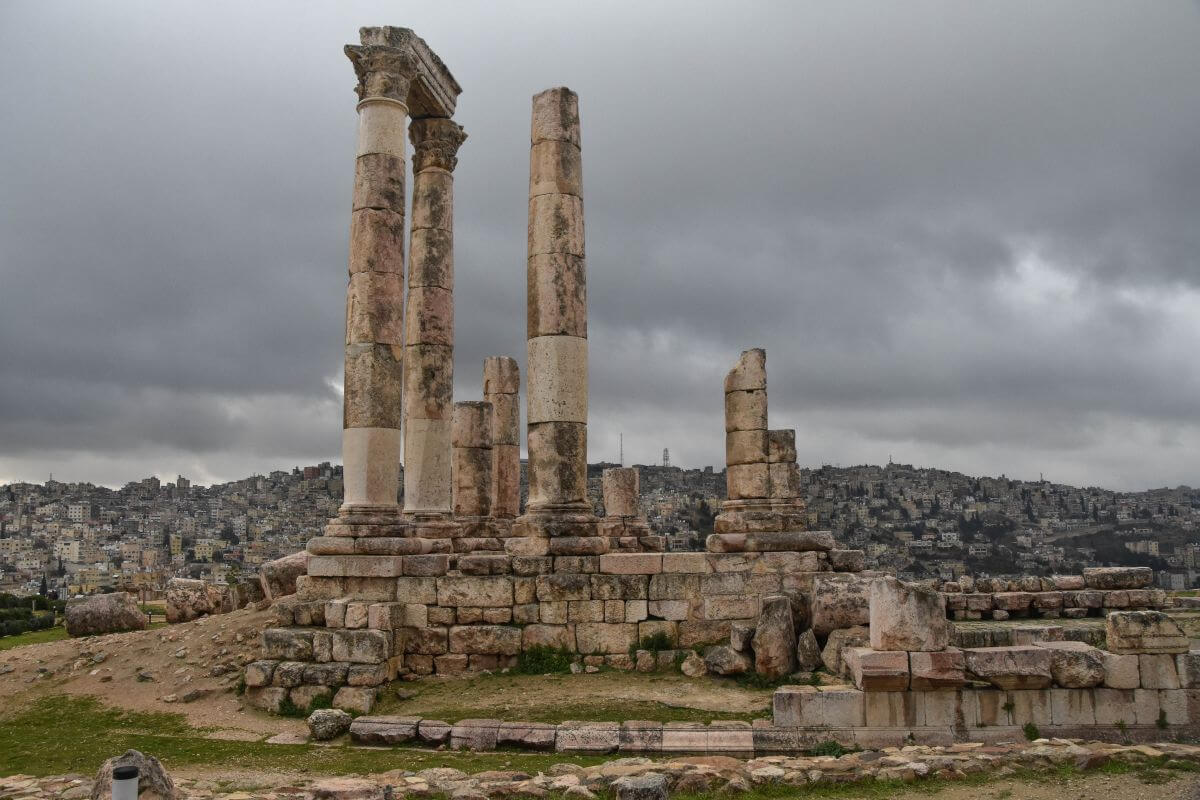
Standing among the ruins of the Amman Citadel, the Temple of Hercules is one of the most recognisable landmarks on the hilltop. Although only fragments of this enormous temple survive today, what remains gives a powerful impression of the scale of ancient Philadelphia.
The location of the Temple of Hercules was carefully chosen. It stood at the top of a monumental staircase connecting the lower city with the Citadel, allowing one to approach it from below in a dramatic way. Today, the remaining stone blocks near the edge of the hill mark where the staircase once stood.
TEMPLE THAT MAY HAVE NEVER BEEN FINISHED
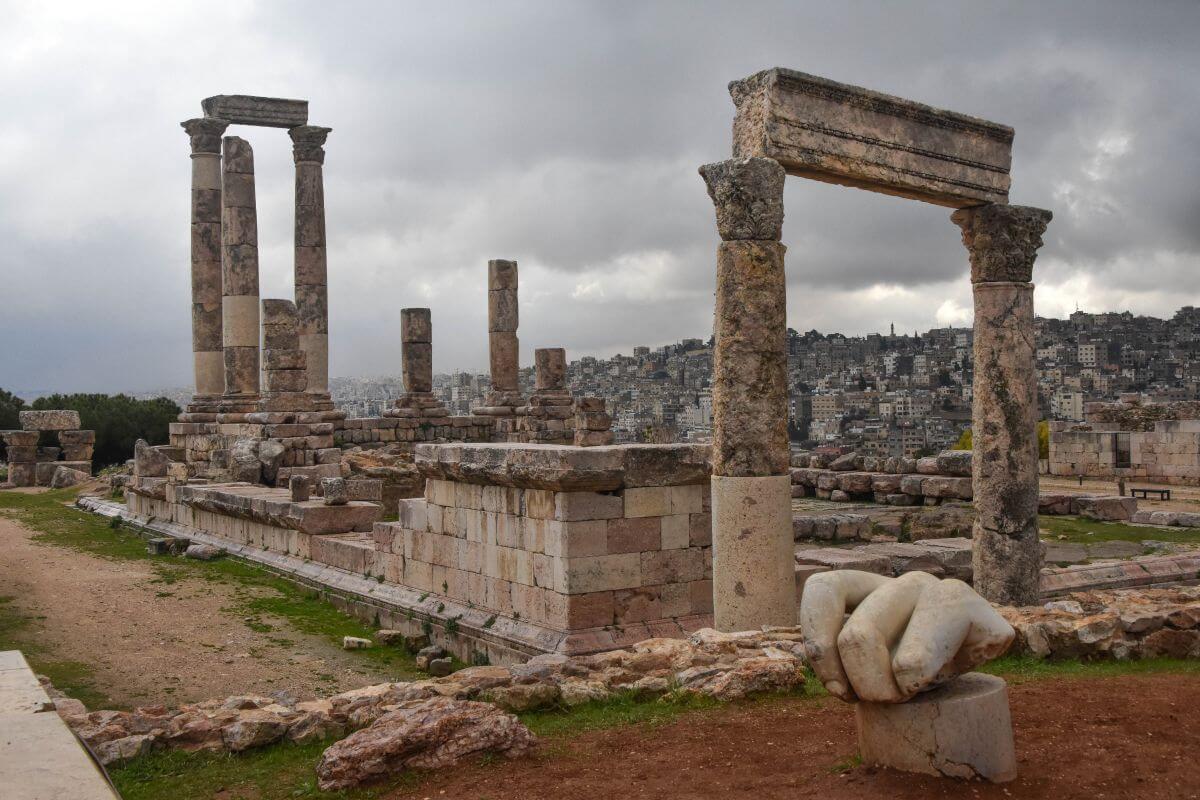
The temple was normous by ancient standards. Some historians suggest that its size rivalled or even exceeded many famous Roman temples, despite standing far from the heart of the Roman Empire.
Information panels on the site indicate that the Temple of Hercules dates back to the height of Roman Philadelphia. It was constructed most likely between AD 161 and 166, when Geminius Marcianus governed the Roman province of Arabia. This was the same period when the Roman Theatre below the Citadel was built, showing how important this period was in the city’s development.
Despite its damaged state, the surviving remains are still impressive. The temple originally stood on a huge platform measuring approximately 43 by 27 m (141 by 88 ft). The main building stretched around 30 by 24 m (98 by 78 ft). At the front was a monumental portico lined with 6 earthquake-proof columns, each rising about 13.5 m (45 ft) above the ground. Today, only two complete columns and sections of four others remain. They are among the most photographed features of the Citadel.
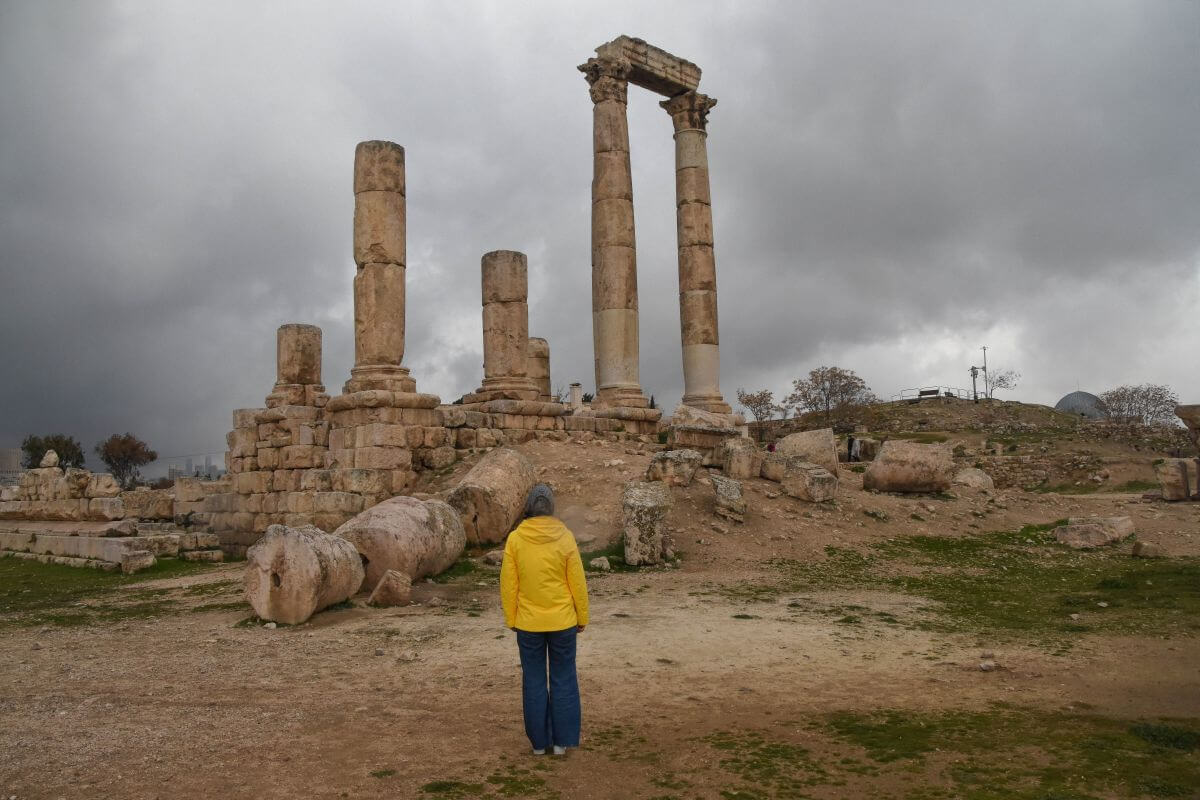
One of the biggest mysteries surrounding the Temple of Hercules is that it looks incomplete. Unlike many Roman temples, no additional columns were ever added along the sides of the building. Archaeologists believe this may indicate that construction stopped before the temple was fully completed.
THE GIANT HAND OF HERCULES
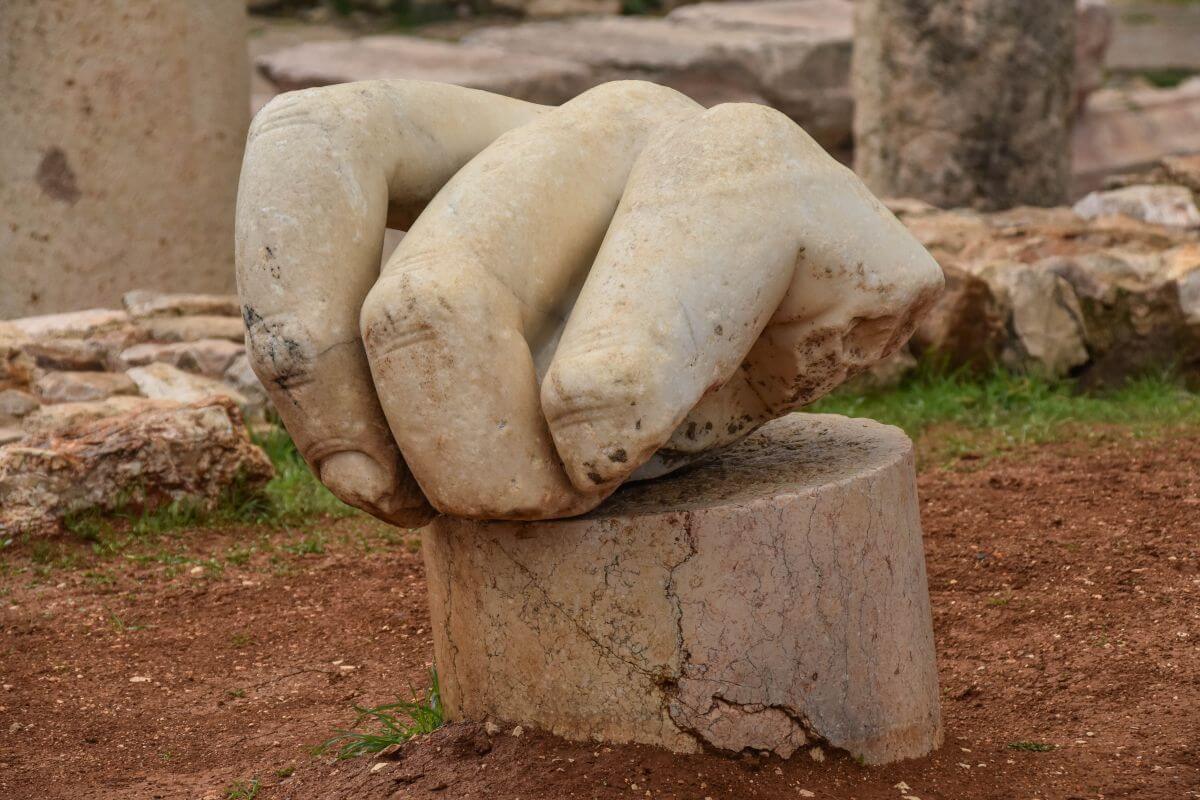
The most surprising discovery at the Temple of Hercules for us was not a wall, column, or carved inscription, but a giant marble hand lying among the ruins. During the excavations, archaeologists found fragments believed to have belonged to a colossal statue of Hercules, including three enormous fingers, an elbow, and parts of the statue’s base.
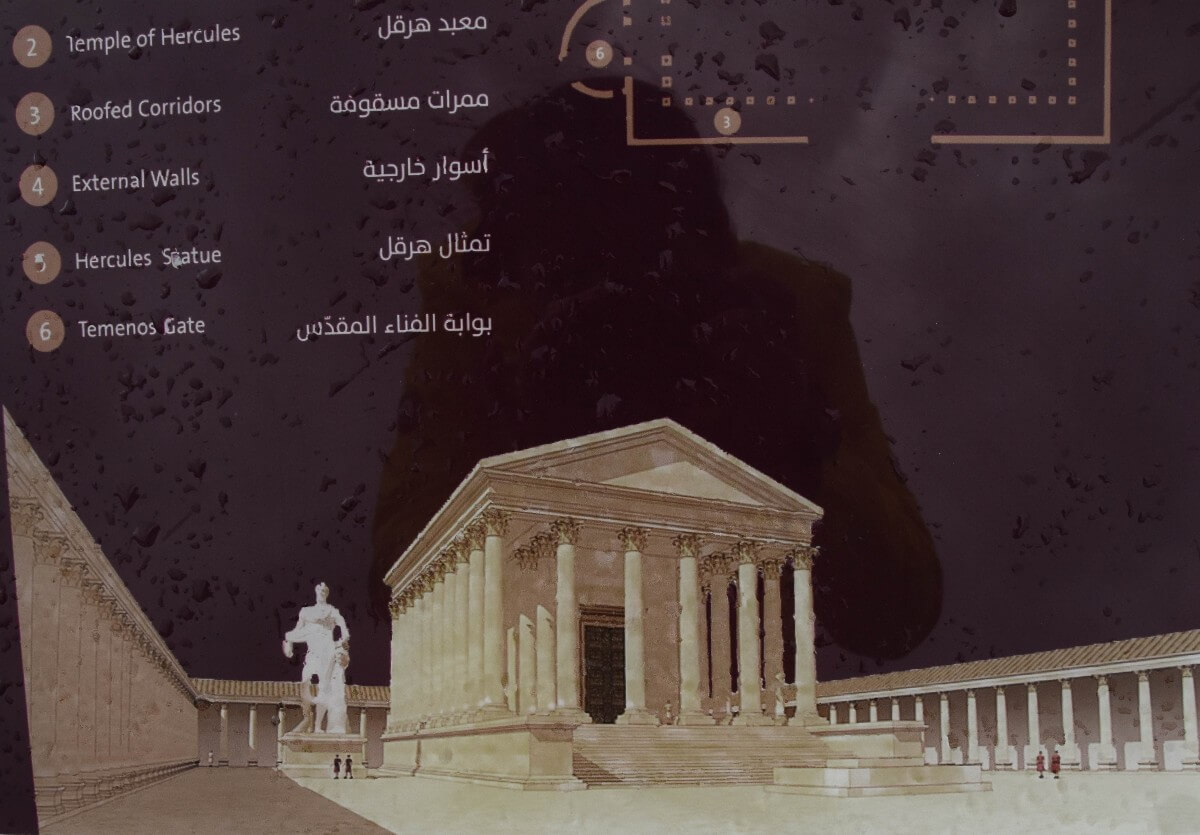
If the reconstruction theories are correct, this statue would have stood over 13 m (43 ft) tall, making it one of the largest marble statues known from the ancient world. Although earthquakes likely destroyed the statue centuries ago, the surviving hand remains a fascinating reminder of how extraordinary this temple once was. Standing beside these oversized fingers feels almost surreal. It is one of those moments where history becomes surprisingly human. You can look at a piece of stone and immediately understand the incredible scale of what once existed here.
4. Umayyad Palace
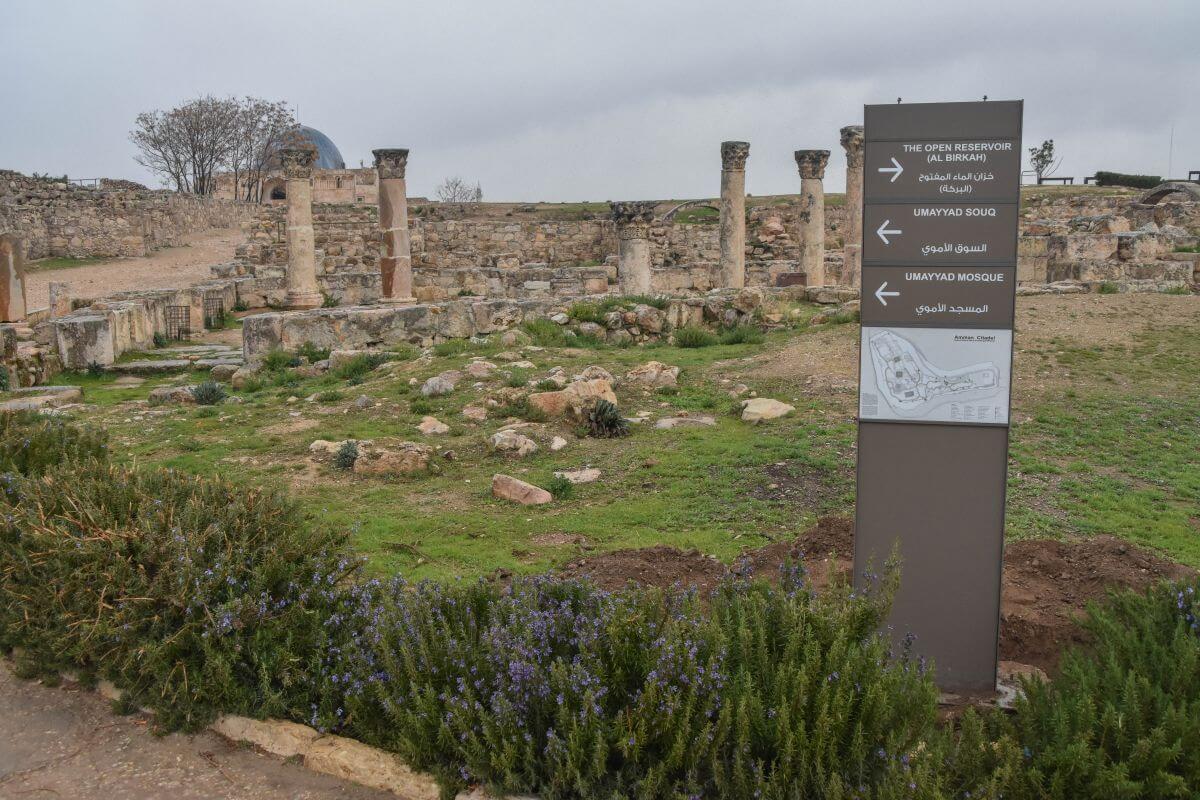
While the Roman ruins reveal the city’s ancient past, the Umayyad Palace is a remarkable reminder that this hilltop citadel didn’t lose its importance after the Roman Empire disappeared.
Built during the early Islamic Period between approximately AD 724 and 743, this enormous complex became the administrative and residential centre of the city. It was an important provincial capital of the Umayyad Caliphate. According to an informational panel on the site, the palace originally covered a vast area across the northern part of the citadel. It included residential quarters, administrative buildings, a mosque, courtyards and spaces used by the governor and officials. Rather than replacing the Roman past completely, the Umayyad builders incorporated parts of earlier structures into their own designs. They also reused stone blocks and columns from the ancient city that came before them.
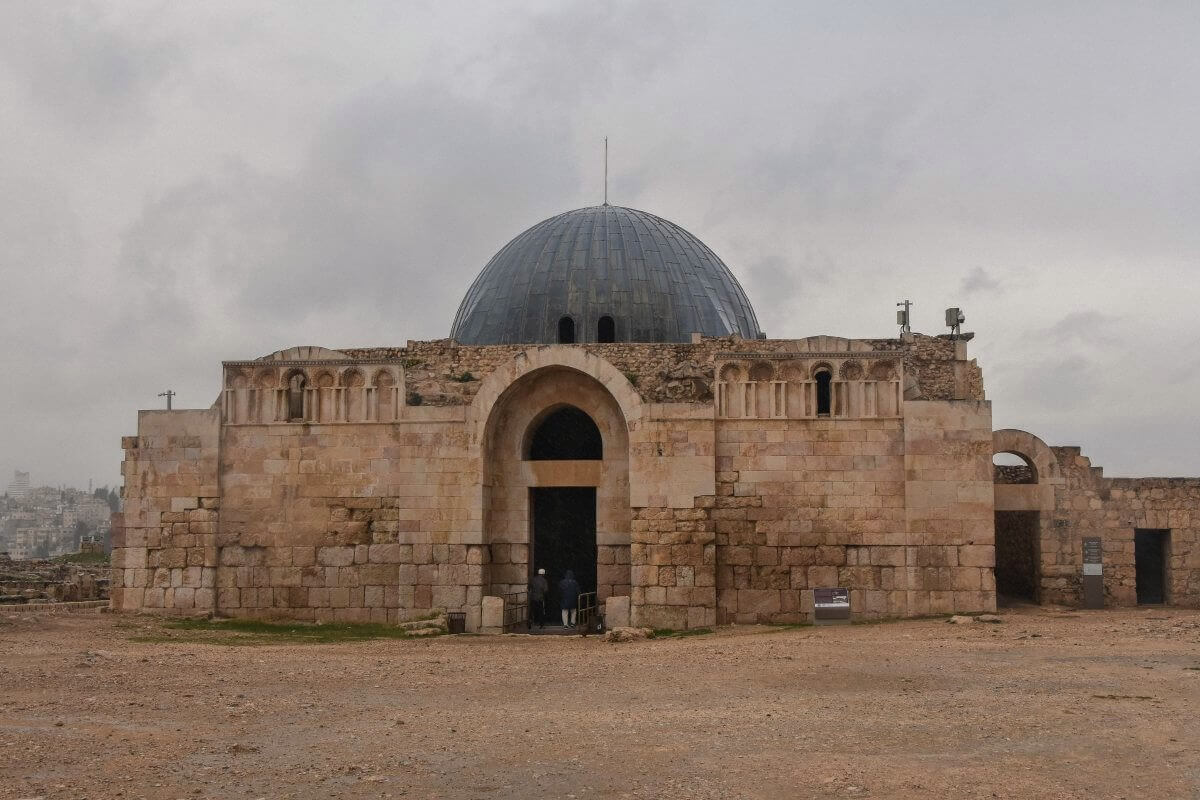
The most famous part of the Umayyad Palace is its audience hall. This grand place would have been where official meetings and important ceremonies took place.
DON’T MISS
One of the most fascinating parts of the Umayyad Palace complex is the enormous circular stone cistern. This impressive underground system could hold around 1.3 million litres of rainwater, providing a reliable source for residents living on the hilltop. At its centre stands a large stone column that likely helped measure water levels.
OUR EXPERIENCE
We had planned to spend much more time exploring the outdoors of the Umayyad Palace. The courtyards, ancient stonework and open views across the city looked like the perfect place to capture some memorable photographs. However, when we visited in February, the weather changed completely unexpectedly. Heavy rains suddenly arrived without warning, and we had no umbrellas with us. We ended up having to find shelter instead of properly exploring the exterior of the palace complex as planned.
5. Jordan Archaeological Museum
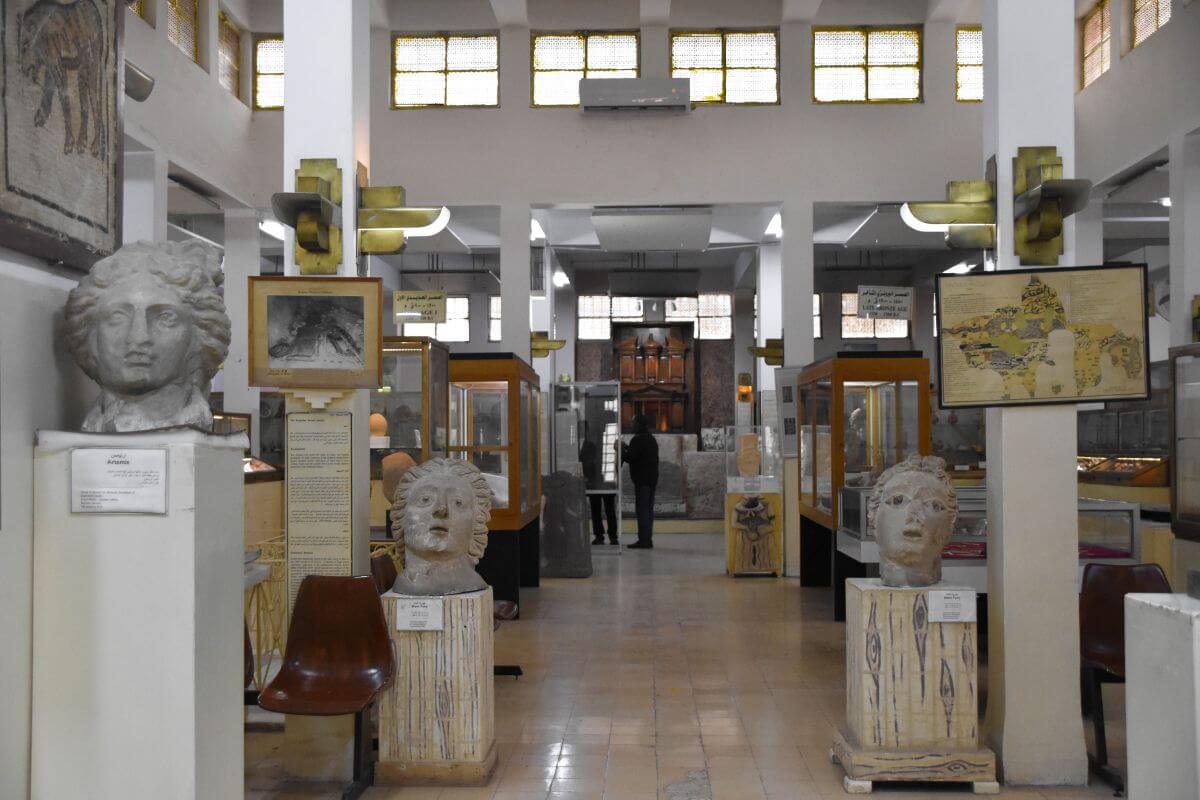
Hidden inside the Amman Citadel is a small museum with a collection far more important than its size suggests. The Jordan Archaeological Museum protects some of the most remarkable discoveries ever found in this region. For anyone searching for unique places to visit in Amman, this museum offers a rare chance to see some of the country’s most extraordinary artefacts in one place.
Opened in 1951, the Jordan Archaeological Museum was the first national museum established in the country. Its location on top of the Citadel was not accidental. The museum was designed to connect directly with the archaeological remains surrounding it. This allows visitors to experience thousands of years of history in one place.
Although the museum is not large, its collection is incredibly valuable. The exhibits follow a timeline from the Palaeolithic Age to the Islamic era. The museum houses ancient pottery, coins, tools, inscriptions and statues discovered from archaeological sites across Amman and throughout the country.
THE AIN GHAZAL STATUES
The first thing you should look for inside the museum is the extraordinary Ain Ghazal collection. The statues date back approximately 9,000 years, making them thousands of years older than many famous ancient monuments around the world. Made from lime plaster and reed, these statues reveal an incredible level of artistic skill for such an early society.
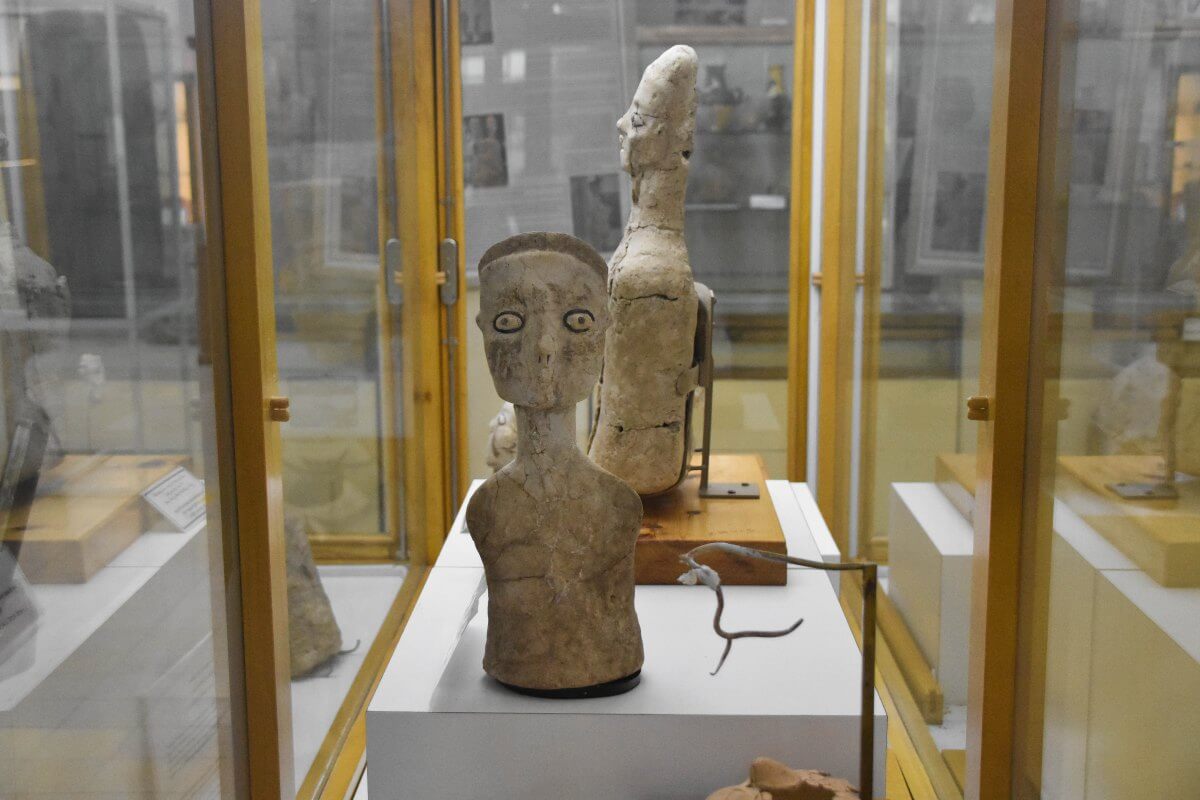
The ‘Ain Ghazal statues are among the oldest large-scale human statues in the world.
Ain Ghazal, meaning ‘Spring of the Gazelle’, was a Neolithic settlement located on the eastern outskirts of modern Amman. Inhabited between approximately 7250 BC and 5000 BC, it was one of the largest farming communities in the ancient Near East. Historical records indicate that this was a crucial period in human history. Communities were moving away from a nomadic lifestyle and developing permanent agricultural settlements.
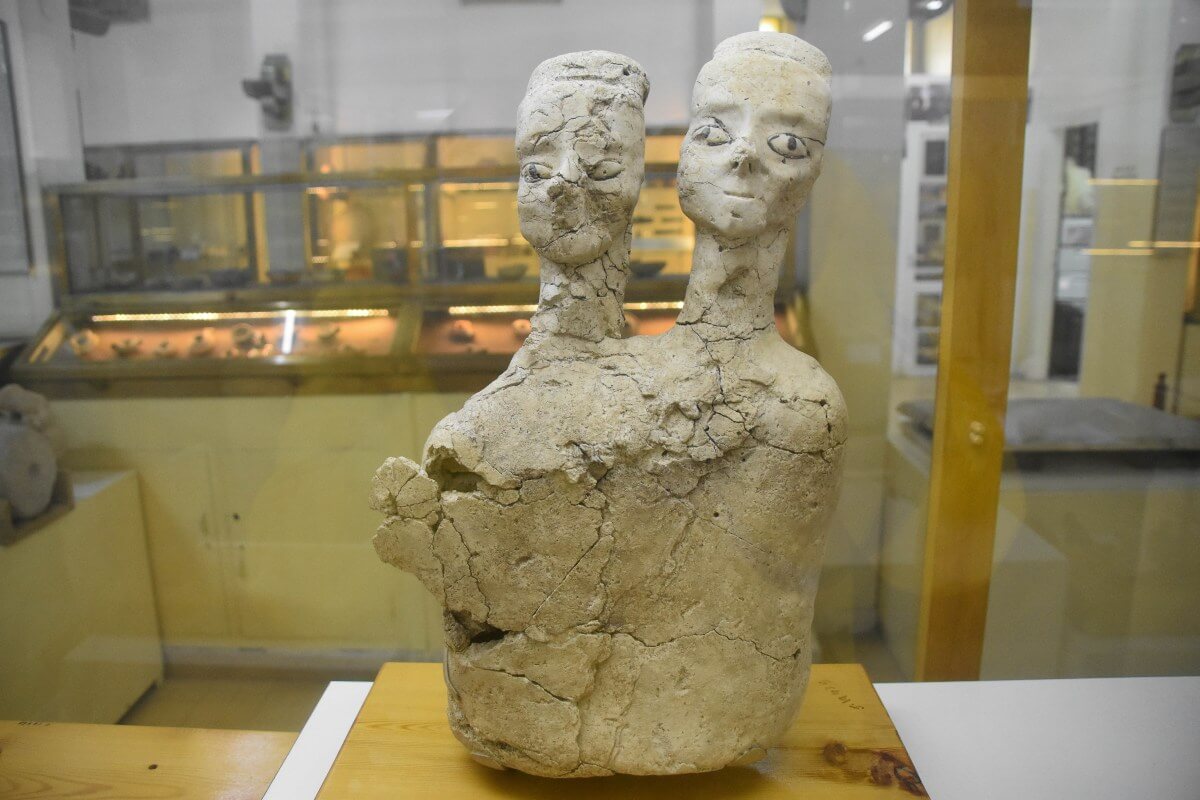
One of our favourite examples of these statues was the rare two-headed bust, where two faces share a single body. Archaeologists still debate whether these represent ancestors, mythical figures, or early religious beings. Because of their unusual shape and large eyes, many tourists jokingly say they look like ancient ‘alien’ sculptures.
GOOD TO KNOW:
Some Ain Ghazal statues remain here, while others are at the larger Jordan Museum in downtown Amman.
OTHER HIGHLIGHTS
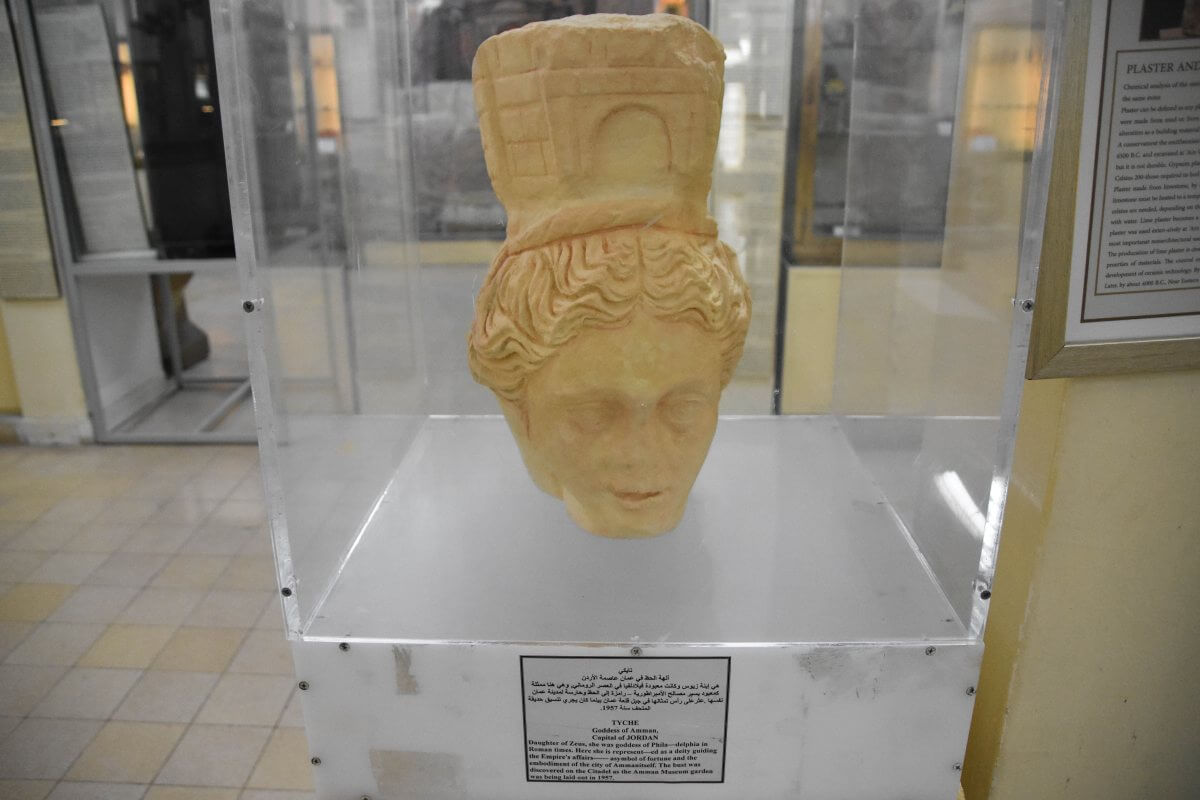
- TYCHE: A beautifully carved Roman marble bust representing the goddess of fortune. In ancient Philadelphia, Tyche was believed to be the protector of the city and its people.
- PLASTERED SKULLS FROM JERICHO: Ancient communities covered real human skulls with lime plaster and painted them to recreate faces of their family members. According to historical records, they are considered some of the earliest examples of portrait-making in human history.
- TEL SIRAN BOTTLE: A small bronze vessel dating back around 2,700 years. It contains a remarkably preserved inscription written by an ancient Ammonite king.
- AMMAN CITADEL INSCRIPTION: This small Iron Age stone fragment is one of the oldest known examples of writing in the ancient Ammonite language. It provides a direct connection to the Kingdom of Ammon.
GOOD TO KNOW:
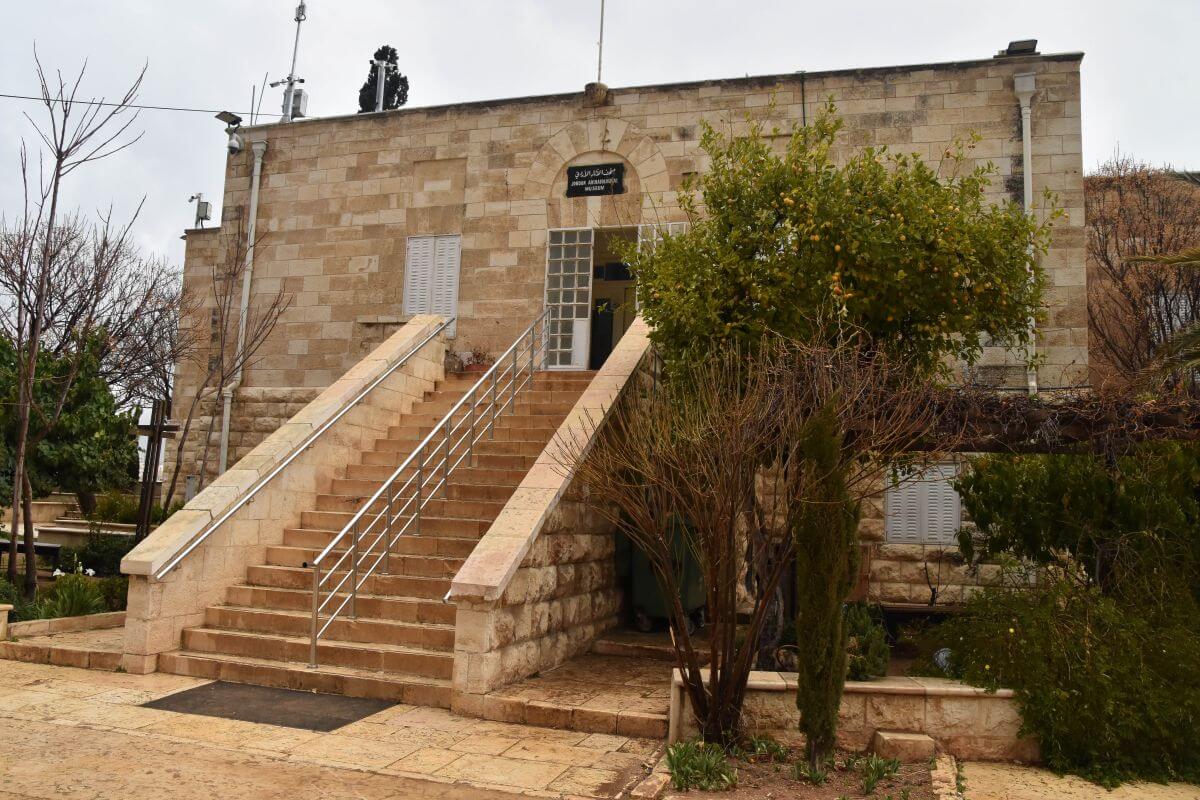
The Jordan Archaeological Museum is located inside the Amman Citadel, and visiting it doesn’t require an additional ticket. One important thing to know is that the museum building isn’t wheelchair-friendly. To enter the museum, you must climb a long staircase, with no lifts or ramps available at the entrance.
Although the Jordan Archaeological Museum is relatively small compared with modern collections, do not underestimate how much of Jordan’s history it contains. Allow at least 40 minutes to appreciate the main highlights. Information panels in English provide well-written background information on everything. So, you could easily browse for an hour or longer.
6. Cave of the Seven Sleepers
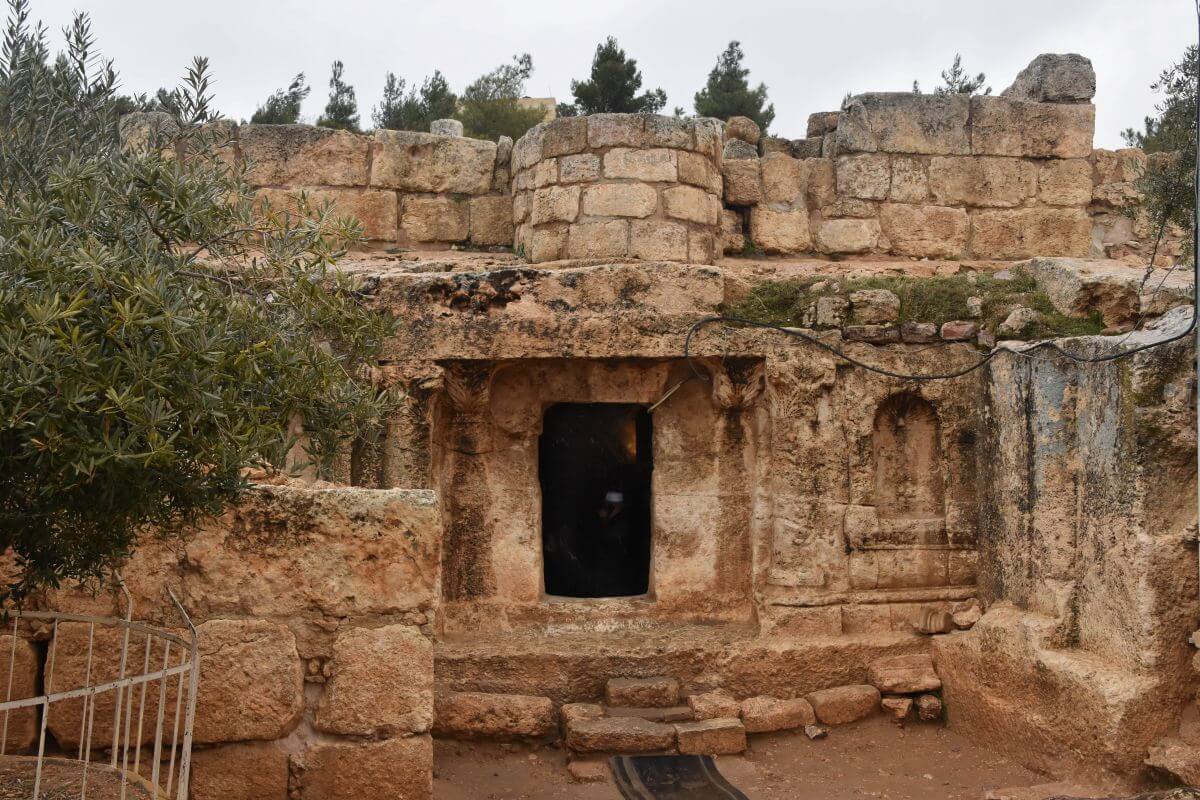
If you’re searching for unusual things to do in Amman, visiting the Cave of the Seven Sleepers offers a completely different experience from the city’s Roman ruins and bustling streets. This peaceful pilgrimage site is where one of the best-known stories from the Quran is believed to have taken place.
Known in Arabic as Ahl al-Kahf (‘People of the Cave’), the site is linked to the story of seven young Christian men who escaped Roman persecution by hiding inside a cave. According to Islamic tradition, God places the young men into a miraculous sleep lasting 309 lunar years. When they finally awoke and tried to buy food with centuries-old coins, the miracle was revealed. The story is also recognised in Christian tradition as the story of the Sleepers of Ephesus.
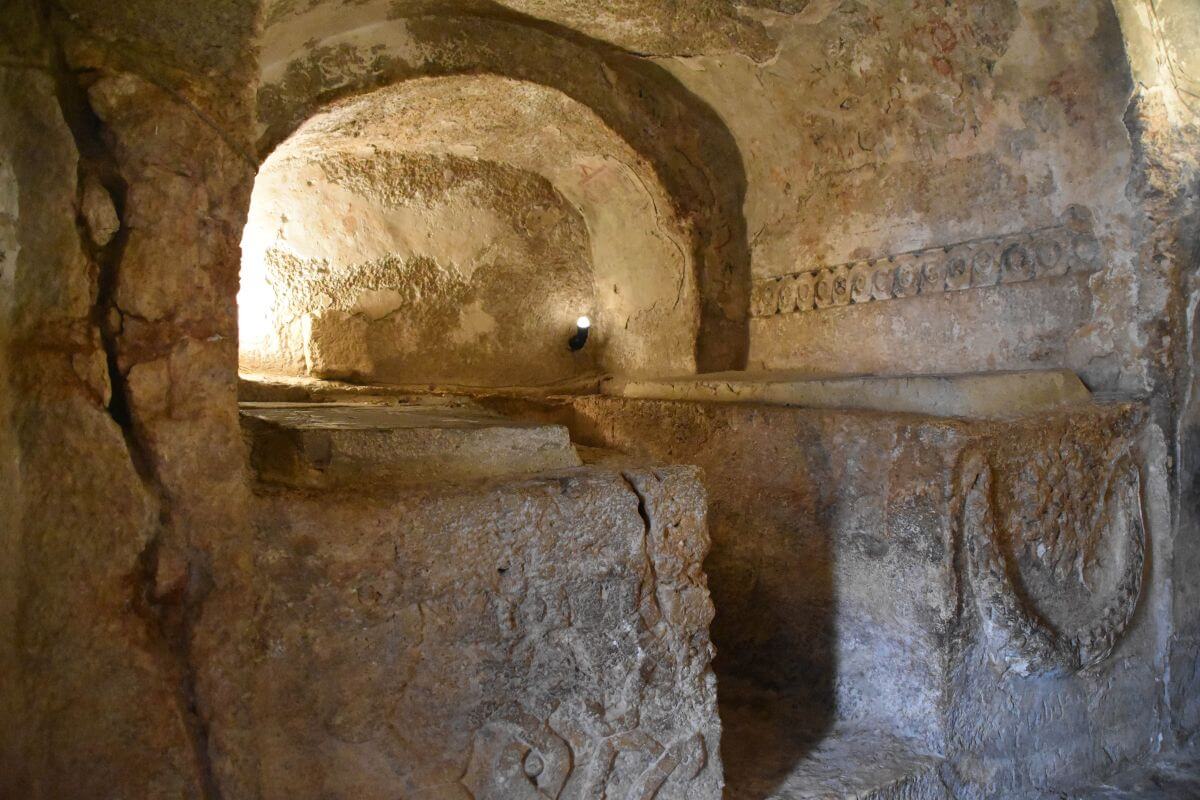
Archaeologists have discovered a rock-cut burial cave containing several sealed tombs with preserved human bones. Inside the cave, you can see ancient stone sarcophagi, faded Byzantine decorations, and a small niche traditionally believed to be the resting place of the faithful dog who guarded the sleepers. Above the cave are the remains of an early church, later converted into a mosque.
A PLACE THAT STILL SPARKS DEBATE
One fascinating detail is the cave’s south-west-facing entrance. Many believers, including our Jordanian guide, point out that it closely matches the description in Surah Al-Kahf, where the sun passes the cave without shining directly inside. Although this site is the best-known location in the Islamic world, similar claims also exist in Turkey, Syria, Tunisia, and even China.
GOOD TO KNOW:
- You can find the Cave of the Seven Sleepers at an archaeological site in Ar-Rajib, a village to the east of Amman. From the city centre, the easiest option is a chartered taxi, costing around 8 JOD each way.
- Entry to the Cave of the Seven Sleepers is completely free. The cave is open from 9 AM to 5 PM. Visits may pause briefly during prayer times.
- Women must dress modestly and cover their hair. During our February visit, Martina was given a free black gown, despite already wearing modest clothes.
7. Jordan Museum
Sitting in the modern Ras al-Ain district, this national museum shouldn’t be confused with the Jordan Archaeological Museum inside the Citadel. Opened in 2014, the Jordan Museum is the largest museum in the country, using modern displays to guide you through millions of years of history.
Exploring the Jordan Museum is one of the best things to do in Amman for culture lovers because it protects some of the world’s most important archaeological discoveries. Its greatest highlight is the collection of the 9,500-year-old Ain Ghazal statues. Equally remarkable are the famous Dead Sea Scrolls, written between the 3rd century BC and the 1st century AD. These include some of the oldest known biblical texts, together with hymns and prayers in Hebrew, Aramaic, Greek, and Nabataean. The museum also displays the unique Copper Scroll, the only scroll made from metal, displayed in its own climate-controlled gallery. Don’t miss the impressive Nabataean and Roman artefacts from Petra, including beautifully carved sculptures and architectural remains.
GOOD TO KNOW:
Allow at least two to three hours for the Jordan Museum. As of July 2026, entry costs 5 JOD and is NOT included in the Jordan Pass. The museum is fully wheelchair accessible and air-conditioned. It’s usually open from 9 AM to 5 PM, closed Tuesdays, and open Fridays from 3 PM to 6 PM. We planned to visit on a Tuesday, and embarrassingly, missed it before flying home. Don’t make the same mistake.
8. King Abdullah Mosque
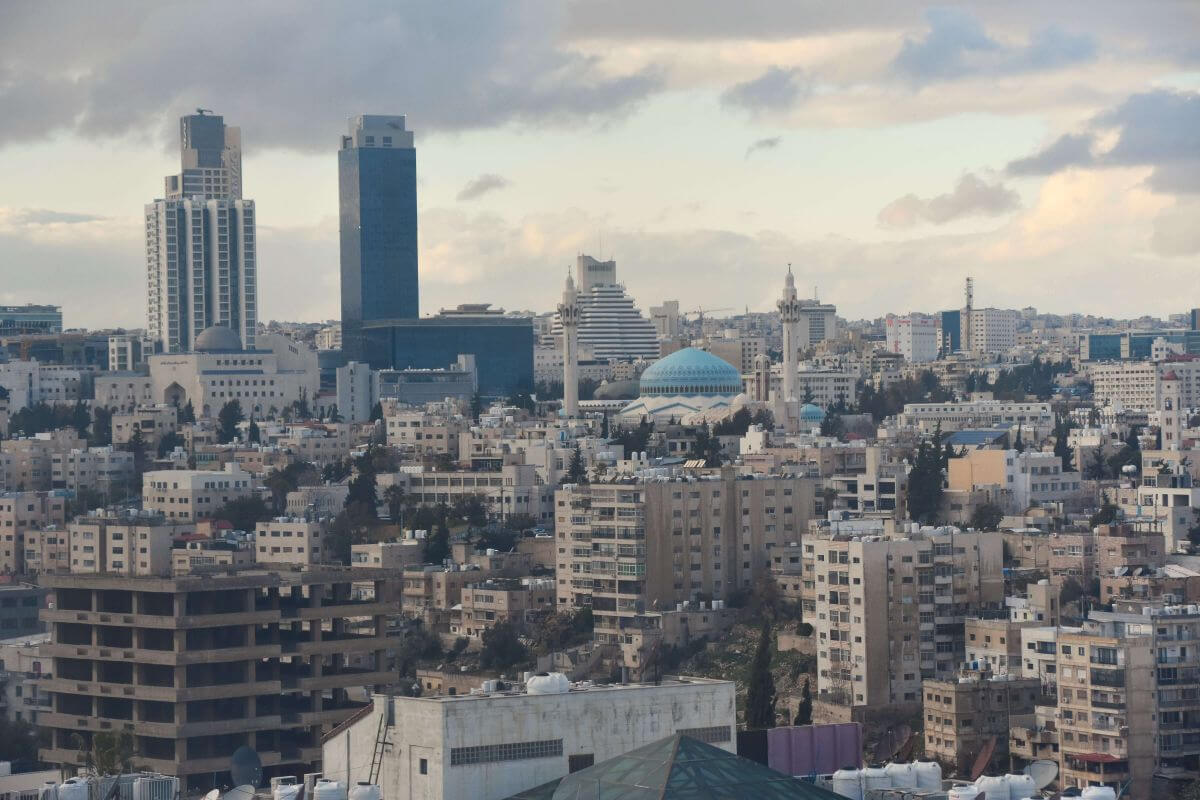
Completed in 1989 by King Hussein in memory of his grandfather, King Abdullah I, founder of the Hashemite Kingdom, it remains one of the capital’s most recognisable landmarks. Unlike every other mosque in the city, this is the only mosque in Amman that openly welcomes non-Muslim visitors. The King Abdullah Mosque offers a rare opportunity to admire Islamic architecture from the inside while learning more about the country’s royal heritage.
THE FAMOUS BLUE DOME
Known locally as the Blue Mosque, the building dominates the skyline with its enormous 35-m blue mosaic dome. Beneath it lies an octagonal prayer hall with no supporting pillars, creating a bright, uninterrupted space where approximately 3,000 worshippers can pray at once. The wider complex can accommodate more than 10,000 people, according to Universes Art.
GOOD TO KNOW:
- Entry to the King Abdullah Mosque costs around 2 JOD as of July 2026.
- Non-Muslims may usually visit from Saturday to Thursday outside prayer times, while Fridays are reserved for worshippers.
- Men should wear long trousers, while women receive a headscarf and an abaya free at the entrance.
- Inside the complex, a small Islamic Museum displays pottery, historic coins and manuscripts. You can also find artefacts belonging to King Abdullah I and models of important Islamic sites across the country.
9. Take an unforgettable day trip from Amman to Jerash

Some of the most rewarding things to do in Amman lie beyond the capital itself. Less than 2 hours away, you can visit one of the largest and best-preserved Roman provincial cities anywhere in the world. Often called the Pompeii of the East, the Jerash Ruins have beautifully preserved streets, temples, and theatres. It’s one of the country’s most impressive archaeological sites, which currently sits on Jordan’s UNESCO Tentative List.
Only around 52 km from the capital, Jerash blends Greek, Roman, Byzantine, and early Islamic history in one remarkable place. It deserves far more than a quick visit, which is why we’ve created a complete guide explaining everything you need to know before visiting Jerash Ruins.
READ MORE:

10. Explore Ajloun Castle

Around 45 minutes north of Jerash stands Ajloun Castle, dramatically located above rolling pine forests and olive groves. Built by one of Saladin’s generals, this 12th-century fortress was designed to defend the region from Crusader attacks while protecting an important trade route linking Damascus, Jerusalem, and Mecca.
If you’re planning your visit, don’t miss our detailed Ajloun Castle guide, where we share everything you should know before you go.
READ MORE:
GOOD TO KNOW:
- Entry is included with the Jordan Pass, offering excellent value if you plan to visit several historic sites. For the best experience, leave early, ideally around 8 AM, to avoid the hottest part of the day.
- The castle usually takes between one and two hours to visit, making it the perfect companion to Jerash on the same day. Together, Jerash and Ajloun Castle allow you to explore one of the world’s greatest Roman cities and the finest medieval Islamic fortress. Expect a day packed with history, spectacular scenery and unforgettable views. If you only have time for one excursion in Amman, this combination is difficult to beat.
11. Take a day trip to Umm ar-Rasas from Amman
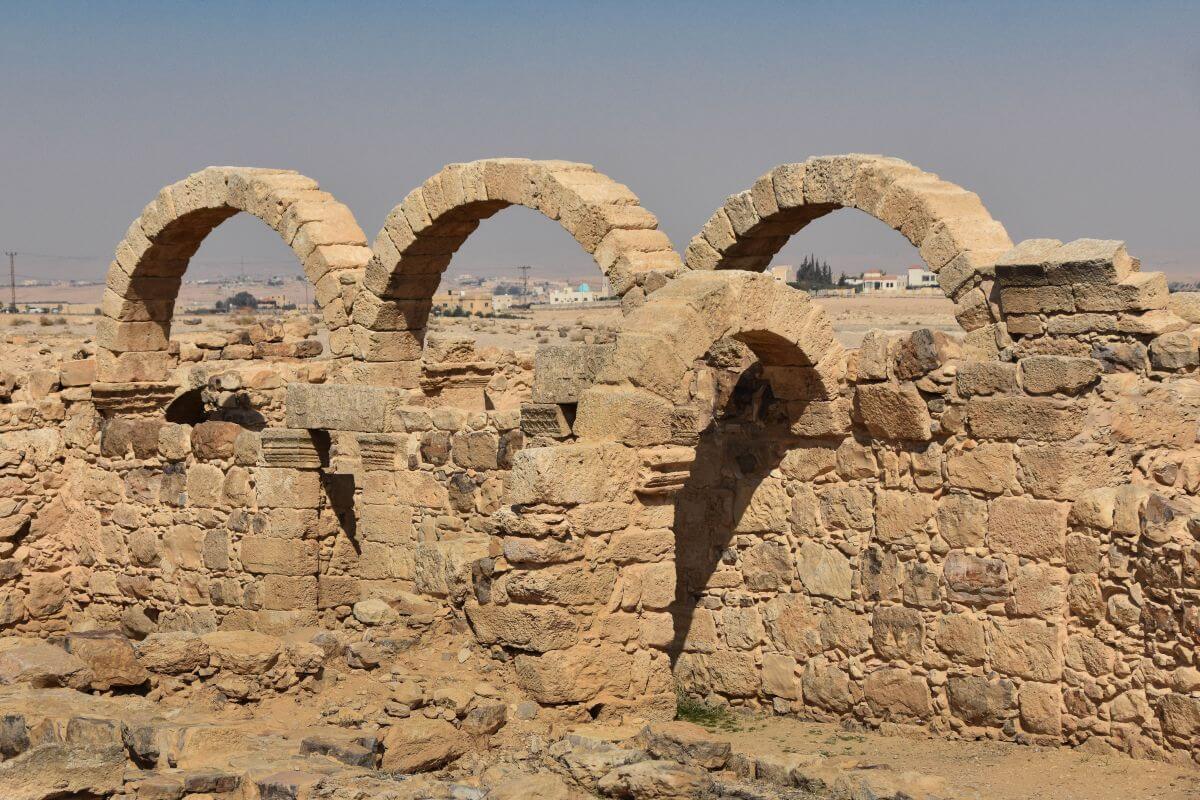
Around 1 hour and 20 minutes from the centre lies Umm ar-Rasas, a UNESCO World Heritage Site that almost every tourist completely overlooks. Yet, this remarkable archaeological site preserves one of the country’s richest collections of Roman, Byzantine, and early Islamic history. Today, the site is most famous for the Church of St. Stephen, which houses the largest perfectly preserved Byzantine mosaic floor in Jordan. This extraordinary masterpiece depicts dozens of ancient cities, including Jerusalem, Gaza, and Madaba.
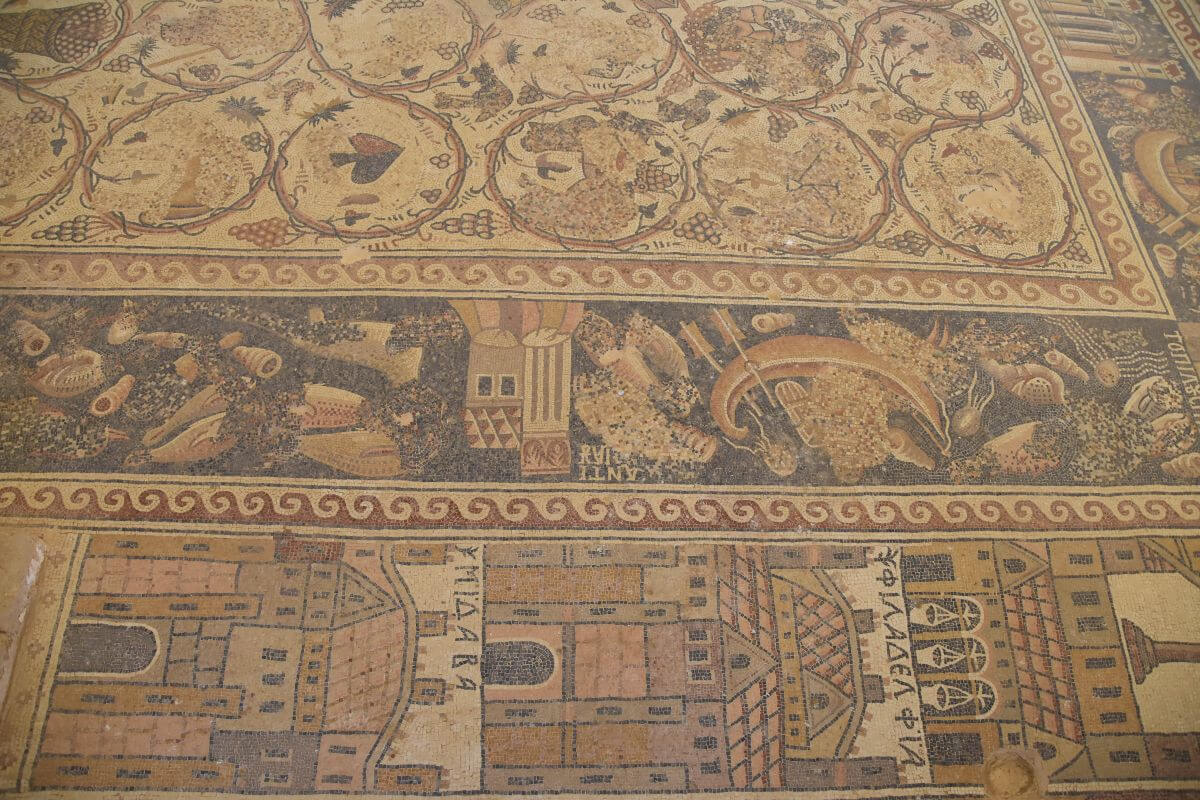
Here is an example of a breathtaking mosaic.
WHY WE RECOMMEND VISITING BEFORE YOUR FLIGHT
We visited Umm ar-Rasas on the morning of our flight home. After arranging a private taxi in advance, our driver waited while we explored the site before taking us straight to the airport. The location, only about 40 minutes from Queen Alia International Airport, makes this surprisingly convenient.
GOOD TO KNOW:
There is no public transport, so you will need a rental car or a pre-arranged driver. Avoid relying on Uber or local taxis from the ruins, as finding one can be difficult. Allow around four hours in total, including driving time and 1 to 1.5 hours to explore. As of July 2026, entry costs 3 JOD and is included in the Jordan Pass.
Free things to do in Amman, Jordan
12. Photograph some amazing murals
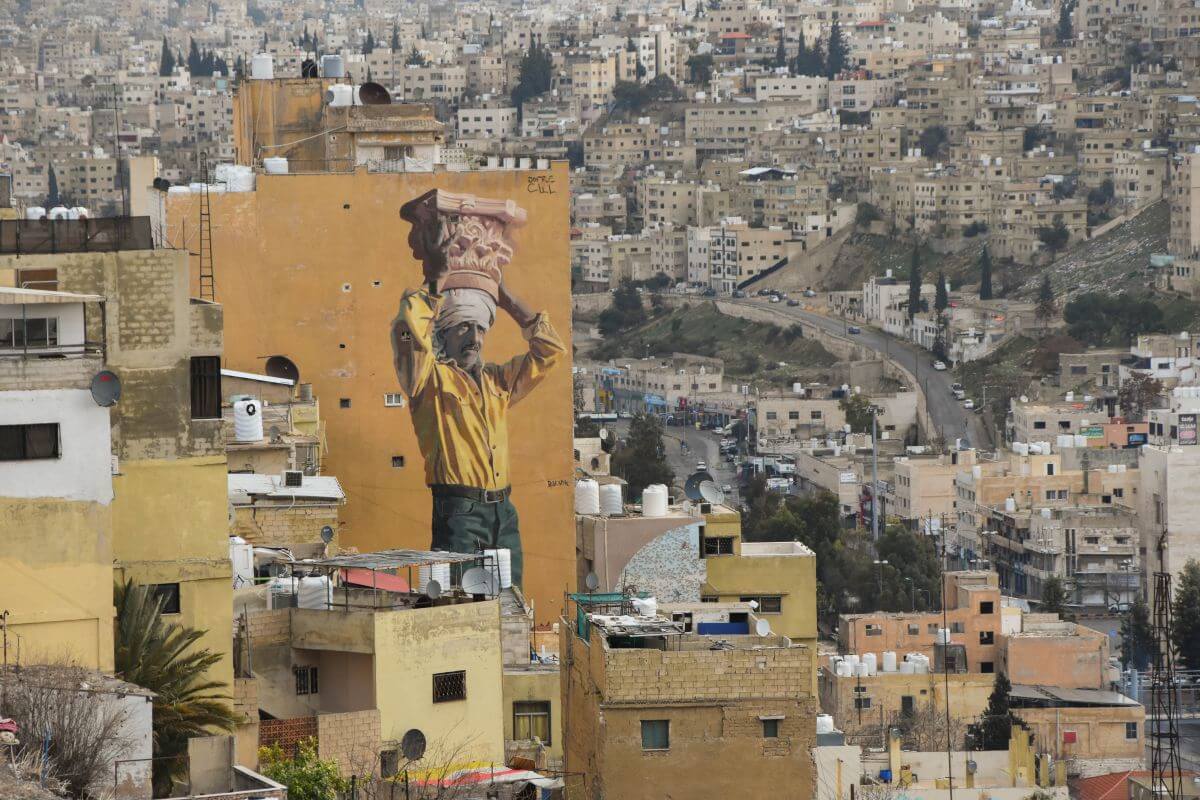
Look beyond the ancient ruins, and you’ll discover one of the most surprising attractions in Amman. Hidden among the city’s famous white limestone buildings is an enormous open-air art gallery, where towering murals turn ordinary streets into colourful works of art. Some cover entire buildings; others hide in quiet side streets. Together, they reveal a creative side of the capital that many visitors, including us, never expect to find.
DID YOU KNOW?
Street art began growing rapidly after the Arab Spring, when artists used public walls to express ideas and celebrate local identity. Today, these artworks have become an important part of the cultural scene, attracting art lovers and photographers to experience a different side of Amman.
One of the reasons these murals feel so different is the city’s unique landscape. Because the capital stretches across steep hills, artists can work on a much larger scale than almost anywhere else. A mural painted on one hillside can often be admired from another, creating enormous pieces that seem to become part of the skyline. Instead of viewing a painting from a few metres away, you may first notice it from hundreds of metres across the valley.
WHERE TO FIND THE BEST STREET ART
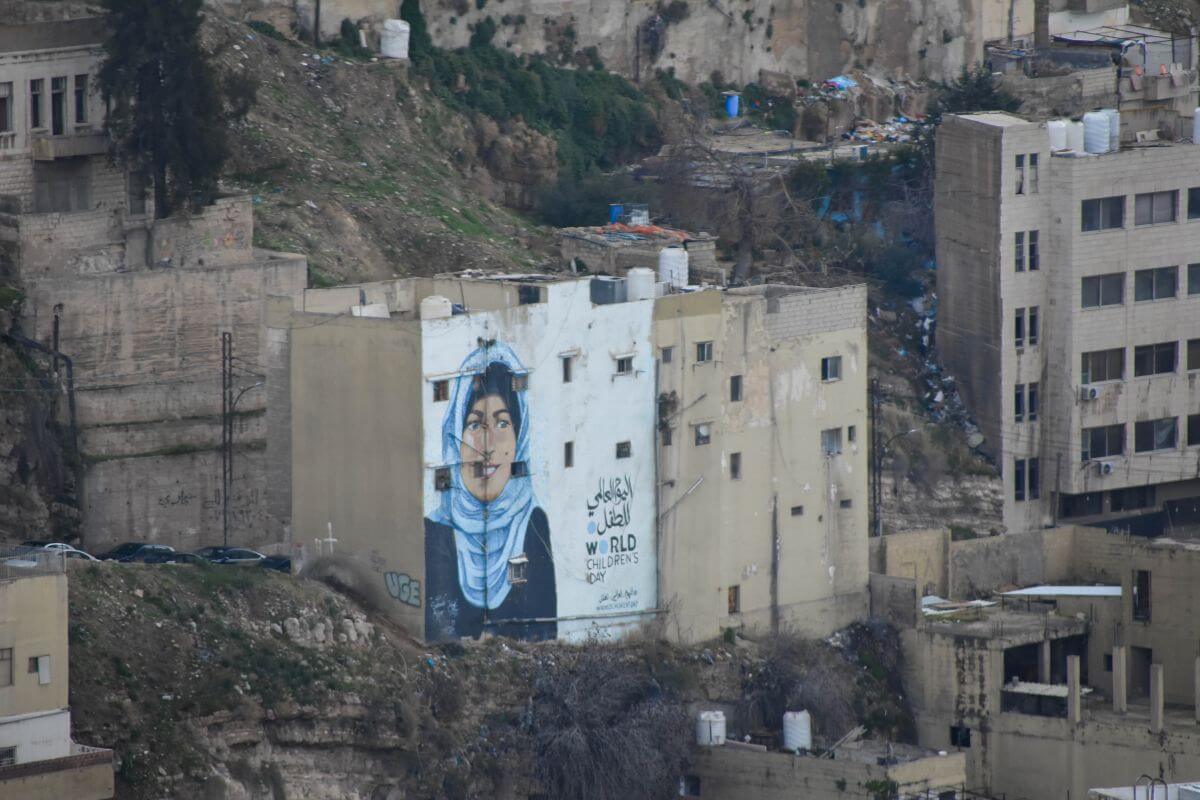
You will spot colourful murals while wandering around the city, but the greatest concentration is around the busiest tourist streets. Two of the best areas to explore are Jabal Al Weibdeh, Al-Kalha Stairs and Downtown.
If you enjoy exploring independently, follow the route of the annual Baladk Street Art Festival. This long-running event has helped transform blank walls into impressive public artworks by both local and international artists. Keep an eye out for the breathtaking calligraphy portrait by Lebanese artist Yazan Halwani and the striking geometric deer. There are also several powerful murals highlighting the country’s ongoing water shortage. Together, they show that some of the most memorable free things to do in Amman can be found simply by looking as you explore the streets.
13. Take a Walk Along Rainbow Street
Lined with restored stone villas, colourful cafes and independent businesses, this historic street has become one of the city’s best-known places to spend a slow afternoon or evening. Although officially named Abu Bakr Al Siddiq Street, almost everyone knows it by the name of the Rainbow Cinema, which once stood here.
Despite its popularity, don’t expect grand monuments or spectacular viewpoints. Instead, come here for a leisurely stroll, people-watching and soaking up a more contemporary side of the city. If you’re looking for unique souvenirs, keep an eye out for the antique and curio shops towards the western end of Rainbow Street. They offer something far more interesting than the mass-produced gifts found elsewhere. If you’re visiting on Fridays during the season, nearby Souk Jara is also worth exploring.
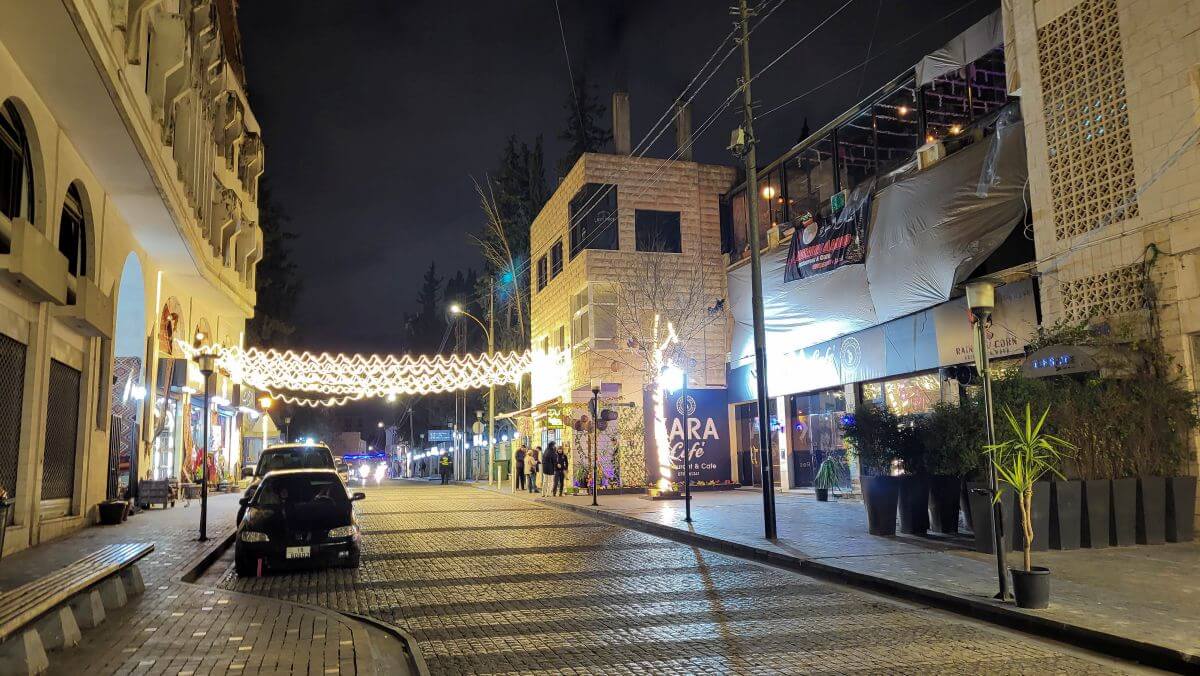
Rainbow Street at night
OUR EXPERIENCE
After receiving several recommendations from our hotel and other people, we visited on a February evening. Perhaps because of the cold weather, the atmosphere felt quieter than we expected. Although Rainbow Street was pleasant to walk along, we personally found the narrow streets of Downtown much more atmospheric and authentic. Even so, we still think Rainbow Street deserves a place on every itinerary, if only to experience one of the city’s oldest and most famous streets. Don’t leave without trying the legendary Al Quds Falafel or treating yourself to ice cream from Gerad, two long-standing local favourites.
14. Visit the Oldest House
Hidden among the busy streets of Downtown is one of the city’s most overlooked attractions. The Duke’s Diwan is a beautifully preserved townhouse which offers a fascinating look into everyday life during the 20th century. Completed in 1924, this building is the oldest intact townhouse in the city centre. Over the decades, it has served as the Central Post Office, the Ministry of Finance, and later the Haifa Hotel. In 2001, it escaped demolition thanks to Mamdouh Bisharat, known as the ‘Duke of Mukheibeh’, who leased the building simply to save it for future generations.
Today, you can wander through elegant rooms filled with authentic furniture, antique typewriters, vintage radios, and historical photographs. Don’t miss the arched balcony overlooking King Faisal Street. From there, the contrast between historic architecture and modern city life is especially striking.
OUR EXPERIENCE
Although it’s one of the best free attractions in Amman, we decided to prioritise nearby half-day trips that offered a better cultural experience. Even so, if you have limited time in the city centre, make sure you add this historic house to your itinerary – it’s well worth a visit.
GOOD TO KNOW:
As of July 2026, entry is completely free, and you don’t need a reservation. The house is usually open from Saturday to Thursday (10 AM to 5 PM) and closed on Fridays. If the hosts offer you tea or Arabic coffee, leave a small donation to support the preservation of this unique building.
Other things to do in Amman, Jordan
15. Eat at the legendary Hashem Restaurant in Amman
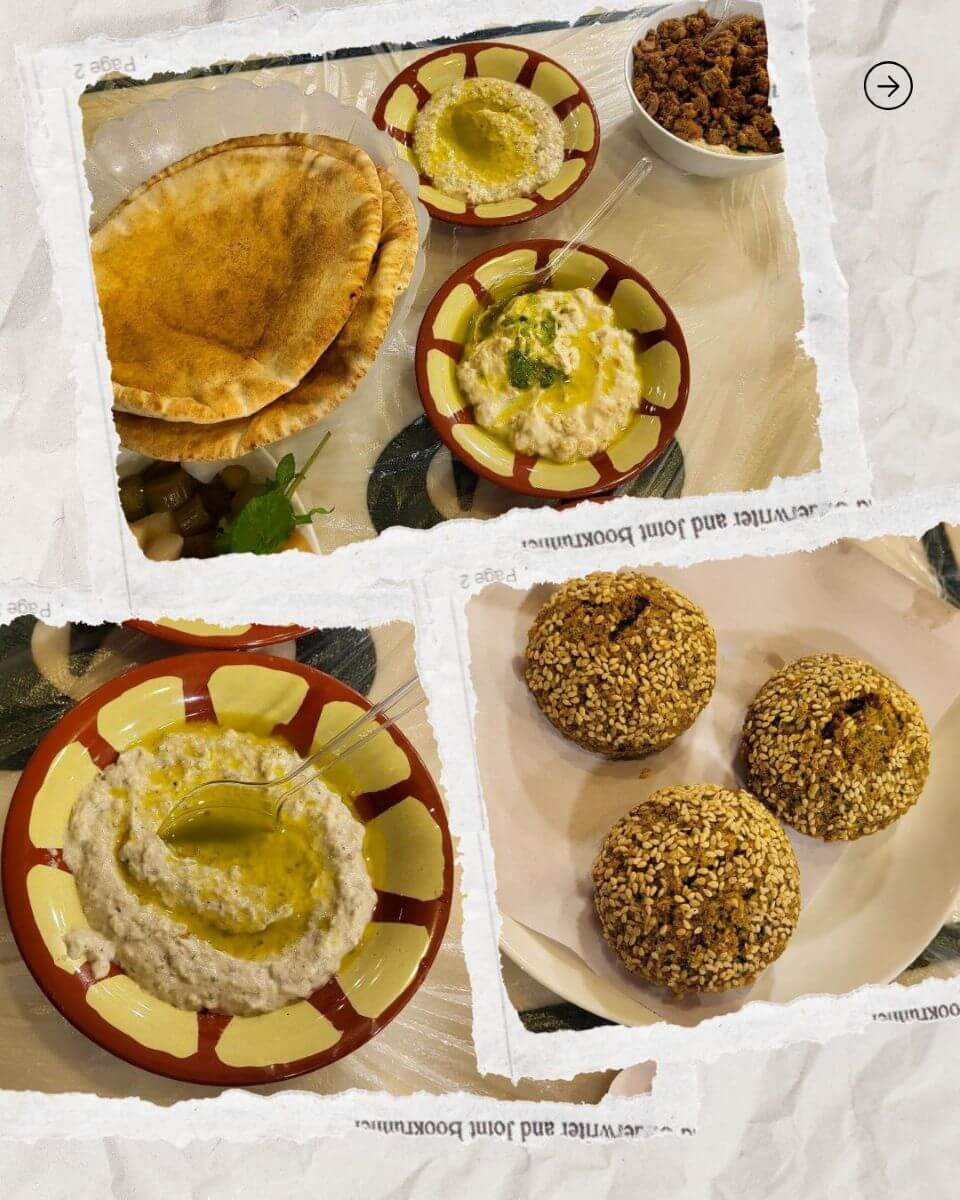
If you want to understand the real flavour of the city, forget fancy restaurants and head straight to one of its most famous food institutions. Hidden in the narrow streets of Downtown, Hashem Restaurant has been serving simple, traditional Jordanian dishes since 1956 and remains one of the most unforgettable places to visit. For many travellers searching for authentic things to do in Amman, eating at Hashem Restaurant becomes a highlight. This famous restaurant offers something more valuable than luxury – a genuine taste of everyday life.
Located in a pedestrian alleyway just off King Faisal Street, Hashem Restaurant sits only a short walk from the Roman Theatre. At first glance, it may not look impressive. There are basic tables, plastic chairs, no printed menu, and waiters simply call out the available dishes. Yet this simple setting is exactly what makes it special.
The restaurant has welcomed everyone from local families and backpackers to celebrities, wealthy visitors, and members of the Jordanian Royal Family. Here, everyone sits together, eats the same affordable food, and enjoys the same friendly atmosphere. It’s a rare place where social differences disappear over plates of hummus and falafel.
OUR EXPERIENCE
TIP:
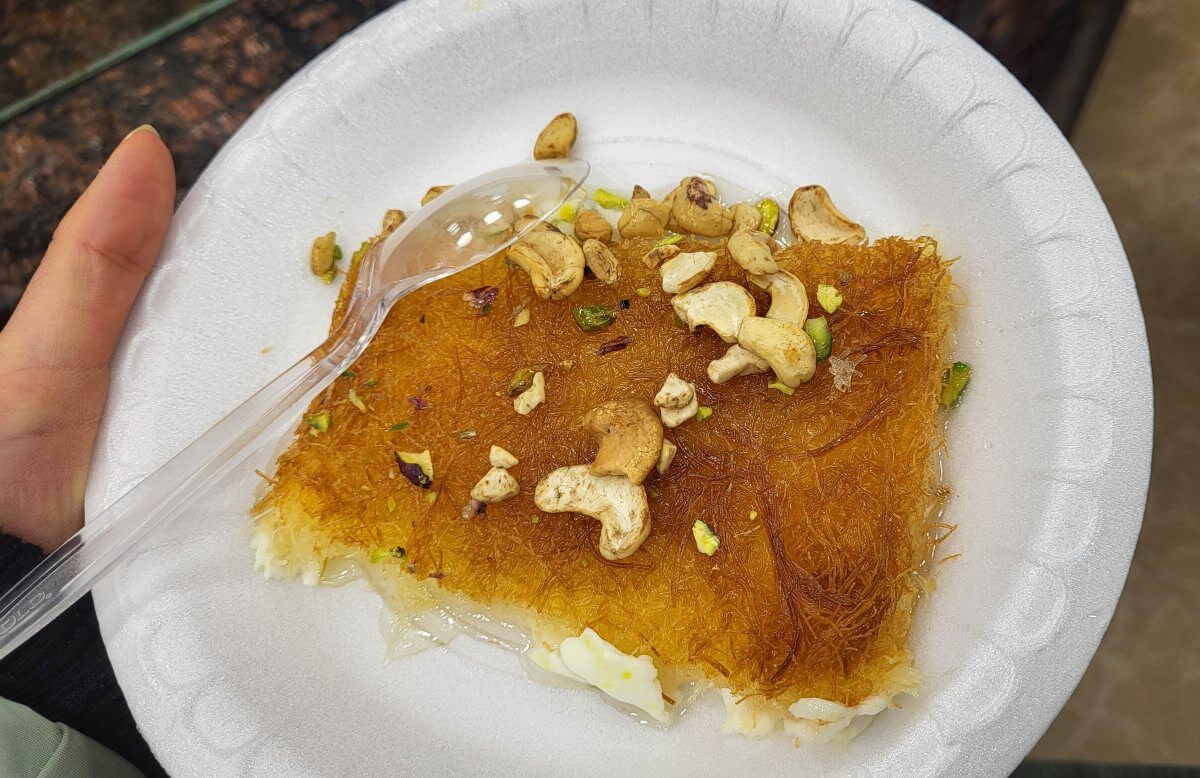
Kunafa – one of the sweetest ways to experience everyday life in Jordan
Although Hashem Restaurant doesn’t serve it, we highly recommend trying kunafa while exploring Downtown. This famous Jordanian dessert combines a crispy golden crust, melted cheese and sweet syrup into one unforgettable treat. Fresh kunafa straight from the hot pan is much more than dessert. It’s part of Jordanian social life, traditionally shared during celebrations, weddings, and family gatherings.
Recommended Amman Itineraries
1 Day in Amman:
- Amman Citadel
- Roman Theatre
- Hashem Restaurant
- Visit the Oldest House
- Historic Downtown and Rainbow Street
2 Days in Amman
- King Abdullah Mosque
- Photograph some amazing murals.
- Jordan Museum
- Royal Automobile Museum
- The Cave of the Seven Sleepers
3 Days in Amman
- Take a Day trip to ancient Jerash (UNESCO)
- Explore nearby Ajloun Castle
BONUS TIP: Explore Umm ar-Rasas archaeological site before flying home from Amman Queen Alia International Airport (UNESCO).
Now you have a complete guide to the best things to do in Amman, Jordan.
Thank you for staying with us until the end! If you’ve enjoyed this article, please consider sharing this post to extend its reach.
Pin this guide to best things to do in Amman, Jordan for later so you don’t lose it!
YOU MAY ALSO ENJOY: