A palace with onion domes, grand banqueting rooms, and stories filled with royal drama is probably not what you expect to find on the English seaside. Yet, the Royal Pavilion in Brighton does exactly that. It feels bold, extraordinary, and slightly unreal, as though someone lifted it from another world and placed it beside the coast. From the moment you see it, questions begin to appear. Why was such an unusual building created here? What inspired a style so different from anything else in Europe at the time? In this guide, you’ll discover its secrets, history, and highlights. We also cover practical tips that help you turn an ordinary trip to Brighton into a memorable experience.
What is the Royal Pavilion in Brighton and why is it famous?
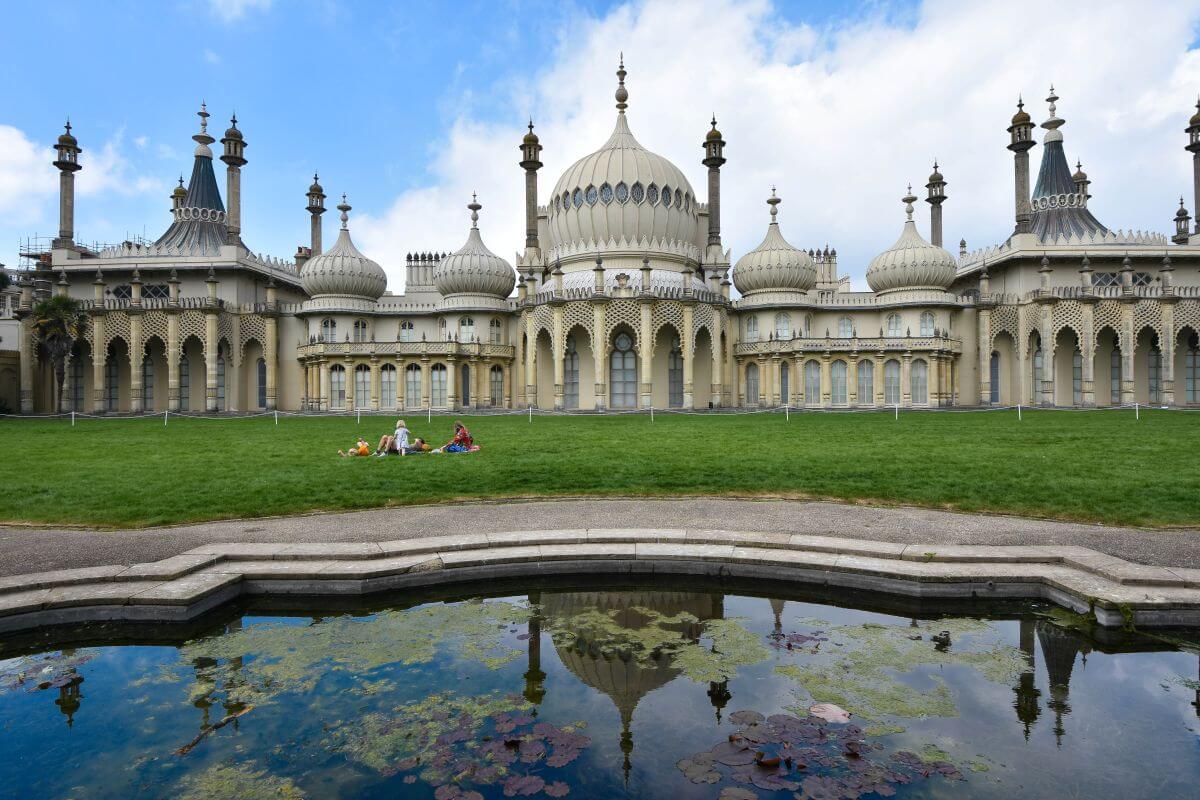
The Royal Pavilion in Brighton is famous for its distinctive blend of Indian-inspired exterior and Regency-era Chinese interior design. Originally built as an opulent seaside palace for the Prince Regent (King George IV), the landmark represents 19th-century British exoticism and royal history. Today, this Grade I listed building operates as a public museum. It also remains the city’s most unforgettable symbol and one of the top attractions in Brighton.
Short History of the Royal Pavilion in Brighton 

Long before Brighton became known for weekend breaks, beach crowds, and colourful seafront, this extraordinary building changed the future of the town forever.
The story began in 1783 when George, Prince of Wales (future King George IV), first visited Brighton at the age of 21. At that time, Brighton was transforming from a small fishing town into a fashionable seaside resort thanks to his uncle. Prince Henry, Duke of Cumberland, enjoyed the town’s gambling houses, fine dining, entertainment, freedom, and relaxed social life. This strongly influenced the young prince. Doctors also advised the prince that the sea air and seawater could help relieve his painful gout. This gave him another reason to escape London and spend time by the coast.
ORIGIN

In 1786, while facing criticism over his expensive lifestyle in London, the prince rented a small farmhouse. The location gave him distance from court life and allowed him a secret relationship with Maria Fitzherbert. The historical records explain how George privately married her despite laws preventing members of the royal family from legally marrying a Roman Catholic. This hidden romance became one of the key reasons why Brighton matters so much to him.
After purchasing a seaside lodging house and the surrounding land, the first major transformation arrived. The Royal Trust notes that architect Henry Holland redesigned the farmhouse into the elegant Marine Pavilion. Holland introduced fashionable neoclassical interiors inspired by French style. He created stylish rooms for dining, entertaining, and relaxing. As George’s tastes became more extravagant, the estate continued to expand. New conservatories, dining areas, riding schools and stables appeared. Architect William Porder introduced Indian-inspired details, which hint that the Pavilion would become more than a simple seaside retreat.
TRANSFORMATION

Between 1815 and 1823, architect John Nash completely redesigned the Pavilion into the palace you recognise today. Side information panels explain that Nash added onion domes, minarets, curved roofs, and exotic details to match George’s extravagant taste. The architect also introduced groundbreaking engineering methods for the early 19th century. These methods allowed the grand ceremonial rooms to feel open, dramatic, and unlike anything else in Europe at that time. Inside, Chinese-inspired interiors with dragons, chandeliers, and richly coloured banqueting rooms amazed guests. The design reflected Britain’s growing fascination with South Asian art and architecture during the Regency era.
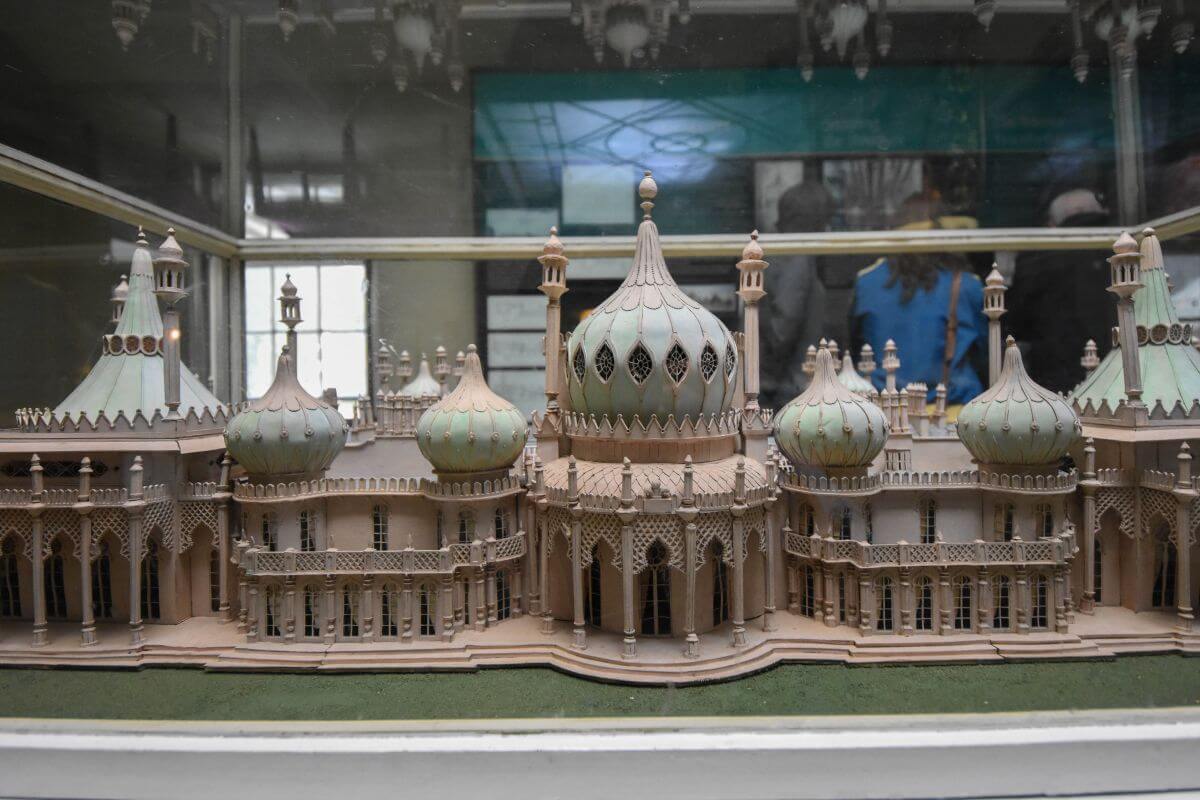
Many visitors compare the building to the Taj Mahal because of its striking architecture. However, the Brighton Pavilion served as a royal pleasure palace rather than a mausoleum.
ROYAL DEPARTURE
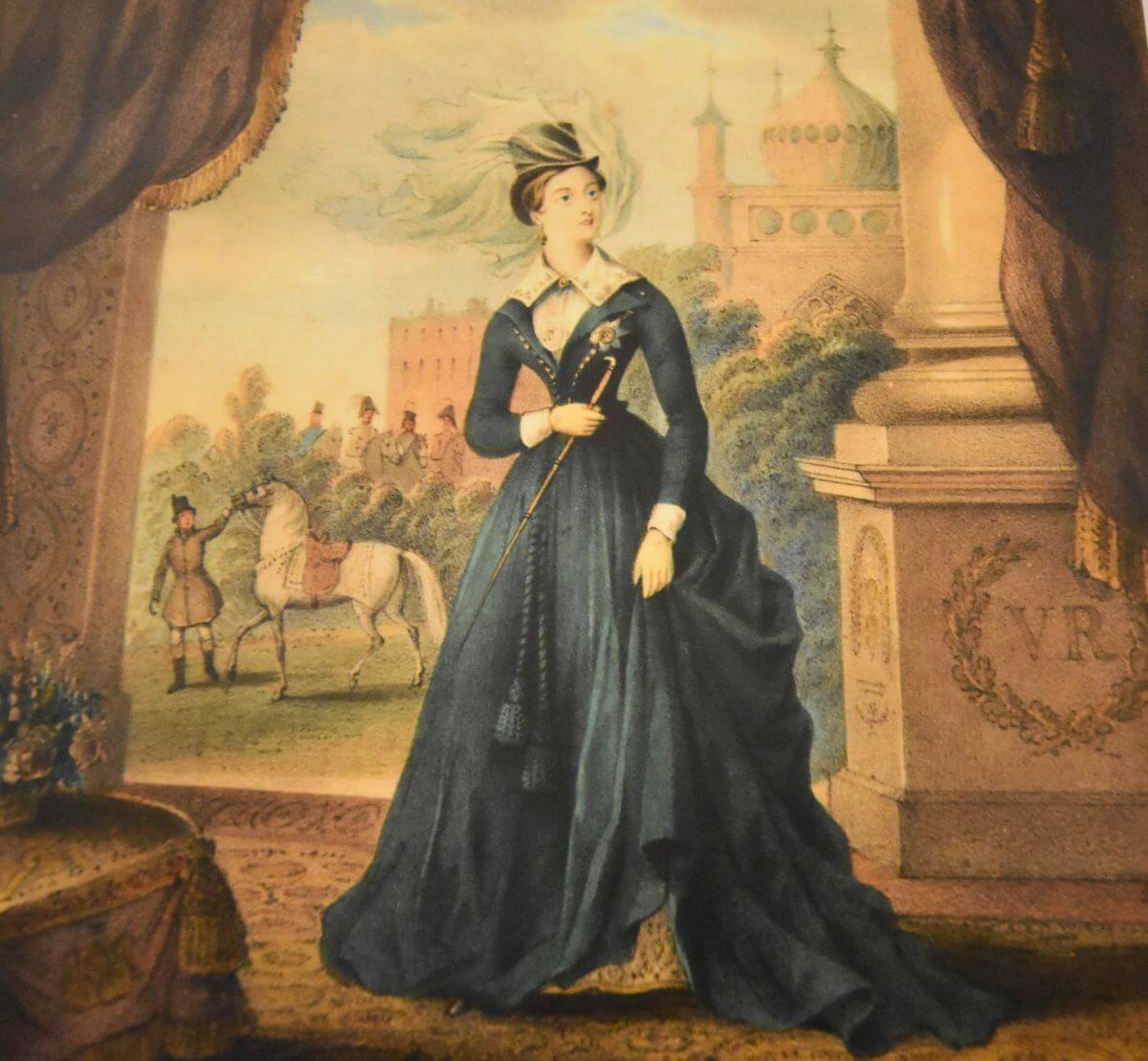
After George IV died in 1830, King William IV continued using the palace during visits to Brighton. Queen Victoria, however, strongly disliked the lack of privacy. The arrival of the railway in the 19th century turned the city into an even busier destination, attracting crowds that removed her privacy. Instead, she stopped using it and chose Osborne House on the Isle of Wight as her preferred seaside residence. According to the information panels on the side, the government agreed to sell the building to the town in 1850 for £53,000. This decision saved the Royal Pavilion from decline and possible demolition. It also allowed the city to protect one of its most significant landmarks.
CIVIC OWNERSHIP, WORLD WAR I, AND CURRENT ROLE

Since then, the building has lived many different lives. The former royal stables became the Brighton Dome concert venue. During the First World War, the palace served as a hospital for Indian soldiers. This added another important layer to its connection with Indian culture and history. Since the Second World War, the city has carefully restored the interiors and furnishings. Today, this palace in Brighton operates as a public museum managed by the Royal Pavilion & Museums Trust.
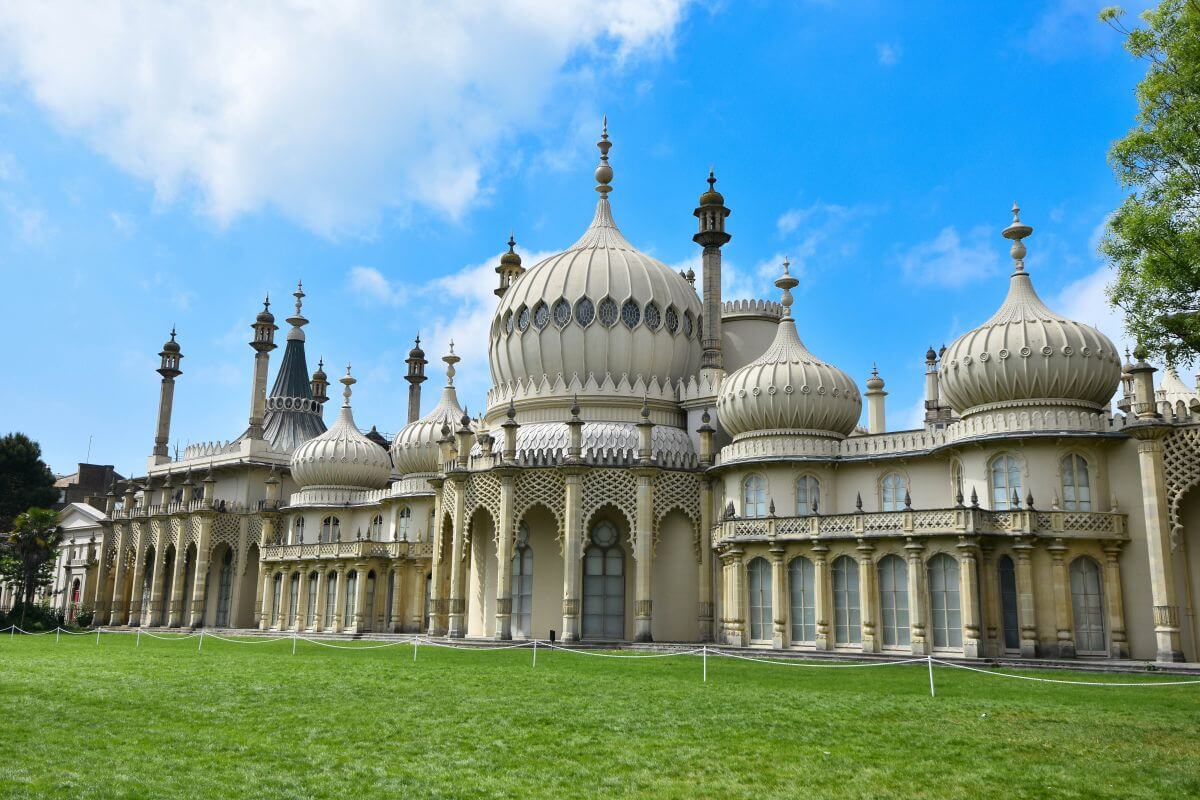
More than two centuries after George’s first arrival in Brighton, the palace still stands as one of Britain’s most remarkable landmarks.
Inside the Royal Pavilion in Brighton
1. Long Gallery

The moment you step inside the Long Gallery, your eyes begin to play tricks on you. Walls seem alive with twisting bamboo. Marble glows like polished stone, yet somehow feels too perfect. Strange figures stare from the corners as though they are about to move. In the Royal Pavilion in Brighton, the Long Gallery was designed to amaze guests and confuse your senses in the most entertaining way possible.
This was not simply a corridor between rooms. Every wall, arch, and decoration encourages you to question what is real and what is simply part of George IV’s fantasy world. It was part theatre set, part fantasy, and part royal mind game created for one purpose – to impress every visitor who entered.
A FANTASY VERSION OF CHINA
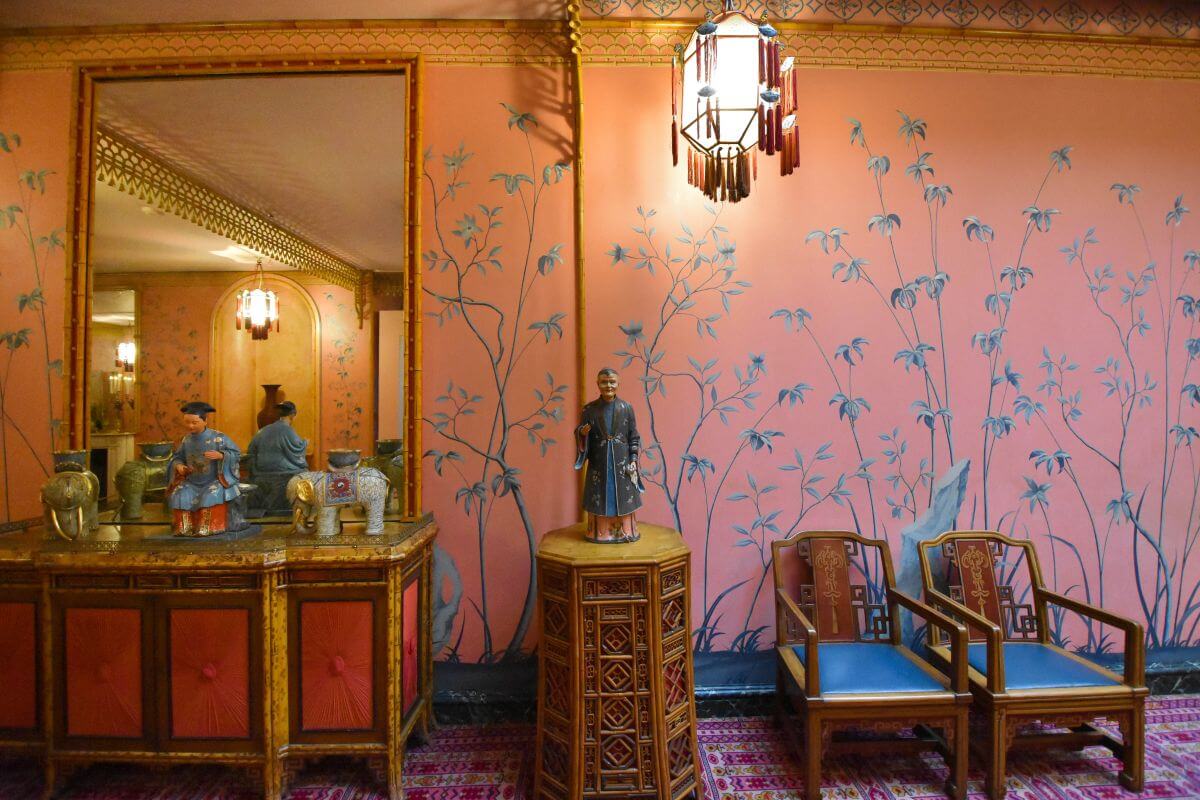
The Royal Pavilion Audio Tour explains that the designers wanted this remarkable gallery to feel like a Chinese garden at sunset. There was only one problem – none of them had ever actually seen bamboo growing in real life. Instead, artists invented their own version and painted it across the walls. As you walk through the Long Gallery, the bamboo bends, twists and flowers. It even produces berries in ways that real bamboo never could.
This unusual style perfectly captures the spirit of Chinoiserie, a European fashionable interpretation of China during the 18th and early 19th centuries. According to the Royal Pavilion Audio Guide, George inherited his fascination with this style from his mother, Queen Charlotte. The result was not an authentic Chinese interior, but rather an extravagant English fantasy shaped by imagination, theatre, and luxury.
NOTHING IS QUITE WHAT IT SEEMS
One of the most fascinating things about the Long Gallery, for us, is how cleverly it hides its illusions. Almost everything that appears exotic or expensive is actually something else. The bamboo decorating the arches and ceilings is not bamboo at all. Craftsmen carved ordinary English beech wood and painted it to imitate bamboo canes. Even the marble inside the alcoves is fake. Artists just painted plaster to create the illusion of polished stone.
This obsession with illusion appears throughout the building, but the Long Gallery pushes it further than almost anywhere else. George IV loved confusing appearances, blurring the line between fantasy and reality. Guests entering the gallery would never feel completely certain about what they were seeing. That uncertainty became part of the entertainment.
LOOK UP, SLOW DOWN, AND WATCH THE DETAILS

In the centre of the gallery hangs one of the room’s most overlooked treasures – a massive chandelier shaped like a lotus flower. In Eastern symbolism, the lotus represents beauty, spirituality, and forgetfulness – perfectly suited to a palace built for pleasure and escape. Above it, painted onto the glass ceiling laylight, a Chinese thunder god beats his drum across the sky.
Don’t rush through this room too quickly. The Long Gallery functioned as a pre-dinner promenade space where guests displayed fashion and social status. Audio interpretation confirms this was a central part of Regency social performance. Visitors would show off expensive clothes while quietly judging who else had been invited. Look carefully for the small Chinese clay figures lining the room. Their heads were made separately from their bodies, allowing staff to secretly tap them from behind so they nodded in greeting as visitors walked past. Small details like this turned an evening at the Pavilion into a theatre. It was playful and wonderfully strange – exactly what George IV wanted his visitors to remember long after leaving Brighton.
2. Banqueting Room
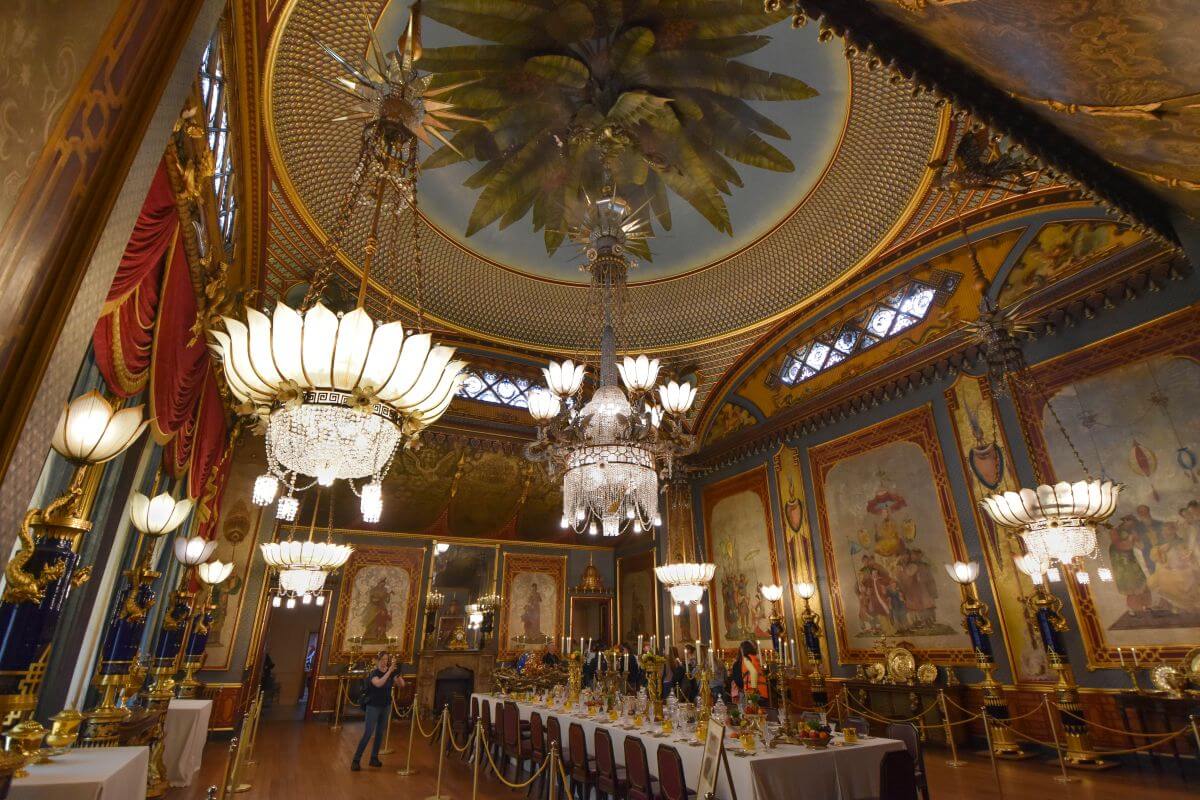
Few rooms in Britain know how to impress like this one. The moment you cross the doorway, the Banqueting Room explodes into colour, light, dragons, mirrors, and glittering crystal. Your eyes hardly know where to look first.
This extraordinary space was designed by artist Robert Jones to overwhelm guests before a single course even reached the table. The room reflects not only George IV’s obsession with luxury but also his fascination with Asian-inspired art and design. Red and gold dominate the interior (colours strongly associated with royalty and power in China), while dragons appear in almost every direction you turn.
As you walk further inside, it becomes easier to understand why guests once described the room as a ‘diamond blaze’. Imagine a huge dining table surrounded by richly uniformed footmen waiting to guide guests to their exact seats. Candlelight flickered across mirrors, silver, and crystal. Look closely, there are hundreds of dragons hidden throughout this room. Some appear on chandeliers, others decorate lampstands, furniture, walls, and ceiling details. Smaller chandeliers even hang from flying birds inspired by Chinese mythology.
DRAGON CHANDELIER

Everything inside the Banqueting Room in the Brighton Pavilion leads your eyes upwards towards a giant chandelier hanging beneath the dome. The Brighton Museum and the audio tour highlight that the chandelier is over 9 m long (27 ft) and weighs almost one ton. The entire chandelier contains around 15,000 sparkling crystals.
The detail becomes even stranger the longer you study it. Six silvered dragons climb upwards around the chandelier, holding lotus-shaped lamps in their mouths. When lit by oil flames, the dragons appeared to breathe fire across the room. Above them, banana leaves cover the dome ceiling, creating the illusion of an exotic Eastern sky. Hidden ventilation holes behind large copper leaves allowed smoke from candles and oil lamps to escape through the roof.
DID YOU KNOW?
According to the audio guide, the decoration of the Banqueting Room alone reportedly cost around £46,000 (close to £1 million today). George’s extravagant projects eventually left parliament to repeatedly rescue him from enormous personal debts.
DINING
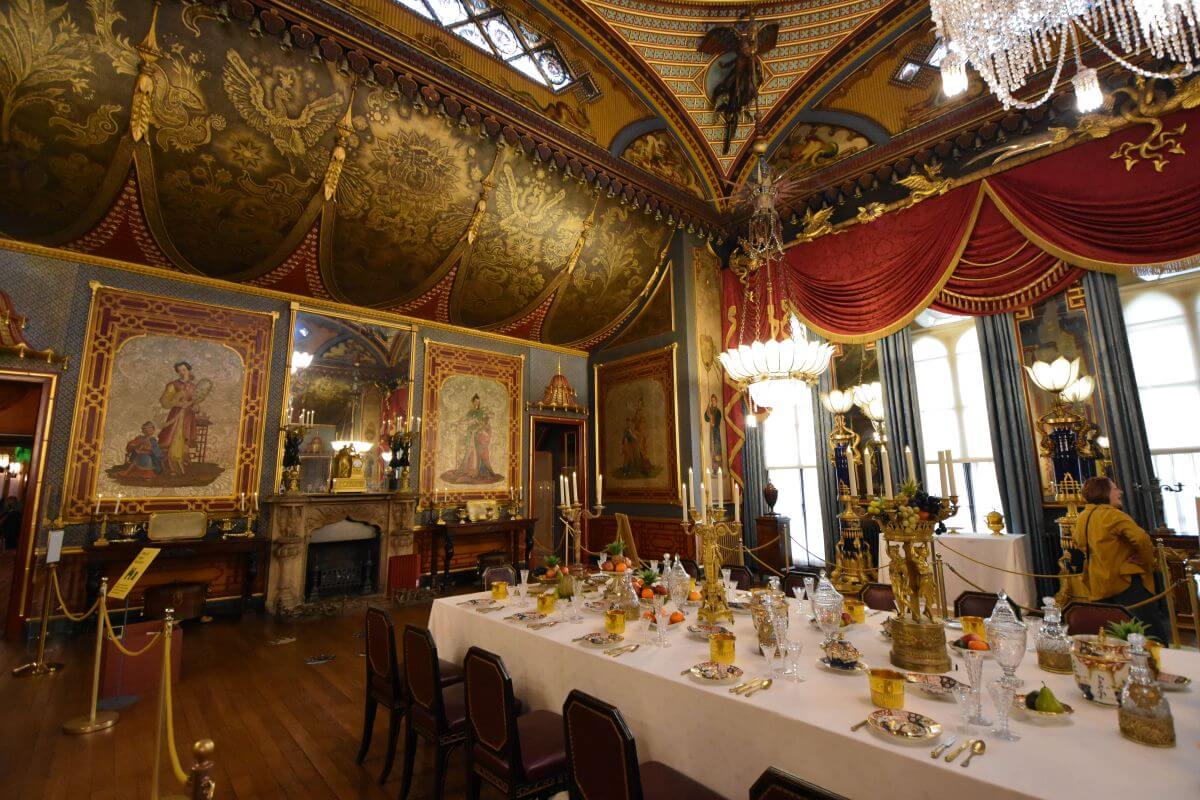
The Brighton Museum website explains that guests usually dined at 6 PM and could receive up to 70 elaborate dishes. Today, the massive mahogany table displays the dessert course, considered the most luxurious part of the meal. It requires expensive imported ingredients and specialist confectioners. The table setting includes a porcelain dinner service from 1810. Together with fruit baskets and ornate dessert stands, they demonstrate how important display and status were during the Regency period.
One detail perfectly reveals George IV’s personality. The Pavilion audio guide describes the tradition that placed the monarch at the head of the table at Buckingham Palace. Here, however, George preferred to sit directly in the middle so he could hear every conversation around him. Even during dinner, he wanted to remain at the centre of attention.
3. Great Kitchen
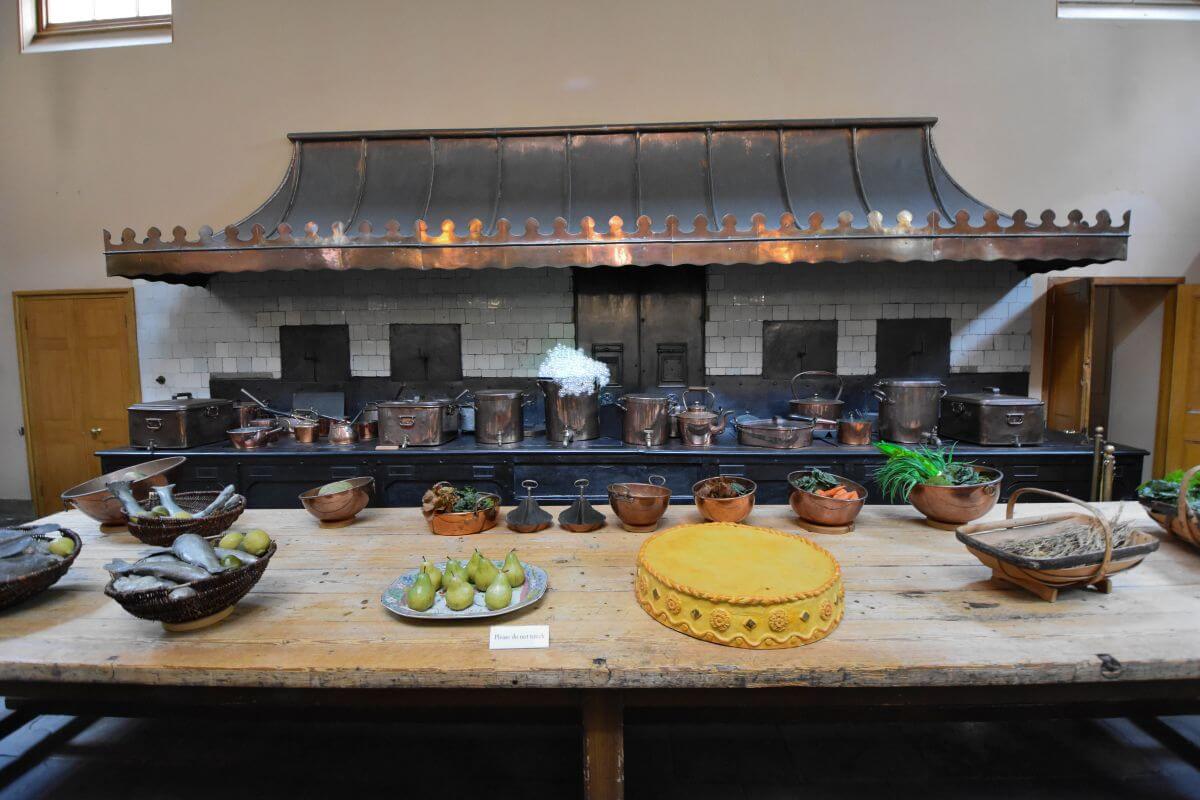
Most royal kitchens stay hidden behind closed doors, far away from important guests. This one did the exact opposite. The heat from enormous fires, the smell of roasting meat, and busy chefs became part of the royal performance.
BUILT FOR A KING OBSESSED WITH FOOD
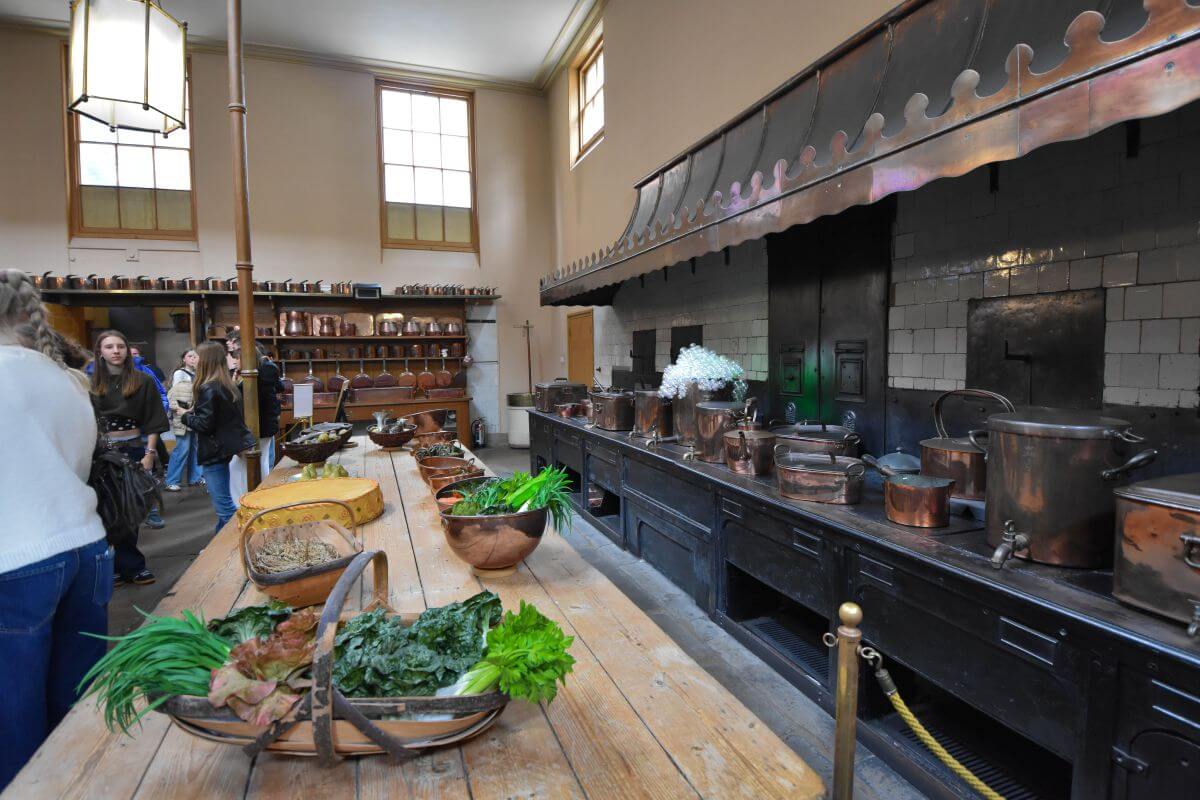
According to the Royal Pavilion & Museums, the Great Kitchen was one of the first rooms completed during John Nash’s transformation of the Pavilion. George IV cared deeply about food and dining, and the scale of this kitchen only proves it. The room sits unusually close to the main state rooms, allowing servants to move dishes quickly through the adjoining Table Decker Room. This way, food remained hot and beautifully preserved.
George IV also enjoyed personally guiding important guests through it. The king took enormous pride in this kitchen because it perfectly reflected his personality. It represented everything he admired most: luxury, French cuisine, modern technology, and theatrical display. This also explains why the room feels so decorative compared with ordinary working kitchens of the period. Even here, George wanted guests to feel impressed.
FRENCH INFLUENCE
The influence of France is evident everywhere within this space. During the Regency era, French cuisine represented the height of sophistication. George wanted his kitchens to compete with the finest royal households in Europe.
The Pavilion records explain that, in 1816, the king hired the famous French chef Marie-Antoine Carême to cook for him in London and Brighton. Carême was considered one of the greatest chefs in Europe, making his arrival at the Pavilion a major achievement for George. A copy of one of Carême’s menus for royal guests still survives in the kitchen today. The French chef created it for a visit by Grand Duke Nicholas of Russia. Look closely at the menu; it reveals an extraordinary scale of royal dining. Banquets included dozens of complicated dishes prepared with expensive imported ingredients and strict presentation standards.
A KITCHEN FAR AHEAD OF ITS TIME
The Royal Pavilion & Gardens website outlines that this was one of the most technologically advanced kitchens in Europe. In the early 19th century, these innovations were remarkable. The giant cooking ranges used steam heating, while a huge smoke jack hidden inside the chimney turned roasted spits automatically using rising hot air from the fires below. In the centre of the room stood an oval steam table where dishes stayed warm before service. This was essential when preparing massive royal banquets, serving up to 70 dishes.
The kitchen also included pumped water from a nearby well and large ventilated spaces. It also had unusually bright working conditions rarely seen in kitchens of this period. Decoration also remained just as important. Chinese-inspired details appear everywhere. You can spot pagoda-shaped cooker hoods, bamboo-style iron columns, and palm-leaf details supporting the ceiling.

Once the chefs finished preparing dishes, servants carried them into the Table Deckers Room. Here, specialists carefully arranged desserts and decorations before the food finally entered the Banqueting Room for royal display.
4. Banqueting Room Gallery

After the glittering dragons, blazing chandeliers, and endless courses of rich food, the Banqueting Room Gallery feels surprisingly calm. Soft green walls replace the heavy reds and golds (which you can see everywhere else). This created a quieter atmosphere where guests could finally breathe, sit back, and recover from the overwhelming dinner. The Banqueting Room Gallery offered an important pause between dining and the next stage of the evening’s entertainment.
According to the Royal Pavilion Audio Guide, this space formed part of the original house. George first rented it when he arrived in Brighton to visit his uncle, the Duke of Cumberland, and try the fashionable sea cure. What began as a modest four-room farmhouse slowly expanded into one of Britain’s most extraordinary royal palaces.
5. Saloon

The room feels almost unreal at first glance. Gold flashes across every surface, and deep red silk glows beneath the chandeliers. The painted ceiling seems to rise far higher than the walls should allow.
After moving through the quieter spaces of the palace, stepping into the Saloon feels like walking directly into George IV’s imagination. It feels extravagant, theatrical, and slightly excessive in exactly the way the king intended. George IV used it as a formal reception room where he personally greeted important guests before leading them towards dinner. Nothing inside the Saloon was accidental. Every colour, mirror, chandelier, and decorative detail existed to display his royal power, wealth, and status.
The official website and the Pavilion audio guide explain that this was the grandest room inside the palace. It was also one of the oldest surviving parts of the building. Architect Henry Holland created the original rotunda here in 1787 during the first expansion of George’s farmhouse. Years later, John Nash transformed the exterior by building a cast-iron framework around the structure, allowing the palace to grow into the extraordinary Indian-inspired fantasy. Inside, the Saloon drew inspiration from another source entirely.
EXTRAVAGANT STYLES
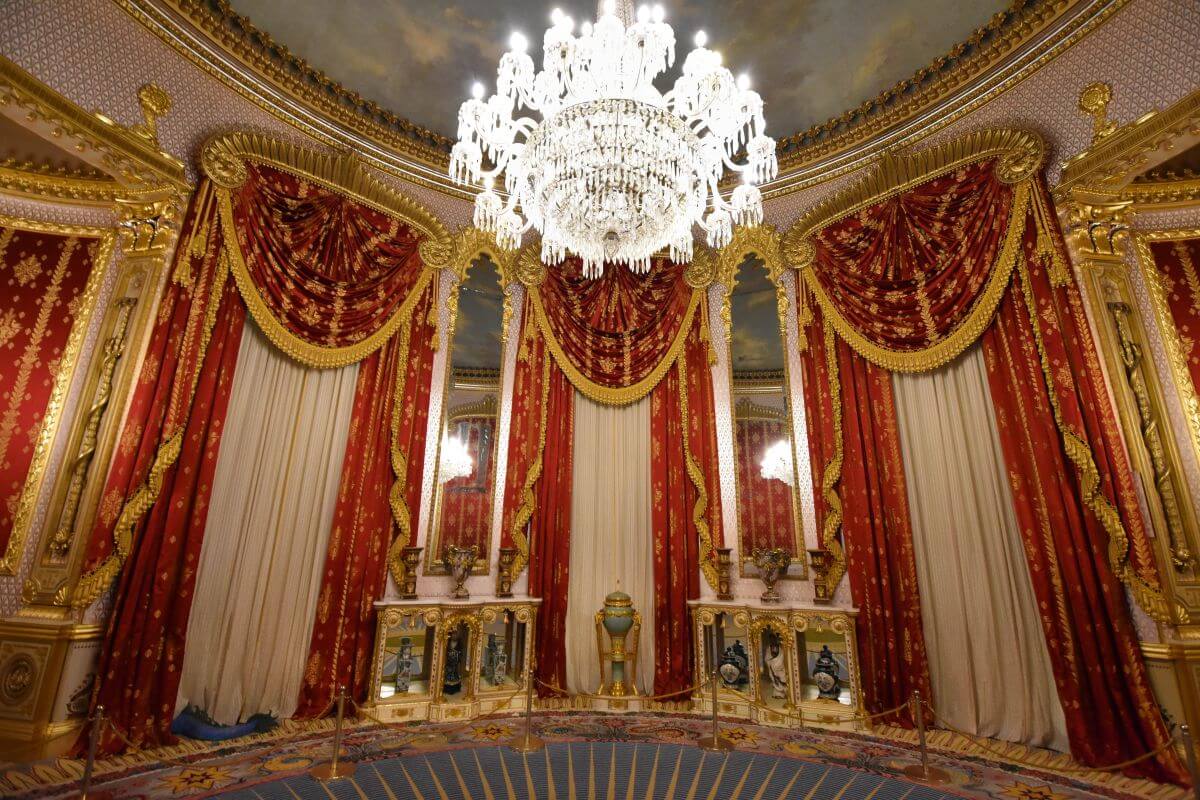
The decoration follows the lavish styles once used by Napoleon and Louis XIV, the famous Sun King. References to Louis do appear throughout the room, especially in the dramatic use of gold and light. Rich red silk panels glow beneath heavy gold decoration, while a massive blue carpet creates a bold contrast. Look carefully upwards, and you will notice how the painted blue dome mirrors the carpet’s colour. Even the Chinese porcelain placed around the room forms part of the carefully controlled display.
AUTHENTIC RESTORATION:

After Queen Victoria left the Pavilion in the 19th century, many original furnishings had disappeared into other royal residences. Conservators later spent years studying watercolours and historical records to recreate Robert Jones’ design as accurately as possible. Thanks to that restoration, the Saloon once again brings George IV’s vision back to life.
6. Music Room Gallery

The Music Room Gallery offered something slightly different from the grand state rooms. It revealed a more intimate side of George IV’s world. This was a place built not only for display but also for entertainment, music, and long evenings of socialising.
The Pavilion audio guide describes how guests used this room to sit, talk, play cards, and enjoy smaller musical performances after dinner. The atmosphere here felt less formal than the great reception spaces nearby. Yet entertainment still remained at the centre of everything George IV created. During dances, servants rolled back the carpet and chalked patterns directly onto the floor to guide guests through the complicated Regency dance steps. Bands performed live while couples moved carefully through the room beneath the chandeliers. George often joined the dancing and was known as a talented pianist and cellist.
SECRET CORRIDORS
The Music Room Gallery also hides one of the palace’s cleverest secrets. In the corners stand mirrored doors leading into hidden servant corridors. These run behind the walls and beneath the palace, allowing staff to move unseen throughout the building.
7. Music Room

The moment the doors open to the next room, the Music Room feels less like part of the palace and more like stepping inside a dream designed by someone who refused to believe that ‘too much’ ever existed.
EXTRAORDINARY DECORATION
Gold flashes across the ceiling, dragons twist through the shadows, and glowing red silk surrounds you from every direction. According to the official audio guide, this was George IV’s favourite room in the entire building. Music shaped much of his private life. He kept his own royal band and reportedly knew every musician by name. The king often even joined performances himself, singing or playing the piano. Balls regularly welcomed up to 100 visitors, turning the room into one of the most glamorous spaces in Regency Britain.

Frederick Crane, the king’s decorator, spent almost two years designing the Music Room. Information panels inside the palace explain that every detail was carefully planned to look most impressive after dark. When the chandeliers burned and hidden gas lights illuminated the stained-glass windows around the dome, the whole room shimmered with colour and reflection. The official audio guide explains how guests standing beneath the glowing ceiling would have felt as though they had stepped inside a giant Chinese jewellery box sparkling in the dark.
We expected the exterior to be the highlight, but the interiors completely stole the experience. The scale of the chandeliers and the overwhelming detail inside the Music Room felt far more theatrical than photographs suggest.
DRAGONS

Everywhere you look, dragons dominate the room. Some curl around chandeliers, others support curtains or spread across the walls in gold leaf. Yet something feels slightly wrong about them. Although inspired by Chinese design, these creatures are not truly Chinese dragons at all. They have wings, which belong to European mythology rather than Eastern tradition. Like much of the palace, the Music Room reflects Britain’s romantic fantasy version of Asia rather than historical accuracy.
BAD LUCK

Look carefully, and you’ll also spot snakes appearing through the decoration. In Chinese mythology, snakes often symbolise bad luck. Strangely, this room had experienced more than enough misfortune. According to the audio guide, in 1975, a young man threw a petrol bomb here. This caused a devastating fire that destroyed a large section of the dome and curtains. Restoration work lasted for years. During those repairs, craftsmen created the famous hand-knotted carpet. They used the original Regency design after Queen Victoria had moved the carpet into Buckingham Palace and cut it into smaller pieces for other rooms. Then, almost unbelievably, catastrophe arrived again.

During the Great Storm of October 1987, scaffolding outside collapsed into a minaret. A huge stone crashed through the roof and smashed directly into the newly restored carpet. Repairs continued for another 3 years.
The Music Room has been carefully restored to reflect George IV’s original vision. One of his greatest treasures (the king’s original piano) has also returned to the palace, after appearing at auction.
8. King’s Apartments
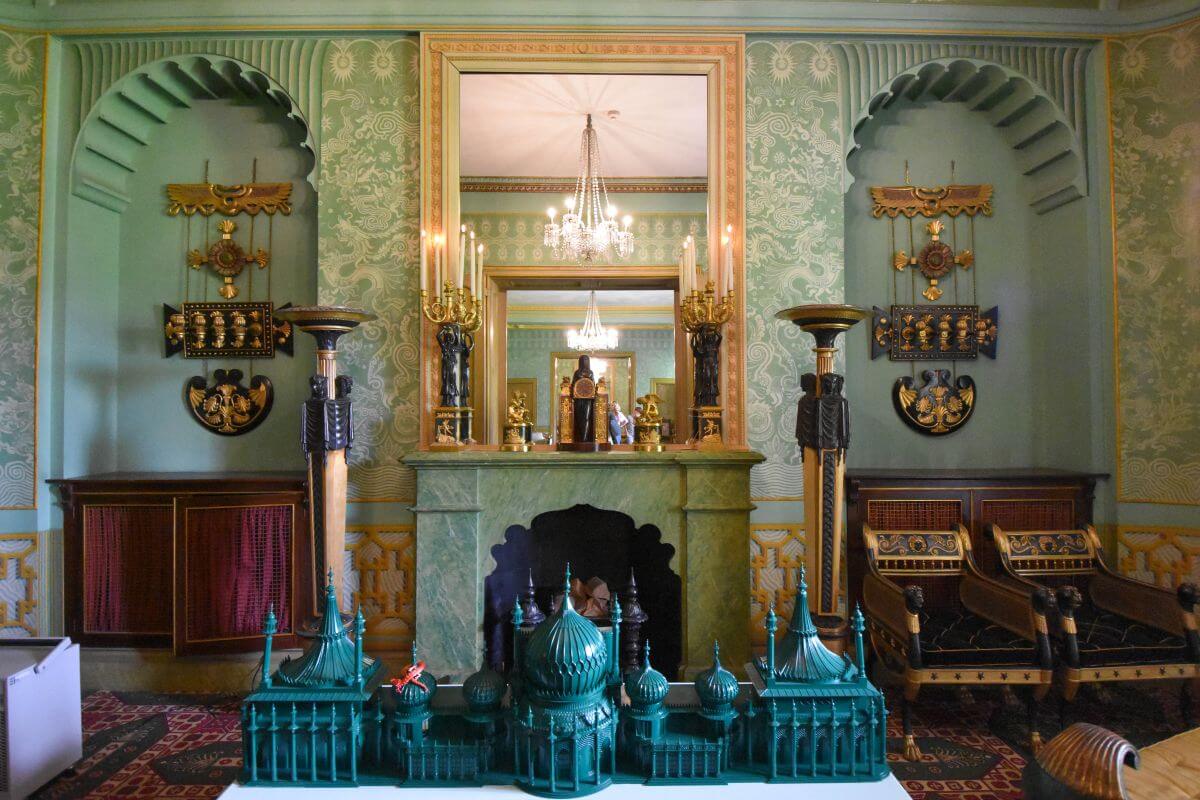
The King’s Apartments feel completely different from the dramatic state rooms nearby. These spaces don’t try to overwhelm you with colour. Instead, they reveal comfort and privacy. King’s Apartments also show the fading world of a king whose declining health trapped him inside the luxury he once loved.

King’s Bedroom: George IV originally slept upstairs when the palace first expanded. Later, however, his obesity and failing health made climbing stairs increasingly difficult. John Nash eventually relocated the bedroom to the ground floor to make daily life easier for his king. The bed on display today is not the original from the Brighton Pavilion. It’s the one George used at Windsor Castle, where he died. Its mechanical design allowed the bed to rise and lower, helping the king get in and out more easily.
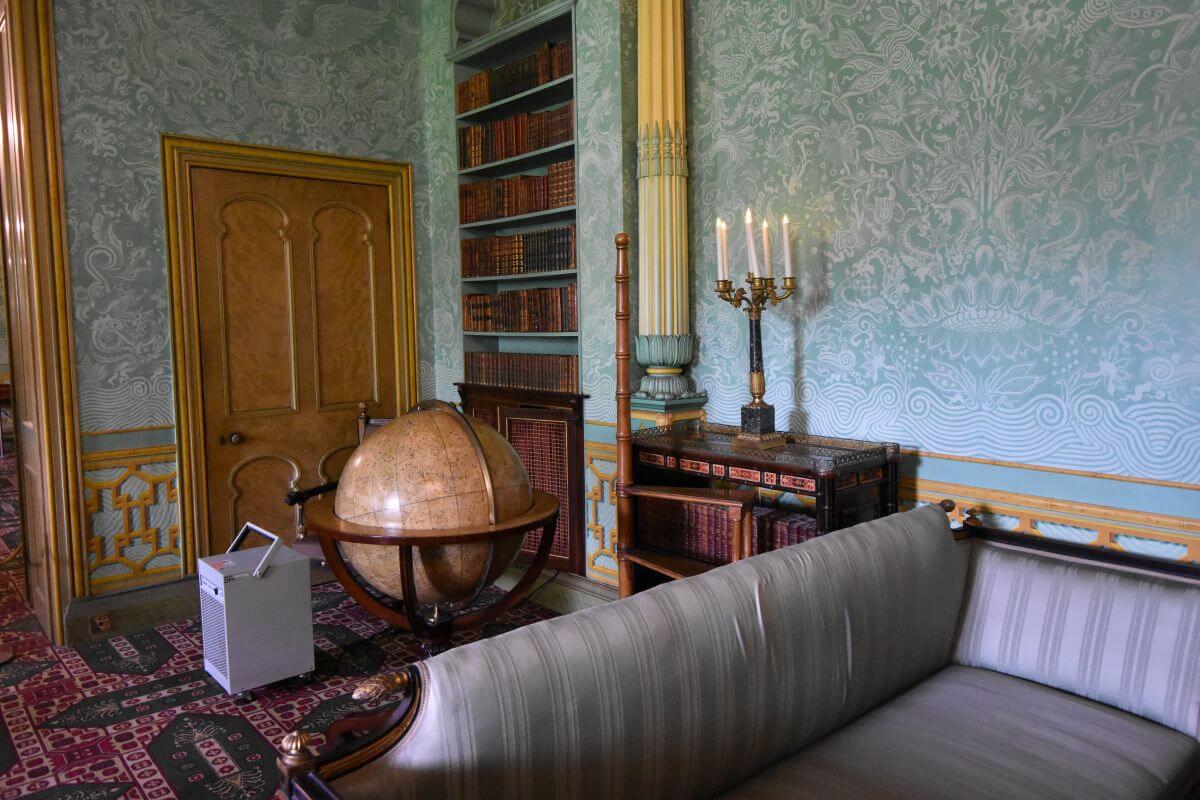
Nearby, the King’s Library reflects an entirely different mood again. Here, George met government ministers, ambassadors, and trusted members of the Privy Council. The darker atmosphere reflects both government business and the sadness that shaped his final years.
9. Queen Victoria’s Apartments

This small bedroom hides the uncomfortable truth behind Victoria’s relationship with this building. Although she inherited the Royal Pavilion in Brighton when she became queen, she never truly fell in love with it. The city had grown noisy, crowded, and impossible to escape from. Privacy disappeared, and the young queen quickly began searching for somewhere more peaceful.
Queen Victoria admired the palace’s Chinese interiors. Unlike the grand state rooms, her bedroom feels personal and modest. The room’s centrepiece is a beautiful mahogany bed. It contains six separate mattresses layered with horsehair, straw, and feathers for comfort. One of the room’s remarkable features hangs quietly on the walls around you. The hand-painted wallpaper with tropical plants and birds once disappeared into Buckingham Palace before conservators carefully returned and restored it.
10. Royal Pavilion Garden
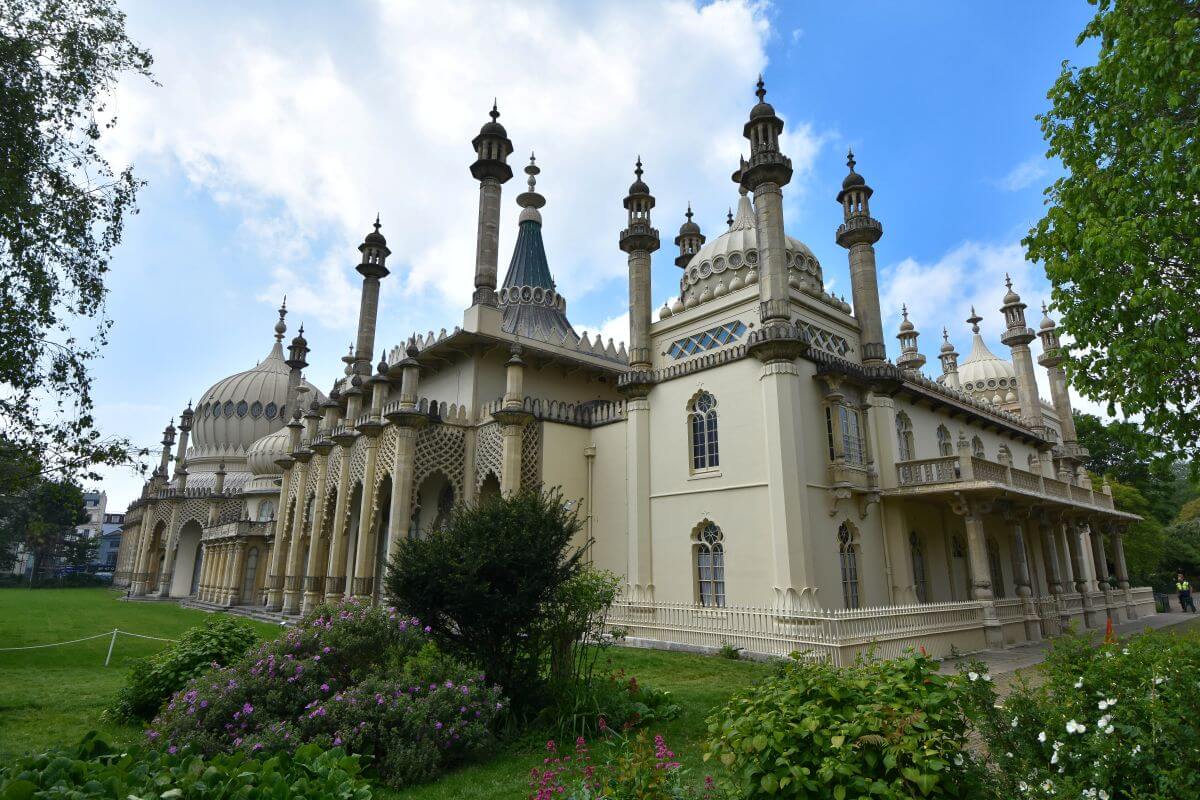
One moment, you are walking through busy streets filled with cafes, buses, shops, and the noise of modern Brighton. Next, everything changes. Onion domes rise above the trees, curved pathways pull you away from the crowds, and the city suddenly feels distant. The gardens surrounding the Royal Pavilion in Brighton were designed to create exactly this feeling. Nothing here happens by accident. Every winding route, hidden view, and carefully planted tree was meant to confuse and slowly reveal the fantasy palace.
THOUGHTFULLY DESIGNED GARDENS AS THE BUILDING ITSELF

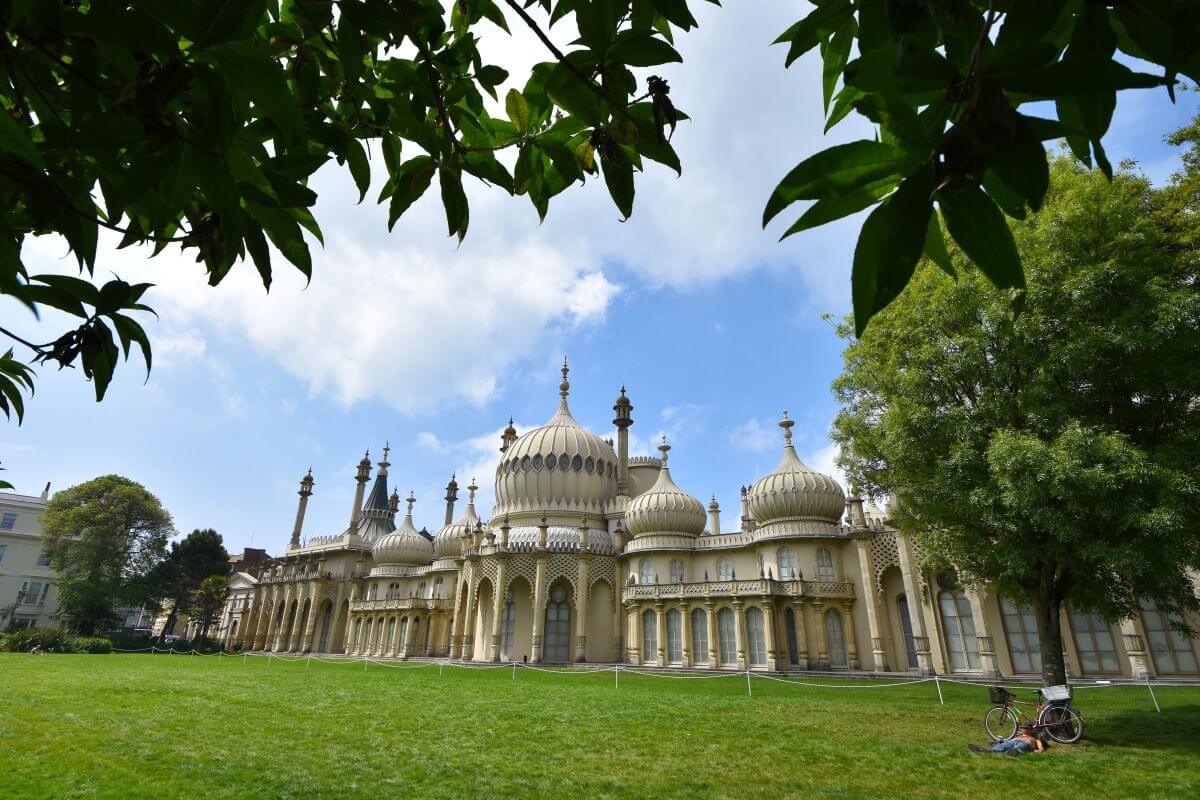
Unlike many royal residences built in open countryside, the Royal Pavilion sits directly inside the city. Architect John Nash understood this challenge when he designed the grounds during the 1820s. Instead of straight formal paths leading directly to the entrance, he created twisting paths and changing viewpoints. You will never approach the building in a simple way. As you walk through the gardens, the palace appears, disappears, and reappears again from different angles. The onion domes, minarets, and turrets seem to float above the trees.
This playful design reflected the Romantic ideas of the Regency period. Nash wanted visitors to feel curiosity and surprise rather than order and control. The unusual Indian-inspired exterior, hidden among twisting paths and exotic planting, created an experience unlike anywhere else in Britain. Even today, you feel slightly disoriented when you come across the building hidden within the urban landscape.
RARE TREES AND PLANTS
The gardens are far more than decorative lawns. According to Wikipedia, the Royal Pavilion Gardens are one of the rarest restored Regency landscapes in Britain. Covering approximately 8 acres, they remain the only fully restored Regency gardens in the UK. What makes them unique is that they use only plant varieties available during the early 19th century. Gardeners avoid modern plants, helping preserve the authentic atmosphere George IV once experienced.

The planting was chosen carefully to reflect the palace’s oriental-inspired appearance. Jasmine, honeysuckle, Chinese lantern plants, and Indian trees strengthen the exotic mood created by the domes and minarets. Brighton Museums notes that the gardens are also home to some of Britain’s oldest and rarest elm trees. These form the National Elm Collection. They even include specimens so rare that only around 20 exist worldwide, according to the official website. Brighton & Hove’s remarkable elm population also contributes to the city’s role within The Living Coast UNESCO Biosphere Reserve.
SECRET TUNNEL BEHIND THE GROUNDS
The grounds also hide one of the Brighton Pavilion’s most fascinating secrets. Many people believe a secret tunnel once connected the palace to the home of George IV’s mistress, but the real story is different. The underground passage actually linked the Pavilion to the Royal Stables, now the Brighton Dome. The king used it to move privately without facing public crowds who criticised his appearance due to his weight and lifestyle.
TIP:
Before leaving, take a moment to notice the ornamental gates at both the north and south entrances. Just outside the north gate stands the statue of King George IV. Many visitors completely miss it while rushing towards the palace itself.
Practical Tips for Visiting The Royal Pavilion in Brighton
The difference between rushing through packed rooms and slowly absorbing every strange detail comes down to knowing when to arrive and how to book. Many tourists overlook this entirely.
Is It Worth Visiting the Brighton Royal Pavilion?
The Royal Pavilion in Brighton is absolutely worth visiting, especially for anyone interested in history, opulent design, or unusual architecture. It’s a must-see landmark in Brighton and also in the United Kingdom. It’s well worth exploring inside as well as outside of the palace.
How Long Does a Visit Take?
A typical visit to the Brighton Royal Pavilion takes around 1.5 to 2 hours to explore the opulent rooms and view the historic collections. However, you can complete it in about 1 hour if you move at a faster pace and don’t read all the information panels.
Top 6 Must-See Highlights in the Royal Pavilion in Brighton

- Royal Pavilion Garden
- The Long Gallery
- Banqueting Room
- Great Kitchen
- Saloon
- Music Room
Crowds, Atmosphere, and Best Time To Visit the Royal Pavilion in Brighton
One thing we didn’t expect during our visit was how quickly the atmosphere inside the Pavilion could change. When we arrived around noon on a Friday in May 2026, many of the rooms initially felt surprisingly calm and almost empty. For a short time, we could move slowly through the palace, noticing tiny details, reflections, and decorative features without distraction. In quieter moments, you could even hear the wooden floorboards creak beneath the chandeliers. It made the palace feel less like a museum and more like a lived royal residence.
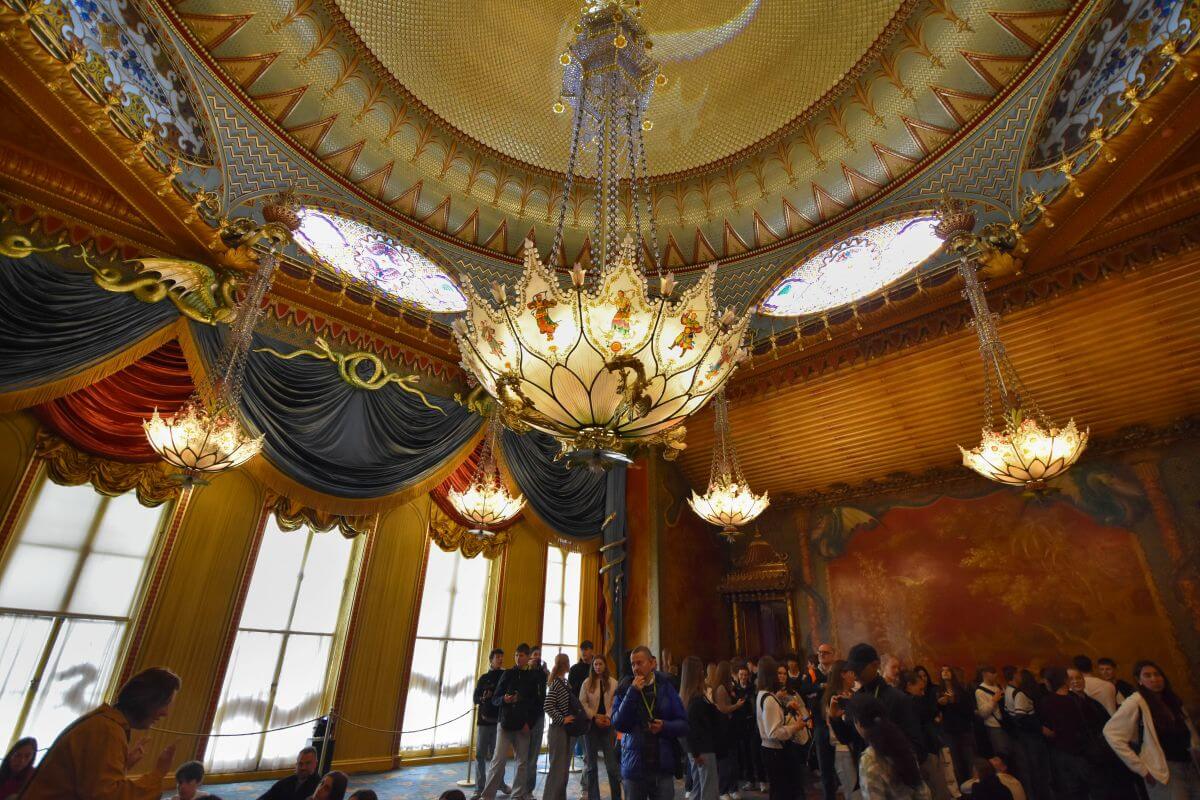
About 15 minutes later, several students and guided tour groups arrived almost at once. The atmosphere changed immediately. Rooms that had felt peaceful suddenly became crowded and much louder. Instead of rushing ahead, we found it far more enjoyable to slow down and briefly wait while the larger groups moved into the next rooms. A few minutes later, many of the spaces became quiet again, allowing us to experience parts of the palace almost to ourselves. The difference completely changed how immersive the visit felt.
If you enjoy photography, architecture, or simply absorbing the details properly, pacing your visit around larger groups makes a huge difference here. The Royal Pavilion feels more atmospheric when you can pause quietly beneath the chandeliers and domes without constantly moving with the crowd.
OPENING HOURS
The first thing to know is that opening hours change, depending on the season. Between April and September, the palace welcomes visitors from 9:30 AM until 5:45 PM each day. During the quieter months from October to March, doors open slightly later at 10 AM and close at 5:15 PM. The building closes entirely on Christmas Day and Boxing Day.
Although many people arrive late morning, the calmest experience usually begins in the afternoon. Mid-afternoon usually feels calmer, especially after 3 PM, when many day-trippers begin drifting back towards the beach and station. Exploring later allows you to slow down properly rather than moving room-to-room with large tour groups.
ADMISSION FEES

As of May 2026, standard adult entry costs £21.50, while children aged between 5 and 18 pay £13. Families can also purchase combined tickets. However, one of the easiest ways to save money surprises many first-time visitors. If you travel to Brighton by train, you can use the National Rail 2FOR1 promotion. Rail tickets allow two adults to enter for the price of one, though you must present your valid train ticket when visiting. Brighton & Hove residents living within BN1, BN2, BN3, and BN41 postcodes receive reduced admission (£16.50).
LOCATION
The location makes the Pavilion incredibly easy to include within a full day of exploring Brighton. The city’s railway station is approximately 0.6 mi away, and the walk usually takes between 10 and 15 minutes. Buses cover the route in only a few minutes if you prefer to avoid walking. However, we personally prefer to walk here because the streets gradually narrow, and independent shops and courtyards appear. The atmosphere changes as you approach the building and suddenly spot the domes through the trees.
AUDIO GUIDE
One of the smartest things you can do is purchase the multimedia audio guide (£3). Without it, you just walk straight past without realising how much extra detail it adds to the experience. The guide works directly on your smartphone through the official web app. Don’t forget to bring your own headphones. During our visit in May 2026, tours were available in English, Easy English, French, German, Spanish, Italian, Polish, Mandarin, and Russian.
ACCESSIBILITY
Despite its age, the palace remains surprisingly accessible. Ground-floor routes remain accessible for disabled visitors and wheelchair users. Guide dogs are also welcome, and accessible toilets are available downstairs. However, the upstairs is not wheelchair accessible (no lifts available). Families will also find baby changing facilities on site. Once your visit ends, a small gift shop near the exit sells books, souvenirs, and Pavilion-inspired pieces.
TIPS
- Don’t rush away once you finish the interior route. The restored Regency Gardens remain completely free to visit. They also offer some of the best viewpoints of the palace exterior.
- The beach is only around 5 minutes away on foot. Combine the visit here with an afternoon along the seafront. You can also finish the day in the nearby Lanes, where narrow alleyways hide some of the city’s best restaurants, cafes, and bars.
Now you have a complete guide to planning your visit to the Royal Pavilion in Brighton.
Thank you for staying with us until the end! If you’ve enjoyed this article, please consider sharing this post to extend its reach.
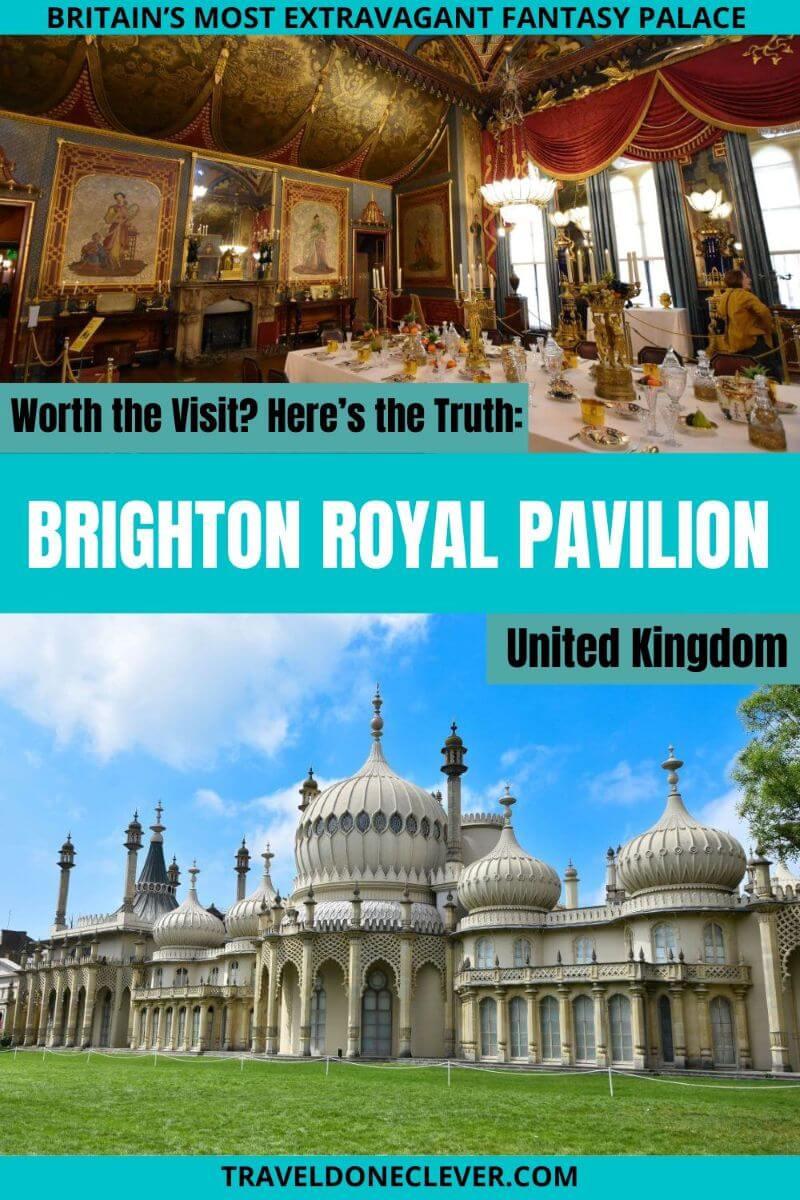
Pin the Royal Pavilion in Brighton for later so you don’t lose it!
YOU MAY ALSO ENJOY: