Hidden in the beautiful Shing Valley, the Seven Lakes offer some of the most breathtaking scenery in northern Tajikistan. Unlike many popular destinations across Central Asia, this area has not been overwhelmed by tourism and remains very authentic. Instead of crowded viewpoints and queues for photographs, you are more likely to meet experienced hikers, locals and donkeys. As a result, planning ahead becomes especially important. This guide covers everything you need to know before visiting. You’ll find clear information here on where the lakes are located, why they are worth visiting, and how to reach them. We also cover the best seasons to visit, accessibility, and useful tips to help you get the most from your visit.
Disclaimer: This post contains affiliate links. If you click through and make a purchase, we may receive a small commission at no additional cost to you. This helps to support and run our blog.
DID YOU KNOW?
Although Tajikistan possesses remarkable natural beauty and a rich cultural heritage, it remains the least visited country in the region.
What are the Seven Lakes in Tajikistan, and why visit them?
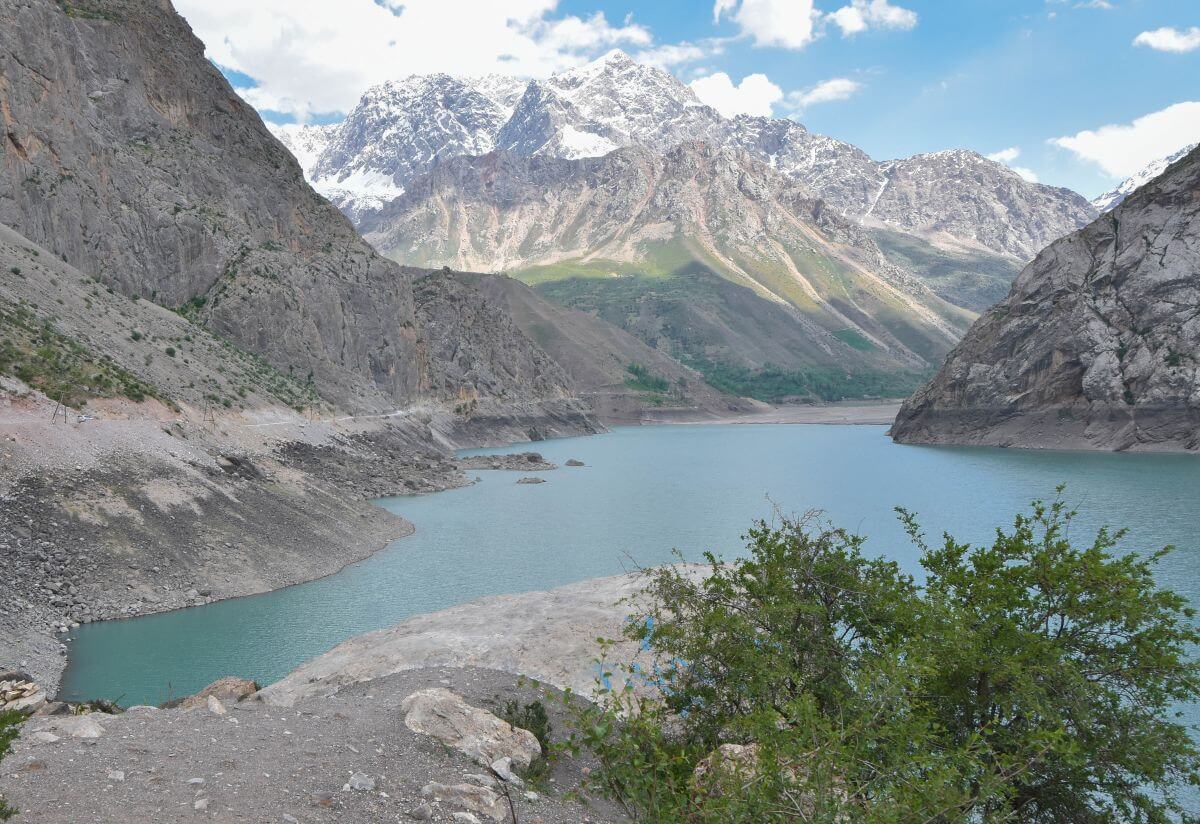
Known locally as Haft Kul (meaning ‘Seven Lakes’ in Tajik), this remarkable chain of alpine waters is one of the most beautiful attractions in the Fann Mountains. Locals often refer to them as the Seven Beauties of Shing (after the Shing River) or the Marguzor Lakes, named after the largest lake in the group.
At first glance, they appear to be simply a collection of beautiful mountain waters. However, when you spend a little more time here, you quickly realise that they offer something far more memorable. The Seven Lakes in Tajikistan combine extraordinary natural beauty, constantly changing scenery, and authentic mountain culture into an unforgettable experience.
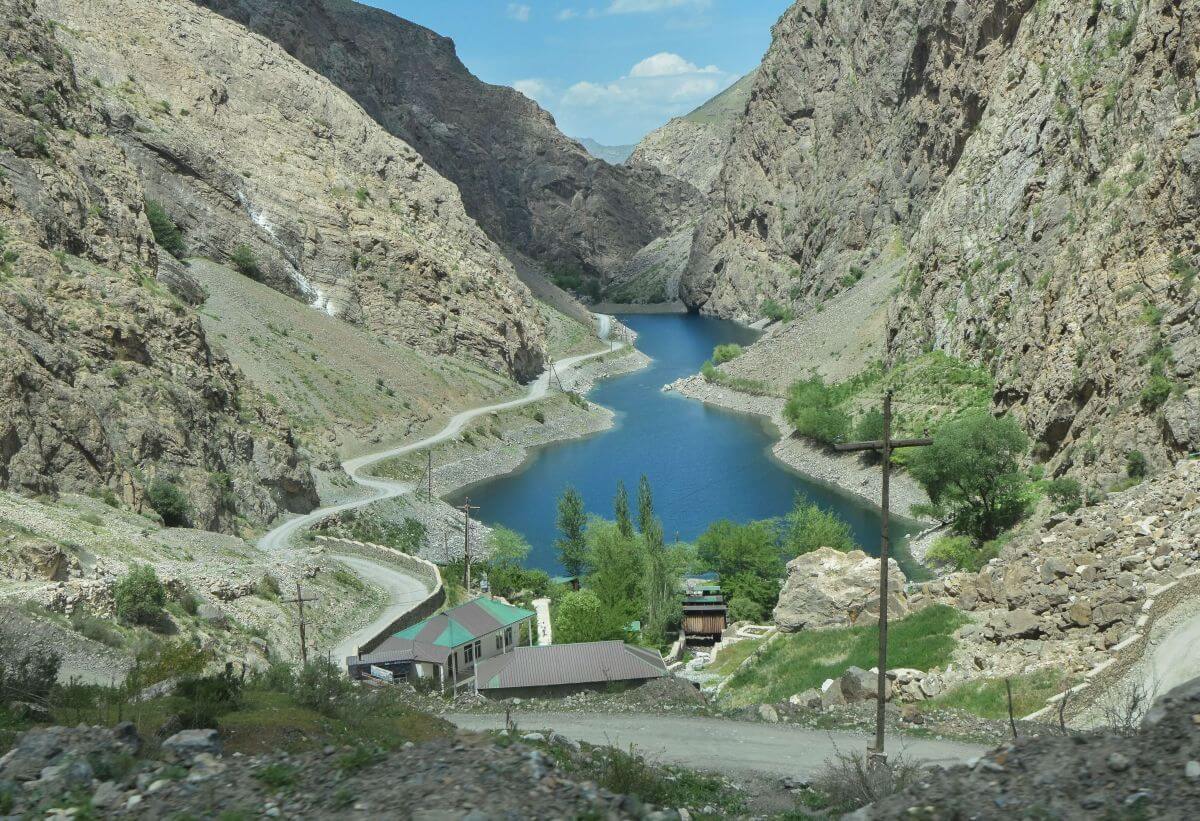
Just when you think the scenery cannot become any more impressive, a twist in the gorge reveals a view that proves you wrong.
SHIFTING COLOURS
One of the biggest surprises for us was the extraordinary range of colours. Each body of water shines with a different shade, ranging from bright turquoise and emerald green to deep blue. These colours are the result of a combination of glacial meltwater, mineral springs, and changing mountain light. Thanks to this, no two stops look exactly alike. Even on the same day, the scenery transforms entirely as the sun moves across the steep, rocky valley, creating different hues in the water.
SHING RIVER GORGE
The surrounding scenery is equally impressive. Steep mountain walls rise above the valley, while the Shing River links each section together. According to Wikipedia, the Shing River gorge has created a natural cascade that stretches over 14 km while descending more than 800 m in altitude.
Location: How far are they really, and can you visit them from Samarkand, in Uzbekistan?
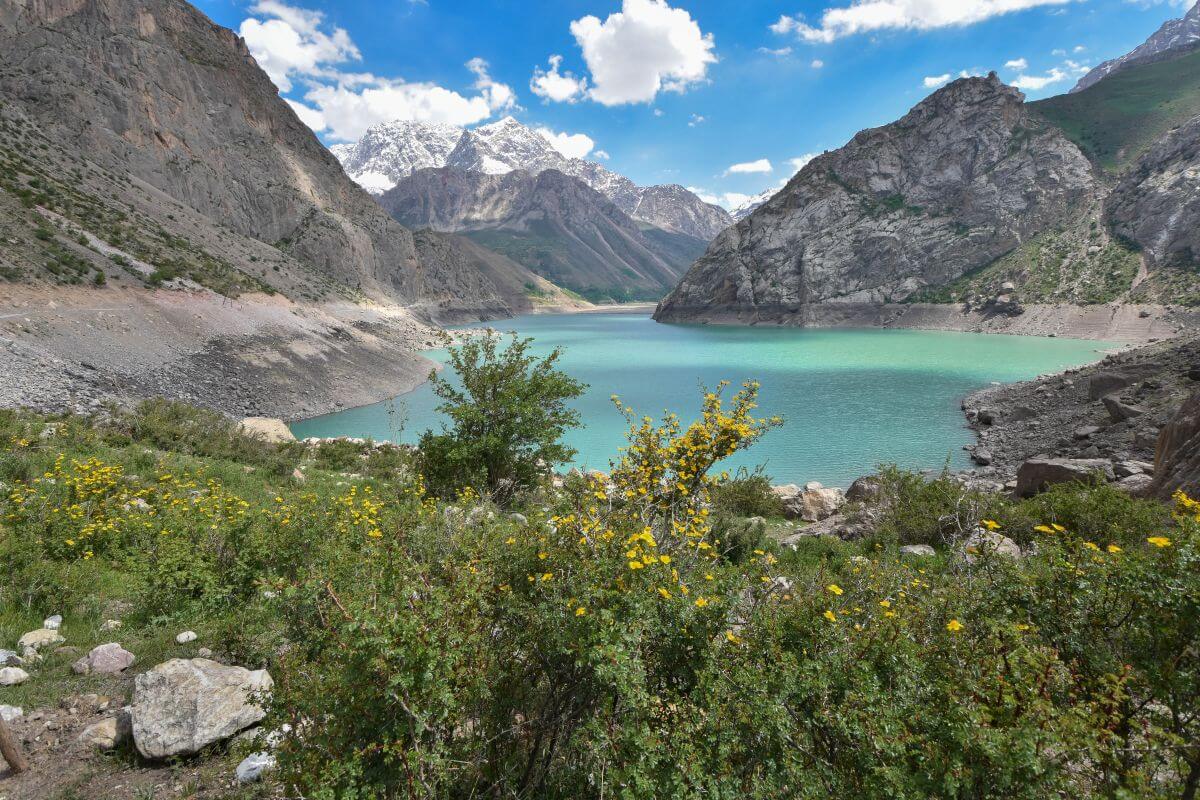
One of the biggest surprises for many travellers is how close this spectacular mountain scenery is to Uzbekistan. While the landscape feels wonderfully remote, reaching them is far easier than you would expect.
The Seven Lakes in Tajikistan lie in the Shing Valley, south of Panjakent and close to the Uzbek border. Positioned on the western edge of the Fann Mountains in the Pamir-Alay system, these lakes rise dramatically above the surrounding landscape. Stretching approximately 14 km of mountain valley, the chain of the lakes begins at around 1,600 m above sea level and climbs to approximately 2,400 m at the highest point. Thanks to a mountain road that follows much of the valley, you can also reach them by vehicle.
DISTANCE FROM SAMARKAND, TASHKENT, AND DUSHANBE
For most international travellers, Samarkand in Uzbekistan serves as the main gateway. The journey is surprisingly straightforward and can be easily completed as a day trip. From Samarkand, it takes around one hour to drive 40 km to the Jartepa-Sarazm border crossing. After crossing into Tajikistan, the route continues through Panjakent before entering the Shing Valley. From the border, expect another 65-80 km of driving, depending on how far into the valley you plan to travel.
In total, the distance from Samarkand is approximately 105-120 km, making the Seven Lakes in Tajikistan a perfect day trip. If coming from Tashkent (the capital of Uzbekistan), you face a considerably longer journey of around 330-370 km. Dushanbe, the capital of Tajikistan, is approximately 250 km away by road. A road trip from the Tajik capital takes approximately 5 to 6 hours each way by car.
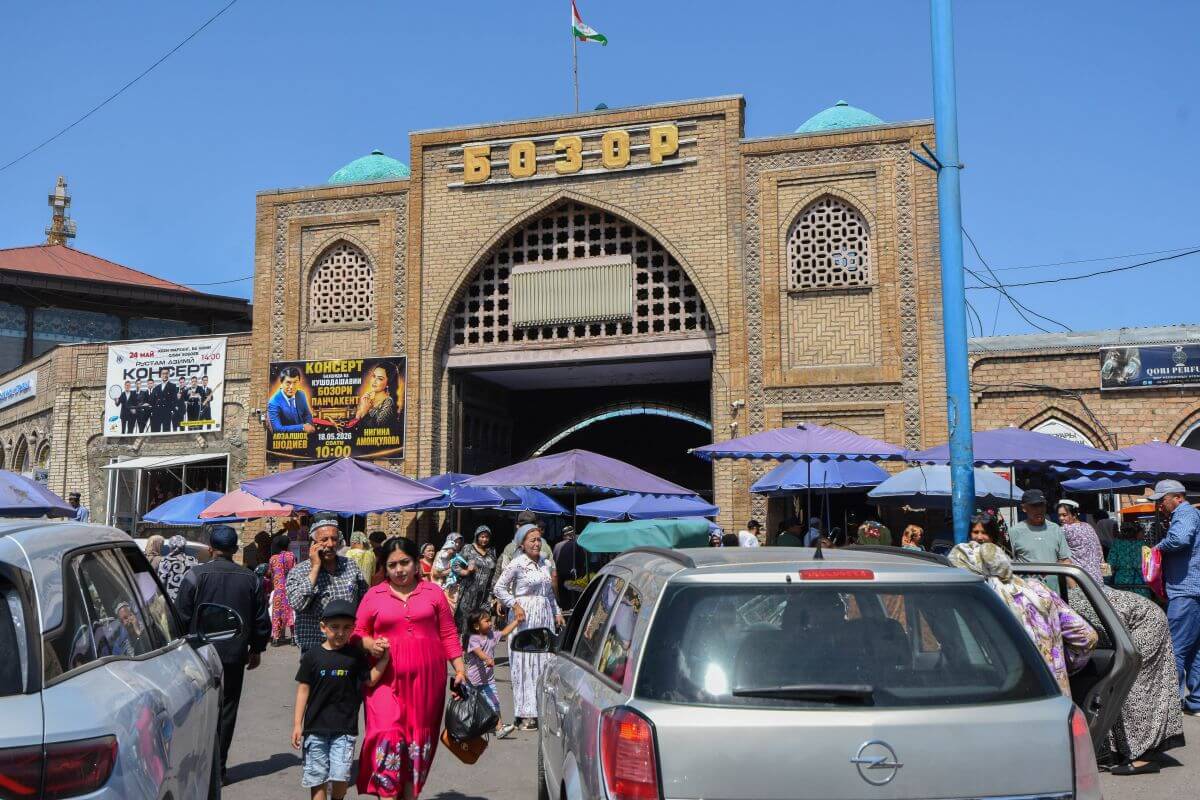
The Shing Valley lies approximately 40 to 50 km south of the Tajik city of Panjakent. The journey takes 1.5 to 2 hours each way due to the unpaved, winding mountain roads.
Seven Lakes in Tajikistan – Our Experience
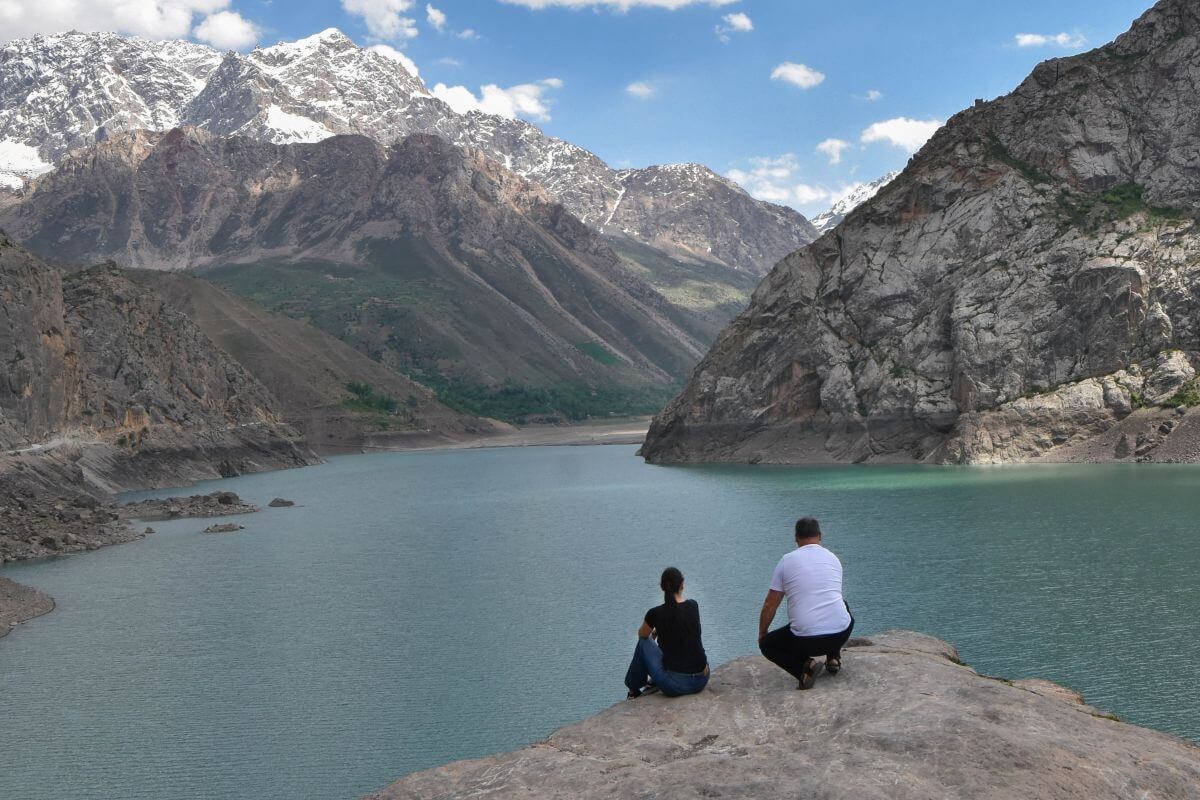
We visited the Seven Lakes in Tajikistan on a Saturday in mid-May 2026. We started early, leaving Samarkand at 7:30 AM. It was not peak season or a public holiday, which made the journey feel calm and well-paced.
A PRIVATE TOUR FROM SAMARKAND
We chose this private tour with lunch because we wanted a personalised mountain experience designed just for us, giving us comfort, privacy, and flexibility throughout the day. We also wanted to combine nature with culture. The key cultural spots we didn’t want to miss included the UNESCO-listed Sarazm archaeological site near the Uzbekistan-Tajikistan border and the ancient city of Panjakent. Travelling privately meant we had full control over timing, which helped us enjoy each stop properly.
Once we crossed the border, the journey became more scenic. We passed river valleys and traditional villages that framed the journey beautifully. Apart from our vehicle, we met two small groups travelling in vans from Samarkand inside the Shing Valley. We also saw 6 more cars heading up the valley. Between the lakes, there were only a handful of hikers and local children selling souvenirs. This made the experience feel authentic and unspoilt. The full trip lasted approximately 12 hours, combining nature, culture, and history into one well-structured experience.
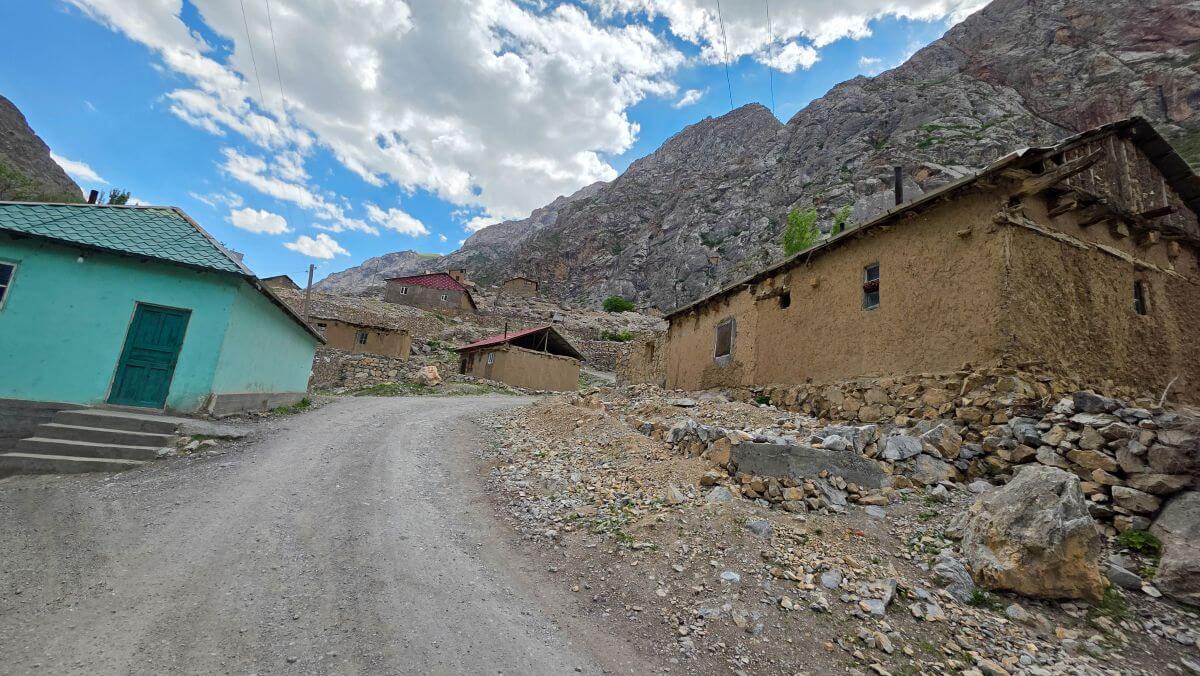
traditional Tajik mountain villages
BOOK YOUR ONCE IN A LIFETIME EXPERIENCE BELOW:
The Seven Lakes of Tajikistan – Names and Highlights
Each of the Seven Lakes in Tajikistan has its own name and identity. However, many visitors refer to them numerically from first to seventh, according to their position in the valley. As their altitude increases, so does the variety of scenery. The surroundings become wilder, the views more dramatic, and the atmosphere increasingly remote. Local communities have known these places for generations, and many names reflect legends or distinctive natural features. Knowing a little about the names and highlights before you arrive makes the experience far more rewarding. It also helps you appreciate the character of each location rather than seeing them as simply another scenic viewpoint.
1. Lake Number 1 – Mizhgon
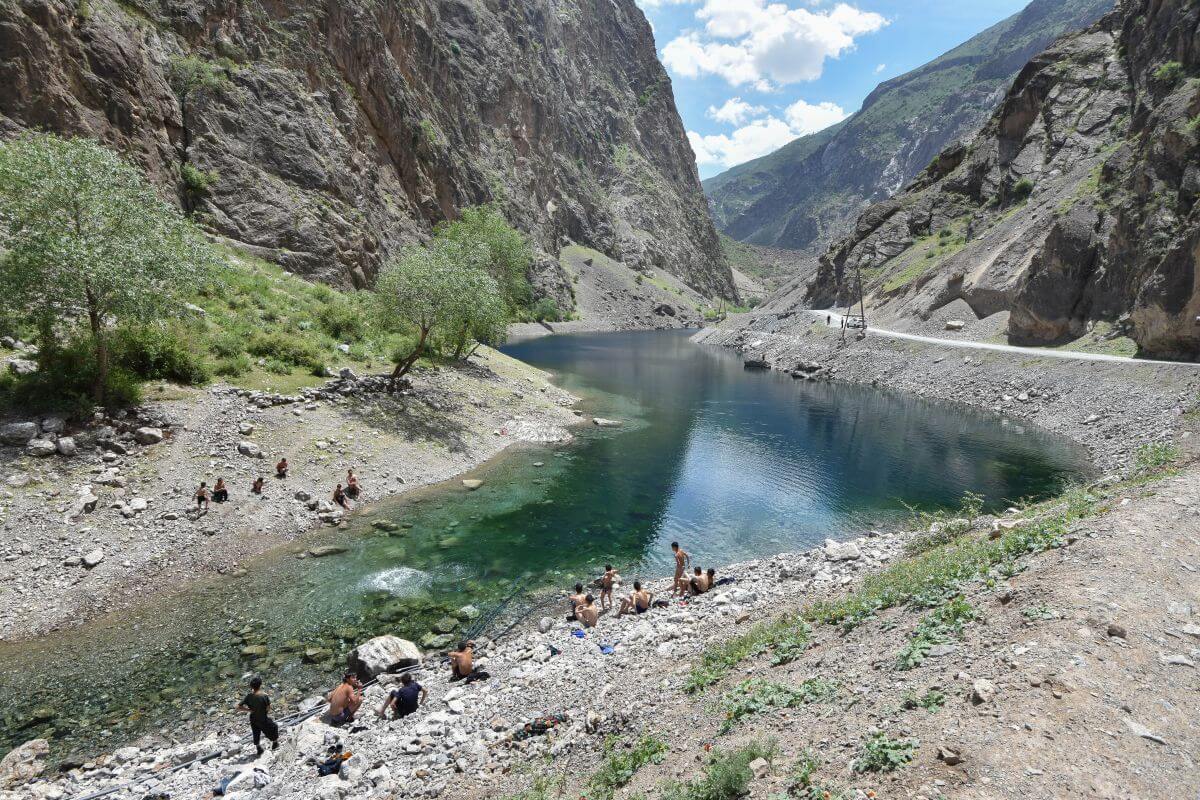
Many tourists focus on reaching the higher waters, but overlooking Mizhgon would be a mistake. During our visit, this was the first place where we stopped to admire the landscape, and it immediately exceeded our expectations.
Positioned at roughly 1,600 m (5,249 ft) above sea level, Mizhgon is the lowest of the seven. It’s approximately 20 m deep and also among the smallest, covering just 0.05 square kilometres, according to Wikipedia. However, its compact size does nothing to reduce its appeal. Its name is thought to originate from the Tajik word for ‘eyelashes’, although nobody seems entirely certain why. Whatever the reason, the name suits a place that leaves such a strong first impression.
COLOUR-CHANGING
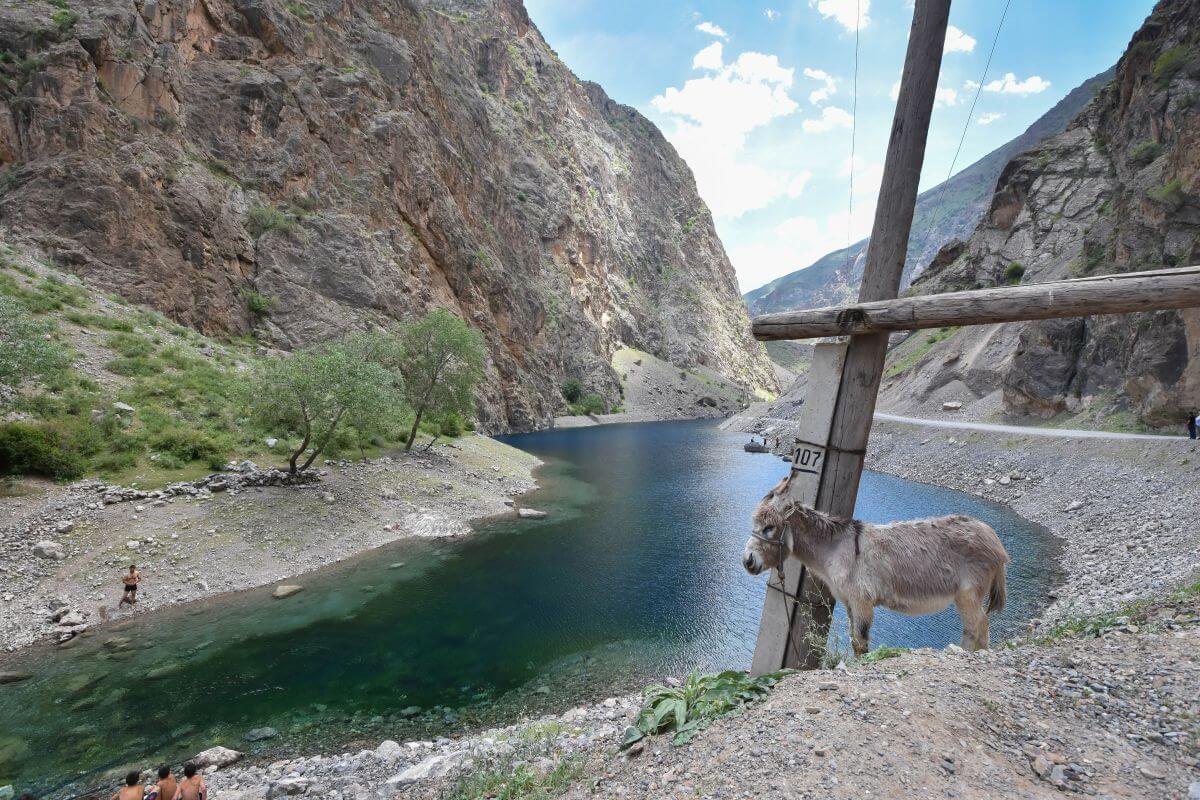
Despite its small size, Mizhgon attracts attention thanks to its extraordinary colour. Depending on the season, weather, and angle of the sun, the highly mineralised water can appear bright turquoise, deep blue, or even shades of purple. The minerals responsible for these colours, particularly sodium and calcium, create one of the most remarkable displays found among the Seven Lakes in Tajikistan.
Unlike many alpine waters that formed through ancient glacial activity in Central Asia, this one formed relatively recently. Lake Number 1 owes its existence to massive landslides and rockfalls that blocked the narrow Shing River gorge. These natural events created a barrier that allowed water to collect and form the basin, which you can see today. When we arrived before midday, temperatures had already reached approximately 33°C. Several local boys were cooling off from the intense heat. Watching them swim from the shore added a lively and authentic atmosphere to the otherwise peaceful setting.
A Tale of Seven Sisters
According to local legend, a father became lost in the Shing Valley. His seven daughters searched desperately for him. Unable to find their father, they cried so much that their tears formed the seven beautiful waters scattered throughout the gorge. Lake number 1 symbolises the first daughter and remains the symbol of beauty and devotion.
2. Lake Number 2 – Soya
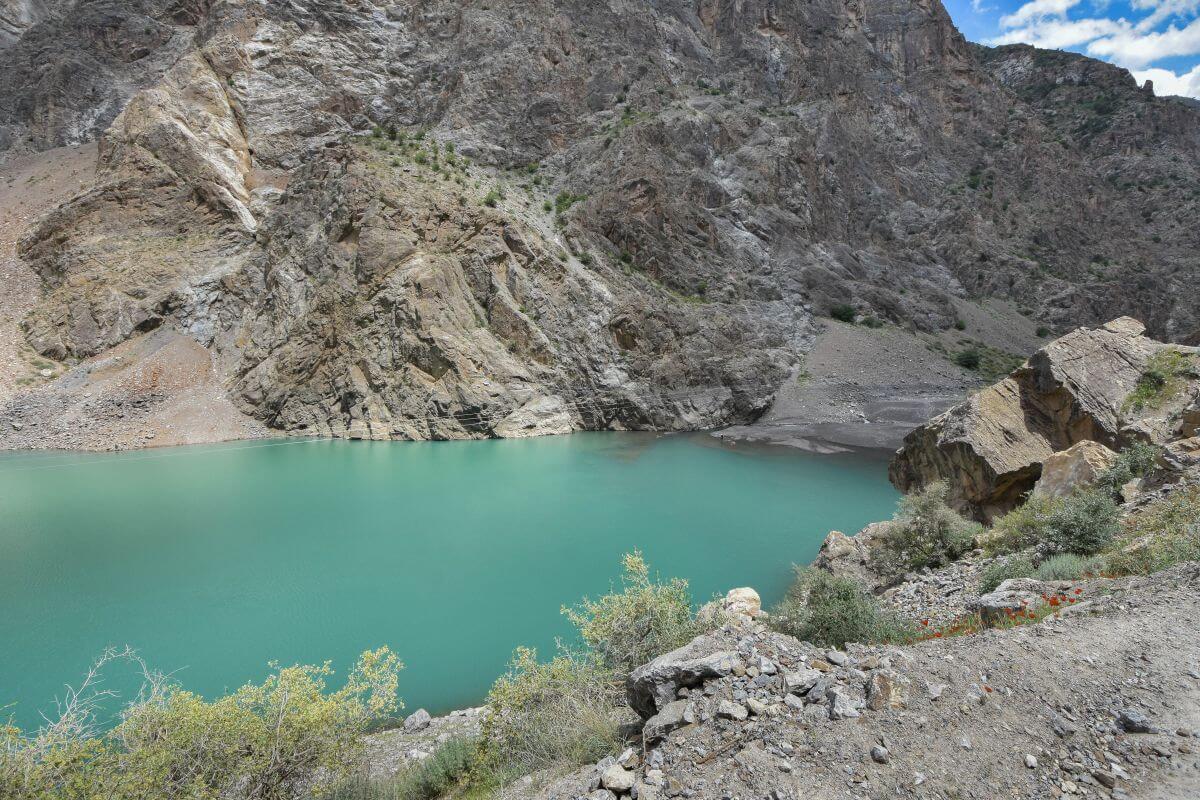
Just beyond Mizhgon, the road crosses a natural dam before revealing Soya, your second stop along the valley route. Although the distance between the two is short, the atmosphere changes noticeably. Sitting at 1,701 m (5,580 ft) above sea level, Soya occupies a narrow section of the Shing Valley where steep rocks block much of the sunlight. Our local Tajik guide, Umeda, explained to us that its name means ‘shadow’ in Tajik, and once you arrive, the reason becomes obvious. Even on a bright day, parts of the water remain hidden beneath the shade of the surrounding cliffs. Sunlight reaches the lake’s surface only for limited periods, around noon. That is the best time to visit Soya.
EVER-CHANGING APPEARANCE
What makes Lake Number 2 especially memorable is its colour. Depending on the light, the surface shifts between turquoise, deep blue, violet, and rich purple tones. High concentrations of minerals, including sodium and calcium, help create these remarkable shades.
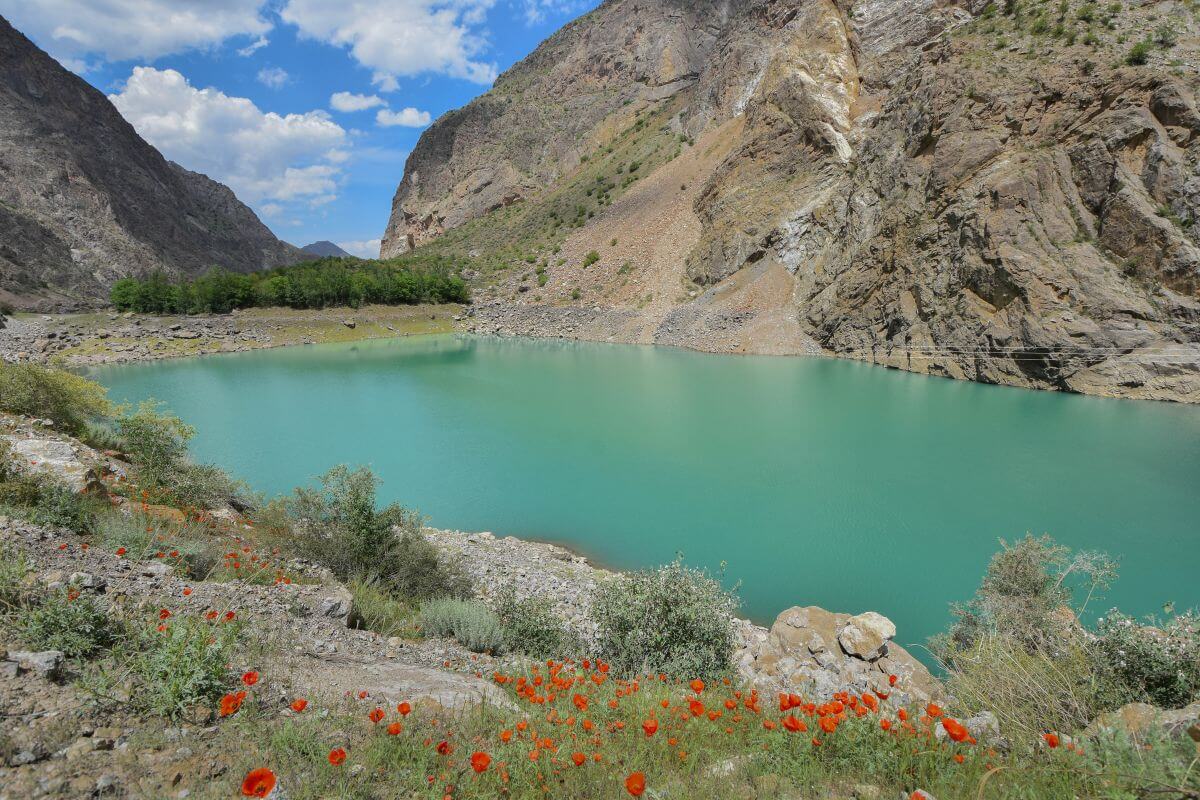
During our visit, around noon, sections of water appeared vibrant turquoise. In the shallower areas near the shore, the colour shifted towards a lighter, mint green or pale teal. The water had a milky quality rather than being perfectly clear. This made the vibrant turquoise lake with red poppy flowers around it pop against the rocky landscape. However, when we saw the lake on the way out of the valley 3 hours later, when it was cloudy, Soya looked completely different.
3. Lake Number 3 – Gushor
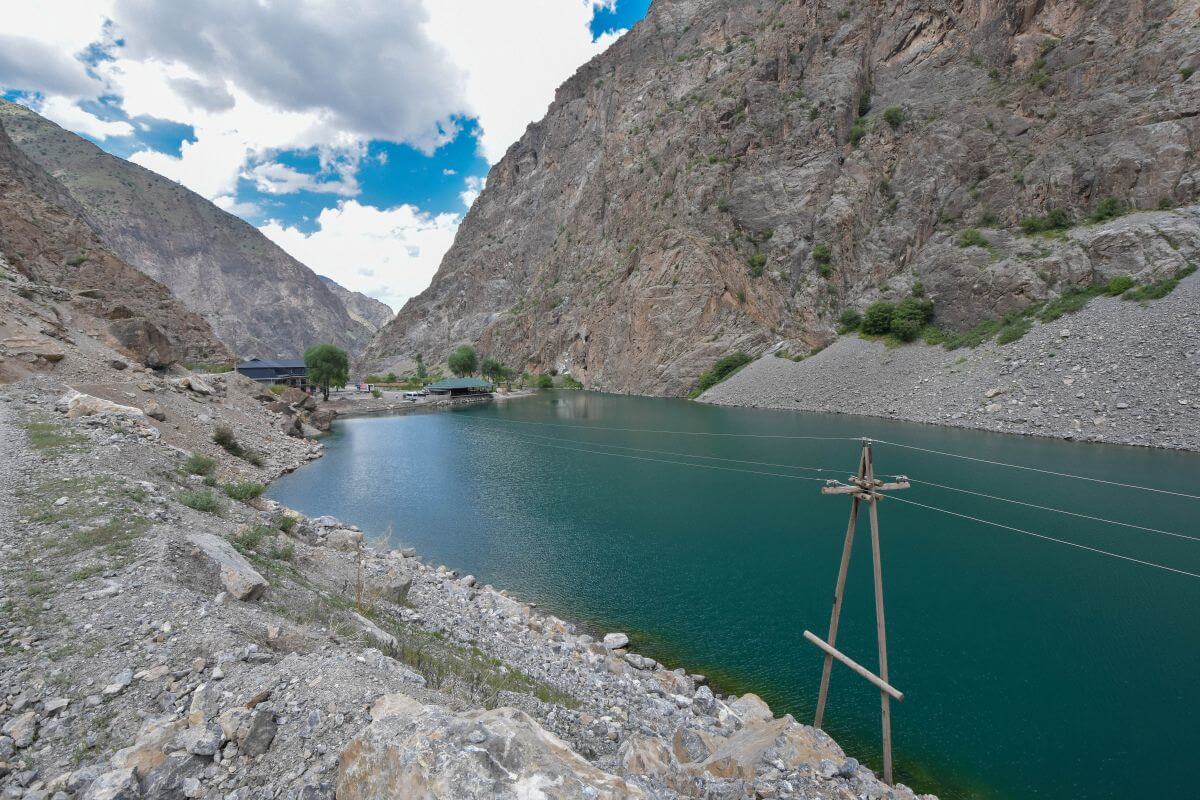
The moment we reached the next lake, the valley felt noticeably wilder. The colour of the waters below was still beautiful, but the scenery here became more dramatic, with towering cliffs rising steeply from the shoreline. Gushor, or Lake number 3 of the Seven Lakes in Tajikistan, was the first place we truly began to appreciate the raw scale of the Shing Gorge. According to Wikipedia, it sits at approximately 1,770 m (5,807 ft) above sea level. It’s more than twice the size of Soya and occupies a larger section of the valley.
CAUTION
Our guide, Umeda, explained that its name comes from the Persian and Tajik word for ‘vigilance’ or ‘alertness’. At first, this seemed unusual, but the story behind the name makes perfect sense. For generations, local people believed this area was home to venomous snakes. Although sightings are now extremely rare, we advise watching every step carefully while moving through the rocky terrain. Many locals believe this connection gave this lake its name. Alternative names, including Khusher or Ishore, also share the same meaning of being watchful or alert. Even though a sighting is highly unlikely, it’s still smart to practise basic mountain safety. For this reason, stick to the established trails, look where you step, and avoid sticking your hands into dark rock cracks where a snake might be cooling off.
A LOST PIECE OF HISTORY
Umeda also told us that during Soviet times, a campsite operated near this lake. A major landslide later destroyed the camp, leaving only traces behind.
THE BEST VIEWS IN THE LOWER VALLEY
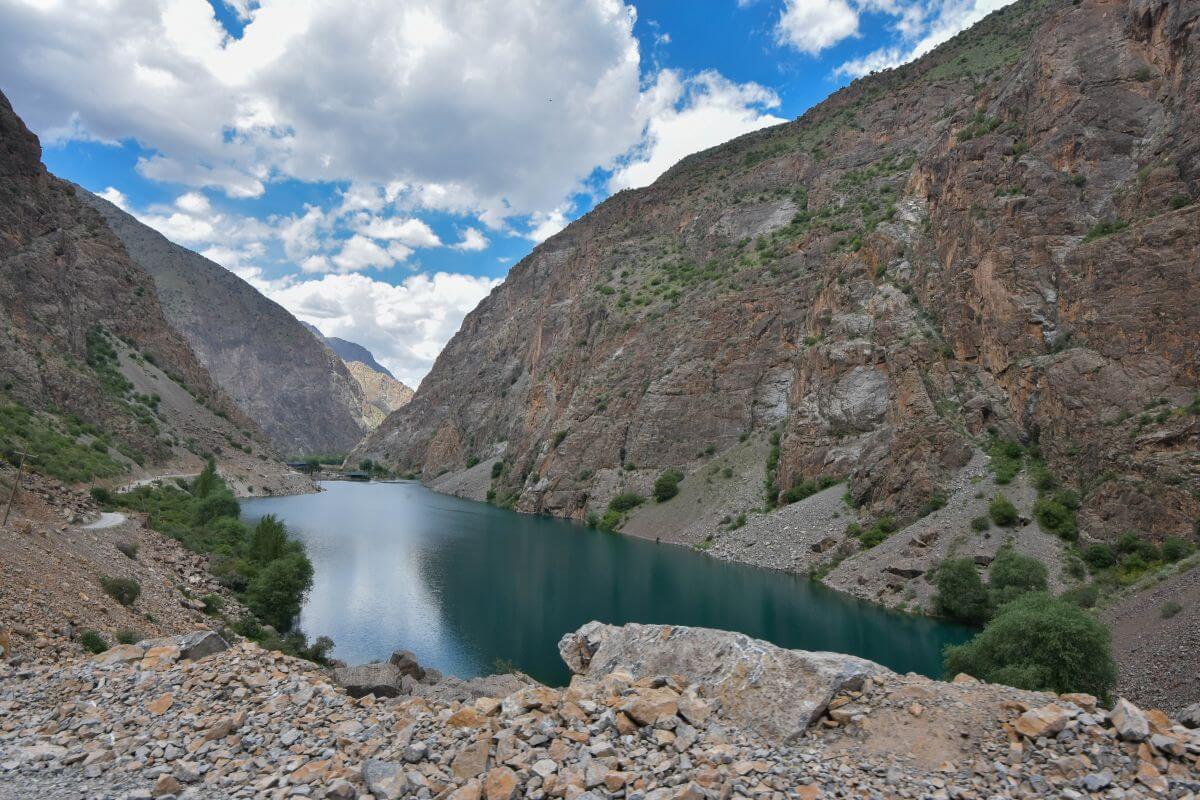
One of Gushor’s most impressive features lies at its far end. A huge natural dam blocks the valley and creates a spectacular viewpoint above the water. From here, you can enjoy one of the finest panoramas of the lake.
If you are not short of time, a zigzag trail climbs towards the top and rewards you with the finest panoramas in the lower valley. Looking back, you will see both Gushor and Soya, displaying different shades of blue side by side. Unfortunately, we did not have enough time to hike here. Because the narrow, rugged gravel road slowed us down, we were sadly short on time. We had to settle for catching these breathtaking views right from the car window.
4. Lake Number 4 – Nofin
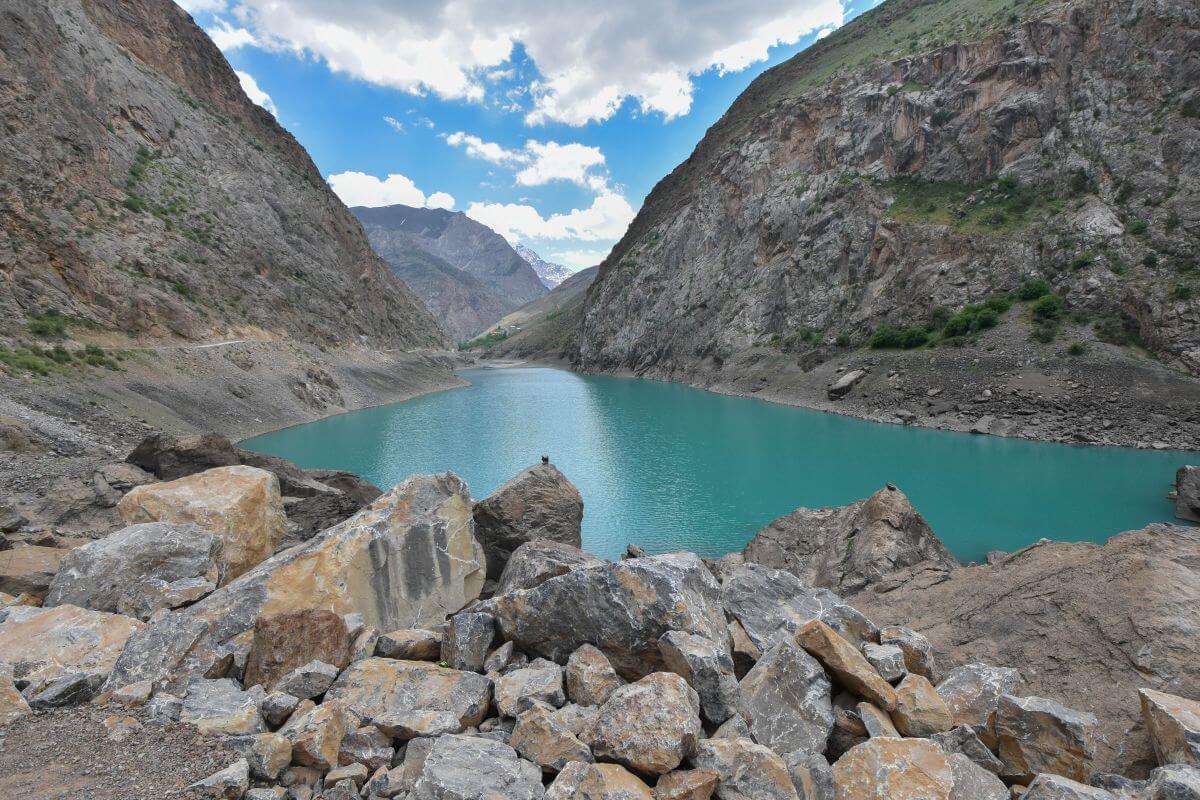
While the distance from Lake Number 3 to Lake Number 4 is surprisingly short, the winding road stretches to around 1 km. Then, suddenly, a long strip of water appears ahead, twisting through the mountains like a turquoise ribbon. Among the Seven Lakes in Tajikistan, Nofin immediately stands out because of its unusual shape. Instead of spreading widely across the valley floor, it extends for more than 2.5 km while remaining remarkably narrow for most of its length.
WHY IS IT CALLED NOFIN?
Nofin is one of the most unusual names along the route. It translates from Tajik as ‘bellybutton’ or ‘umbilical cord’, as our guide Umeda explained to us. While unusual, the nickname makes perfect sense once you understand the geography. The water lies in the middle of the seven-lake system and stretches for over 2.5 km in a long, narrow shape. When viewed from above, its unusually long shape resembles an umbilical cord winding through the mountains.
A COLOUR THAT REFUSES TO STAY THE SAME
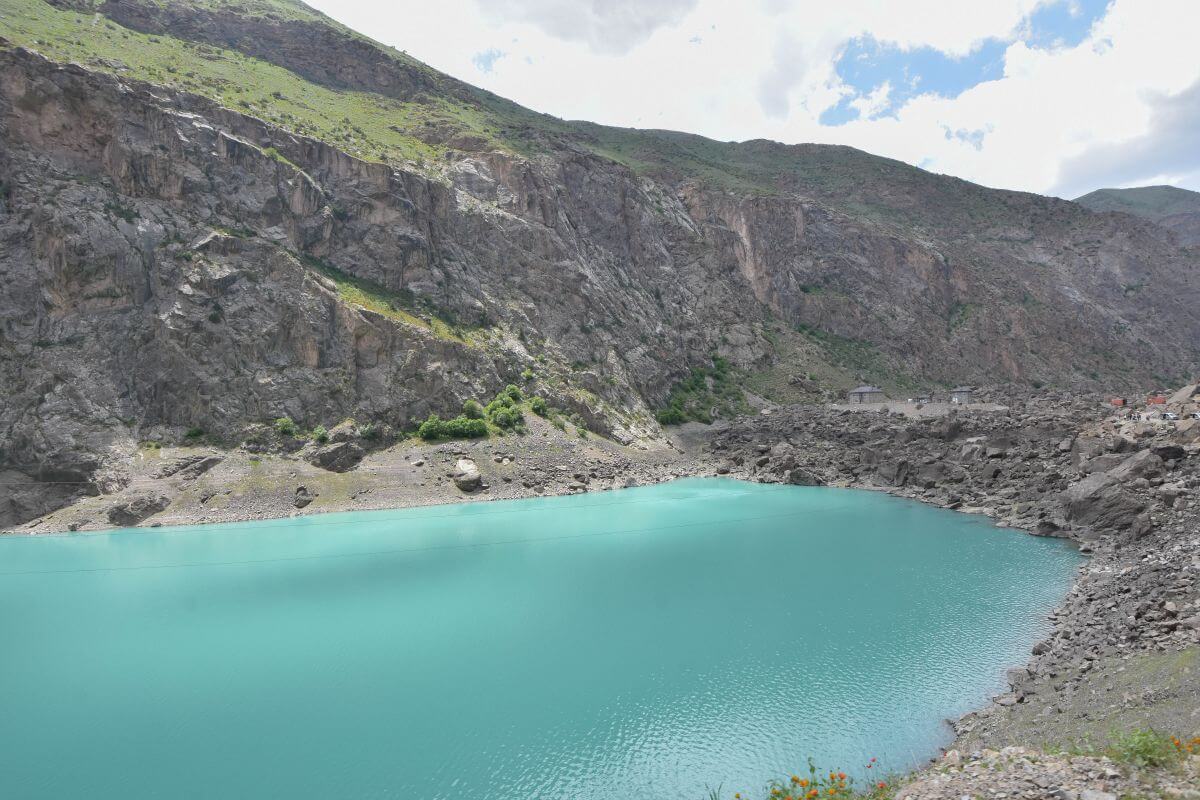
At approximately 1,820 m (5,970 ft) above sea level, Lake Number 4 constantly changes its appearance. Depending on the season, sunlight, and weather conditions, you may see shades ranging from sapphire blue and emerald green to surprisingly reddish tones. When we arrived shortly after 1 pm in May, the water displayed a beautiful milky turquoise colour. The shade reminded us of glacial rivers. High mineral content gives the water a striking appearance and creates different tones throughout the day.
THE ROAD THAT SOMETIMES DISAPPEARS
During peak summer melt, water levels can rise enough to cover sections of the track. Local drivers often need to navigate muddy sections carefully. But during our visit, the road did not disappear, and we had relatively easy access on a gravel road.
GOOD TO KNOW
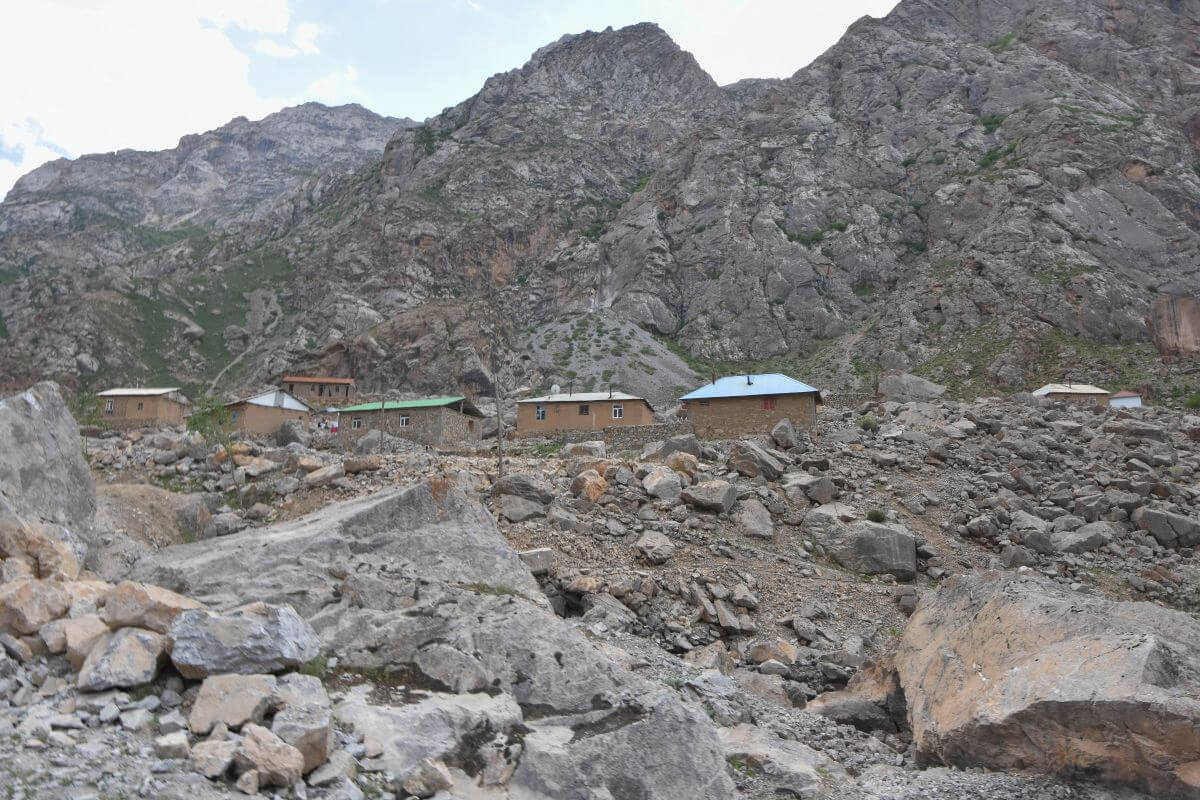
At the far end stands a small village where several families run guest houses. It provides one of the best opportunities along this route to extend your stay and experience traditional life in Tajikistan beyond the viewpoints.
5. Favourite River Lunch Spot
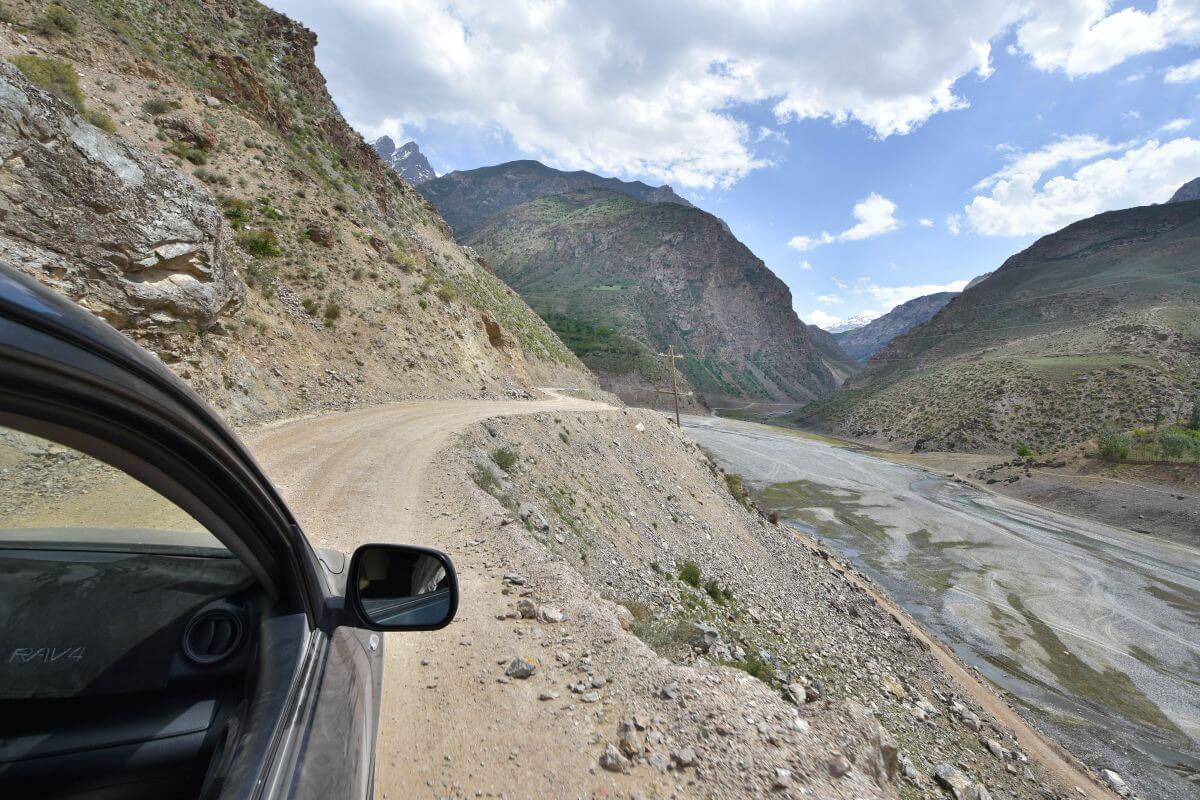
After leaving Lake Nofin, the dirt road climbs steeply through a few sharp turns. Suddenly, the canyon opens wide, and you see a beautiful, shallow river flowing between the massive peaks of the Fann Mountains. Our experienced guide, who travels this route 6 times per week, chose this exact riverbank for our stop. It’s one of the best spots in the entire valley to rest. We sat by the river, unpacked a fresh lunch, and dipped our feet into the cool, refreshing mountain water while taking in the incredible views.
6. Lake Number 5 – Khurdak
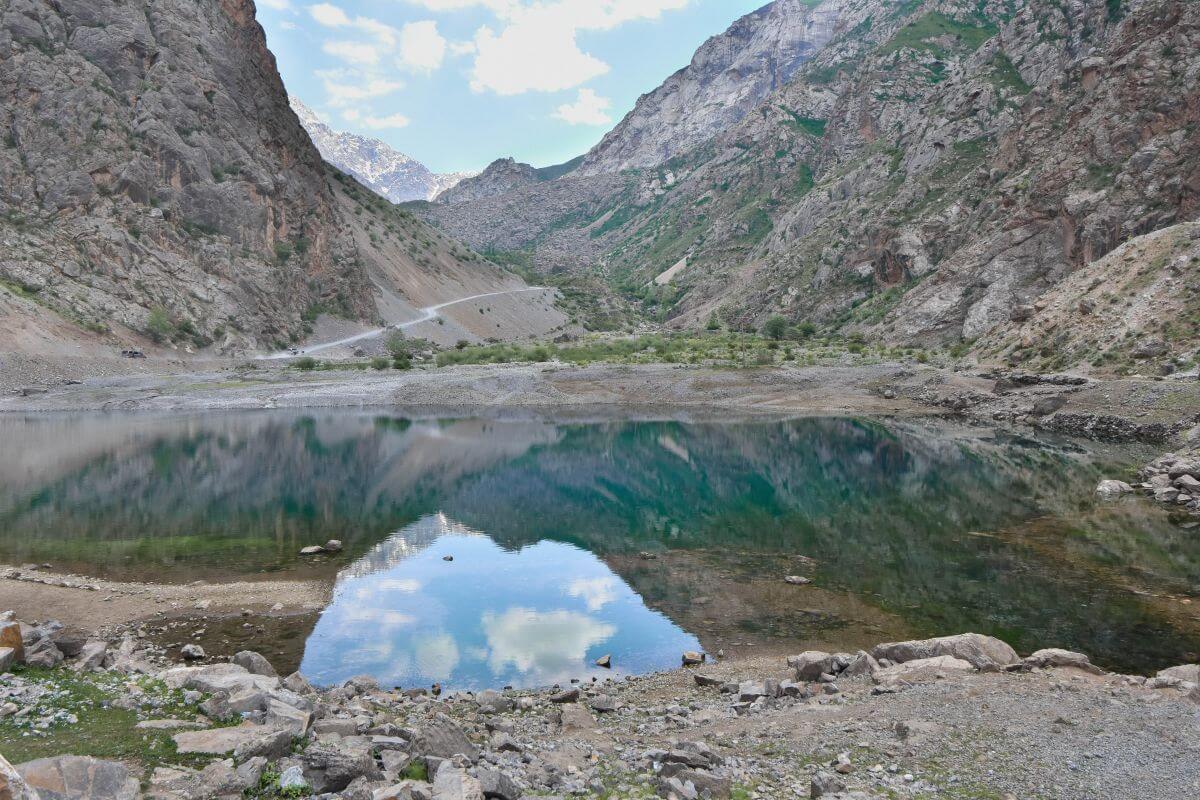
At first glance, Lake Number 5 may not seem as impressive as some of the earlier stops. However, Khurdak offers something completely different from the dramatic viewpoints that define much of the valley.
Known as the smallest of the seven, Khurdak (or Churdak) lies approximately 1,870 m (6,135 ft) above sea level. It covers only 0.025 square kilometres, according to Wikipedia. Its name comes from the Tajik word for ‘small’ or ‘baby’, which could not be more appropriate. Despite its size, it occupies an important place within the chain of the Seven Lakes in Tajikistan. This lake provides a glimpse into everyday life in one of the country’s most isolated mountain communities.
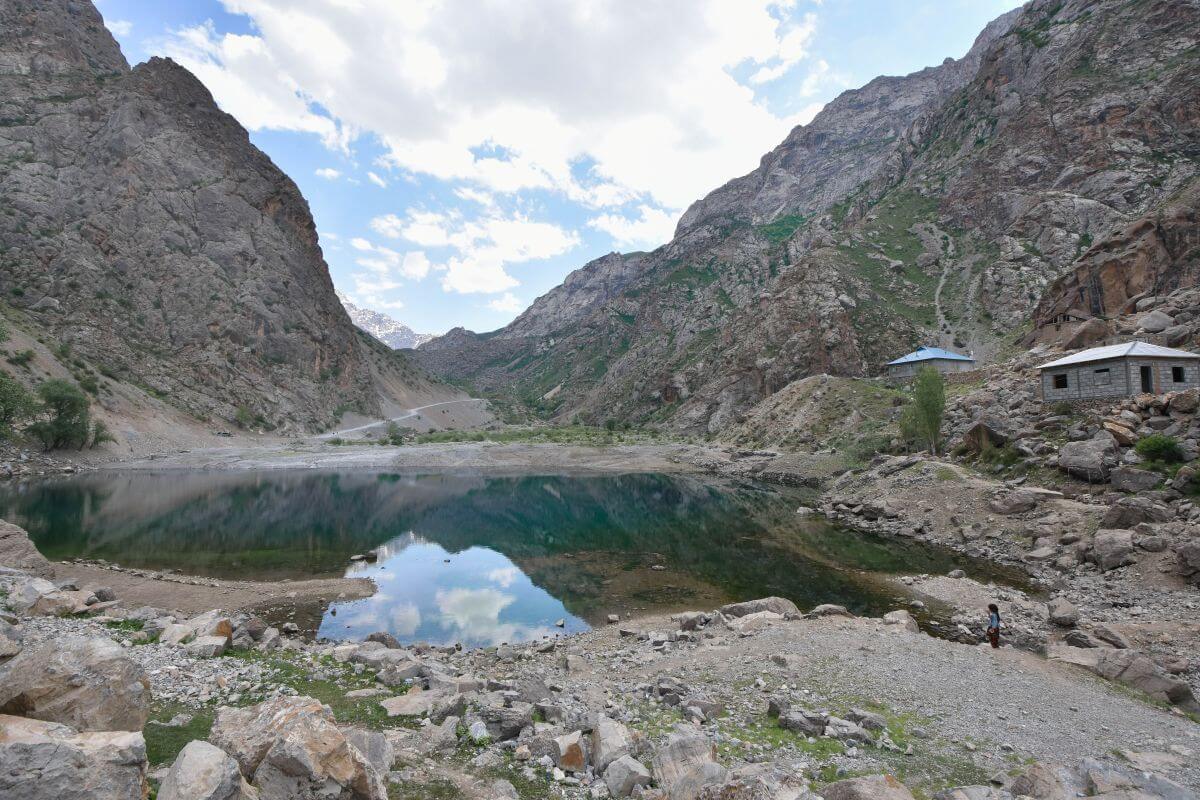
Unlike the more remote sections of the gorge, Khurdak sits directly beside Padrut village. Local people sometimes jokingly refer to it as the ‘business’ water because of daily life around its shore. Small fields, grazing animals, and family activities create a completely different atmosphere from the untouched mountain scenery we found elsewhere along the route.
OUR HONEST EXPERIENCE
We stopped here briefly during our visit. In fact, our guide Umeda initially suggested skipping the stop completely. The reason became clear almost immediately. As soon as we stepped out of the vehicle, a group of local children, together with several adults, approached us, hoping to sell handmade souvenirs. They spoke surprisingly good English and were extremely persistent. A polite ‘no thank you’ rarely ended the conversation.
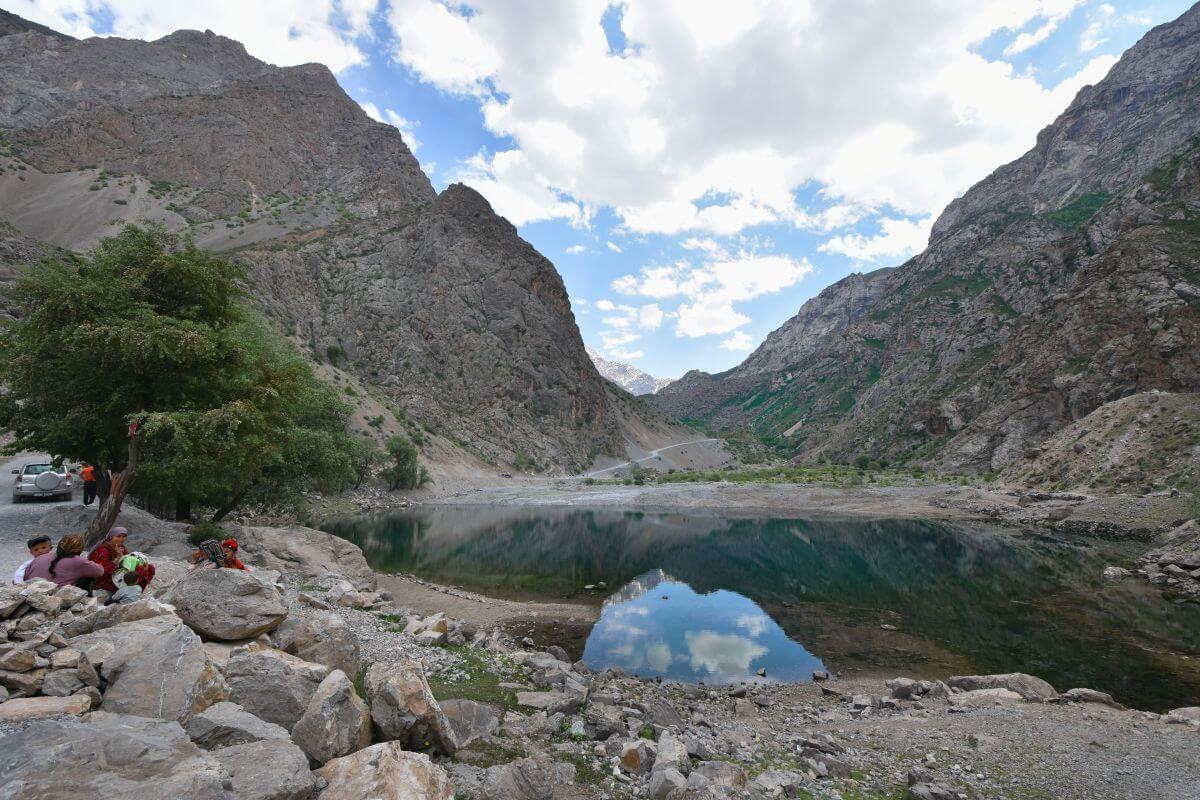
While some travellers may find this uncomfortable, we saw a different side of the situation. These villages are incredibly remote, with very limited opportunities to earn income. We decided to buy several handmade souvenirs to support families. We also gave the children four catch-ball sets, along with dried fruits, nuts, and bottled water. The excitement on their faces was unforgettable. If you plan to visit this part of the Seven Lakes, consider bringing a few small gifts or snacks. It may seem like a simple gesture, but in a place with no shops and few visitors, it can make a surprisingly big difference.
7. Lake Number 6 – Marguzor
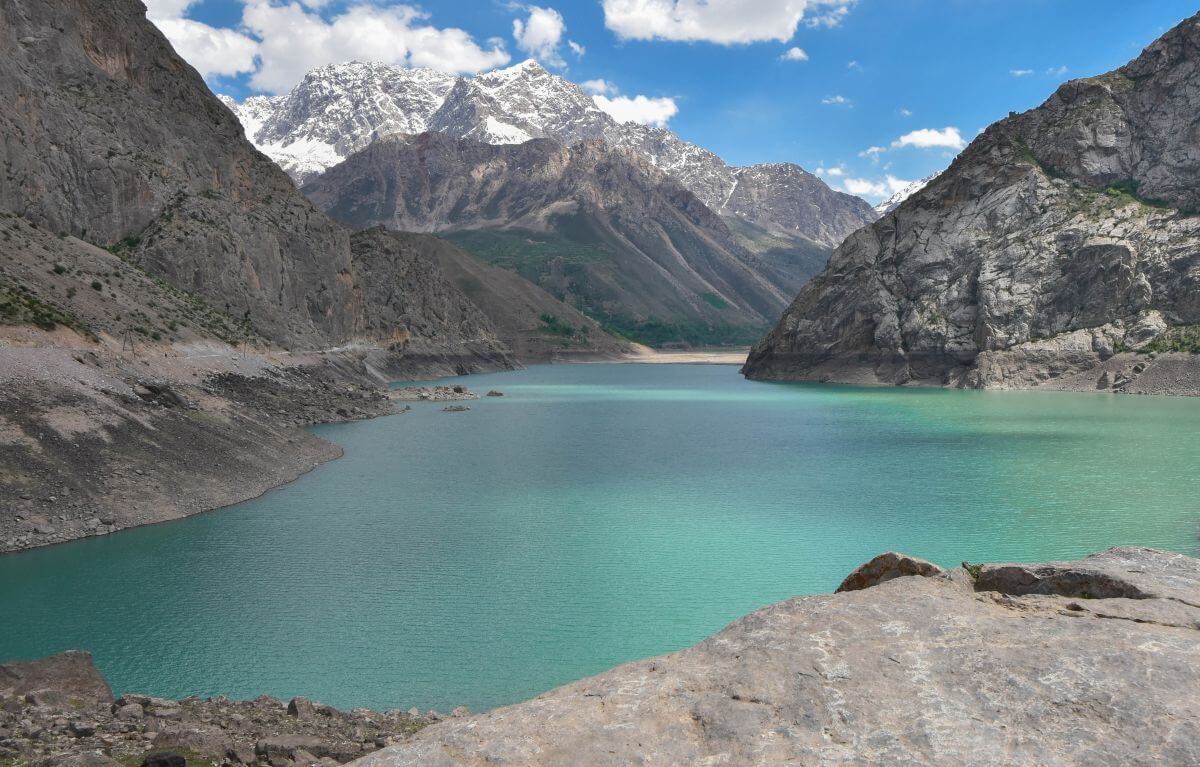
If one place completely stole our hearts, it was Marguzor. Among all the Seven Lakes in Tajikistan, Lake Number 6 felt different. Bigger, wilder, and somehow more dramatic than anything we had seen earlier in the valley. We spent more time here than anywhere else.
Sitting approximately 2,140 m (7,020 ft) above sea level, Marguzor is the largest and most famous of all the Seven Lakes in Tajikistan. According to our tour guide, it stretches approximately 3 km (1.86 mi) and reaches an impressive depth of up to 45 m (148 ft). Size alone, however, is not what makes it special. The breathtaking scenery creates an entirely different atmosphere, with snowy mountains in the background. During our visit, the surface glowed with a soft turquoise colour. The combination of depth, mineral-rich water, and changing light conditions created a constantly changing appearance.
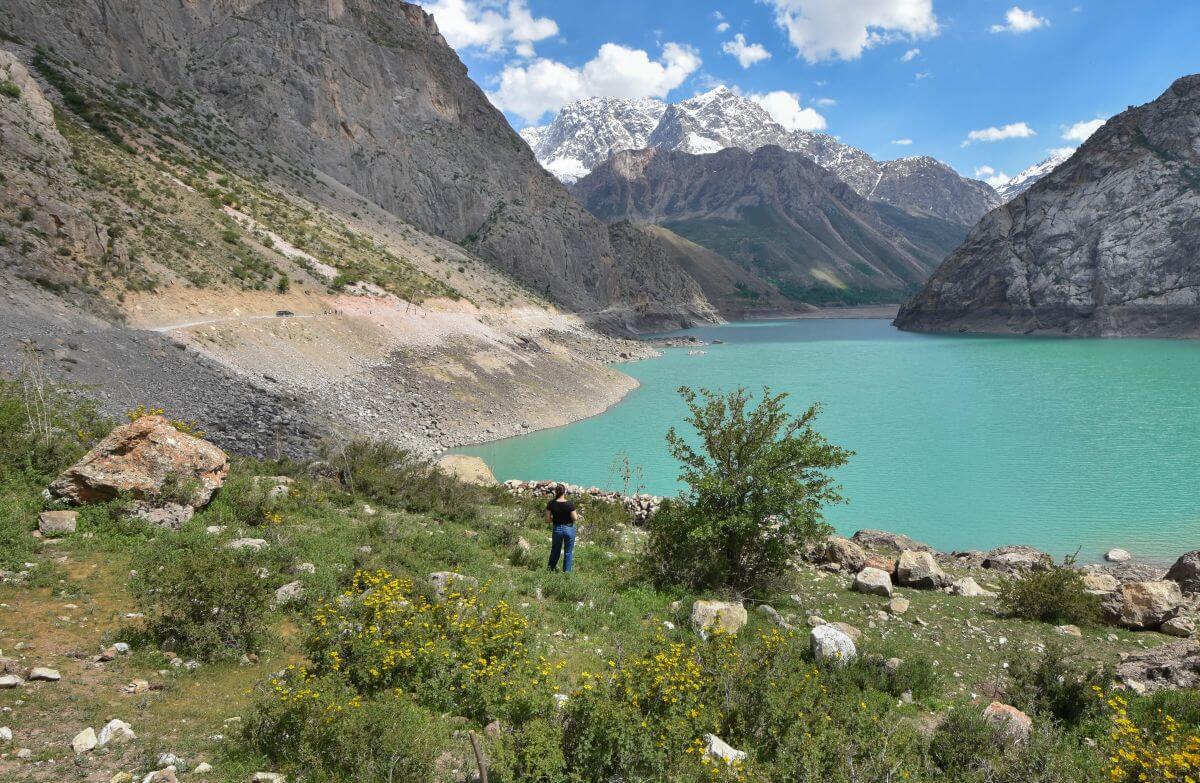
The name Marguzor translates from the local Tajik dialect to ‘blooming meadow’ or ‘place of abundant greenery’. Lake Number 6 is surprisingly lush; it has a fertile valley with wild yellow flowers and herbs. You can even find raspberry bushes here.
MORE THAN BEAUTIFUL SCENERY
Marguzor has a surprisingly rich history. Several travel blogs mention ancient petroglyphs discovered near the shore. Unfortunately, we cannot confirm this ourselves. We never found any during our visit, and embarrassingly, we completely forgot to ask our guide about them. She never mentioned them throughout the day.
Historical records also suggest that people once mined semi-precious stones in the surrounding mountains. Even today, the shoreline attracts geology enthusiasts searching for colourful rocks and striped stones washed down from the higher slopes of the Fann Mountains.
GOOD TO KNOW
You can find a basic Turkish toilet here, and a small shack where locals sell a selection of soft drinks and light snacks (e.g. crisps).
This area also marks the start of one of the most popular hiking routes in the region. Trails leading towards Tavasang Pass attract experienced trekkers looking to explore deeper into the mountains. For us, though, the greatest attraction was much simpler. We sat on the rocks, admired the changing colours, and enjoyed the stunning view for as long as possible. Out of all the stops along the route, Lake Number 6 was the one we didn’t want to leave.
8. Lake Number 7 – Hazorchashma
Perched at approximately 2,400 m (7,874 ft) above sea level, Lake Number 7 is the final stop in the valley. It’s also the highest point of the route and the second-largest body of water in the valley. Beyond this point, the road disappears and the wild landscapes of the Fann Mountains take over completely.
According to our local guide, the name Hazorchashma comes from two Tajik words that translate as ‘a thousand springs’. Unlike the lower waters in the valley, this lake receives water from countless underground springs, mountain streams, and two rivers flowing down from higher elevations. The constant flow helps maintain its size and gives the surrounding landscape an alpine appearance.
Because it sits slightly apart from the rest of the chain, the area feels even quieter and more isolated. For many tourists, reaching the last of the Seven Lakes in Tajikistan becomes the ultimate goal. Yet surprisingly, many visitors never make it this far.
THE TOUGHEST SECTION
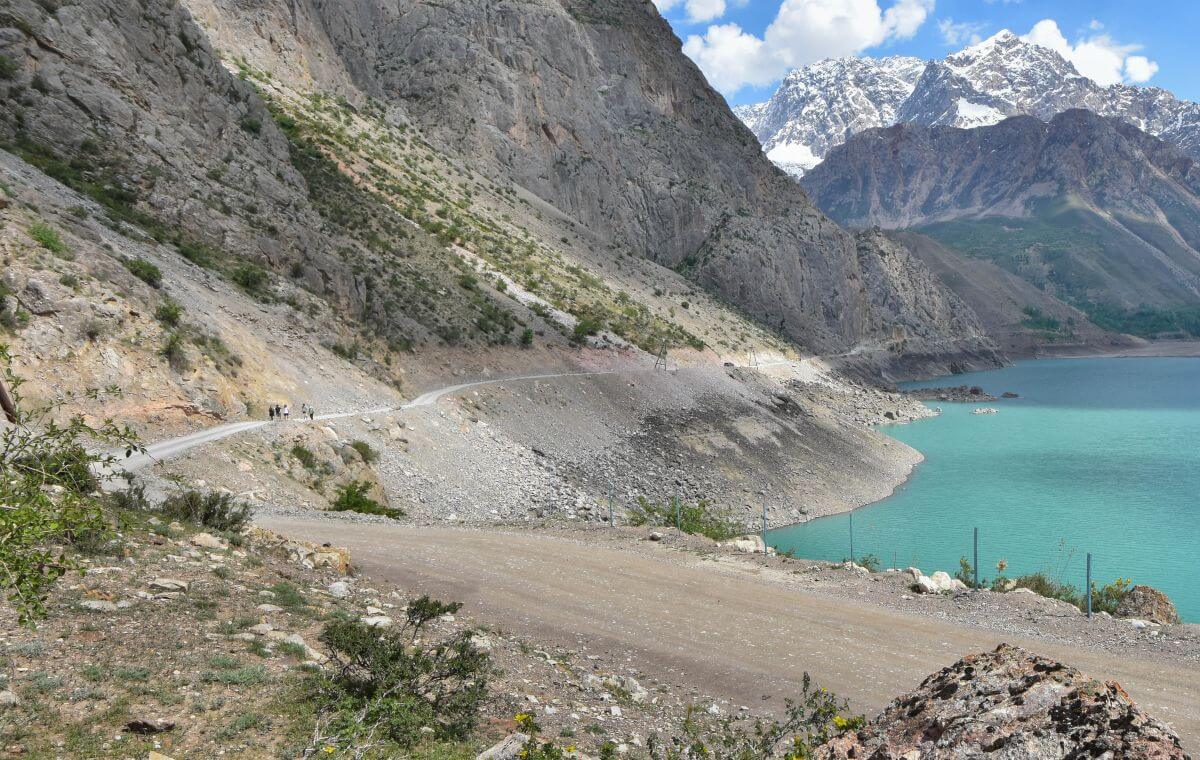
Although Lake Number 7 lies only 2.5-3 km from Lake Number 6, the final approach is surprisingly challenging. The road climbs through a steep, serpentine track covered with loose stones, sharp bends, and even rougher gravel. Every year during periods of glacier melt, sections can become flooded, damaged, or completely blocked. For this reason, many tourists complete the journey on foot. According to Umeda, the walk takes between 20 and 30 minutes each way.
WHY WE DECIDED TO SKIP
This may surprise some readers, but we deliberately chose not to continue to Lake Number 7. The decision had nothing to do with difficulty. We simply had to make a practical choice.
The rough condition of the gravel road meant the return journey would have added roughly another hour to our day. That extra time would have prevented us from visiting two places we were equally determined to see while exploring Tajikistan. The ancient city of Panjakent, which appears on UNESCO’s Tentative List, and the UNESCO-listed archaeological site of Sarazm both close at 5 PM. We carefully calculated our timing and realised we could either visit the seventh lake or reach both cultural attractions before closing. We chose the other option.
Fortunately, our private tour gave us enough flexibility to make it work. We successfully visited both locations, although the museums had already closed by the time we arrived. Interestingly, one of the group tours from Samarkand that we met several times throughout the day planned to visit Sarazm as well, but never arrived before closing time. Looking back, skipping Lake Number 7 was absolutely the right decision for us.
GOOD TO KNOW
Lake Number 7 isn’t accessible throughout the year. The best period to visit is from May to October. Mid-June to mid-September offers the best conditions for hiking and road access. During winter, heavy snowfall, ice, and even avalanche risk make the upper valley inaccessible, and Lake Number 7 remains completely closed for months. Always check if you’ll be able to visit this lake before booking your tour to avoid disappointment.
BOOK YOUR ONCE IN A LIFETIME EXPERIENCE BELOW:
Seven Lakes in Tajikistan – Tips we wish we knew before visiting
If you’re thinking about visiting the Seven Lakes in Tajikistan, these are the practical tips we genuinely wish someone had shared with us before we arrived.
BEFORE YOU GO
- Check your visa before booking anything. This sounds obvious, but it’s surprisingly easy to overlook. Many travellers can apply for a simple eVisa online, including tourists from the UK, EU countries, the United States, and Canada. However, visa rules change, so always check the latest requirements before booking your tour.
- Start earlier than you think you need to. One of the biggest mistakes you can make is underestimating the travel time. The distance may not look particularly long on a map, but the mountain road slows everything down. If you’re travelling from Samarkand or even further, leave as early as possible. A large part of the day involves driving, especially once you enter the Shing Valley.
- Don’t forget to bring your passport. There are security checks on the route, and you may be asked to show identification.
- Crossing the border is easy. You can easily cross the border if arriving from Samarkand. The Jartepa-Sarazm crossing operates 24 hours a day and serves as the main crossing point between Uzbekistan and Tajikistan. You can find it on Google Maps here. We crossed alongside a small tour group from Samarkand and met our local guide on the Tajik side. The process was straightforward.
OTHER THINGS TO KNOW
- Carry enough cash. There are no cash machines in the valley, and card payments are nonexistent. Bring enough Tajikistani somoni for your driver, drinks and any unexpected purchases.
- Mobile signal disappears sooner than expected. If you rely on maps, translation apps, or messaging services, prepare in advance. Phone coverage becomes increasingly unreliable further into the valley, especially beyond the middle section of the route.
- Don’t expect modern facilities; they remain basic. During our drive, we found two toilet facilities in the valley. One was near the beginning of the valley, and the other was close to the sixth stop. Neither was signposted, and without our driver, we would never have found them. Both were traditional Turkish-style toilets run by local families for a small fee.
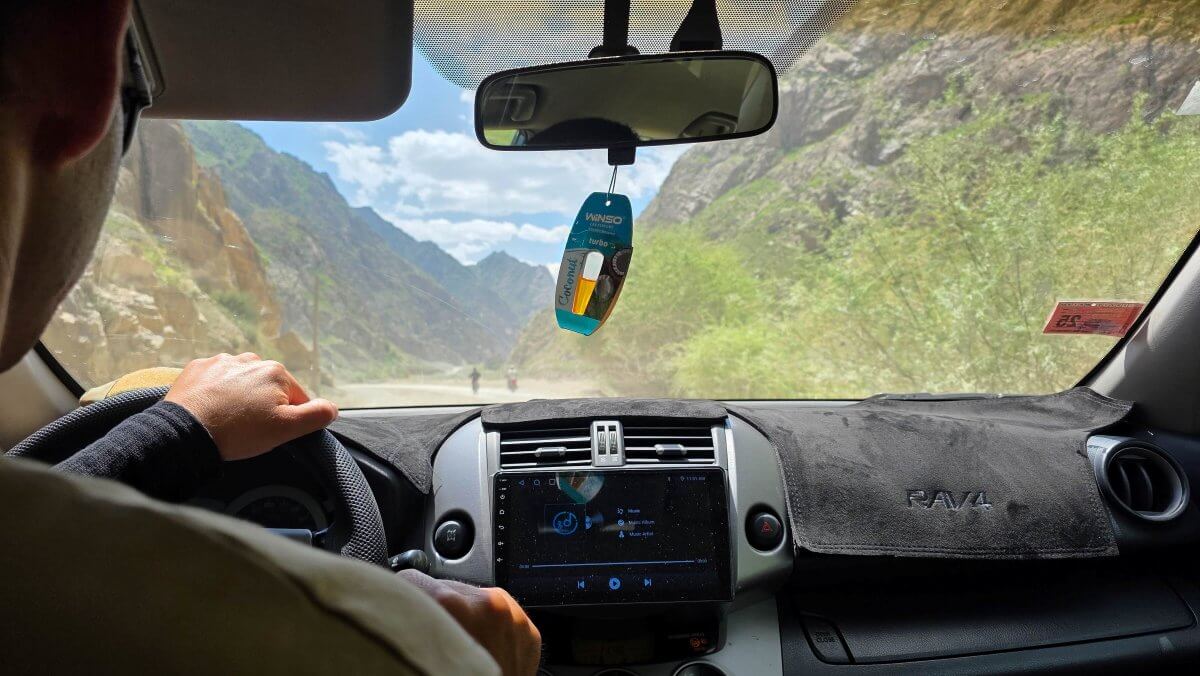
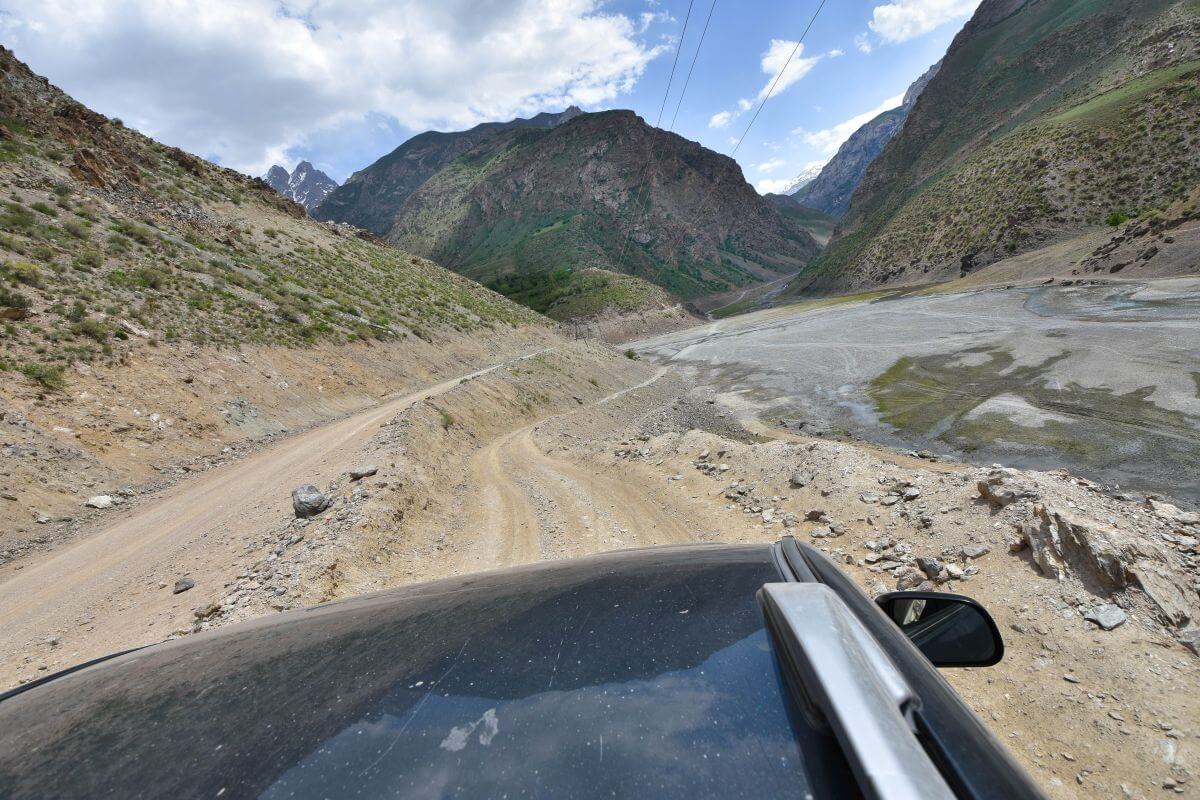
- Expect dust, gravel, and a bumpy ride. Even during the dry weather, the road throws up plenty of dust. The rough gravel also means the ride is slow and bumpy in places.
- Wear comfortable clothes and sturdy footwear, and accept that getting a little dusty is simply part of the adventure. This is not a destination for spotless white trainers or delicate clothing.
REMEMBER
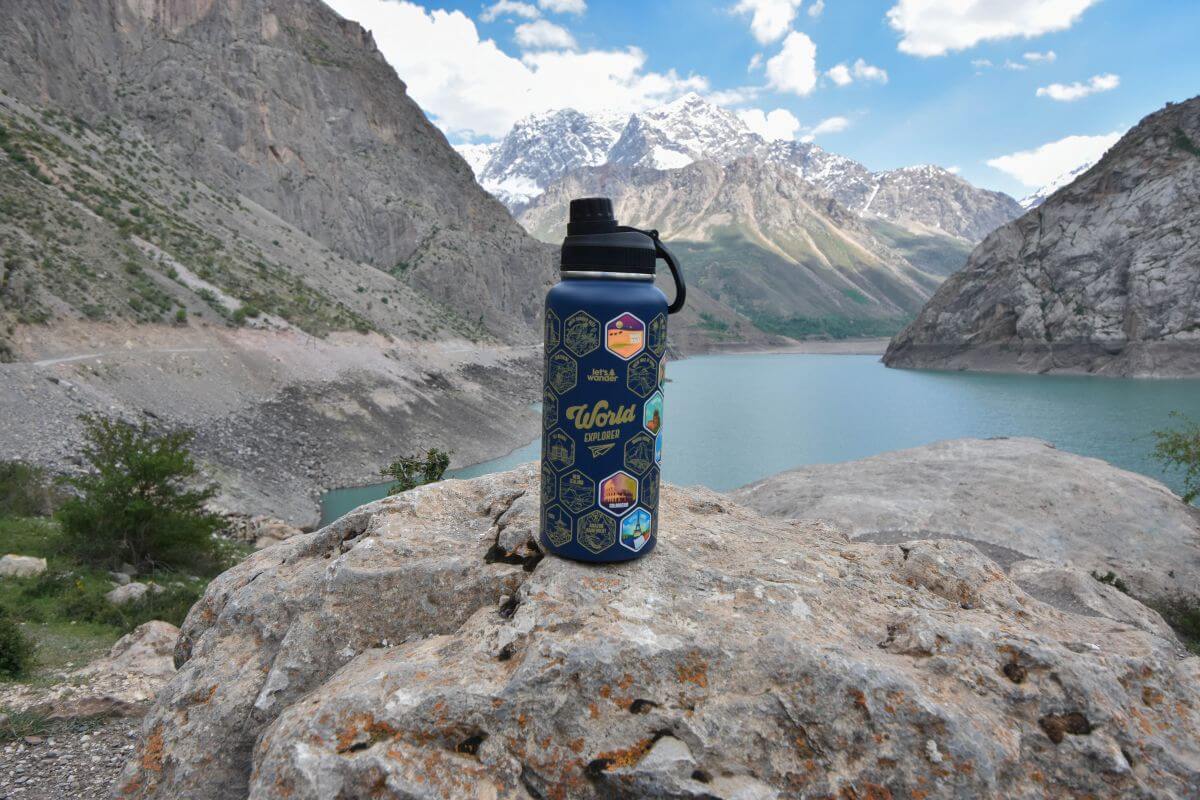
- Bring more snacks and water than you think you’ll need. We strongly recommend bringing drinks, snacks, and anything else you may need from Panjakent before you leave. Even if lunch is included in your tour, extra snacks and a bottle of water make the journey much more comfortable.
- The weather changes more than you expect. The lower part of the valley can feel surprisingly hot. During our visit in mid-May, temperatures exceeded 30°C. However, conditions are much cooler during the colder months and become cooler as you gain altitude.
- Respect local communities. You’ll pass traditional villages where daily life continues much as it has for generations. Always ask for permission before photographing people, particularly children. Remember that many families rely on small souvenir sales for extra income.
- Think carefully about the vehicle. A standard car can reach much of the route, especially in dry weather. However, the higher sections become rougher, steeper, and far more uncomfortable. After experiencing the road ourselves, we completely understand why many drivers prefer a 4WD. It’s not essential, but it certainly makes the journey easier.
Overnight Stay or a Day Trip to the Seven Lakes, Tajikistan?
If you aren’t visiting on a day tour, it’s possible to stay overnight near the Seven Lakes in Tajikistan. This is an excellent option if you want to avoid the long drive from Panjakent. A handful of traditional homestays are available along the route, including Jumaboy Guesthouse near the fourth lake, Sem Ozer Guest House, and Marguzor Turbaza & Najmidden Homestay further up the valley. However, we didn’t personally stay in any of these properties, so we are unable to share recommendations.
Can you swim in the Seven Lakes in Tajikistan?
These mountain pools are fed by icy streams and remain extremely cold, even during the warmer months. We saw local boys swimming in the first pool without hesitation. If you decide to swim, remember that this is a conservative rural region. Modest swimwear and respectful behaviour are always appreciated.
Now you have a complete guide to planning your visit to the Seven Lakes in Tajikistan.
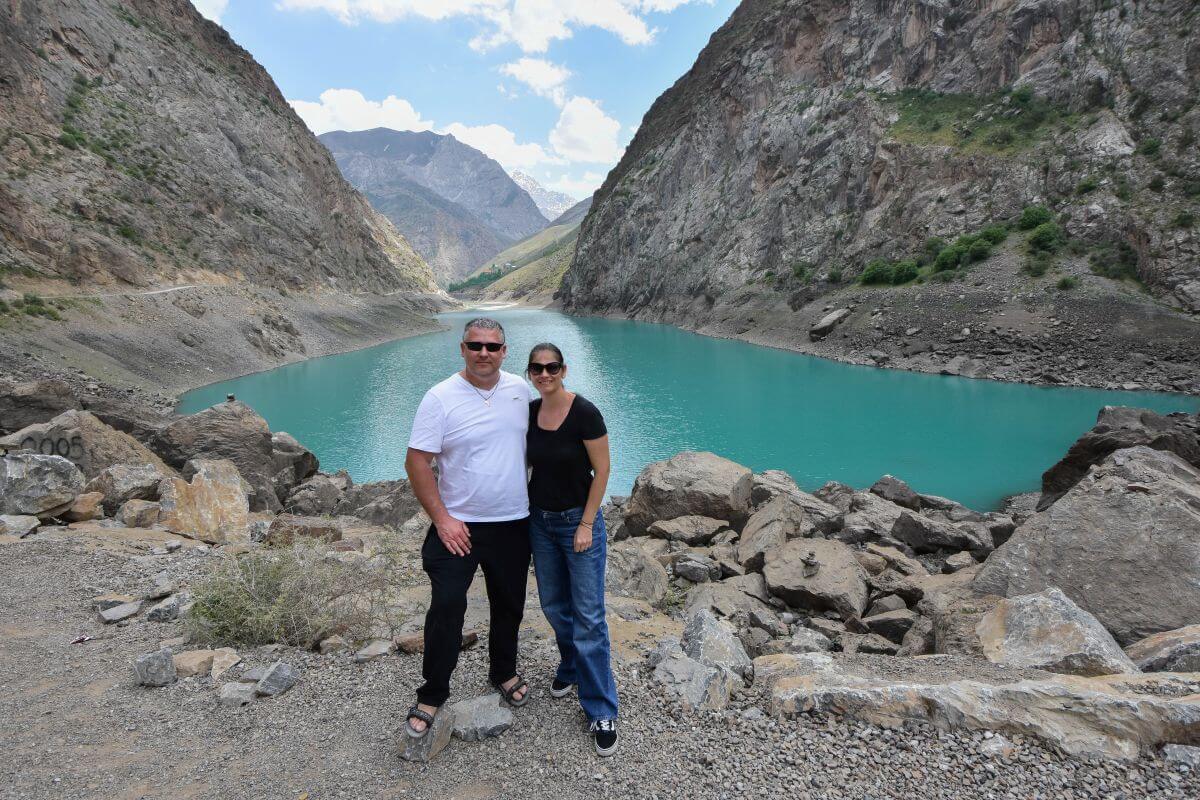
Thank you for staying with us until the end! If you’ve enjoyed this article, please consider sharing this post to extend its reach.
Pin the Seven Lakes in Tajikistan for later so you don’t lose it!
BOOK YOUR ONCE IN A LIFETIME EXPERIENCE BELOW:
Disclaimer: This post contains affiliate links. If you click through and make a purchase, we may receive a small commission at no additional cost to you. This helps to support and run our blog.
YOU MAY ALSO ENJOY: