For 3,000 years, great civilisations shaped Tunisia, and no place tells that story better than the Bardo National Museum in Tunis. Here, history surrounds you from the moment you enter. Picture an entire wall covered by breathtaking Roman mosaics, so finely made you can read the emotion on every face. That sense of wonder is evident in room after room inside one of the most important and beautiful collections of its kind anywhere in the world.
Located just outside the capital, this stunning palace-housed landmark rivals and often surpasses many better-known European museums. After extensive restoration, the site reopened stronger than ever, with elegant spaces that make exploring easy and enjoyable. You can trace every era of Tunisian history through treasures such as a prehistoric altar and Hellenistic sculptures, as well as precious Carthaginian jewellery. In this article, you’ll discover why the Bardo National Museum matters, why it’s famous and the must-see highlights. We also cover the story behind the building and practical tips to make your visit smooth and unforgettable.
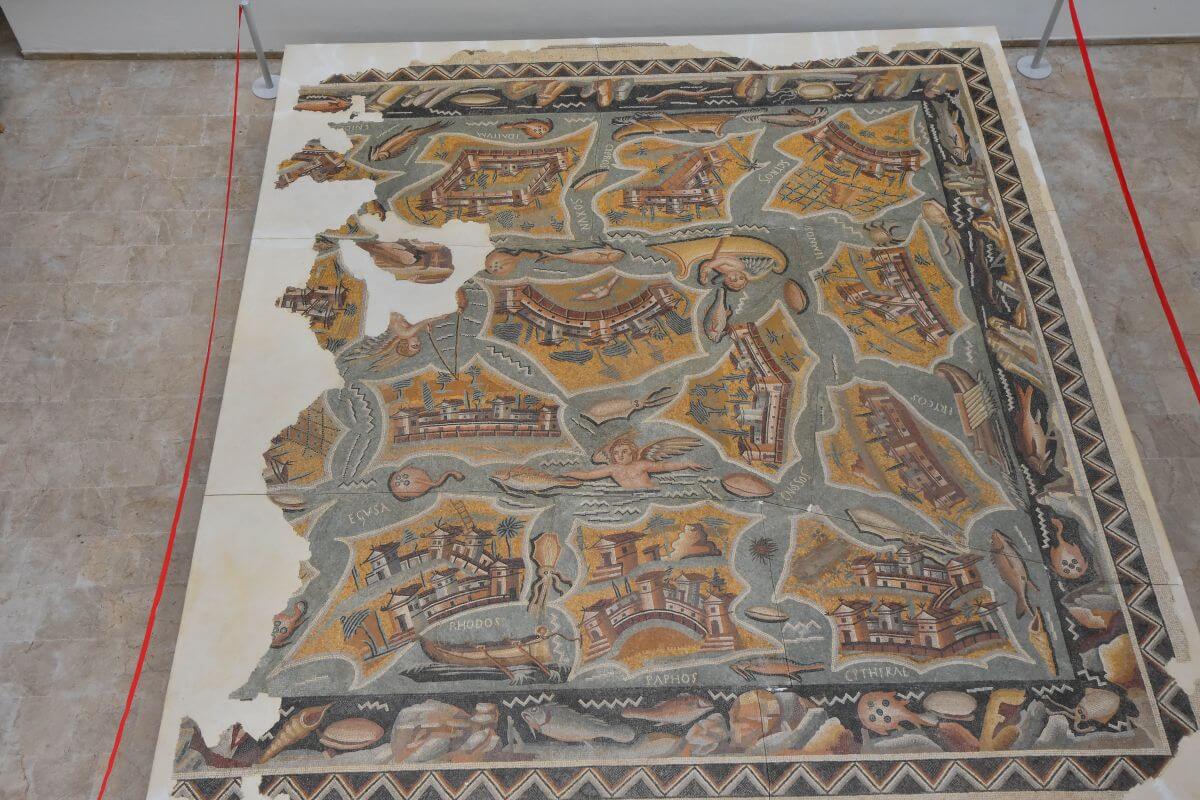
It’s not only a place to look at objects, but a place to understand how cultures rose, traded, and shaped the land.
What is the Bardo National Museum in Tunis famous for?
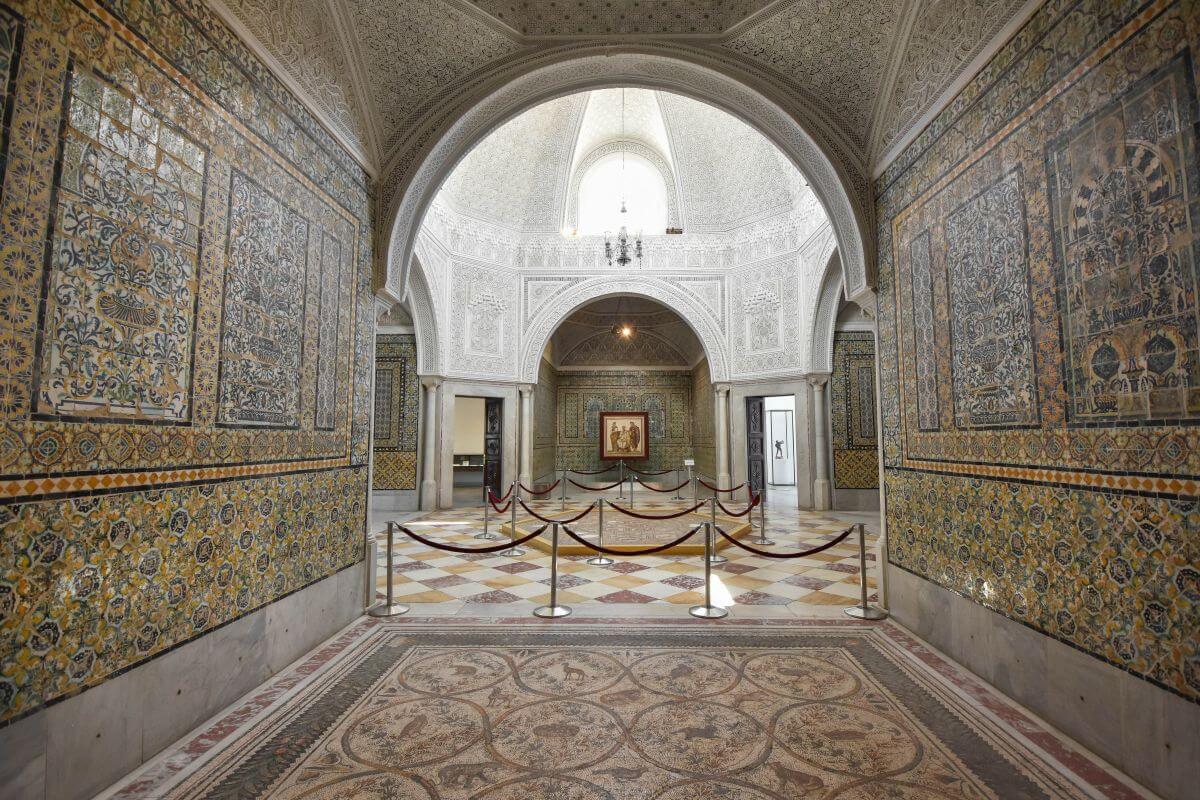
The Bardo National Museum in Tunis is famous for housing one of the largest Roman mosaic collections in the world. As the largest museum in Tunisia and one of the most significant museums in the Mediterranean, it’s often dubbed the ‘Louvre of Tunisia’ for its priceless treasures.
For many years, it held the title as the museum with the second most important or richest collection in Africa, after the Egyptian Museum in Cairo. That changed when the Grand Egyptian Museum (GEM) in Giza officially opened on 1 November 2025. The Bardo now holds the third position behind Egypt’s two giants. Despite this shift in ranking, the museum remains the key authority on the civilisations that shaped North Africa. It traces the history of the Punic, Roman, Byzantine, and Islamic periods, with extensive collections covering these eras.
REMARKABLE COLLECTIONS 
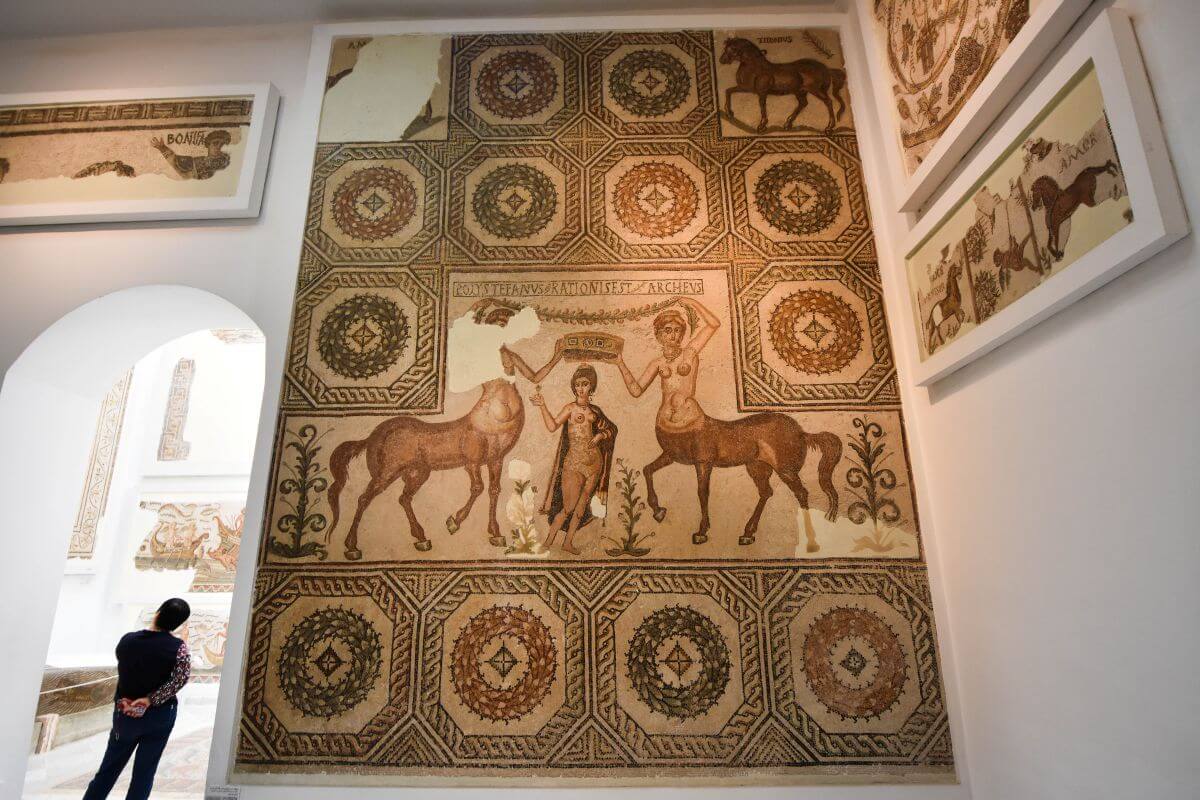
After recent renovation and expansion, the galleries now cover approximately 20,000 square metres, according to Arab Weekly. This wider layout gives the major collections the space they deserve. Around 5,000 square metres focus on mosaics, the museum’s star attraction. In total, the Bardo National Museum holds approximately 130,000 objects and over 3,500 Roman mosaics, according to Wikipedia. Few places anywhere can rival those numbers, making it one of the world’s greatest centres for mosaic art.
According to information panels on the site, these works came from excavations across Tunisia, including Carthage, Hadrumetum, Dougga, and Utica. Beyond mosaics, galleries reveal Phoenician, Roman, Christian, and Islamic artefacts that show how cultures traded, ruled, and shaped the land.
How Was the Museum Founded?
Long before it displayed treasures, the Bardo National Museum began life as a royal palace in Tunis. Its story started centuries before the first ticket desk appeared.
FROM PALACE TO CULTURAL LANDMARK
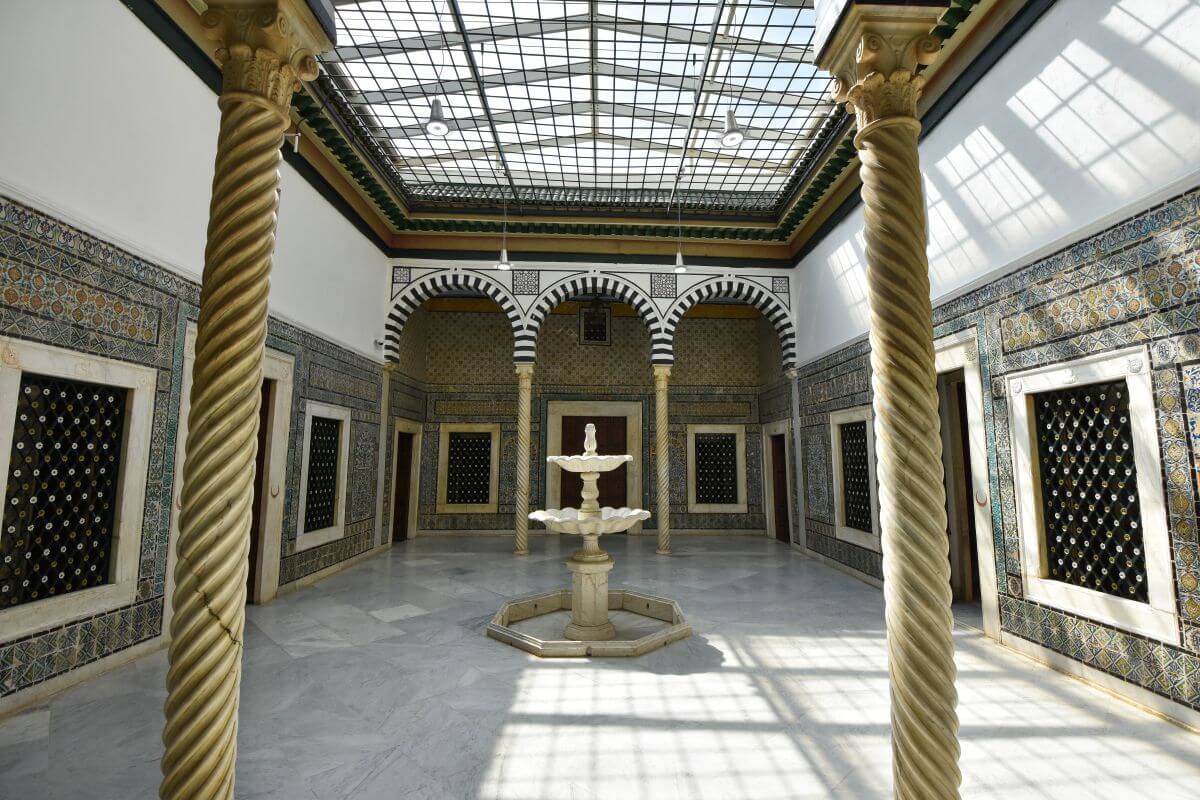
The complex grew on land known as Le Bardo, an area whose name means gardens or meadows. Its earliest palace buildings trace back to the Hafsid dynasty, which ruled from the 13th to 15th centuries. These rulers created a grand residence outside the old city, choosing space and privacy over the crowded medina. Over time, generations expanded the estate, turning medieval residences into the heart of the later complex.
During the 18th and 19th centuries, the Husainid dynasty transformed the site further. They added elegant courtyards and richly decorated halls that drew admiration for their architecture. The wider complex included several buildings, including the Little Palace and the Grand Palace, each with its own role and style. A new chapter began on 7 May 1888, when the palace officially opened as the Alaoui Museum. The French colonial administration created it to gather and display the growing number of Roman and Punic finds uncovered during excavations across Tunisia. Royal rooms soon filled with statues, inscriptions and mosaics instead of court ceremonies. That change gave Tunisia one of the most remarkable museums in Africa.
Bardo National Museum Highlights
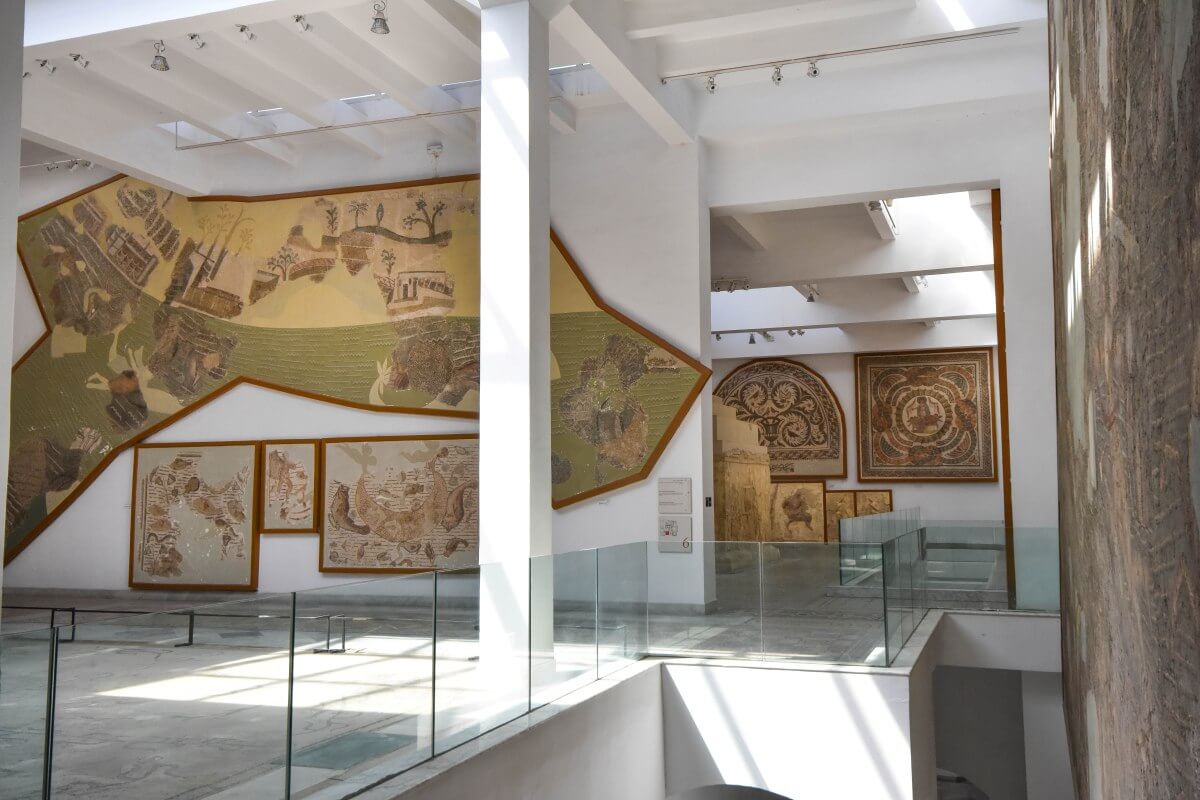
Don’t expect a quick walk-through, because the Bardo National Museum in Tunis is enormous. Its collections spread across several sections and galleries, each organised by historical periods and key moments that shaped this land.
During your visit, you will move from the Punic world and remarkable finds from Carthage to classical antiquity. Statues of gods, heroes, and emperors greet you in majestic poses. Vast mosaics appear throughout the route, some so detailed that you can spend minutes studying a single scene. Make time for the Marine Archaeology Hall, where maritime discoveries reveal Tunisia’s bond with the sea. Then look up and around, because the palace itself deserves attention. Many halls are as impressive as the collections inside them. Let’s begin with the treasures waiting on the ground floor.
1. Triumph of Neptune
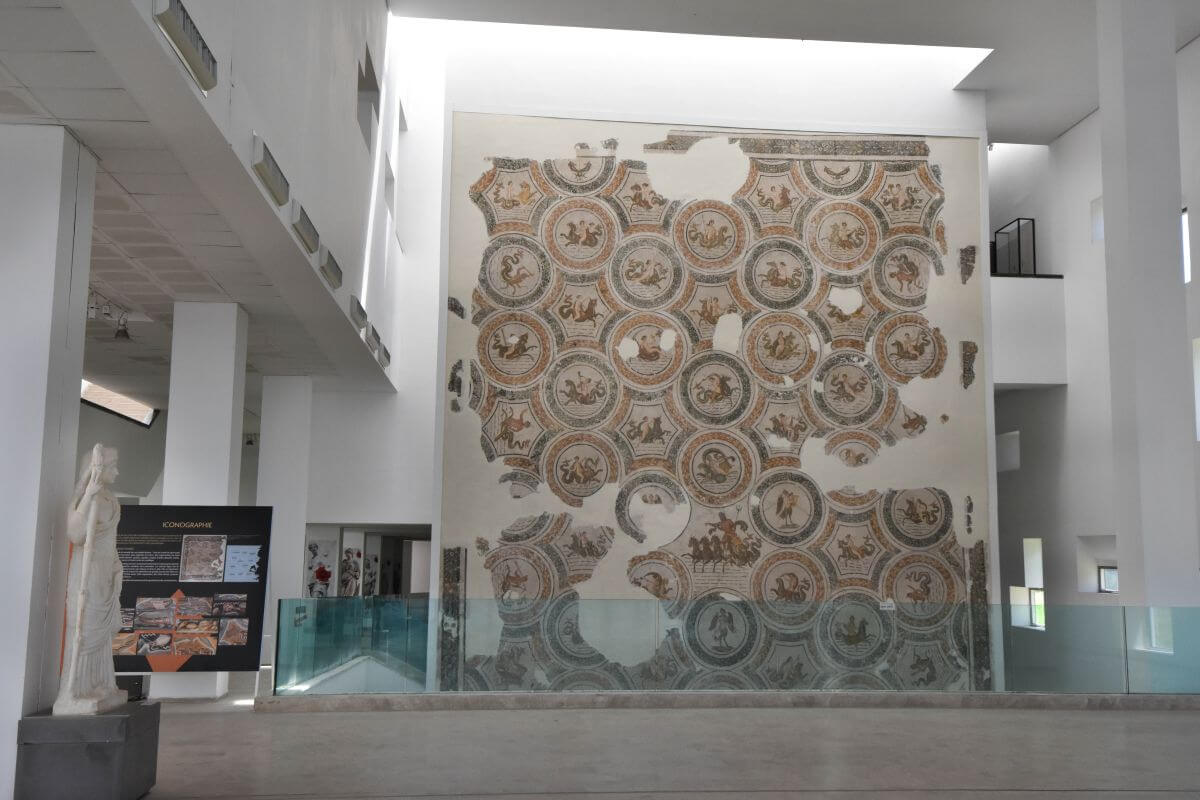
After buying a ticket, many visitors hurry through the entrance hall of the Bardo National Museum and miss one of the greatest treasures hanging in plain sight. Slow down here, because the massive Triumph of Neptune mosaic is not just decoration. It’s one of the most unforgettable mosaics in the building, and it deserves your attention before you head anywhere else.
This huge Roman masterpiece dates back to the late second century AD. According to the information panels on the site, it is associated with the House of Sorothus in ancient Hadrumetum, today’s Sousse. Many online sources, however, connect it instead to an elite Roman villa at La Chebba, ancient Caput Vada. Both sides belonged to wealthy Roman Tunisia, which explains why the debate continues. Whatever its precise origin, few doubt its importance.
For years, the mosaic lay on the floor in the old Sousse room. During the major 2010s extension, teams relocated it to the grand hall and mounted it vertically. That change transformed the viewing experience. Measuring over 100 square metres, it now ranks among the largest and most complete Roman mosaic floors.
WHAT YOU CAN SEE
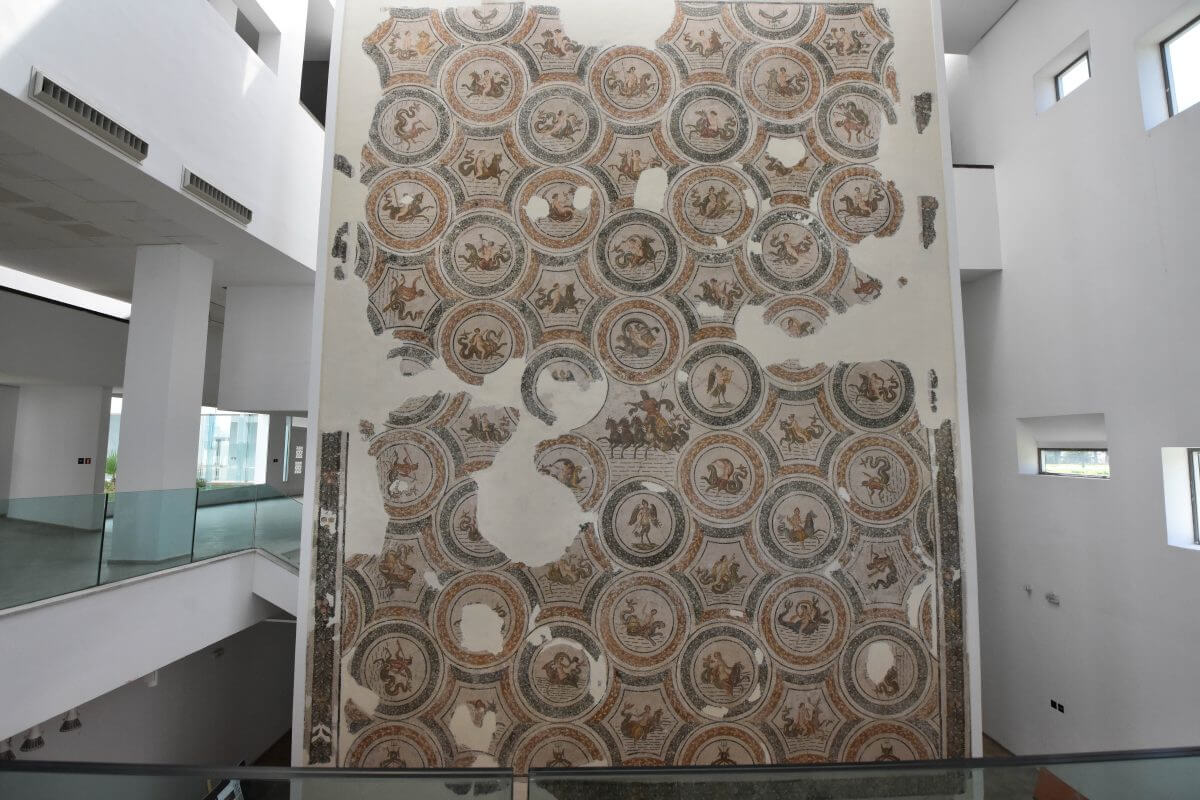
Now you can admire the full composition at once. At the centre, Neptune (Roman god of the sea), stands in a chariot drawn by four hippocamps (horses with fish tails). Around him, 56 medallions show fishermen, sea creatures and mythological figures. Look closely at the small hand-cut pieces of stone and their rich colours. They reveal astonishing craftsmanship. That combination of scale, symbolism and beauty makes the Triumph of Neptune one of the Bardo’s greatest highlights.
2. Virgil Mosaic
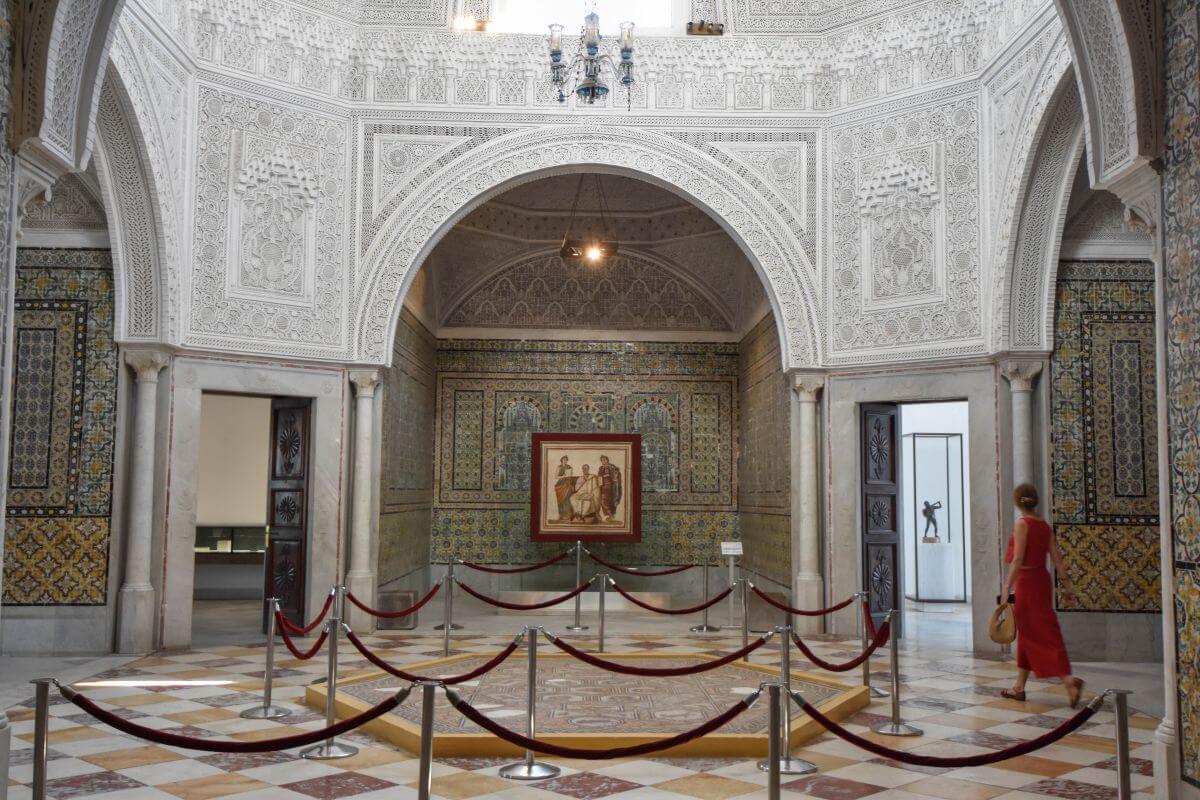
Many visitors chase size and colour and head straight for giant mosaics. Yet one of the most precious treasures in the Bardo National Museum hangs quietly in the Virgil Room. The Virgil Mosaic may be smaller than some showpieces, but few works carry greater importance than this one.
According to the information panel on the site, this remarkable Roman mosaic dates to the 3rd century AD. It came from ancient Hadrumetum (today’s Sousse), a Phoenician settlement that existed before Carthage rose to power. Archaeologists uncovered it in 1896, and later it became one of the stars of the Bardo’s Roman collection.
WHY IT IS SO FAMOUS?
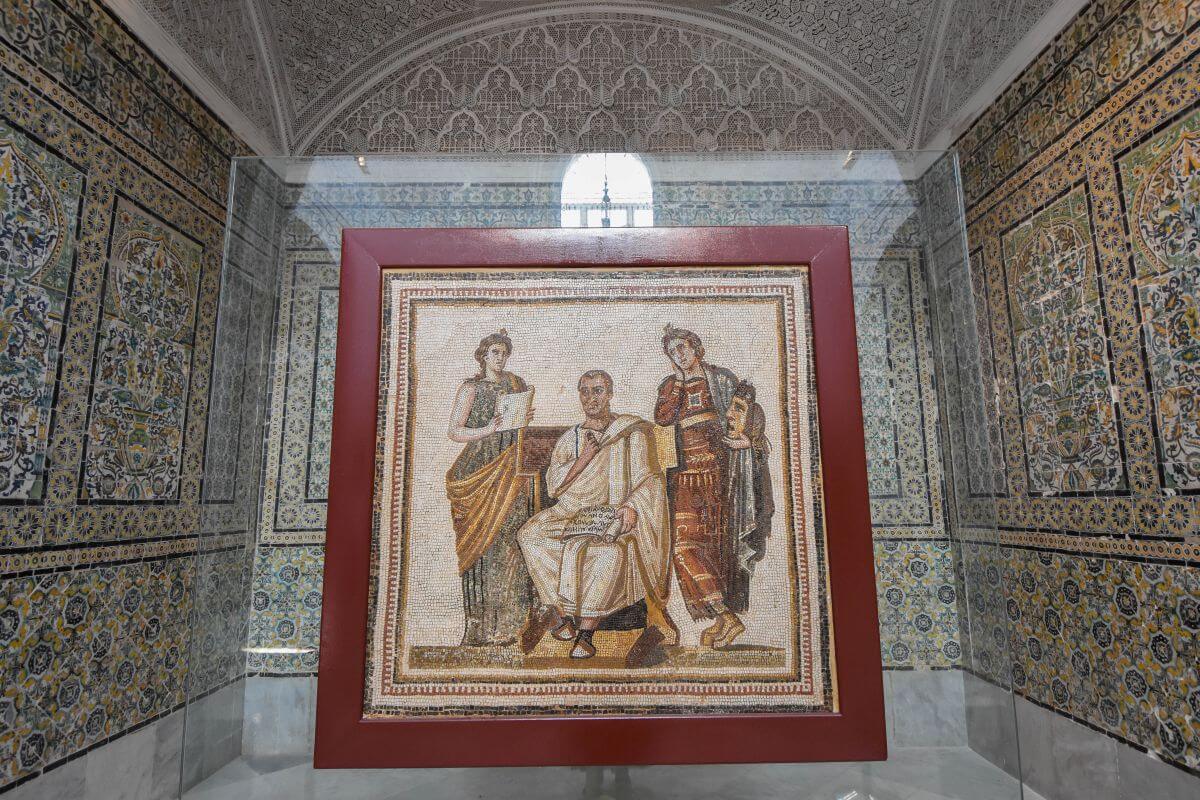
The Virgil Mosaic matters because scholars widely consider it the oldest surviving portrait of Virgil. According to our tour guide, Imed, and historical records, this is the only portrait of him from Roman times. That alone makes it extraordinary and far more than decoration. It also reveals something more significant: Roman North Africa prized education, poetry, and classical learning.
WHAT YOU CAN SEE
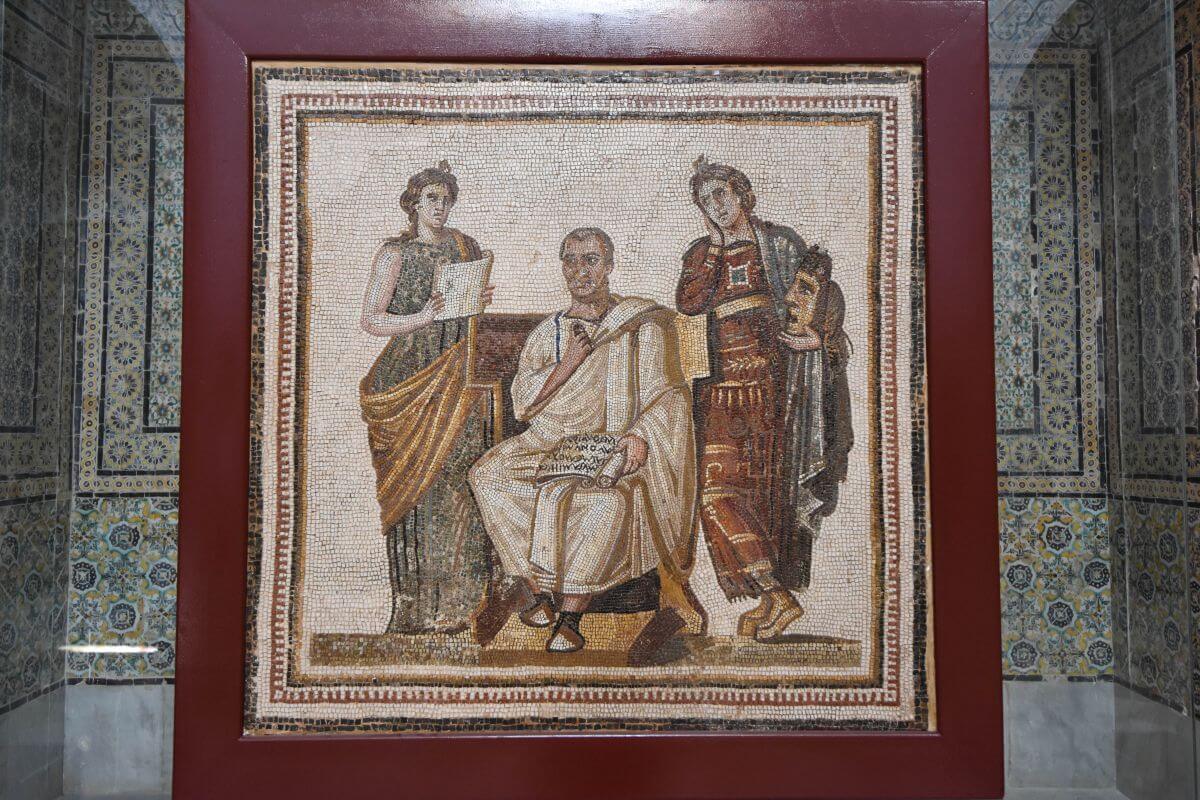
The image shows the poet Virgil seated on a chair with an open scroll across his lap. The scroll refers to the Aeneid, his most famous work. On the scroll, you can still read the words: Musa, mihi causas memora, quo numine laeso (Muse, tell me the causes). Those lines came from Book I, verse 8, according to historical records.
Virgil doesn’t sit alone. On one side stands Clio, muse of history, holding a scroll. On the other stands Melpomene, muse of tragedy, carrying a theatrical mask. Their presence turns the portrait into a tribute to knowledge, storytelling, and artistic inspiration. Fine details in clothing, faces and posture reveal the skill of Roman artists working in North Africa.
3. A Domain at Water’s Edge
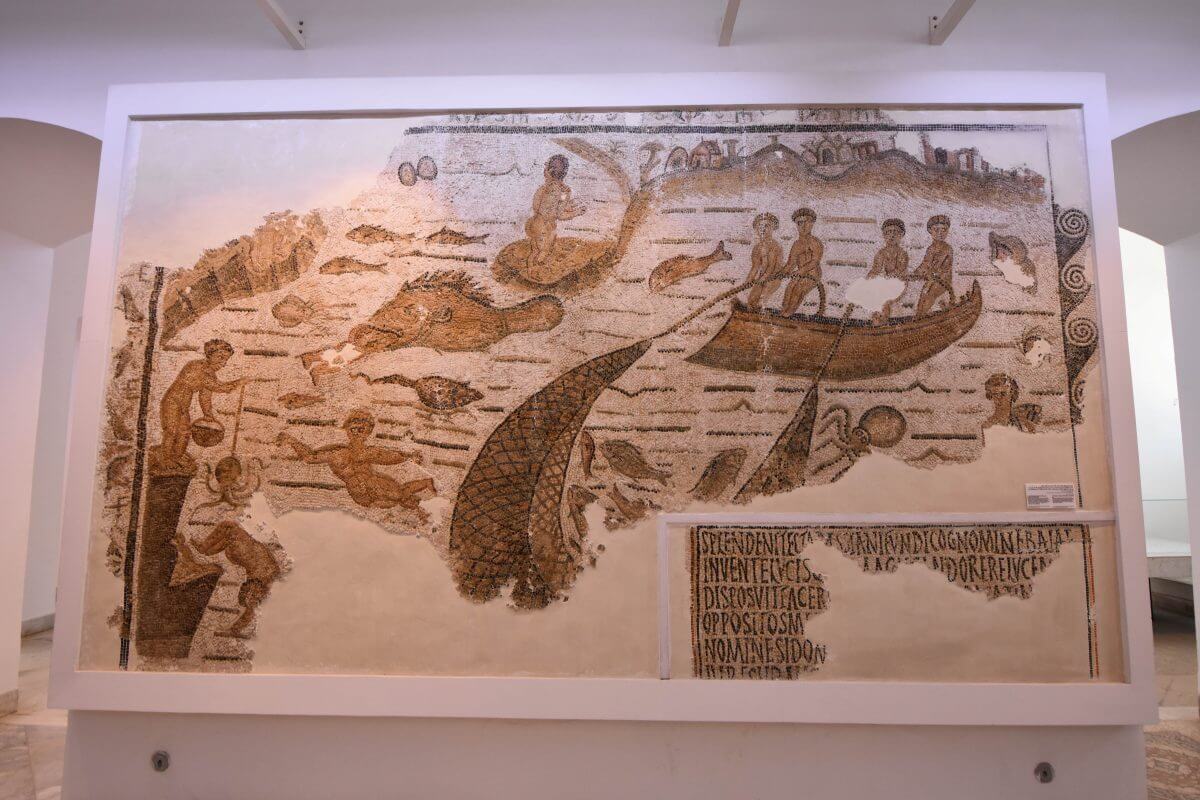
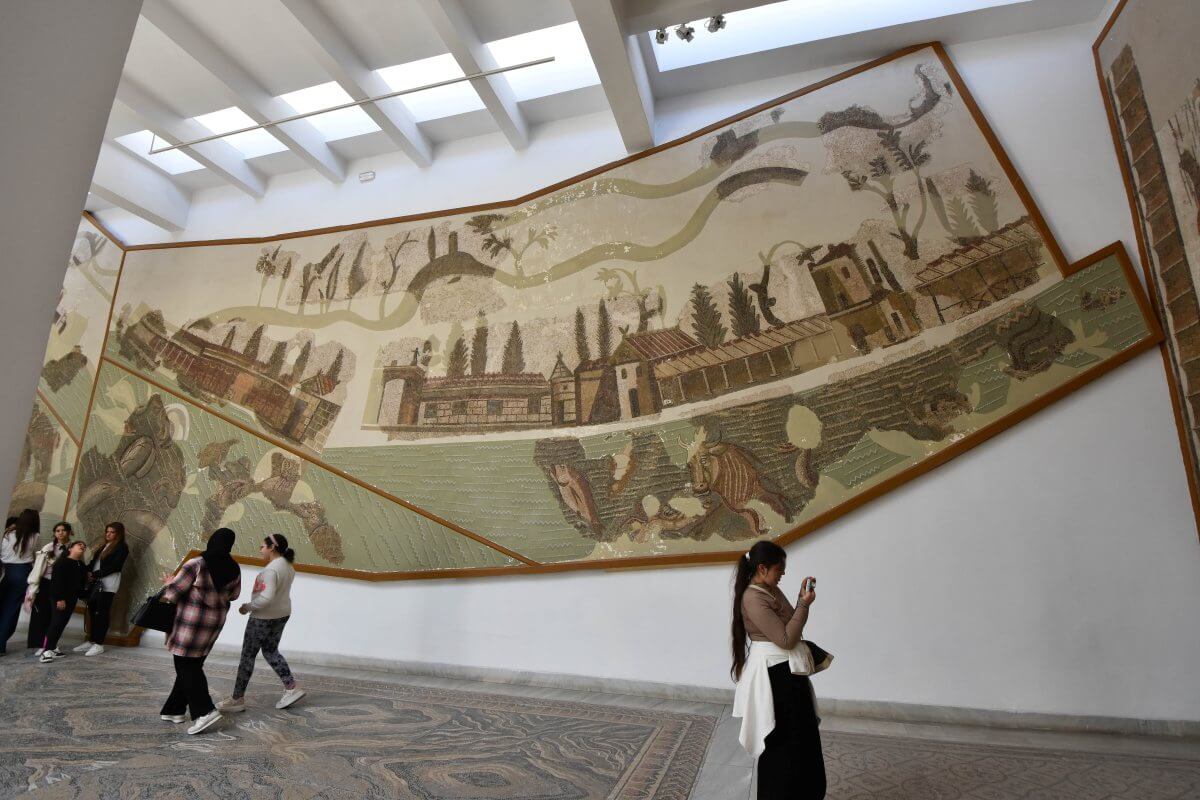
This elegant mosaic comes from Sidi Abdallah in the Bizerte region and dates to the late 4th or early 5th century AD. According to an information panel on the site, artists used marble and limestone to build the scene. A Domain at Water’s Edge mosaic once decorated a maritime villa. The mosaic shows scenes of fishermen at the Bizerte Lake in northern Tunisia during ancient times. It shines because it captures everyday life and scenery, not mythological drama.
4. Odysseus and the Sirens
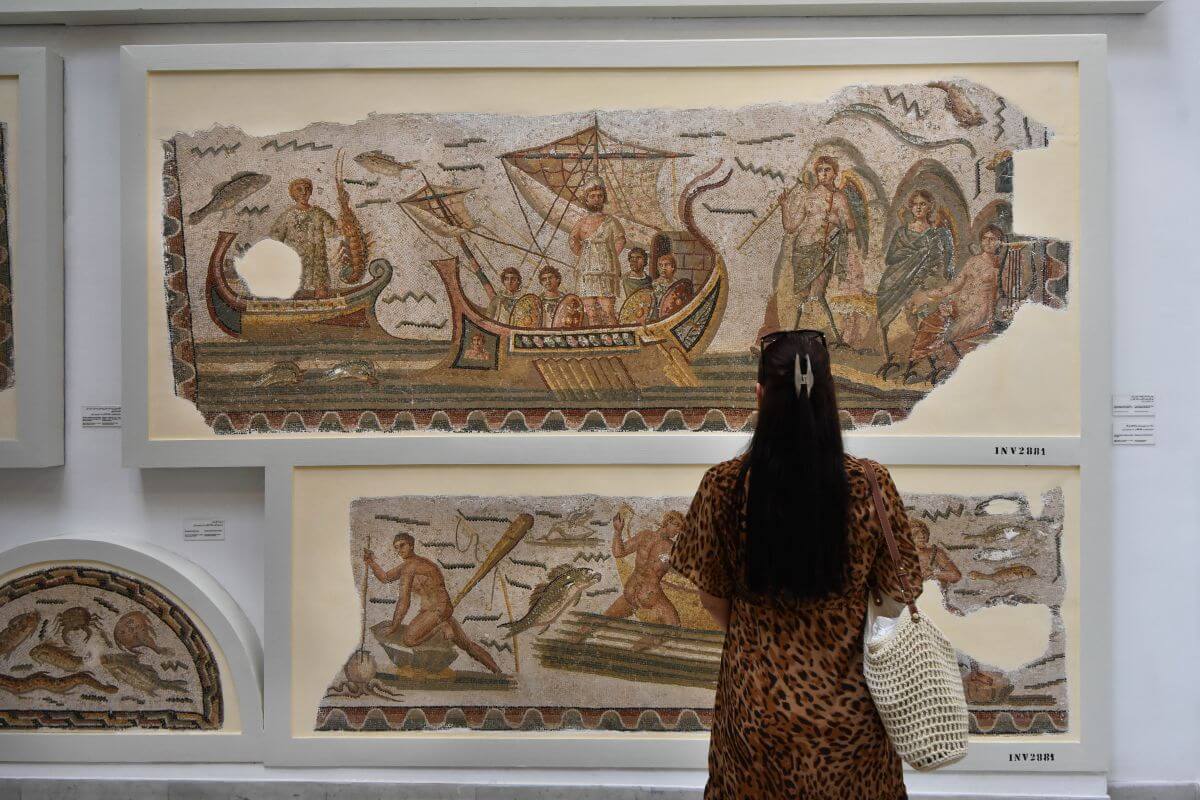
We nearly walked straight past one of the finest treasures in the Bardo National Museum in Tunis. The galleries twist and turn like a maze, with side rooms that many visitors never notice. We had to ask a nearby guard for help, and thankfully, he could not have been kinder and prouder of the collection. He personally guided us to the Ulysses Room, where this remarkable mosaic waits.
WHY IT IS SO FAMOUS?
According to the information panel on site, the mosaic comes from Dougga in northern Tunisia. The Odysseus and the Sirens mosaic dates to the Roman period in the 2nd century AD. Odysseus and the Sirens is a rare, detailed Roman depiction of one of the two epics of ancient Greek literature. The artworks show a dramatic episode from Homer’s Odyssey (one of the oldest surviving works of literature).
WHAT YOU CAN SEE
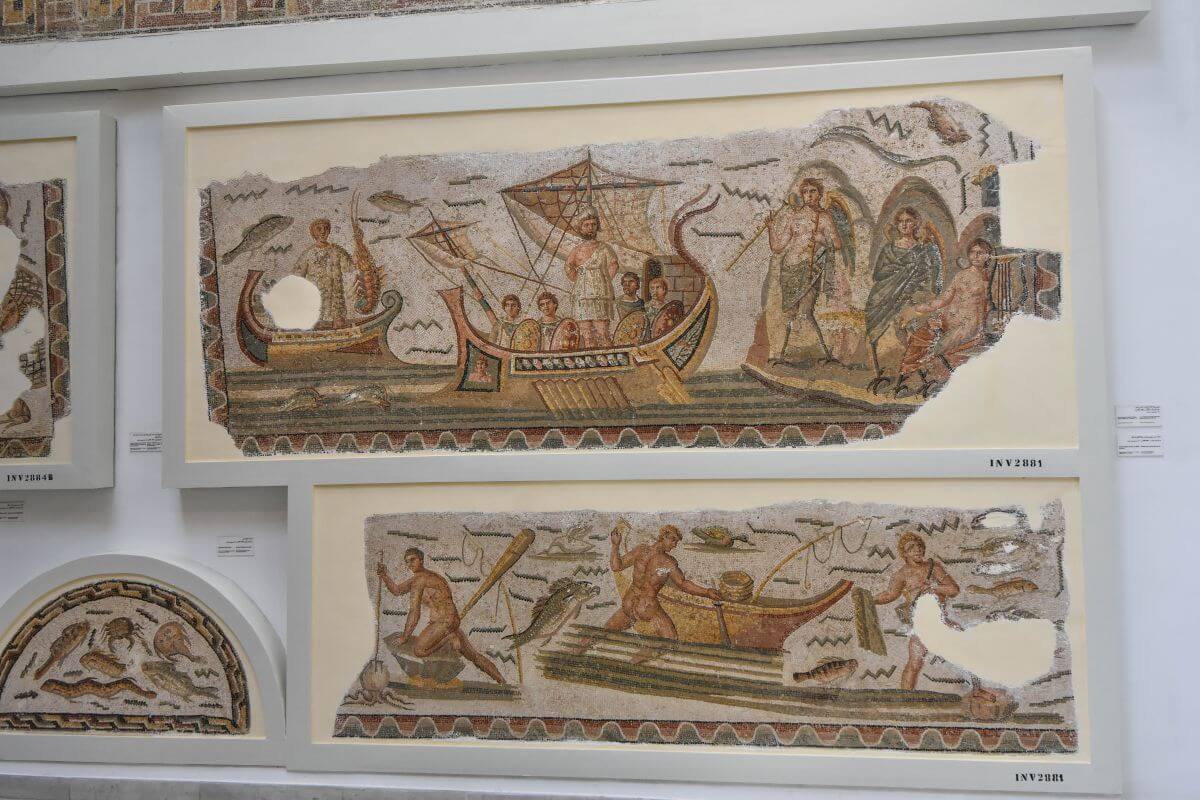
Odysseus sails past the island of the Sirens, while irresistible song lures sailors to destruction. To survive, he orders his crew to tie him tightly to the mast while they block their ears and keep rowing. What surprises many visitors is the appearance of the Sirens. Here they are no mermaids. Roman artists followed older traditions and showed them as women with wings and bird legs (not fish-tailed mermaids). They hold musical instruments as they sing, ready to lure the ship closer.
Look closer, and you notice a brilliant extra detail. A local fisherman sits in a small boat and catches a giant lobster. It’s a scene Homer never wrote. That playful addition shows how Roman artists in North Africa adapted famous myths with local humour and daily life.
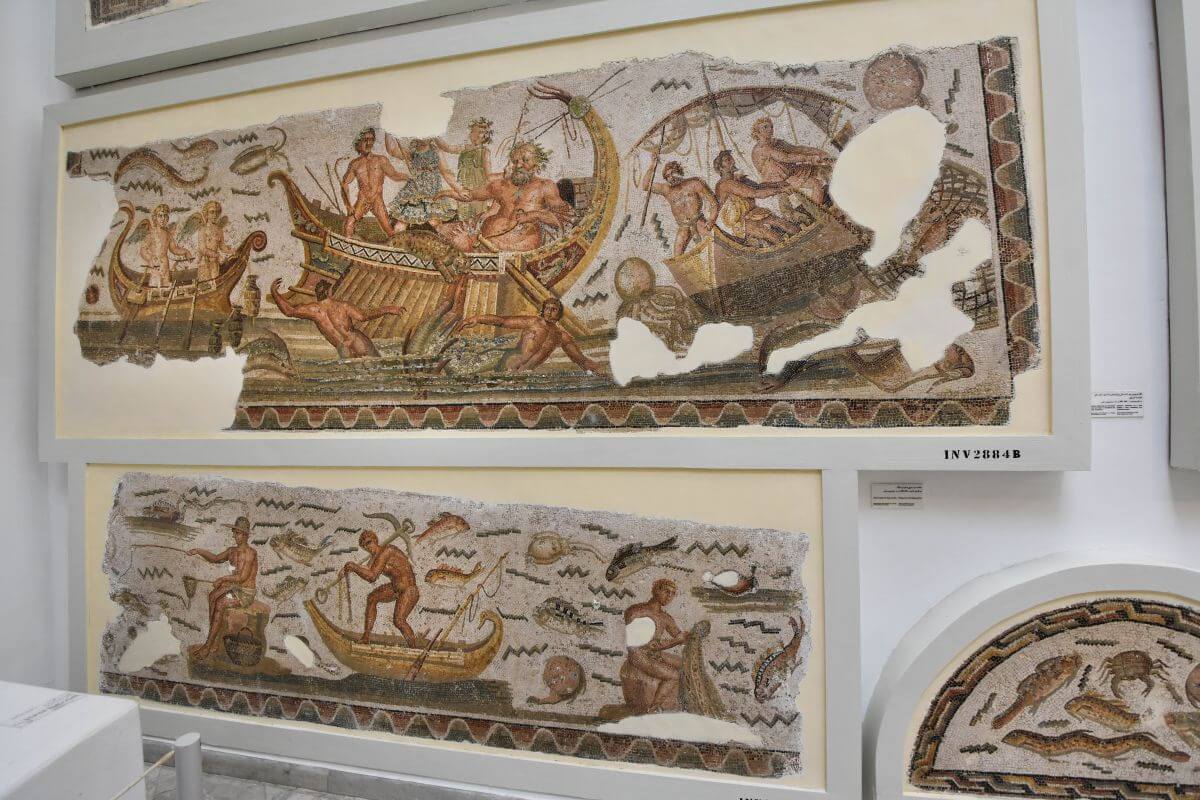
The Ulysses Room opened during the 1930s expansion. It holds other superb mosaics, including allegorical scenes of Venus and Neptune. Don’t rush out; stay a few more minutes, look around slowly and find more breathtaking artworks on every wall.
5. Statue of Tanit with a Lion’s Head
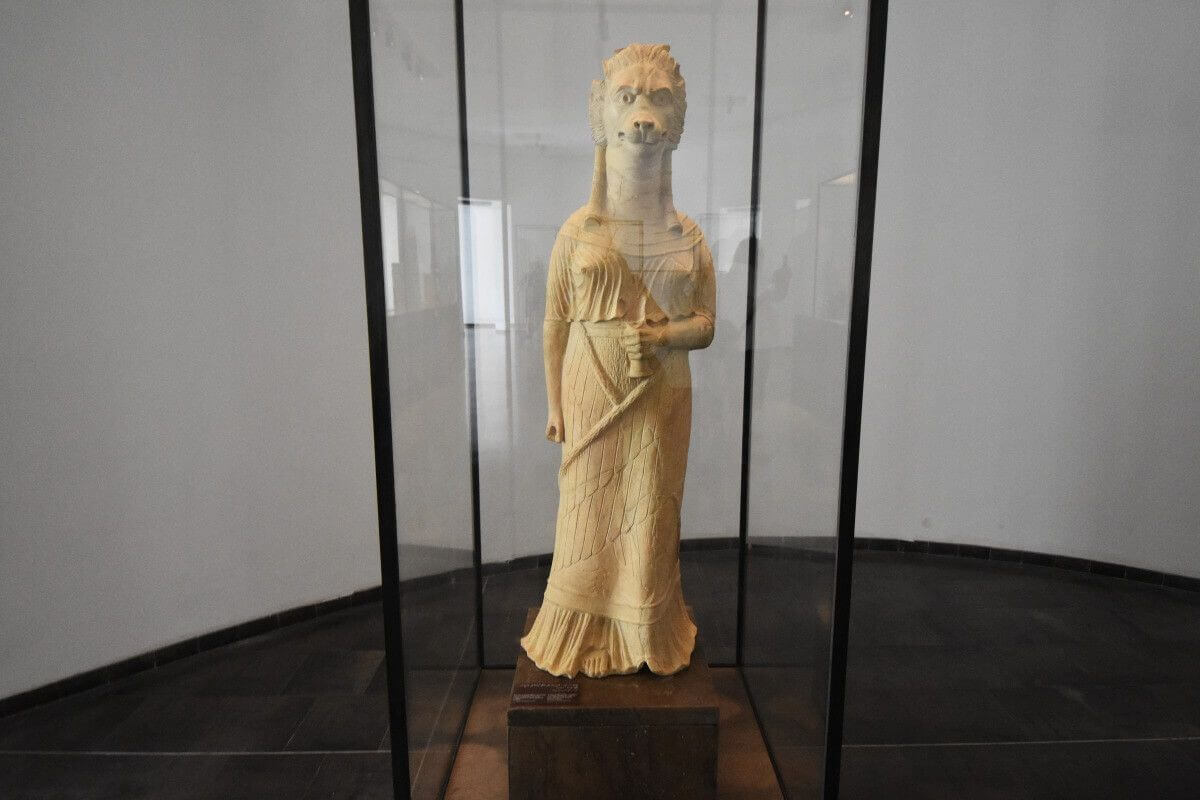
One of the most powerful objects in the Bardo National Museum comes from an older world shaped by Carthage. Stop in the Punic galleries, because the statue of Tanit with a Lion’s head offers a rare meeting with a civilisation that once ruled western Mediterranean trade.
WHY IT IS SO FAMOUS?
According to information panels on site, Punic religion, like the older Phoenician faith from which it grew, remains only partly understood despite decades of excavation. Archaeologists continue to piece together beliefs from temples, inscriptions, burials, and offerings. What they know shows us that Punic worship changed little under Egyptian and Greek influence. Out of 39 Semitic deities honoured in Carthage, only three Egyptian gods and one Greek deity entered the cult. The most honoured were Baal Hammon and his goddess Tanit, together with Milqart, Eshmoun, and Ashtart. Surviving documents also point to blood sacrifice and vegetal offerings as central acts of devotion. That background makes the lion-headed Tanit one of the rare objects in the collection of the Bardo National Museum in Tunis.
WHAT YOU CAN SEE
According to the gallery panel, this rare terracotta statue dates back to the 1st century and came from Thinissut in Tunisia. Scholars identify the figure as Tanit because excavations found it in a sanctuary dedicated to Tanit and Baal Hammon. It depicts a chief goddess of Carthage in a warrior form, powerful and adorned with a lion’s head. Tanit served as the Punic deity of fertility and motherhood, and was respected as a sky goddess who ruled over the sun, moon, and stars. She served as the protector of towns and homes. Her cult, alongside Ball Hammon, is associated with the sacrifice of firstborn children. You can see this evidence when you explore Carthage.
6. Other Tanit-related artefacts
The Bardo National Museum also houses other Tanit-related artefacts, including important stelae from Carthage. According to an information panel on the site, this example dates back to the 4th century BC and one stood in a sacred Punic sanctuary. It has the so-called Tanit sign, one of the best-known symbols that appeared across Carthaginian religious life.
WHAT YOU CAN SEE
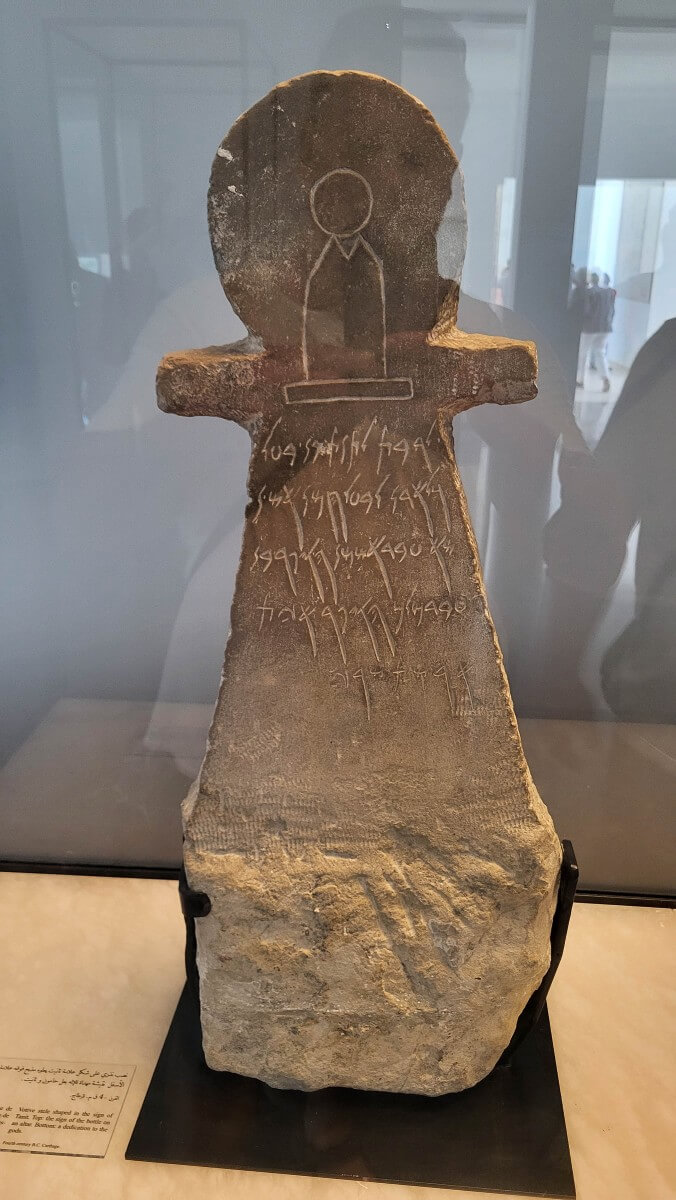
The limestone votive stele gives voice to ordinary believers from over two thousand years ago. Someone hoped, prayed, gave thanks, and left this message for eternity. Its design seems simple, yet every line carries meaning. Archaeological studies generally accept that the image works as a symbolic figure of the goddess Tanit itself. The sign of Tanit consists of a circle above a horizontal bar and triangle (representing head, hands, and body).
According to our tour guide, Imed, these stones did not only mark graves. Worshipers placed them in sanctuaries, such as the Tophet of Carthage, as offerings or vows. Many included inscriptions thanking Tanit, declaring that the promise had been honoured. Many archaeologists argue that they also functioned as markers of children’s burials within the sanctuary. Urns containing the cremated remains of young children can often be found directly underneath them. For that reason, they could function as both offerings to the goddess and grave markers for the child.
7. Carthage Room
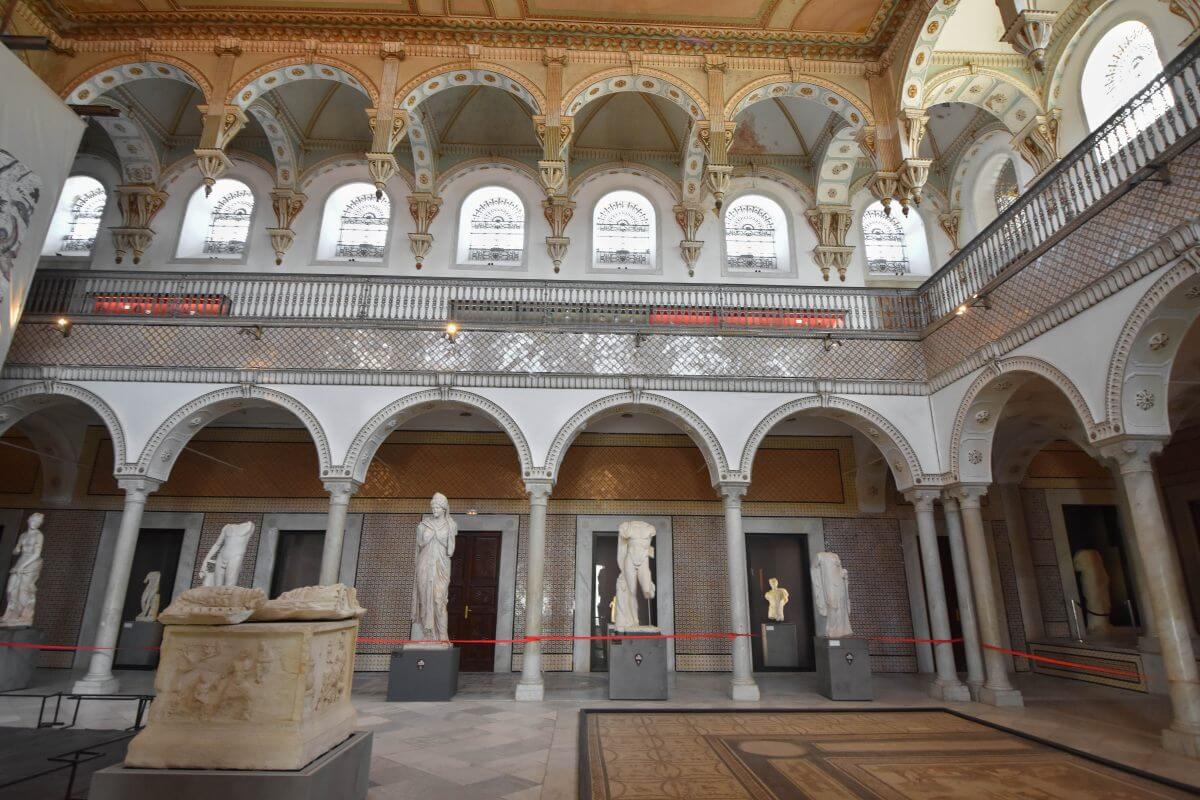
The Carthage Room is one of the most beautiful spaces in the entire palace. This grand gallery began life as a large patio in the Beylical palace. Early curators transformed the former courtyard into one of the most spacious exhibition rooms. The original open-air design survives in the surrounding arches and elegant columns, clearly visible today.
The elegant royal setting gave curators the perfect space for monumental discoveries from Carthage. According to panels on site, the room displays an altar dedicated to Emperor Augustus. You can also see several monumental statues from Carthage. Most depict gods and emperors shown as gods, dating from the 1st to 3rd century AD. Their faces, robes, and poses still carry authority centuries later.
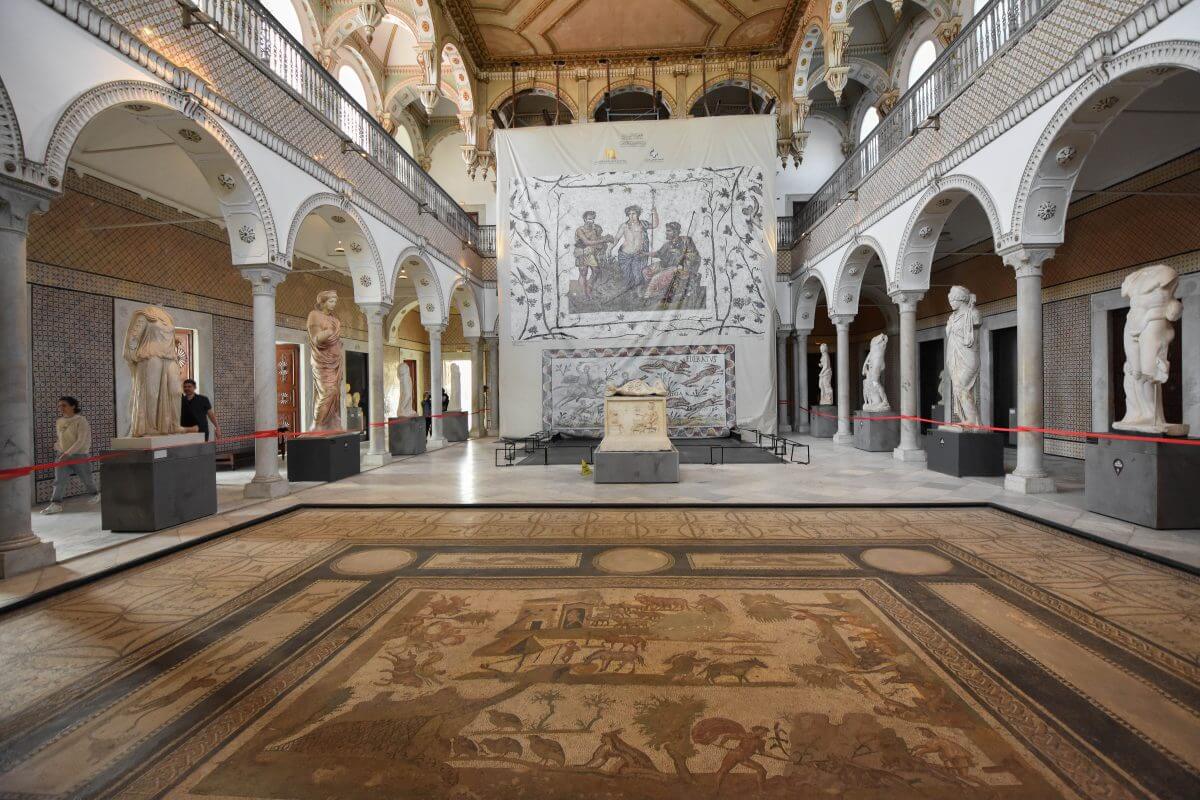
Before you leave the room, lower your eyes to the floor. Roman mosaics of exceptional quality spread across the room. The two largest examples came from Uthina, an archaeological site around 30 km south-west of Tunis. Their detail and scale earned them a place of honour here.
READ MORE:
8. Carthage Mausoleum Room
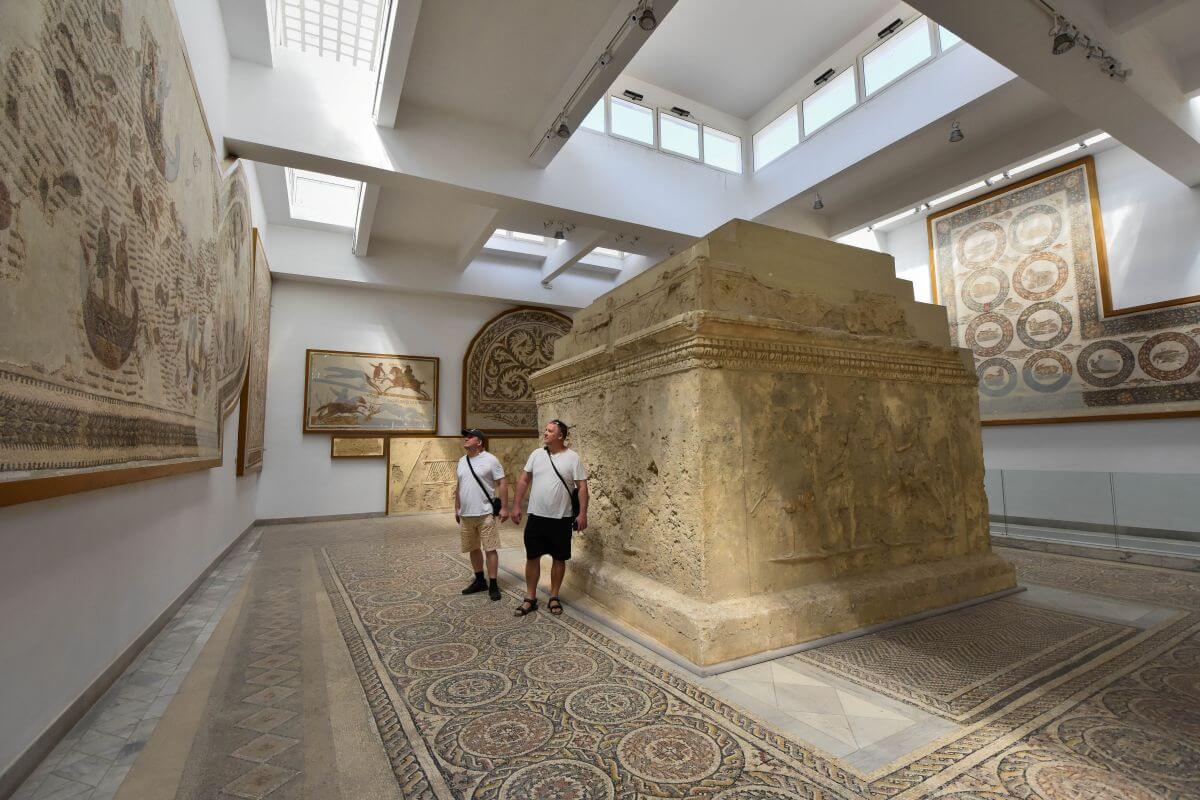
When you step into the Carthage Mausoleum Room, you’ll face a towering Roman tomb at the centre of the gallery. According to the site panel, archaeologists found this massive stuccoed mausoleum in Carthage within a cemetery from the imperial Roman era. Experts date it to the 1st or 2nd century AD. Its scale explains why it stands among the room’s highlights. Photos never prepare you for its size. Stand beside it, and you suddenly understand how grand elite burials once looked in Roman Tunisia.
Look closer at the partially restored surface, and you can still see surviving stucco reliefs. These details reveal the decorative taste wealthy families choose to honour the dead.
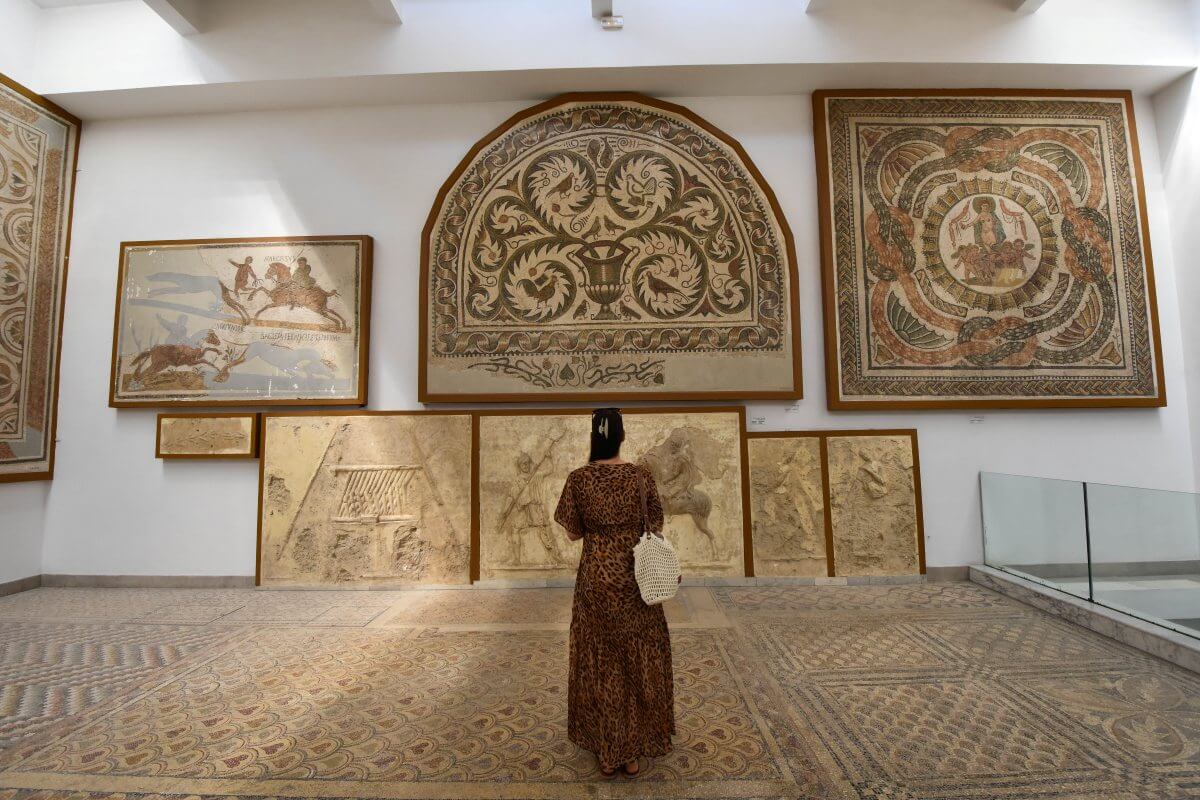
The room offers more than one masterpiece. Around the mausoleum, a rich display of floor mosaics covers the space with geometric and animal designs. Many came from Thuburbo Majus and Carthage, turning one gallery into one of the most memorable spaces in the whole collection.
9. Marine Mosaics Room
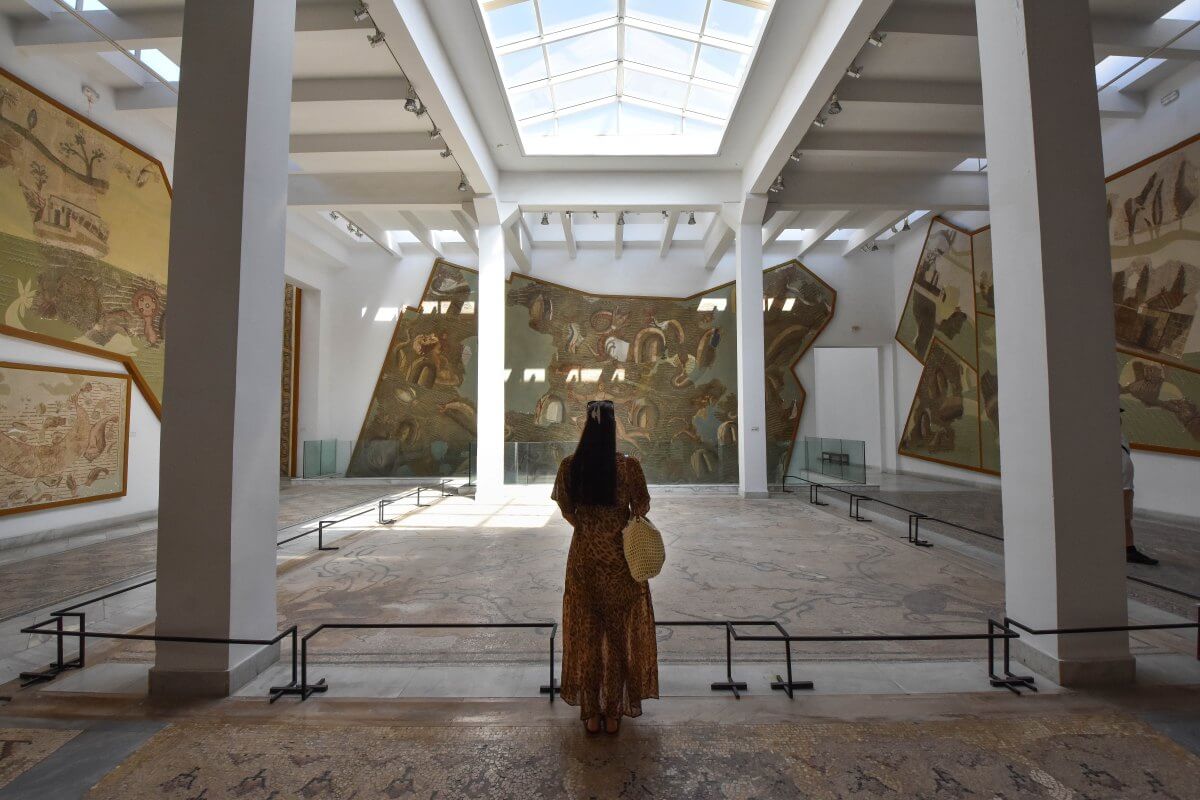
Don’t be surprised if you lose track of time in the Marine Mosaics Room. Every wall and floor of this room at the Bardo National Museum seems alive with waves and stories of ancient times. Stone floors transform you into a bright Mediterranean world of creatures, gods, and waves.
WHAT YOU CAN SEE
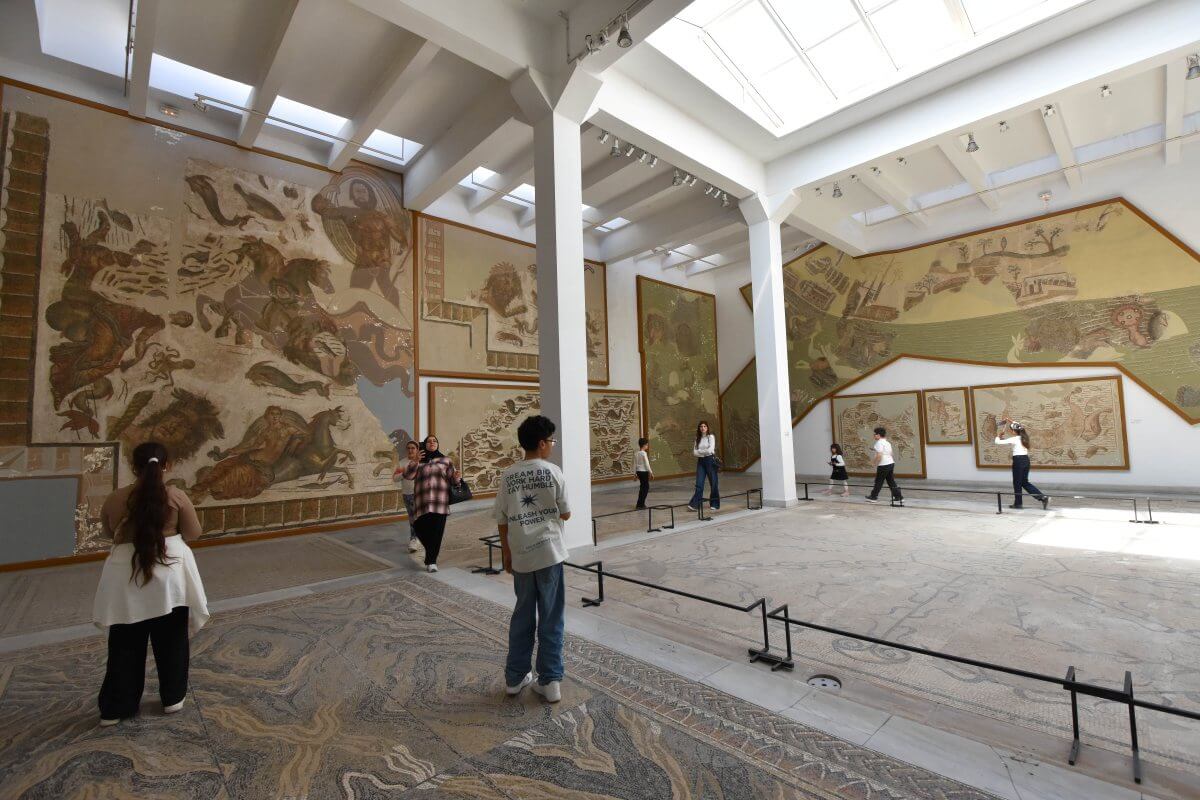
This vast gallery forms one of the most important sections of the museum’s mosaic selection. Many of the works once served as floors in grand villas across Roman North Africa. Wealthy owners used art to display their status and taste, and wanted their guests to admire them.
Look around, and you will see seaside landscapes, dolphins, Nereids, sea monsters, and scenes from daily coastal life. According to informational panels on the site, these mosaics date mainly from the 2nd to 4th centuries AD. They show the remarkable skill of Roman African craftsmen. Artists used tiny stone pieces to create shading, movement, and rich colour that still impresses today. Details are so fine that scales, shells, and flowing hair still stand out.
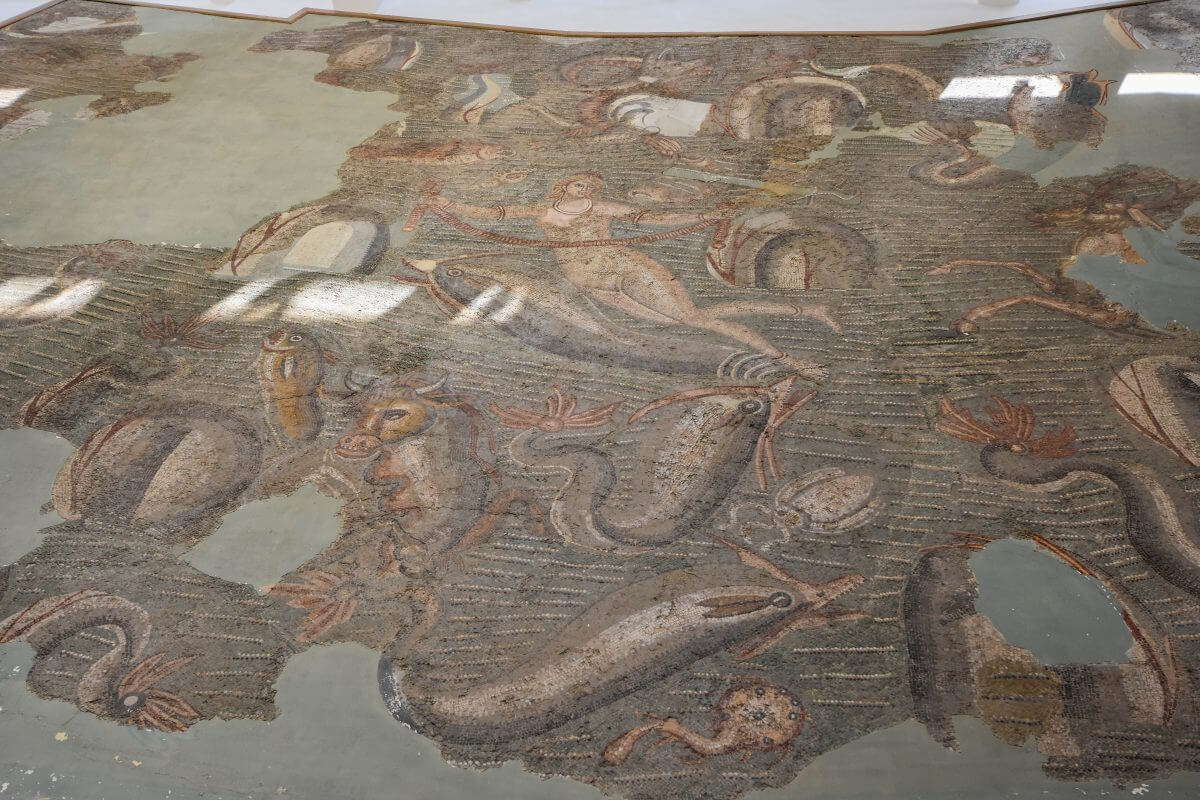
One of our favourite mosaics is the Nereids and Sea Animals from Carthage. This 4th-century AD masterpiece depicts a sea nymph riding marine creatures, including dolphins, lively fish and beasts, all around her. The detail is extraordinary, from curling tails to flowing hair.
Why should you not miss this room? Because it turns hard stone into a living sea filled with beauty, fantasy, and Roman luxury.
10. Kairouan Room
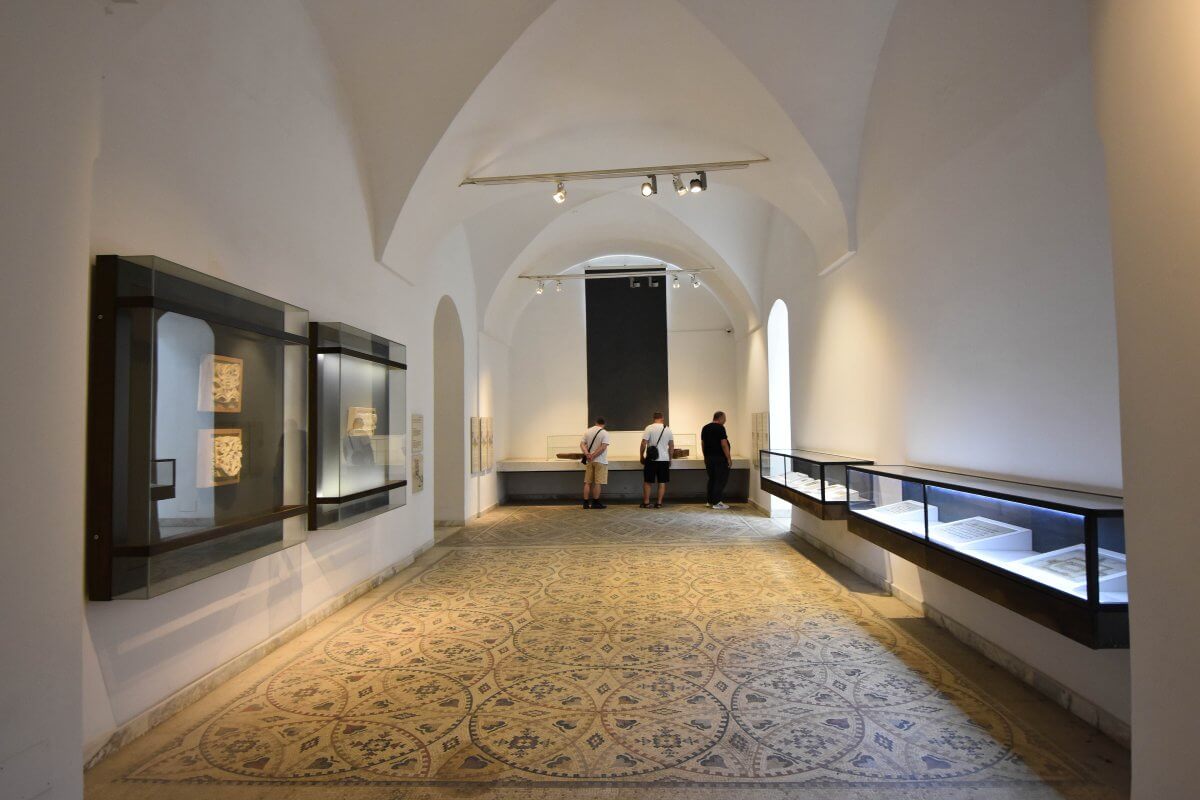
This elegant section of the Bardo museum reveals different treasures: the rise of Islamic civilisation, learning, and art in Tunisia. According to the site panels, this series of vaulted chambers likely dates from palace renovations carried out in the 19th century. The rooms stand near the entrance to the former private gardens, and their calm design still feels grand today. Arched ceilings and connected chambers guide you through a different chapter of Tunisian history.
WHAT YOU CAN SEE
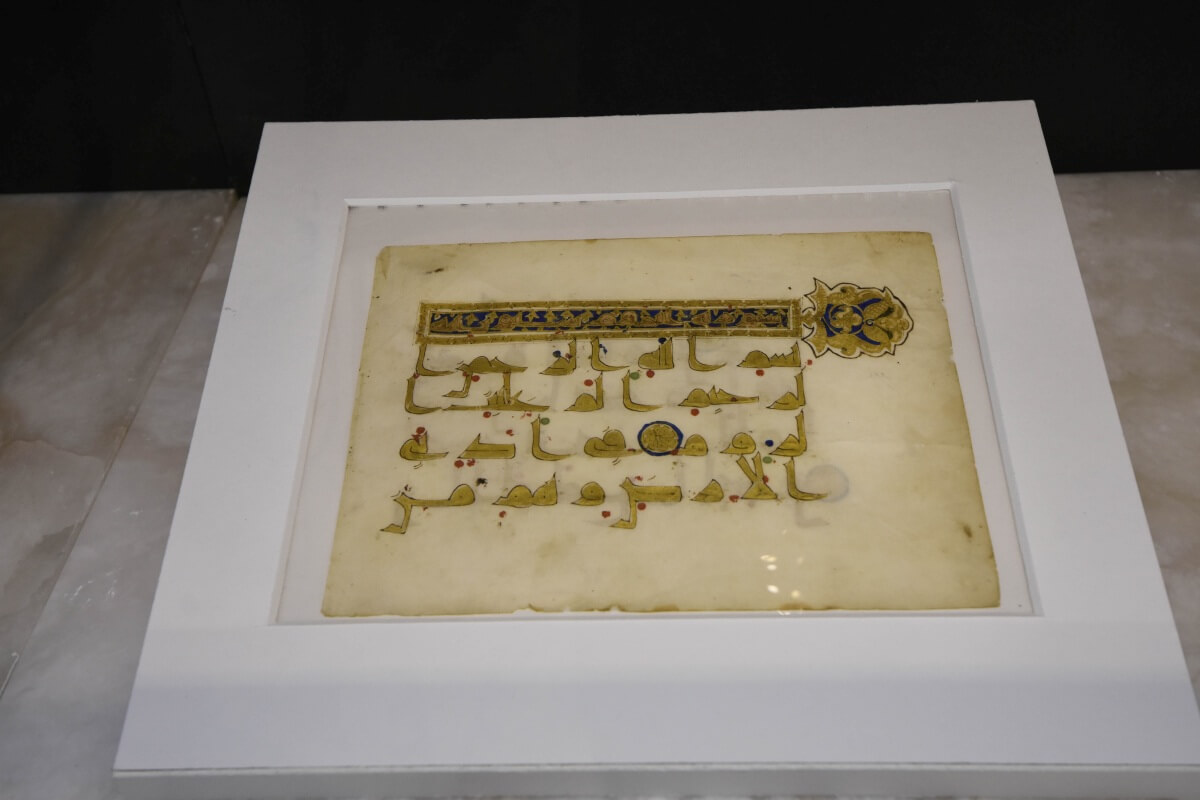
The rooms explore the arrival of Islam in Tunisia and the rise of powerful North African dynasties. Here you can learn about the founding of Kairouan, one of the greatest cities in the region. The displays focus on Islamic craftsmanship and Tunisia’s rich history. Beautiful Arabic calligraphy covering manuscripts will steal your attention. Some of the finest pieces are pages of the Koran written in glowing gold Kufic script. Every letter feels like art.
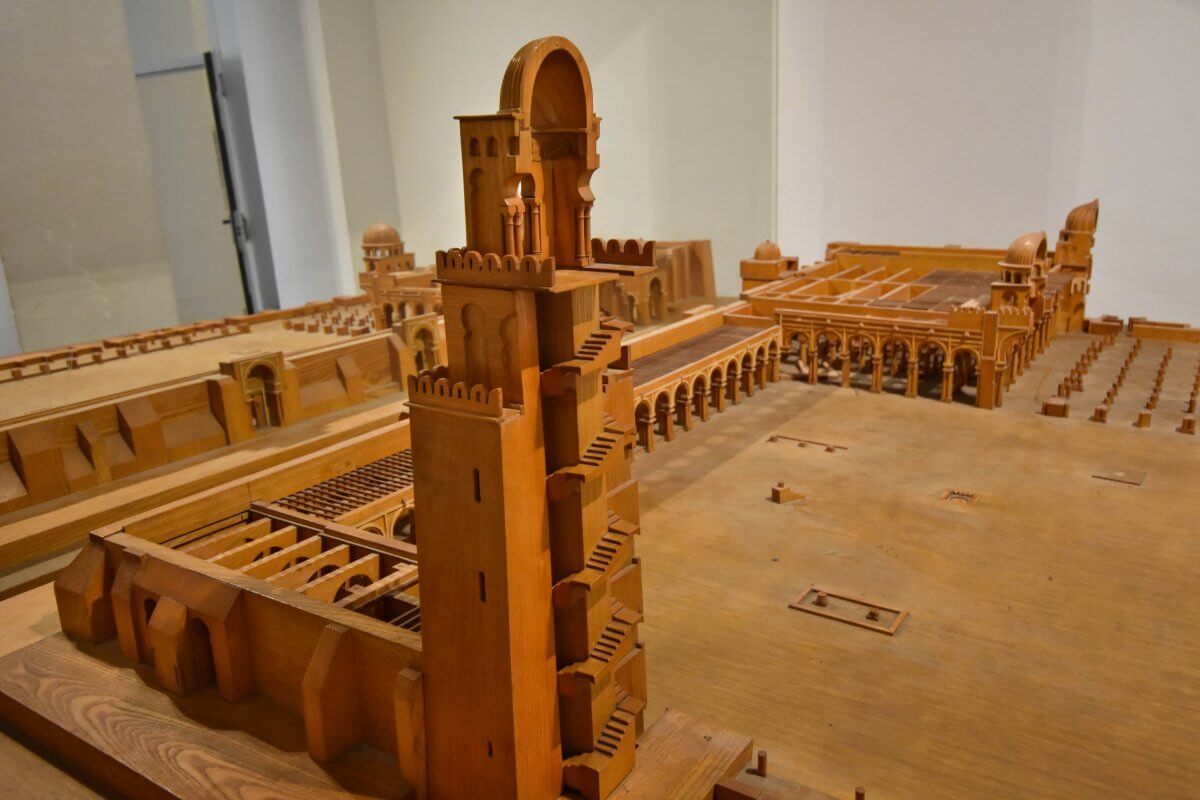
When exploring this section, don’t miss the large wooden model of the Great Mosque of Kairouan. It showcases staircases inside the minaret and architectural details that you may not notice when visiting this holy city in real life. As the oldest mosque in North Africa and a UNESCO World Heritage site, it deserves this spotlight.
11. Blue Quran
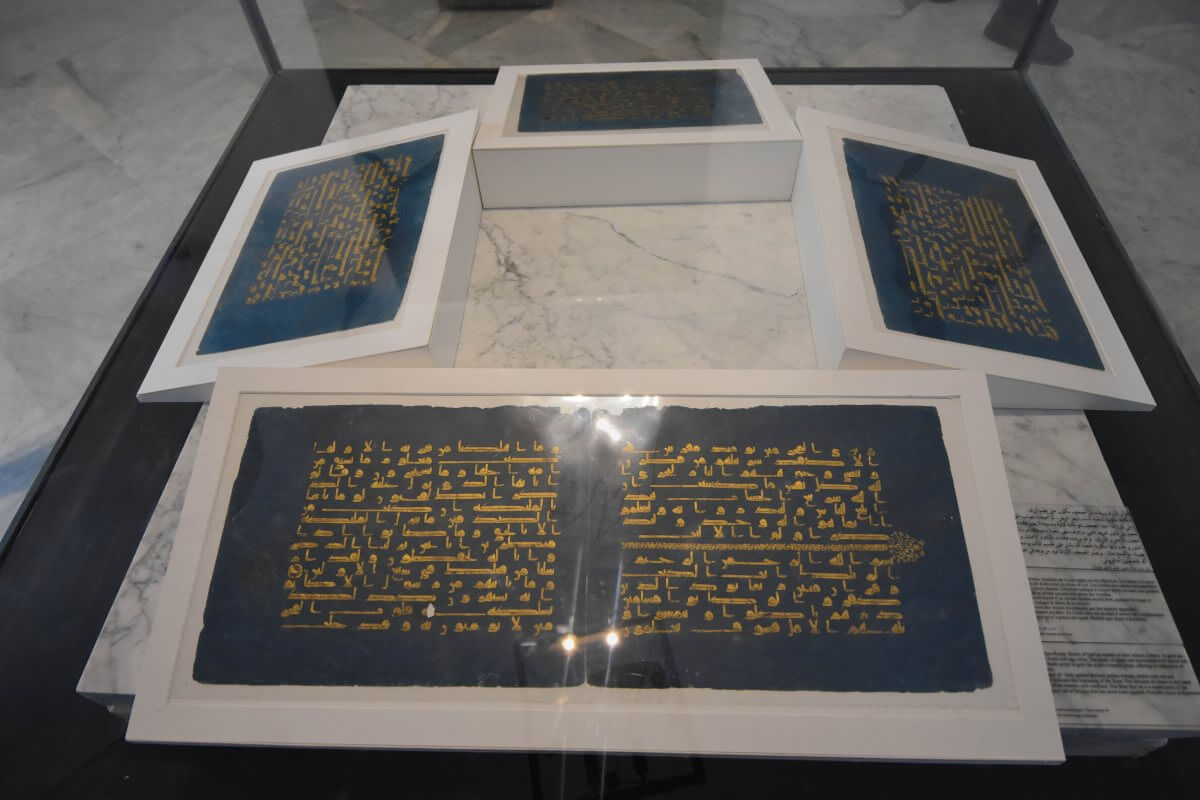
According to the side panels, this celebrated manuscript belongs to an outstanding group of early texts dating from the first five centuries of Islam. Skilled craftsmen first prepared fine parchment from animal skins. Then they dyed it a deep indigo blue through techniques so advanced that scholars still discuss how they achieved it. After that, expert calligraphers traced Kufic letters in gold ink, fixed with egg white so the script would hold firmly to the page. Then, they outlined the letters in brown ink to perfect every line and hide any trace of error.
The result looks extraordinary even today. Gold script shines against the dark surface like stars across a night sky. Silver rosettes, now oxidised with age, separate the verses. At the beginning of chapters, artists added elegant bands of stylised golden leafy scrolls touched with red and blue. Every detail shows discipline, patience, and wealth. Because the Kufic script is stretched to fit the lines and lacks the necessary dots to distinguish between letters, the manuscript is very difficult to read.
WHY IT IS SO FAMOUS?
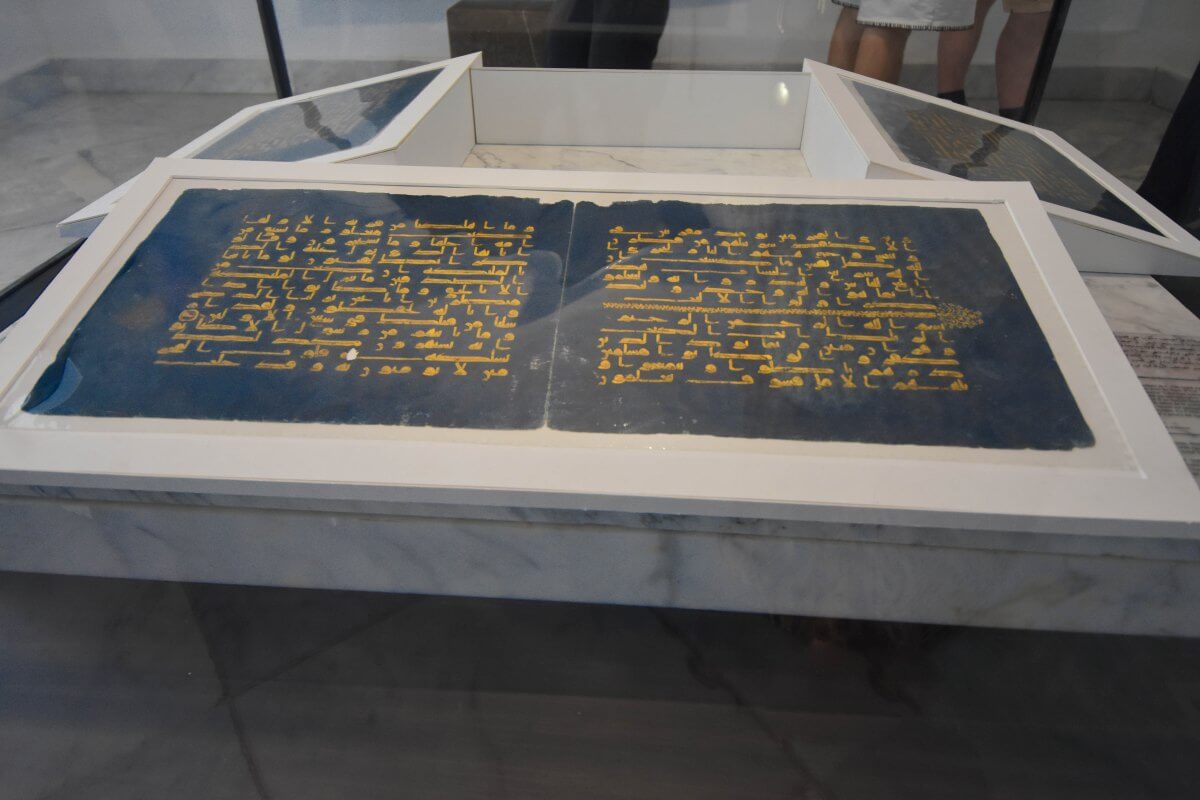
This was never an ordinary copy made for daily reading, but a luxury liturgical object. It was a statement of devotion, prestige, and artistic power, not just an old manuscript. The Blue Quran is a masterpiece of Islamic art from Ifriqiya, and many experts say no other version has ever equalled it. It’s approximately 1,000 -1,100 years old and is among the most famous works of Islamic calligraphy. Historical records note that it’s one of the most extraordinary luxury manuscripts ever created. In a building famous for stone mosaics, the Blue Quran proves that ink, colour, and faith can be just as breathtaking.
According to the gallery information, scholars most often link the manuscript to Kairouan. Centuries later, scattered pages reached collections in museums around the world. Today, you can find the pages from the Blue Quran at the Louvre in France and the Metropolitan Museum of Art in New York City.
12. Punic Masks
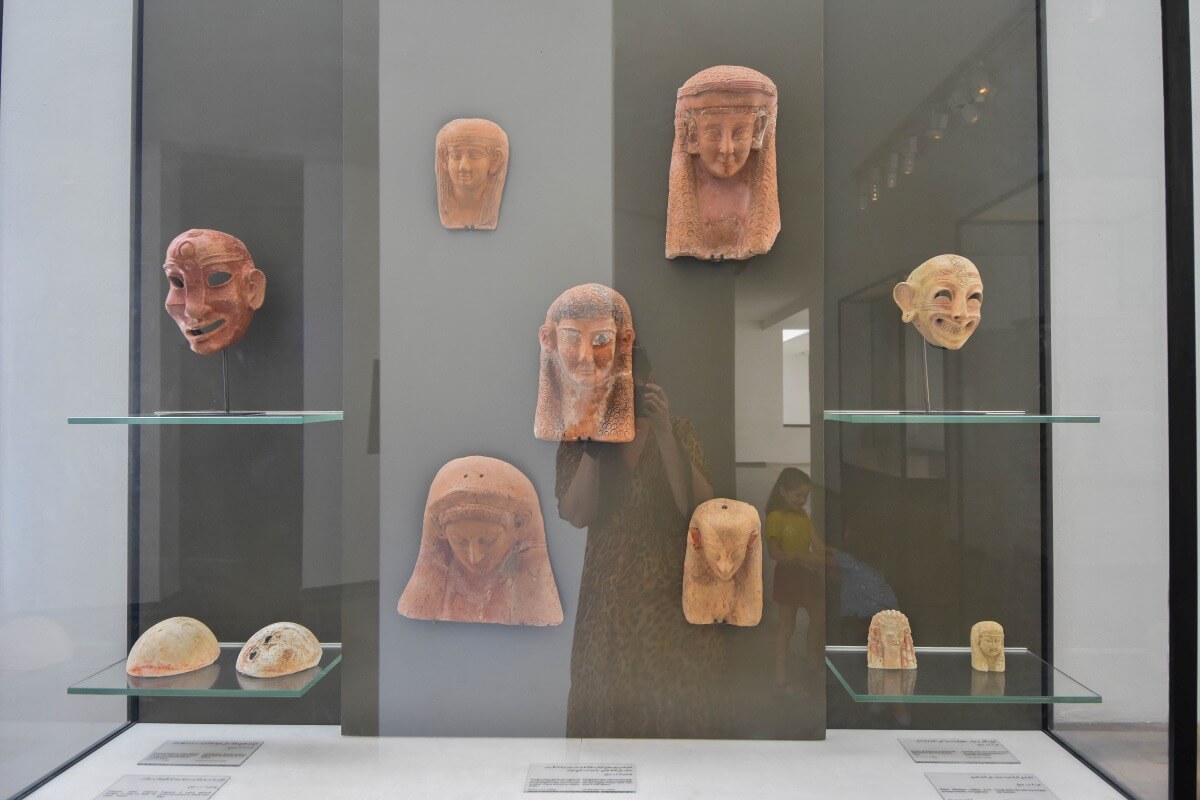
A wall of staring faces, crooked smiles, and wide, empty eyes waits for you upstairs. Here you can find some of the strangest treasures in the Bardo National Museum. Many people expect polished grand statues and glittering jewels. Instead, you’ll find here bold masks that still look full of personality more than 2,500 years later.
According to the display information, these Punic masks date mainly from the 7th to 5th centuries BC. Craftsmen shaped them from terracotta, then gave them exaggerated expressions, sharp features, and theatrical energy. Most are far too small for an adult to wear, which suggests they served as symbolic objects rather than practical masks. Many scholars believe families offered them in tombs or sanctuaries as protective gifts.
WHY ARE THEY SO FAMOUS?
Punic masks show the spiritual world of ancient Carthage, where art served religion, burial customs, and protection. They also reveal how Carthage stood at the crossroads of cultures. You can see how Phoenician traditions, Egyptian influence, and local North African ideas blended and created something entirely new. That mix makes them especially valuable.
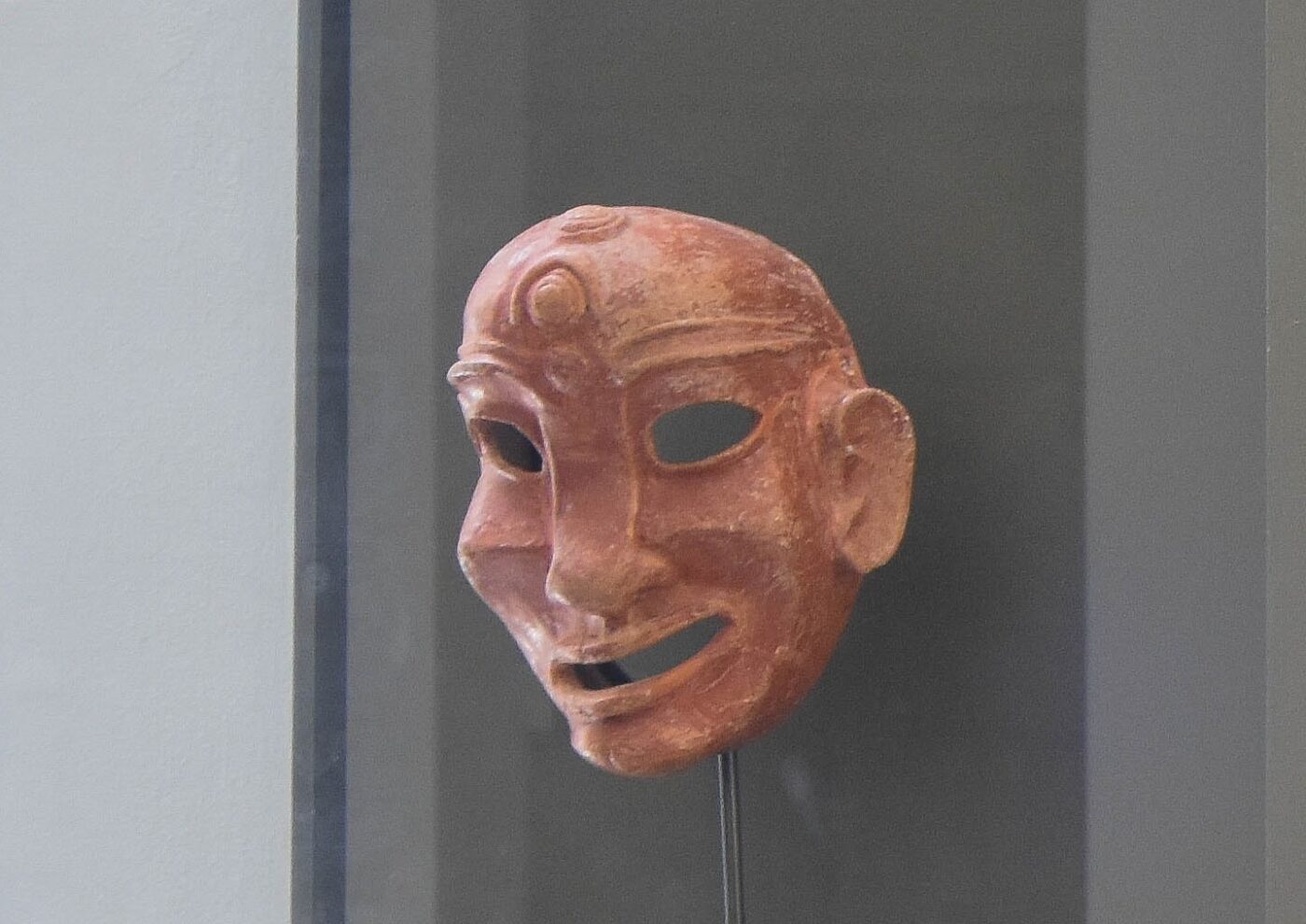
This striking terracotta mask from Carthage dates back to the 7th-6th century BC, according to the side panels. The face shows broad features and a vivid smile. Take a closer look: between the eyebrows sits a raised disk enclosed by a lunar crescent. This adds religious or symbolic meaning.
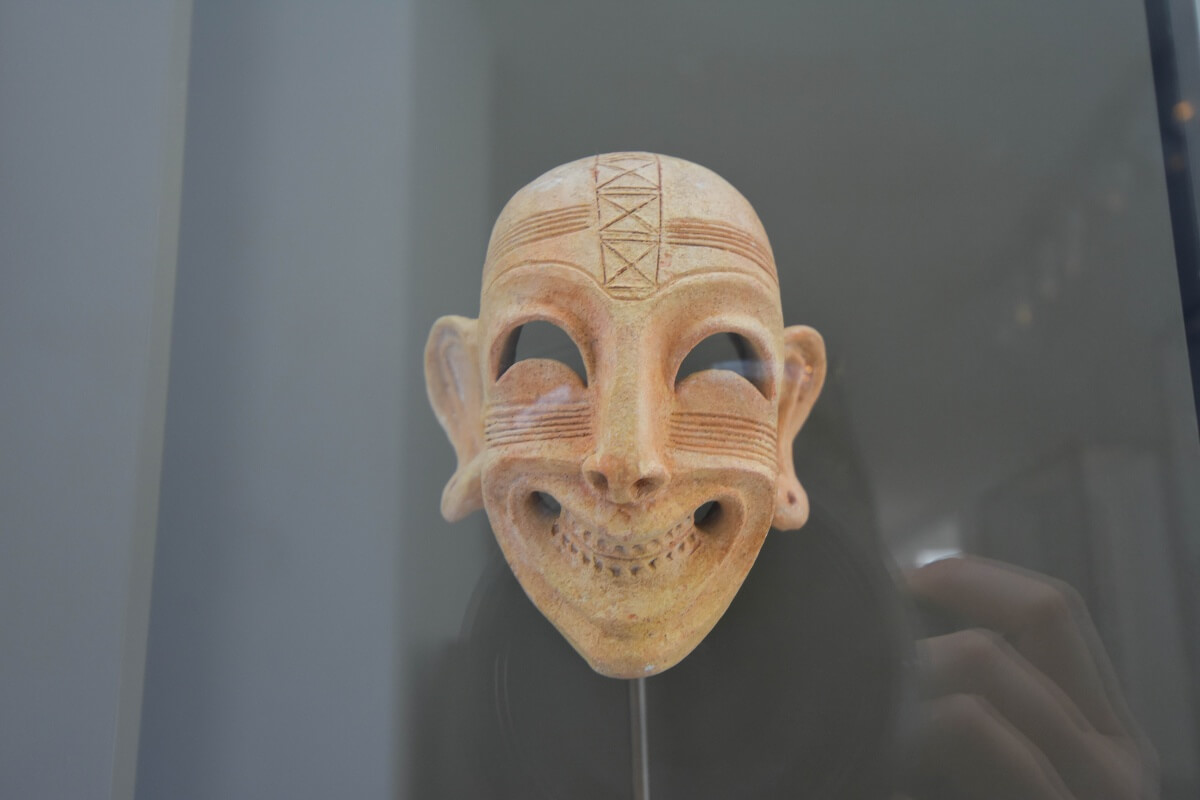
This beige terracotta funerary mask from the necropolis in Carthage dates back to the 6th century BC. The mouth forms a sharp, unnatural grin, while carved decoration marks the forehead and cheeks. According to the label, people placed it in graves as a talisman to ward off evil spirits and bring peace to the dead.
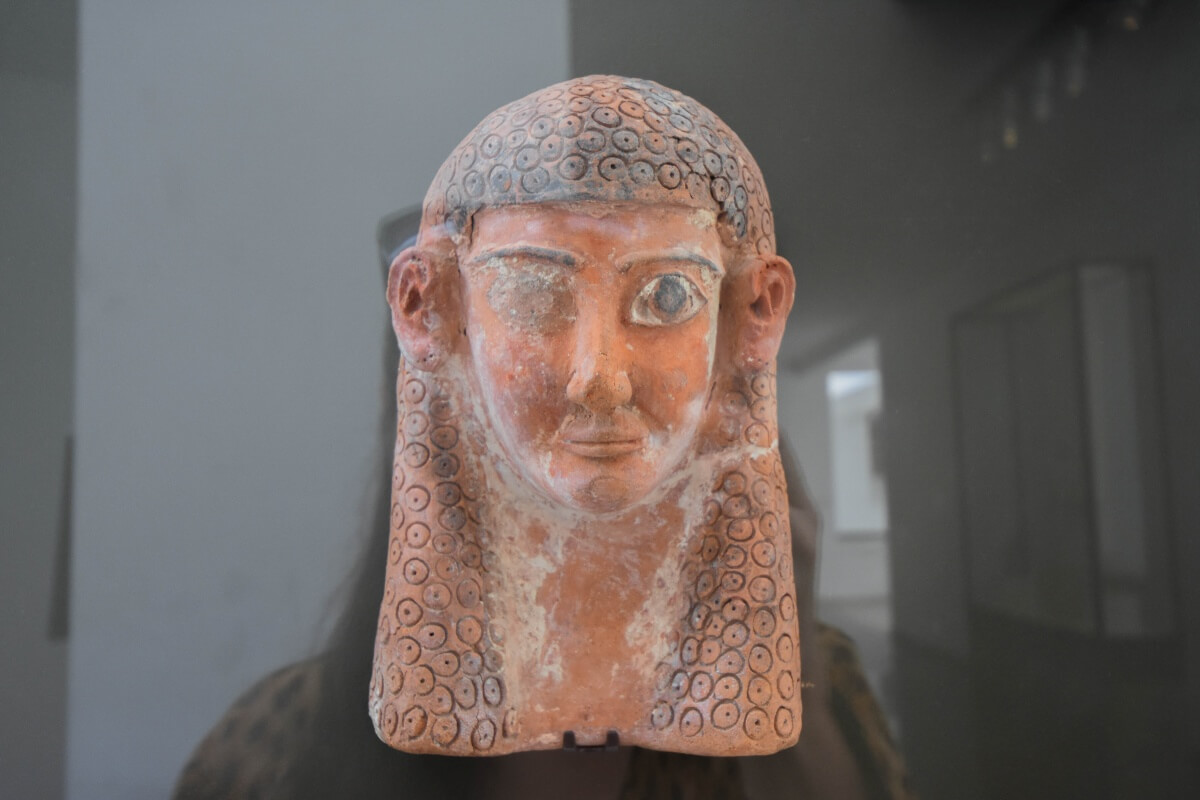
This feminine terracotta mask dates from the late 6th to 5th century BC. Its calm face, ordered features, and Egyptian styling contrast strongly with the grotesque male masks nearby. According to the label, families placed these pieces in tombs to protect the deceased soul.
All you need to know before visiting the Bardo National Museum in Tunis
The Bardo National Museum in Tunis is not a place to squeeze into a rushed hour between lunch and other sights. Time it right, and it can become the standout memory of your trip. Give it proper time, arrive prepared, and you can enjoy one of North Africa’s greatest collections with far less stress.
LOCATION:
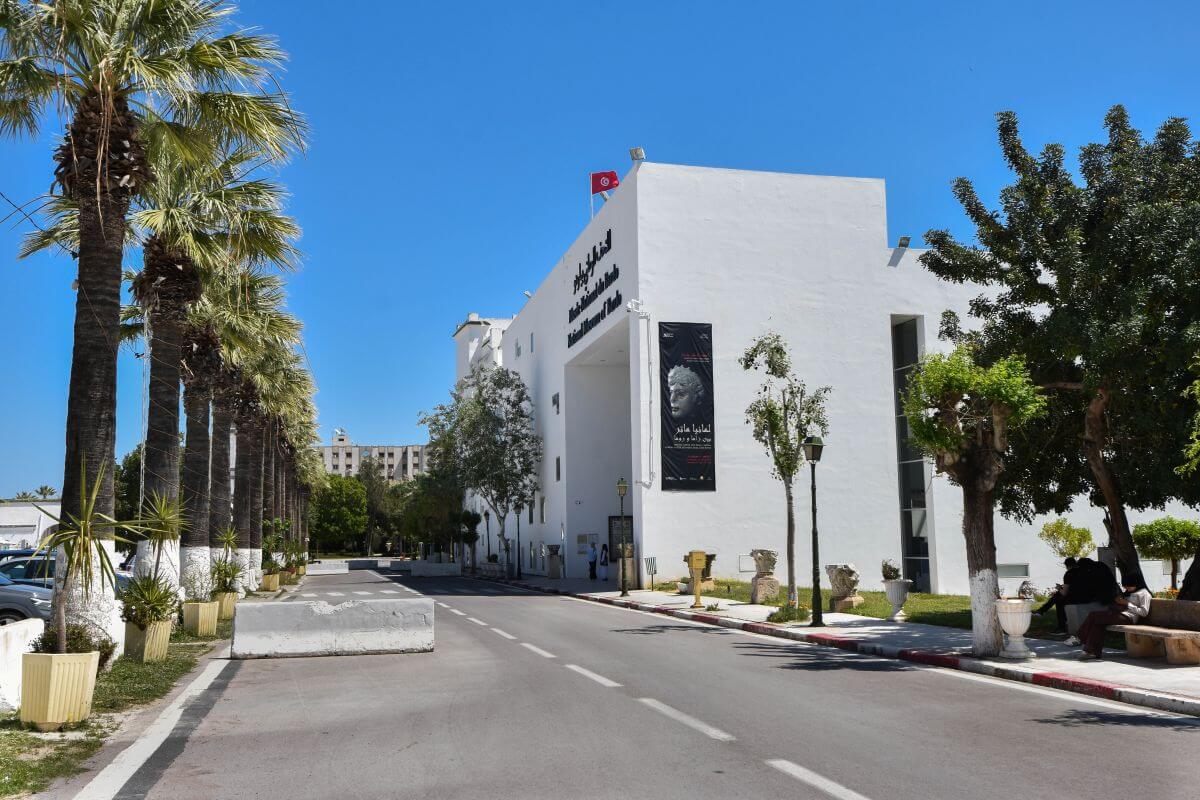
You’ll find the museum in Le Bardo, a district just outside the capital centre, beside the Tunisian Parliament. From downtown Tunis, the journey usually takes around 15 to 20 minutes by car, depending on traffic. If you arrive from La Goulette cruise port, allow about 30 minutes for the 20 km journey. Coming from picturesque Sidi Bou Said takes approximately 30 minutes for the 26 km route. If you fly in or out on the same day, Tunis-Carthage International Airport lies only around 13 minutes’ drive. This makes it an easy stop before your departure.
The easiest way to get there is by taxi. Yellow taxis in the capital are cheap, common, and practical. Always ask the driver to use the meter rather than offering a fixed price. If you prefer public transport, take Line 4 Metro towards Bardo and get off at Bardo station. From there, the site is within easy reach. Many yellow taxis wait outside when you finish, so returning to the medina, Carthage, Sidi Bou Said, or your hotel is usually simple.
WHO SHOULD VISIT THE BARDO NATIONAL MUSEUM?
The Bardo National Museum in Tunis is one of the easiest major attractions in Tunisia to explore. It makes it an excellent choice not only for history lovers but also for families, cruise passengers and short-stay Tunis visitors. It is also a perfect attraction for older visitors, and travellers with reduced mobility. Unlike Carthage, where one archaeological site is spread across large distances and requires taxis or long walks between ruins, the Bardo places Tunisia’s greatest treasures under one roof. Start your visit on the lower level and slowly work your way up through the higher floors. This route feels more natural and helps avoid backtracking.
HOW LONG TO VISIT?
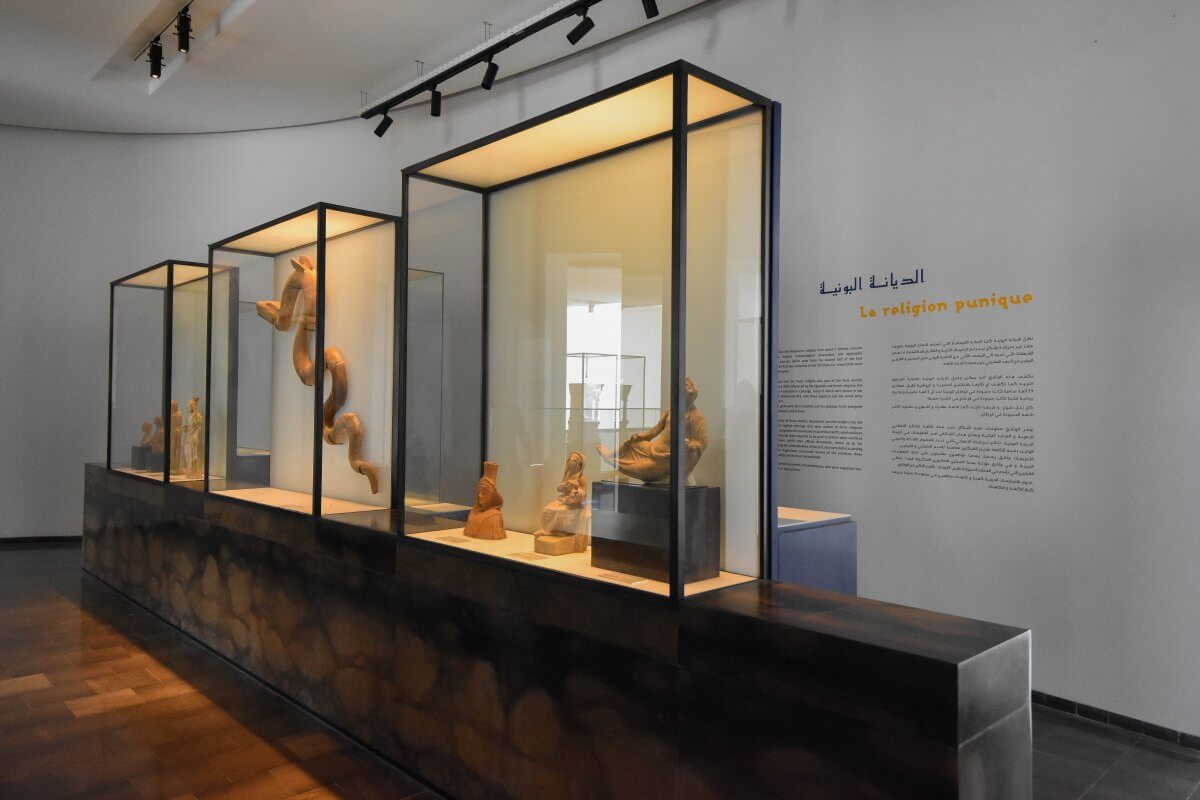
Plan at least two to three hours for your visit to the Bardo National Museum. The collection spreads across three floors, and each floor covers a different chapter of history. If you enjoy reading labels or taking photographs, allow longer than 2 hours.
During our visit in mid-April 2026, however, the second floor was closed. From what we read on the internet, the closure appears to be for an extended period. We couldn’t find clear information about when it may reopen. Interestingly, two guards politely mentioned that we could still visit the second floor if we wished. They were not pushy in any way, though it seemed clear they expected a tip for access. Unfortunately, we were short on time because we visited before flying home that day, so we declined. Had we known about this option earlier, or had more time available, we would have allowed ourselves a longer stay so we could explore the second floor as well.
OPENING TIMES:
Opening hours change by season. As of May 2026, winter hours run from 9:30 AM to 4:30 PM. Summer hours extend from 9 AM to 5 PM. During Ramadan, opening hours at the Bardo National Museum are generally 9:30 AM to 4:30 PM. The site closes on Monday, so always plan around that.
ADMISSION:
As of May 2026, residents pay 8 Tunisian dinars (£2), while non-residents pay 30 dinars (£7.60). Staff accept both cash and cards, which makes entry easier for international visitors.
ACCESSIBILITY:
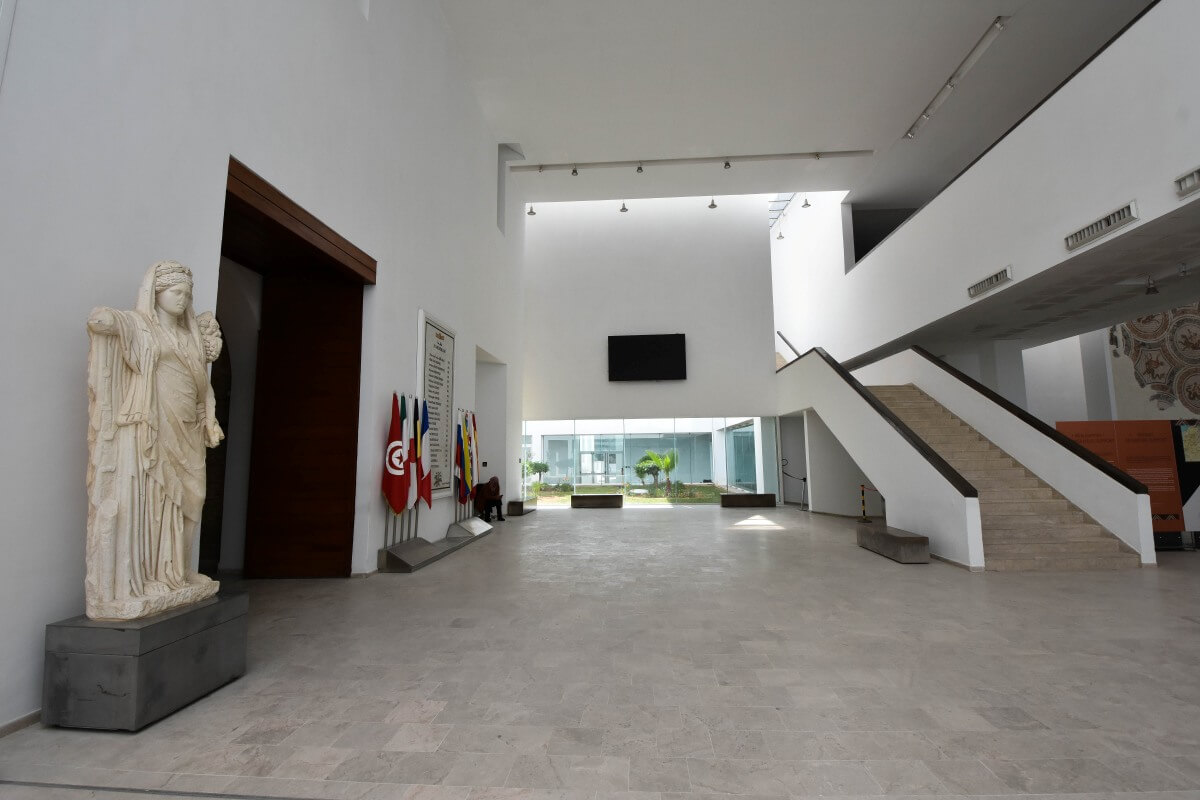
Following major renovations, the Bardo National Museum is now wheelchair accessible. Visitors will find an accessible entrance, ramps, lifts between floors, and wheelchair-friendly exhibition space. The museum’s major galleries, including the massive mosaic hall and palace chambers, are reachable. Wheelchair-accessible toilets are also available on-site. According to online reviews, wheelchair users and also disabled visitors often receive free admission. Sometimes, even one accompanying person enters for free. As rules may change, we highly recommend bringing proof of disability, such as a Blue Badge or medical documentation (avoiding complications at the ticket office).
IS THE BARDO NATIONAL MUSEUM FAMILY-FRIENDLY?
Unlike many archaeological sites where children quickly get tired from walking in the heat, the Bardo offers shade, air conditioning, and easy navigation under one roof.
Families visiting with children aged roughly 6 to 17 will likely find the museum surprisingly engaging. Younger children may not understand the historical importance. However, school-age children interested in mythology, Roman history, colourful mosaics, giant statues, and ancient gods find this site interesting. Massive sea creatures, theatrical masks, Roman emperors, and vivid mosaic scenes make the experience feel visual rather than academic.
Combining the Bardo National Museum with the Carthage archaeological site makes perfect sense for everyone staying in Tunis. Carthage offers an atmosphere of ancient ruins by the sea, while the Bardo explains civilisations through statues, mosaics, inscriptions, and artefacts. Since the Carthage museum remains closed, we believe important objects from the site were transferred here following the Bardo’s reconstruction. On rainy or cold days, the Bardo also becomes a more enjoyable and easier alternative. Everything is indoors, organised, and accessible under one roof.
OTHER THINGS TO KNOW ABOUT THE BARDO NATIONAL MUSEUM:
- Inside, you’ll find clean modern toilets, a coffee shop, luggage storage (free), and a small souvenir shop. Bring a light jacket because the air conditioning can feel cold.
We personally did not try the museum’s café during our visit. However, many online reviews mention that the café can be inconsistent and occasionally closed. It is limited to simple refreshments and vending machines. Because the museum is enormous and easy to spend several hours inside, it is wiser to plan ahead or eat later in the nearby Le Bardo neighbourhood.
- Photography is allowed throughout the museum. You can freely capture the extraordinary mosaics and palace interiors without restrictions. The only important rule is to avoid using flash photography to protect delicate artefacts and manuscripts.
- Security in the museum is strict. Following the 2015 attack and major renovations, the museum reopened in autumn 2023 with stronger measures. Expect mandatory bag checks, controlled entry, and visible guards.
Now you have a complete guide to planning your visit to the Bardo National Museum in Tunis.
Thank you for staying with us until the end! If you’ve enjoyed this article, please consider sharing this post to extend its reach.
Pin this guide to the Bardo National Museum in Tunis for later so you don’t lose it!
YOU MAY ALSO ENJOY:
Written by Martina Kokesova