What if one of England’s most famous landmarks hides far more stories than guidebooks usually tell? Fun facts about Windsor Castle help explain the strange, amusing, and unexpected details. Located in Berkshire, approximately 25 miles west of central London, this legendary fortress has witnessed centuries of power, drama, and daily royal life. Behind its famous image, it hides curious traditions, surprising truths, and moments that feel almost unbelievable. This article prepares you to explore the castle in a deeper and more enjoyable way when you plan your visit in 2026.
Surprising facts about Windsor Castle that will amaze you!
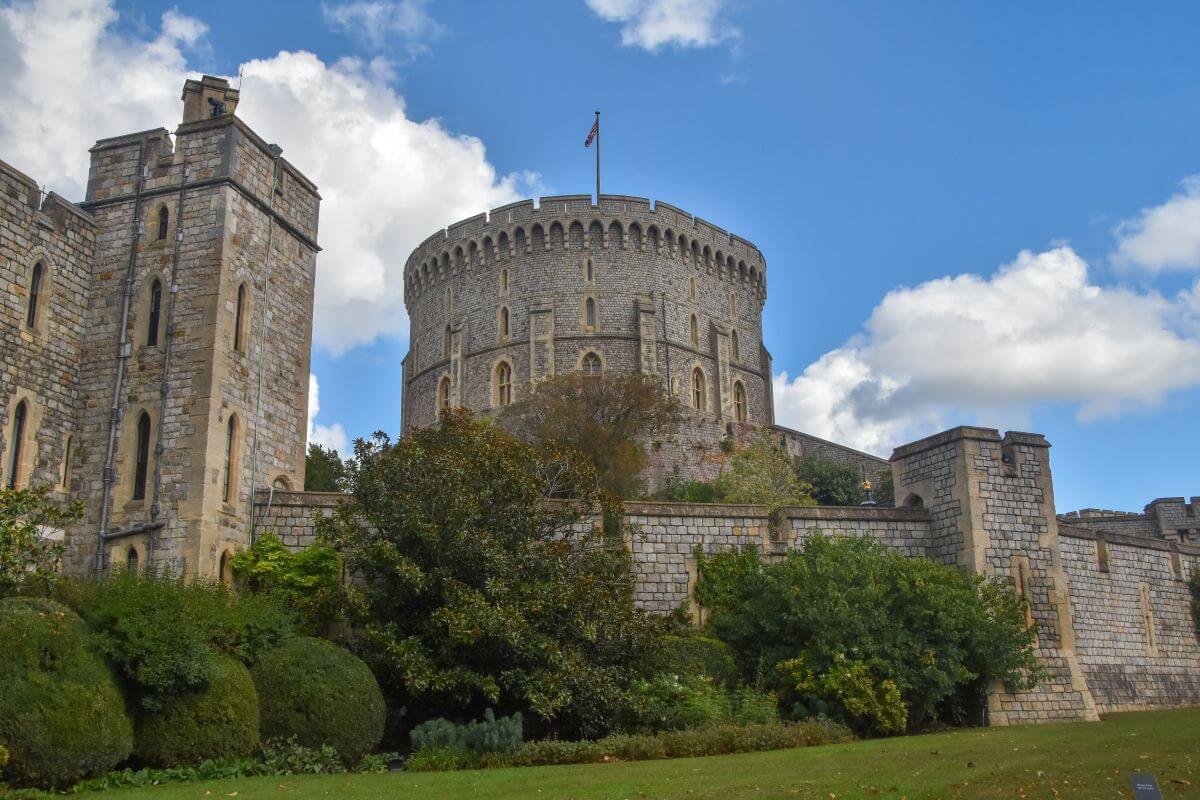
How much do you really know about the most famous castle in England? Let’s explore the quirky details that make it one of the most attractions in London.
1. A Castle that never stopped being a home
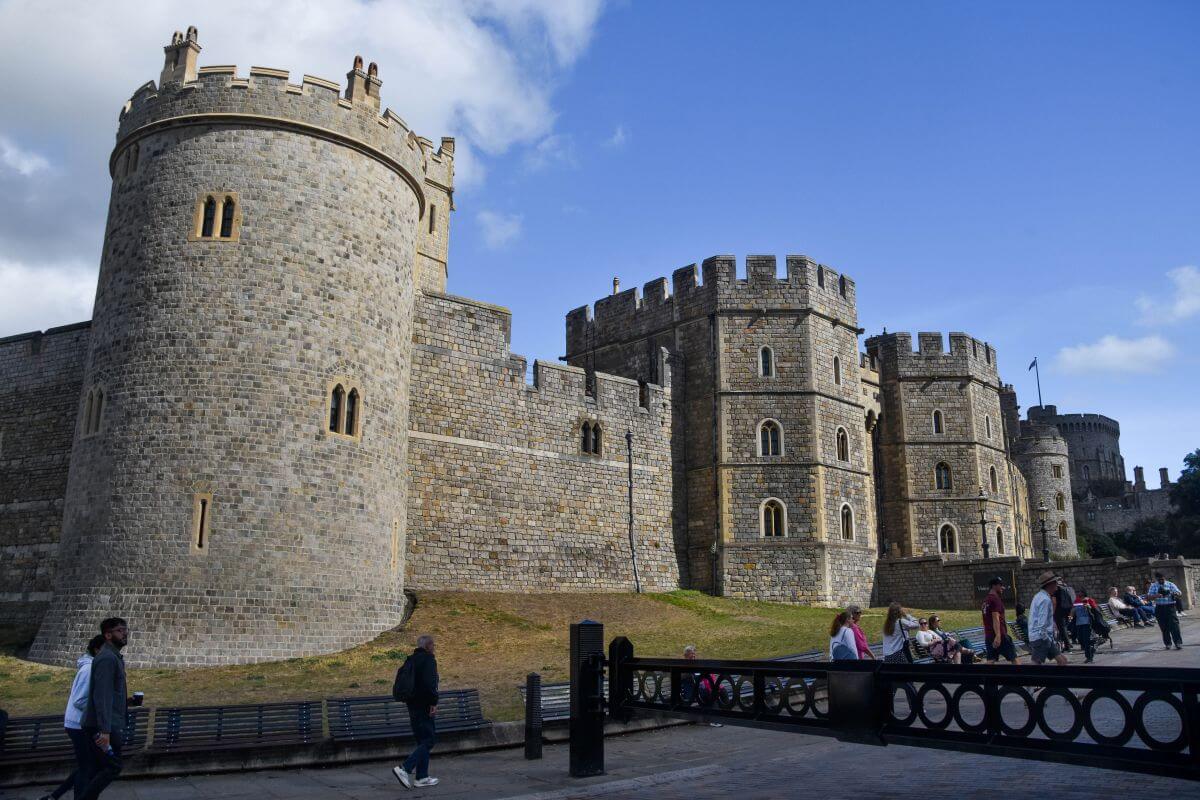
Windsor Castle holds a rare record. Its story began over 950 years ago, around 1070, when William the Conqueror ordered its construction following the Norman Conquest. Fortresses like this one were placed carefully to control the land, rivers, and key routes. Its position near the Thames and royal hunting grounds made it both strategic and desirable.
According to the Royal Collection Trust, William the Conqueror ordered it as part of a wider plan to secure his new kingdom and protect London’s western approach. The earliest version was a wooden motte-and-bailey fort, built quickly for defence. Over generations, monarchs replaced wood with stone, expanded towers, and added living spaces. What began as a military base slowly became a royal residence without ever losing its defensive role. Since the reign of Henry I in the early 1100s, Windsor Castle has been continuously occupied by the monarchy. This makes it the longest-ever used royal palace in the world. More than 40 monarchs have lived within its walls since its founding.
The oldest occupied castle in the world.
2. Bigger than you expect
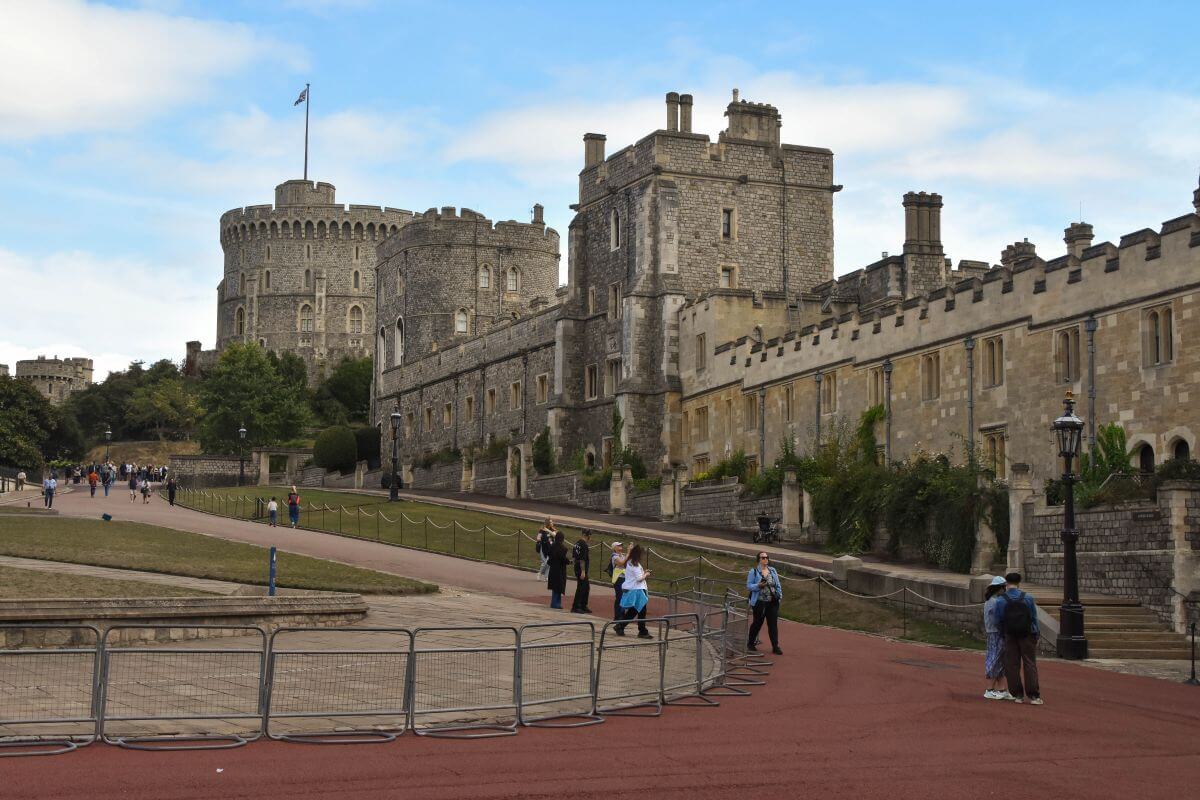
Many fortresses are bigger on paper, but they stand empty.
While Malbork Castle often claims the title for total size, this fortress holds a rarer distinction. Windsor Castle is the largest occupied castle in the world. According to Wikipedia, its grounds cover about 13 acres (5.3 hectares).
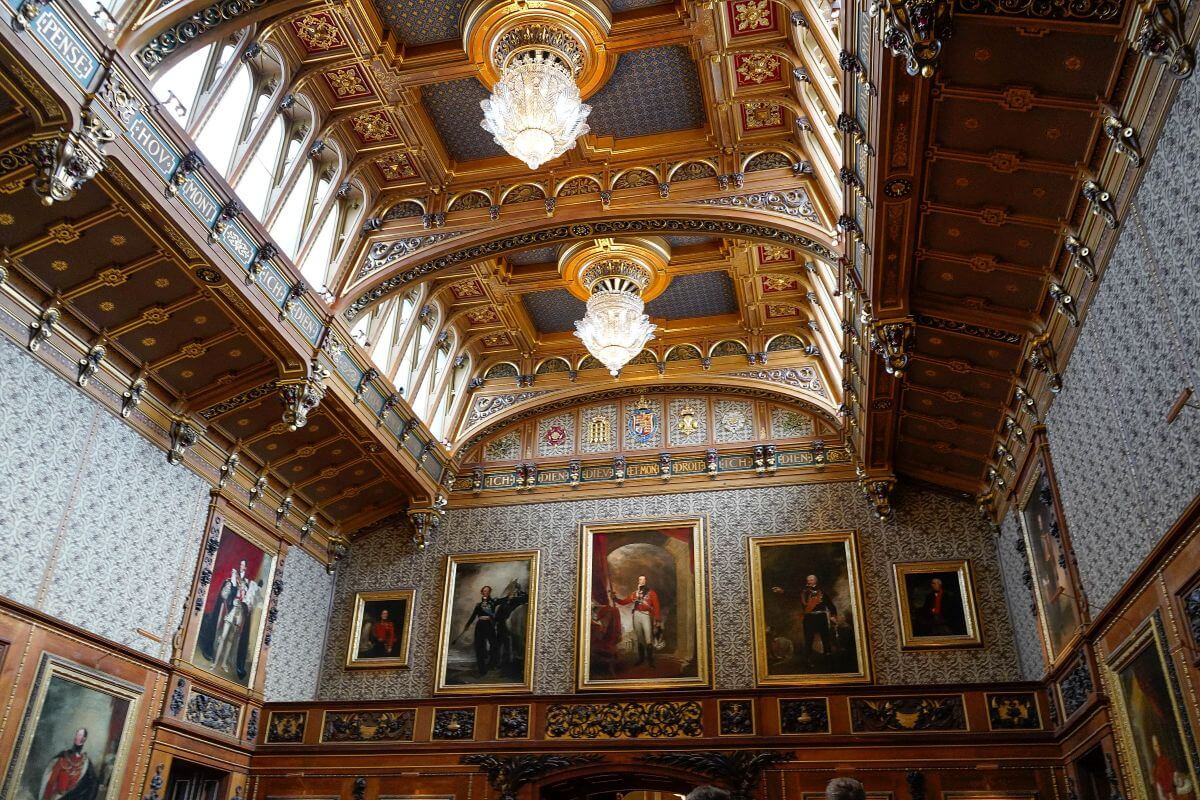
Inside, the numbers are just as striking. London ticket information lists more than 1,000 rooms, including 52 royal and guest bedrooms, 92 offices, 78 bathrooms, and vast state rooms. The Royal Mint Museum notes that around 500 staff members operate daily inside the walls, from chefs and butlers to librarians. While the monarch no longer lives here full time, it remains an active royal workplace, not a silent monument.
3. A Royal favourite through a lifetime
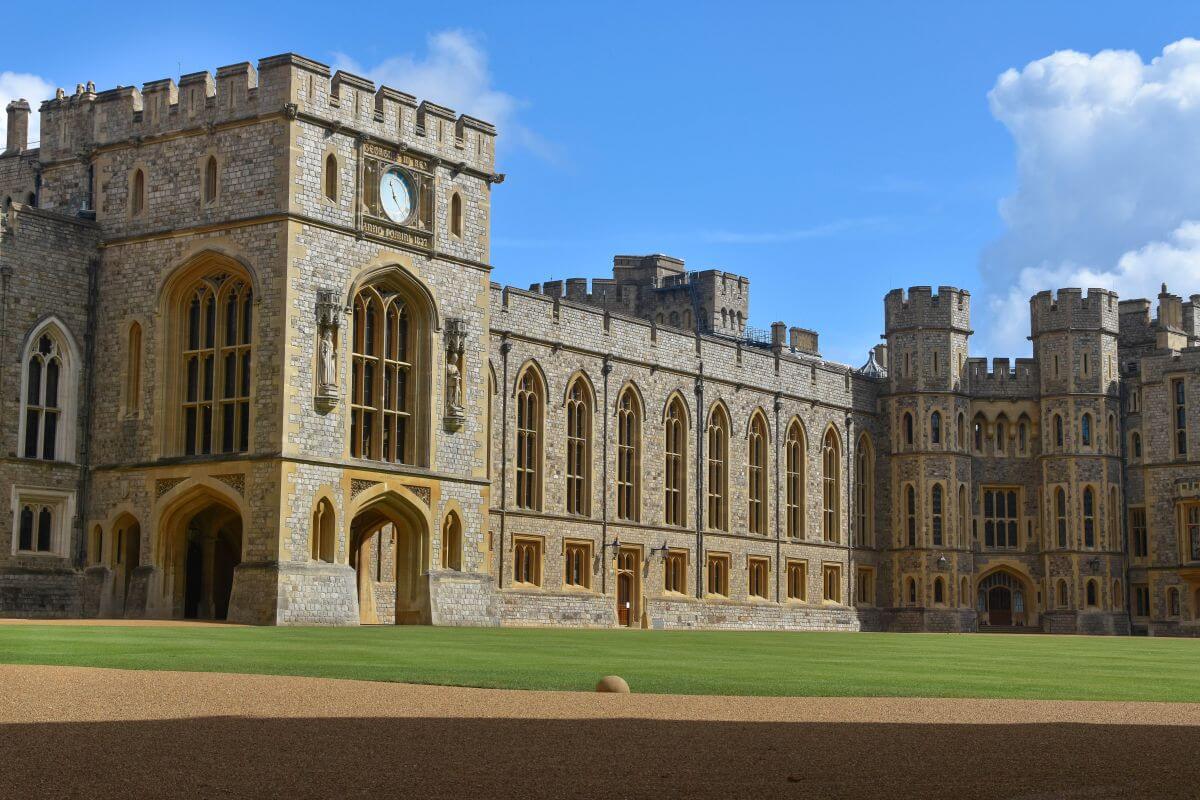
For Queen Elizabeth II, this fortress was not just a symbol of power, but it was also home.
Few people know that Windsor Castle held deep personal meaning for Queen Elizabeth II. According to Wikipedia, she spent much of her childhood here and returned often throughout her life. After becoming Queen in 1952, she chose it as her main weekend residence. In her final years, the palace became her main residence. The Queen spent most of her time here and carried out royal duties in familiar surroundings.
After the Queen’s passing, the fortress continued its royal role. Though Charles III doesn’t reside there full-time like his mother, it remains a principal residence and official country home of His Majesty the King. While Buckingham Palace remains the main administrative base, King Charles III uses this historic home for official state visits, audiences, and receptions. The other royal homes, such as the Palace of Holyroodhouse in Edinburgh and other private estates, are also significant residences for the ruler.
4. A Chapel where Kings and Queens rest
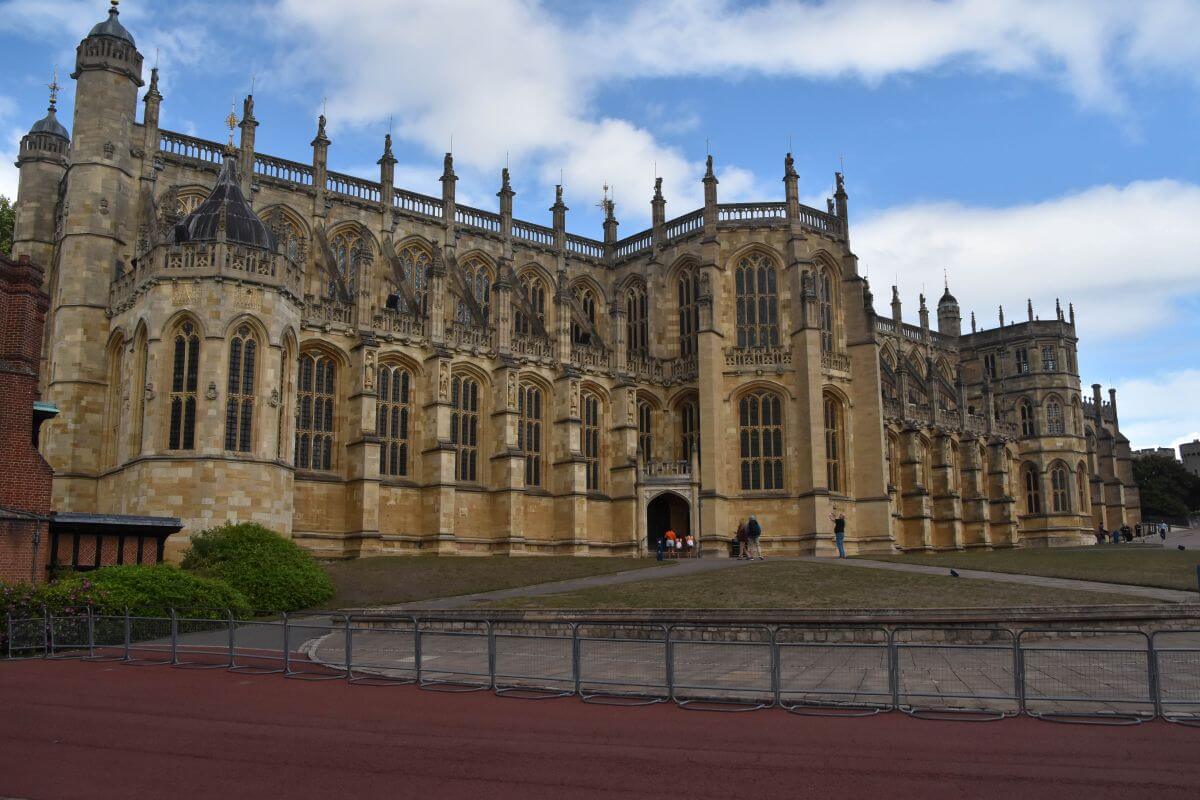
According to the Windsor Government website, 11 of the 39 British monarchs now rest inside St. George’s Chapel. Among them are Edward IV, Henry VIII, Jane Seymour, and Queen Elizabeth II. Among these rulers, King Charles I’s burial stands apart from all others. According to the Westminster Abbey website, after his execution for treason in January 1649, officials buried him quietly inside Henry VIII’s vault. No public mourning or grand procession marked his burial. Over time, people forgot the exact location until it came to light by accident years later. King Charles I remains the only English monarch buried without a ceremony due to execution and unrest.
Another surprising fact about Windsor Castle is that not every royal rests inside St. George’s Chapel. Queen Victoria broke away from chapel burials entirely. Royal Collection Trust reports that the queen chose Frogmore’s Royal Mausoleum, where she rests beside her husband, Prince Albert. She commissioned it herself after his death and visited often, finding comfort there during widowhood.
5. The Royal Family’s name has a hidden origin
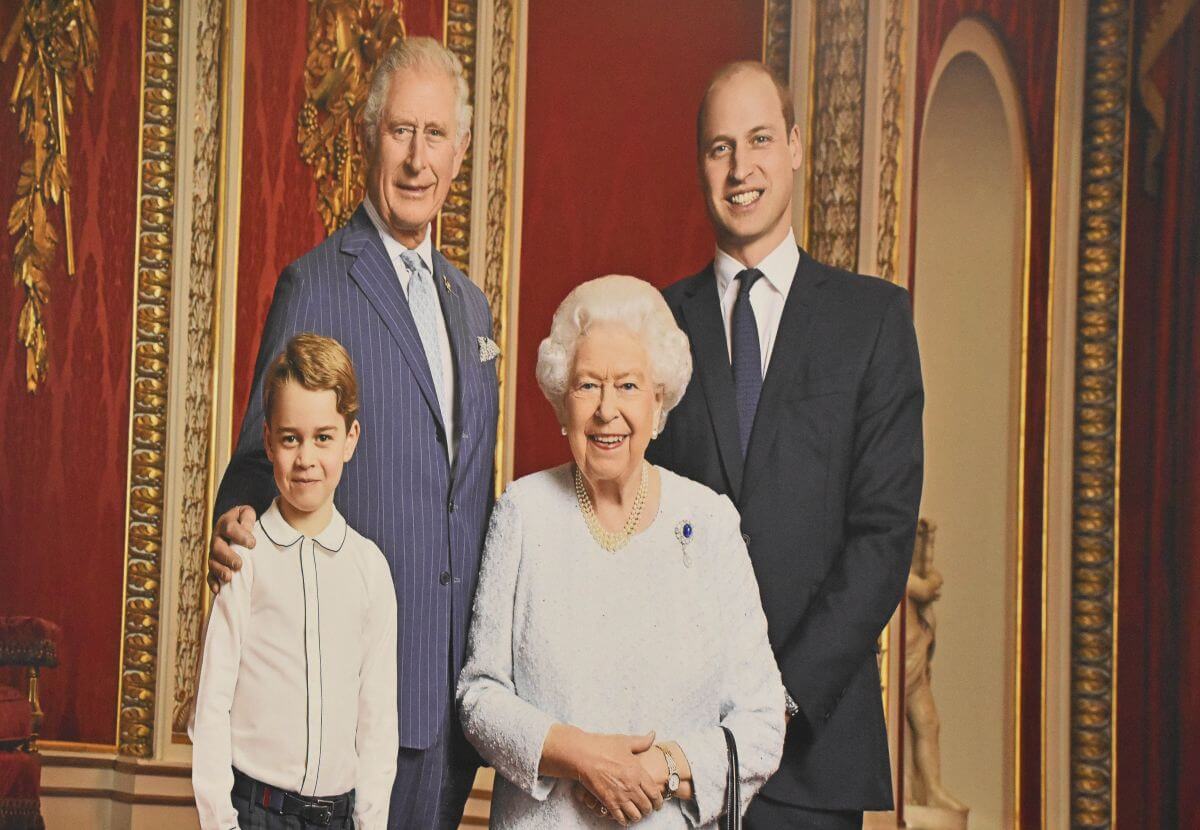
Did you know that the British Royal Family did not always carry an English-sounding name? According to the Royal Family website, before 1917, members of the British Royal Family had no surname, only the name of the house or dynasty to which they belonged.
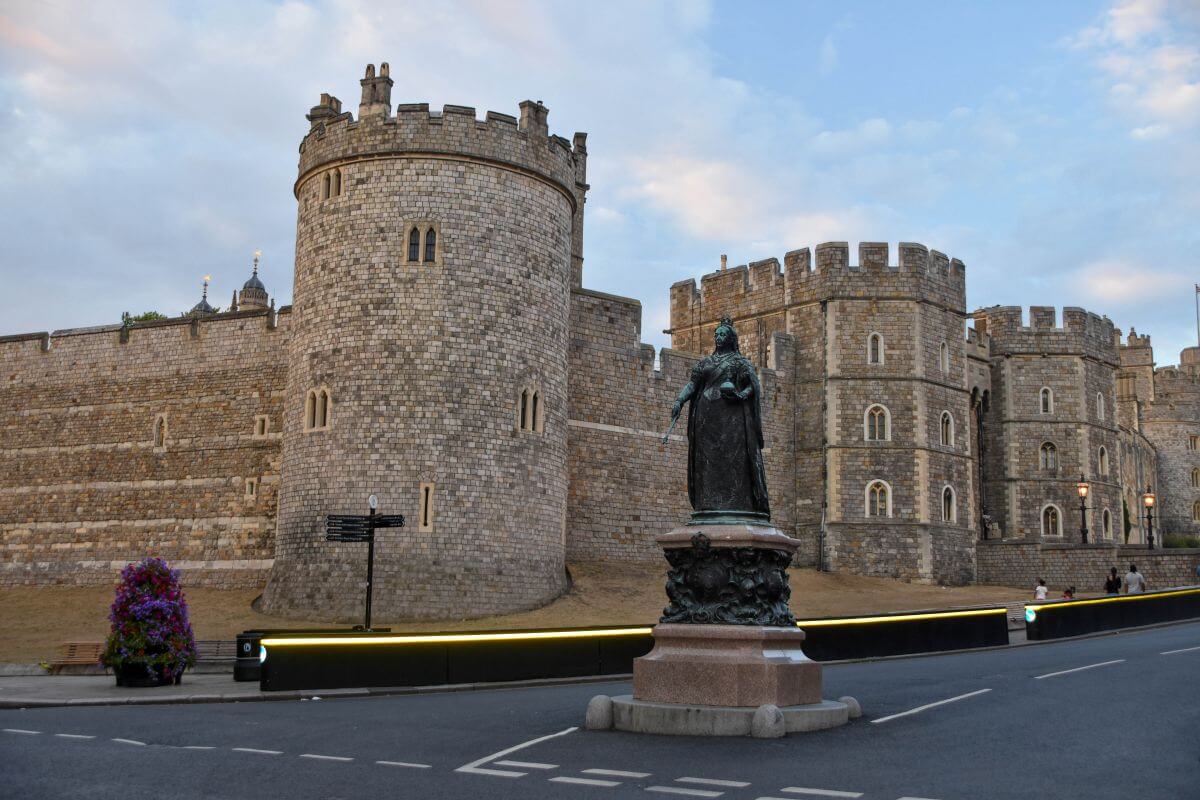
The current dynasty descends from German roots and used the surname Saxe-Coburg and Gotha. During the First World War, public anger toward Germany grew strong, and King George V needed a bold solution. In 1917, George V responded with a powerful symbolic change. He adopted the name Windsor and replaced the German title with a stronger, national symbol taken from a historic royal residence. This decision reshaped royal identity forever and stands out among the most unexpected fun facts about Windsor Castle.
According to the Royal Family website, at a Privy Council meeting on 17 July 1917, George V ruled that all male-line descendants of Queen Victoria would use Windsor as their surname, except women who married. This decision tied royal identity to place rather than bloodline. Queen Elizabeth II confirmed the name again after her accession in 1952. Later, in 1960, she and the Duke of Edinburgh introduced Mountbatten-Windsor for certain descendants.
6. Look up to know if the King is home
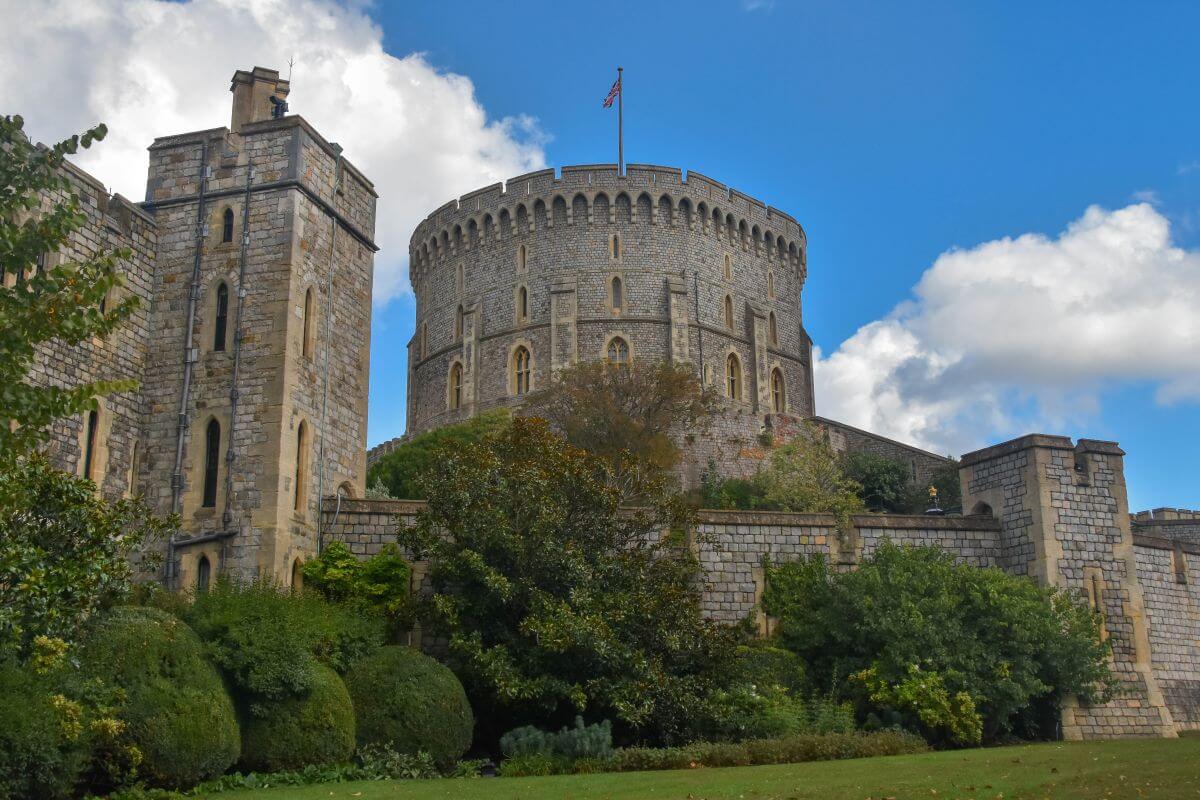
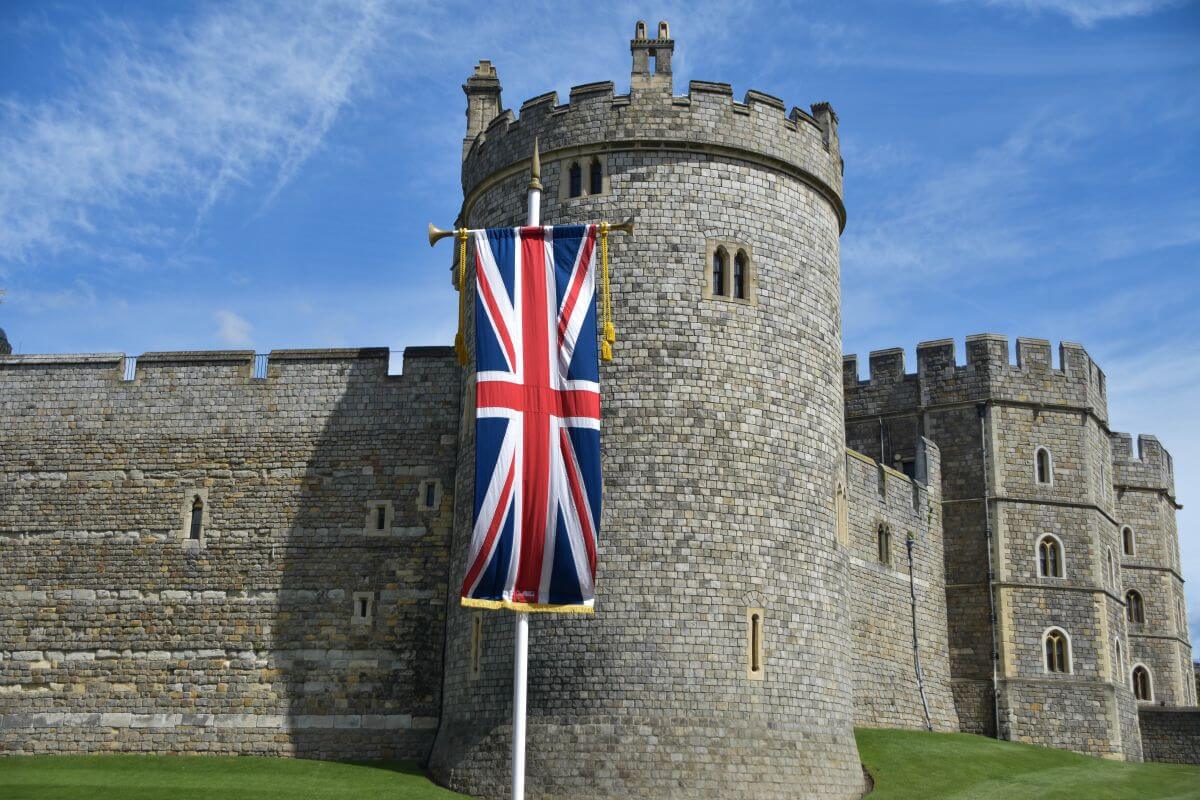
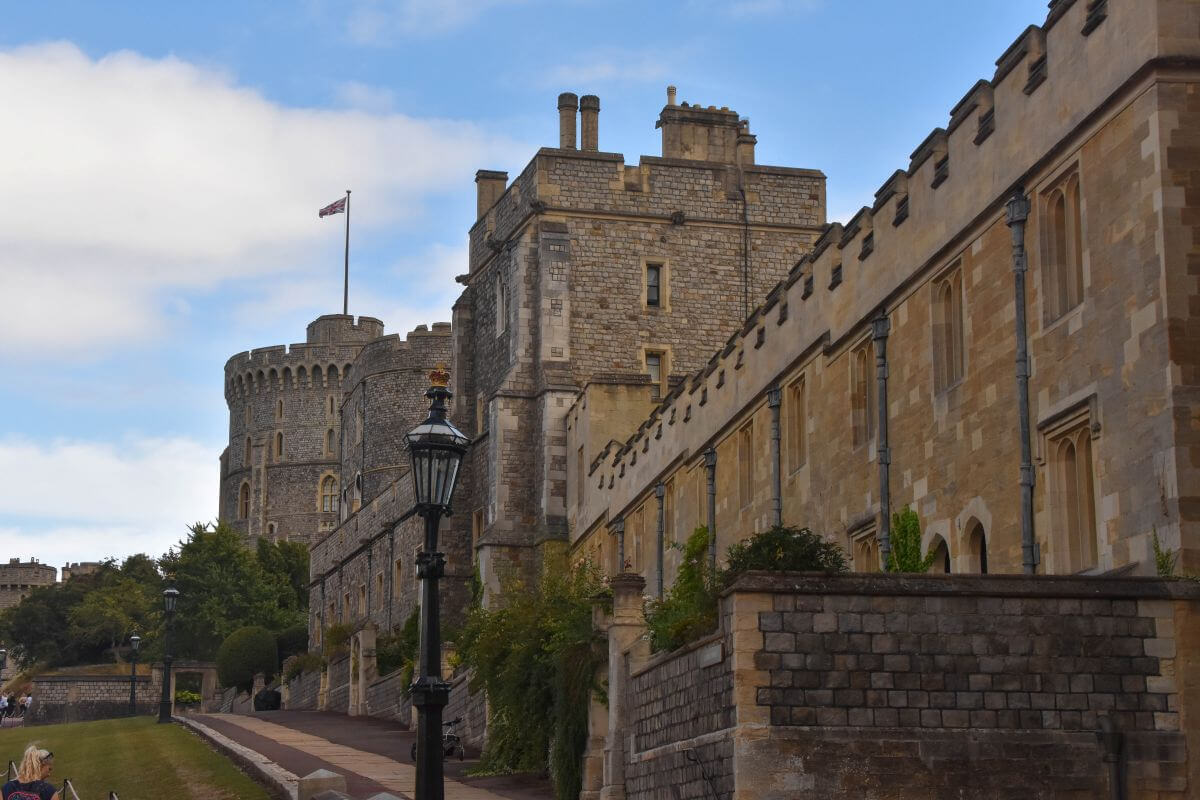
Ever wonder how everyone instantly knows if the King stays inside the fortress? Look up at the Round Tower and check the flag.
When the King enters the grounds, the flagman climbs to the top and swaps the Union Jack for the Royal Standard. He watches the final moments of arrival through binoculars and raises the flag the second the King comes inside. The Royal Standard represents the Sovereign and the United Kingdom, and it only flies when the King appears in a royal residence.
7. A kitchen older than most countries
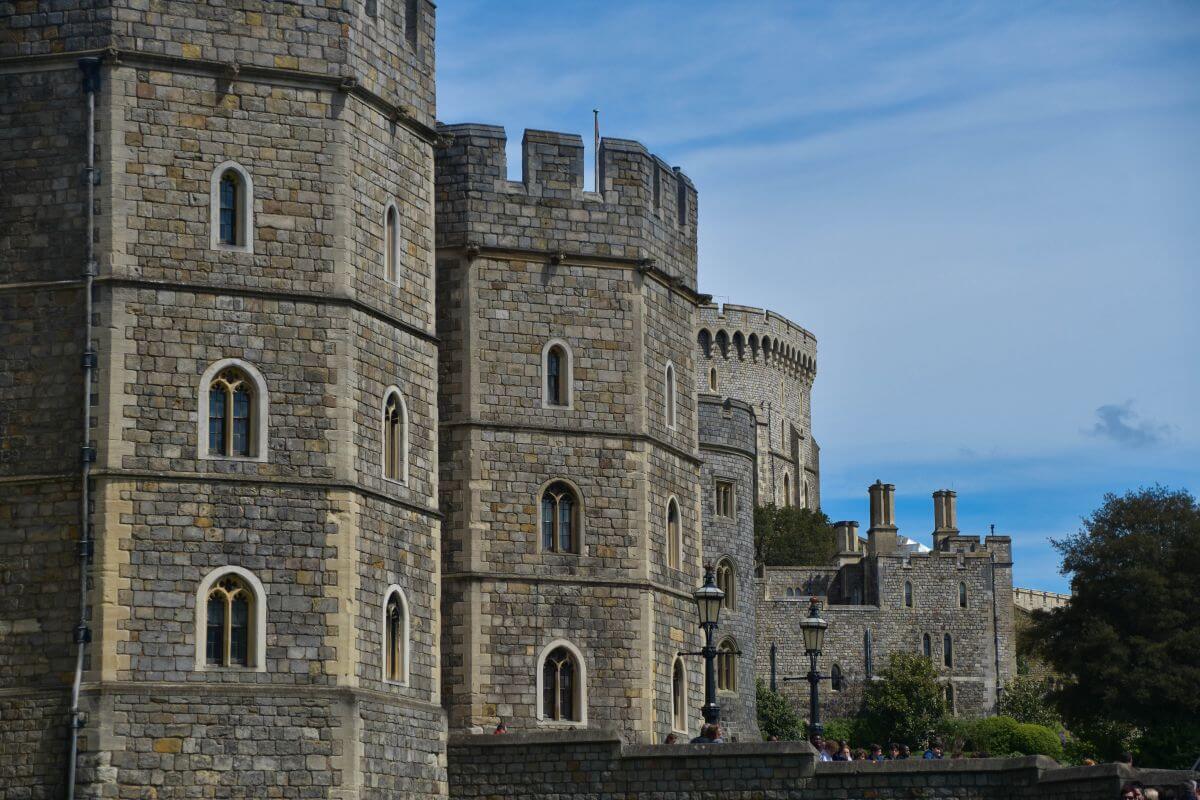
Did you know one working kitchen in Britain has served royal meals for over six centuries? Britain’s oldest working kitchen is still operational here, having first served dishes during the reign of Edward III, around 1360. According to the Windsor Government website, this kitchen has never stopped operating and has cooked for 33 of Britain’s 39 monarchs.
Daily routines here rely on strict timing. The clocks in the Great Kitchen run five minutes fast to ensure every dish arrives on time. Oversized tools handle royal-scale cooking, including a whisk large enough to mix 250 eggs at once. Nearby, the wine cellar stores approximately 18,000 bottles for banquets and formal occasions.
8. Rising from the flames – 1992 fire
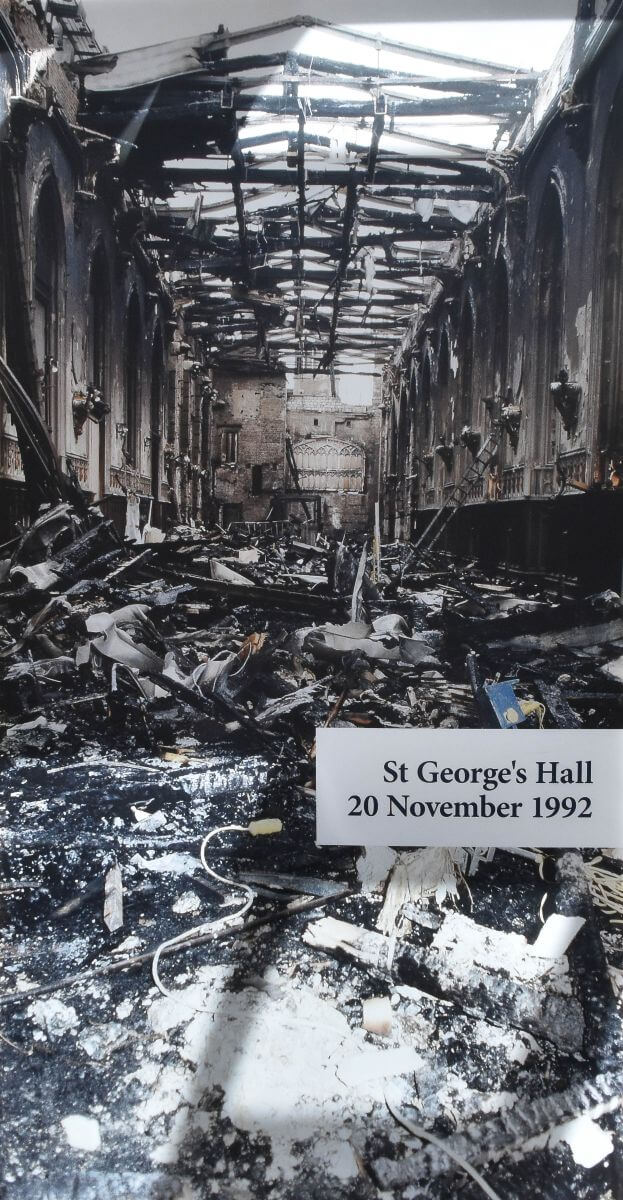
History nearly burned away in 1992.
One of the most dramatic facts about Windsor Castle comes from a night Britain will never forget. Although this fortress survived many fires over a thousand years, the most devastating struck in November 1992. According to Wikipedia, renovation work inside the State Apartments triggered the blaze when a spotlight overheated and set a nearby curtain inside the Private Chapel.
What followed shocked the nation. The fire spread rapidly through the Upper Ward and burned for 15 hours. Flames destroyed nine principal state rooms and badly damaged more than 100 others. Around 200 firefighters worked nonstop, battling smoke, collapsing roofs, and extreme heat throughout the night. At the same time, staff raced through corridors to rescue historic artworks, many saved only because renovation works had already removed them from nearby rooms.
Royal Collection Trust reports that the fire crew poured more than 1.5 million gallons of water to contain the blaze. While the water damaged the structure, it caused serious damage to ceilings, floors, and walls, creating a restoration problem greater than fire damage alone. The crew finally brought the blaze under control at 2:30 AM on Saturday, 21 November.
The restoration raised controversy. According to Wikipedia, the repair cost reached around £67 million in today’s money. Many questioned whether taxpayers or the Royal Family should pay. In the end, the government approved a bold plan: open Buckingham Palace to the public at selected times, using ticket sales to fund repairs.
9. A wartime hideout for a future queen
One of the most astonishing facts about Windsor Castle is that it once protected a future queen during Britain’s darkest hours. When the Second World War broke out in 1939, London faced relentless bombing. According to Wikipedia, Buckingham Palace suffered a direct hit, and danger followed the Royal Family. Faced with real fear for their children’s lives, the King and Queen chose Windsor Castle as the safest refuge for Princess Elizabeth and her younger sister Margaret.
Wikipedia also reports that the site was immediately prepared for wartime conditions. Workers blacked out windows, removed priceless artworks, and lowered chandeliers to prevent deadly falls. On the most dangerous nights, when air raids threatened nearby areas, the young princesses did not sleep in their usual rooms. Instead, they moved deep below ground and slept in a fortified dungeon that offered protection, thick walls, and no exposed glass.
10. The Long Walk – A Royal Road, almost 3 miles long
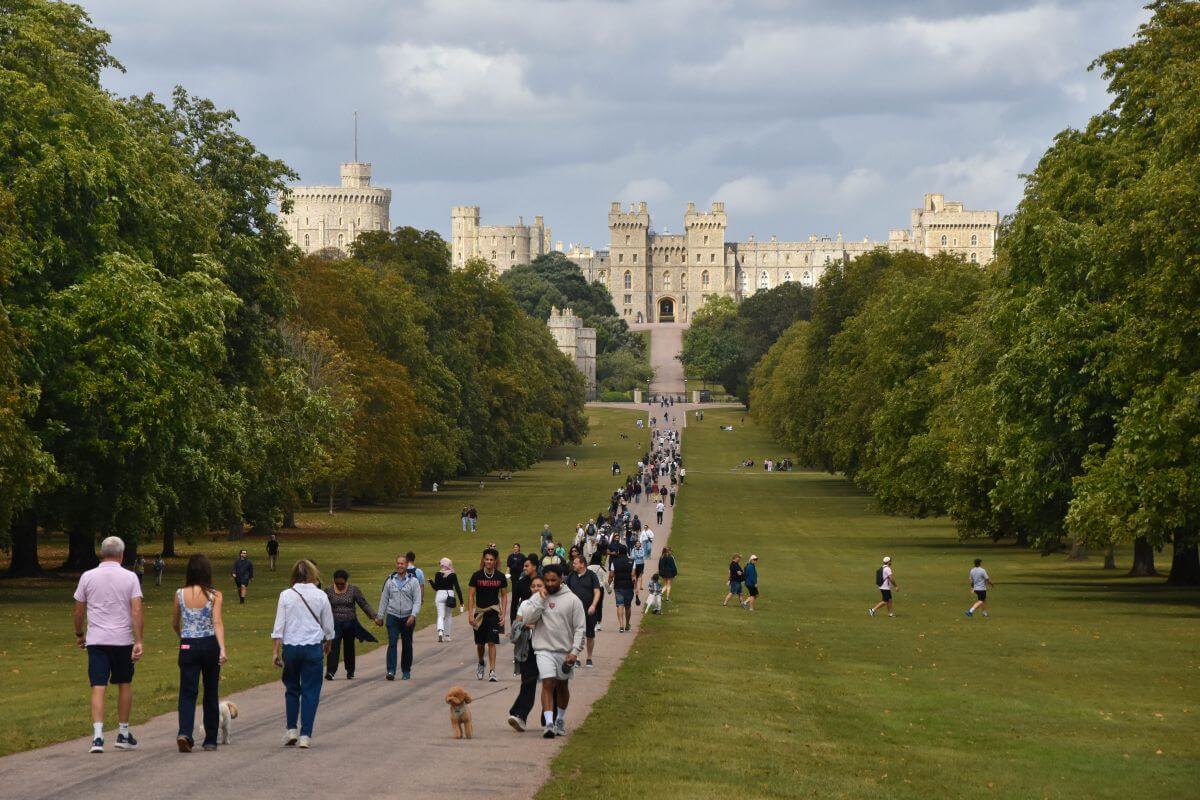
Royalty has used these lands since William the Conqueror claimed England. For centuries, kings and queens enjoyed these parklands for hunting, riding, and escaping court life here. According to historic records, the park remained a private royal pleasure ground for centuries until William IV opened it to the public.
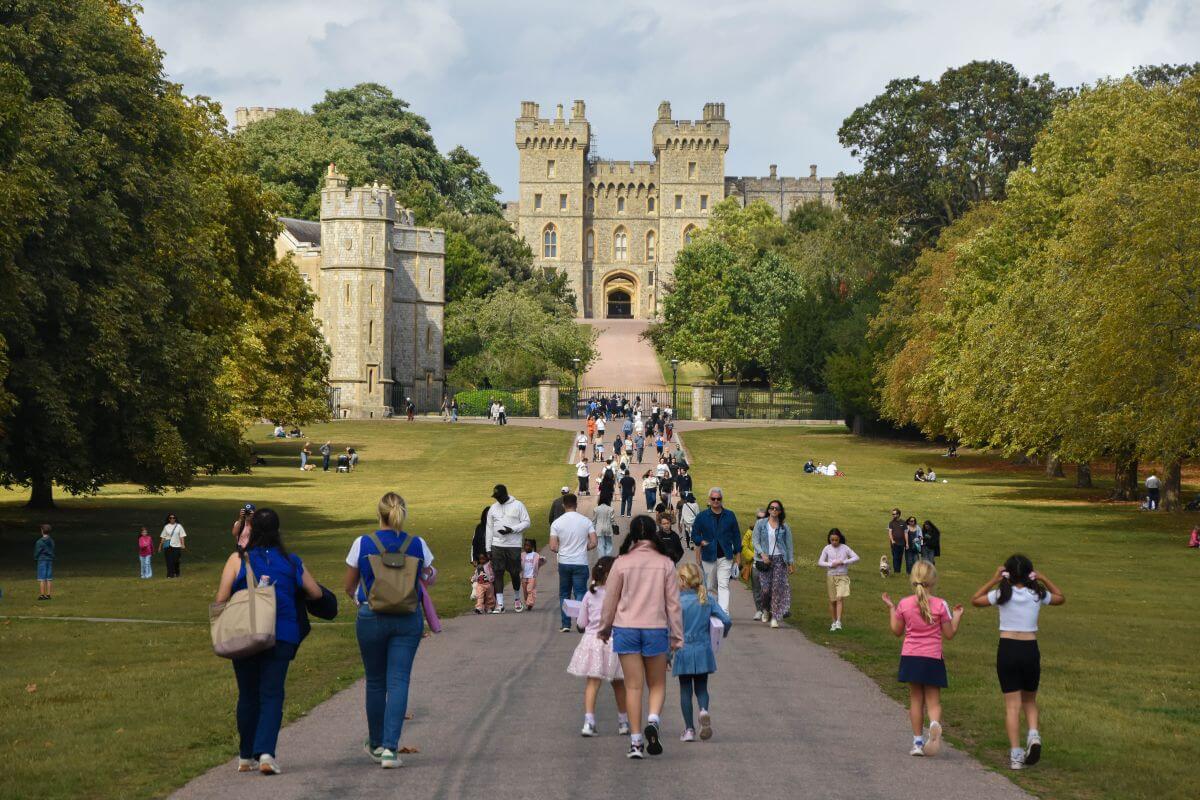
King Charles II transformed the area with ambition and grand purpose. Inspired by the formal gardens of continental Europe, he wanted a bold ceremonial route that would highlight royal authority. The new grand route would also frame the fortress as a symbol of power. According to the official website, Charles II commissioned the project between 1680 and 1685. The workers planted thousands of trees to form a straight avenue stretching almost 2.5 miles, leading towards the stronghold. Later, Queen Anne improved the surface in 1710, making travel suitable for carriages rather than a rough ride across the grass. At the highest point stands the Copper Horse statue of King George III. From here, you can enjoy one of the most iconic views in England.
ANCIENT TREES AND LEGENDS
Some oak trees along the route are believed to be over 1,000 years old. The local legend passed through generations says they shelter protective spirits. Folklore speaks of faeries and sightings of Herne the Huntsman (a ghostly figure linked to the royal forest).
MODERN HISTORY:
In 2018, Prince Harry and Meghan Markle travelled the Long Walk in a joyful wedding procession. In 2022, the nation watched as Queen Elizabeth II made her final journey along the same road.
11. Changing of the Guard
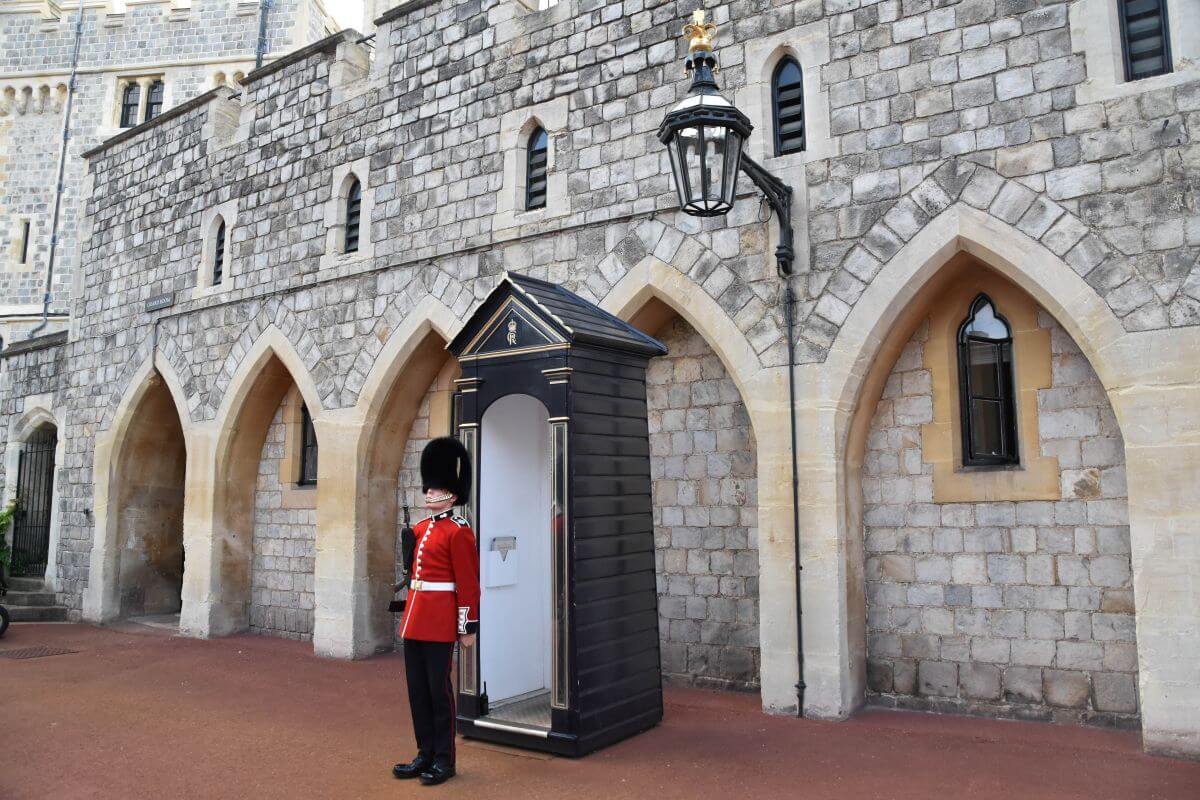
One of the most memorable things to see is the Changing of the Guard. This military tradition dates back to 1660. The tradition still follows rules set more than 360 years ago and continues the same purpose – protecting the Sovereign.
Today, the ceremony takes place every Tuesday, Thursday, and Saturday at 11 AM. Soldiers in bright red uniforms march with music, drums, and perfect timing as one guard hands over duty to another. According to official Royal Household records, this ceremony happens inside the Castle Precincts, which means visitors must purchase a ticket to watch it. There is no guard change on Sundays.
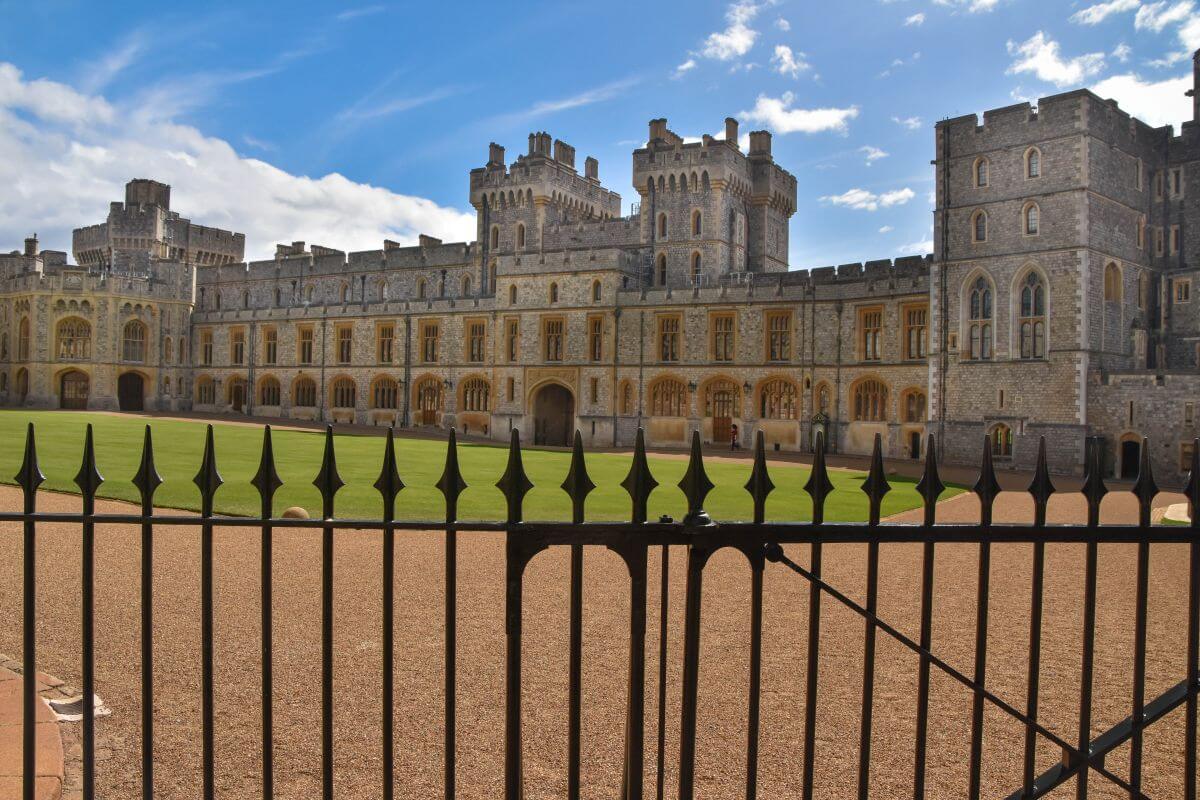
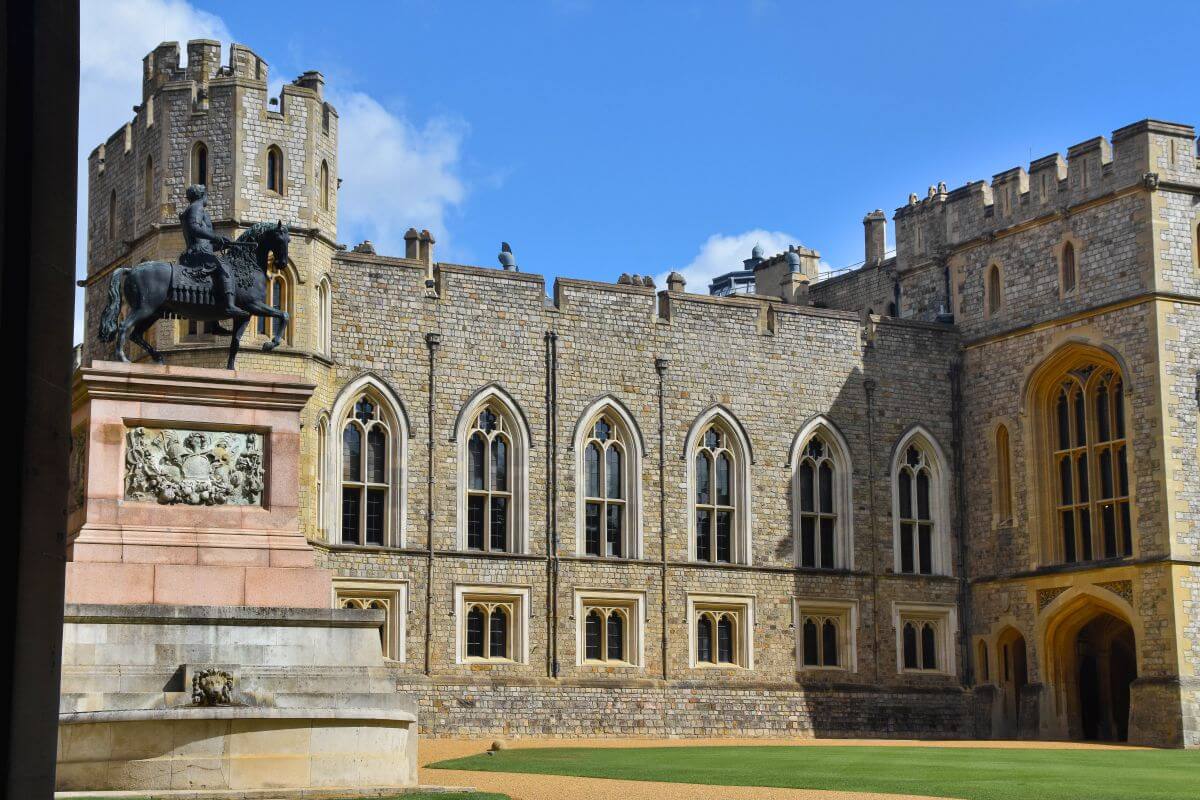
Quadrangle lawn
The setting depends on whether the King is in the official residence. When he is not, the guard change happens in the Lower Ward, with both guards entering and leaving through the Henry VIII Gate. When the King stays in residence, the ceremony moves to the Quadrangle lawn outside the Royal Apartments, where guards march up Castle Hill and enter through St George’s Gate.
GOOD TO KNOW:
This ceremony offers a quieter, closer experience than Buckingham Palace. Arrive early, check the residence schedule, and plan your visit around this unforgettable experience.
12. Queen Mary’s Tiny Kingdom
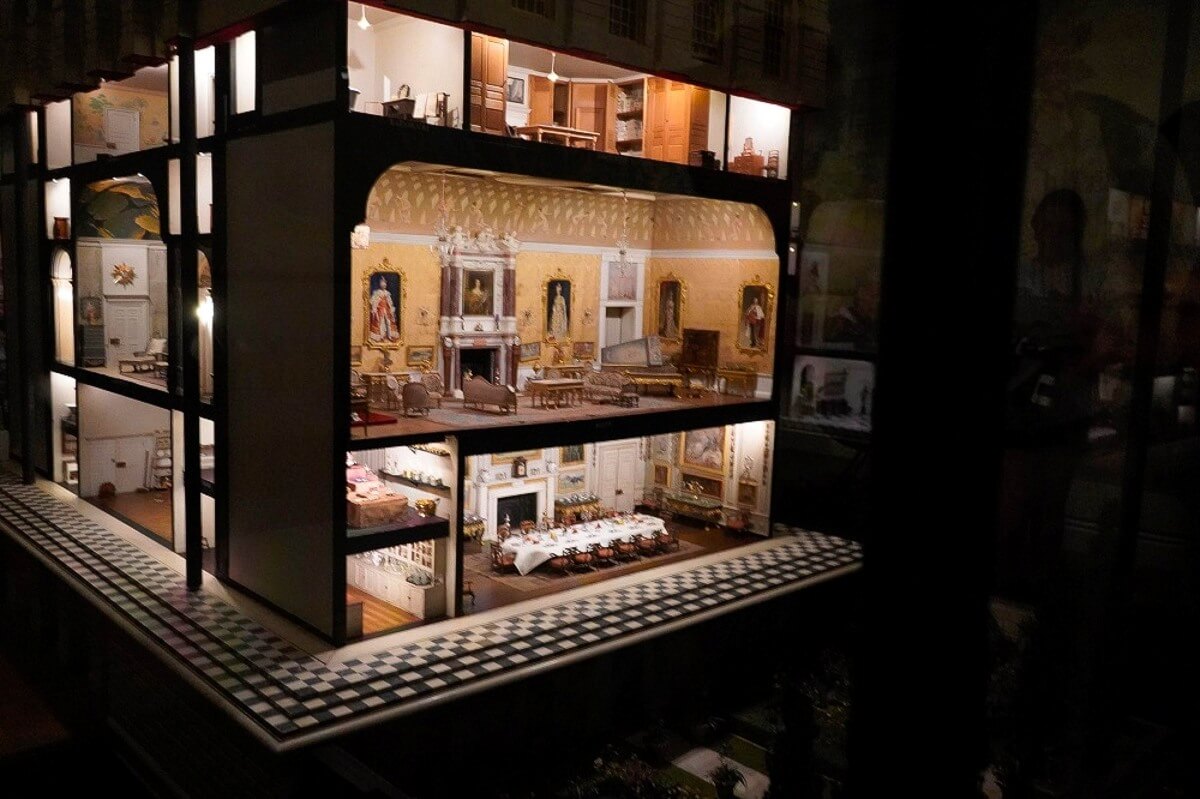
This isn’t a toy. It’s a masterpiece.
Did you know that Queen Mary’s Dolls’ House is one of the castle’s top attractions? According to the Royal Collection Trust, this is the largest and most famous doll’s house in the world. Built between 1921 and 1924, the house served as a gift to Queen Mary (wife of King George V) after World War I. Sir Edwin Lutyens designed the house to reflect a perfect Edwardian residence at a 1:12 scale.
One of the most surprising facts is that every feature of a model works exactly like a full-size version of Windsor Castle. Lights switch on, water runs from taps, toilets flush, and even tiny lifts move between floors. The library holds 170 miniature books, written by famous authors of the time. The wine cellar also stores real wine, carefully bottled to scale. Royal Collection Trust also notes that over 1,500 artists and makers contributed objects, turning the house into a showcase of British skill and creativity.
13. Nearly 450 clocks
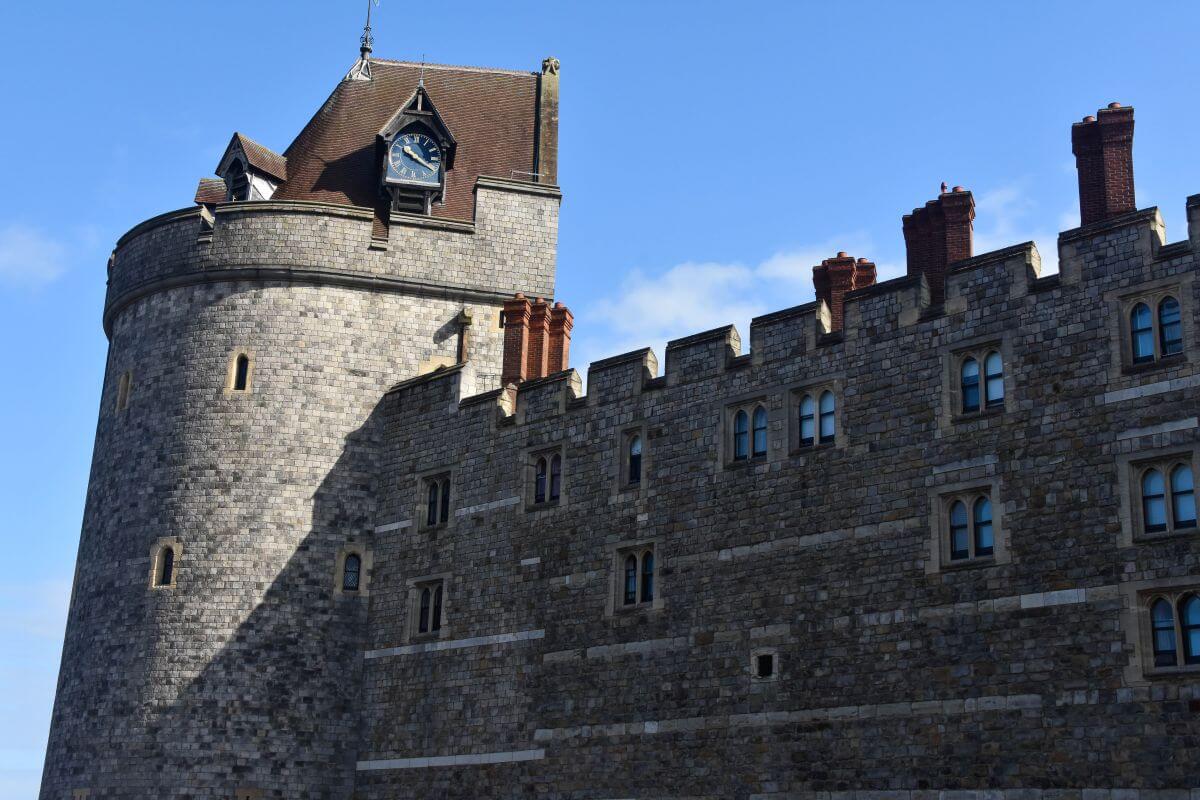
While your phone automatically changes time, timekeeping here is a royal operation.
One of the most surprising fun facts about Windsor Castle is that the estate holds over 450 clocks. Unlike modern devices, none adjust themselves. The King’s clockmaker changes every clock by hand to ensure perfect timekeeping for staff and visitors. According to the Windsor Government website, when British Summer Time starts, the process takes 16 hours of steady work. When it ends, it takes 18 hours because the historic clock must move forward 11 hours instead of backward.
14. More than 300 Fires
The castle is home to over 300 fireplaces, according to the Royal Household and Windsor Government sources. These fireplaces remain a key feature, and all need constant attention. That responsibility belongs to one man, the King’s fendersmith. He took this role in 1984, continuing a family tradition passed down through generations. Each fireplace requires careful cleaning and inspection, worthy of a royal home. The work demands precision, tradition, and trust, which explains why the job has never been outsourced.
15. Ghosts with crowns and the royals who never truly left

This royal residence holds more than priceless art. According to the BBC website, it ranks among Britain’s most haunted historic sites, with ghost stories tied directly to its royal past. My London News reports that this fortress is said to have more than 25 ghosts, outnumbering even the Tower of London.
These claims include sightings of numerous monarchs, and Henry VIII leads the list. Witnesses describe heavy footsteps and painful groans echoing through the cloisters, linked to the king’s injured leg late in life. Perhaps he’s on his way to meet Anne Boleyn, his executed wife, who appears at a window above the Dean’s Cloister. Charles I, executed in 1649 and buried without ceremony, walks the cloisters near Canon’s House.
Even Elizabeth I refuses to fade quietly. The BBC notes reports of her presence in the Royal Library, announced by the sharp click of heels on wood, which often come first. Several witnesses, including senior royals, claimed to see her figure pass through the room before vanishing.
16. Hidden corridors
Most visitors never realise how royals move unseen. Secret passageways connect private rooms with grand rooms, allowing monarchs and staff to move without crossing public spaces. Medieval underground escape tunnels used during sieges and secret staircases for royalty also still exist, confirmed by documentaries using declassified plans.
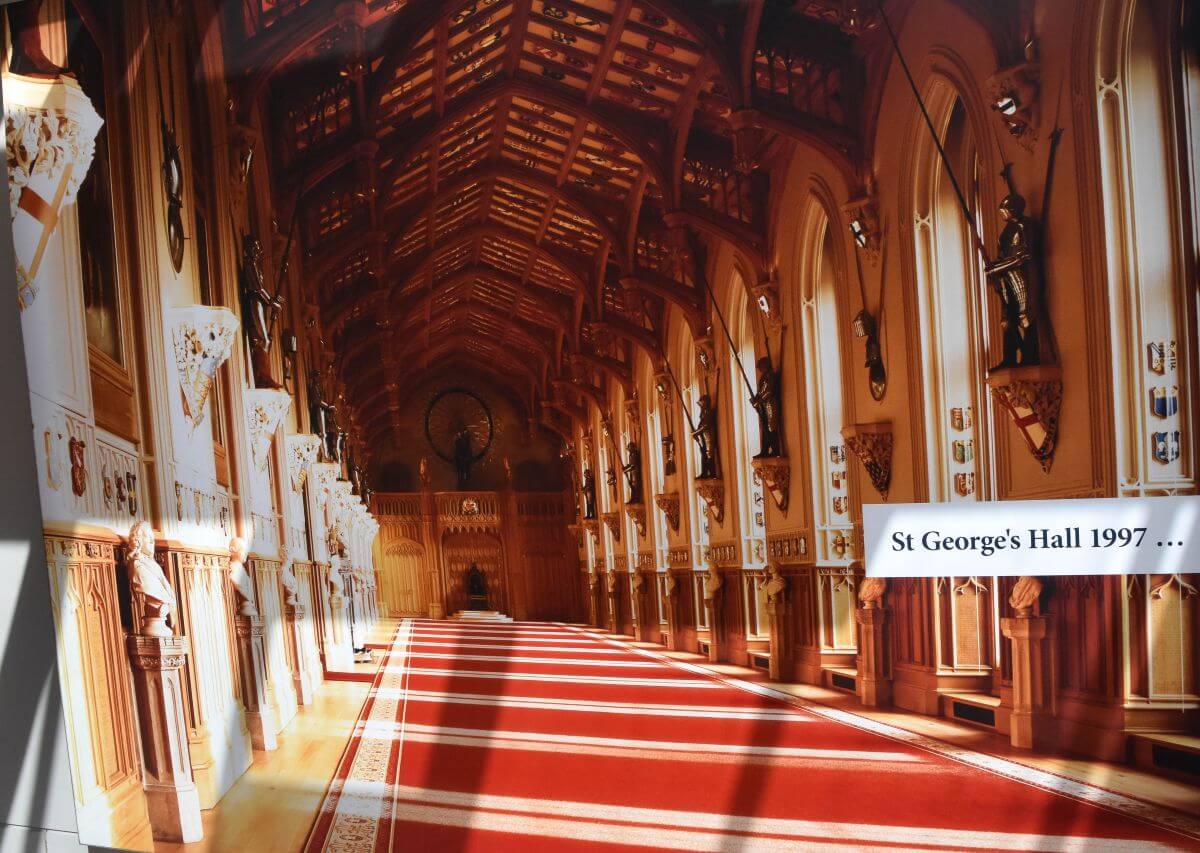
17. St. George’s Hall
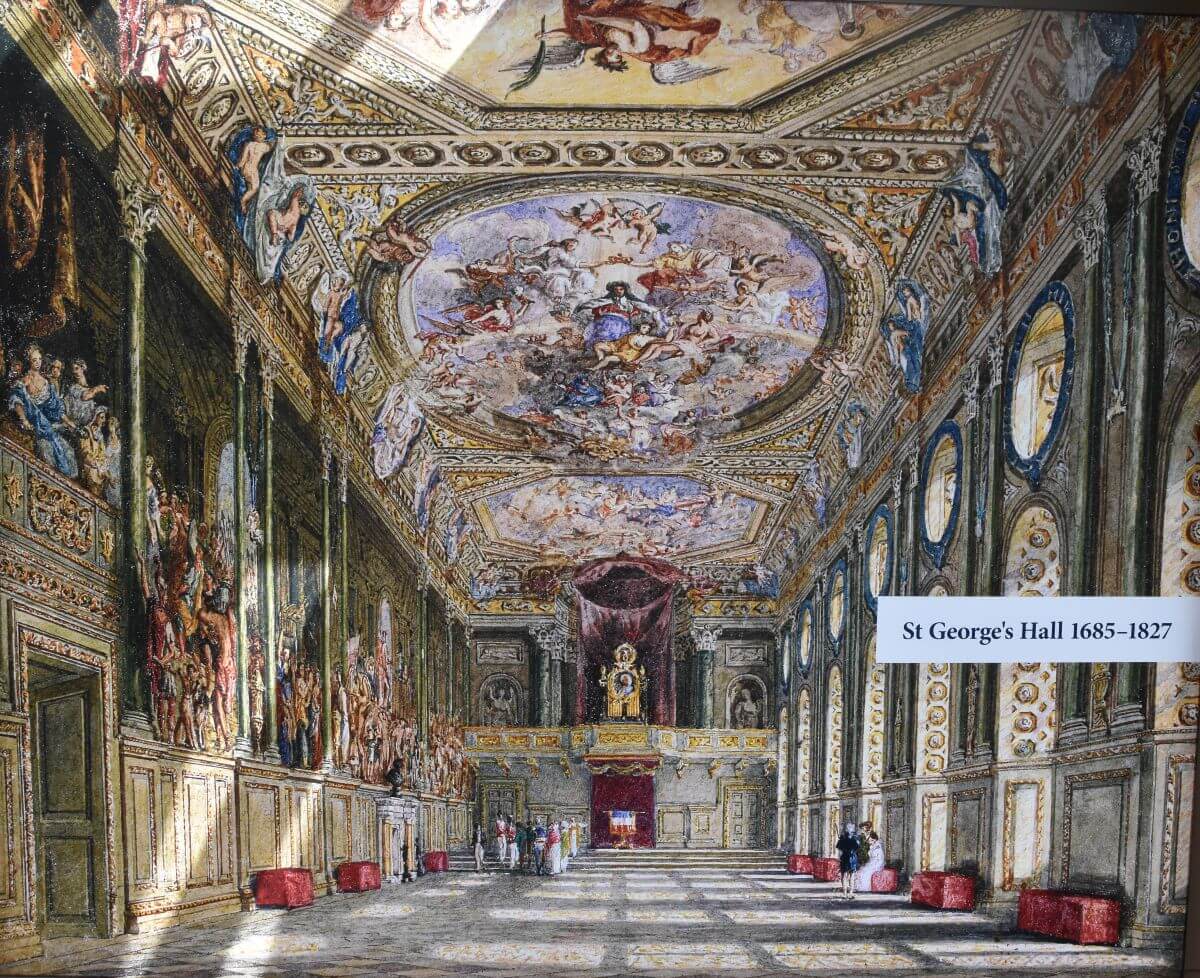
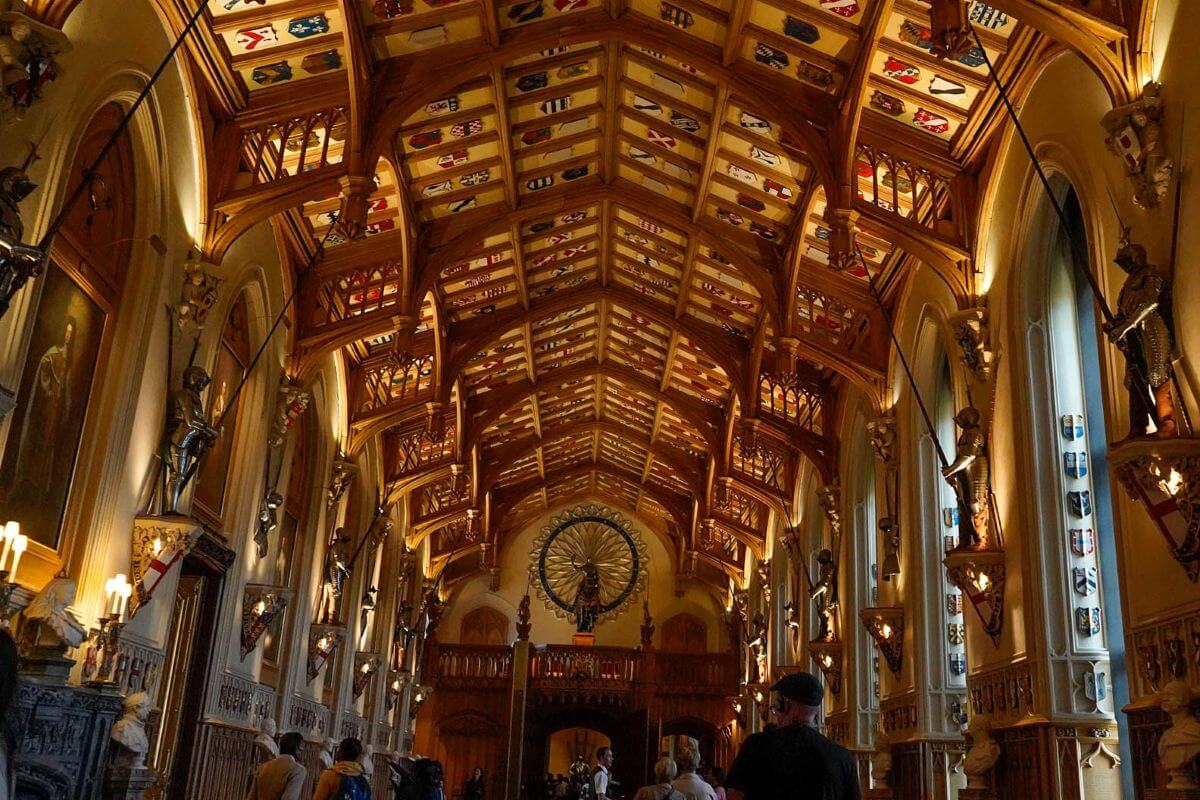
Kings, queens, and global leaders have gathered in the castle’s largest room for centuries. St. George’s Hall is one of Britain’s most important ceremonial spaces. This grand space within the State Apartments has hosted royal banquets, diplomatic receptions, and moments that shaped the nation. The fire of 1992 nearly erased it forever, but the restoration team rebuilt the hall stronger and more meaningful than before.
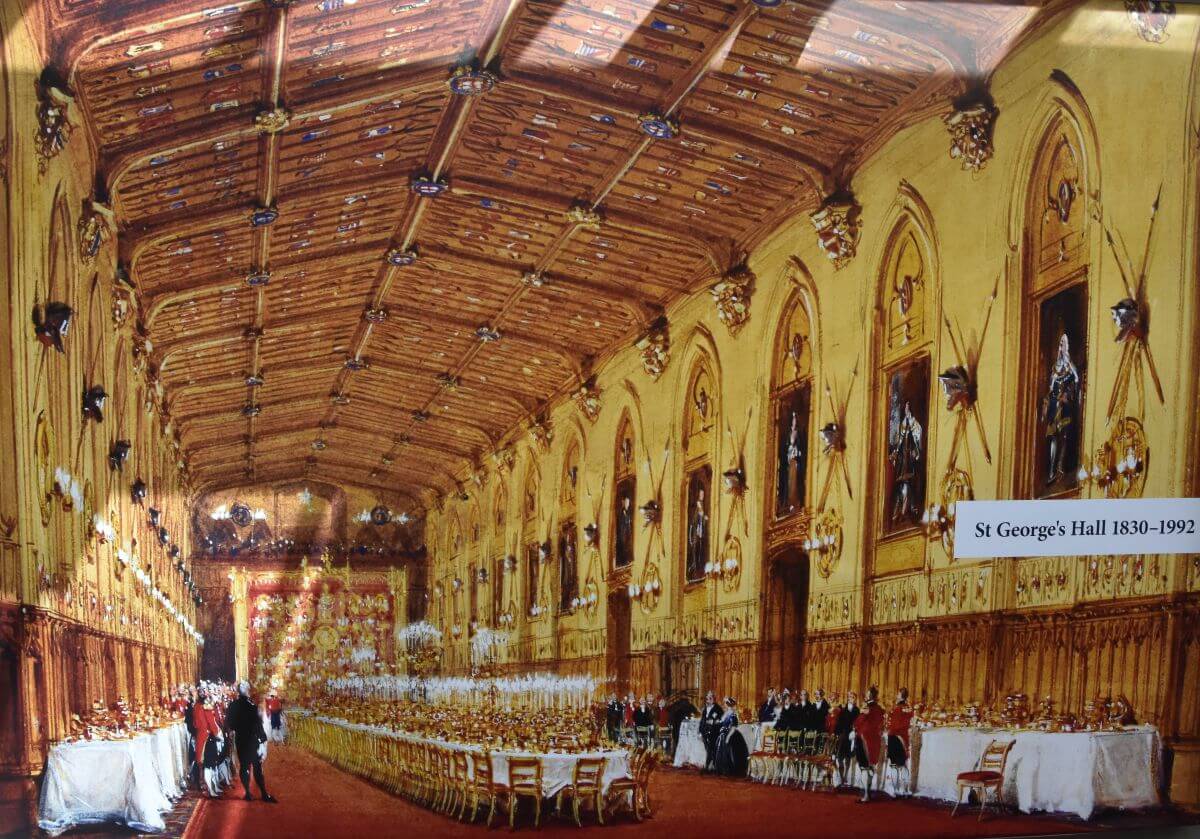
Today, the ceiling carries the coats of arms of every Knight of the Garter since the Order’s founding in 1348. Below, you can spot one of the longest dining tables in any royal residence. At 53 m, it hosts up to 160 guests during official banquets. According to the Windsor Government website, preparing the space demands two full days of work, with up to 10 specialists. Every plate, glass, and chair follows strict rules, including a precise 46-cm allowance per guest.
Now you know all the fascinating facts about Windsor Castle!
Thank you for staying with us until the end. If you’ve enjoyed this article, please consider sharing this post below.
Pin 17 Windsor Castle facts for later!
Have you ever visited this famous fortress in England? Which fun facts surprised you the most? Let us know in the comments below!
YOU MAY ALSO ENJOY: