The Megalithic Temples of Malta are older than the pyramids in Giza and remain one of the island’s greatest wonders. They’re also some of Malta’s biggest attractions and biggest mysteries. UNESCO recognised their global importance by protecting six of them as World Heritage Sites. When we visited the islands in October 2025, we were amazed by how well these prehistoric places have survived and how much they reveal about early life on Malta and Gozo. In this guide, you’ll learn what to expect when visiting in 2025, including must-see sites, practical tips, opening hours, and accessibility information.
What makes Malta’s Megalithic Temples world famous?
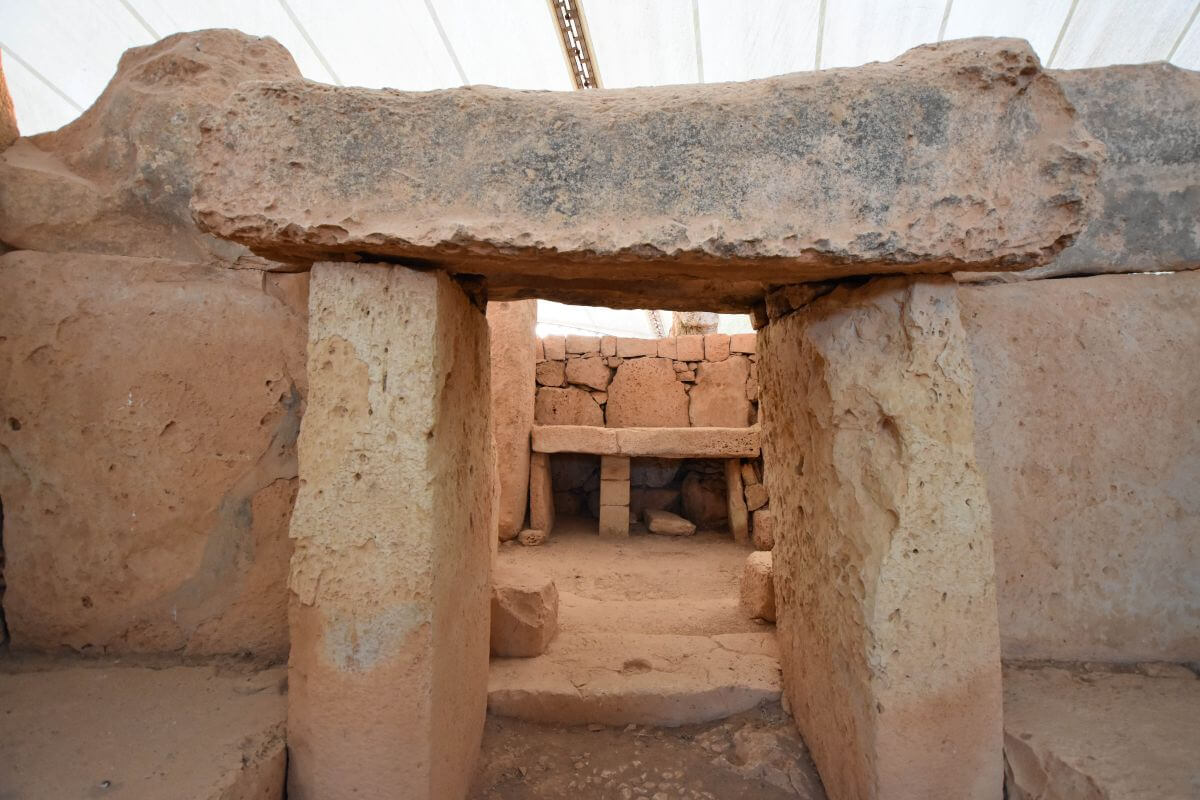
The Megalithic temples of Malta are famous for being among the world’s oldest freestanding stone monuments. Dating back to the 4th and 3rd millennia BC, they held the title of the world’s oldest free-standing stone structures. This changed when excavations in Göbekli Tepe in Turkey discovered that the site was much older than previously thought.
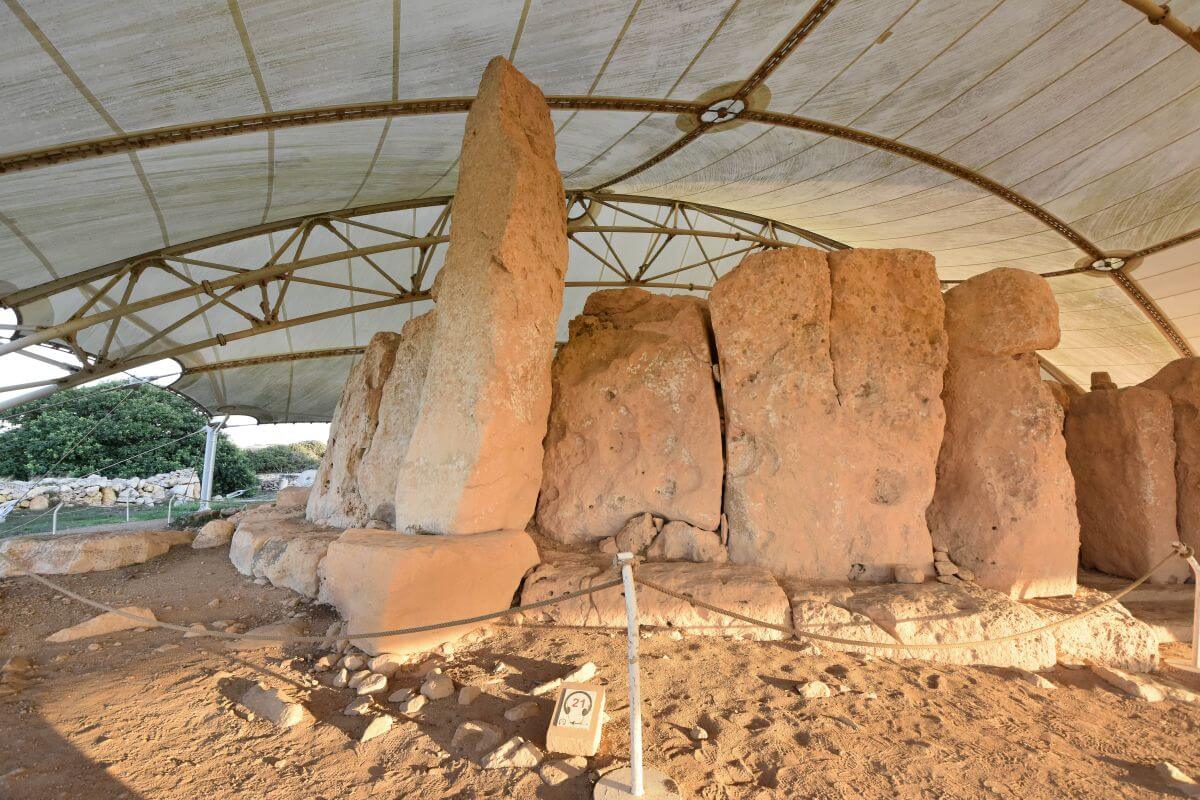
According to UNESCO, these prehistoric monuments are remarkable for their diversity of form and decoration. Their fame also comes from the engineering challenges the builders overcame. Builders used only stone tools to move blocks weighing up to 57 tons and shaped them with surprising precision. Each complex also has its own style and layout. Some structures show astronomical alignment, suggesting careful observation of the sky.
Archaeologists believe early Neolithic farmers sailed 93 km from Sicily around 5400 BC, according to Wikipedia. Later, around 3850 BC, early settlers repopulated the islands and built the temples during the culture’s peak. Sometime around 2350 BC, all traces of this culture of temple builders mysteriously disappeared. Nobody knows exactly what happened, possibly due to a prolonged drought, an epidemic or even a combination of the two.
How did Malta’s Stone Age ancestors build them?
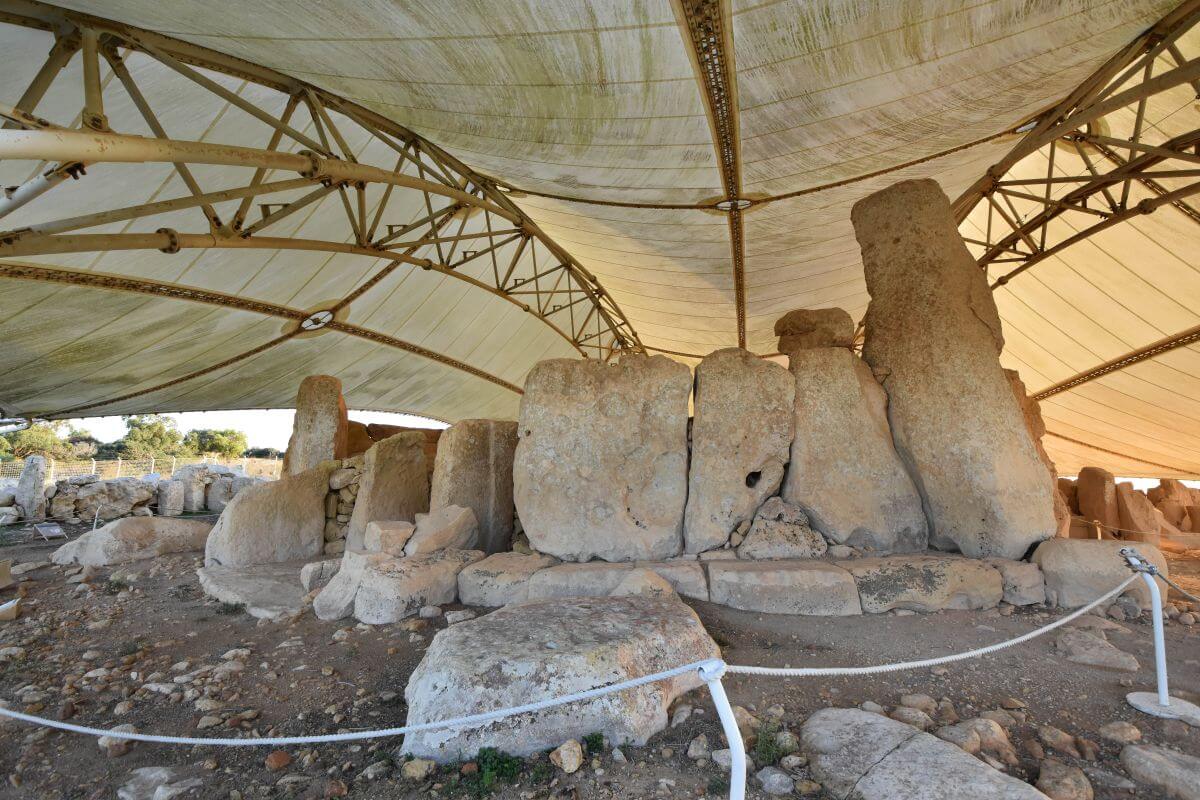
The people who built the Megalithic temples of Malta created engineering masterpieces long before advanced tools existed. No cranes, not even the wheel. Yet they created monuments that still stand thousands of years later.
What tools built these structures?
UNESCO explains that the Neolithic builders used only carefully selected locally sourced stone. They chose durable Coraline limestone for the exterior walls and softer Globigerina limestone for the inner rooms, altars, and decorated areas. This smart use of materials shows how well they understood the land.
To transport stones as long as 5 m and weighing up to 50 tons, they relied on pure human strength and problem-solving. Archaeologists believe the builders rolled these blocks over round stone spheres. Information panels on the sites explain that these stones were found across the Maltese islands, suggesting these spheres acted like early ball bearings.
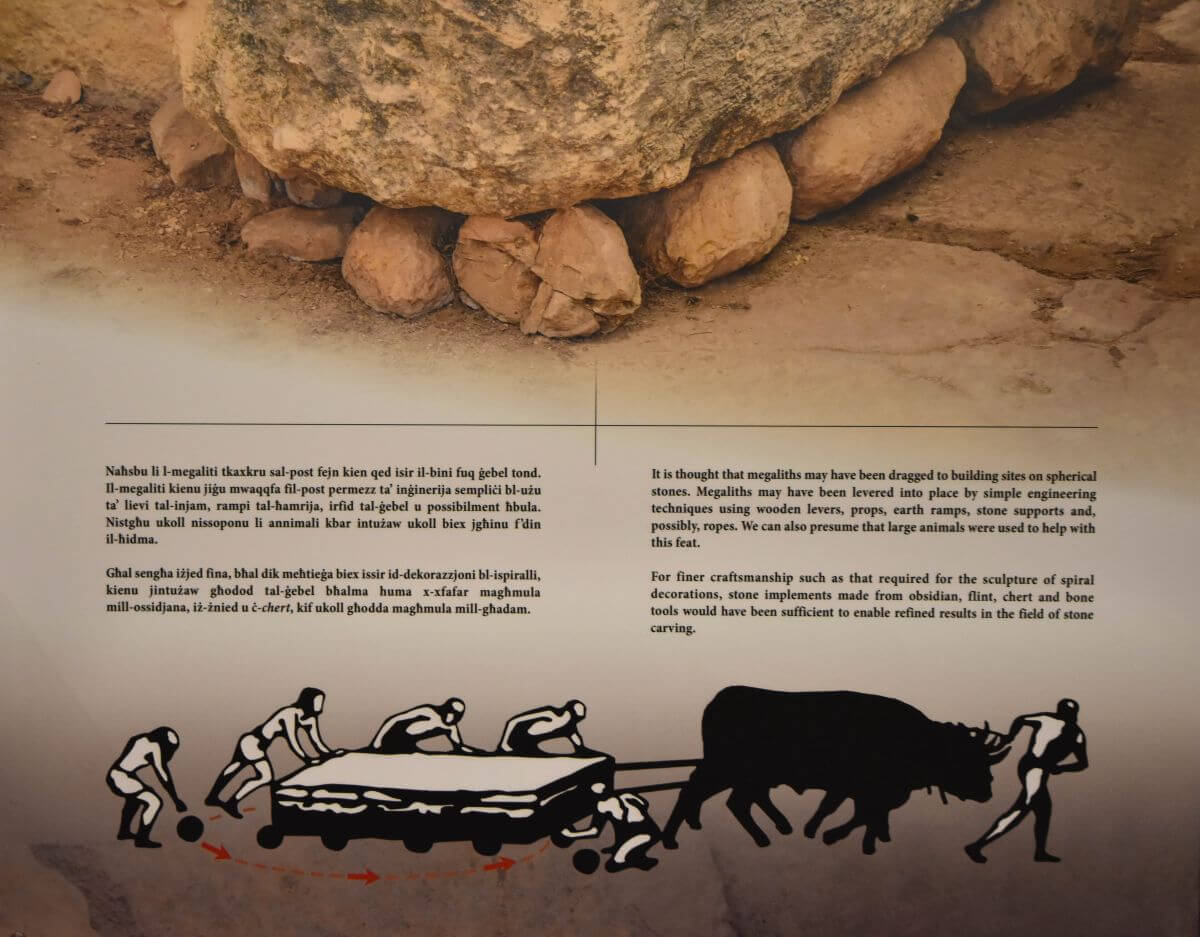
Imagine the slow, steady process of rolling each block across the landscape, adjusting the path, and slowly shifting them into place.
The most beautiful Megalithic temples of Malta and Gozo you need to visit
1. Ggantija Temples

Among the Megalithic temples of Malta, the Ggantija Temples stand out not just in size, but in age and importance. Found on the tranquil island of Gozo, just a quick ferry ride from Malta, this landmark predates Stonehenge by around a thousand years. It ranks as the second-oldest man-made religious structure on the planet, right behind Göbekli Tepe.
Ggantija temples are, in fact, the earliest of all the Megalithic temples of Malta, built more than 5,550 years ago during the Neolithic period. Wikipedia notes that they mark the beginning of temple construction on the island.
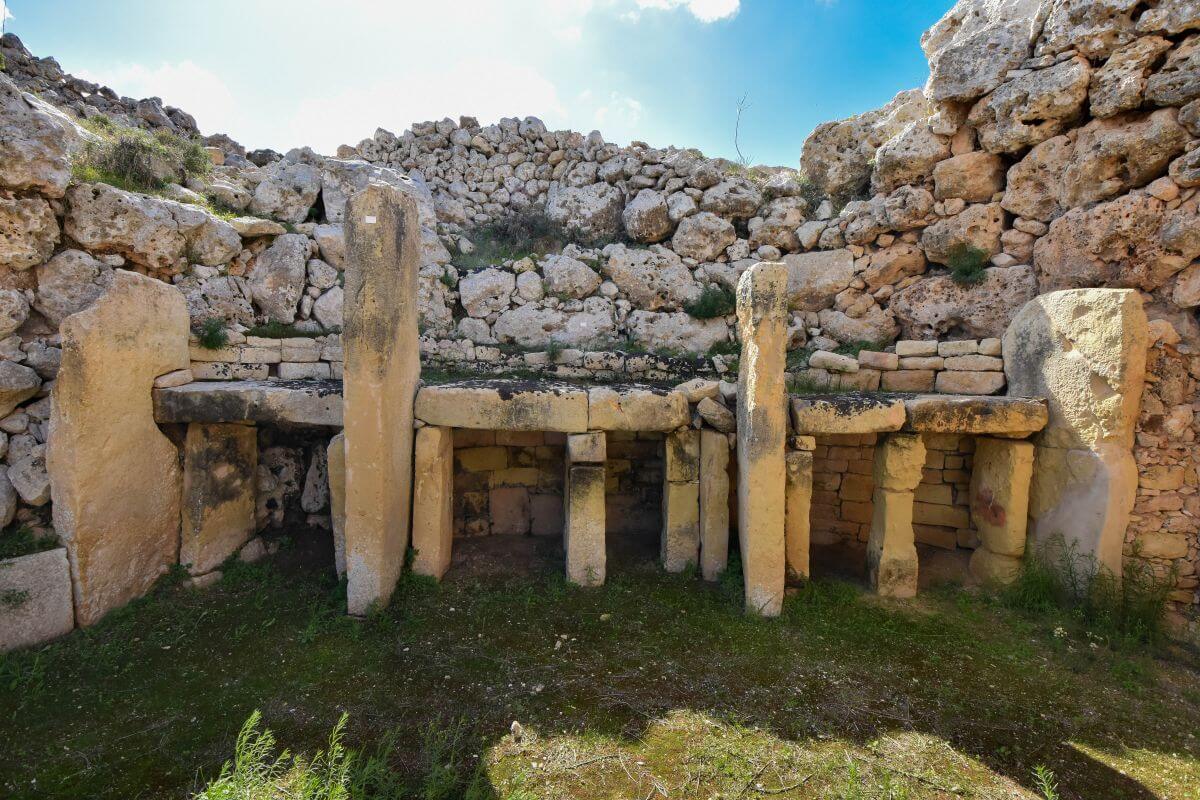
Because it’s on Gozo island, Ggantija receives fewer visitors than Malta’s temples. Yet it was the first Maltese temple inscribed as a UNESCO World Heritage Site in 1980 for its extraordinary Bronze Age architecture.
PERFECT HARMONY:
What also makes Ggantija unforgettable is its design. The complex consists of two massive temples, standing side by side, wrapped within one impressive outer wall. Each temple has its own entrance, which leads you into a series of semi-circular apses arranged in a clover-leaf shape. This layout wasn’t random. Both structures align with the equinox sunrise, reflecting an early understanding of seasonal cycles. Site panels also explain that the South Temple is larger, older, and better preserved, dating to around 3600 BC, while the North Temple was added about 400 years later.
GOOD TO KNOW:
- Adults: €10
- Youth (12-17): €8
- Children (6-11): €6
- Infants: Free
TIP:
READ MORE:
2. Hagar Qim
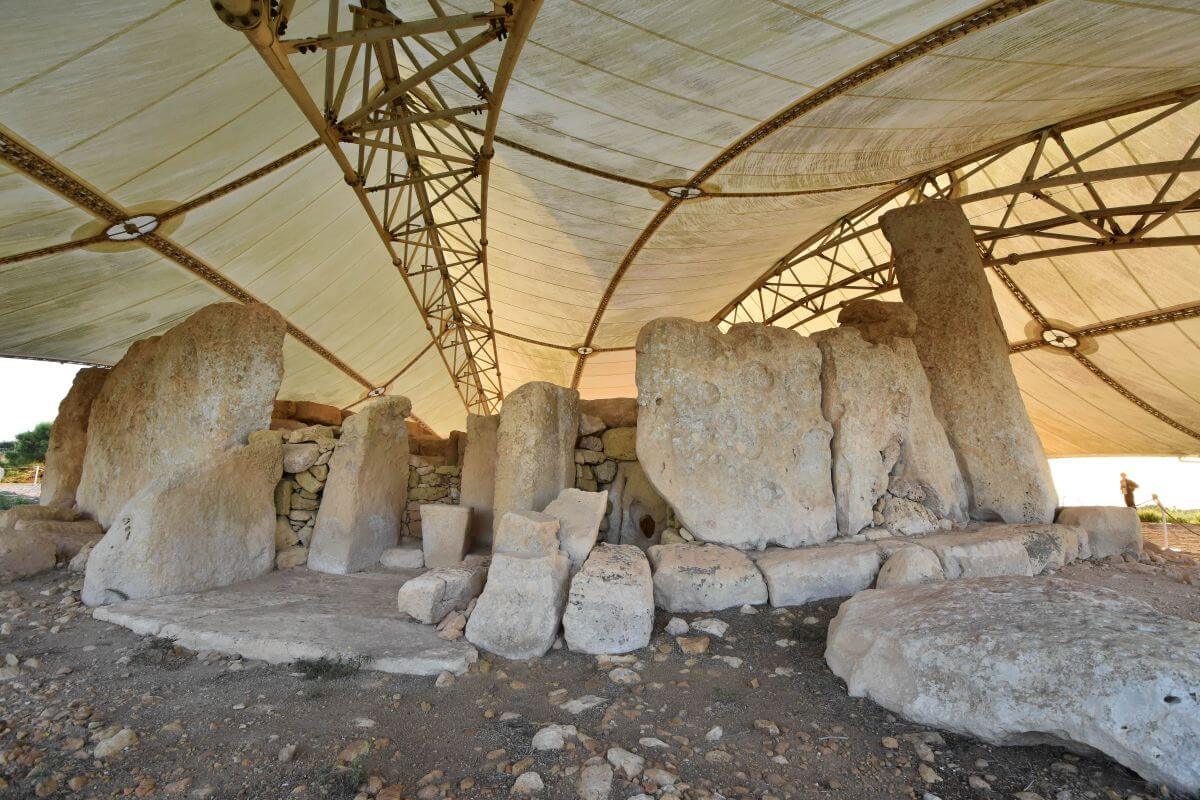
Hagar Qim sits in southern part of the island, around 14 km (8.7 mi) from Valletta on top of a rocky ridge. To its west, the land drops toward the open Mediterranean; to the east, it overlooks a wide, fertile plain. Its location was chosen with intention, giving the site a dramatic presence above the landscape, especially at sunrise and sunset.
SPIRITUAL AND CULTURAL SIGNIFICANCE:
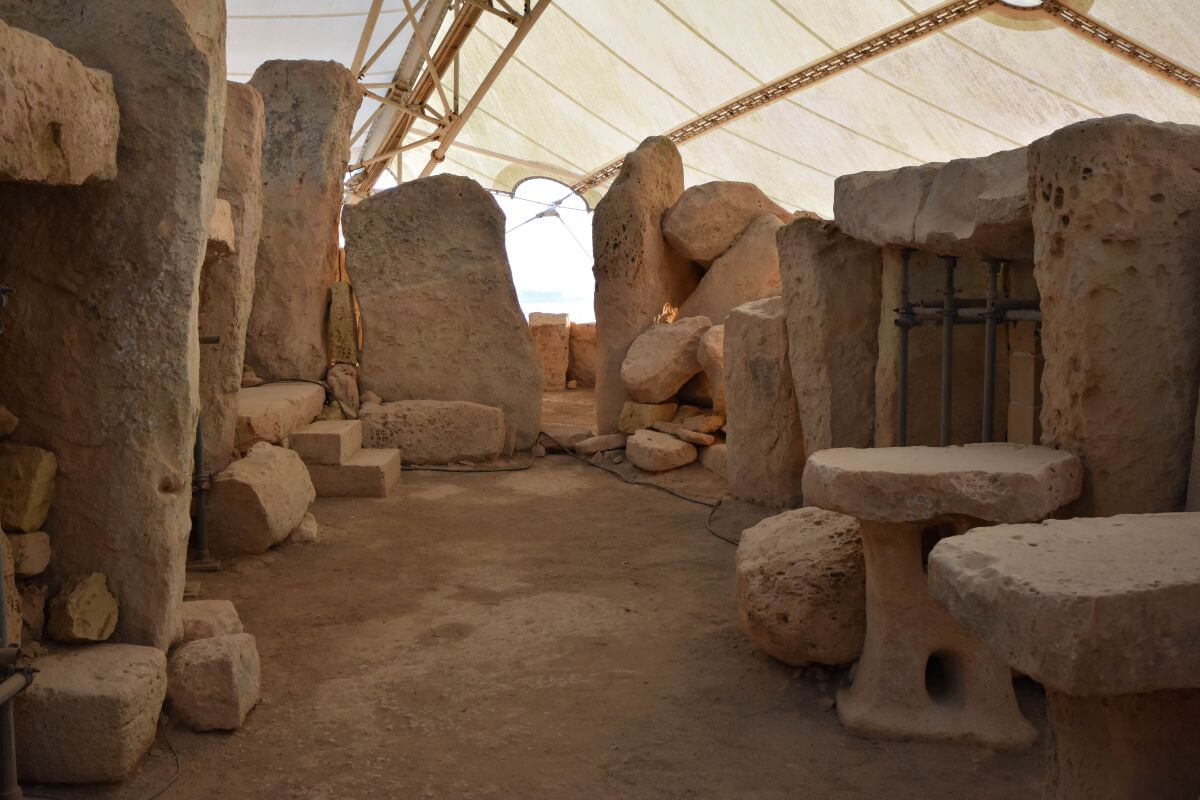
5,000-year-old Hagar Qim is one of Malta’s most iconic UNESCO-listed sites. According to Wikipedia, this megalithic temple dates back to the Ggantija phase between 3600 and 3200 BC. The name translates to ‘Standing’ or ‘Worshipping Stones’, a fitting description for the spiritual purpose behind its construction.
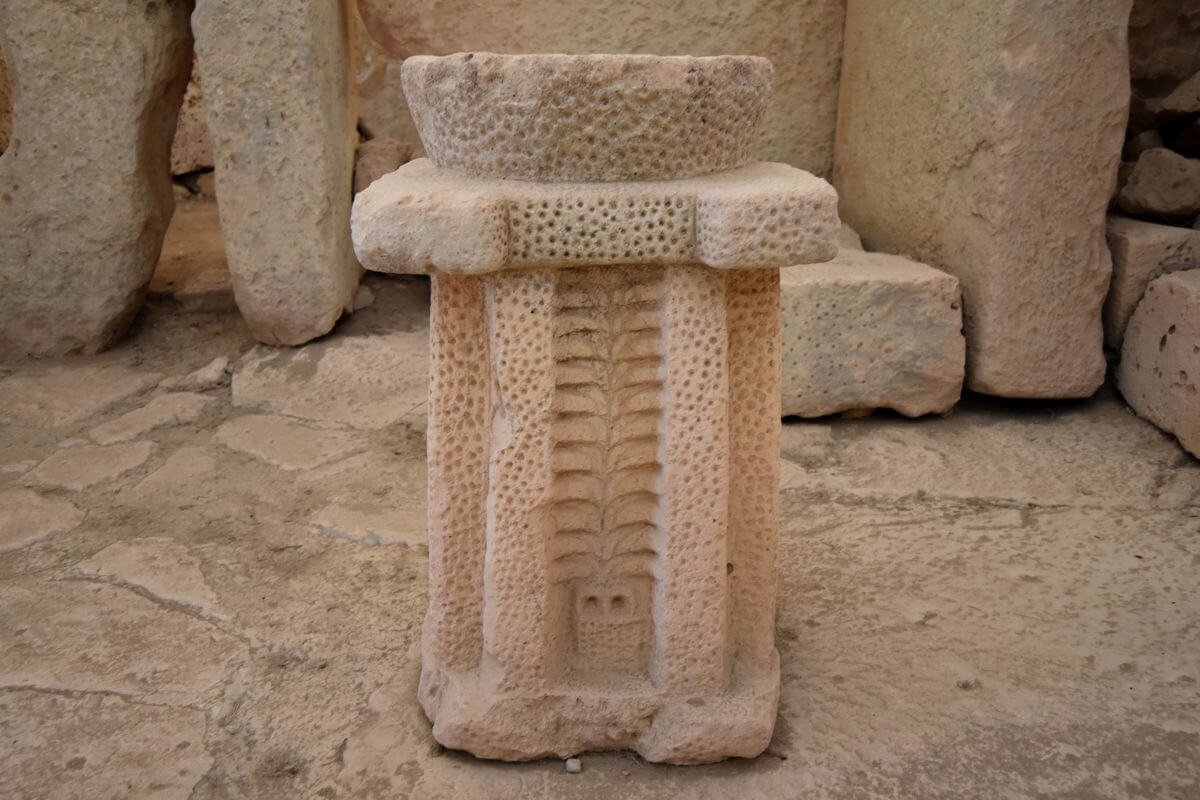
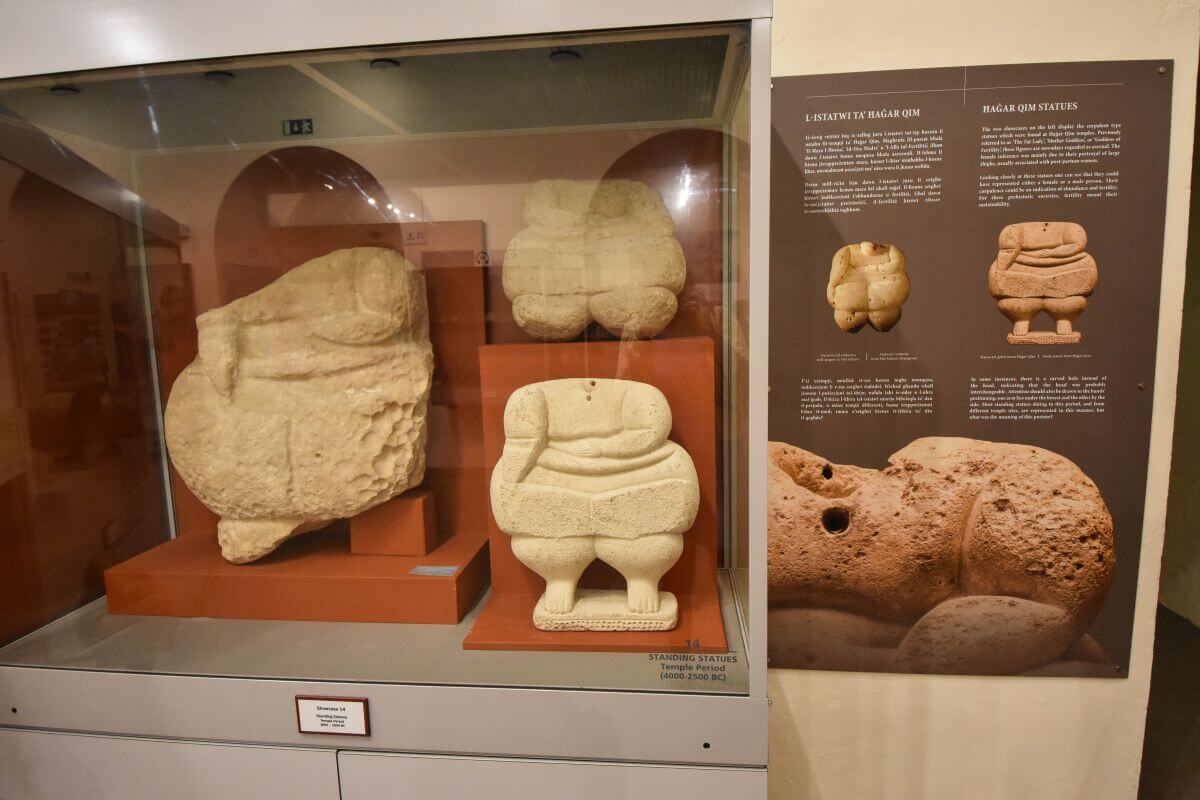
What makes Hagar Qim fascinating is its spiritual meaning. Archaeological digs discovered decorated pottery, animal bones, and an altar, suggesting animal sacrifices took place here. According to information panels, archaeologists have also found a collection of four female statues, below some steps, during restoration works. These statues of large women, including the famous ‘Venus of Malta’, provide a rare glimpse into Malta’s ancient rituals and beliefs.
DESIGN:
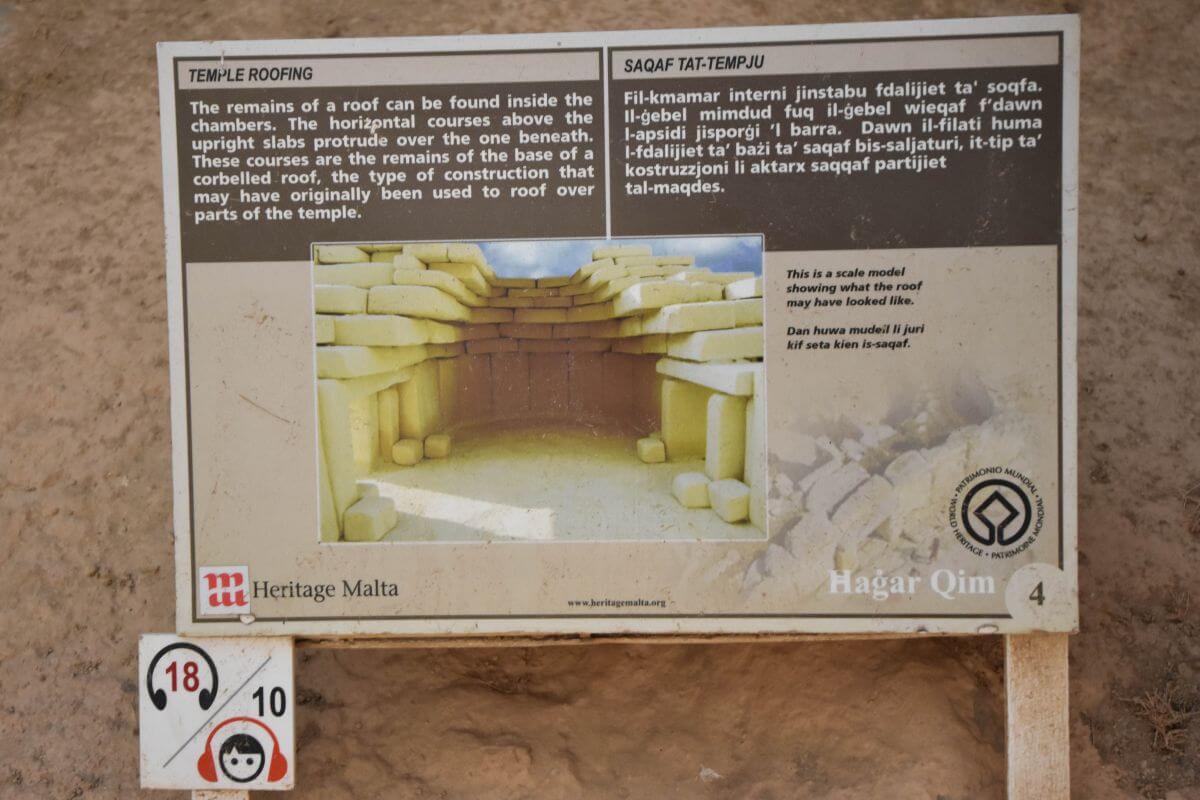
According to Wikipedia, Hagar Qim’s layout shares its basic architectural design with the Mnajdra, Tarxien, and Ggantija temple complexes. The complex of Hagar Qim includes a main temple and three smaller megalithic structures nearby. The main temple’s entrance leads to a passage that connects six chambers. The floors of the central passage have stone slabs, while the floors in the chambers are from beaten earth. Heritage Malta also explains that some roofs were once created using a corbelled roof. While it is no longer intact, there is evidence that the Neolithic community used this sophisticated building technique.
Unlike other Megalithic temples in Malta, Hagar Qim’s builders worked exclusively with the soft, globigerina limestone. Because this stone erodes easily, the temple’s outer walls (especially the southern side exposed to strong winds) have suffered severe weathering. According to the official website, a protective tent (installed in 2008) slows the damage and saves this incredible site for future generations.
SUMMER SOLSTICE
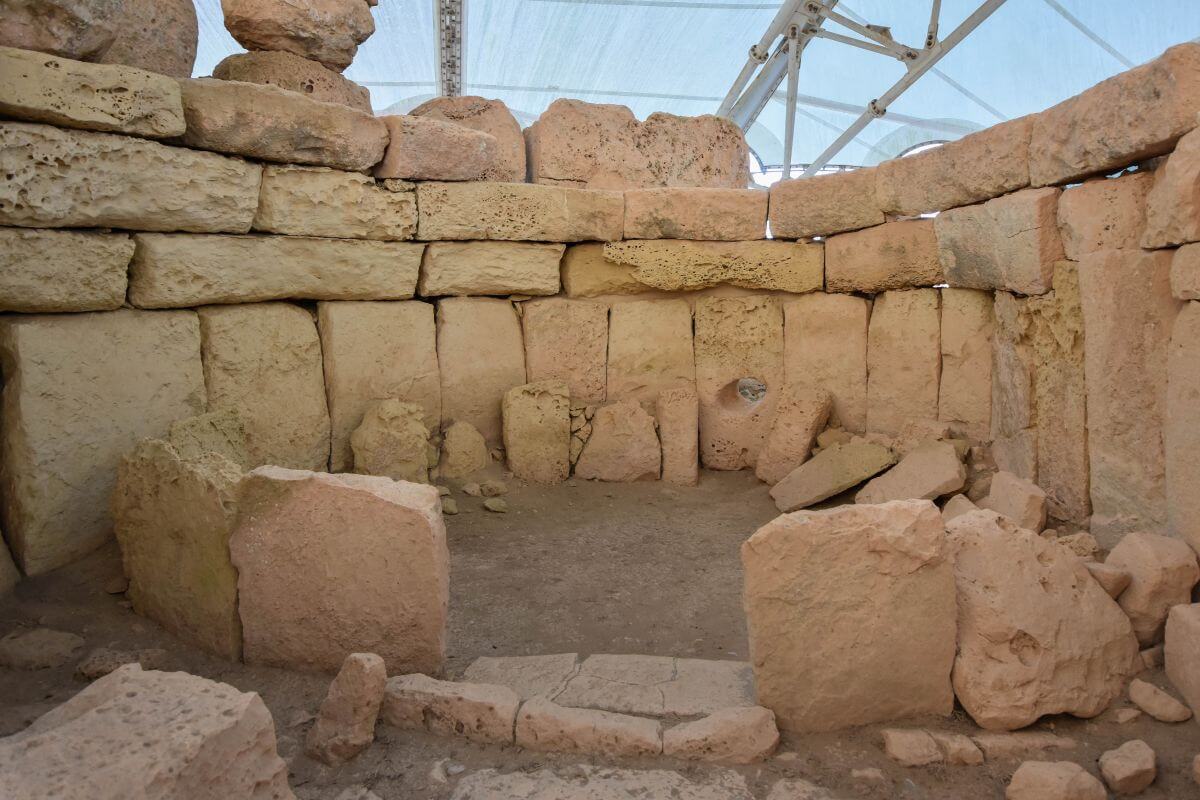
One of the unique features of Hagar Qim temples is also ‘the Oracle Hole’. This carefully carved opening in the northeast wall of the main temple complex is a solar alignment tool. It aligns with the summer solstice sunrise. According to the official website, members of the community may have gathered here to experience the changing of the seasons on the longest day of the year.
ARCHITECTURAL FEATURES:
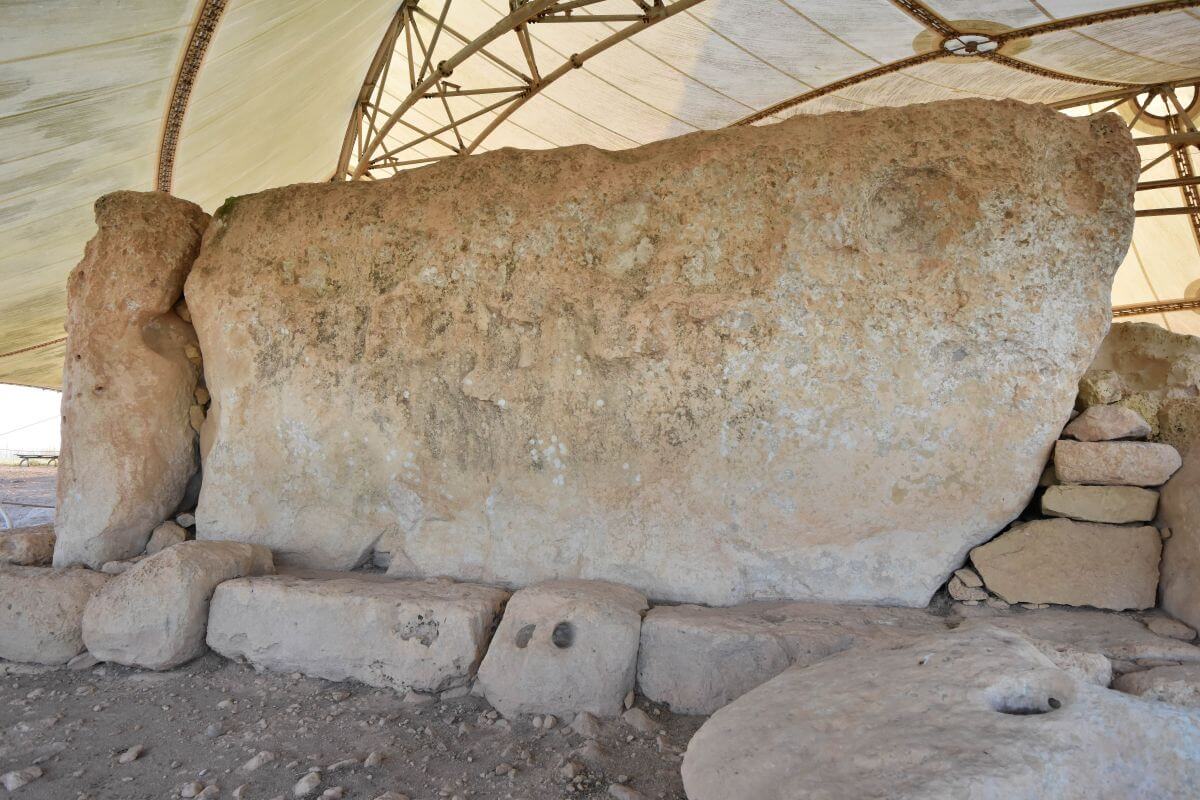
The builders used gigantic stones in the temple’s construction. According to the information panel on the site, the Hagar Qim façade contains the largest stone used in Maltese megalithic architecture. This 3 m tall megalith is 6.4 m long, and its estimated weight is approximately 20 tons.
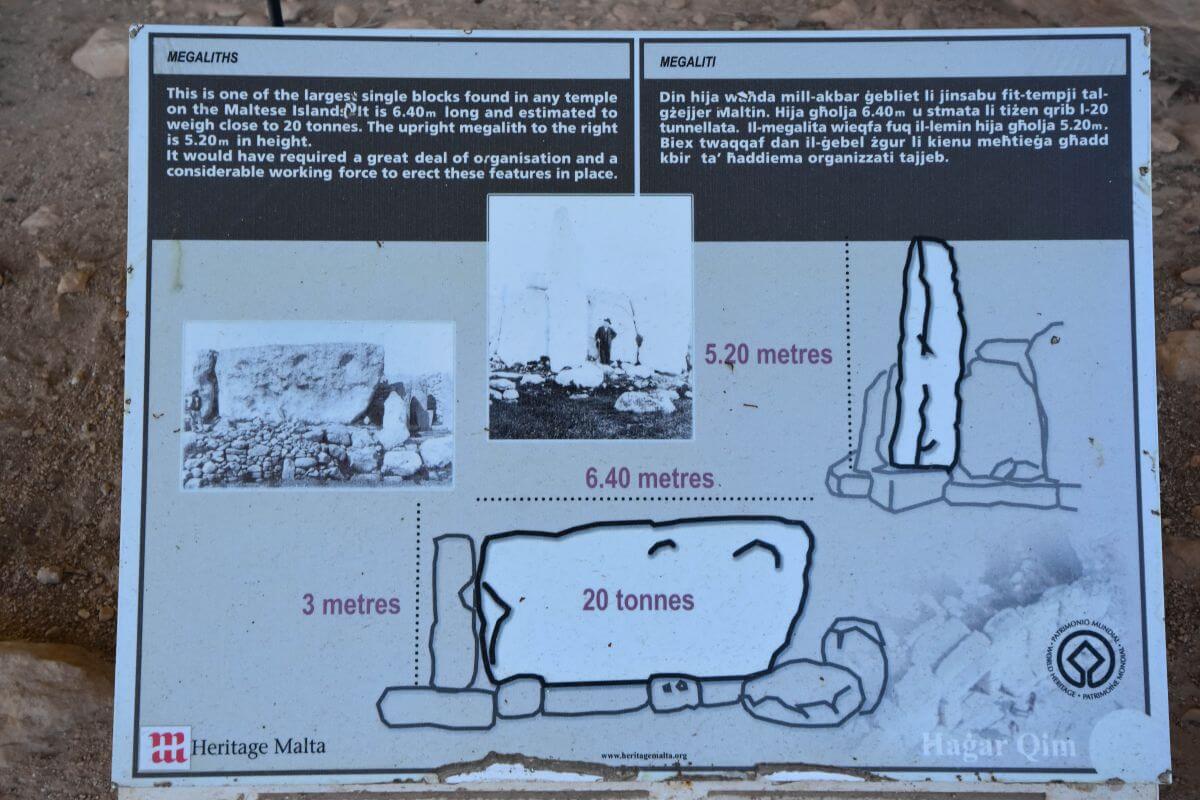
Another source, including Wikipedia, reports that it may weigh up to 57 tons; however, if you calculate the density of globigerina limestone, this information cannot be correct.
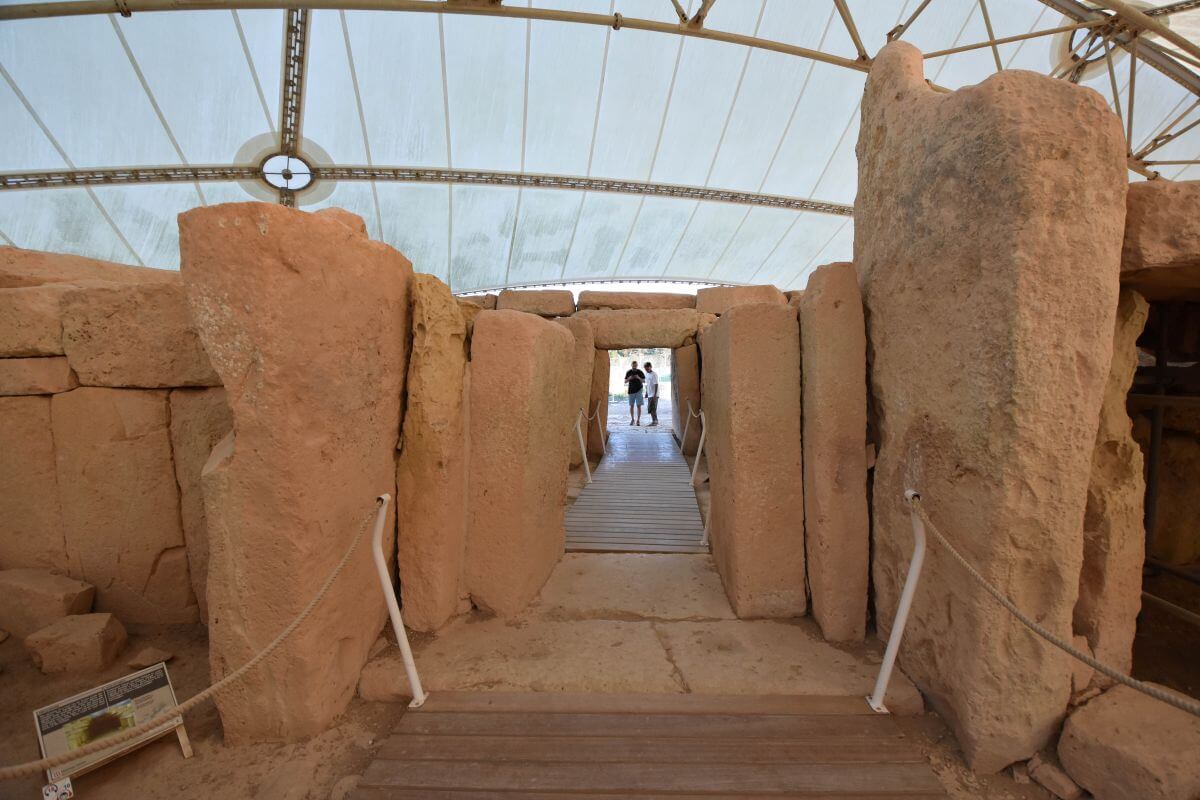
Some doorways consist of two large vertical stones supporting a third horizontal stone on top.
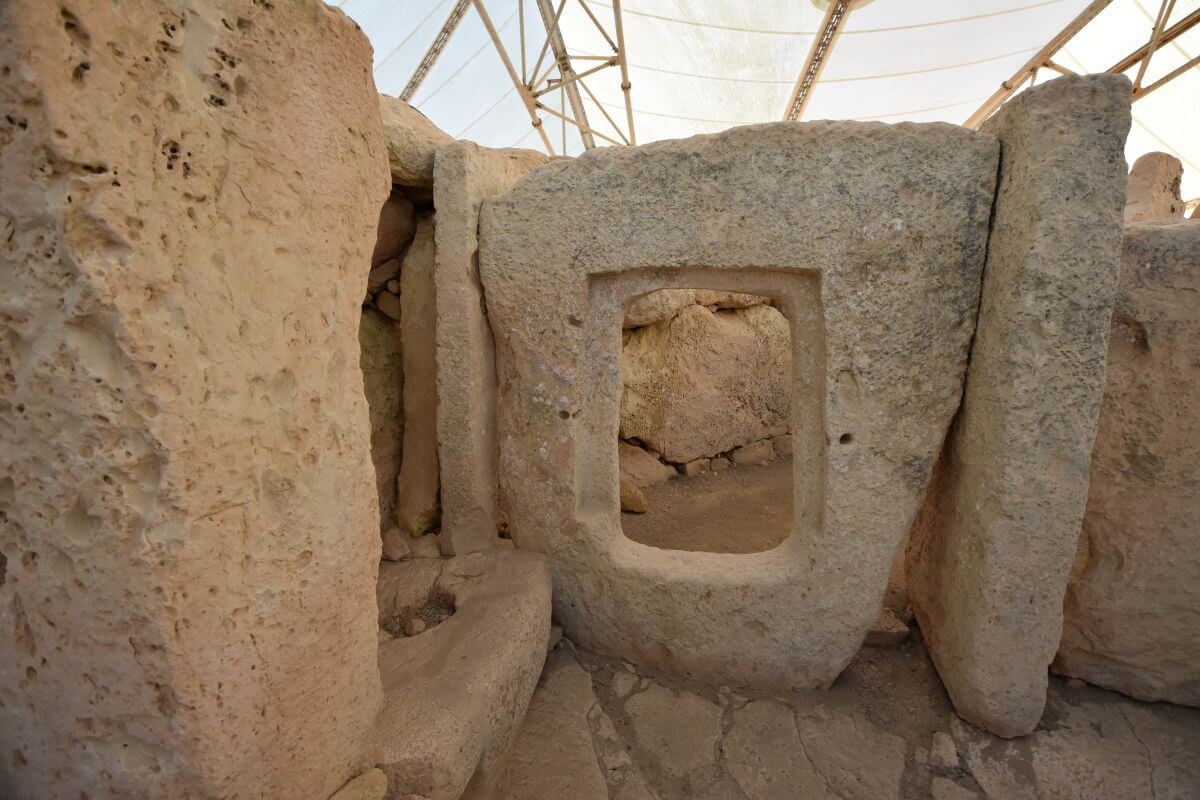
While walking among these stones, this unusual hole especially surprised us. The ‘Porthole’ doorway, carved directly through a thick stone slab, required exceptional effort. This square-shaped hole is a unique feature compared to other temples on the island.
3. Mnajdra
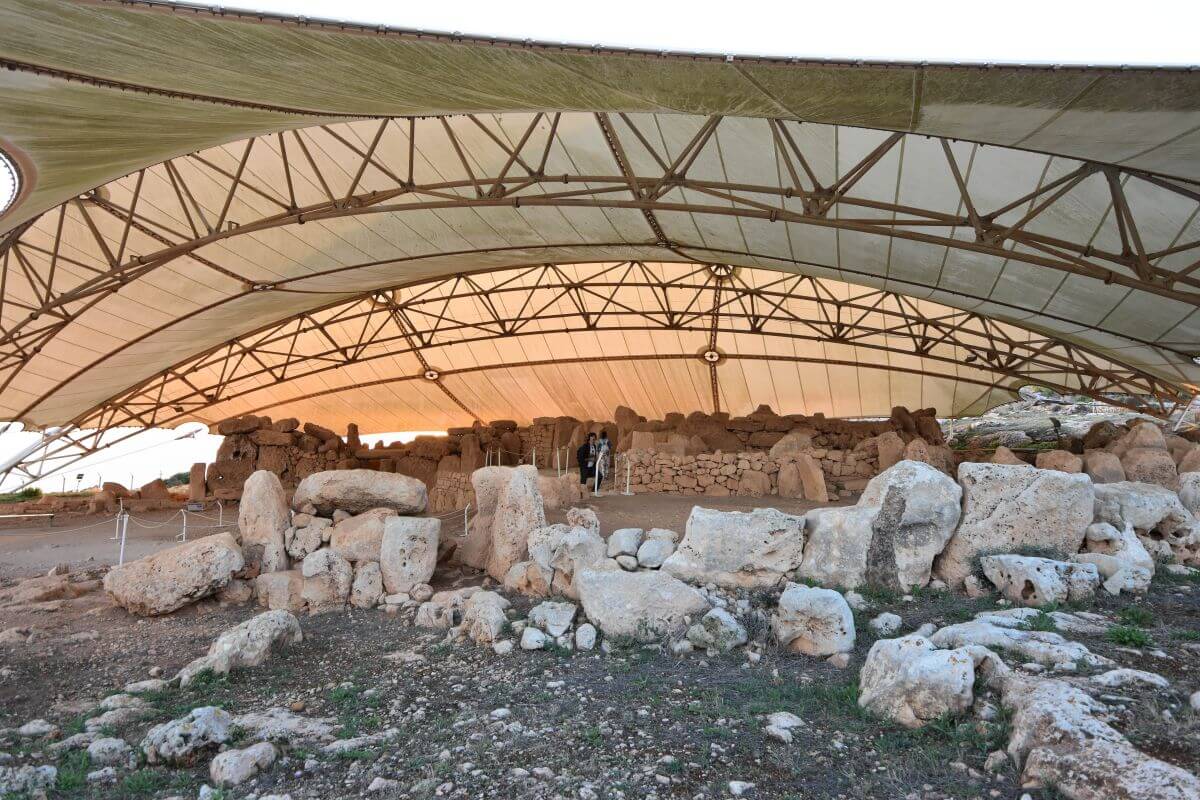
Among all the Megalithic temples of Malta, Mnajdra is the temple that feels most connected to the sky.
Located just 500 m downhill from Hagar Qim, this complex stands on a wild, rocky slope with open views of the Mediterranean. Archaeologists explain that both structures were likely used by the same community due to their close distance. Both Hagar Qim and Mnajdra also date back to the same prehistoric period and are part of the same archaeological park.
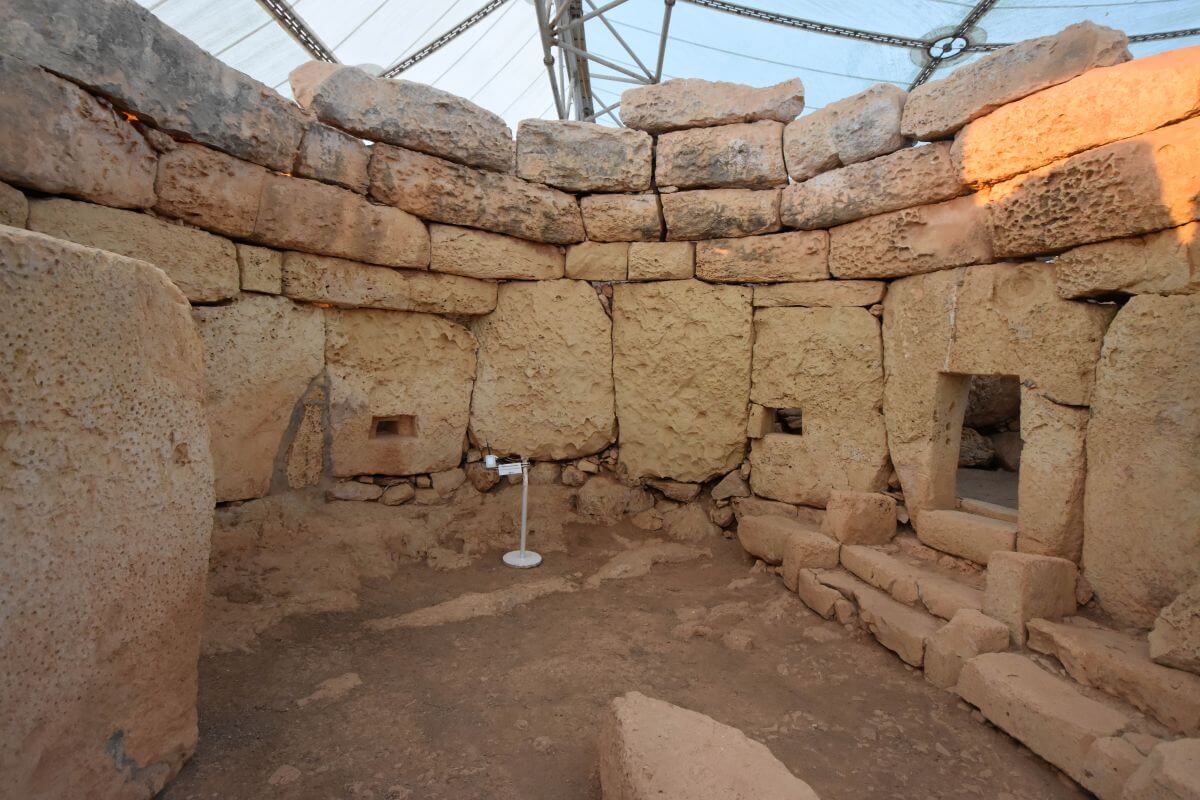
Mnajdra dates to the fourth millennium BC and gained UNESCO recognition in 1992. To slow erosion, Heritage Malta installed a protective tent in 2009 to preserve the complex for future generations. Unlike the nearby Hagar Qim, the builders chose to use harder, more durable coralline limestone for Mnajdra. For this reason, this temple has survived in better condition than the softer globigerina limestone structure at the nearby complex.
DESIGN:
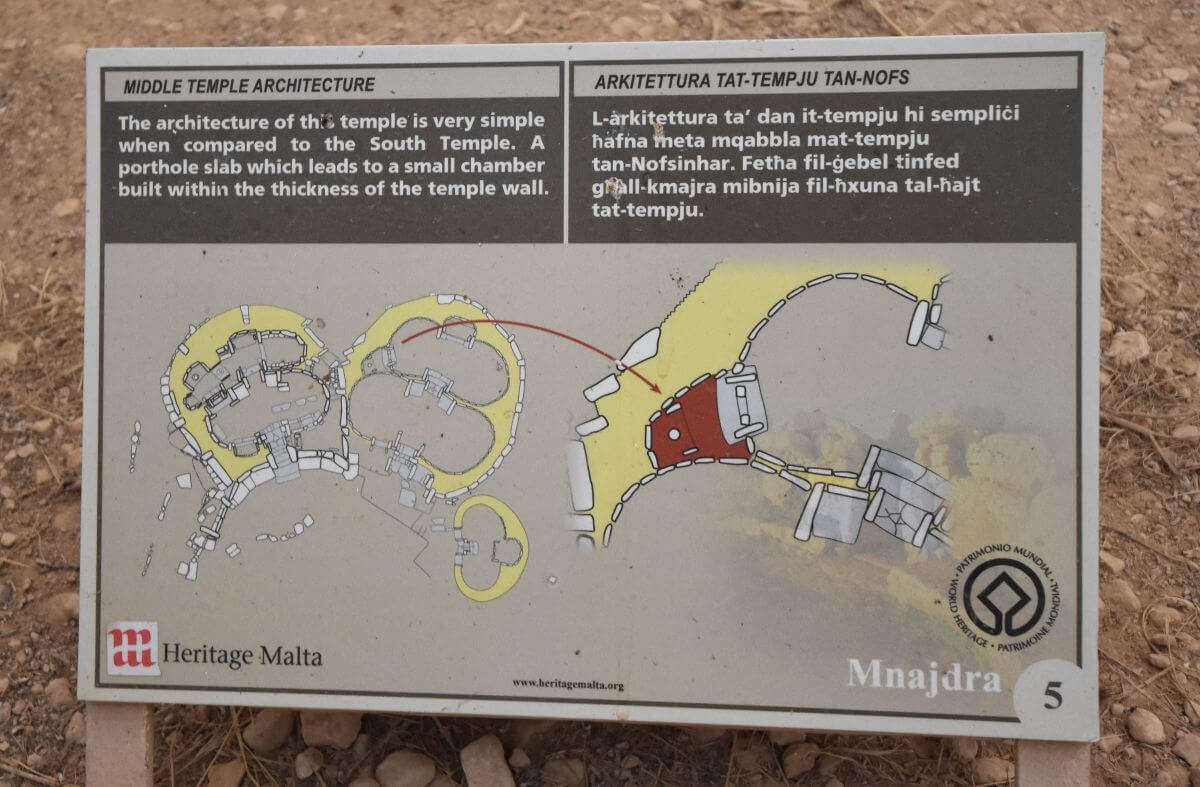
The complex contains three adjoining temples (upper, middle, and lower), built at different periods. Its cloverleaf layout is more symmetrical than that of Hagar Qim. Wikipedia reports that the upper temple is the oldest and dates to the Ggantija Phase (3600-3200 BC). The lower temple, however, is the masterpiece.
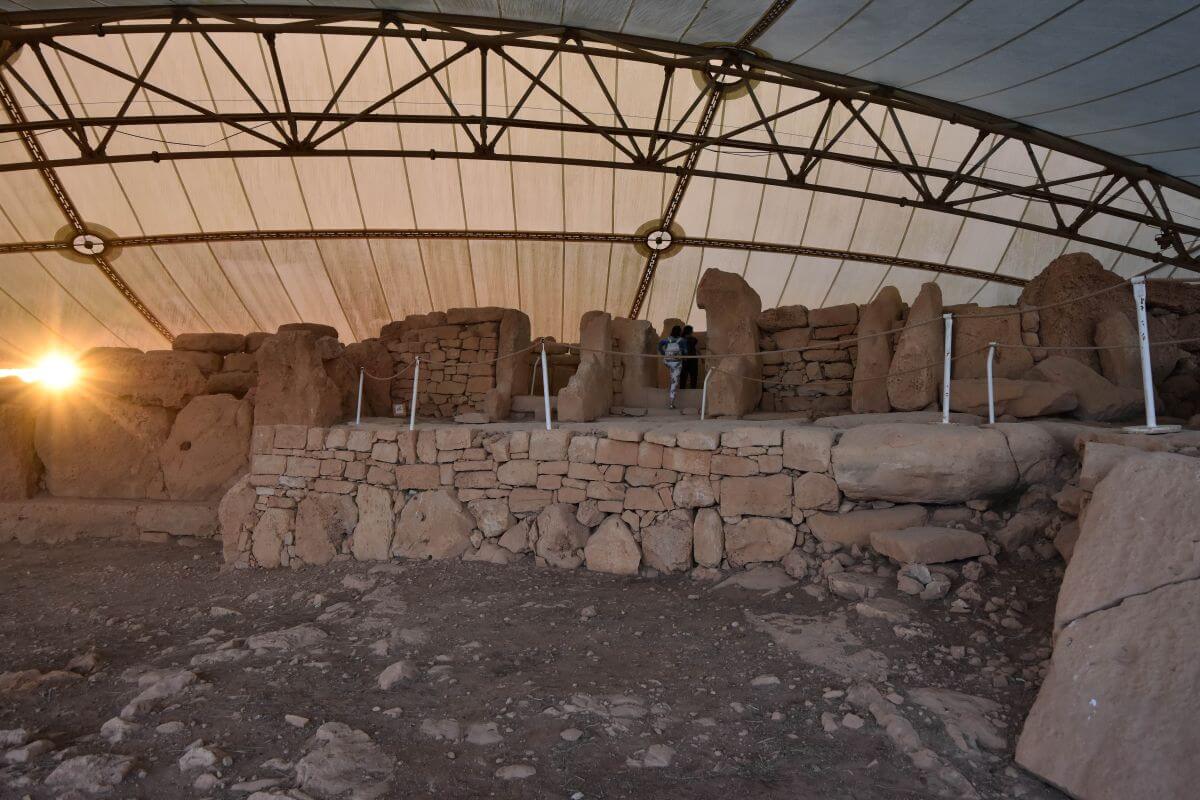
A temple with an artificial platform
TEMPLE THAT TRACKS THE SUN:
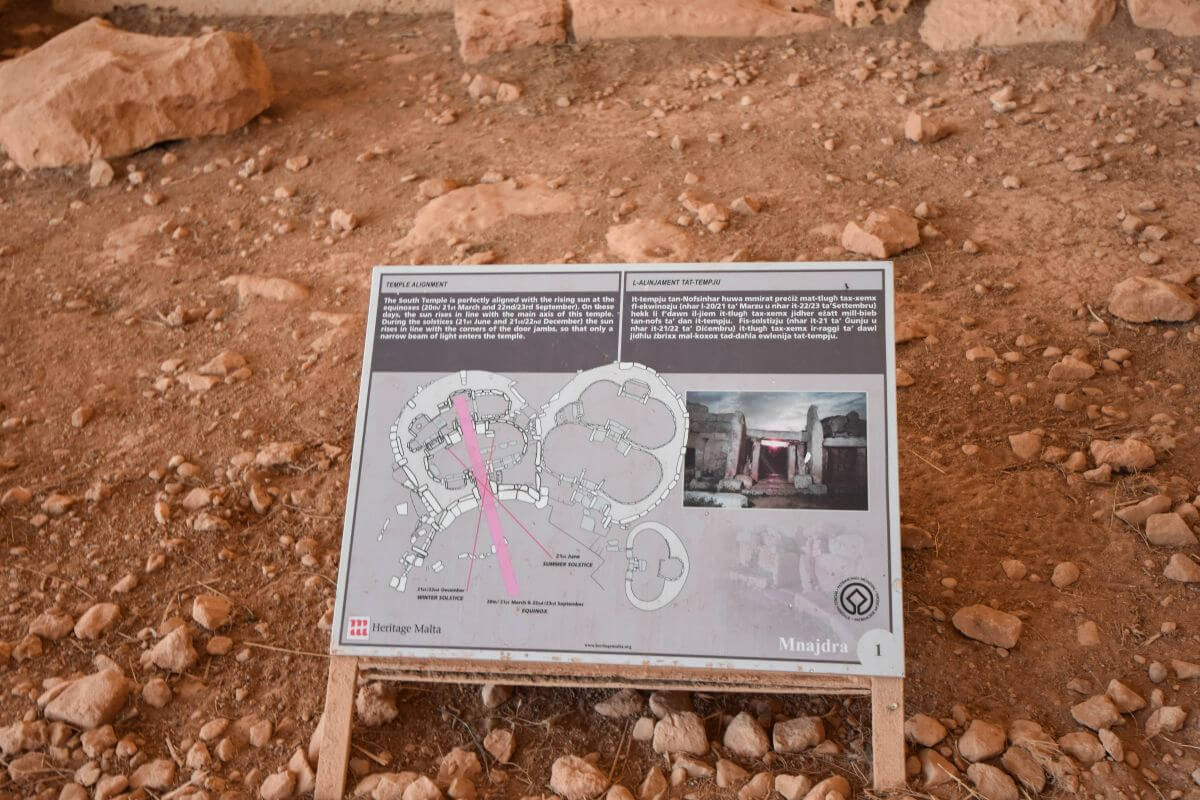
What makes Mnajdra extraordinary is its astronomical alignment. According to Wikipedia, the lower temple, dating to the early Tarxien phase, is possibly the best example of Maltese megalithic architecture. The information panel on the site explains that the lower South Temple is perfectly aligned with the rising sun at the equinoxes. On the spring and autumn equinoxes, the rising sun shines directly through the doorway, illuminating the main axis. During the solstices (21st June and 21st/22nd December), the rising sun illuminates the edges of specific stones on either side of the entrance. This shows Mnajdra was not only a ritual site, but also a scientific one.
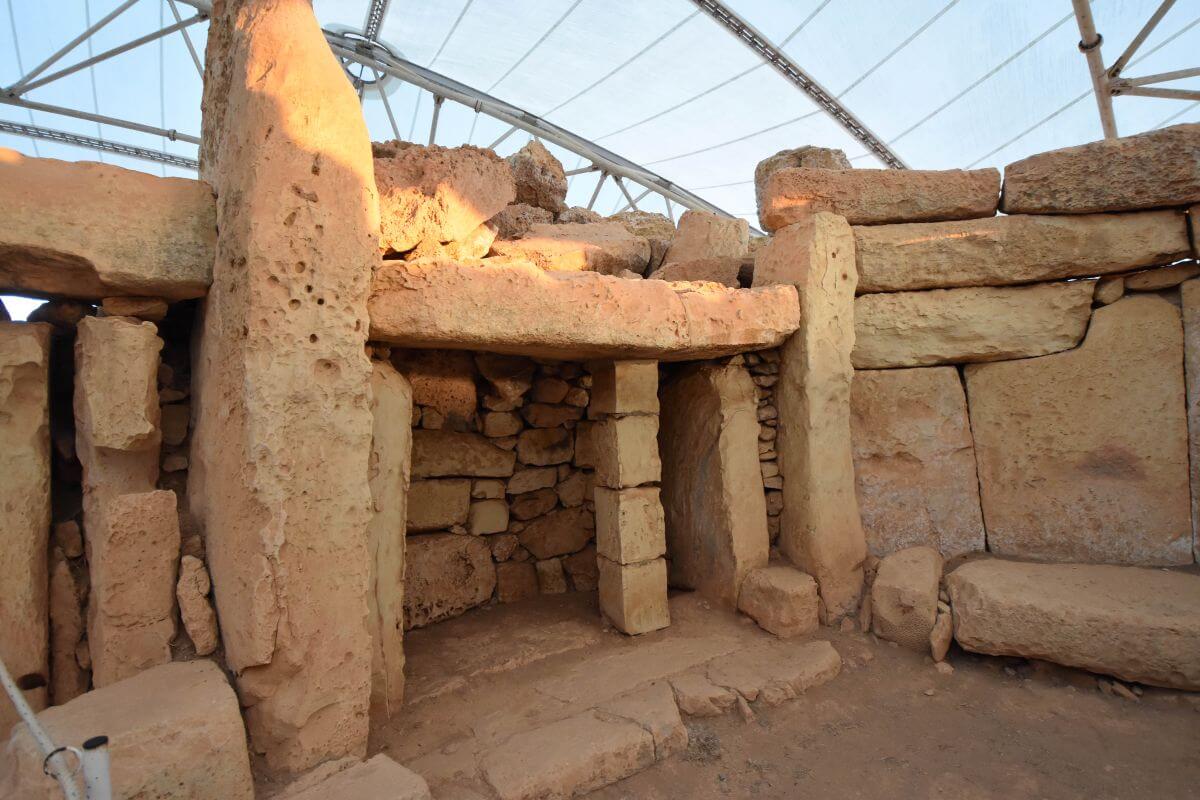
Similar to Hagar Qim, Mnajdra also reveals clues about ancient rituals. Inside the structure, archaeologists found stone benches, flint tools, pottery, and animal bones. These discoveries suggest ceremonies related to healing, fertility, and offerings. According to Wikipedia, no human burials were ever found here, confirming that Mnajdra served for worship, not as a tomb.
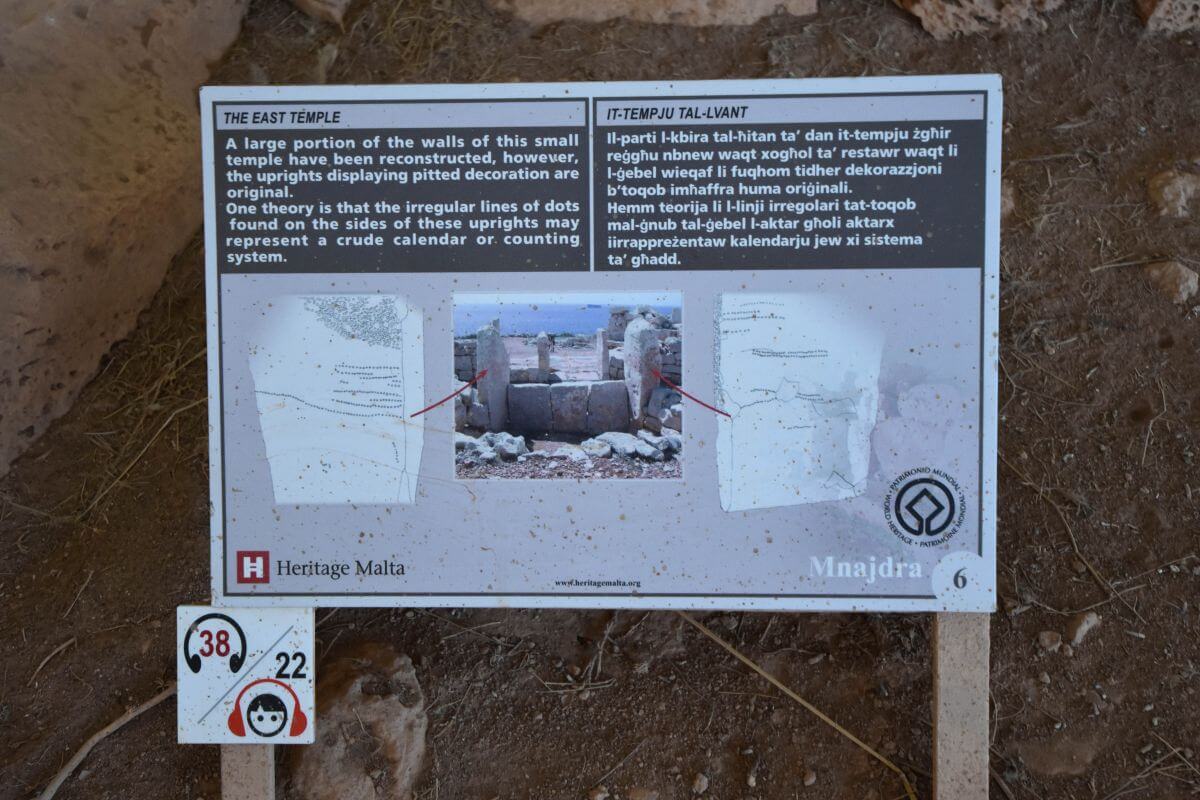
Scientists also believe Malta’s prehistoric people tracked lunar cycles. One of the most fascinating finds is the calendar stone, drilled with rows of holes. This stone shows how the early community tracked time and celestial cycles in Mnajdra.
GOOD TO KNOW:
- Adults €10
- Seniors (60+): €7.50
- Youth (12-17): €7.50
- Students: €7.50
- Children (6-11): €5.50
4. Tarxien Temple Complex
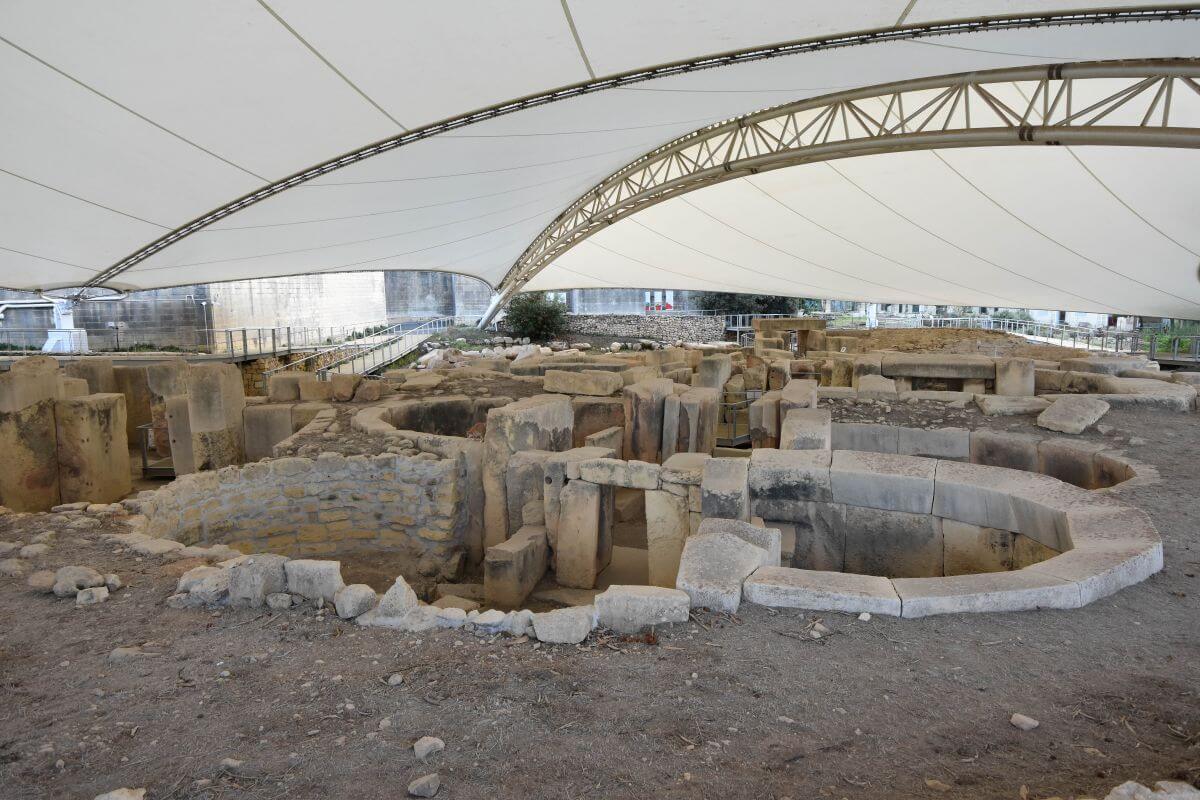
Tarxien stands out for its extraordinary artistry and convenient location.
Located in the southeastern region of the island, the site sits just southeast of Valletta, and a short 600 m walk from the UNESCO-listed Hypogeum. It’s also an 11-minute drive from the airport, making it a convenient stop before your flight. Wikipedia notes that the Tarxien Complex dates to roughly 3400 BC and has been designated a UNESCO World Heritage Site since 1992.
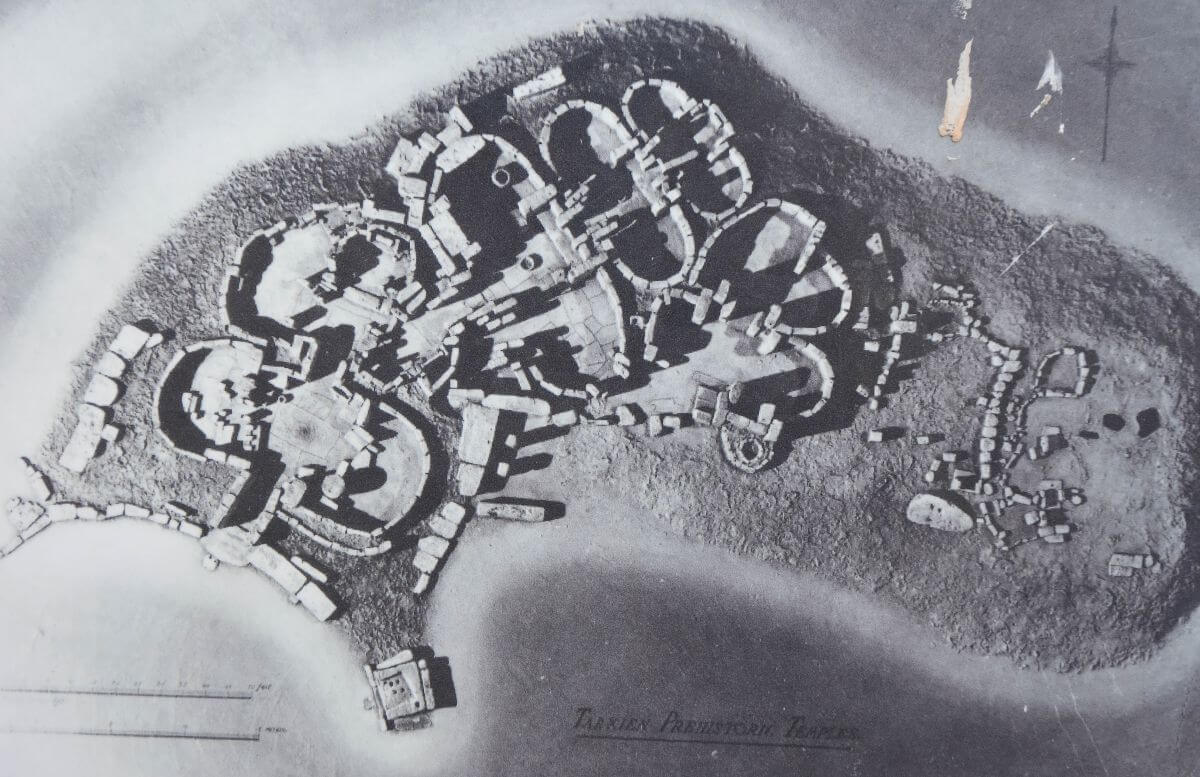
Discovered in 1913 by farmer, Lorenzo Despott, the Tarxien complex consists of four structures built over roughly 1,000 years. According to an information panel on the site, the modest Eastern Structure is the oldest, while the large six-roomed Central Structure is the most architecturally advanced. Information panels also explain that during the Bronze Age, they were repurposed as a cremation cemetery. By the Roman period, 2,000 years later, the area became farmland with channels and cisterns.
MALTA’S PREHISTORIC ART:
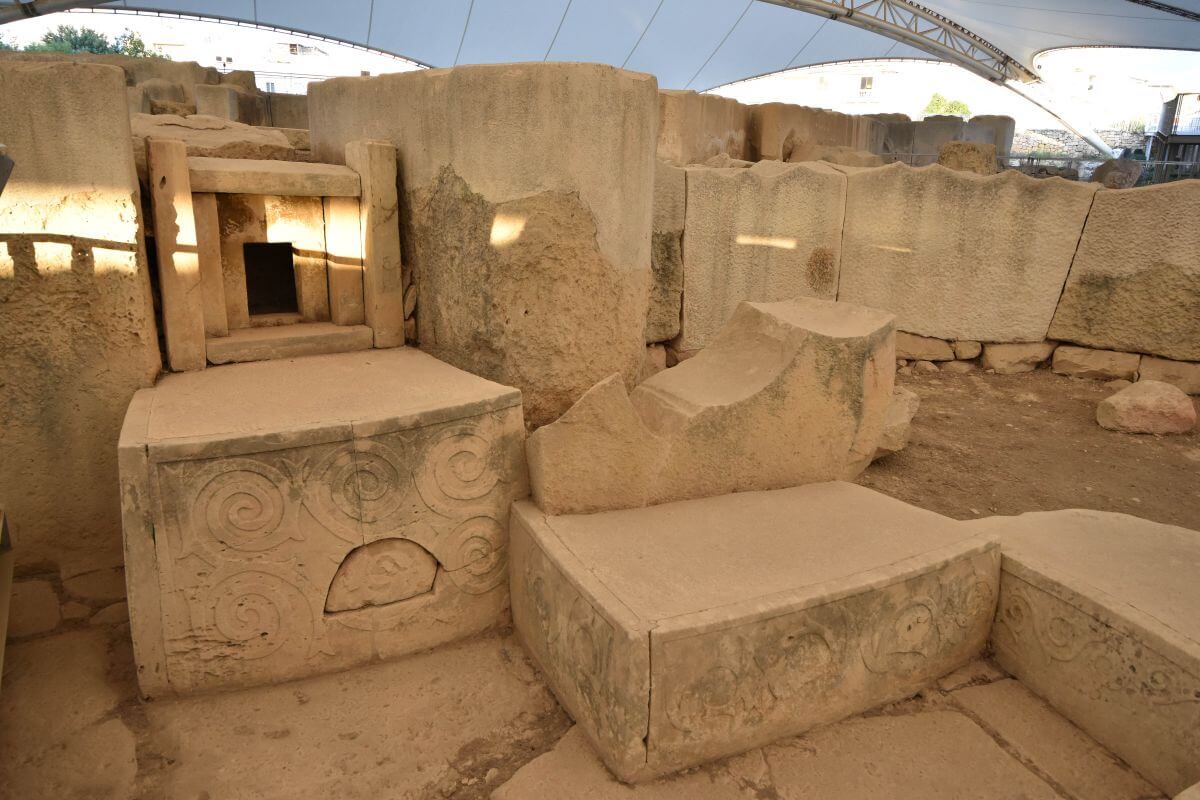
Even though the Tarxien temple complex isn’t Malta’s largest temple, its artwork, unusual six-chamber layout, and beautifully preserved reliefs make it one of the most impressive temple complexes to visit on the island.
What sets the Tarxien Complex apart is its remarkable artwork. It features beautiful spiral carvings and screens decorated with geometric designs. It also depicts animal reliefs of bulls, goats, pigs, and a ram. Wikipedia notes that one of the most significant discoveries is the ‘Fat Lady’ statue was found here. Originally 2 m tall, this monumental figure is believed to be linked with fertility rituals. A replica of one of the world’s earliest monumental statues stands on the site, while the original is preserved at the National Museum of Archaeology in Valletta.
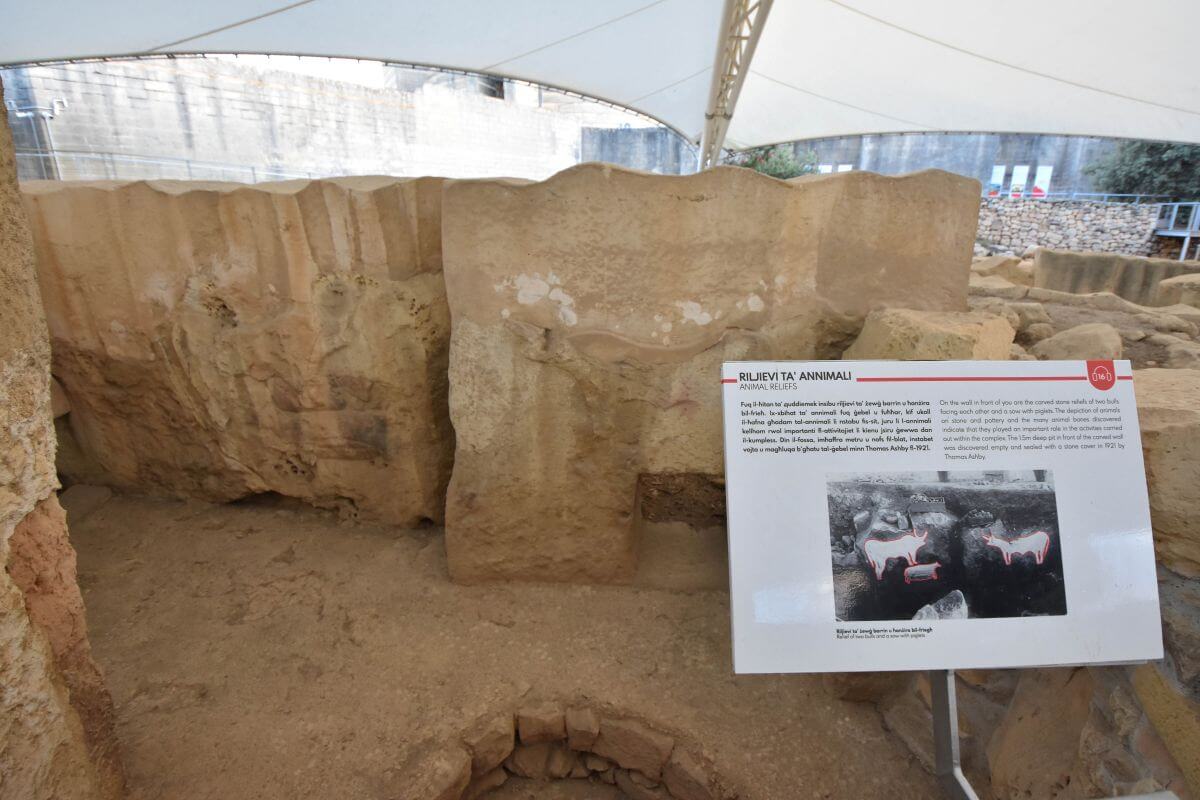
Animal reliefs
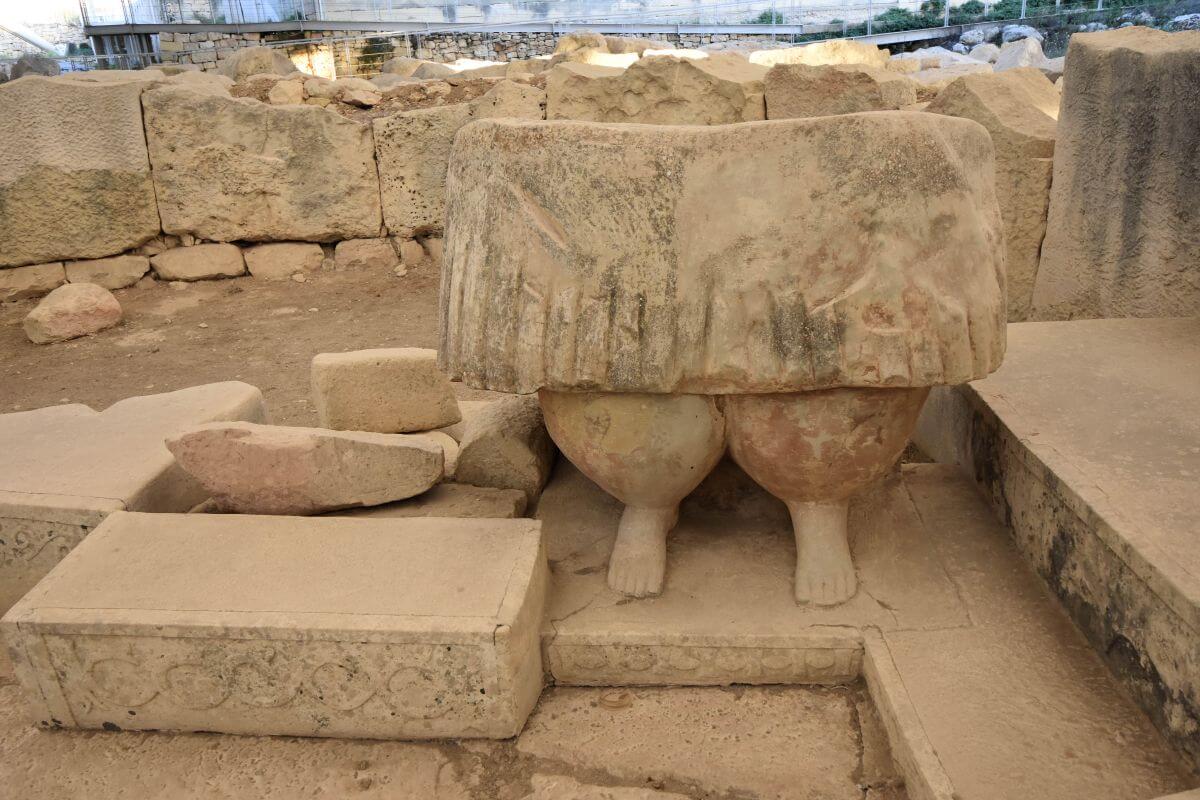
Fat Lady Statue
GOOD TO KNOW:
- Adults €6
- Seniors (60+): €4.50
- Youth (12-17): €4.50
- Students: €4.50
- Children (6-11): €3
- Infants and Heritage Malta Pass Holders: Free
5. Skorba Prehistoric Site
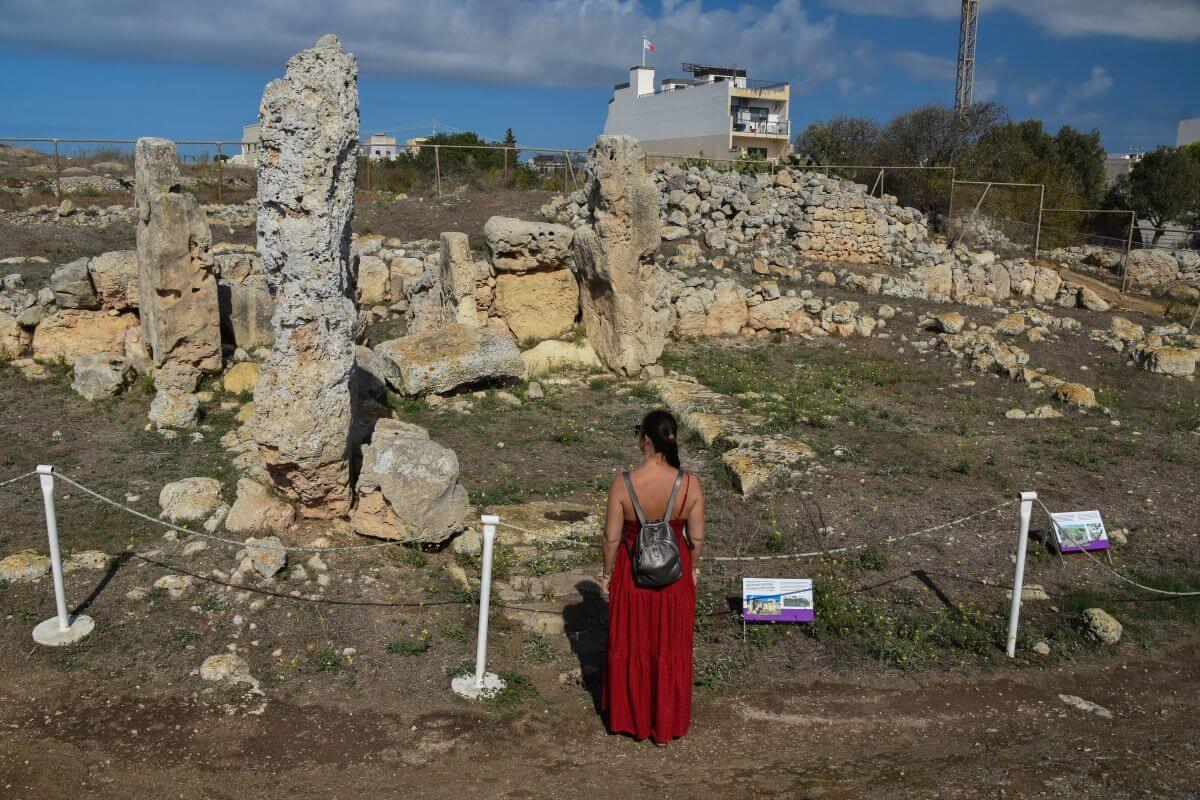
Skorba Prehistoric site looks simple at first glance, but if the Megalithic temples of Malta fascinate you, it should belong on your itinerary.
Found on the northern edge of Zebbiegh in Malta’s Northern region, this quiet site is one of the most important archaeological discoveries ever made on the island. According to Wikipedia, Skorba was excavated surprisingly late (in the early 1960s), long after many complexes had already been studied. Yet, the findings were so important that they led to Malta joining UNESCO’s World Heritage group.
THE TEMPLE THAT REVEALS MALTA’S EARLIEST STORY:
What makes the Skorba Prehistoric site unique is how much it reveals about the island’s oldest settlers. Wikipedia notes that the area had been inhabited for over 1,200 years before the temples appeared. Archaeologists discovered an 11-m-long straight wall here. Deposits at its base contain material from the Għar Dalam phase (the first known human occupation on the island), including charcoal dated to 4850 BC.
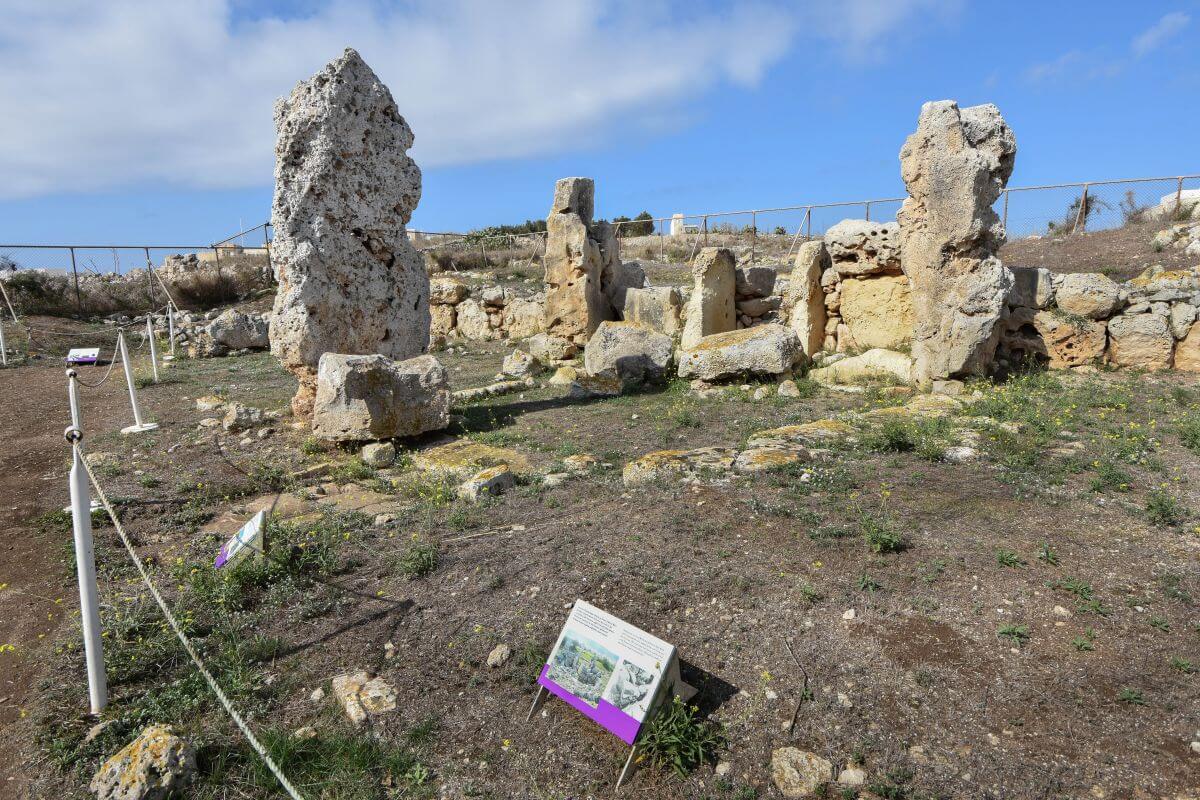
When archaeologist Sir Temi Żammit worked nearby at Ta’ Hagrat, only a single upright stone was visible at Skorba. Excavations later revealed a series of megalithic uprights (one standing 3.4 m), a foundation wall, and paving slabs with libation holes. They also uncovered a cement-like material floor belonging to a three-apse temple from the Ġgantija phase. Although the façade and most of the first two apses had been reduced to ground level, the north wall remains impressively intact.
Skorba also preserves rare evidence of everyday life in the Neolithic. Heritage Malta explains that excavations revealed remains of several domestic stone and mudbrick huts. These finds of Neolithic dwellings with rock floors, pottery fragments, animal bones, and fragments of female figurines reveal how temple builders lived. It’s something few Maltese sites can show.
GOOD TO KNOW:
Admission prices for Skorba Prehistoric Site, as of December 2025, are:
- Adults €3.50
- Seniors (60+): €3
- Youth (12-17): €3
- Students: €3
- Children (6-11): €2.50
- Infants and Heritage Malta Pass Holders: Free
6. Ta’ Hagrat temples
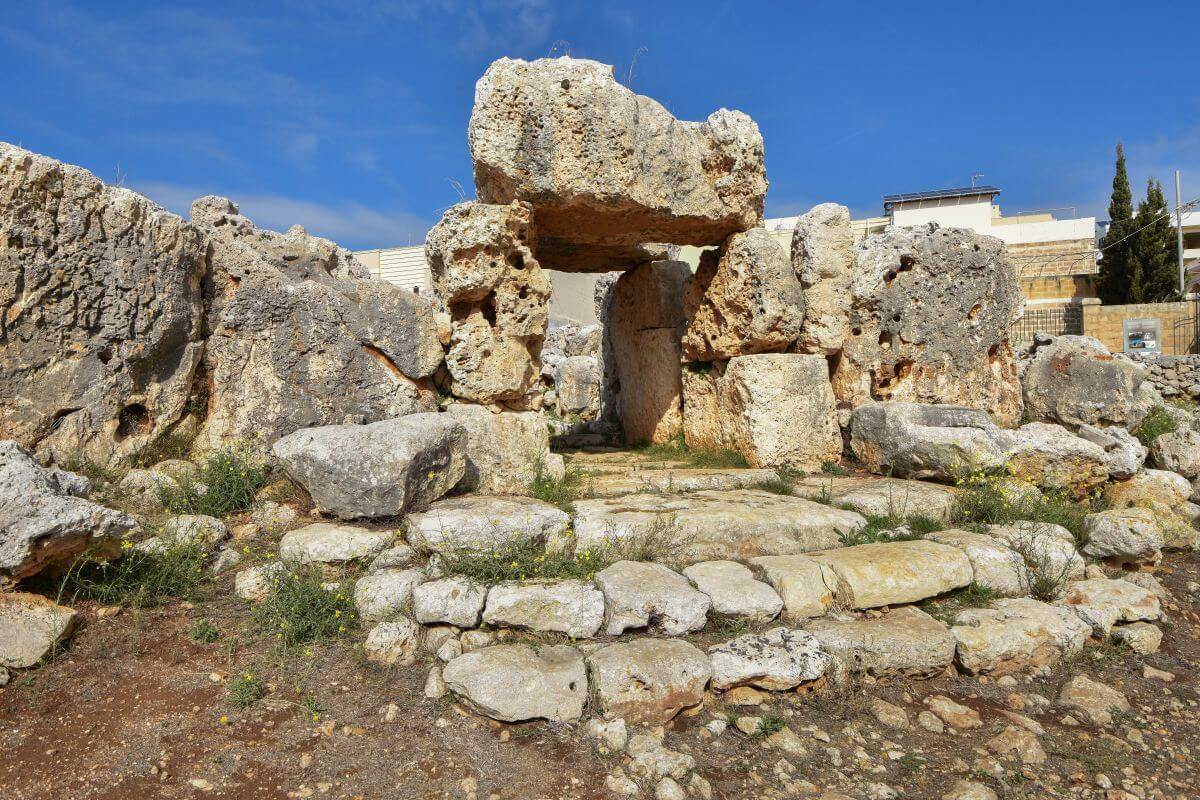
This compact temple, which stands out for its raw authenticity, lies hidden just 1 km from Skorba.
The story of Ta Hagrat in Mġarr also begins before its temples. Excavations revealed pottery from the Mġarr phase (3800-3600 BC), showing that a settled community lived here long before anyone placed the first stone. According to Wikipedia, the early community later built two buildings out of the island’s strongest material, coralline limestone. Its larger structure dates back to the Ggantija phase (3600-3200 BC). Builders added the second, smaller temple during the Saflieni phase (3300-3000 BC). Unlike other megalithic temples of Malta, this one doesn’t include blocks.
Heritage Malta notes that the larger temple features a semi-circular façade, a monumental doorway, and a rectangular forecourt leading to three rounded chambers. The smaller temple was added later on the northern side.
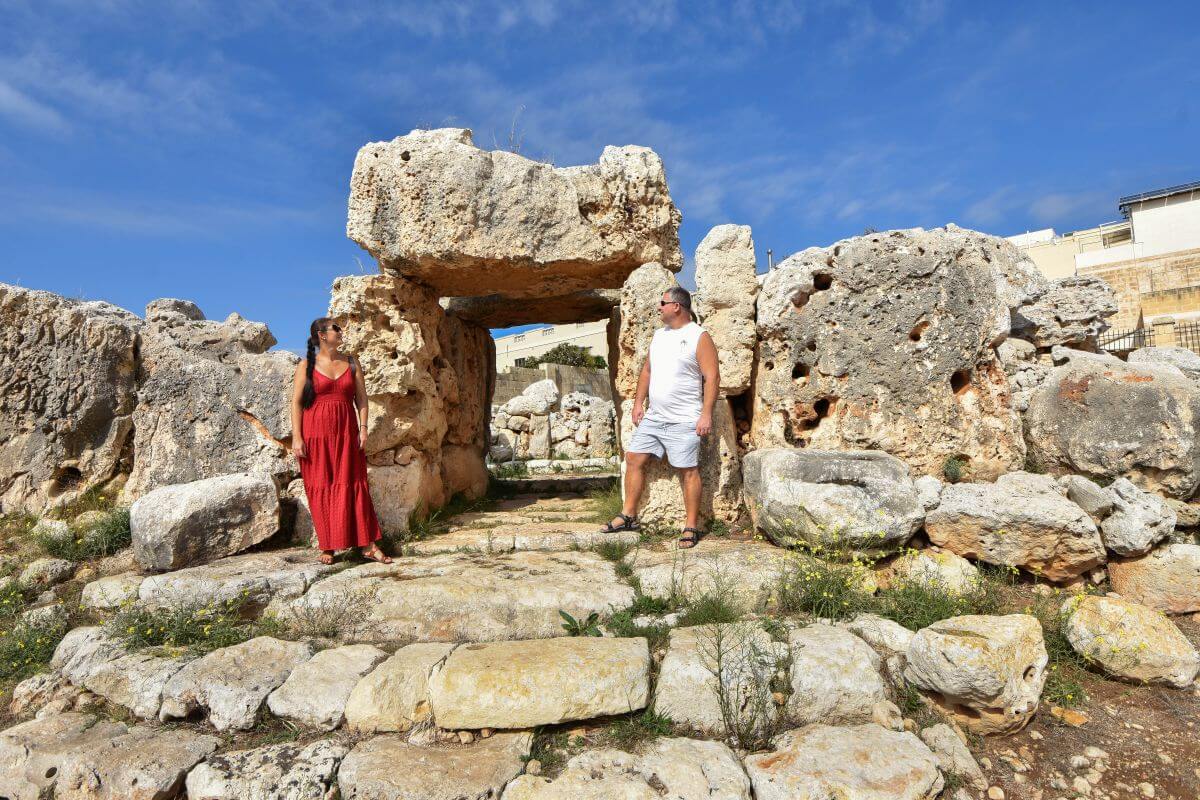
Inside the main structure, you’ll find a corridor framed by upright stones leading into a central space with three apses. The layout is trefoil – one of Malta’s classic prehistoric designs. Traces of corbelling on the walls show that the entire structure once had a roof.
UNIQUE ARTEFACT:
Ta’ Hagrat is also famous for a rare find: a sculptured limestone miniature model of a temple. This tiny model, discovered in 1923, shows a trilithon entrance and corbelled layers. It’s a perfect scale model of Malta’s ancient architecture.
GOOD TO KNOW:
Admission prices for the archaeological Site of Ta’ Hagrat, as of December 2025, are:
- Adults €3.50
- Seniors (60+): €3
- Youth (12-17): €3
- Students €3
- Children (6-11): €2.50
- Infants and Heritage Malta Pass Holders: Free
Before you go: Opening Hours for 5 Major sites – Hagar Qim, Mnajdra, Tarxien, Skorba, and Ta Hagrat.
- From 1 November 2025 – 4 January 2026: Open daily 9 AM – 5 PM
- From 5 January 2026 – 28 February 2026: Same hours (9AM – 5 PM) but closed on Tuesdays
- From 1 March 2026 – 31 October 2026: Open daily 10 AM – 6 PM.
Other Prehistoric sites in Malta, which are worth visiting
7. Ghar Dalam 
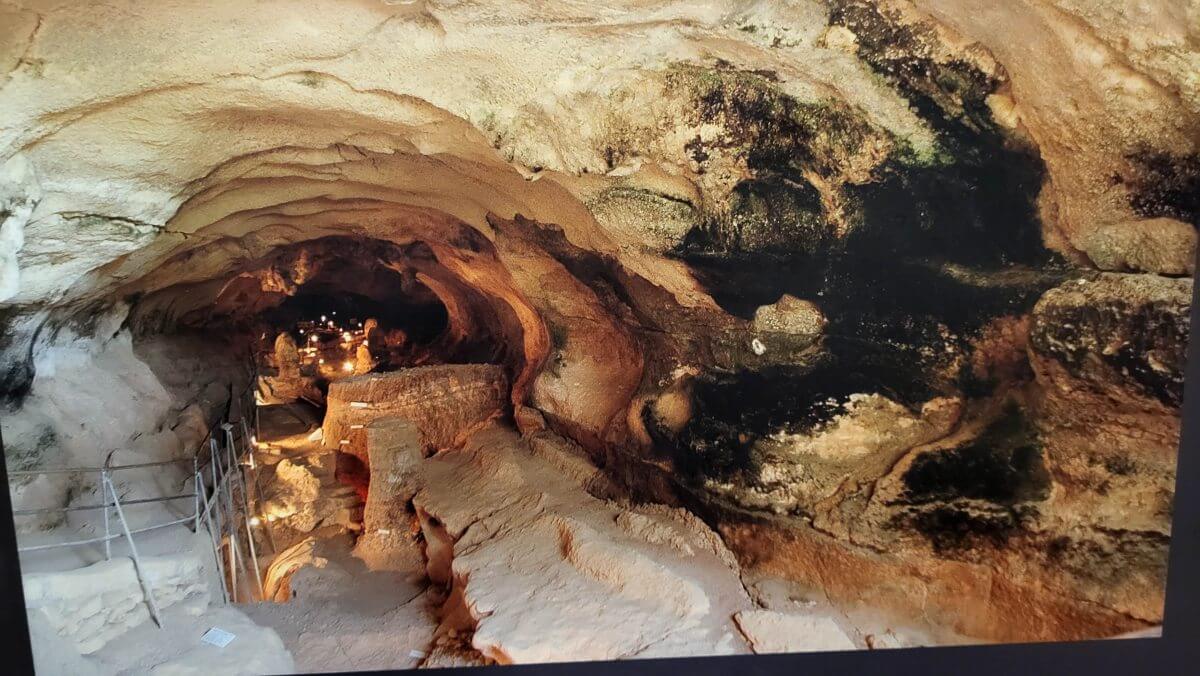
Did you know that Ghar Dalam is one of Malta’s most important prehistoric landmarks? This 145 m long cave offers a rare look into both the island’s natural and human past. It preserves an astonishing record of the animals and people who lived on the island long before written history.
Located just outside Birzebbuga, Ghar Dalam contains layers that reach back more than half a million years. Heritage Malta explains that the deepest layers contain bones of dwarf elephants, hippopotamus, and other species. These animals once roamed here, and suggesting that the island was once connected to Italy by land. Floodwater carried these remains into the cave, creating one of the island’s richest fossil deposits.
Higher up in the sediment, researchers found deer bones dating between 25,000 and 18,000 years ago. But the most surprising discovery sits at the top. Ghar Dalam Cave contains Malta’s earliest evidence of human life, dating back to 7,400 years, according to the official website. The top ‘Cultural Layer’ of the cave marks the point where prehistoric settlers used this cave as a dwelling. Wikipedia notes that archaeologists found early pottery, animal remains, stone tools, and even Neanderthal teeth in the upper layers.
WHAT TO EXPECT:
Walking through Ghar Dalam Cave feels like entering a natural museum. The path leads to the cave, where soft lighting illuminates fossil deposits still trapped in the walls. Outside, a small museum displays bones, tools, and pottery found inside. The site’s garden, protected under the Natura 2000 network, protects native plants and a small bat colony.
8. Cart Ruts
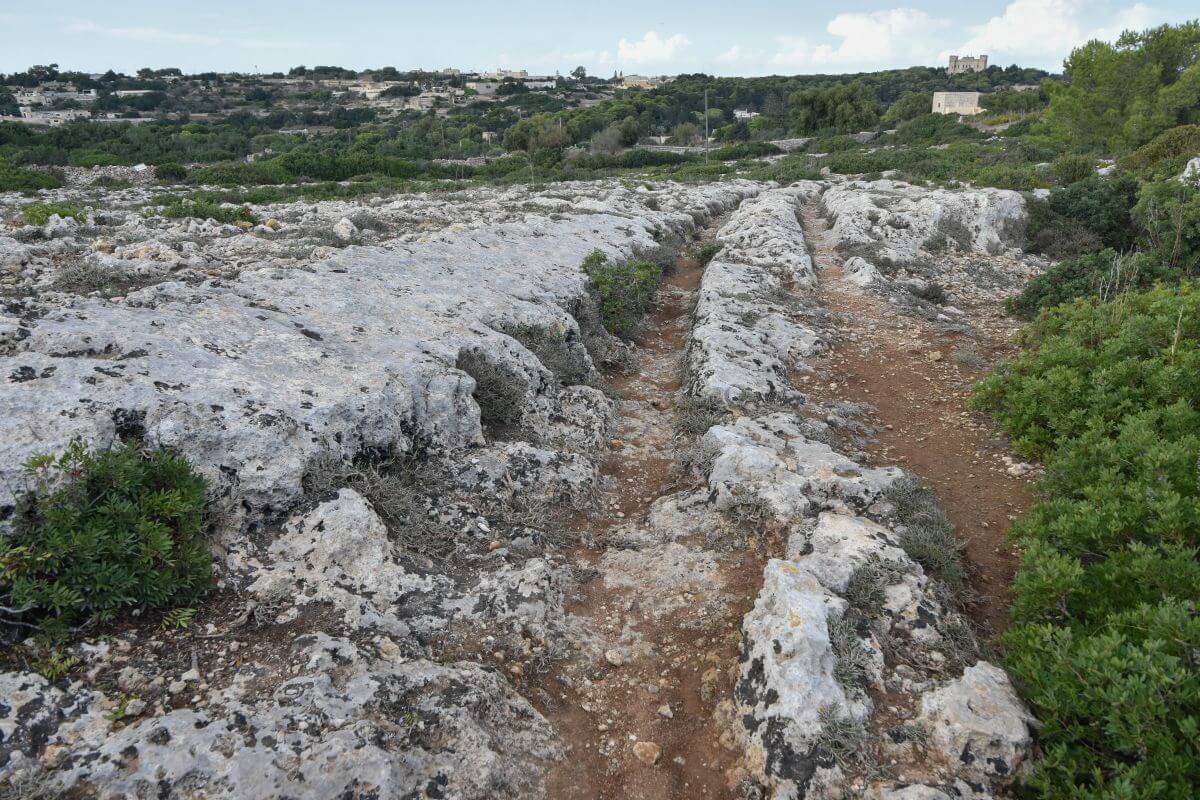
What ancient force carved hundreds of deep grooves into Malta’s limestone, and why do they run in such impossible directions? The islands’ mysterious cart ruts raise exactly that question.
These parallel groves, cut deep into limestone, appear all over the islands. Yet no one fully agrees on their age and purpose. Their depth (sometimes reaching 60 cm) is far too deep to be simple erosion. Some archaeologists link them to the same early communities that built the megalithic temples of Malta. Others believe they formed much later. What makes them so puzzling is their behaviour: many twist uphill, some overlap, others split into several pairs. Many stop in the middle of nowhere, while others vanish under modern buildings. Sometimes the tracks fall off cliffs or extend underwater, suggesting they date back to when sea levels were much lower.
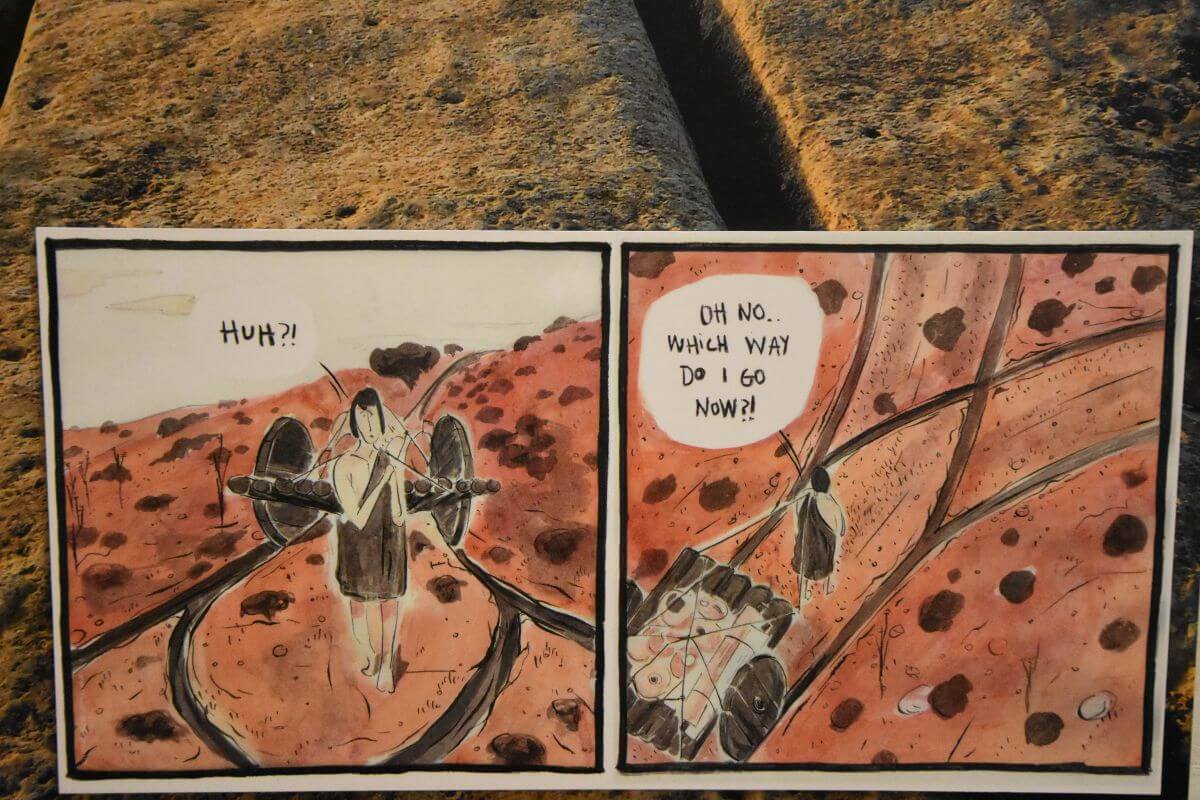
According to Wikipedia, research published in 2008 suggests that wooden sledges transferring heavy loads or primitive wheeled carts eroded soft limestone.
WHERE TO FIND THEM:
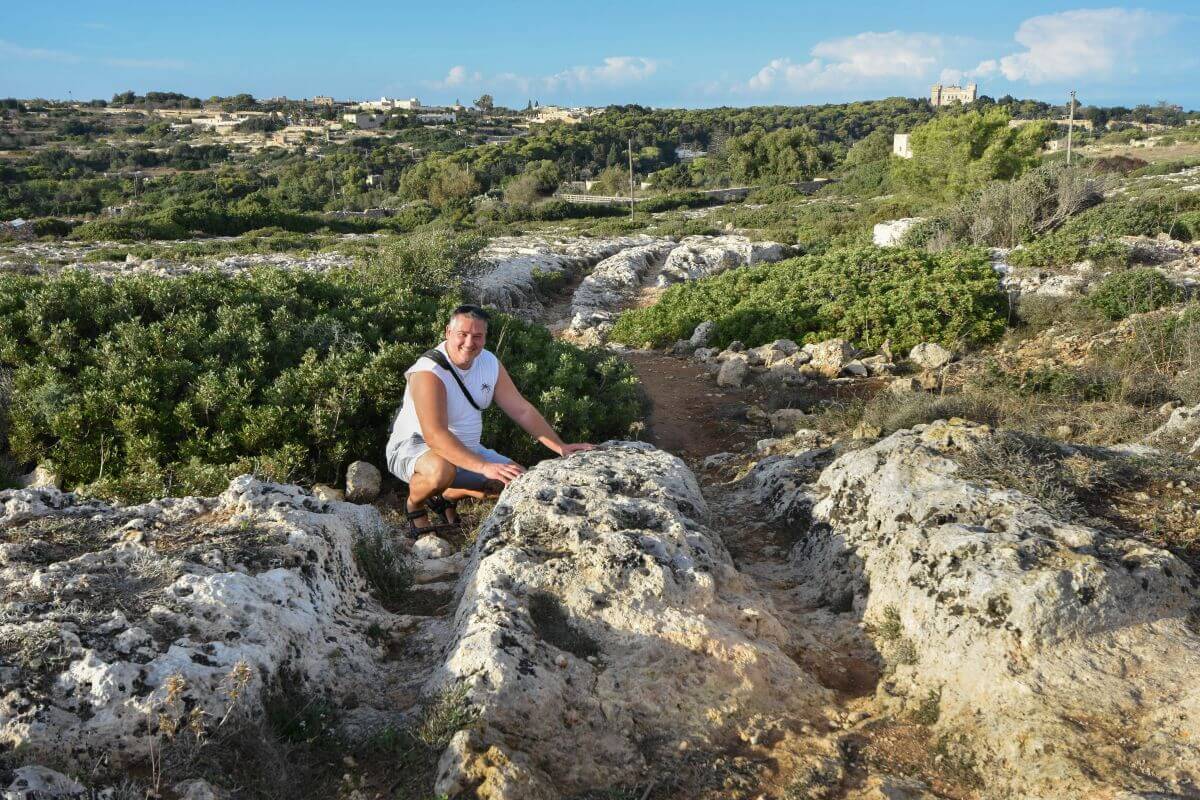
You’ll find these tracks in dozens of places across the islands, from St Paul’s Bay to Bidnija and Ta’ Ċenċ on Gozo. But the most extraordinary example lies at Misrah Ghar il-Kbir. This vast network near the Dingli Cliffs holds hundreds of intersecting tracks that look like an ancient rail yard carved into the stone. Wikipedia explains they have an average distance between them of 110 to 140 cm (43 to 55 in). They contain the densest concentration of tracks anywhere on Malta and are up to 60 cm (24 in) deep. No wonder archaeologist David H. Trump gave the area its nickname ‘Clapham Junction’.
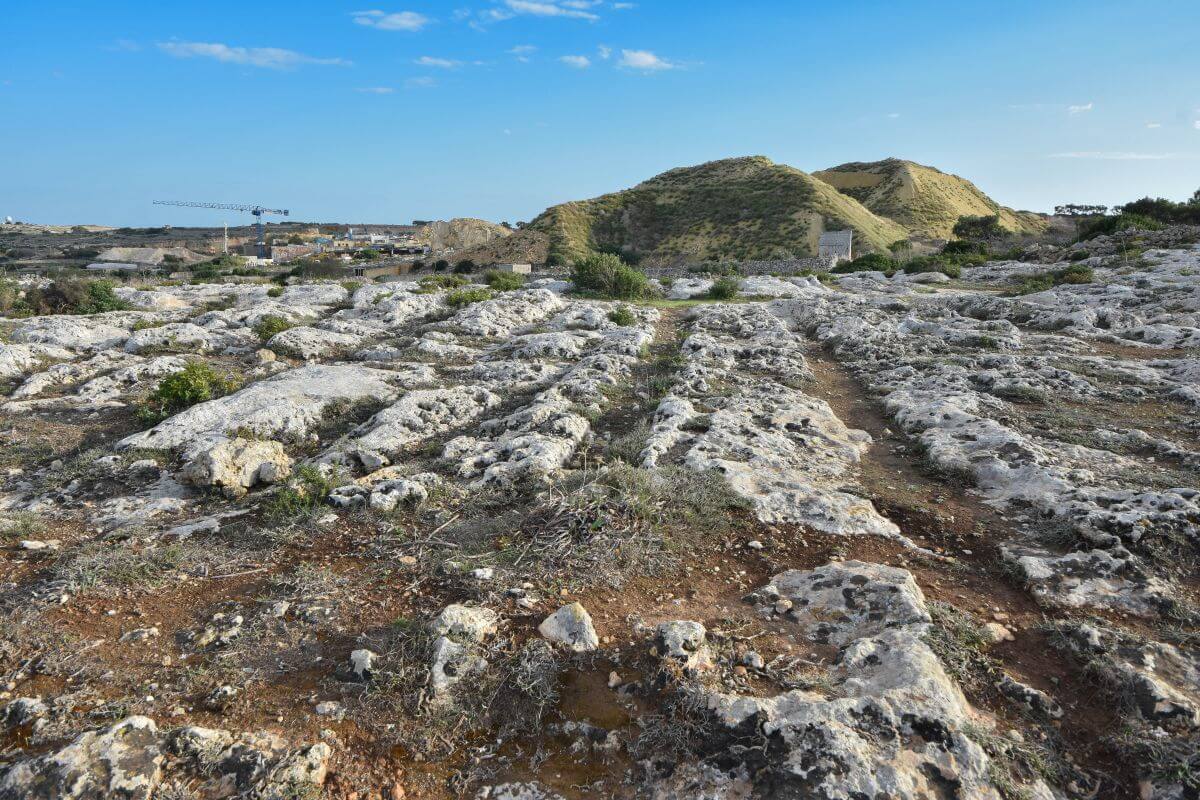
The criss-crossing lines reminded the archaeologist of a crowded British train station. A visit to Malta’s Clapham Junction shows how much of the island’s past still lies unanswered.
Now you know everything you need to know about the Megalithic temples of Malta and other prehistoric sites.
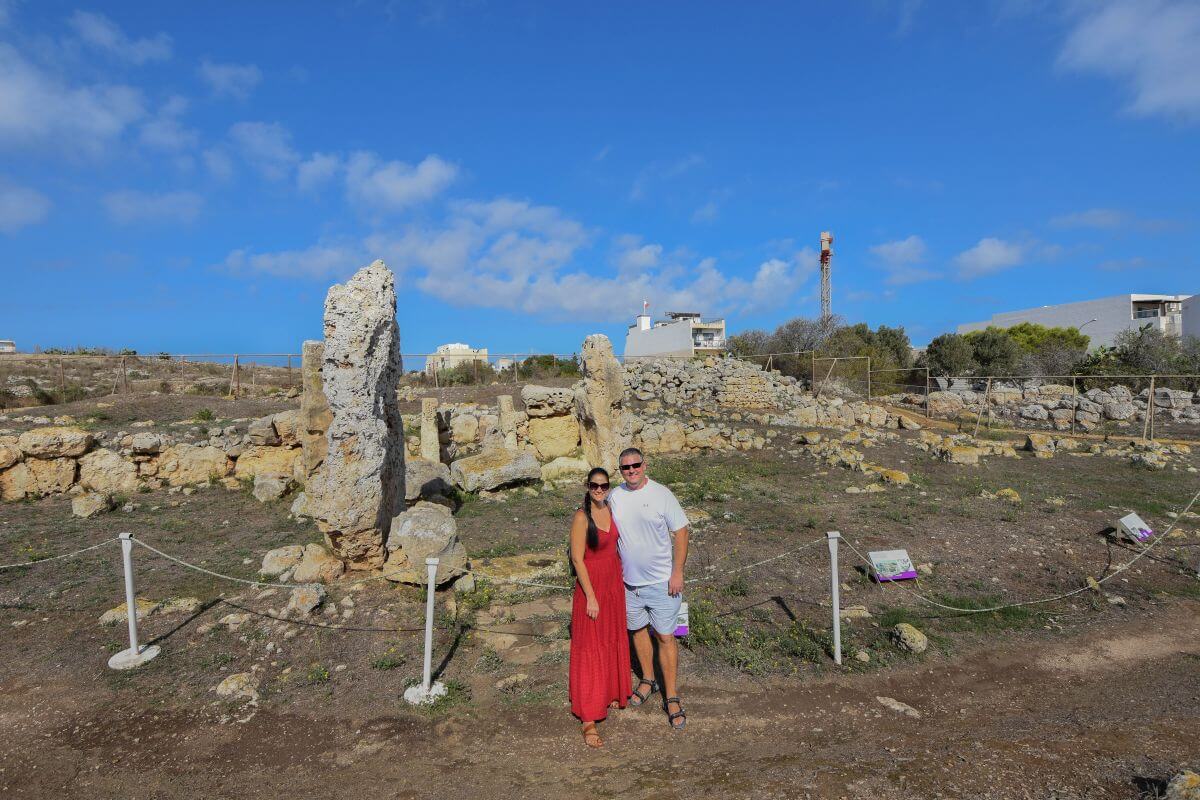
Thank you for staying with us until the end! If you’ve enjoyed this article, please consider sharing this post to extend its reach.
Don’t forget to bookmark this post so you can quickly find it when planning your trip to Malta.
YOU MAY ALSO ENJOY: